













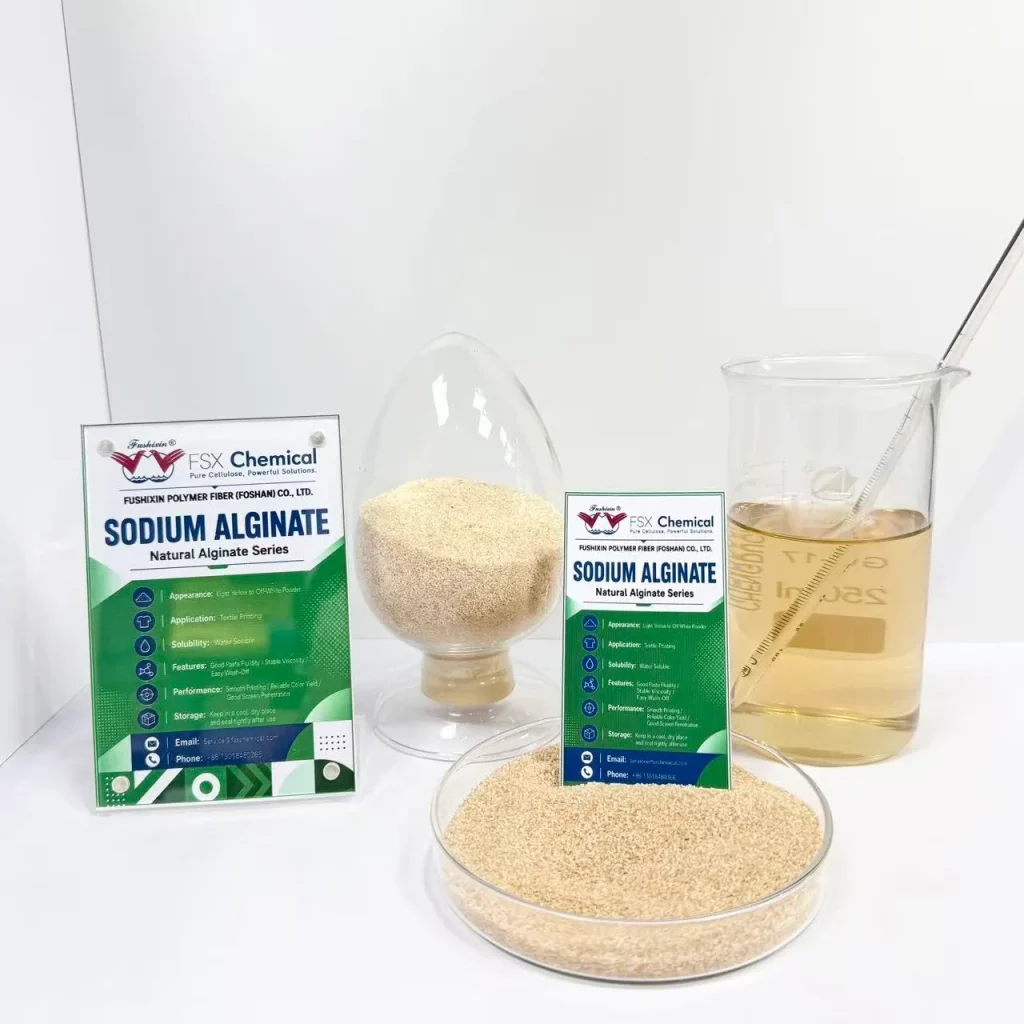
Direct answer: In reactive digital printing on cotton or viscose, sodium alginate may be evaluated in the fabric pretreatment or coating, not in the ink supplied to the printhead. It can help control surface penetration and moisture during printing and fixation, but the suitable grade depends on application method, wet pickup or coating amount, drying, ink set, fabric and steaming-and-washing route.
How Digital Textile Printing Differs from Screen Printing
Ink Delivery and Substrate Interaction
In conventional screen printing, a thick printing paste is pushed through a screen mesh directly onto the fabric surface. The paste carries the dye and controls how it distributes before fixation. In digital inkjet printing, the dye is delivered in a low-viscosity ink through fine print heads — a fundamentally different process that requires a differently prepared substrate.
The print head in a digital textile printer applies ink at high speed across very small nozzle openings. Uneven, over-applied or poorly dried pretreatment can cause ink spreading, uneven uptake, fabric distortion or head-strike contamination risk. Nozzle blockage is primarily an ink-formulation and ink-filtration issue, so fabric pretreatment should not be confused with material added directly to the printhead ink.
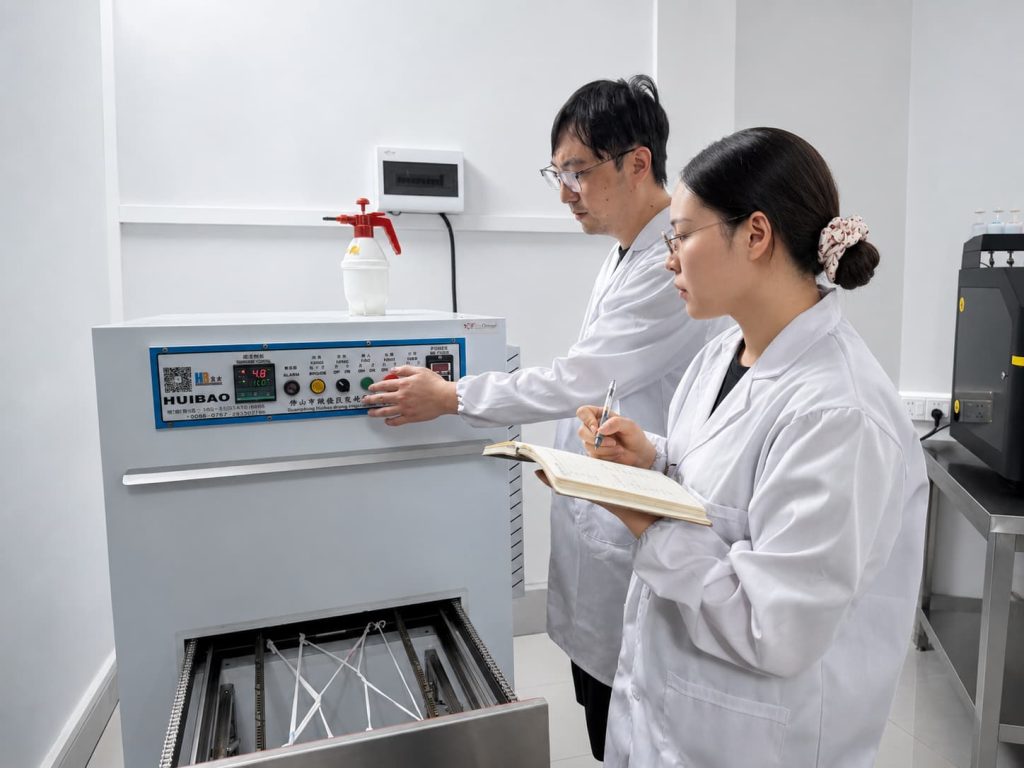
Why Paste and Pre-Treatment Chemistry Matters More in Digital Printing
Pre-treatment paste — applied to the fabric before digital printing — controls surface chemistry, moisture content, and dye reactivity. Sodium alginate is one of the components used in reactive dye pre-treatment formulations, where it helps condition the fabric surface and supports even ink uptake. Getting this formulation right has a direct effect on color sharpness, dye fixation rate, and wash fastness.
Role of Sodium Alginate in Digital Textile Printing
Pre-Treatment Paste Formulations
In reactive inkjet printing on cotton and cellulosic fabrics, pre-treatment paste is padded or sprayed onto the fabric before it enters the digital printer. A typical reactive dye pre-treatment formulation contains sodium alginate (or a sodium alginate blend), alkali (to facilitate dye fixation), urea (to assist dye dissolution and moisture retention), and sometimes a wetting agent.
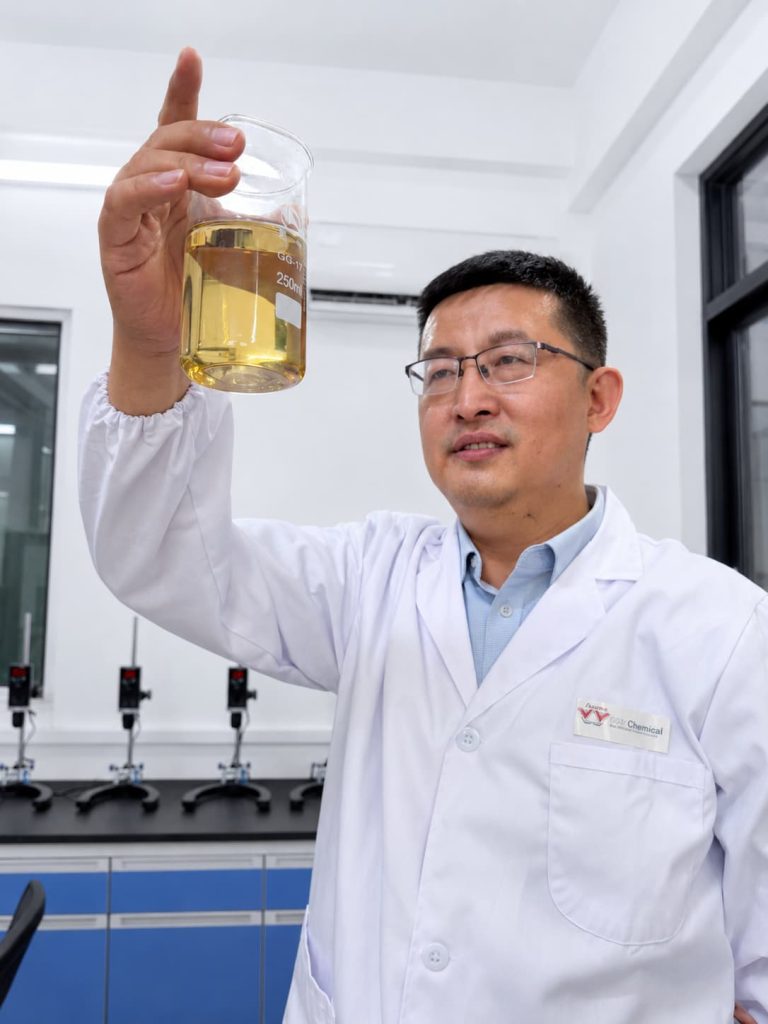
Viscosity Requirements for Digital Pre-Treatment
Pre-treatment paste for digital printing is applied at much lower viscosity than screen printing paste. The paste needs to be fluid enough to be applied evenly by padding mangle or spray system, then dry to a uniform surface without blocking the fabric structure.
Digital pretreatment generally needs a lower application viscosity than conventional screen-printing paste, but supplier labels such as low or medium viscosity are not enough for selection. The target depends on padding, coating or spray equipment, pickup, fabric construction, drying and the complete pretreatment formula.
Compatibility with Reactive Dye Inkjet Systems
Sodium alginate is an established candidate for selected reactive-dye pretreatments, but compatibility is not universal. Confirm the alginate grade, concentration, alkali, humectant, wetting agent, ink set, fabric, steaming and wash-off through a controlled trial.
Some digital printing systems and ink suppliers provide recommended pre-treatment formulation guidelines. If these are available for your system, use them as a starting point and adjust the sodium alginate grade and concentration based on trial results.
Key Grade Parameters for Digital Printing Applications
Viscosity Grade and Stability
For digital pre-treatment applications, low to medium viscosity sodium alginate grades are most commonly specified. The key requirement is not just the viscosity value at preparation, but stability over time — the pre-treatment paste is typically prepared in batches and used over several hours or a full production shift.
Viscosity that drifts significantly between preparation and use can cause inconsistency in pre-treatment coat weight, leading to variation in color depth and fixation across the fabric. Ask your supplier for viscosity stability data under your expected storage conditions and time frame.
Solubility and Dissolution Behavior
Sodium alginate for digital pre-treatment should dissolve cleanly and completely without forming undissolved gel particles. Any undissolved material can affect the uniformity of the pre-treatment coat and, in spray application systems, can block spray nozzles.
When evaluating a grade, test dissolution at your standard preparation conditions — water temperature, mixing method, and concentration. Some grades dissolve more readily in cold water; others require warm water and extended mixing. Confirm the appropriate dissolution method with your supplier.
Fluorescence Level
For applications where fabric is inspected under UV light — common in quality control for white-ground or light-ground fabrics — fluorescence in the pre-treatment components can interfere with inspection results. Non-fluorescent sodium alginate grades are available and are worth specifying if UV inspection is part of your quality process.
Confirm whether the grade you are considering has been tested for fluorescence and whether the supplier can provide supporting data.
Sodium Alginate in Screen Printing vs. Digital Pre-Treatment: A Comparison
Direct Paste Use in Screen Printing
In conventional screen printing, sodium alginate is used directly in the printing paste as the primary thickener. The paste is typically prepared at medium to high viscosity and applied through flat or rotary screens. The sodium alginate controls dye distribution on the fabric surface and prevents bleeding before steaming.
For screen printing paste, medium to high viscosity sodium alginate grades are standard, at concentrations typically ranging from 3% to 6% depending on fabric type and dye class.
Pre-Treatment Use in Digital Inkjet Printing
In digital pre-treatment, sodium alginate is used at lower concentrations and lower viscosity than in screen printing paste. The role is surface conditioning rather than dye carrying — the dye is delivered by the inkjet system, and the pre-treatment creates the right surface conditions for the ink to land, spread, and fix correctly.
Concentration in digital pre-treatment formulations is typically lower than in screen printing paste — often in the range of 0.5% to 2% — though this varies with fabric type and application method.
Can the Same Grade Be Used for Both?
In some cases, the same sodium alginate grade can be used in both screen printing paste and digital pre-treatment, at different concentrations. However, the viscosity profile of a grade optimized for high-concentration screen paste may not be ideal for low-concentration digital pre-treatment use.
If your operation runs both screen and digital printing, it is worth discussing with your supplier whether a single grade can serve both applications, or whether separate grades would give better results. A sample trial in each application is the most reliable way to answer this question.
What to Confirm Before Ordering
Documentation Checklist
- TDS (Teknik Veri Sayfası) — viscosity range, solubility specifications, and recommended application concentration
- SDS (Güvenlik Bilgi Formu) — handling, storage, and shelf life information
- CoA (Analiz Sertifikası) — batch-specific test results matching the lot you are ordering
- Fluorescence test data — if UV inspection is part of your quality process
Sample Trial for Digital Pre-Treatment
A practical trial sequence includes: preparing the pre-treatment at your standard concentration, applying it to your target fabric using your standard application method, printing with your standard ink and profile, steaming and washing, then evaluating color depth, sharpness, and wash fastness. Document the results so you have a reference point when scaling up or comparing grades.
Sodium Alginate for Digital Textile Printing FAQ
Is sodium alginate added to the digital printer ink?
Normally it is evaluated in a fabric pretreatment or coating, not added to ink supplied to the printhead. Direct ink formulation requires specialist control of viscosity, surface tension, filtration and jetting reliability.
Which digital printing route is most relevant to sodium alginate?
Reactive direct printing on cotton or viscose is the clearest starting route, where alginate may be used in pretreatment. Pigment, disperse-direct and sublimation-transfer systems use different chemistry and should not inherit the same recommendation.
How should a digital pretreatment grade be selected?
Confirm fabric, ink chemistry, printer, padding, coating or spray method, wet pickup or coating amount, drying, steaming or curing and washing. Then compare hydration, filtration, application viscosity, ink holdout, color, definition and hand feel.
Can a screen-printing alginate be used at the same dosage in digital pretreatment?
No universal 1:1 transfer applies. Screen paste and digital pretreatment operate at different viscosity, solids, application and drying conditions. Begin with a controlled lab trial and optimize only after the application route is confirmed.
FSX Chemical, Tedarik Sürecinizi Nasıl Destekliyor?
If you are developing or adjusting a digital pre-treatment formulation, our technical team can assist with grade selection based on your fabric type, application method, and inkjet system.
Sonraki adımlar:
- TDS Talep Et — review viscosity and solubility specifications for your target application
- Örnek İsteyin — run pre-treatment trials before committing to bulk volume
- Not Eşleştirme Talebinde Bulunun — share your fabric, application method, and ink system for a specific recommendation
- Teknik Ekibimizle İletişime Geçin — for pre-treatment formulation questions or switching from another thickener: Service@fsxchemical.com
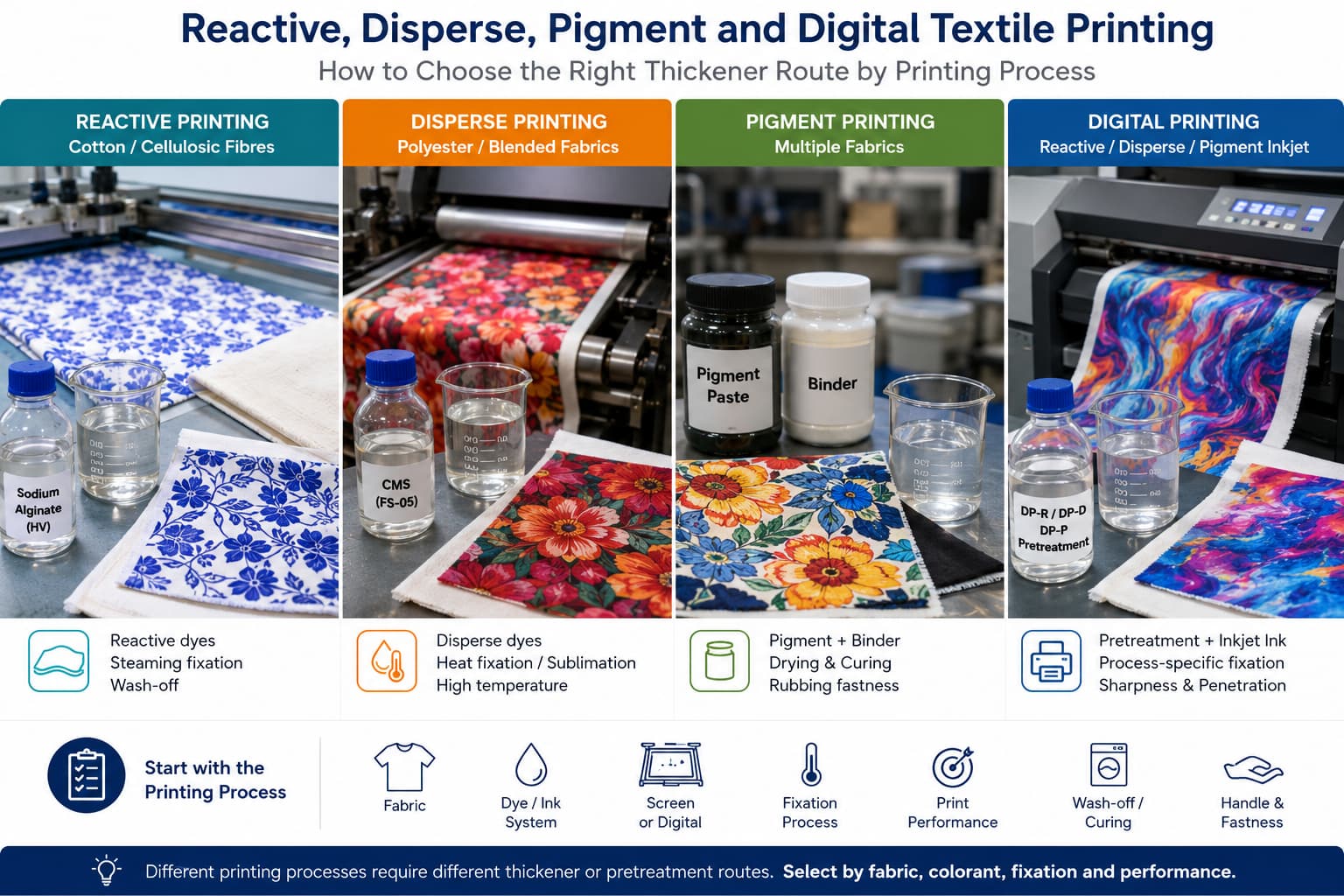
Where Sodium Alginate Fits in Digital Textile Printing
| Yolun yazdırılması | Typical sodium alginate position | Key buyer check |
|---|---|---|
| Conventional reactive screen printing | Thickener in the printing paste | Rheology, screen passage, dye compatibility, fixation and wash-off |
| Reactive digital direct printing | Possible component in fabric pretreatment or coating | Application method, pickup, drying, ink holdout, color, steaming and washing |
| Pigmentli dijital baskı | Not a universal starting route; binder and pretreatment chemistry dominate | Binder compatibility, curing, hand feel, fastness and nozzle-safe ink separation |
| Direct disperse printing on polyester | Process-specific pretreatment; alginate is not automatically the default | Polyester, disperse ink, penetration, drying and fixation route |
| Sublimation transfer printing | Normally not used as a fabric pretreatment for the transfer step | Transfer paper, ink, heat-transfer conditions and final polyester result |