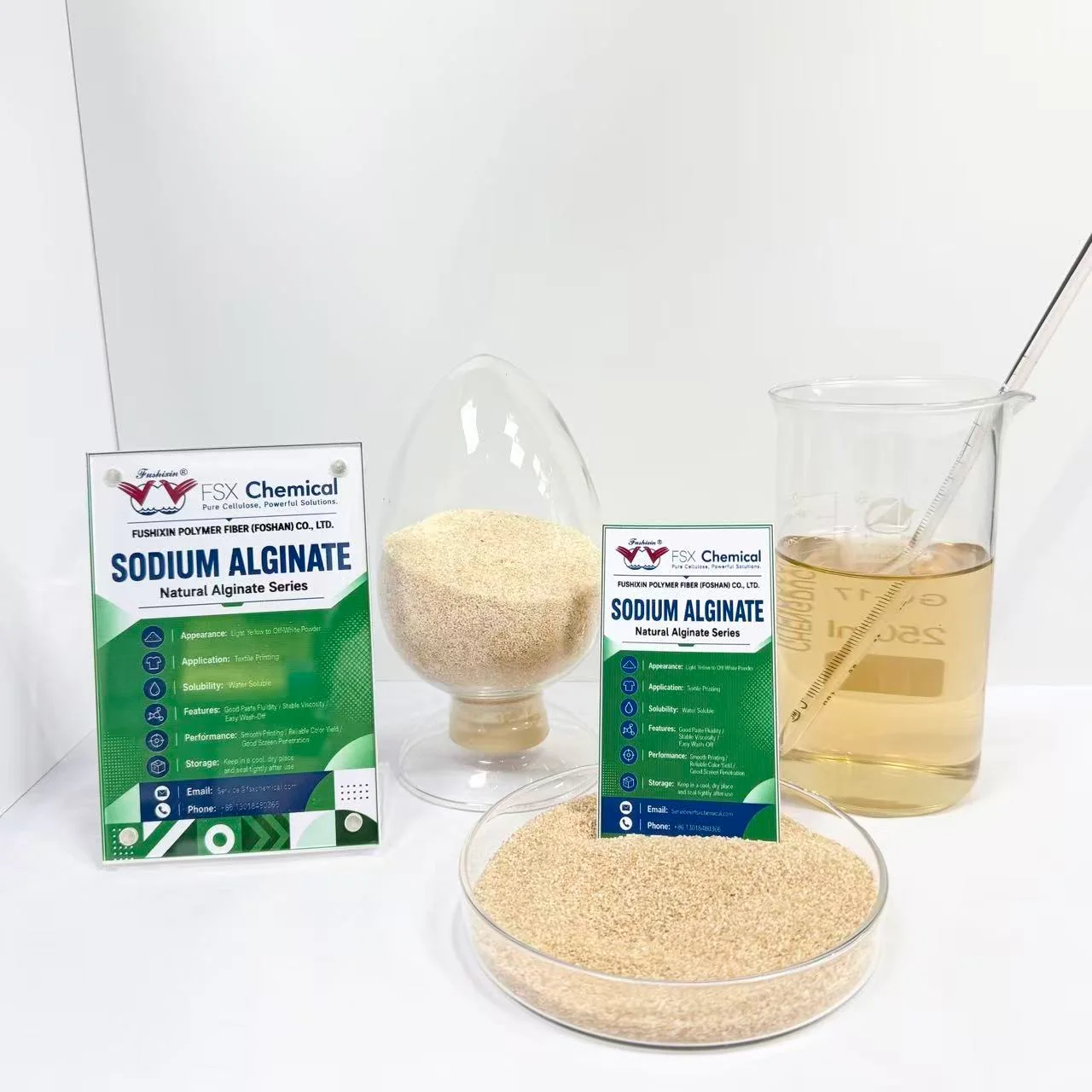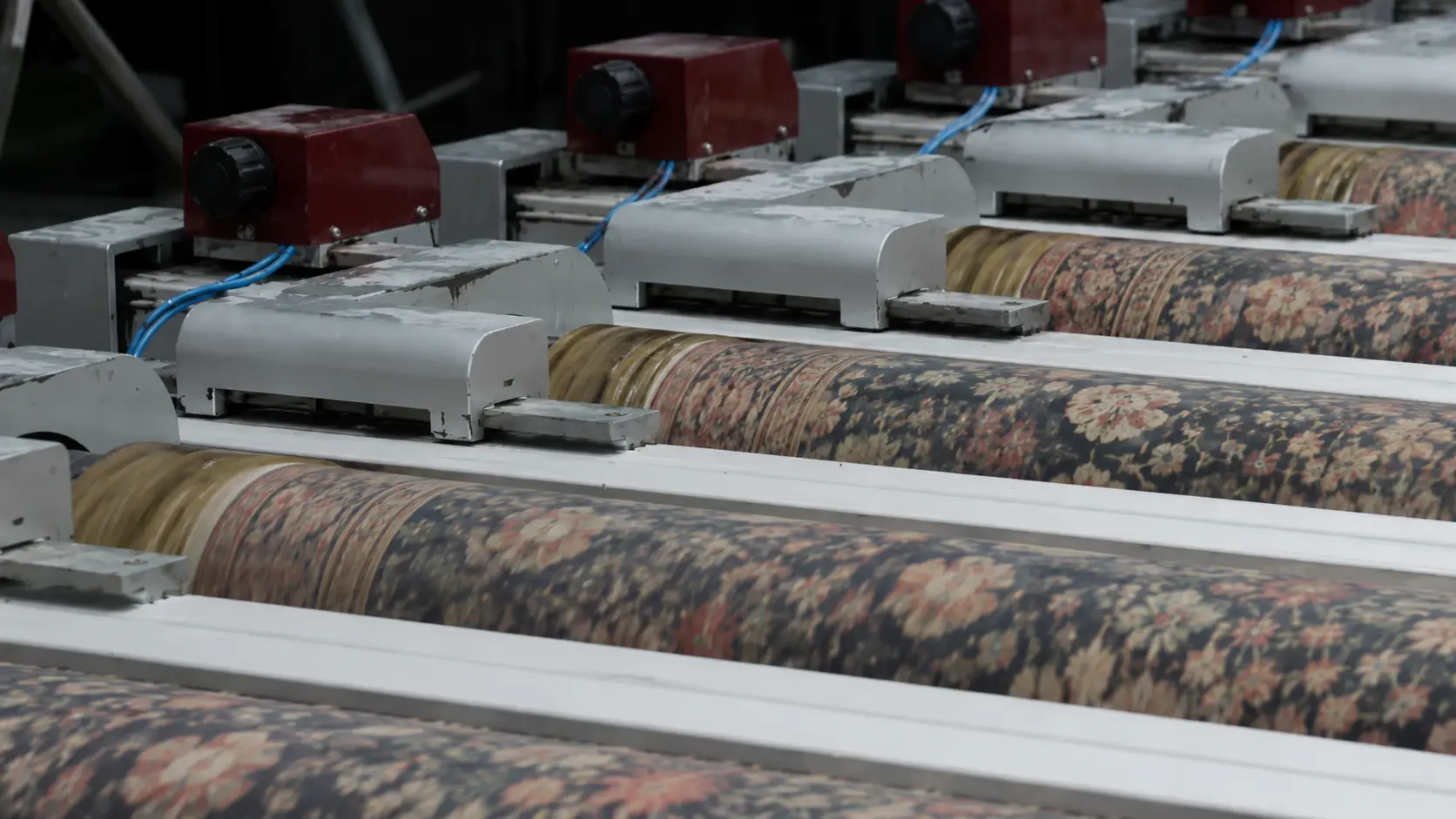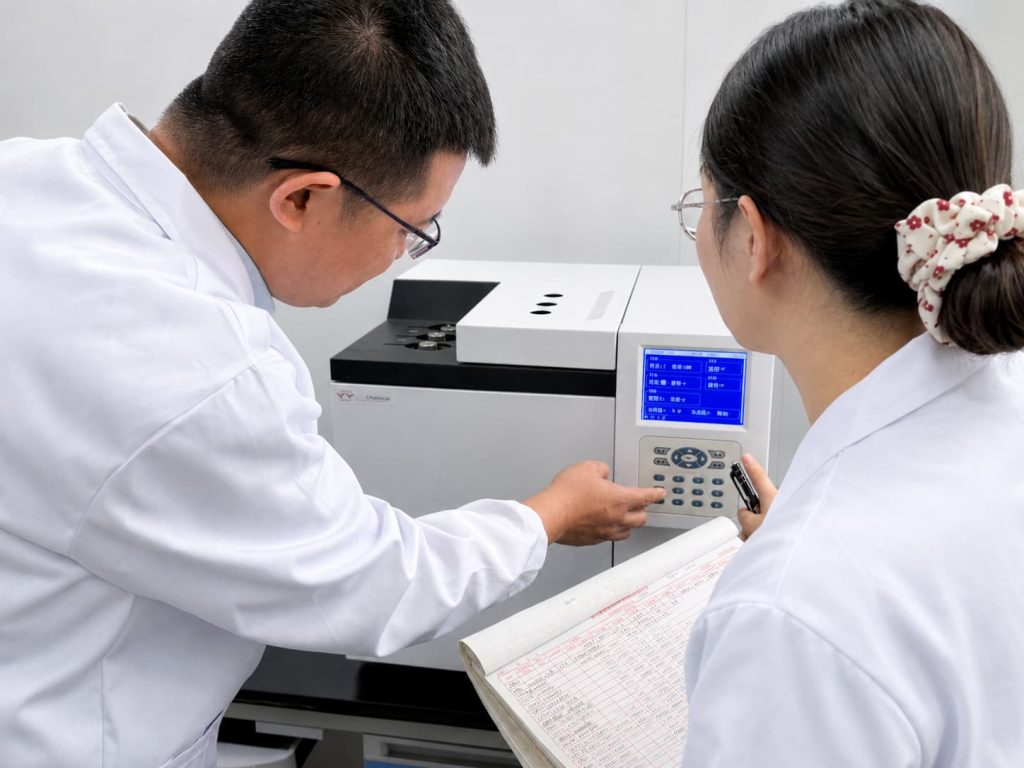
Sodium alginate mesh size describes a powder particle-size classification, not viscosity or printing quality. Finer particles may hydrate faster after effective dispersion, but rapid surface wetting can also create lumps. Select a grade using a defined sieve result, a repeatable preparation trial and complete-paste performance.
Bu kılavuzda, ağ gözü boyutunun ne anlama geldiği, bunun macun hazırlığı ve performansını nasıl etkilediği ve serigrafi veya diğer tekstil uygulamaları için sodyum aljinat seçerken bu parametrenin diğer kalite parametreleriyle nasıl karşılaştırılacağı açıklanmaktadır.
| Parametre | What it can help predict | What it cannot prove |
|---|---|---|
| Sieve or particle-size result | Powder handling, wetting and likely hydration behavior under a defined method | Final viscosity, rheology or print quality |
| Su içme zamanı | Whether the preparation process reaches a stable solution | Suitability of the complete dye paste by itself |
| Method-controlled viscosity | Solution body under stated concentration, temperature, instrument and speed | Filtration, recovery after shear or color yield |
| Filtreleme artığı | Undissolved material, insoluble matter or contamination under the stated filter method | Full machine performance without a production trial |
| Complete-paste printing trial | Transfer, definition, stability, wash-off and finished-fabric behavior | Future batch consistency without specifications and batch control |
Sodyum Aljinat Teknik Özelliklerinde “Ağ Gözü Boyutu” Ne Anlama Gelir?
Mesh Sayısının Tanımı
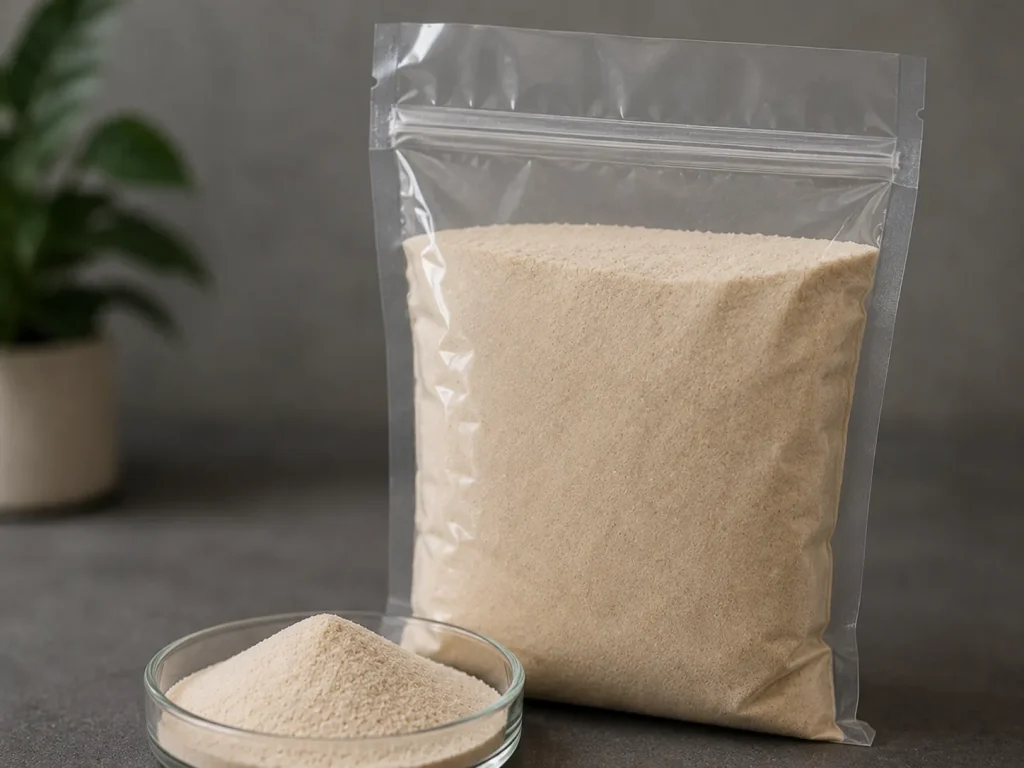
A mesh designation must be interpreted with its sieve standard and nominal opening. Increasing the mesh count generally means a smaller opening within a specified system, but mesh count alone is not a complete aperture specification. Wire dimensions and the adopted standard matter.
Tekstil Uygulamalarında Yaygın Olarak Kullanılan Örgü Aralıkları
Tedarikçiler, partikül boyutunu elek sınıflandırması yoluyla ya da alternatif olarak lazer difraksiyonu veya elek analizi ile ölçülen mikron aralıklarını kullanarak ifade edebilirler. Farklı tedarikçilerin teknik özelliklerini karşılaştırırken, karşılaştırmanın eşit şartlarda yapılmasını sağlamak için hangi ölçüm yönteminin kullanıldığını teyit edin.
Parçacık Boyutu Çözünme Davranışını Nasıl Etkiler?
Çözünme Hızı ve Karıştırma Süresi
Daha ince parçacık boyutu genellikle daha hızlı bir başlangıç çözünmesi anlamına gelir — daha küçük parçacıklar, hacme göre daha yüksek bir yüzey alanı oranına sahiptir; bu da, tozun birim kütlesi başına suyla temas edebilecek daha fazla yüzey alanı olduğu anlamına gelir. Bu durum, suyun sodyum aljinatı daha iri parçacıklara kıyasla daha hızlı bir şekilde nüfuz etmesini ve hidratlamasını sağlar.
A finer grade can shorten preparation only when the powder is dispersed without persistent agglomerates. Confirm the time to the agreed hydration endpoint in the actual mixing process; do not infer it from particle size alone.
Particle size is only one preparation variable. Molecular-weight distribution, polymer condition, moisture, water quality, addition rate, agitation and hydration time may have a larger practical effect on the final solution.
Topak Oluşumu Riski
Tozun suya doğru şekilde eklenmesi koşuluyla, daha iri taneli malzemeler genellikle macun hazırlığı sırasında topaklanmaya daha az meyillidir. Daha ince tozlar ise suyla temas ettiğinde hızla hidratlandıkları için, çok hızlı eklenir veya yeterince karıştırılmazsa yüzeysel olarak hidratlanmış topaklar oluşturabilirler — topağın dış tabakası hidratlanarak iç kısmın suyla daha fazla temas etmesini engeller.
Compare Preparation at the Intended Water Temperature
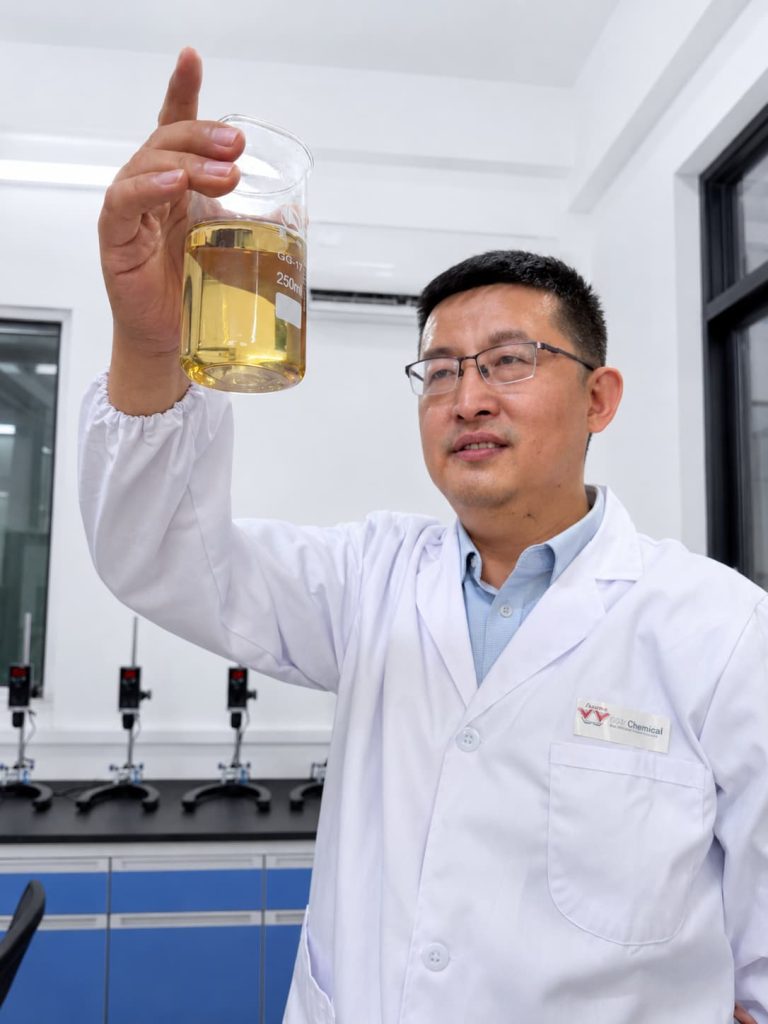
Use the grade supplier’s supported preparation conditions and record actual temperature throughout hydration. Warming changes wetting, solution viscosity and the measurement result, so a hot reading cannot be directly compared with a cold reading. A warmer process does not guarantee that every coarse grade will hydrate completely or that particle-size differences disappear.
For a fair comparison, hold concentration, water quality, powder addition and mixing geometry constant. Record lumps and filtration residue as well as viscosity development. Bring samples to the agreed test temperature before comparing final viscosity.
Ağ Gözü Boyutu ile Macun Viskozitesi ve Kararlılığı Arasındaki İlişki
Daha İnce Örgü, Daha Yüksek Viskozite Anlamına mı Gelir?
Mesh size does not directly determine fully hydrated viscosity. Sodium alginate viscosity is influenced mainly by polymer molecular weight, concentration, temperature, solution history and test method. Two grades with similar particle size can have very different viscosity, while different particle sizes may reach similar final viscosity after complete hydration.
A fixed mixing period can leave one sample incompletely hydrated. Its apparent viscosity can then reflect incomplete development, lumps or sampling heterogeneity rather than the developed solution alone. A lower reading is one possible result, not a universal particle-size rule. First check adequate dispersion, hydration, residue and method repeatability before attributing the difference to the polymer grade.
For a developed-solution comparison, prepare both samples adequately and measure under the same declared conditions. A fixed mill-cycle screen can instead show whether each powder fits that unchanged preparation window; label it as process fit and record any subsequent preparation adjustment separately.
Macun Homojenliği ve Elek Davranışı
Paste homogeneity must be demonstrated after the intended preparation. A finer powder is not inherently more uniform once both samples are adequately dispersed and hydrated. If particle size is the question, compare otherwise equivalent grades where possible, document the preparation window and inspect different batch locations for persistent lumps, residue and viscosity variation.
Persistent agglomerates, gels, insoluble matter or contamination can load filters or obstruct screen openings; these are not the same as the original dry-powder sieve distribution. Record the retained material under a defined filtration method and investigate its identity. Select a particle-size specification for fine-detail work only when the permitted range consistently meets the preparation, filtration and finished-print criteria in the mill’s process.
Tekstil Baskı Uygulamaları için Pratik Örgü Seçimi
Screen Printing: Validate Hydration Before Screen Passage
Do not choose a universal 30-, 40- or 80-mesh powder specification for every mill. Match preparation time, addition equipment and the working paste. Powder sieve size and printing-screen opening describe different stages: fully dissolved polymer does not pass through the printing screen as the original powder particles.
Digital Pretreatment: Test the Applied Bath
Evaluate hydration and filtration in the actual padding, coating or spray formulation. Lower polymer concentration does not by itself mean less driving force for dissolution. Persistent gel or contamination can remain even when a fine powder was purchased. For spray application, confirm the equipment supplier’s filtration requirements and the uniformity of the deposited treatment. Fabric pretreatment approval does not authorize the material for inkjet printhead ink.
Sizing: Use a Separate Application Trial
If sizing is the intended application, qualify concentration, preparation temperature, film behavior and desizing in that specific route. A powder mesh classification cannot establish a universal sizing dose or heating temperature.
Ağ Yapısından Daha Önemli Olan Diğer Teknik Özellikler
Ağ gözü boyutu, birçok teknik özellik parametresinden sadece biridir ve çoğu tekstil baskı uygulamasında en kritik parametre değildir. Sodyum aljinat türlerini değerlendirirken, genellikle aşağıdaki parametreler macun performansı üzerinde daha büyük bir etkiye sahiptir:
Viskozite Sınıfı
A grade viscosity range is useful only with concentration, water, hydration, temperature, instrument, spindle or geometry, speed and reading time. One viscosity value does not describe the complete rheology or guarantee print behavior. Confirm the working paste in the intended dye and auxiliary system.
Polymer Molecular Weight and Condition
Polymer molecular weight and degradation history strongly influence viscosity and flow behavior. Confirm the viscosity method, storage condition and lot consistency; sodium alginate should not be specified using the degree of substitution parameter applied to cellulose or starch derivatives.
Saflık ve Çözünürlük
Composition and residual salts can affect preparation and formulation behavior. A water-insoluble-matter result is method-dependent and is not identical to how quickly a powder hydrates in the mill. Compare the stated laboratory method with the production preparation and filtration procedure.
Specify Particle Size and Verify It in Paste Preparation
A purchasing description should identify the test method and reporting basis. ASTM E11 addresses test sieves and woven-wire sieve cloth; it does not prescribe the right alginate particle size for textile printing.
| Specification item | Ask the supplier to state | Neden önemlidir? |
|---|---|---|
| Sieve result | Standard, nominal opening and mass percentage passing or retained | A mesh label alone does not describe the distribution |
| Particle-size analysis | Method, dispersion procedure and distribution basis for D50 or D90 | A laser result is not automatically equivalent to a dry-sieve result |
| Hydration trial | Water, concentration, addition rate, mixing and endpoint | Separates powder dispersion from final solution development |
| Application approval | Complete recipe, filtration and finished-print criteria | Connects powder handling with the intended use |
Prepare candidate and reference lots independently using the same procedure. Record observations at defined times, inspect any lumps before discarding them and measure viscosity at the agreed temperature. Approve the sieve specification only after its permitted variation works in the mill’s preparation window. Do not turn one successful sample into a guarantee for every future lot.
Sık Sorulan Sorular
Does a higher mesh number mean higher sodium alginate viscosity?
No. Mesh number describes particle-size classification. Fully hydrated viscosity depends on polymer characteristics, concentration, temperature, preparation and measurement method.
Does finer sodium alginate always dissolve better?
Not automatically. Finer particles may hydrate faster, but rapid surface wetting can form lumps if powder addition and agitation are poorly controlled.
How should mesh size be written in a purchasing specification?
State the sieve or particle-size test method, applicable standard, mesh or opening and percentage passing or retained. Do not rely on an isolated mesh number.
Is degree of substitution a sodium alginate specification?
No. Degree of substitution is used for substituted cellulose derivatives such as CMC. Sodium alginate should be evaluated through its own composition, viscosity, purity, moisture, dissolution and application parameters.
Which tests matter more than mesh size for printing approval?
Use method-controlled viscosity, rheology, hydration, filtration, complete-paste stability, screen or machine trials, print definition, wash-off and batch comparison.
FSX Chemical, Not Seçiminizi Nasıl Destekliyor?
Ask FSX Chemical for the current particle-size specification, viscosity method and preparation guidance for the proposed sodium alginate grade. Confirm which fields are controlled specifications and which are application recommendations before ordering.
Sonraki adımlar:
Örnek İsteyin — toplu sipariş vermeden önce çözünme ve macun hazırlama denemeleri yapın
Ürün Sınıfı Eşleştirme Talep Edin — share your mixing conditions, application, and any dissolution problems for a specific recommendation: Service@fsxchemical.com