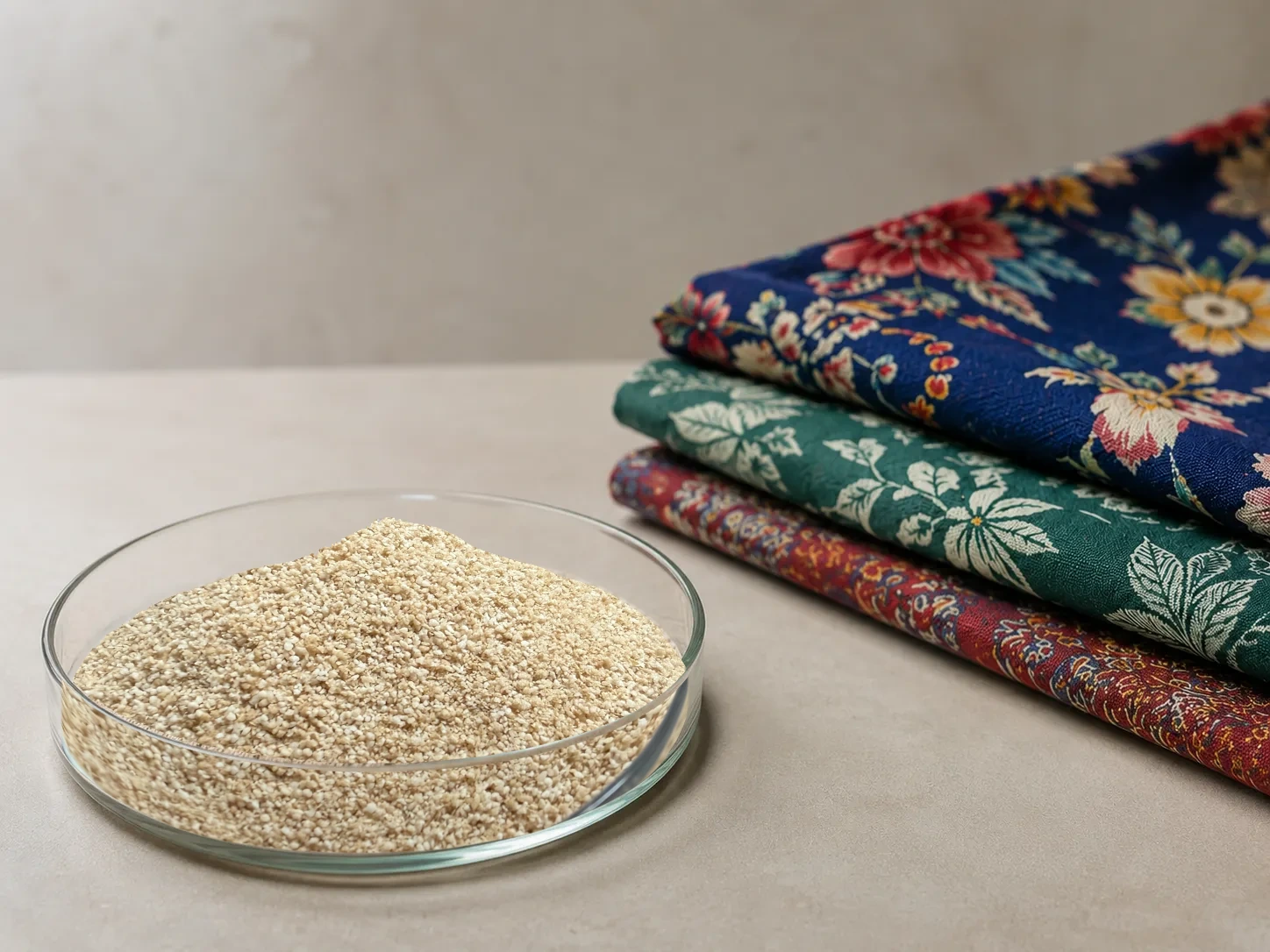
This guide explains what mesh size means, how it affects paste preparation and performance, and how to weigh it against other grade parameters when specifying sodium alginate for screen printing or other textile applications.
| Parameter | What it can help predict | What it cannot prove |
|---|---|---|
| Sieve or particle-size result | Powder handling, wetting and likely hydration behavior under a defined method | Final viscosity, rheology or print quality |
| Hydration time | Whether the preparation process reaches a stable solution | Suitability of the complete dye paste by itself |
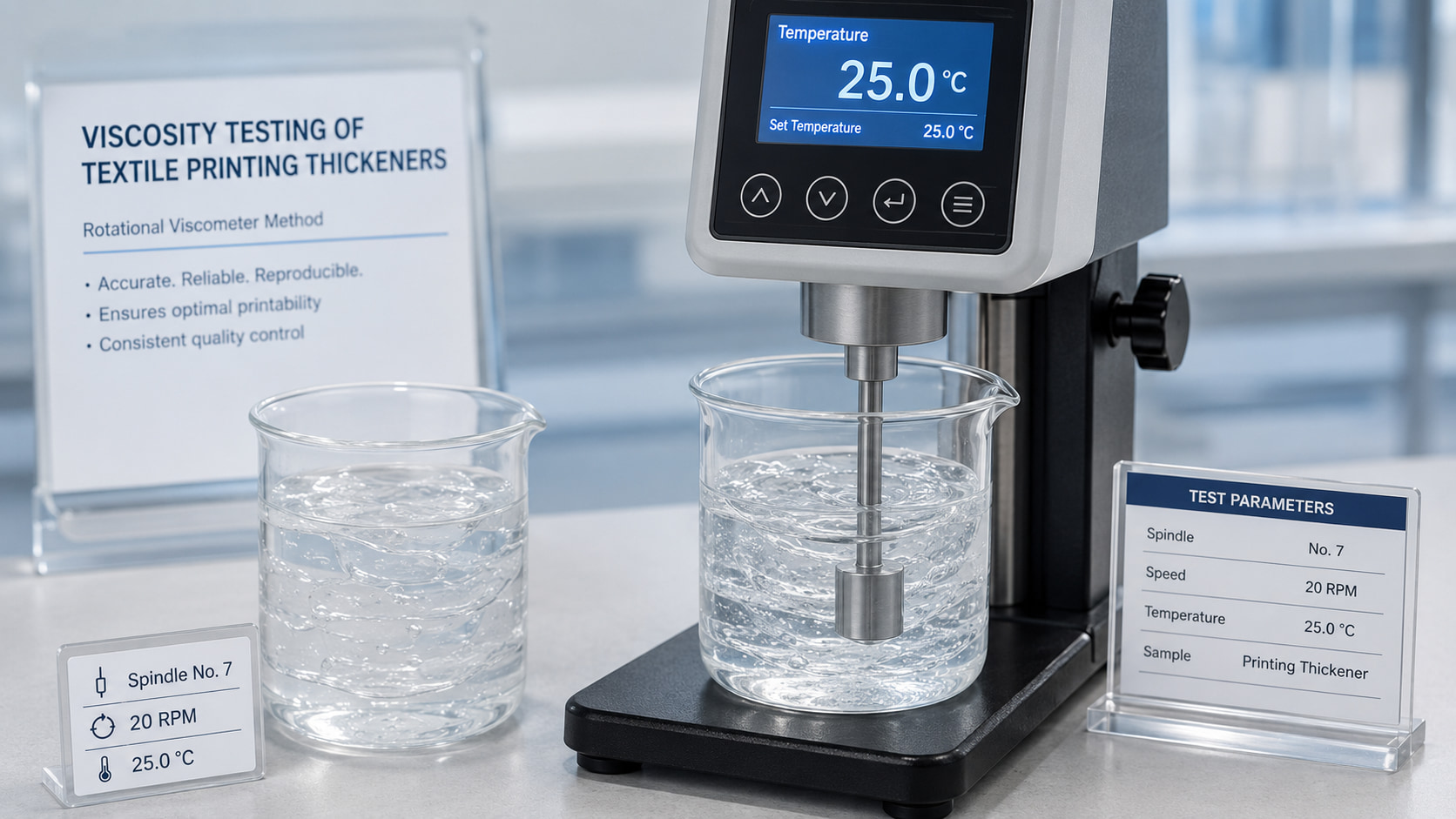
| Method-controlled viscosity | Solution body under stated concentration, temperature, instrument and speed | Filtration, recovery after shear or color yield |
| Filtration residue | Undissolved material, insoluble matter or contamination under the stated filter method | Full machine performance without a production trial |
| Complete-paste printing trial | Transfer, definition, stability, wash-off and finished-fabric behavior | Future batch consistency without specifications and batch control |
What Mesh Size Means in Sodium Alginate Specifications
How Mesh Number Is Defined
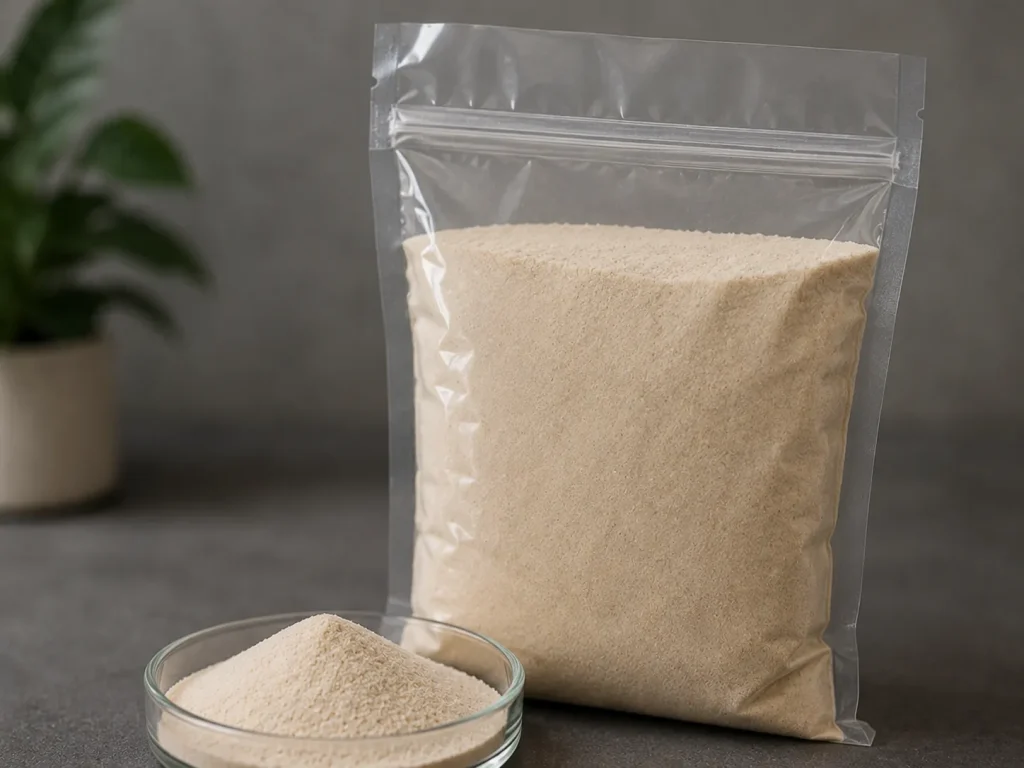
Mesh number refers to the number of openings per linear inch in a sieve used to classify particle size. A higher mesh number indicates a finer particle — 80 mesh is finer than 30 mesh because more openings per inch means each opening is smaller, and only smaller particles pass through.
Common Mesh Ranges for Textile Applications
Suppliers may express particle size using mesh classification, or alternatively using micron ranges measured by laser diffraction or sieve analysis. When comparing specifications from different suppliers, confirm which measurement method is being used to ensure like-for-like comparison.
How Particle Size Affects Dissolution Behavior
Dissolution Rate and Mixing Time
Finer particle size generally means faster initial dissolution — smaller particles have a higher surface-area-to-volume ratio, which means more surface area is available for water contact per unit mass of powder. This allows water to penetrate and hydrate the sodium alginate more quickly compared to coarser particles.
In practical paste preparation, finer mesh grades can reduce the mixing time needed to achieve full hydration. For operations where paste preparation time is a constraint — particularly in high-volume or shift-limited production — this can be a meaningful practical difference.
Particle size is only one preparation variable. Molecular-weight distribution, polymer condition, moisture, water quality, addition rate, agitation and hydration time may have a larger practical effect on the final solution.
Risk of Lump Formation
Coarser particle sizes are generally less prone to lump formation during paste preparation, provided the powder is added to water correctly. Finer powders, because they hydrate quickly on contact with water, can form surface-hydrated clumps if added too rapidly or without adequate agitation — the outer layer of a clump hydrates and seals off the interior from further water contact.

Relevance to Cold vs. Hot Water Dissolution
If your paste preparation process uses cold water and mixing time is limited, a finer mesh grade may offer a practical advantage. If you use hot water dissolution or have adequate mixing time for cold water preparation, mesh size is a less critical differentiator.
How Mesh Size Relates to Paste Viscosity and Stability
Does Finer Mesh Mean Higher Viscosity?
Mesh size does not directly determine fully hydrated viscosity. Sodium alginate viscosity is influenced mainly by polymer molecular weight, concentration, temperature, solution history and test method. Two grades with similar particle size can have very different viscosity, while different particle sizes may reach similar final viscosity after complete hydration.
The confusion between mesh size and viscosity sometimes arises because finer grades dissolve more completely in a given mixing time — if a coarser grade is not fully dissolved, the measured viscosity will be lower than the potential viscosity of a fully hydrated solution. The apparent “lower viscosity” of a coarser grade may simply reflect incomplete dissolution rather than a genuine difference in the product’s intrinsic viscosity.
This distinction matters for evaluation: if you are comparing paste viscosity between two grades of different mesh sizes, ensure both are fully dissolved before measuring, otherwise the comparison is not valid.
Paste Homogeneity and Screen Behavior
Finer mesh grades that dissolve more completely and evenly tend to produce more homogeneous paste — fewer undissolved particles, more consistent viscosity throughout the batch. In screen printing, paste homogeneity affects how consistently the paste transfers through the screen mesh across the full print run.
Undissolved particles or inconsistent viscosity within a batch can cause localized screen blockage, uneven paste deposit, or color variation within a production run. For fine-line or high-detail printing where paste consistency is critical, specifying a finer mesh grade may be worthwhile for the improved paste homogeneity it produces under your standard preparation conditions.
Practical Mesh Selection for Textile Printing Applications
Screen Printing Paste: What to Consider
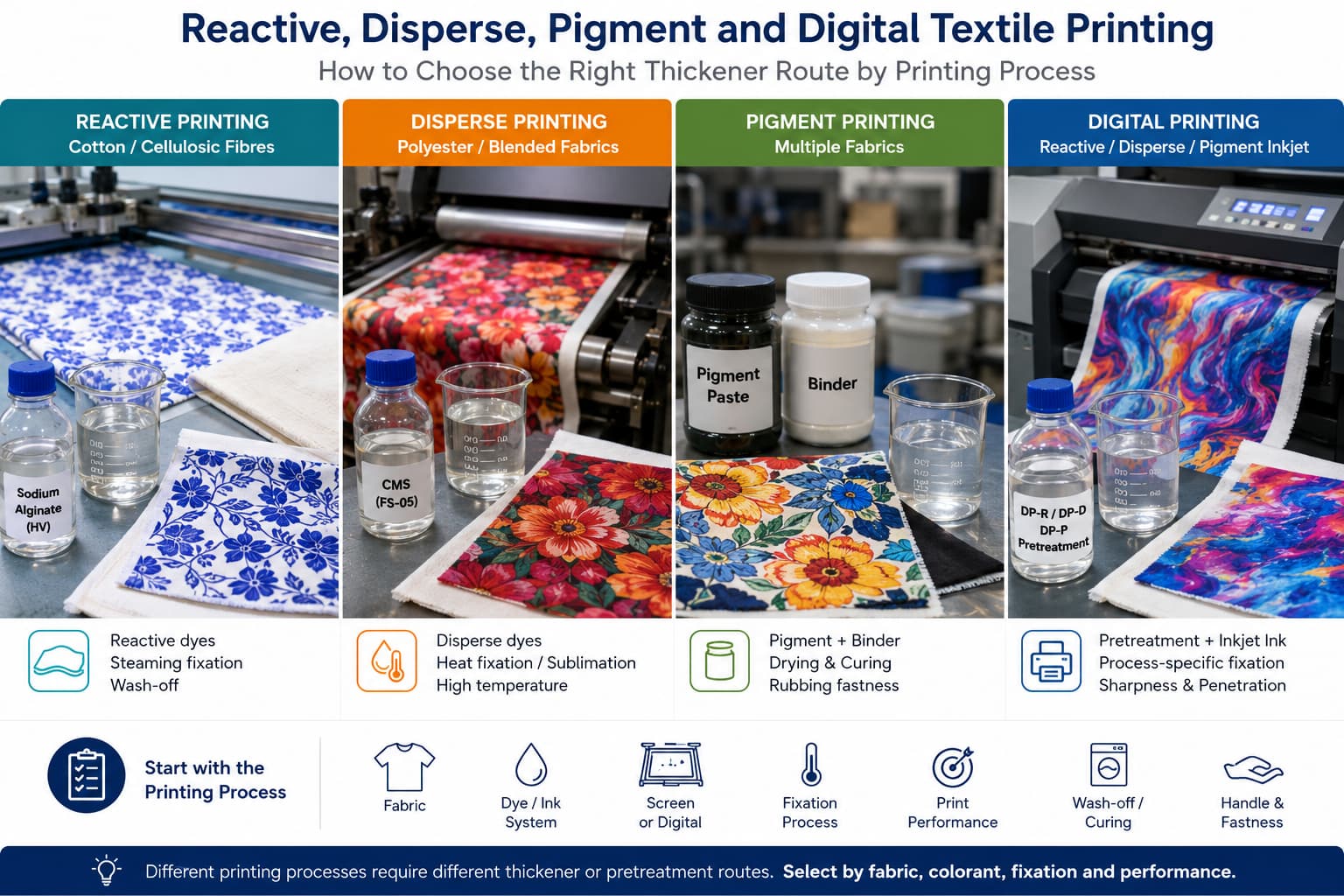
Coarser grades (around 30 mesh) can be used in screen printing paste applications where dissolution time is not a constraint and where the preparation process includes adequate mixing time and temperature for complete hydration. Finer grades offer faster dissolution but require careful powder addition to avoid lump formation.
Digital Pre-Treatment: Different Requirements
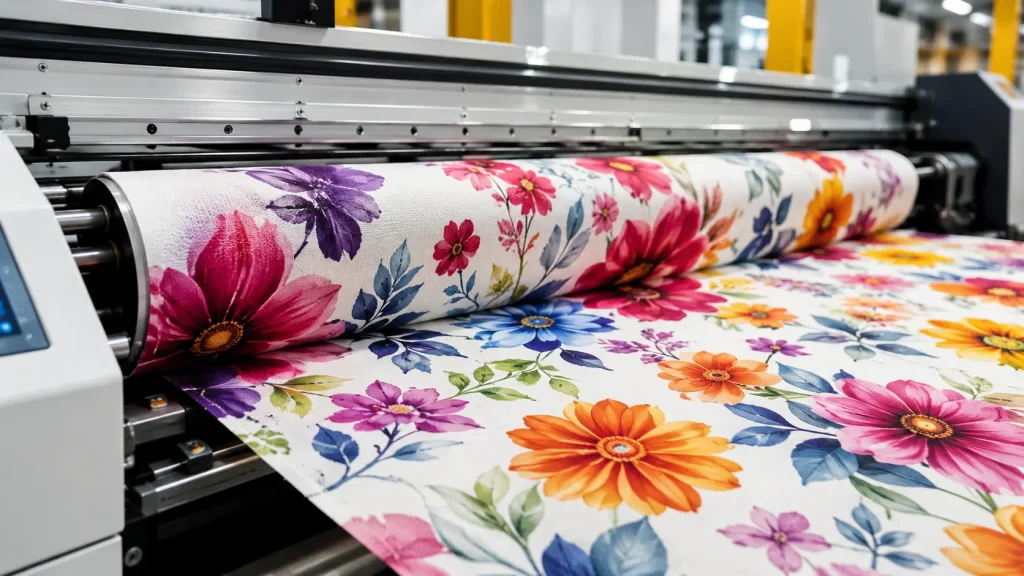
Additionally, in spray application systems, any undissolved particles can block spray nozzles. Finer mesh grades reduce this risk by dissolving more completely at the lower concentrations used in pre-treatment formulations.
Sizing Applications
Other Specifications That Matter More Than Mesh Alone
Mesh size is one specification parameter among several, and for most textile printing applications it is not the most critical one. When evaluating sodium alginate grades, these parameters typically have a greater impact on paste performance:
Viscosity Grade
Viscosity — measured as a percentage solution at a defined temperature — directly determines paste body and rheology. Selecting the right viscosity grade for your application is the most important specification decision. A correctly chosen viscosity grade at the right concentration will give you the paste behavior you need; mesh size fine-tunes how quickly that grade dissolves in your preparation process.
Polymer Molecular Weight and Condition
Polymer molecular weight and degradation history strongly influence viscosity and flow behavior. Confirm the viscosity method, storage condition and lot consistency; sodium alginate should not be specified using the degree of substitution parameter applied to cellulose or starch derivatives.
Purity and Solubility
Purity — including residual sodium chloride content — affects ionic strength in the paste and can influence dye-fiber interaction during fixation. Solubility specification (often expressed as water-insoluble content) is directly relevant to paste quality and is a more meaningful indicator of dissolution completeness than mesh size alone.
What to Confirm with Your Supplier About Particle Size
When discussing mesh size with a sodium alginate supplier, the following questions are worth confirming:
- What mesh classification does this grade carry, and what sieve standard was used to determine it?
- Is particle size measured by sieve analysis or laser diffraction, and what is the D50 or D90 value if available?
- What dissolution method is recommended for this mesh grade (cold water, warm water, mixing time)?
- Does the supplier have data on dissolution completeness at your target concentration and mixing conditions?
Frequently Asked Questions
Does a higher mesh number mean higher sodium alginate viscosity?
No. Mesh number describes particle-size classification. Fully hydrated viscosity depends on polymer characteristics, concentration, temperature, preparation and measurement method.
Does finer sodium alginate always dissolve better?
Not automatically. Finer particles may hydrate faster, but rapid surface wetting can form lumps if powder addition and agitation are poorly controlled.
How should mesh size be written in a purchasing specification?
State the sieve or particle-size test method, applicable standard, mesh or opening and percentage passing or retained. Do not rely on an isolated mesh number.
Is degree of substitution a sodium alginate specification?
No. Degree of substitution is used for derivatives such as CMC or CMS. Sodium alginate should be evaluated through its own composition, viscosity, purity, moisture, dissolution and application parameters.
Which tests matter more than mesh size for printing approval?
Use method-controlled viscosity, rheology, hydration, filtration, complete-paste stability, screen or machine trials, print definition, wash-off and batch comparison.
How FSX Chemical Supports Your Grade Selection
Next steps:
Contact Our Technical Team — for paste preparation troubleshooting or mesh grade comparison support
Request a Sample — run dissolution and paste preparation trials before bulk ordering
Ask for Grade Matching — share your mixing conditions, application, and any dissolution problems for a specific recommendation: Service@fsxchemical.com