













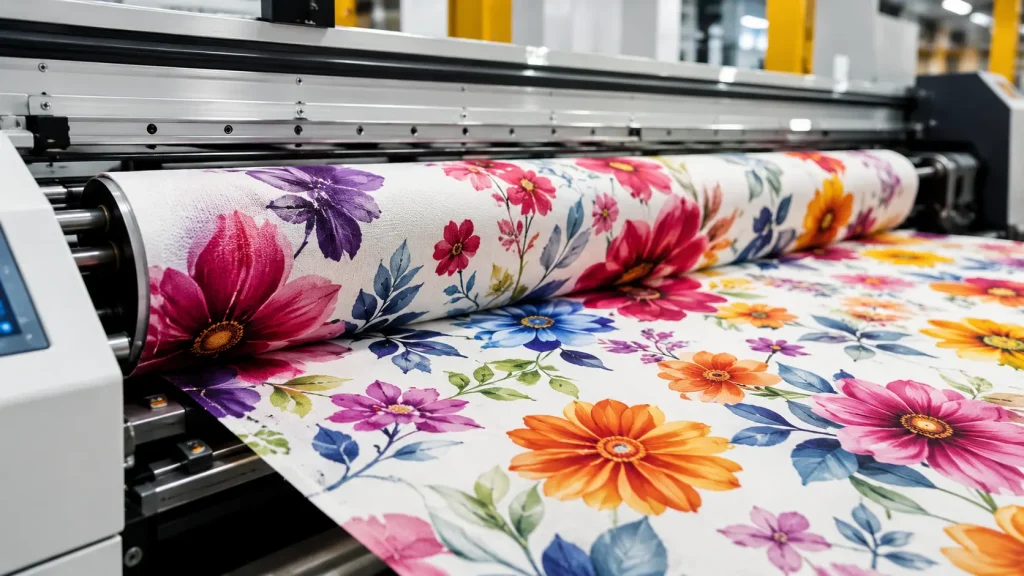
For reactive dye printing on cotton or viscose, sodium alginate is usually the lower-risk starting thickener because it has low reactivity toward reactive dyes and generally good wash-off. Guar gum may be considered in pigment printing or in selected modified and blended systems, but raw guar is not a universal 1:1 substitute for sodium alginate.
Choose between them by dye system first, then compare rheology, paste stability, print definition, penetration, color yield, wash-off and total cost in use. A lower powder price or a similar viscosity value does not prove equivalent printing performance.
Sodium Alginate vs Guar Gum: Quick Decision Table
| Decision factor | Sodyum aljinat | Guar gum or derivative |
|---|---|---|
| Reaktif baskı | Common starting route for cotton and viscose | Raw guar is not a default 1:1 replacement; modified grades require testing |
| Pigment baskı | Possible but not normally selected for dye-inertness alone | Can be considered with the binder and pigment system |
| Chemical compatibility | Low reactivity toward many reactive dyes under normal process conditions | Depends strongly on modification, formulation and dye system |
| Reoloji | Grade-dependent flow and screen release | Often efficient viscosity development; flow profile must be measured |
| Wash-off and handle | Generally favorable in reactive printing | Residue and handle must be checked on the actual fabric |
| Cost decision | Evaluate use level, yield and production consistency | Lower powder cost may not equal lower cost in use |
| Replacement approval | Use as the reference where already qualified | Approve only after laboratory and production trials |
Because viscosity labels are not standardized between suppliers, use the same method described in our textile thickener viscosity comparison guide.
What Guar Gum Is and How It Is Used in Textile Printing
Origin and Basic Chemistry
Guar gum is a polysaccharide derived from the endosperm of the guar bean (Cyamopsis tetragonoloba), cultivated primarily in India and Pakistan. It is a galactomannan — a polymer of mannose and galactose units — which gives it different chemical properties from sodium alginate, a polyuronic acid derived from seaweed.
Guar gum is water-soluble and forms viscous solutions at relatively low concentrations, which makes it an efficient thickener on a weight basis. It is widely used in food, cosmetics, oil drilling, and paper industries, and has been used in textile printing paste — particularly in pigment printing — as a cost-effective thickener alternative.
Where Guar Gum Is Used in Textile Printing
Guar gum is most commonly used in pigment printing paste, where it functions as a thickener and rheology modifier alongside binders and fixatives. It is also used in some discharge printing formulations and as a component in blended thickener systems.
Guar gum is less commonly used as the primary thickener in reactive dye printing — the reasons for this are discussed in the dye compatibility section below. Its primary advantage over sodium alginate is cost: guar gum is generally less expensive per unit weight, which has driven its adoption in cost-sensitive markets, particularly for pigment printing applications where its chemical limitations in reactive dye systems are not relevant.
Dye System Compatibility: The Most Important Differentiator
Sodium Alginate in Reactive Dye Systems
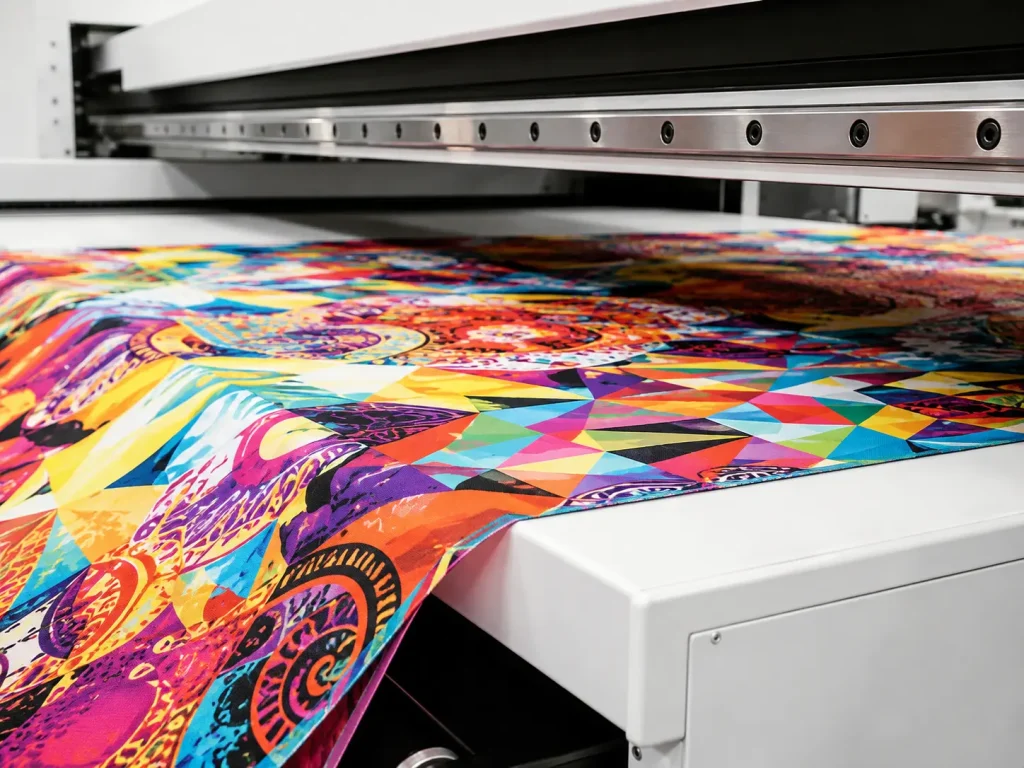
Sodium alginate is the industry-standard thickener for reactive dye printing on cotton and cellulosic fabrics precisely because of its chemical inertness under the alkaline fixation conditions used in reactive printing. Sodium alginate does not react with reactive dyes during steaming, preserving all of the dye in the paste for fiber fixation. This low reactivity helps keep more dye available for fiber fixation. Actual color yield still depends on the dye, alkali, fabric, steaming, wash-off and complete paste formulation, so the result must be confirmed by a controlled print trial.
Guar Gum in Reactive Dye Systems
Guar gum’s performance in reactive dye printing is more limited than sodium alginate’s. Guar gum contains hydroxyl groups that can react with reactive dyes under alkaline steaming conditions — the same reaction mechanism by which reactive dyes bond to cellulose fiber. When this reaction occurs, the thickener competes with the fiber for dye molecules, reducing the amount of dye available for fiber fixation and lowering color yield.
Additionally, guar gum can undergo hydrolytic degradation under alkaline conditions — the glycosidic bonds in the polymer chain are susceptible to alkali-catalyzed hydrolysis, which reduces molecular weight and viscosity over time in an alkaline paste. This degradation is accelerated at elevated temperature, which means that guar gum paste containing alkali loses viscosity more rapidly during storage and during the steaming stage than sodium alginate paste under comparable conditions.
The practical result is that guar gum in reactive dye printing typically produces lower color yield, less stable paste viscosity, and potentially poorer wash fastness (due to lower fixation rate) compared to sodium alginate at comparable concentration. For these reasons, sodium alginate is the technically preferred choice for reactive dye printing, and guar gum is generally not recommended as a direct substitute in reactive dye systems.
Guar Gum in Pigment Printing
In pigment printing, where fixation occurs through a binder film rather than a chemical reaction with the fiber, the dye-thickener reactivity issues that limit guar gum in reactive systems are not relevant. Guar gum can function effectively as a thickener in pigment printing paste, providing adequate viscosity and paste body for screen application.
For pigment printing where cost is a primary consideration and reactive dye performance is not required, guar gum or guar gum derivatives offer a cost-effective thickener option. However, compatibility with the specific binder system and fixative used in your formulation should be confirmed through trial before switching thickeners.
Rheology and Viscosity Behavior
Shear-Thinning Behavior
Both sodium alginate and guar gum are pseudoplastic (shear-thinning) polymers — their viscosity decreases under applied shear and recovers when shear is removed. This shear-thinning behavior is desirable in printing paste because it allows the paste to flow readily under squeegee pressure but hold position on the fabric after transfer.
The degree of shear-thinning and the rate of viscosity recovery differ between the two polymers. Sodium alginate tends to show good viscosity recovery after shear, which contributes to sharp pattern definition in screen printing. Guar gum also shows shear-thinning behavior, but the recovery profile differs and may affect paste behavior differently on different screen types and at different printing speeds.
Concentration Efficiency
Guar gum is a more efficient thickener than sodium alginate on a weight basis — it produces higher viscosity at lower concentration. This concentration efficiency is one of the economic arguments for guar gum: less material is needed per unit of paste to achieve a given viscosity, which partially offsets its lower unit cost advantage over sodium alginate.
However, concentration efficiency alone is not a sufficient basis for thickener selection in reactive dye printing. The chemical compatibility and stability issues discussed above mean that even at lower concentration, guar gum in reactive dye paste may produce inferior color yield and fastness compared to sodium alginate.
Viscosity Stability Over Time and Temperature
Sodium alginate paste maintains viscosity more reliably over time under alkaline conditions than guar gum paste. The alkaline hydrolysis susceptibility of guar gum means that paste viscosity drops more quickly after alkali addition, and more dramatically at higher temperatures.
For production environments where paste is prepared in advance and used over extended periods — or where ambient temperature is high — this difference in stability is practically significant. Sodium alginate paste in alkaline conditions typically maintains workable viscosity for longer than comparable guar gum paste, reducing the frequency of paste replenishment and the risk of shade variation caused by viscosity change during a production run.
Washout Behavior and Post-Printing Processing
Sodium Alginate Washout
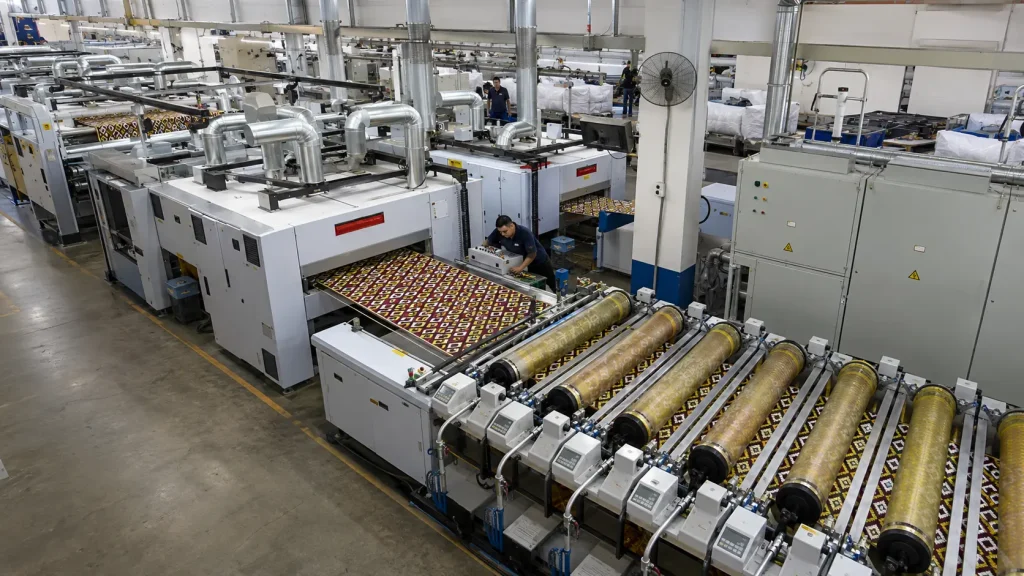
Sodium alginate is water-soluble and washes out readily from fabric in hot water without requiring enzymatic or chemical assistance. The washing-off stage for reactive dye printing — hot wash with soaping agent, followed by cold rinse — removes sodium alginate efficiently, leaving the fabric clean and free of thickener residue.
Efficient washout of the thickener is important for achieving target wash fastness, because residual thickener on the fabric surface can trap unfixed dye and cause it to release during subsequent washing by the end consumer. Sodium alginate’s clean washout behavior supports consistent wash fastness performance.
Guar Gum Washout
Guar gum is also water-soluble and washes out in hot water, though it can be somewhat more difficult to remove completely than sodium alginate in some fabric and washing conditions. In heavy paste deposits or on fabrics with tight construction, incomplete guar gum removal during washing-off can affect handle and may leave a slight residue affecting fabric surface properties.
For most standard washing-off conditions, guar gum removes adequately. If incomplete removal is observed in your process, extending hot wash time or temperature before evaluating a thickener change is the appropriate first step.
Cost Considerations: When the Economics Favor Each Option
When Guar Gum Is Cost-Effective
Guar gum is generally less expensive than sodium alginate on a per-kilogram basis, and its higher thickening efficiency means less is needed per batch. In pigment printing applications where chemical compatibility with reactive dyes is not a concern, guar gum can offer a genuine cost reduction without meaningful performance disadvantage — provided compatibility with your specific binder and fixative system is confirmed through trial.
Guar gum pricing is subject to significant fluctuation due to its dependence on Indian and Pakistani agricultural production, which is affected by monsoon conditions and competing demand from food and industrial uses. In years of poor guar harvest, prices can increase substantially, which has driven some operations to switch to sodium alginate as a more stable-priced alternative.
When Sodium Alginate Is the Right Choice Regardless of Cost
For reactive dye printing on cotton and cellulosic fabrics, sodium alginate is the technically correct thickener choice. The color yield advantage of sodium alginate over guar gum in reactive systems typically outweighs the raw material cost difference — lower dye efficiency with guar gum means more dye is needed to achieve the same color depth, which increases dye cost and partially or fully offsets the thickener cost saving.
For operations where color consistency and wash fastness to specification are non-negotiable requirements — for example, export orders to buyers with specific fastness standards — the risk of performance variability with guar gum in reactive systems is an additional cost consideration beyond the simple per-kilogram price comparison.
Guar Gum Derivatives: Modified Options Worth Considering
Hydroxyethyl Guar and Other Derivatives
Chemically modified guar gum derivatives — including hydroxyethyl guar (HEG) and hydroxypropyl guar (HPG) — have been developed to address some of the performance limitations of native guar gum. These derivatives have modified hydroxyl group chemistry that reduces their reactivity with reactive dyes and improves their stability in alkaline conditions compared to unmodified guar gum.
Some modified guar gum products are used as thickeners in reactive dye printing, particularly in markets where cost is a primary concern and where the performance gap versus sodium alginate is considered acceptable for the specific application. If you are evaluating modified guar gum as an alternative to sodium alginate, the same trial process applies as for any thickener switch — comparative paste trials with color yield and fastness measurement under your standard production conditions.
Blended Thickener Systems
Some printing operations use blended thickener systems combining sodium alginate with guar gum derivatives, aiming to achieve a balance of performance and cost. In these blends, sodium alginate provides the chemical inertness and color yield contribution, while the guar gum component contributes additional viscosity at lower cost.
Blended systems require careful formulation — the ratio of components, compatibility in the paste, and behavior under steaming conditions all need to be validated through trial. The performance of a blend is not simply the average of its components; interaction effects between thickeners and with other paste components can produce unexpected results in either direction.
Summary: Which Thickener for Which Application
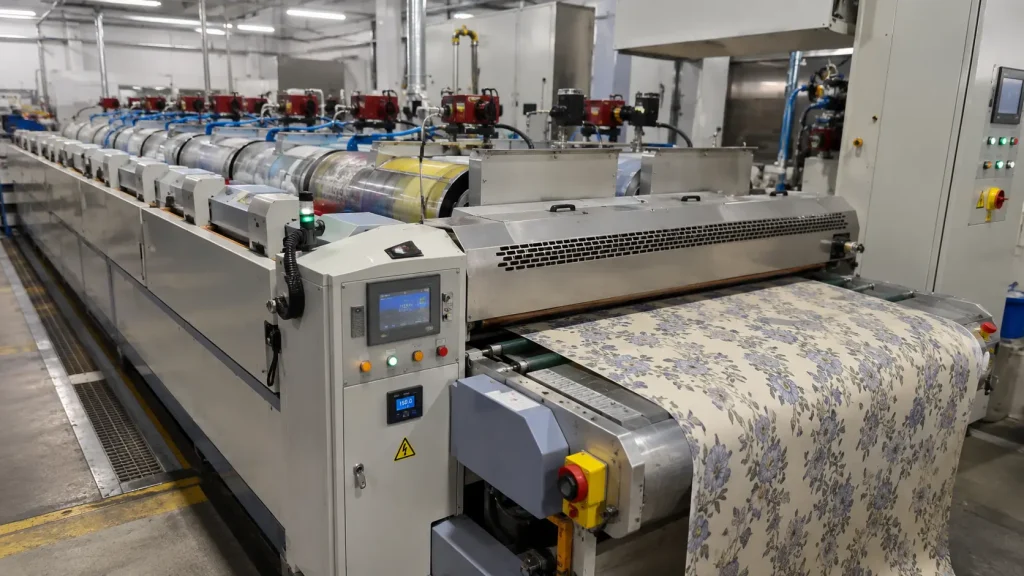
- Reactive dye printing on cotton and cellulosic fabrics → Sodium alginate is the technically preferred choice. Guar gum is not recommended as a direct substitute due to dye reactivity and alkaline stability issues.
- Pigment baskı → Either sodium alginate or guar gum (or derivatives) can be used; selection based on cost, binder compatibility, and paste stability requirements. Trial recommended before switching.
- Digital pre-treatment → Sodium alginate at low concentration; guar gum derivatives may be used in some pre-treatment systems but confirm compatibility with your inkjet ink system.
- Cost reduction in reactive dye printing → Evaluate carefully; the dye cost increase from lower fixation with guar gum may offset thickener cost savings. Trial with color yield and fastness measurement before adopting.
Replacement Test Protocol
- Keep fabric, dye or pigment, auxiliaries, water quality and fixation conditions unchanged.
- Record concentration, temperature, instrument, spindle, speed and hydration time for every viscosity result.
- Compare flow, screen release, penetration, outline sharpness and paste stability.
- Measure color yield, wash-off, fabric handle and residue after the same fixation and washing process.
- Calculate total cost from workable use level, corrections, rework and batch consistency—not powder price alone.
Sık Sorulan Sorular
Can guar gum replace sodium alginate 1:1 in reactive printing?
It should not be assumed. Raw guar, modified guar and blended products behave differently. Match the viscosity method, then verify dye compatibility and printing results before selecting a replacement ratio.
Which thickener is cheaper?
Powder price alone cannot answer this. Compare the workable concentration, color yield, paste stability, wash-off, correction time and rejected fabric risk.
Does the same viscosity mean the same printing performance?
No. Equal viscosity can still produce different shear response, penetration, outline sharpness, stability and wash-off. Use one test method and one printing recipe for qualification.
How FSX Chemical Supports Your Thickener Evaluation
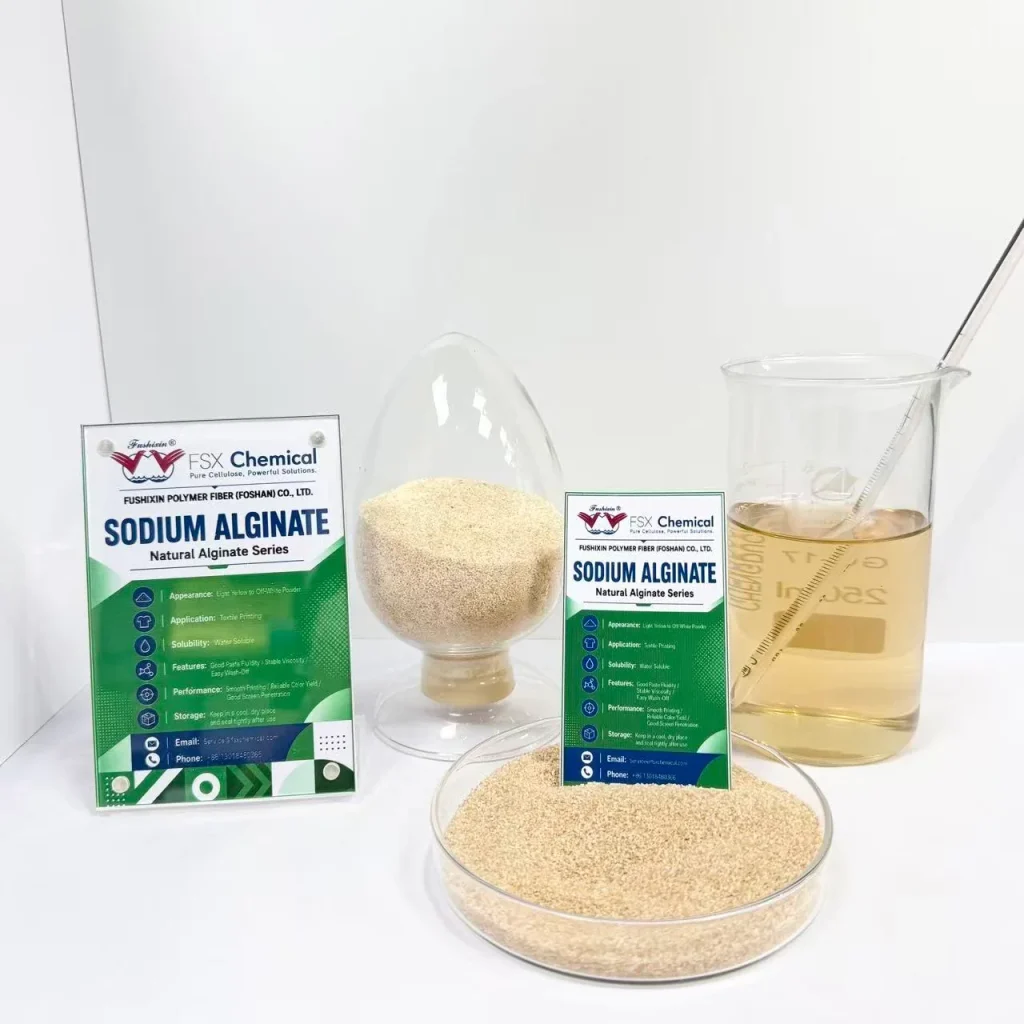
FSX Chemical supplies sodium alginate for reactive dye and pigment textile printing applications. If you are evaluating sodium alginate as an alternative to guar gum or another thickener, we can provide samples for comparative paste trials alongside technical datasheets for grade selection.
Our technical team can assist with formulation guidance for switching from guar gum to sodium alginate — including concentration adjustment recommendations, dissolution method, and paste stability considerations for your specific dye system and production conditions.
Sonraki adımlar:
- TDS Talep Et — review sodium alginate grade specifications for your target application
- Örnek İsteyin — run comparative paste trials against your current guar gum formulation
- Not Eşleştirme Talebinde Bulunun — share your dye system, fabric type, and current paste parameters for a specific recommendation
- Teknik Ekibimizle İletişime Geçin — for formulation support when switching from guar gum or other thickeners📧 E-posta: Service@fsxchemical.com