Cặn alginate natri còn lại sau khi giặt: Tại sao vải in phản ứng lại có cảm giác thô ráp sau khi giặt
Properly washed sodium alginate should normally leave little permanent thickener film. When reactive printed fabric...
Sodium alginate is widely used in reactive textile printing partly because, after proper fixation and washing, the thickener film can normally be removed cleanly and leave a soft fabric handle. When a reactive printed fabric feels harsh after washing, however, the cause is not automatically “too much alginate” or a poor alginate grade. Residual paste can come from incomplete wash-off, calcium-induced insoluble alginate, high thickener dosage, insufficient rinsing, retained salts and alkali, hydrolyzed reactive dye, or a combination of these factors. This guide explains how textile mills can identify the real residue source, distinguish sodium alginate from calcium alginate problems, and optimize washing without changing the thickener blindly.
Why Sodium Alginate Normally Supports a Soft Handle
Sodium alginate is a water-soluble alginate salt widely used as a benchmark thickener for conventional reactive dye printing on cotton, viscose and other suitable cellulosic fabrics.
One of its practical advantages is that the thickener film can normally be removed effectively after fixation.
That matters because a reactive printing thickener is not intended to remain as a permanent polymer film on the fabric.
After printing, drying and steaming, the washing stage should remove:
Sodium alginate thickener
Unfixed and hydrolyzed reactive dye
Residual alkali
Muối
Urea or other soluble auxiliaries where used
When these materials are removed sufficiently, the fabric should recover a handle close to the underlying textile rather than retain a heavy dried-paste film.
Research on reactive printing thickeners specifically notes that sodium alginate film is readily washed out after dye fixation and that effective hydrocolloid removal supports a soft fabric handle.
Therefore, persistent harshness should trigger a root-cause investigation rather than an assumption that sodium alginate inherently makes the fabric stiff.
Why Harsh Fabric Does Not Automatically Mean “Bad Alginate”
“Harsh hand” is a finished-fabric symptom, not a chemical diagnosis.
The same symptom can be created by several different causes:
Residual sodium alginate
Insoluble calcium alginate
Excess paste deposit
Residual salt or alkali
Hydrolyzed reactive dye left on the surface
Insufficient washing temperature or time
Low water exchange
Inadequate soaping
Fabric construction that traps paste more strongly
Changing the sodium alginate grade before identifying the residue source can hide the real process problem.
Even normal water-soluble sodium alginate can remain on fabric if the washing process does not provide enough:
Nước
Nhiệt độ
Mechanical exchange
Time
Bath renewal
The dried thickener film must first rehydrate before it can leave the fabric.
Problems are more likely when:
The paste deposit is very heavy.
The fabric is thick or highly absorbent.
The first rinse is overloaded with dissolved paste.
Wash liquor is not renewed sufficiently.
Production speed is increased without adjusting washing capacity.
A useful diagnostic is simple:
If an additional controlled hot rewash makes the fabric clearly softer, incomplete removal is likely contributing to the problem.
This does not yet prove whether the remaining material was alginate, dye or salts, but it establishes that the original washing process was incomplete.
2. Calcium Alginate: A Different Wash-Off Problem
Calcium contamination creates a more serious alginate-removal problem.
Sodium alginate is water-compatible, while calcium ions can crosslink alginate chains and form much less soluble calcium-alginate structures.
This changes the problem from:
“A soluble thickener was not washed long enough”
to:
“Part of the thickener may have been converted into a difficult-to-dissolve calcium form.”
Possible symptoms include:
Persistent harsh hand after normal washing
Soft or translucent gel residue
Filter or screen gel particles before printing
White or dull surface deposits
Fabric that improves only slightly with simple water rewashing
Material that must later be rehydrated and washed away
However, comparing only concentration can be misleading because two alginate grades with different molecular weights may require different dosages to reach similar printing rheology.
The correct comparison is:
Required Dosage → Screen Rheology → Printed Deposit → Color Yield → Wash-Off → Finished Hand
A lower-dose high-viscosity grade can sometimes reduce the mass of hydrocolloid that must later be removed.
But this benefit should be proven on fabric rather than assumed from viscosity.
6. Drying and Steaming Can Change Wash-Off Difficulty
The printed paste goes through drying and fixation before washing.
These stages affect:
Film structure
Moisture distribution
Dye migration
Alkali activation
Final residue condition
Excessive or uncontrolled drying can create a harder dried paste layer that takes longer to rehydrate.
Inadequate steaming can leave more unfixed dye and increase the washing burden.
Overly aggressive thermal conditions can also alter fabric hand independently from the thickener.
Therefore, if wash-off suddenly becomes difficult, confirm that drying and steaming conditions did not change.
What Should a Reactive Print Washing Sequence Accomplish?
A successful washing process has several jobs:
Rehydrate and remove the printing thickener.
Remove soluble salts, alkali and auxiliaries.
Remove hydrolyzed and unfixed reactive dye.
Prevent removed dye from redepositing on clean areas.
Restore the intended fabric hand.
The exact sequence varies with:
Dye class
Shade depth
Fabric construction
Machine type
Chất lượng nước
Tốc độ sản xuất
Do not copy one universal wash recipe from another mill.
Instead, validate the minimum washing sequence that consistently delivers:
Clean background
Required fastness
No paste residue
Acceptable hand
Why the First Rinse Matters
The first rinse removes a high concentration of readily soluble material from the fabric.
At this stage the bath can quickly accumulate:
Alginat
Salt
Alkali
Hydrolyzed dye
If the bath becomes overloaded, the concentration gradient driving removal decreases.
Practical control points include:
Fresh-water exchange
Counter-current washing where equipment allows
Fabric speed
Liquor movement
Bath contamination
A weak first rinse pushes more residue burden into later hot-wash and soaping stages.
Why Hot Washing and Soaping Matter
Hot washing helps remove remaining water-soluble paste components and improves the removal of unfixed reactive dye.
Soaping or detergent-assisted washing is particularly important for deeper shades and for removing surface dye that would otherwise reduce wet fastness or stain adjacent areas.
The mill should monitor:
Wash temperature
Residence time
Detergent/soaping chemistry
Water exchange
Fabric loading
The goal is not maximum washing severity.
The goal is complete enough removal at the lowest stable water, energy and chemical cost.
Water Hardness During Washing
Hard water matters not only during paste preparation.
It can also matter during wash-off.
If free calcium contacts residual sodium alginate on the fabric, less-soluble calcium-alginate structures can form or persist.
This can make the thickener harder to remove precisely at the stage where the mill is trying to wash it away.
For unexplained harshness, compare:
Make-up water hardness
First-rinse water hardness
Hot-wash water hardness
Calcium concentration where available
Water-treatment performance
Do not assume that softened color-kitchen water guarantees softened wash water throughout the line.
Fabric Construction, Absorbency and Residue Retention
The same paste and washing sequence can behave differently on different fabrics.
Potentially important variables include:
Cotton vs. viscose
Woven vs. knitted construction
Fabric weight
Yarn twist
Surface hairiness
Absorbency
Printed coverage
A heavy, absorbent or hairy fabric can physically retain more paste than a smooth lightweight fabric.
Large solid printed areas also carry more dried paste than fine-line designs.
When investigating harsh hand, compare equivalent design coverage and fabric construction.
The Fastest Diagnostic: Controlled Rewash Test
A controlled rewash is one of the fastest ways to determine whether removable residue is contributing to harshness.
Step 1: Take One Harsh Production Sample
Keep an unwashed reference piece.
Step 2: Rewash Under Controlled Conditions
Use appropriately controlled low-hardness water and the mill’s normal hot-wash/soaping chemistry.
Step 3: Dry Without Extra Finishing
Do not add softener during diagnosis because it can hide the residue problem.
Step 4: Compare
Đánh giá:
Hand feel
Surface residue
Color loss
Background staining
Wash liquor color
If hand improves strongly, the original washing process did not fully remove soluble or rehydratable residue.
If hand does not improve much, investigate calcium alginate, thermal damage, fabric finish or another non-washable cause.
How to Check Whether Calcium Is the Real Problem
Use several pieces from the same printed fabric.
Compare washing with:
Plant water
Controlled soft/DI water
The mill’s approved sequestering system where technically justified
Keep temperature, time and detergent conditions constant.
Sau đó, hãy so sánh:
Tay
Residue
Surface appearance
Water extraction
If low-hardness water produces a much cleaner and softer result, calcium/hardness should be investigated before changing alginate grade.
Also examine the upstream paste for gel particles or elevated filter residue, because calcium problems can begin before printing.
How to Compare Two Sodium Alginate Grades for Wash-Off
To compare grades fairly, use:
Same Fabric → Same Dye → Same Alkali/Auxiliaries → Matched Printing Rheology → Same Screen → Same Drying → Same Steaming → Same Washing
Then evaluate:
Parameter
Tại sao điều này lại quan trọng
Required alginate dosage
Determines hydrocolloid solids applied
Định nghĩa về in ấn
Confirms rheology remains suitable
K/S after washing
Confirms color performance
Residual film
Direct wash-off indicator
Vải dệt tay
Finished textile acceptance
Water/energy required
Commercial wash-off cost
Do not reduce alginate dosage only to obtain a softer hand if print definition and color yield become unacceptable.
The goal is a balanced operating window.
Troubleshooting Harsh Hand After Washing
Vấn đề được ghi nhận
Các biến cần kiểm tra trước tiên
Đừng vội kết luận
Fabric becomes much softer after rewash
Original rinse/hot-wash/soaping efficiency
Alginate grade is automatically wrong
Harshness remains after repeated normal washing
Ca²⁺, insoluble residue, thermal/fabric causes
More water alone will solve it
Gel-like residue is visible
Water hardness, calcium contamination, paste filtration
It is simply undissolved powder
Dark shade feels harsher than light shade
Paste deposit, dye load, wash-off burden
One alginate behaves differently by color without formula effect
White ground stains during washing
Hydrolyzed dye, bath contamination, soaping
Alginate residue is the only cause
Hand worsens after seasonal water change
Hardness, Ca²⁺, wash-line water source
Alginate manufacturing changed
Good lab wash-off, poor production wash-off
Water exchange, fabric speed, load, bath contamination
The lab result proves wash-line capacity
Production QC for Wash-Off Consistency
A useful production record can include:
Sodium alginate batch
Alginate dosage
Paste viscosity and method
Fabric lot
Printed coverage / shade depth
Steaming conditions
Wash-line speed
Wash temperatures
Độ cứng của nước
Conductivity where relevant
Soaping/detergent dosage
Final hand reference
When harshness appears, this record helps separate:
Raw Material Variation
from:
Water / Washing / Formula / Process Variation.
Total Cost in Use: Washing Is Part of Thickener Cost
A sodium alginate grade should not be evaluated only from price per kilogram.
Bao gồm:
Alginate dosage
Paste preparation
Printing efficiency
Hấp
Water consumption
Hot-wash energy
Soaping chemicals
Rewash
Softener used to mask harshness
Vải bị loại
A useful framework is:
Total Cost in Use = Alginate + Printing + Steaming + Washing + Rewash + Quality Loss
A grade that costs slightly more but achieves the required rheology at a lower dosage and washes away more predictably may be commercially better.
A lower-priced grade may still be the better choice if its dosage, wash-off and finished handle are equivalent.
The answer should come from the complete production trial.
What Information Should You Send to a Sodium Alginate Supplier?
If reactive printed fabric feels harsh after washing, send:
Current sodium alginate TDS/sample
Alginate concentration and dosage
Độ nhớt và phương pháp thử nghiệm toàn diện
Reactive dye class and shade depth
Complete or simplified paste formula
Fabric composition and construction
Screen route and printed coverage
Drying and steaming conditions
Wash sequence
Wash temperatures and line speed
Water hardness / Ca²⁺ where available
Soaping chemistry
Whether controlled rewash improves the hand
Visible residue, gel particles or filter observations
FSX Chemical có thể sử dụng thông tin này thông qua Mẫu và việc kết hợp to determine whether the next trial should focus on sodium alginate grade, dosage, water quality or wash-off conditions.
How Should a Mill Diagnose Harsh Hand After Reactive Printing?
Properly washed sodium alginate should normally leave little thickener residue and support a soft handle.
Harsh hand is a symptom, not proof of poor sodium alginate quality.
Calcium can convert water-compatible sodium alginate into much less soluble calcium alginate.
Hydrolyzed dye, salt, alkali and other paste chemicals also increase the washing burden.
Thickener dosage and printed deposit determine how much material must later be removed.
The final judge is the washed fabric after the complete production process.
Các câu hỏi thường gặp
1. Does sodium alginate make reactive printed fabric stiff?
Properly washed sodium alginate normally removes effectively and should not create a permanent binder-like film. Persistent stiffness usually requires investigation of wash-off, calcium, dosage and other paste residues.
2. Why does reactive printed fabric still feel harsh after washing?
Possible causes include incomplete alginate removal, calcium alginate, residual salts/alkali, hydrolyzed dye, excessive paste deposit or insufficient washing.
3. What is calcium alginate residue?
Calcium ions can ionically crosslink sodium alginate and form much less water-soluble calcium-alginate structures that are harder to wash from the textile.
4. Can hard water make sodium alginate difficult to wash off?
Yes. Calcium in hard water can promote less-soluble alginate structures, so both paste-preparation water and washing water should be controlled.
5. How can I tell whether the harshness is caused by incomplete washing?
Run a controlled rewash using low-hardness water and the normal hot-wash/soaping process. A strong improvement in hand indicates removable residue contributed to the original problem.
6. Can hydrolyzed reactive dye affect wash-off?
Yes. Hydrolyzed and unfixed dye must be removed during washing and soaping. Excess hydrolysis increases wash-water color and can worsen staining and fastness.
7. Does using more sodium alginate make wash-off harder?
A higher alginate deposit means more hydrocolloid must be removed, but the correct dosage also depends on rheology and print quality. Optimize total performance rather than minimizing dosage alone.
8. Should I use a softer-water supply only for paste preparation?
Not necessarily. If the washing line uses hard water, calcium can still contact residual alginate during wash-off. Check water quality across the whole process.
9. Can a sequestering agent solve calcium-related wash-off problems?
It can help in selected processes, but compatibility with dyes, alkali, washing chemistry and wastewater requirements should be validated before routine use.
10. Why does a dark shade feel harsher than a light shade?
Darker prints often have higher dye and paste loading and therefore a larger wash-off burden. Compare printed deposit, formula and washing efficiency.
11. Should I change sodium alginate grade if the fabric feels harsh?
Not before checking rewash response, water hardness, paste dosage, steaming and washing. Change grade only when controlled trials show the alginate route is part of the root cause.
12. What should I send FSX Chemical for wash-off troubleshooting?
Send the current alginate TDS/sample, dosage, viscosity method, reactive dye and formula, fabric, steaming, wash sequence, water hardness and whether additional rewash improves the hand.
Reduce Sodium Alginate Wash-Off Residue with Controlled Testing
If your reactive printed fabric feels harsh after washing, FSX Chemical can help determine whether the problem is caused by sodium alginate dosage, calcium contamination, incomplete wash-off or another part of the printing process.
When reactive printed fabric feels harsh after washing, do not ask only “Which sodium alginate is softer?” Ask instead: what residue remains, why did it remain, and which combination of alginate dosage, calcium control and washing process removes it consistently?
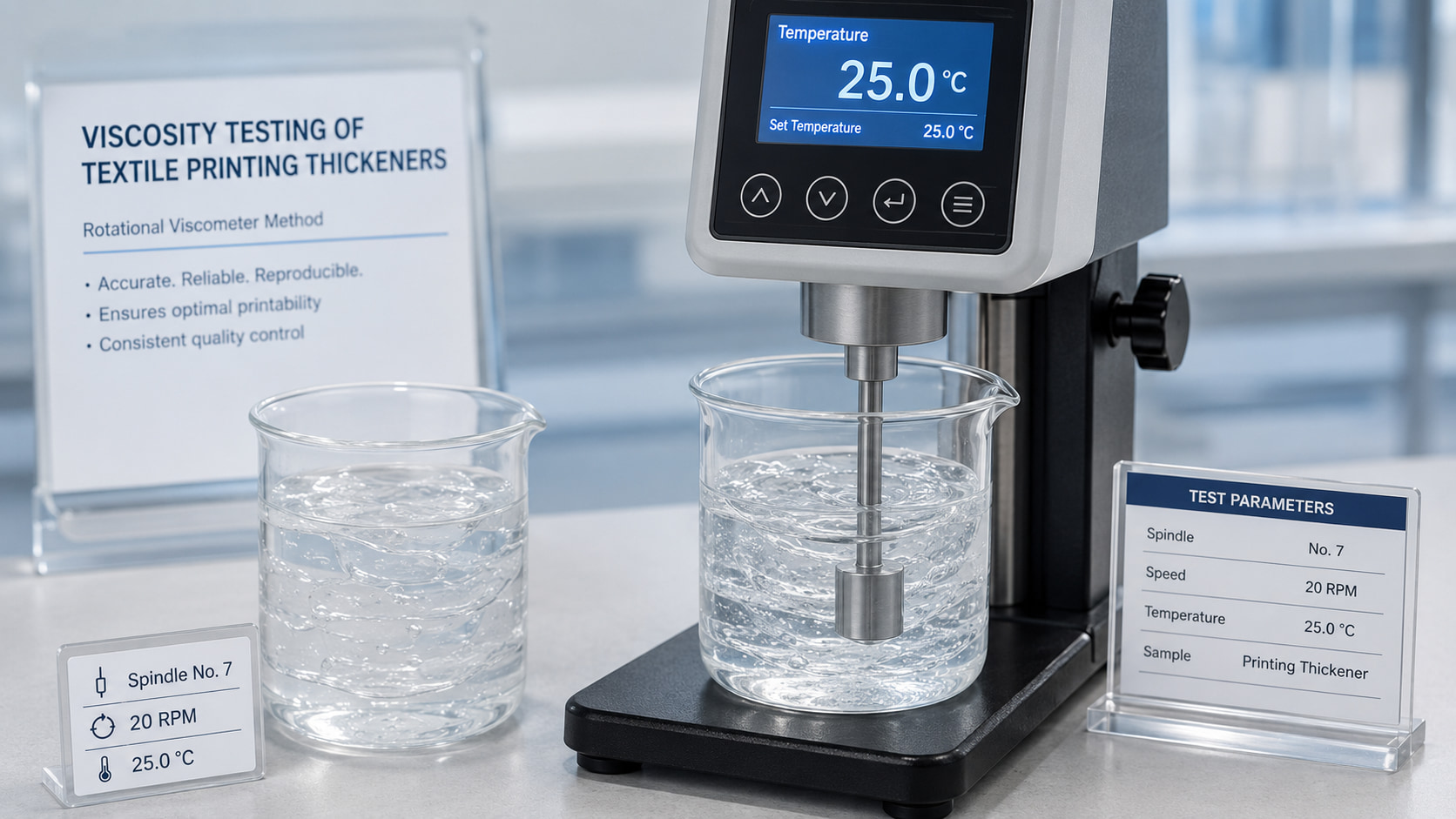
Tìm hiểu lý do tại sao không thể so sánh các giá trị độ nhớt của chất làm đặc trong in ấn dệt may nếu không đảm bảo các yếu tố như nồng độ, nhiệt độ, thiết bị, trục quay, tốc độ, phương pháp chuẩn bị và thời gian thử nghiệm đều giống nhau.
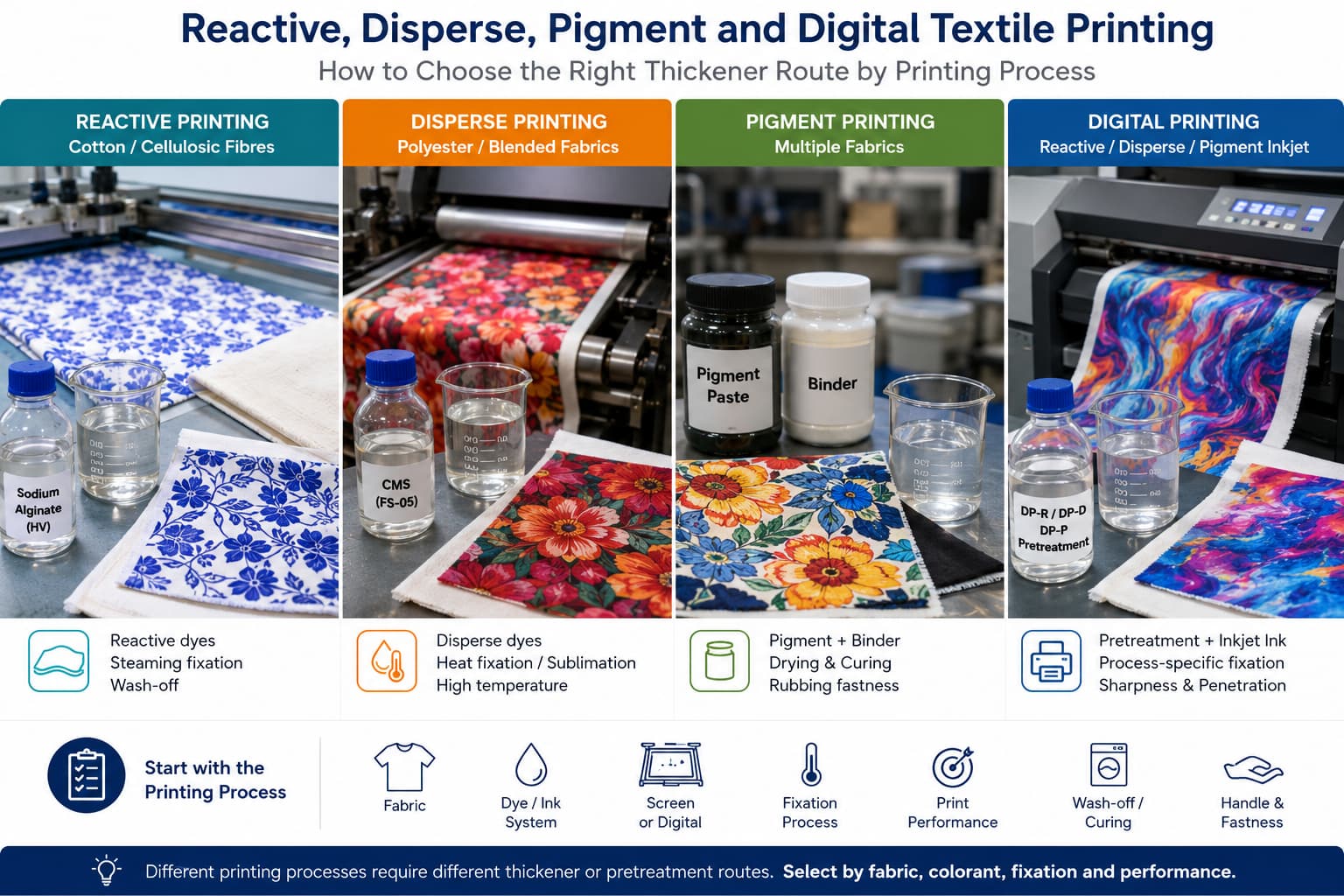
Tìm hiểu cách lựa chọn chất làm đặc và quy trình tiền xử lý cho các phương pháp in dệt phản ứng, in phân tán, in sắc tố và in kỹ thuật số, dựa trên các yêu cầu về vải, thuốc nhuộm hoặc mực in, quá trình cố định màu, khả năng rửa trôi và chất lượng in.
So sánh CMC, CMS, natri alginat và mực in kỹ thuật số trong in ấn dệt may. Tìm hiểu cách thức từng loại nguyên liệu phù hợp với các quy trình in phản ứng, in phân tán, in sắc tố và in kỹ thuật số, cũng như những yếu tố mà người mua cần xem xét trước khi thử mẫu, đối chiếu chất lượng và mua số lượng lớn.
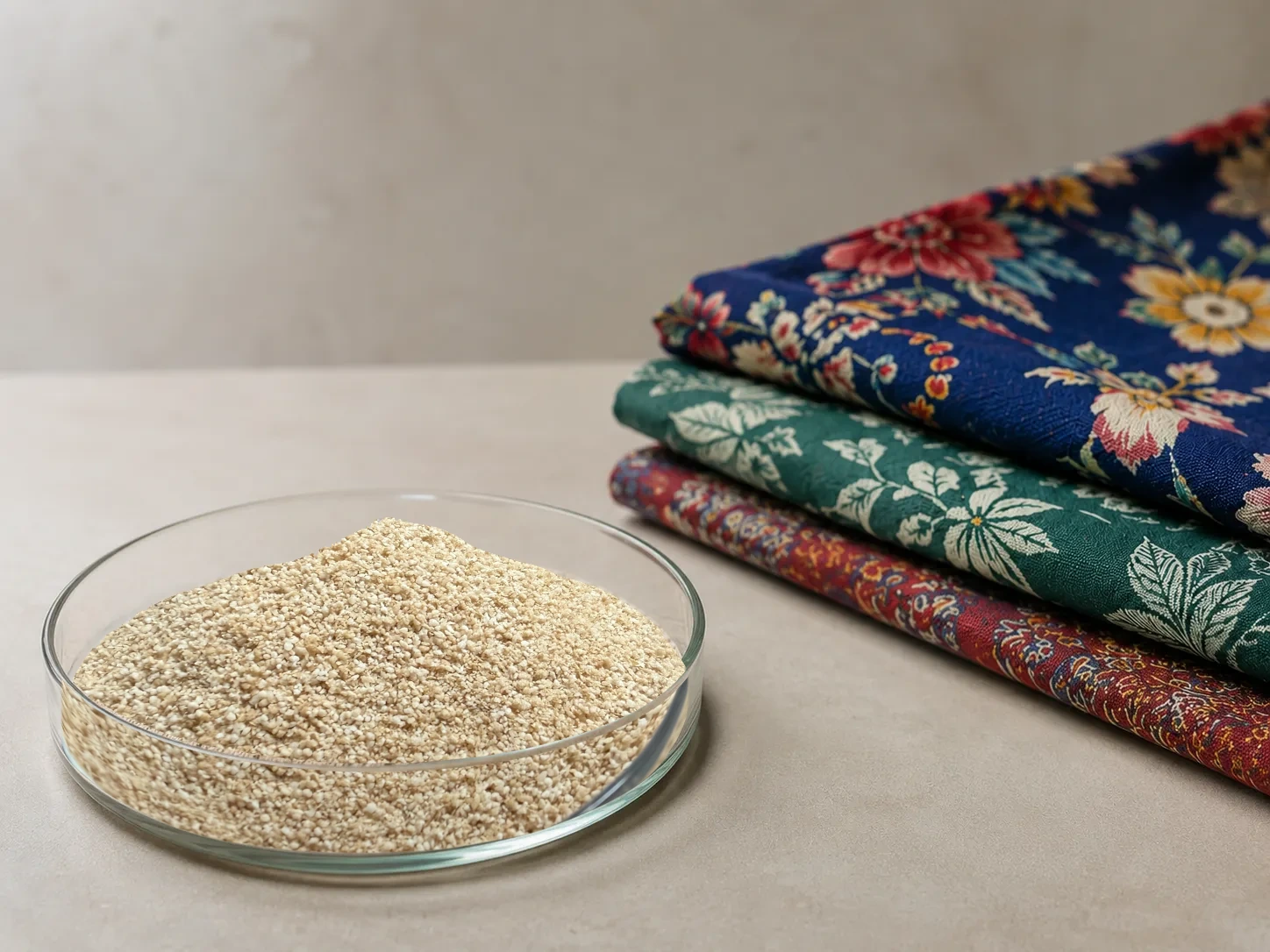
Natri alginat được sử dụng rộng rãi trong in ấn dệt may với vai trò là chất làm đặc ổn định và có thể giặt được cho hỗn hợp in phản ứng. Tìm hiểu cách đánh giá cấp độ độ nhớt, độ tinh khiết và tính phù hợp trong ứng dụng trước khi mua hàng, cũng như cách FSX Chemical hỗ trợ người mua trên toàn cầu thông qua dữ liệu kỹ thuật và mẫu sản phẩm.
Cả natri alginat và CMC đều được sử dụng làm chất làm đặc trong in vải, nhưng chúng phù hợp với các hệ thống thuốc nhuộm và điều kiện quy trình khác nhau. Hướng dẫn này giải thích những điểm khác biệt chính và thời điểm nên sử dụng từng loại.
In phun kỹ thuật số trên vải có các yêu cầu về hỗn hợp mực và xử lý sơ bộ khác so với in lụa. Hướng dẫn này giải thích cách sử dụng natri alginat trong in kỹ thuật số trên vải cũng như các thông số về cấp độ chất lượng mà các đội ngũ mua hàng cần quy định.
Việc chuẩn bị hỗn hợp dán đúng cách cũng quan trọng không kém việc lựa chọn loại thuốc nhuộm trong in vải bằng thuốc nhuộm phản ứng. Hướng dẫn này đề cập đến các phương pháp hòa tan natri alginat, phạm vi nồng độ tùy theo mục đích sử dụng, điều kiện bảo quản, cũng như cách khắc phục các sự cố thường gặp trong quá trình chuẩn bị.
Assess sodium alginate in reactive-printing wastewater using measured COD load, product-specific biodegradation evidence and controlled process comparisons. Includes a buyer checklist and illustrative load calculation.
Tỷ lệ cố định thuốc nhuộm ảnh hưởng trực tiếp đến hiệu suất màu, độ bền màu khi giặt và lượng chất thải trong quá trình in bằng thuốc nhuộm phản ứng. Hướng dẫn này giải thích cách natri alginat hỗ trợ quá trình cố định thuốc nhuộm, các thông số của hỗn hợp thuốc nhuộm nào ảnh hưởng đến tỷ lệ cố định, cũng như cách khắc phục tình trạng tỷ lệ cố định thấp trong quá trình sản xuất.
Kích thước hạt (mesh) của natri alginat ảnh hưởng đến tốc độ hòa tan của bột, mức độ đồng đều khi ngậm nước, cũng như hiệu quả của hỗn hợp in trong quá trình in lụa. Hướng dẫn này giải thích những tác động thực tiễn của thông số mesh đối với các ứng dụng hỗn hợp in trên vải.
Evaluate sodium alginate for warp sizing through grade-specific bath, yarn and desizing trials. Compare dry size add-on, yarn protection and removal using appropriate residue methods and downstream fabric checks.
Các tiêu chuẩn về độ tinh khiết của natri alginat không chỉ gói gọn trong một con số duy nhất. Hướng dẫn này giải thích ý nghĩa của các chỉ số như hàm lượng hoạt chất, NaCl, chất không hòa tan và kim loại nặng đối với hiệu suất của bột in dệt — cũng như khi nào nên yêu cầu độ tinh khiết cao hơn so với loại tiêu chuẩn công nghiệp.
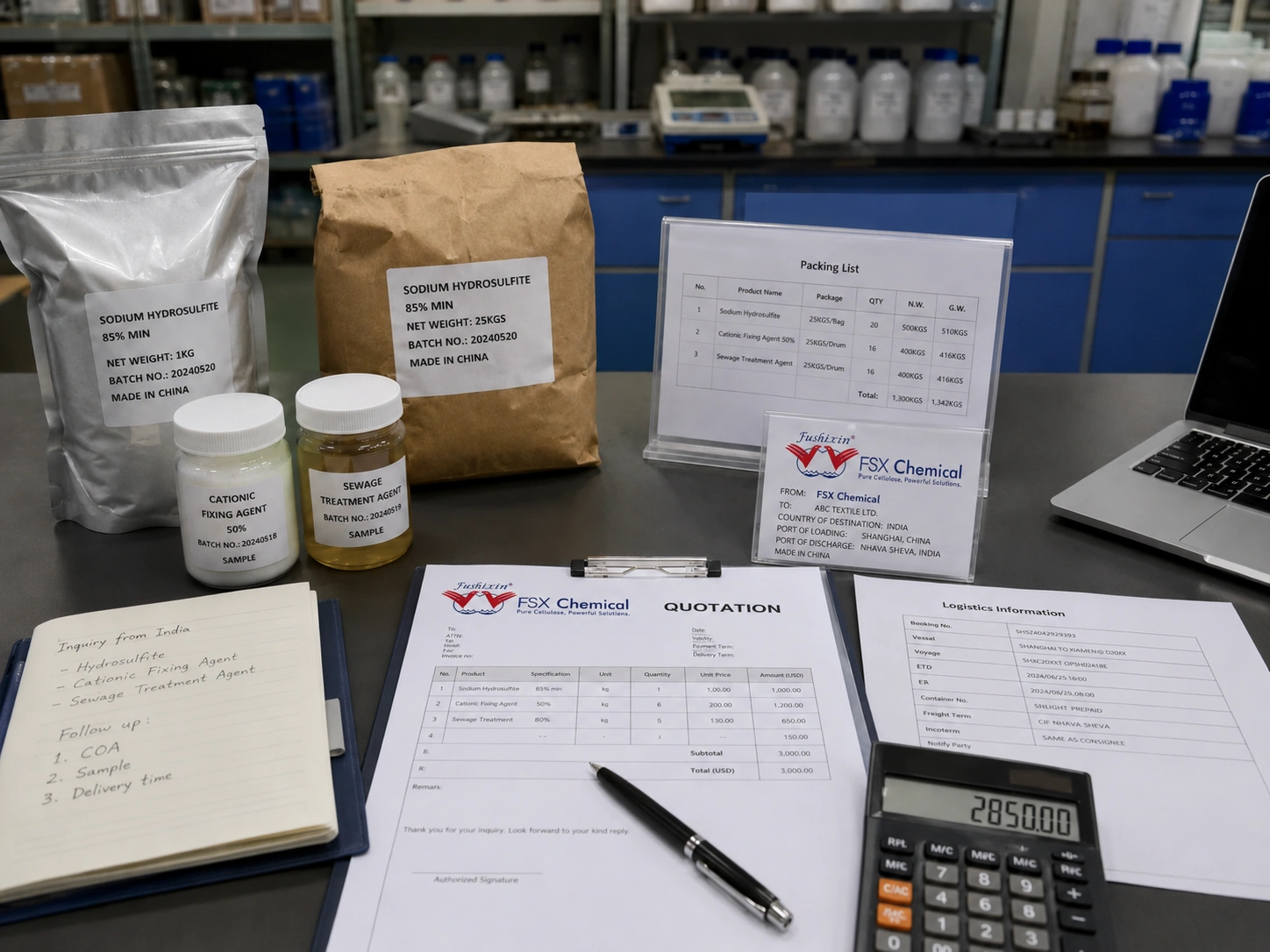
Vui lòng cung cấp tên sản phẩm, ứng dụng, số lượng, điểm đến và bất kỳ tài liệu kỹ thuật (TDS),
hình ảnh mẫu hoặc tài liệu nào mà quý khách đã có. FSX Chemical sẽ xem xét
thông tin này và đề xuất bước tiếp theo liên quan đến báo giá, đối chiếu mẫu
hoặc lựa chọn sản phẩm.
Thông tin sản phẩmTên sản phẩm, cấp loại, mẫu mã, ảnh nhãn mác hoặc mã tham chiếu của nhà cung cấp.
Các tài liệu có sẵnTDS, SDS, COA, ảnh mẫu, danh mục sản phẩm hoặc dữ liệu thử nghiệm.
Chi tiết đơn hàngSố lượng dự kiến, hình thức đóng gói, nước nhập khẩu, cảng hoặc điều kiện thương mại.
Yêu cầu hoặc Vấn đềQuy trình in trên vải, yêu cầu về công thức, vấn đề hiện tại hoặc chỉ tiêu hiệu suất.