قارن بين أفضل 3 مواد مكثفة لطباعة المنسوجات من حيث التكلفة والأداء
The cheapest textile printing thickener is not necessarily the lowest-cost option in production. This guide...
Choosing a textile printing thickener by price per kilogram can lead to the wrong purchasing decision. Sodium alginate, CMC and CMS can differ substantially in effective dosage, rheology, filtration, print definition, dye compatibility and downstream processing. This guide compares the three routes from both technical and commercial perspectives, with one objective: identifying the technically suitable thickener that delivers the required printing result at a competitive total cost in use.
Why Thickener Cost Cannot Be Compared by Price per Kilogram Alone
For a purchasing manager, comparing textile printing thickeners may initially appear simple: obtain quotations for sodium alginate, carboxymethyl cellulose and carboxymethyl starch, compare the price per kilogram and select the cheaper material.
In actual textile production, this calculation is incomplete.
A printing thickener is not purchased simply to create viscosity in water. Its purpose is to control the complete printing paste during preparation, storage, transfer to the fabric, printing, fixation and washing. Two products with different prices can therefore generate very different production economics.
A practical comparison should include:
سعر المنتج المُسلَّم
Effective thickener dosage
Stock-paste concentration
وقت الترطيب
Mixing requirements
فقدان الترشيح
ثبات المعجون
مقطع من الشاشة
Printing speed and continuity
تعريف الطباعة
الاختراق
معدل إنتاج الألوان
Fixation performance
Wash-off behavior
Cleaning frequency
فترة توقف الماكينة
نفايات المعجون
Rejected or reprocessed fabric
This is why a lower product price does not automatically mean a lower production cost.
The more useful purchasing question is:
Which technically suitable thickener achieves the required printing performance at the lowest stable total cost in use?
Quick Comparison: Sodium Alginate, CMC and CMS
Three polysaccharide-based routes are frequently evaluated in textile printing: sodium alginate, CMC and CMS. They should not be treated as universally interchangeable products. Each material family contains multiple grades, and the behavior of a commercial grade depends on its manufacturing specifications and the complete printing formulation.
منطقة المقارنة
ألجينات الصوديوم
CMC
CMS
Polymer origin
Alginate derived from brown algae
Cellulose-derived polymer
Starch-derived polymer
Typical evaluation position
Common benchmark for conventional reactive printing
Candidate for selected textile printing and compound systems
Candidate for selected disperse, specialty and compound systems; selected reactive applications require validation
Important grade variables
Viscosity, concentration, rheology, hydration and filtration
DS, viscosity, concentration, hydration, electrolyte response and filtration
Viscosity efficiency, hydration, filtration, paste stability and formulation compatibility
تقييم التكاليف
Compare benchmark reliability with actual dosage and processing cost
Compare effective dosage and complete-paste performance, not price alone
Often evaluated where formulation economics are important, but actual cost advantage must be demonstrated in trials
Replacement logic
Often used as the reference product
Not a universal 1:1 substitute for sodium alginate
Not a universal 1:1 substitute for sodium alginate
Best decision method
Standardized laboratory comparison followed by printing, fixation/washing and production validation
The table provides a starting point, not a universal ranking. The correct decision changes with the dye system, fabric, printing equipment, paste recipe and production target.
1. Sodium Alginate: The Reactive Printing Benchmark
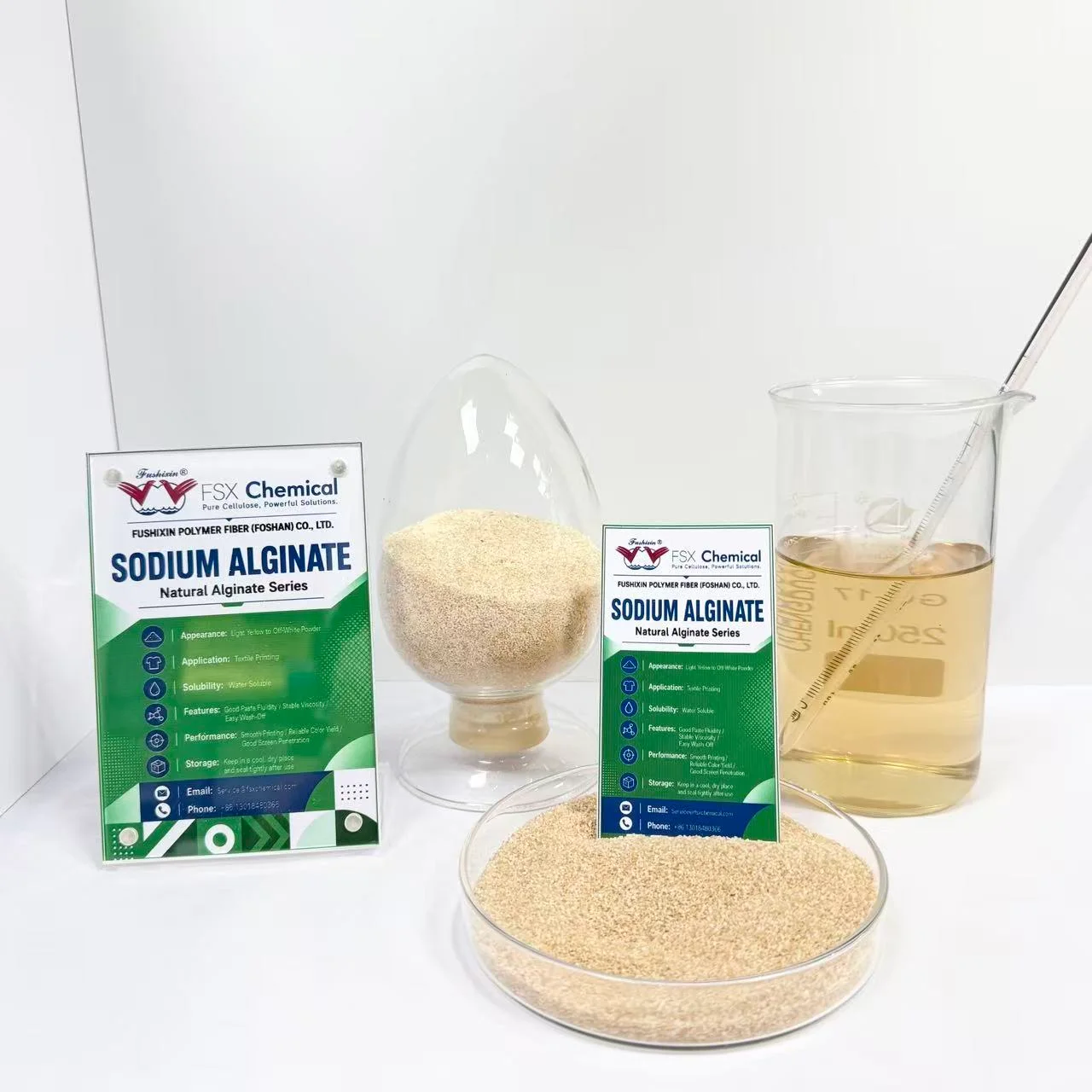
ألجينات الصوديوم remains an important reference thickener in conventional reactive printing on suitable cellulosic fabrics.
Its value is not simply that it produces a high viscosity. Buyers usually evaluate sodium alginate because of the overall balance it can provide in an established reactive printing process.
Where Sodium Alginate Can Offer Strong Value
Conventional reactive printing on cotton and suitable cellulosic fabrics
Production lines where the existing recipe has already been optimized around alginate
Applications where print definition and controlled penetration are critical
Operations where predictable fixation and wash-off are important
Factories that prefer a proven benchmark before testing alternative thickener routes
For a factory with a stable sodium alginate process, changing to another polymer only because its quotation is lower may create hidden costs. A new thickener can change paste rheology, screen behavior, color development, penetration or washing requirements.
What Buyers Should Compare Between Sodium Alginate Grades
The words “high viscosity,” “medium viscosity” or “low viscosity” are not sufficient specifications by themselves.
Request the supplier’s test conditions, including:
Polymer concentration used for viscosity testing
جودة المياه
إجراءات الترطيب
درجة حرارة الاختبار
Viscometer type
Spindle or rotor
سرعة الدوران
الوقت اللازم للقراءة
A 1% viscosity result cannot be compared directly with a 2% result, and even two values measured at the same concentration can be misleading if the instruments or measurement conditions differ.
Cost Consideration
Sodium alginate should therefore be evaluated as a production benchmark rather than classified automatically as either the cheapest or most expensive option.
If an established alginate provides consistent printing with low waste, good screen performance and predictable washing, its higher purchase price relative to another candidate may still produce a competitive total production cost.
2. CMC: A Flexible Route for Selected Printing Systems
كاربوكسي ميثيل السليلوز (CMC) is a cellulose-derived water-soluble polymer available in a wide range of viscosity and substitution levels.
In textile applications, CMC should be selected by commercial grade rather than simply by polymer name. Two CMC products can behave differently because of differences in degree of substitution, molecular characteristics, purity, hydration and salt response.
Important CMC Selection Parameters
Degree of substitution (DS)
Viscosity and test concentration
معدل الترطيب
Solution uniformity
الترشيح
استجابة الشوارد
Shear behavior
Complete-paste compatibility
For selected textile printing systems, CMC can be evaluated as part of a cost-performance optimization project or as a component of a compound thickener formulation.
However, this does not mean that a CMC grade with the same measured viscosity as sodium alginate will automatically deliver the same printing result.
Where CMC Can Become Commercially Interesting
CMC becomes worth evaluating when a buyer is trying to improve one or more of the following:
Effective formulation cost
كفاءة اللزوجة
Paste preparation
Rheology control
Selected electrolyte-response requirements
Compound-thickener formulation flexibility
Supplier diversification
The technically correct approach is to identify a candidate grade and test it in the buyer’s real formulation rather than promise a universal sodium alginate replacement.
This distinction matters commercially. A cheaper CMC that requires a substantially higher dosage or produces more filtration loss may provide no real saving. Conversely, a properly selected CMC grade or compound system can be commercially attractive when the dosage and printing performance are optimized for the specific process.
3. CMS: A Cost-Performance Candidate for Selected Applications
نشا الكربوكسي ميثيل (CMS) is a starch-derived polymer that can be evaluated in selected textile printing and compound-thickener systems.
Its potential should be assessed using the complete printing formula rather than by comparing dry-powder price or stock viscosity alone.
Important CMS Evaluation Points
كفاءة اللزوجة
الترطيب
الترشيح
ثبات المعجون
مقطع من الشاشة
الجرعة الفعالة
Dye-system compatibility
تعريف الطباعة
Finished fabric performance
CMS can be commercially interesting in selected disperse printing, specialty printing and compound-thickener systems. Selected reactive systems can also be investigated, but they require formulation-specific validation.
This is particularly important because thickener performance can be dye-dependent. A system that works well with one dye or recipe may behave differently after the dye concentration or chemistry changes.
CMS and Compound Thickener Systems
CMS can also be evaluated as one component in a compound formulation.
A compound system may combine different rheology-control components to target a balance between:
اللزوجة الأساسية
الترقق تحت تأثير القص
التعافي الهيكلي
الترشيح
Paste holding stability
تعريف الطباعة
تحمل الإلكتروليتات
Cost in use
This does not mean that a compound product is automatically better than a single-polymer thickener. It simply provides another formulation route when one polymer alone does not achieve the required balance.
Why the Same Viscosity Does Not Mean the Same Printing Performance
This is one of the most important principles when comparing textile printing thickeners:
Same viscosity does not mean the same printing performance.
Viscosity is only one measurable property of a printing paste.
Consider three thickener solutions that all produce a laboratory reading of 20,000 mPa·s under a specific test method. They can still behave differently during printing because their flow curves, shear response and structural recovery may not be the same.
During actual printing, the paste experiences different shear conditions as it moves through pumps, pipes, screens, squeegees and the fabric surface.
Performance can therefore differ in:
Flow under shear
Recovery after shear
إصدار الشاشة
تحديد الخطوط الدقيقة
حدة الحواف
الاختراق
تجانس المساحة الصلبة
Paste holding stability
Polymer chemistry also affects interactions with dyes, salts, alkalis, binders and other auxiliaries.
For this reason, viscosity should be treated as a controlled QC parameter, not as the sole predictor of production performance.
How to Calculate Total Cost in Use
Price per kilogram is still relevant, but it should be placed inside a larger cost model.
Step 1: Calculate the Direct Thickener Cost
The first calculation is straightforward:
Direct Thickener Cost = Product Price × Effective Dosage
Consider this simplified illustration. The figures below are hypothetical and are not market quotations.
Candidate
Illustrative Price
Illustrative Effective Dosage per 1,000 kg Paste
Direct Thickener Cost
Grade A
USD 3.20/kg
35 kg
USD 112
Grade B
USD 2.40/kg
45 kg
USD 108
Grade C
USD 1.80/kg
60 kg
USD 108
Grade C is 43.75% cheaper per kilogram than Grade A in this illustration, but the direct thickener cost per 1,000 kg of paste is almost the same because the effective dosage is different.
This is why quotation comparison without dosage information can be misleading.
Step 2: Add Preparation Cost
تقييم:
مدة الخلط
وقت الترطيب
Energy consumption
Labor
Need for additional filtration
Undissolved material or gel loss
Step 3: Add Printing-Line Cost
Check whether the candidate changes:
Screen cleaning frequency
سرعة الآلة
Paste transfer
Printing interruptions
Foam formation
نفايات المعجون
Step 4: Add Finished-Quality Cost
A thickener should ultimately be evaluated on the finished textile, not only in the mixing tank.
Compare:
معدل إنتاج الألوان
الحدة
الاختراق
الاستواء
التثبيت
قابل للغسل
نظافة الخلفية
Fabric handle where relevant
Reject rate
Reprinting or corrective processing
A small reduction in chemical cost is not attractive if it increases rejected fabric or machine downtime.
A Better Commercial Formula
A more realistic model is:
Total Cost in Use = Delivered Product Cost + Effective Dosage Cost + Preparation Cost + Process Loss + Downtime + Washing/Cleaning Impact + Quality Loss
Not every factory needs to assign an exact monetary value to every item. Even a relative score can make supplier comparisons much more accurate.
Which Thickener Fits Which Printing Process?
The best thickener cannot be selected without first identifying the printing chemistry.
مسار الطباعة
Recommended Evaluation Logic
Conventional reactive printing
Sodium alginate is a common benchmark. CMC, CMS or compound candidates should be tested through the complete paste, printing, fixation and washing sequence.
الطباعة المتفرقة
Focus on paste stability, filtration, screen passage, transfer, solid-area uniformity, print definition and thermal fixation. Do not automatically apply reactive-printing selection rules.
الطباعة الصبغية
Evaluate the thickener together with binder and pigment-dispersion chemistry, including compatibility, rheology, curing and fabric handle.
Digital textile processes
Evaluate the exact digital route separately. Pretreatment rheology, filtration, fabric wetting, ink control and machine requirements can differ significantly from conventional screen-printing paste.
الطباعة التفاعلية
For conventional reactive printing, the comparison should include:
لزوجة اللصق الكامل
علم الريولوجيا
توافق الأصباغ التفاعلية
مقطع من الشاشة
تحديد الخطوط الدقيقة
Solid-area performance
الاختراق
التثبيت
قابل للغسل
نظافة الخلفية
A candidate should not be approved only because the stock paste looks similar to the current sodium alginate.
الطباعة المتفرقة
For polyester disperse printing, the technical priorities change.
Important parameters can include:
ثبات المعجون
الترشيح
مقطع من الشاشة
Transfer characteristics
تجانس المساحة الصلبة
تعريف الحافة
التثبيت الحراري
الجرعة الفعالة
The thickener route that performs best in reactive cotton printing should not automatically be transferred to disperse polyester printing.
الطباعة الصبغية
Pigment printing requires another evaluation approach because the thickener operates inside a formulation containing pigment dispersion and binder.
تحقق من:
توافق المجلدات
Pigment dispersion compatibility
استجابة الشوارد
ثبات المعجون
علم الريولوجيا
تعريف الطباعة
Curing behavior
Finished fabric hand feel
Comparing pigment-printing thickeners without the actual binder system can therefore produce misleading conclusions.
How to Compare Sodium Alginate, CMC and CMS in the Laboratory
A controlled comparison is more valuable than comparing three supplier TDS sheets.
Step 1: Define the Printing Process
Identify whether the application is reactive, disperse, pigment, digital or another process.
Step 2: Define the Fabric
السجل:
Fiber composition
تركيب النسيج
Fabric preparation
Relevant pretreatment conditions
Step 3: Define the Existing Benchmark
Record the current:
الشركة المصنعة
Commercial grade
TDS
الجرعة
Viscosity test method
صيغة الطباعة
Step 4: Standardize the Laboratory Method
Use the same:
Polymer calculation basis
مصدر المياه
Mixing equipment
Powder addition procedure
مدة الخلط
وقت الترطيب
درجة الحرارة
Viscometer settings
Step 5: Compare Stock Properties
تقييم:
المظهر
اللزوجة
الترطيب
الترشيح
قيمة الرقم الهيدروجيني، عند الاقتضاء
Step 6: Compare Rheology
If equipment is available, use multi-speed viscosity measurements or a rheometer rather than relying on one single-speed viscosity value.
The objective is to understand how each paste behaves under different shear conditions.
Step 7: Prepare the Complete Printing Paste
Add the actual production chemicals, including the relevant:
Dyes or pigments
مجلد
Alkali
Salt
اليوريا
Auxiliaries
Only at this stage can formulation compatibility be evaluated properly.
Step 8: Test Holding Stability
Monitor:
Viscosity change
الفصل
الرغوة
المظهر
سلوك الترشيح
Step 9: Print the Actual Fabric
A useful test design should contain both difficult and easy printing areas, such as:
Fine lines
Sharp edges
Small details
Solid areas
Large coverage areas
Step 10: Complete the Real Post-Treatment
Depending on the process, complete the actual:
التجفيف
الطهي بالبخار
التثبيت الحراري
المعالجة
الغسيل
التشطيب
Step 11: Optimize Dosage
Do not assume that the new candidate should be used at exactly the same dosage as the current product.
Each candidate should be optimized until it reaches its technically appropriate dosage range. Only then should the commercial comparison be finalized.
Buyer Decision Matrix: Cost vs Performance
The following matrix can help purchasing and technical teams organize the decision.
Buyer Priority
What to Evaluate
Why It Matters
Lowest product price
Price plus actual dosage
Low price per kg may disappear after dosage adjustment
Stable reactive printing
Alginate benchmark plus qualified alternatives
Changing polymer chemistry can affect the complete process
Cost optimization
CMC, CMS and compound candidates where technically relevant
Alternative routes may provide useful cost-performance options after validation
Sharp patterns
Rheology, shear behavior, penetration and structural recovery
A single viscosity value cannot predict print definition
High production reliability
Filtration, screen passage, paste stability and batch consistency
Production interruptions can cost more than chemical savings
Lower total manufacturing cost
التكلفة الإجمالية أثناء الاستخدام
Includes dosage, waste, downtime, washing and reject risk
تغيير المورد
Sample-to-bulk verification
Prevents the approved laboratory sample from becoming disconnected from commercial shipments
How to Compare Textile Thickener Suppliers Correctly
A technically meaningful supplier comparison requires more than three quotations.
Ask each supplier for:
درجة تجارية دقيقة
ورقة البيانات الفنية
ورقة بيانات السلامة
Batch-specific COA or quality data where applicable
Viscosity test method
شروط التحضير الموصى بها
Recommended dosage range
Relevant application guidance
When requesting technical matching, provide the supplier with enough information to identify a relevant candidate.
Useful information includes:
Current supplier and commercial grade
TDS الحالي
Physical sample if available
Current viscosity method
الجرعة الحالية
Complete printing formula
نوع القماش
آلة الطباعة
Fixation or curing process
Current technical problem
Commercial cost target
A responsible supplier should not promise a guaranteed identical replacement based only on a product name and viscosity value.
A better approach is to select a technically relevant candidate for controlled side-by-side testing.
من العينة المعتمدة إلى الدفعة التجارية
The commercial comparison is not complete when the laboratory sample passes.
For industrial buyers, the approved sample should remain connected to the commercial product supplied later.
A practical workflow is:
Select the candidate commercial grade.
Confirm its TDS and test method.
Obtain a representative sample.
Run laboratory testing.
Complete printing and post-treatment trials.
Optimize and approve the working dosage.
Compare the commercial quotation based on the approved dosage.
Confirm the production batch specification.
Obtain batch-specific quality documentation where appropriate.
Verify the first commercial shipment against the approved benchmark.
This process reduces the risk of selecting an attractive laboratory sample that does not represent routine commercial production.
FSX Chemical supports this type of comparison through its العينات والمطابقة process.
So Which of the Top 3 Textile Printing Thickeners Offers the Best Cost and Performance?
There is no technically responsible universal ranking of sodium alginate, CMC and CMS.
For conventional reactive printing, sodium alginate remains an important benchmark and may provide a strong balance of process compatibility and production reliability.
CMC can be evaluated in selected textile printing and compound-thickener systems where its grade characteristics match the actual formulation and process requirements.
CMS can be an important candidate in selected disperse, specialty and compound systems, while selected reactive applications should be validated through complete formulation testing.
The final decision should therefore follow this sequence:
Printing Process → Fabric → Current Benchmark → Candidate Grade → Standardized Laboratory Test → Complete Paste → Printing Trial → Fixation/Washing → Dosage Optimization → Total Cost in Use
This approach prevents two common purchasing mistakes:
Choosing a product only because its price per kilogram is lower
Assuming that equal viscosity means equal production performance
The best-value thickener is the one that provides the required technical result with stable production economics under your actual factory conditions.
الأسئلة الشائعة
1. Which textile printing thickener is the cheapest?
There is no universal cheapest option. Compare delivered price together with effective dosage, preparation loss, printing stability, machine downtime, washing requirements and rejected fabric. The lowest price per kilogram may not produce the lowest total production cost.
2. Is sodium alginate better than CMC for textile printing?
Not in every application. Sodium alginate is a common benchmark for conventional reactive printing, while selected CMC grades can be evaluated in appropriate textile printing and compound-thickener systems. The correct choice depends on the printing chemistry, fabric, formulation and production conditions.
3. Can CMC replace sodium alginate 1:1?
A universal 1:1 replacement should not be assumed. CMC and sodium alginate have different polymer characteristics and rheological behavior. Candidate grades should be compared using the complete printing formula and optimized dosage.
4. Can CMS replace sodium alginate?
CMS can be evaluated in selected applications and compound systems, but it should not be treated as a universal sodium alginate substitute. Reactive printing requires particular attention to dye compatibility, fixation and finished fabric performance.
5. Does higher viscosity mean better printing performance?
No. Higher viscosity does not automatically mean better print definition or production performance. Rheology, shear response, structural recovery, filtration, dye compatibility and penetration are also important.
6. If two thickeners have the same viscosity, are they equivalent?
No. The same viscosity reading can be produced by materials with different flow behavior and formulation compatibility. Viscosity is meaningful only when concentration, water, hydration, temperature, instrument and measurement conditions are clearly defined.
7. Which thickener is best for reactive textile printing?
Sodium alginate is commonly used as a benchmark for conventional reactive printing on suitable cellulosic fabrics. Alternative CMC, CMS or compound routes should be evaluated through controlled complete-paste, printing, fixation and washing tests.
8. Which thickener should be evaluated for disperse printing?
The selection should focus on paste stability, filtration, screen passage, print definition, solid-area uniformity, thermal fixation and effective dosage. Selected CMS and compound-thickener systems can be relevant candidates, but the exact grade requires production-specific testing.
9. How should I compare quotations from three thickener suppliers?
Do not compare quotation price alone. Request the exact grade, TDS, viscosity test method, recommended dosage and representative sample. Standardize laboratory testing and compare the commercial cost only after the effective dosage has been optimized.
10. What information should I send for thickener grade matching?
Provide your current product grade or TDS, current dosage, viscosity method, printing formula, fabric, machine, fixation process, technical problem and commercial target. A physical sample of the current product can make matching more relevant.
11. How much sample is needed before changing suppliers?
The appropriate quantity depends on your laboratory and production equipment. A laboratory screening quantity may be sufficient for initial comparison, but a larger sample is normally required before an industrial machine trial. The objective is to complete both formulation and production validation before approving a supplier change.
12. What is the best way to reduce textile printing thickener cost?
Optimize total cost rather than simply purchasing a cheaper polymer. Compare effective dosage, preparation efficiency, filtration, printing stability, machine downtime, fixation, washing and reject rate. A technically stable formulation often creates more meaningful savings than a small reduction in chemical price.
Compare Your Current Textile Printing Thickener with FSX Chemical
If you are currently using sodium alginate, CMC, CMS or another textile printing thickener, FSX Chemical can help select a technically relevant candidate for controlled comparison.
For more accurate matching, send us:
Your current product TDS or commercial grade
الجرعة الحالية
Viscosity and test method
عملية الطباعة
نوع القماش
Complete or simplified printing formula
Current technical problem or cost target
طلب مطابقة الدرجات or send your current product information for a side-by-side technical evaluation.
The objective is not to replace one polymer name with another. The objective is to identify the thickener system that provides the required printing performance at a competitive and controllable total cost in use.
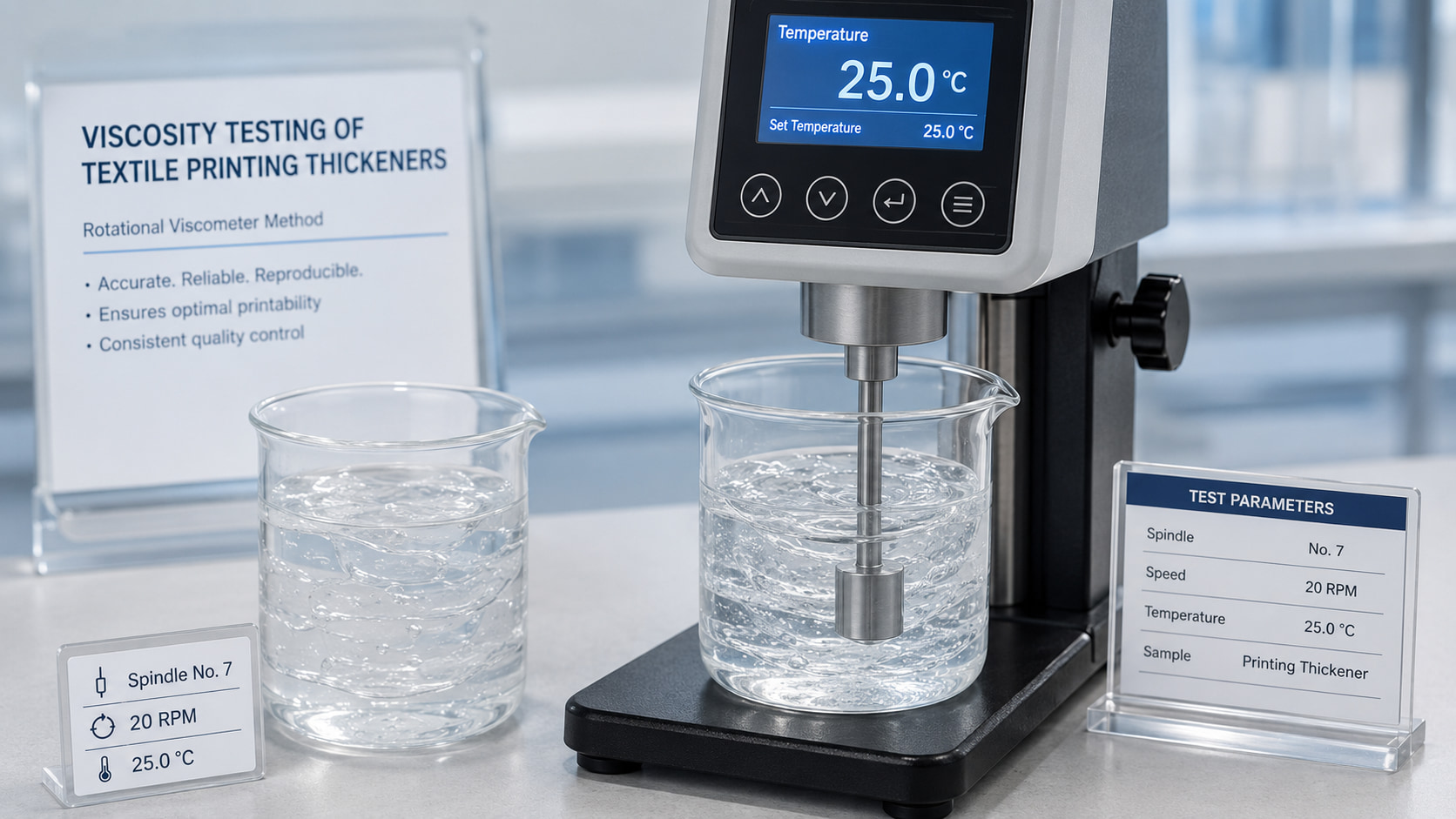
تعرف على السبب الذي يجعل من المستحيل مقارنة قيم لزوجة مكثفات الطباعة النسيجية دون مطابقة كل من التركيز، ودرجة الحرارة، والجهاز المستخدم، والمغزل، والسرعة، وطريقة التحضير، ووقت الاختبار.
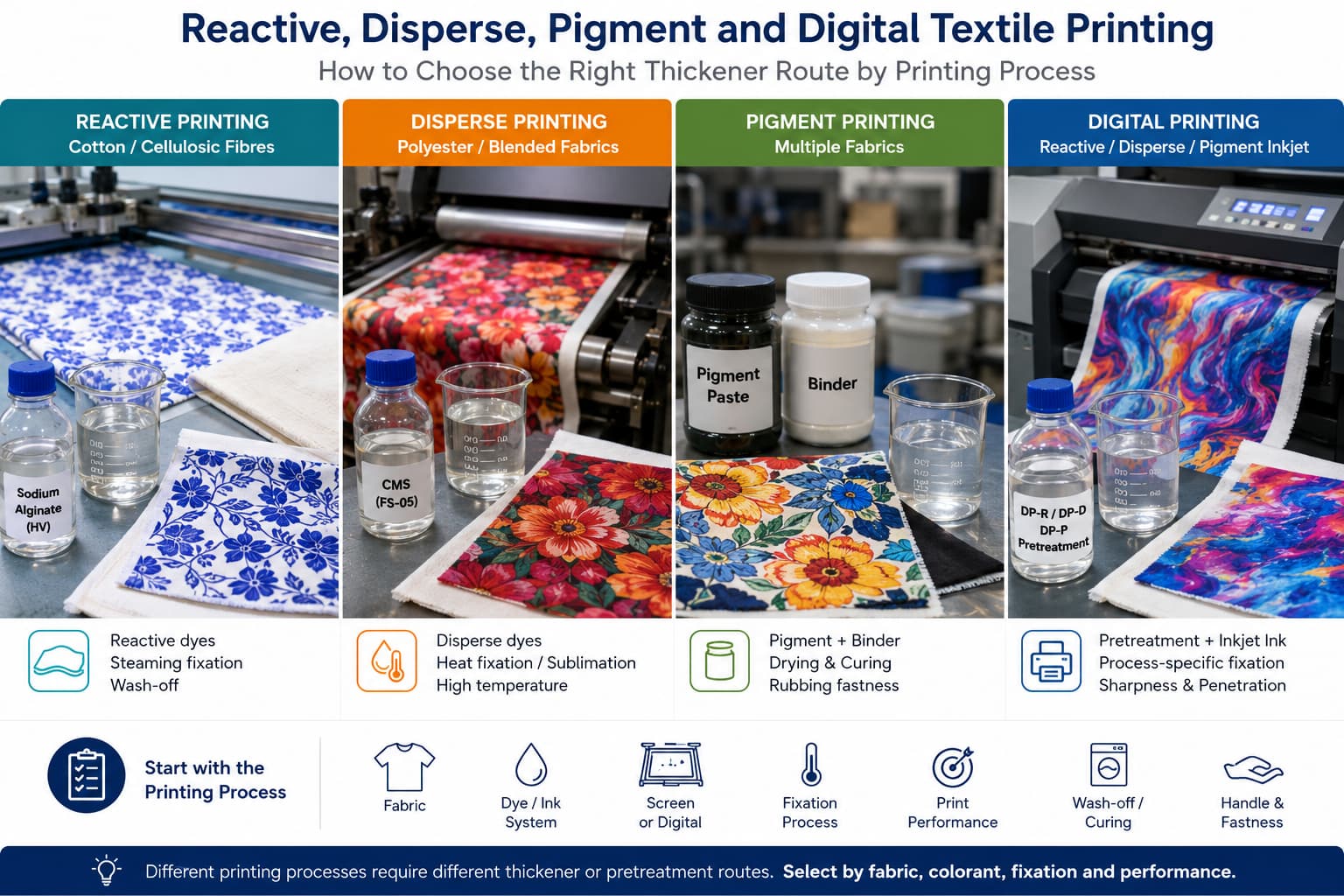
تعرف على كيفية اختيار المُكثِّف وطرق المعالجة المسبقة للطباعة النسيجية التفاعلية، والطباعة بالتشتت، والطباعة بالصبغات، والطباعة الرقمية، بناءً على متطلبات النسيج، والصبغة أو الحبر، والتثبيت، وقابلية الغسل، وجودة الطباعة.
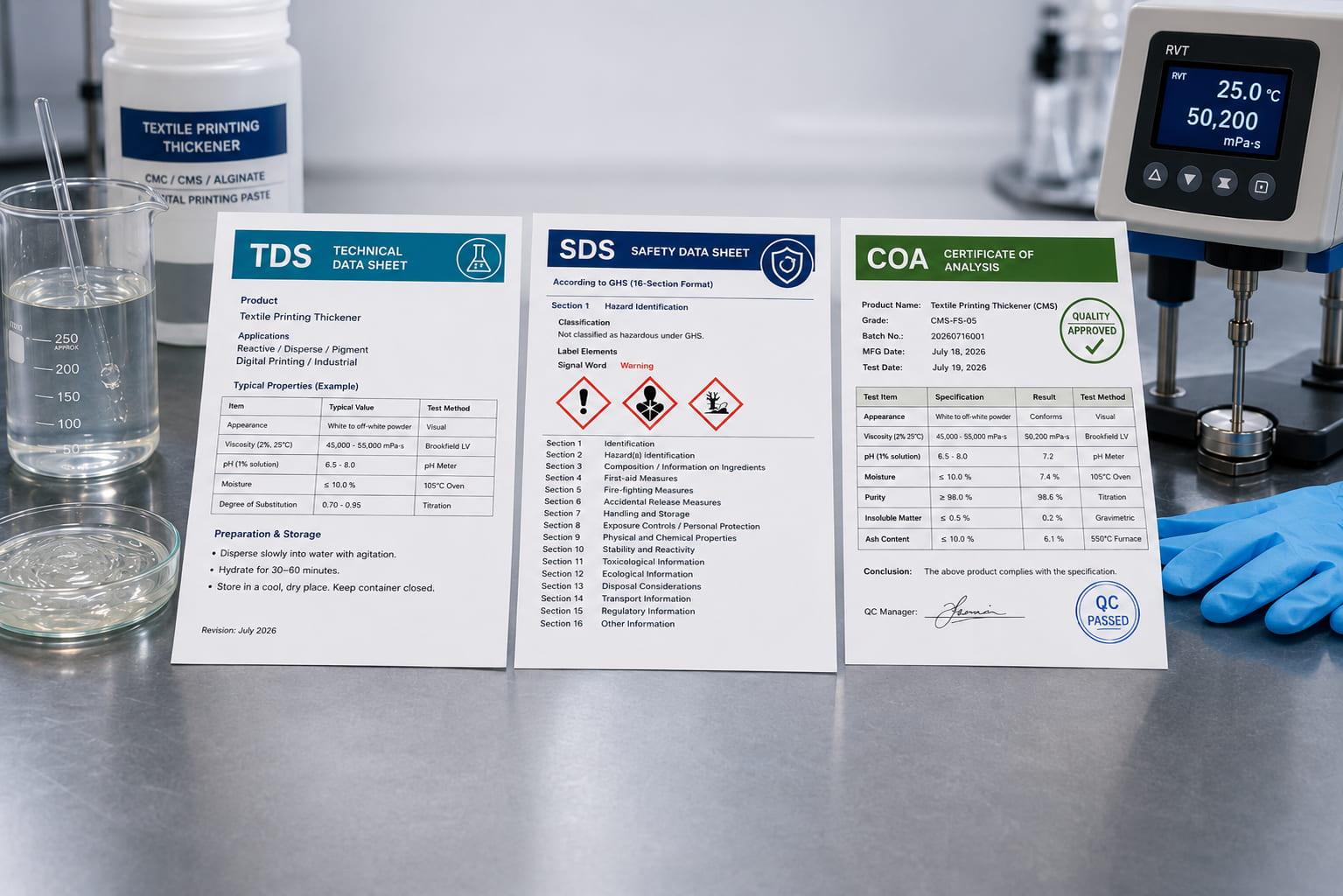
تعرف على الفرق بين مستندات TDS وSDS وCOA، وما يجب على مشتري منتجات طباعة المنسوجات التحقق منه، وكيفية مراجعة المواصفات وبيانات السلامة وطرق الاختبار ونتائج الدُفعات والجهات المصدرة للمستندات.
قارن بين CMC وCMS وألجينات الصوديوم ومعجون الطباعة الرقمية المستخدمة في طباعة المنسوجات. تعرف على مدى ملاءمة كل خيار لعمليات الطباعة التفاعلية، والطباعة بالتشتت، والطباعة بالصبغات، والطباعة الرقمية، وما يجب على المشترين مراجعته قبل اختبار العينات، ومطابقة الدرجات، والشراء بالجملة.
يُستخدم ألجينات الصوديوم على نطاق واسع في طباعة المنسوجات كمكثف مستقر وقابل للغسل لمعجون الطباعة التفاعلي. تعرف على كيفية تقييم درجة اللزوجة والنقاء ومدى ملاءمة الاستخدام قبل الشراء، وكيف تدعم شركة FSX Chemical المشترين العالميين من خلال توفير البيانات الفنية والعينات.
يُستخدم كربوكسي ميثيل السليلوز (CMC) على نطاق واسع في عمليات الطباعة والتحجيم والصباغة للمنسوجات. سيشرح هذا الدليل كيفية تقييم درجات جودة CMC، والمعايير الأكثر أهمية، وكيف يمكن لشركة FSX Chemical دعم قرارات الشراء.
يُستخدم كربوكسي ميثيل السليلوز كمكثف ومثبت في الأحبار المائية، والطباعة بالحفر، والمعالجة المسبقة في الطباعة بنفث الحبر. يتناول هذا الدليل المعايير الرئيسية للدرجات واعتبارات التوريد التي يجب على فرق المشتريات أخذها في الاعتبار.
يُستخدم معجون الطباعة الذي يعتمد على مادة CMC في طباعة المنسوجات بالأصباغ، والطباعة التفاعلية، والطباعة الرقمية. يشرح هذا الدليل المعلمات المهمة، وكيفية مقارنة الموردين، وما يجب طلبه قبل تقديم طلب شراء بالجملة.
يُستخدم كل من ألجينات الصوديوم وCMC كمكثفات في طباعة المنسوجات، لكنهما يناسبان أنظمة صبغ وظروف معالجة مختلفة. يشرح هذا الدليل الاختلافات الرئيسية بينهما ومتى يتم استخدام كل منهما.
تختلف متطلبات المعجون والمعالجة المسبقة في الطباعة الرقمية بنفث الحبر على المنسوجات عن تلك الخاصة بالطباعة بالشاشة الحريرية. يشرح هذا الدليل كيفية استخدام ألجينات الصوديوم في الطباعة الرقمية على المنسوجات، والمعايير التي يجب على فرق المشتريات تحديدها فيما يتعلق بدرجات الجودة.
يتشابه كل من CMC المخصص للاستخدام الغذائي وCMC المخصص للاستخدام الصناعي في التركيب الكيميائي الأساسي، لكنهما يختلفان بشكل كبير من حيث درجة النقاء ونطاق DS والمتطلبات التنظيمية. يشرح هذا الدليل الاختلافات الرئيسية وسبب تسبب استخدام الدرجة غير المناسبة في حدوث مشكلات في الإنتاج.
يُعد التحضير الصحيح للمادة اللزجة أمرًا لا يقل أهمية عن اختيار الدرجة في طباعة المنسوجات بالأصباغ التفاعلية. يتناول هذا الدليل طرق إذابة ألجينات الصوديوم، ونطاقات التركيز حسب الاستخدام، وظروف التخزين، وكيفية معالجة المشكلات الشائعة في عملية التحضير.
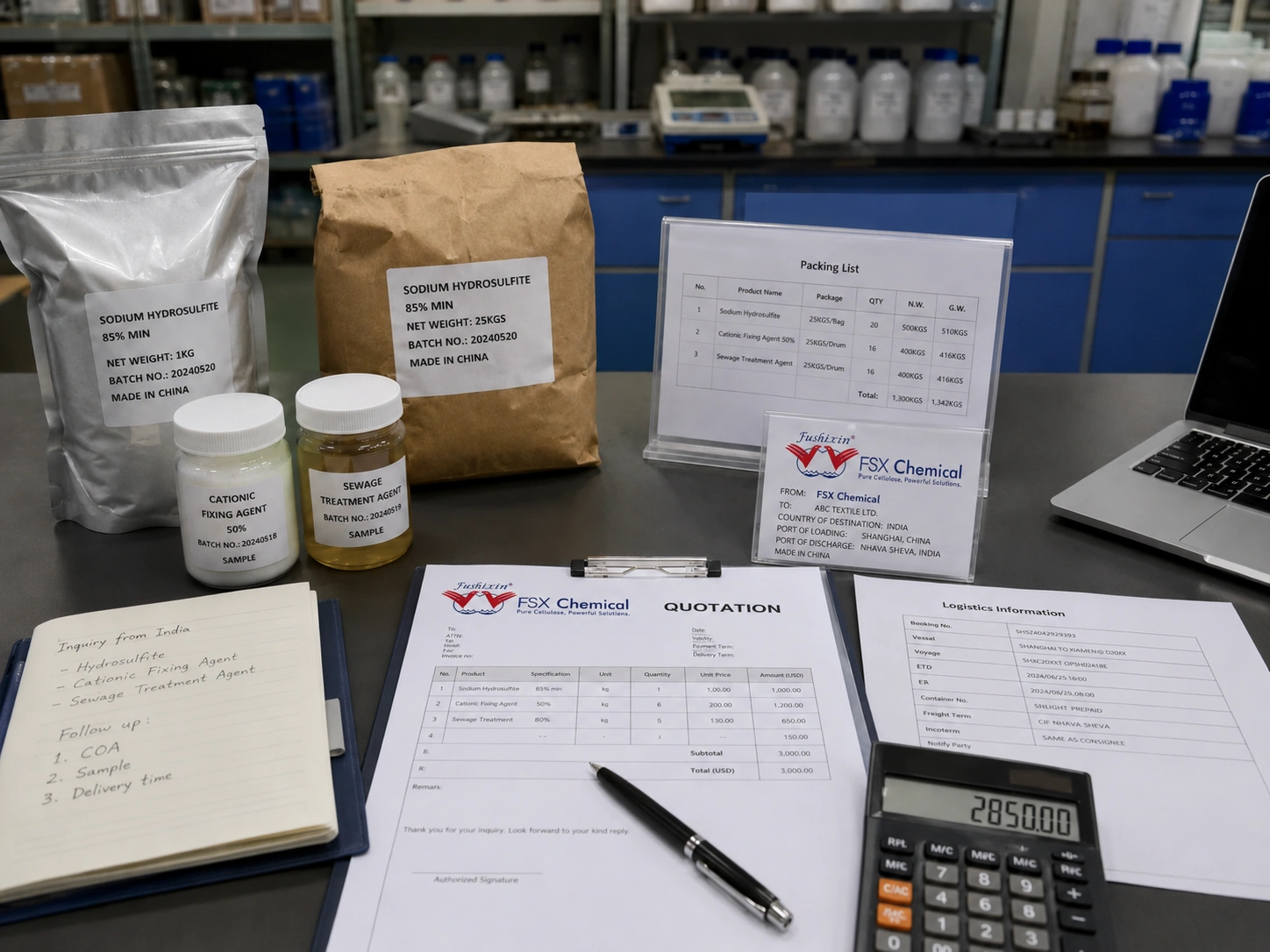
يرجى إرسال اسم المنتج، والتطبيق، والكمية، والوجهة، وأي بيانات تقنية (TDS)،
أو صورة عينة أو مستند متوفر لديكم بالفعل. وستقوم شركة FSX Chemical بمراجعة
هذه المعلومات وتقديم توصية بشأن الخطوة التالية سواء كانت تقديم عرض أسعار، أو مطابقة العينة،
أو اختيار المنتج.
معلومات عن المنتجاسم المنتج، الدرجة، الطراز، صورة الملصق أو مرجع المورد.
الوثائق المتاحةTDS، SDS، COA، صورة العينة، قائمة المنتجات أو بيانات الاختبار.
تفاصيل الطلبالكمية التقديرية، والتعبئة، وبلد المقصد، والميناء، أو الشروط التجارية.
الطلب أو المشكلةعملية طباعة المنسوجات، متطلبات التركيبة، المشكلات الحالية أو الأداء المستهدف.