Why Supplier Experience Matters in Textile Printing Chemicals
Product Selection Affects Production Stability
In textile printing, different thickeners and paste additives can perform differently depending on the fabric type, dye system, water quality, pH, mixing method, and production process.
A product that works well in one factory may not perform the same way in another formulation. This is why supplier experience should be evaluated by application support, not only by product list.
Technical Communication Reduces Sourcing Risk
Before recommending a grade, a responsible supplier should ask practical questions about the buyer’s process. These may include target viscosity, printing method, fabric type, current formulation, dosage, and the problem the buyer wants to solve.
Clear technical communication helps avoid wrong product selection and makes sample testing more efficient.
Sample-to-Bulk Consistency Matters for Repeat Orders
For B2B buyers, sample approval is only the first step. The bulk shipment should match the agreed specification and remain consistent across repeat orders.
Buyers should check whether the supplier can provide COA, batch information, and stable quality communication for each shipment.
Product Range Buyers Should Review
CMC for Textile Printing and Thickening
CMC, or Carboxymethyl Cellulose, can be used in selected textile printing and thickening applications where viscosity control and paste handling are required.
When evaluating CMC, buyers should review viscosity grade, degree of substitution, solubility, pH, moisture, and batch consistency.
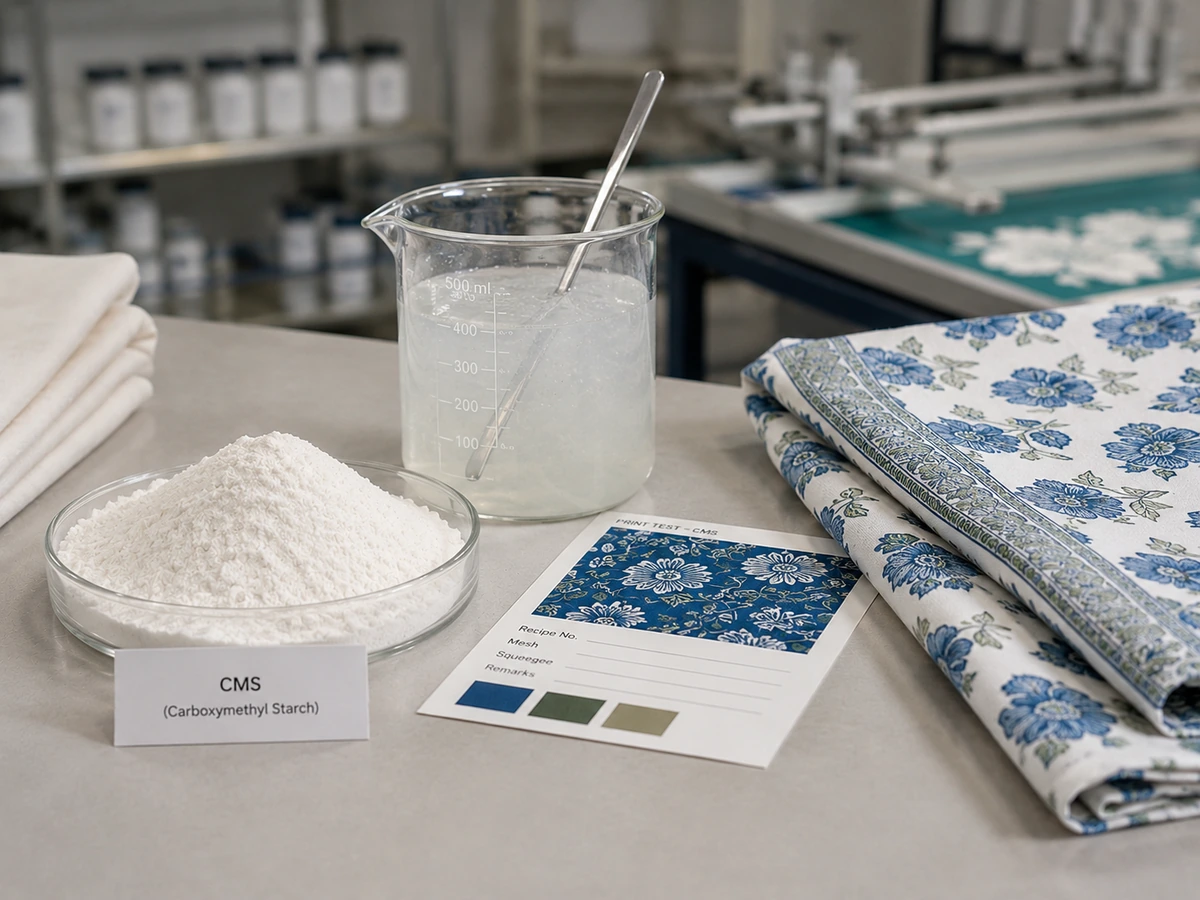
CMS for Printing Paste Formulation
يمكن استخدام مادة CMS، أو النشا الكربوكسي ميثيلي، في تركيبات معينة من معجون الطباعة للمساعدة في ضبط اللزوجة وتسهيل التعامل مع المعجون.
For CMS selection, buyers should focus on viscosity range, DS, dispersion behavior, formulation compatibility, and sample testing results.
ألجينات الصوديوم المستخدمة في معجون الطباعة التفاعلية
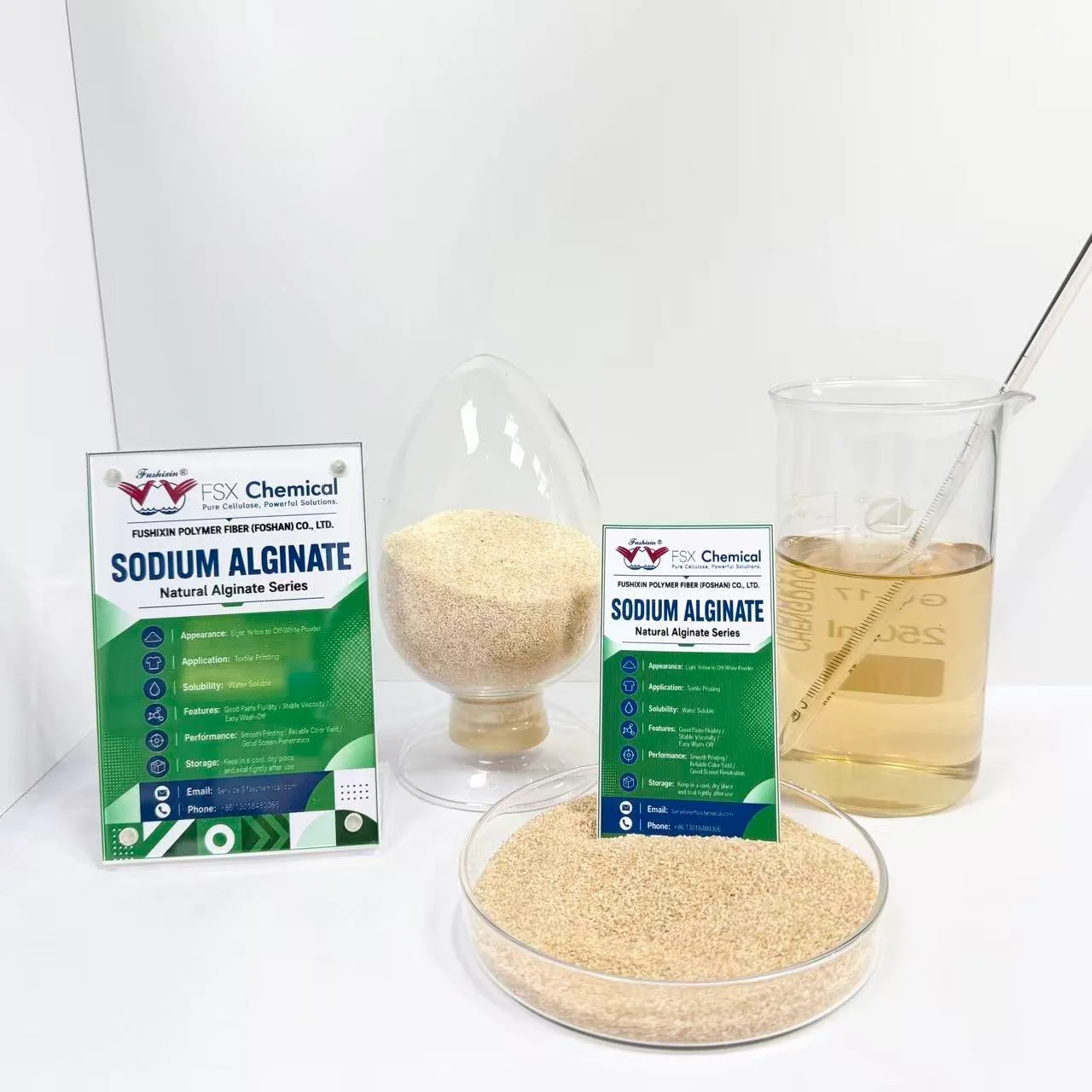
Sodium alginate is commonly used as a thickener in reactive textile printing paste. It is valued for its paste-forming behavior and suitability in many reactive printing systems.
Before purchase, buyers should confirm viscosity grade, mesh size, purity grade, dissolution behavior, and compatibility with their own formulation.
Printing Paste and Thickener Solutions
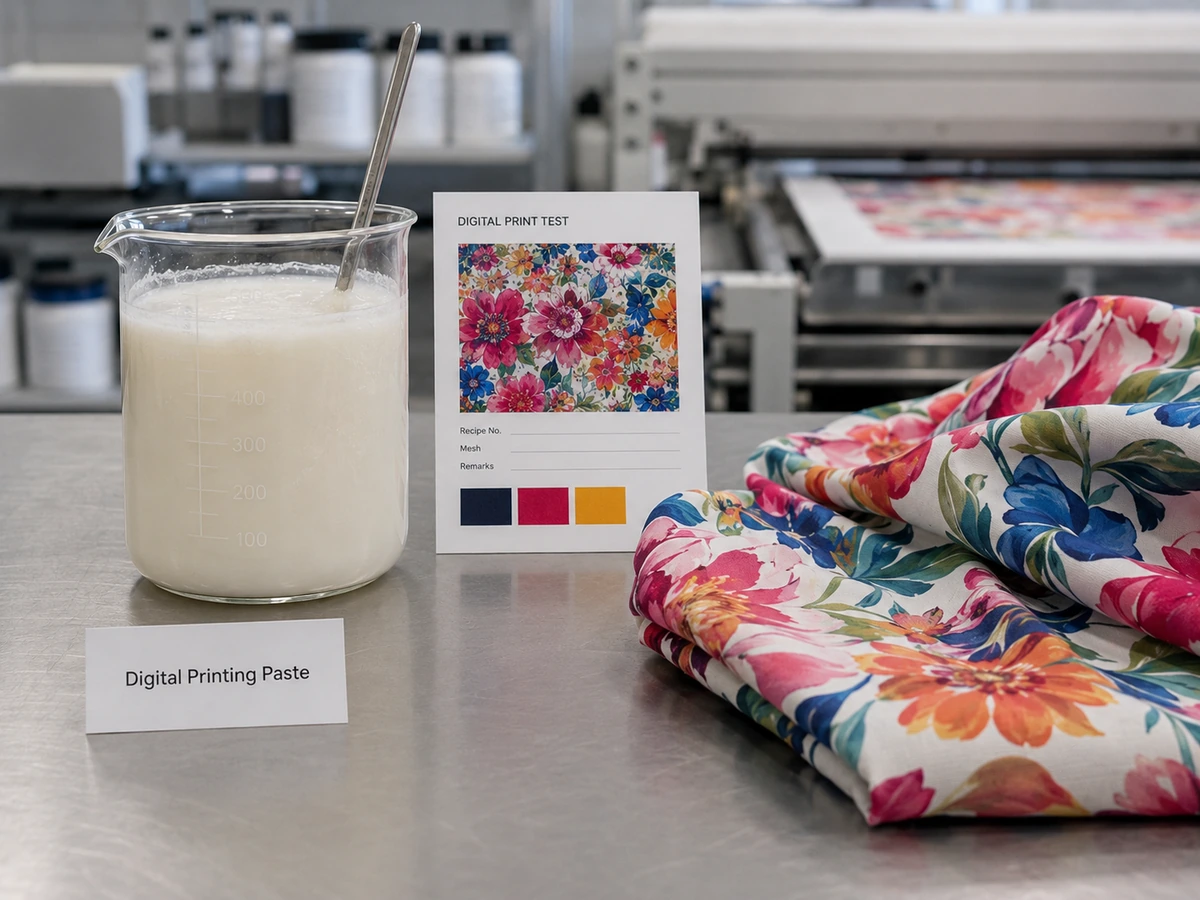
Some buyers may need a single thickener, while others may need a formulation recommendation or grade matching support. The supplier should understand the actual production requirement before suggesting a product.
A practical recommendation should be based on application conditions rather than broad marketing claims.
Documents to Request Before Cooperation
TDS لمراجعة المواصفات
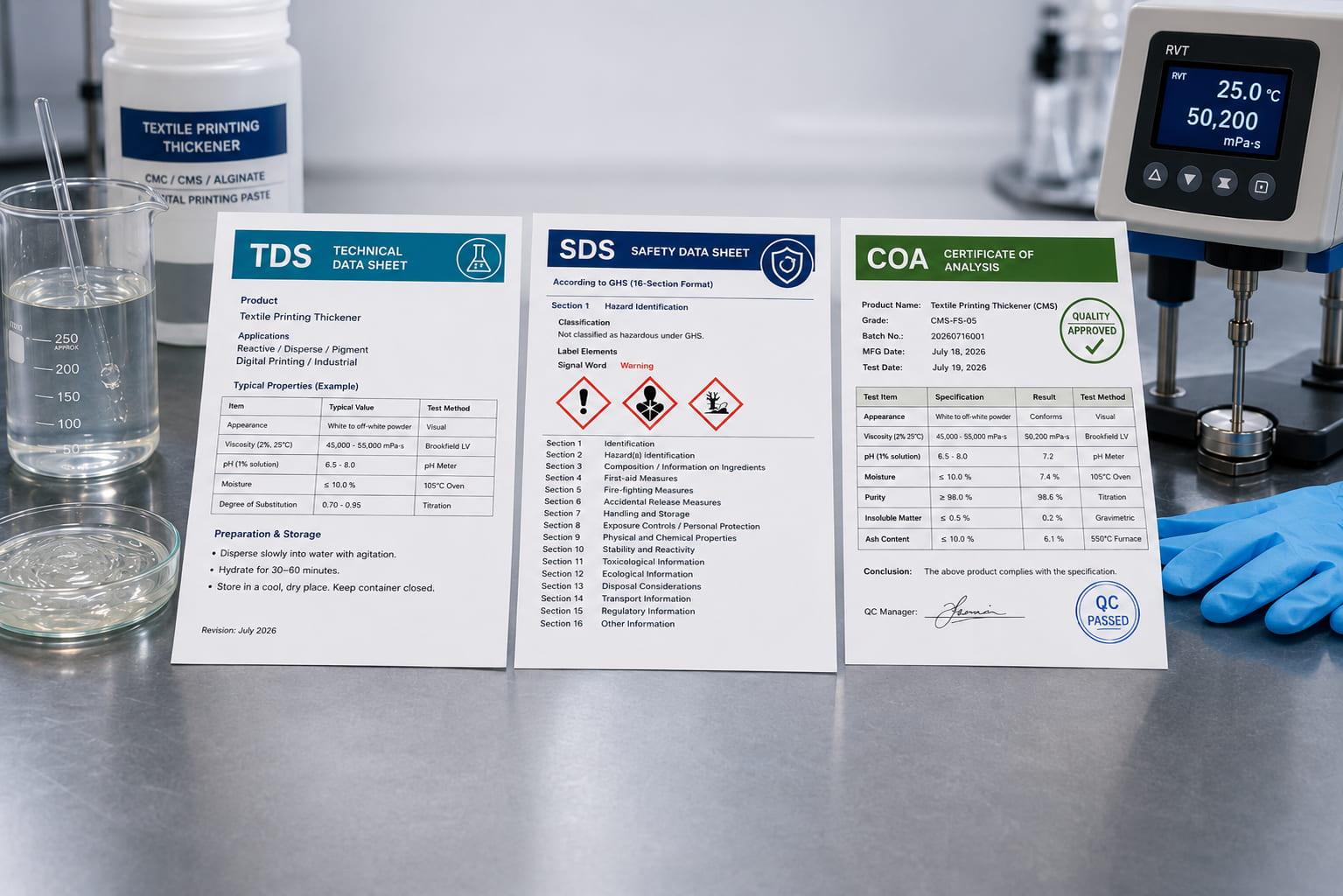
The Technical Data Sheet helps buyers review the basic product specification. It should include key parameters such as appearance, viscosity, pH, moisture, DS where applicable, storage conditions, and testing method.
For viscosity-related products, buyers should check the test concentration, temperature, and method. Without these details, viscosity data from different suppliers may not be directly comparable.
تقرير التوافق (COA) لتأكيد الدفعة
The Certificate of Analysis helps confirm the quality data of a specific batch. It is especially important for repeat orders, distributor supply, and customer quality control.
Buyers can compare COA records over time to monitor whether key parameters remain within the agreed range.
SDS ووثائق التصدير عند الحاجة
For international purchasing, SDS and export documents may be required for transport, customs clearance, and internal compliance review.
The exact documents needed may vary depending on destination country, product type, and buyer requirements.
What to Test Before Placing Bulk Orders
Viscosity and Solubility
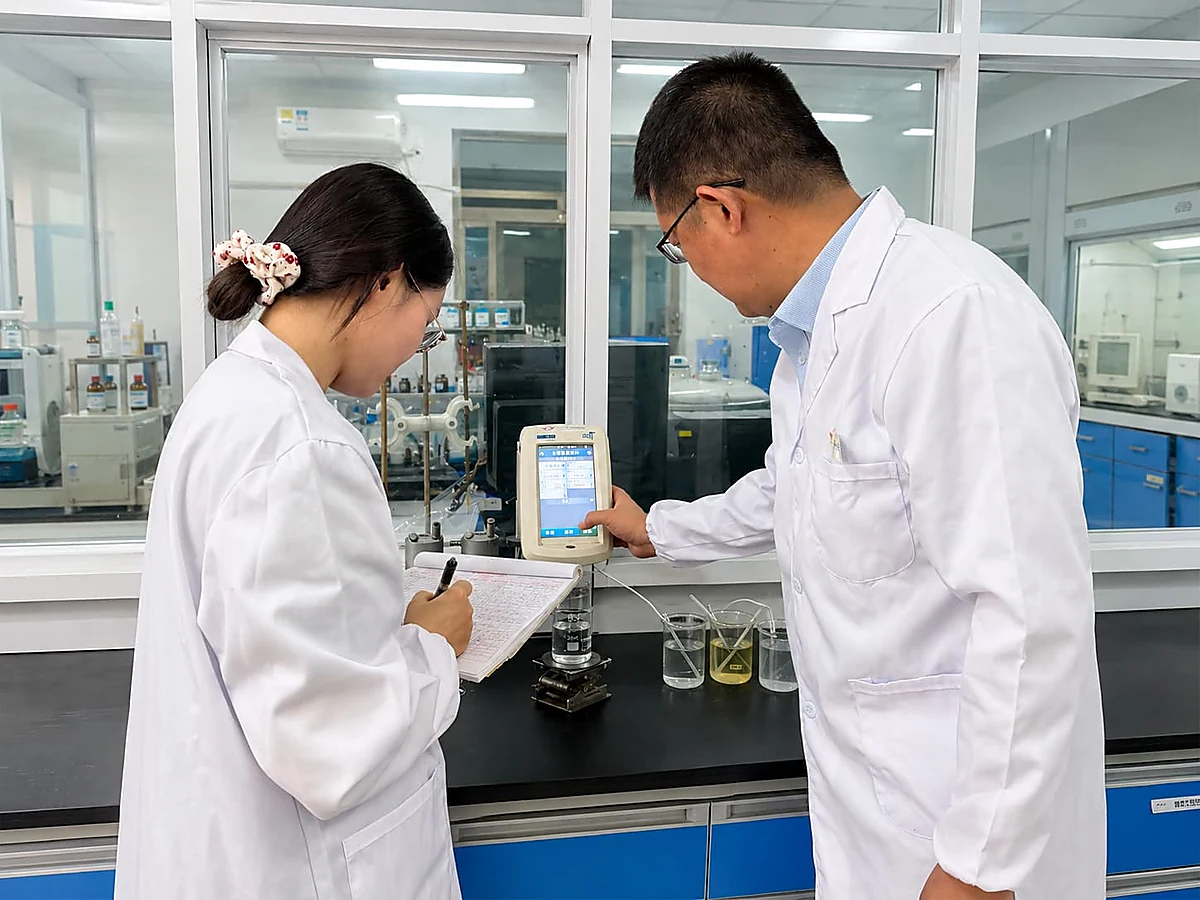
Viscosity and solubility are key points for many textile printing chemicals. Buyers should test whether the product can reach the required viscosity and whether it dissolves or disperses smoothly under their own preparation conditions.
Testing should be done in the buyer’s actual water quality and formulation when possible.
Paste Preparation and Application Behavior
For printing paste applications, buyers should observe paste smoothness, mixing behavior, filtration performance, spreading control, and application stability.
These practical observations are often more useful than judging the product by specification data alone.
Batch Consistency from Sample to Order
Before confirming a bulk order, buyers should ask whether the approved sample and bulk shipment will follow the same specification range.
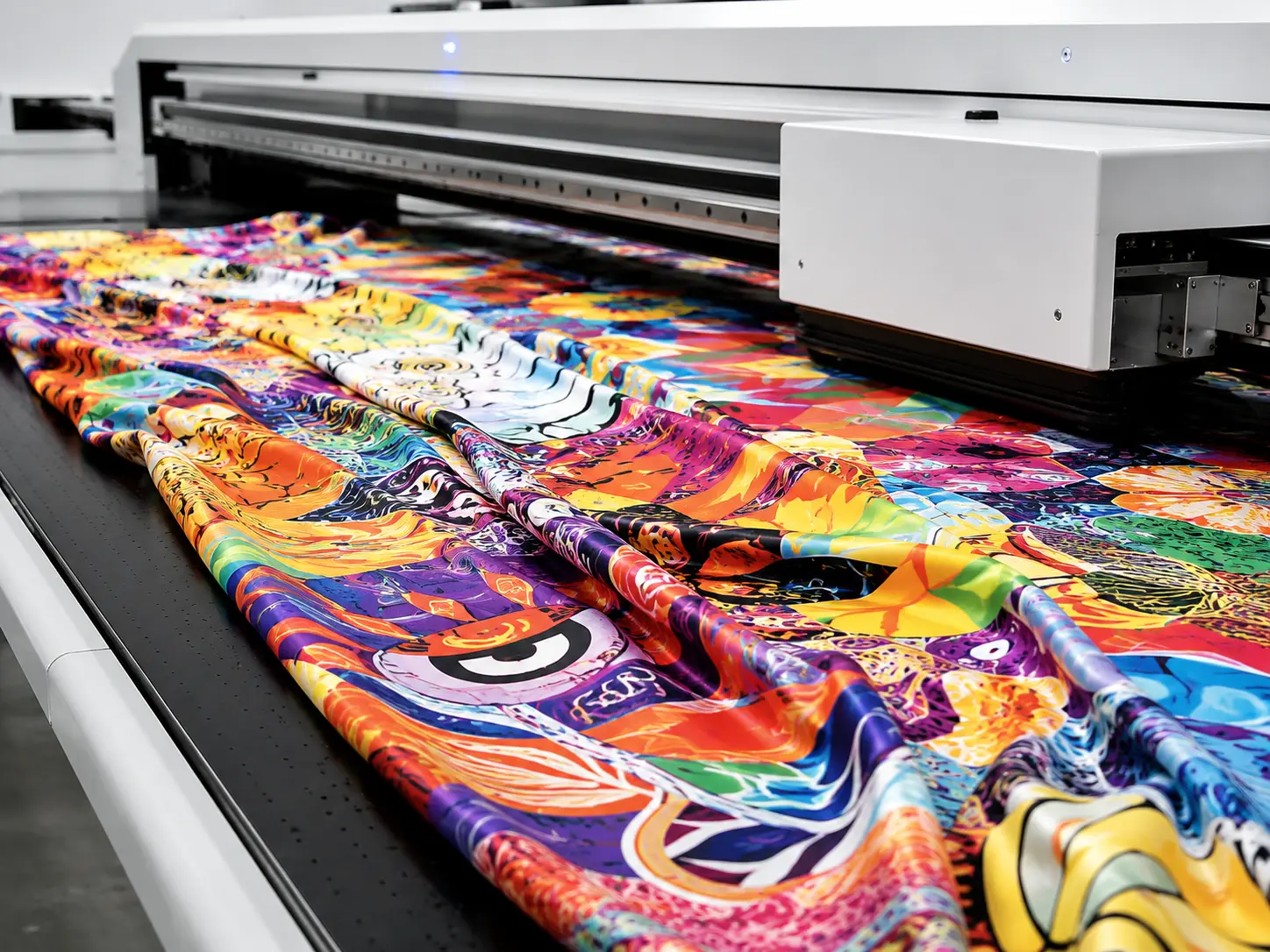
How to Evaluate Supplier Communication
Clear Application Questions
A reliable supplier should ask about the buyer’s application before recommending a product. If a supplier recommends a grade without asking about the process, the suggestion may not be accurate enough.
Useful information includes fabric type, dye system, printing method, target viscosity, current dosage, and existing production issue.
Realistic Grade Matching Suggestions
Not every product can solve every application problem. A professional supplier should explain what can be matched by grade selection and what needs to be confirmed through sample testing.
For example, viscosity range, solubility, mesh size, and DS may be matched within available product ranges. Final application performance should still be tested in the buyer’s own formulation.
Transparent Discussion of Limitations
A trustworthy supplier should avoid exaggerated claims. If a product has application limitations, those limitations should be discussed clearly before bulk purchase.
This helps buyers make practical decisions and avoid unrealistic expectations.
كيف تدعم شركة FSX Chemical مشتري منتجات طباعة المنسوجات
Our support is focused on practical product matching. We can provide TDS, COA, sample support, and grade matching suggestions based on the customer’s application, target viscosity, fabric type, printing process, and formulation conditions.
We do not suggest confirming a product only by name or price. The recommended grade should be reviewed through technical documents and tested in the buyer’s own formulation before bulk purchase.
الخطوات التالية
- طلب تقرير TDS — review viscosity, DS where applicable, pH, moisture, appearance, storage conditions, and testing method.
- Ask for Product Matching — share your product application, printing process, fabric type, target viscosity, and current formulation.
- اطلب عينة — اختبر المنتج الموصى به في ظروف التحضير والإنتاج الخاصة بك قبل تأكيد الطلبات بالجملة.
- Review COA Before Shipment — confirm whether the batch data matches the agreed specification range.
- اتصل بفريقنا الفني — discuss which CMC, CMS, sodium alginate, or textile printing thickener grade is suitable for your application📧 البريد الإلكتروني: Service@fsxchemical.com