ES
ES  EN
EN  BN
BN  TR
TR  FR
FR  ID
ID  RU
RU  AR
AR  UR
UR  VI
VI  TL
TL  HI
HI  UK
UK  KK
KK  KA
KA  UZ
UZ 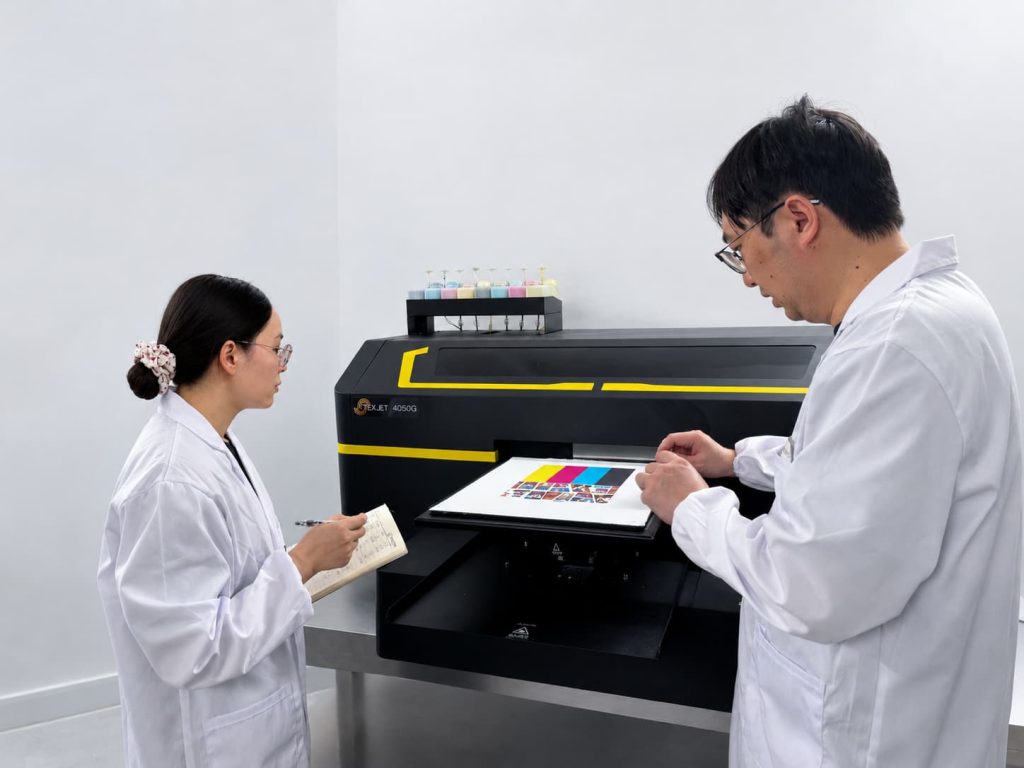
La evaluación de laboratorio de un espesante para impresión debe incluir más de un resultado de viscosidad. Esta guía explica la inspección del polvo, la preparación de la pasta madre, la reología, la compatibilidad de la formulación, las pruebas de impresión, el lavado y la evaluación final del desempeño.
Laboratory testing should therefore follow the product through the complete application process. Dry-powder properties, hydration, rheology, formulation compatibility, print definition, color performance and wash-off should be evaluated as separate but connected stages.
The objective is not to identify the thickener with the highest viscosity. It is to identify the grade that provides suitable process behavior and repeatable printing results at an acceptable total cost in use.
What a Laboratory Evaluation Should Determine
A useful testing program should answer several practical questions:
- Does the powder match the expected identity and physical condition?
- Can it be dispersed and hydrated using the mill’s normal equipment?
- How much product is required to reach the application viscosity?
- Does the paste show suitable shear-thinning and recovery behavior?
- Is viscosity stable after dyes and auxiliaries are added?
- Does the paste pass through the screen and release evenly?
- Does it control spreading and penetration on the selected fabric?
- What are the effects on color yield, fixation, wash-off and fabric handle?
- Can the supplier reproduce the approved performance in later batches?
These questions cannot be answered by one laboratory value. A complete evaluation normally moves from simple screening tests to controlled application trials.
Recommended Printing Thickener Testing Workflow
| Testing Stage | Main Purpose | Typical Decision |
|---|---|---|
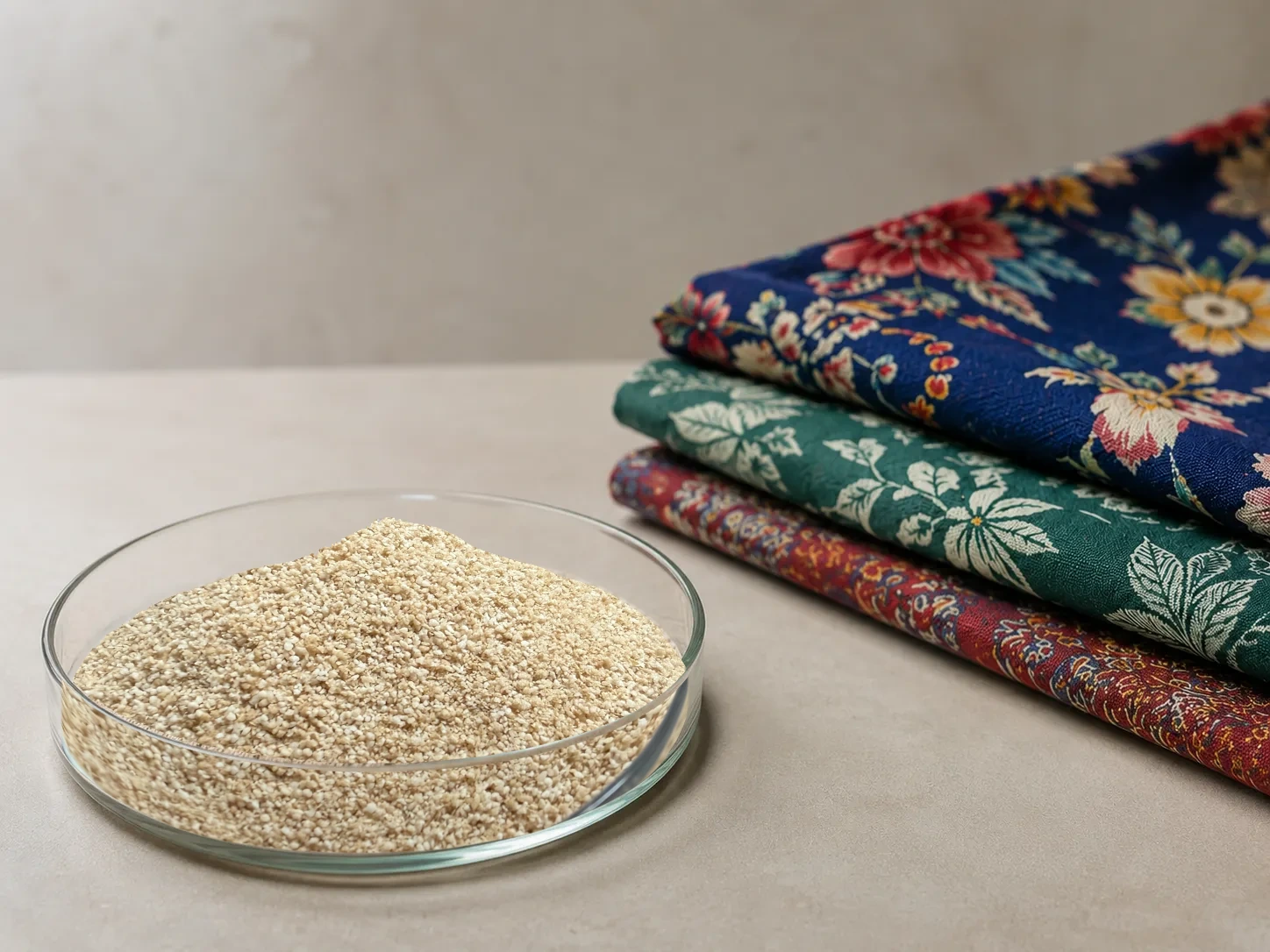
| 1. Dry-powder evaluation | Check sample condition, consistency and handling properties | Accept or reject for solution preparation |
| 2. Stock-paste testing | Measure hydration, viscosity and rheological behavior | Identify suitable dosage and preparation method |
| 3. Complete-paste compatibility | Evaluate interaction with dyes, alkalis, salts, binders and auxiliaries | Confirm formulation suitability |
| 4. Controlled printing trial | Assess screen behavior, transfer, penetration and definition | Confirm machine and fabric compatibility |
| 5. Finished-print evaluation | Measure color, wash-off, fastness and handle | Confirm final performance |
| 6. Documentation review | Compare results, specification, cost and batch-control support | Approve, adjust or reject the grade |
Define the Printing System Before Testing
A thickener cannot be evaluated independently from its intended process. The laboratory should define the application before preparing the first sample.
Record the production requirements
- Fiber and fabric construction
- Reactive, disperse, pigment, vat, discharge or other printing route
- Flat-screen, rotary-screen, roller or digital pretreatment process
- Current paste formulation
- Target application viscosity and test method
- Screen mesh, engraving or application equipment
- Drying and fixation procedure
- Washing or reduction-clearing process
- Required print definition, penetration and fabric handle
Select a reference product
Use the current production thickener or another approved grade as the reference. Testing a new product without a reference makes it difficult to decide whether the result represents an improvement or simply a different paste behavior.
The reference and candidate samples should be prepared and tested at the same time wherever possible.
Use two comparison approaches
The first comparison should use the same dry-product dosage. This shows relative thickening efficiency and helps estimate cost in use.
The second comparison should adjust each product to the same application viscosity under the same measurement conditions. This gives a fairer assessment of rheology, printing behavior and final performance.
Testing principle: Equal dosage evaluates thickening efficiency. Equal application viscosity evaluates functional performance. Both comparisons are useful, but they answer different questions.
Laboratory Equipment and Sample Controls
The exact equipment depends on the product and test program. A practical textile printing laboratory may use:
- Calibrated laboratory balance
- Controlled-speed mixer
- Rotational viscometer or rheometer
- Thermometer or controlled-temperature bath
- pH meter
- Moisture analyzer or approved oven method
- Sieve set or particle-size equipment
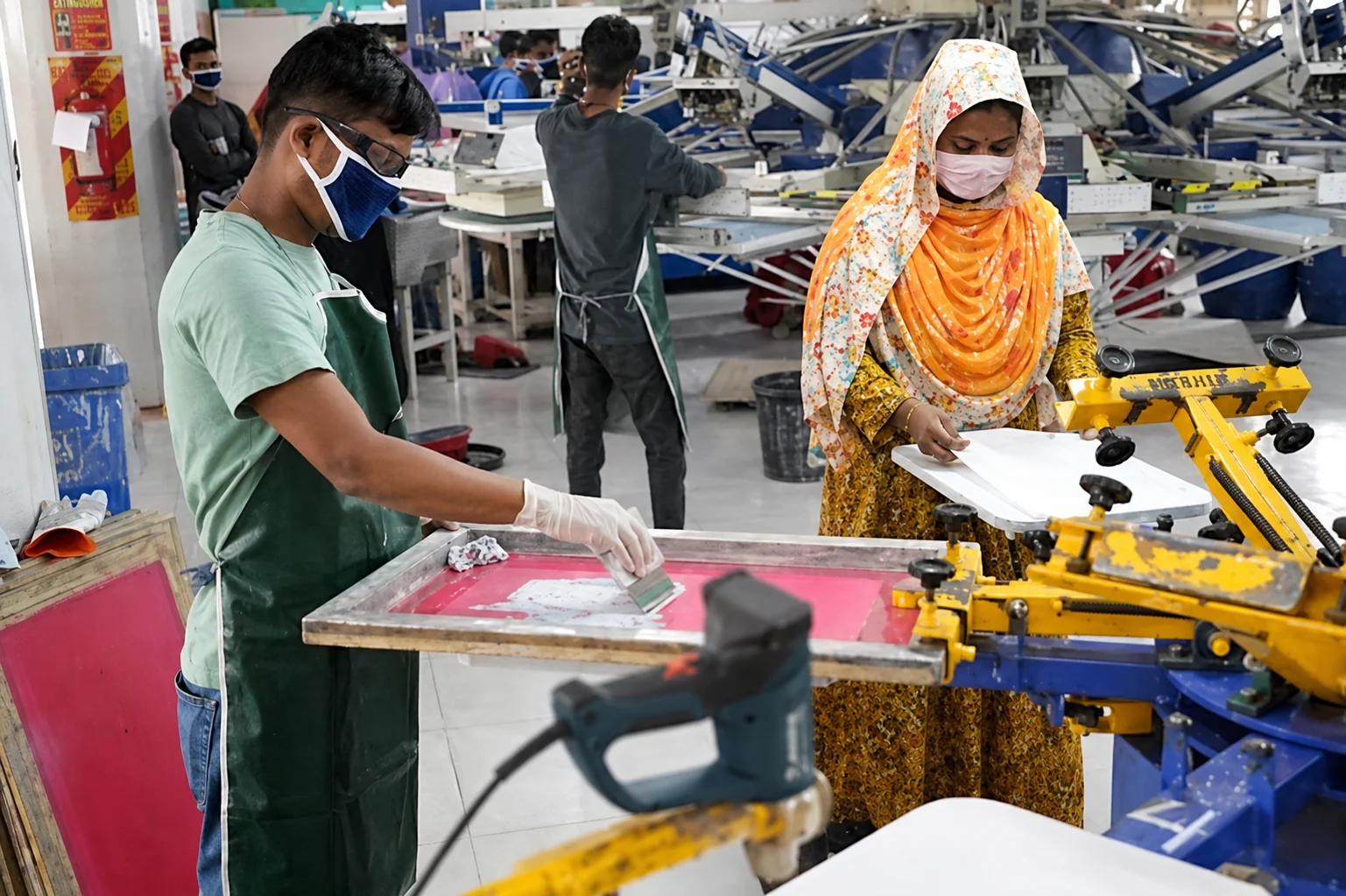
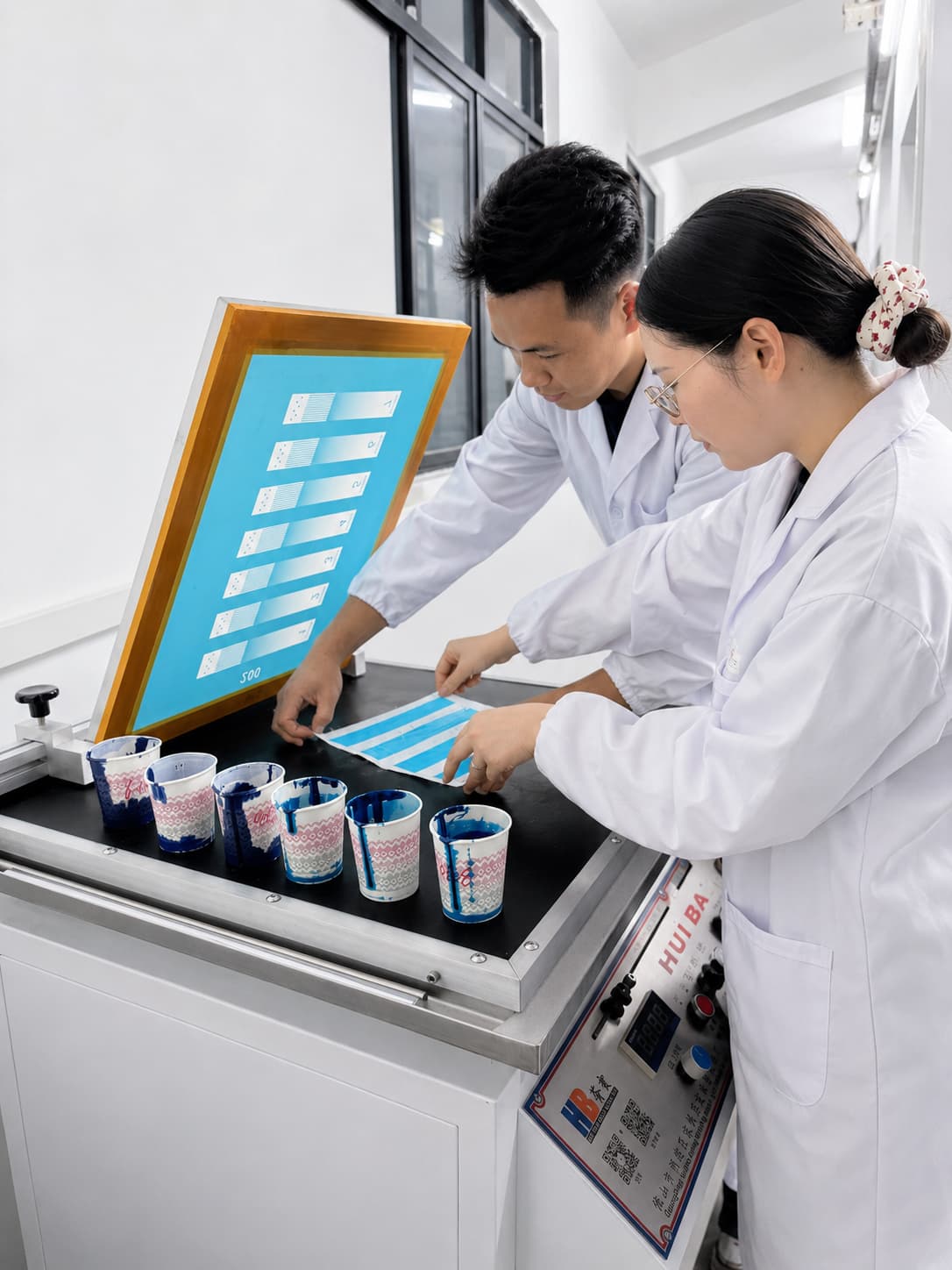
- Laboratory screen-printing equipment
- Dryer and fixation equipment
- Spectrophotometer
- Microscope, scanner or controlled imaging system
- Wash-fastness and rubbing-fastness equipment where required
Identify and condition samples
Record the supplier, product name, grade, batch number, receipt date, packaging condition and sampling source. Keep the original label or a traceable photograph with the test record.
Powder samples should be sealed and conditioned under the laboratory’s defined environment before testing. Moisture exposure during storage or sample preparation can affect powder weight and solution performance.
Stage 1: Dry Powder Evaluation
Dry-powder screening can identify obvious differences before time and dyes are used in printing trials.
Appearance and contamination
Check color, uniformity, visible foreign material, caking and unusual odor. Appearance should be compared with the supplier’s specification and the approved reference sample.
Appearance alone cannot confirm product identity or purity. A normal-looking sample may still differ in viscosity, moisture or chemical characteristics.
Humedad
Moisture influences the amount of active dry material delivered at a stated product weight. It can also indicate storage or packaging problems.
The test method, drying temperature, test time and calculation basis should be specified. Results from different moisture methods may not be directly comparable.
Particle size and powder handling
Particle-size distribution can influence dusting, wetting, lump formation and hydration time. Extremely fine powder may disperse differently from a coarser grade even when the final solution viscosity is similar.
Bulk density and flow behavior may also be recorded when they affect weighing, dosing, bag emptying or automated handling.
Product-specific chemical parameters
Depending on the chemistry and agreed specification, additional tests may include degree of substitution, active content, ash, insoluble matter or another identity-related parameter.
These tests should use a validated method appropriate to the individual product. Not every parameter is required for every printing thickener.
Stage 2: Standard Stock-Paste Testing
Stock-paste preparation is one of the largest sources of variation in thickener comparison. The procedure must be written and followed for every sample.
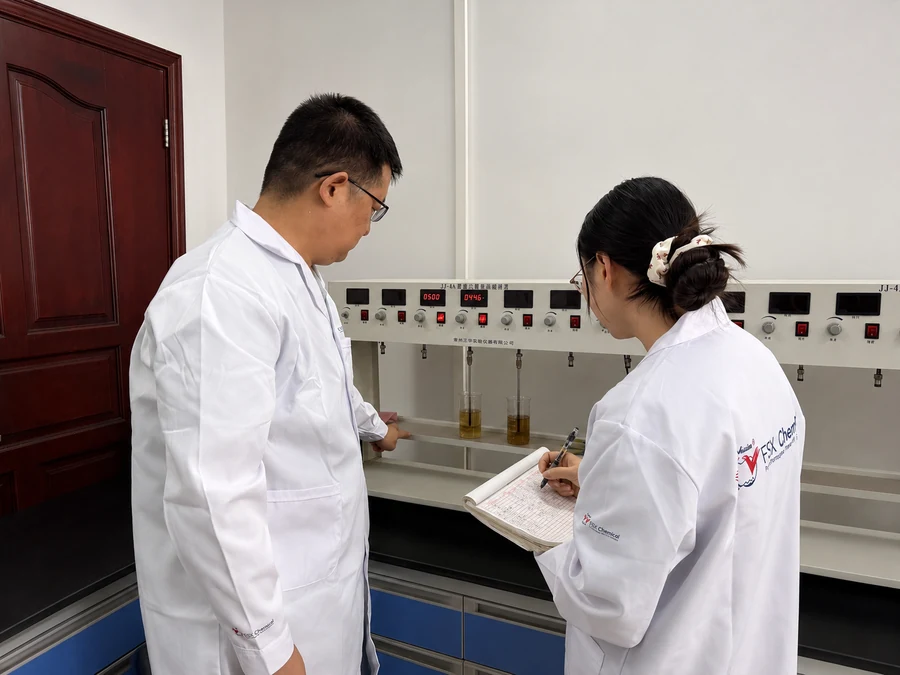
Standardize the preparation procedure
Registro:
- Dry-product concentration
- Whether concentration is calculated as supplied or on a dry basis
- Water source and water quality
- Water and powder temperature
- Order and speed of powder addition
- Mixer type, speed and mixing time
- Resting or hydration time
- Final sample weight and evaporation adjustment
- Deaeration procedure
Powder should normally be added in a controlled manner to reduce lump formation. The appropriate addition method depends on product particle size, wetting behavior and supplier instructions.
Evaluate hydration behavior
Record the time required for the sample to become uniform and reach stable viscosity. Inspect for fisheyes, gel particles, undissolved powder, foam and sediment.
A product that reaches the target viscosity but requires impractical mixing time may create production problems during bulk preparation.
Measure viscosity under fully defined conditions
A viscosity result is incomplete unless it states:
- Concentración del producto
- Sample temperature
- Hydration or conditioning time
- Viscometer or rheometer model
- Spindle or measuring geometry
- Rotational speed or shear rate
- Measurement duration
- Reported unit
Results measured at different concentrations, temperatures, spindle speeds or hydration times should not be compared as if they were equivalent.
Use more than one rotational speed
Printing pastes commonly show non-Newtonian behavior. Their apparent viscosity changes with the applied shear condition.
Measuring at multiple speeds provides information about shear-thinning behavior. A rheometer can provide a more complete flow curve and, where appropriate, information about yield behavior, thixotropy and viscoelastic response.
Evaluate recovery after shear
During screen printing, the paste is exposed to shear as it moves under the squeegee and through the screen. After deposition, it should recover enough structure to limit unwanted spreading.
A controlled recovery or increasing-and-decreasing speed test can help distinguish two samples that have the same single-point viscosity but different printing behavior.
Measure pH and short-term stability
Measure pH using a defined sample concentration and temperature. Then inspect the paste after the established holding period for viscosity drift, separation, skin formation, odor change or microbial signs.
| Stock-Paste Test | What It Indicates | Main Limitation |
|---|---|---|
| Single-point viscosity | Apparent viscosity under one defined condition | Does not fully describe shear-dependent behavior |
| Multi-speed viscosity | Relative shear-thinning behavior | Depends on the instrument and measuring geometry |
| Flow curve | Viscosity or stress response across a shear range | Requires a controlled rheological method |
| Recovery test | How structure rebuilds after shear | Must reflect the intended printing process |
| Hydration observation | Mixing demand, lumping and solution uniformity | Can be operator-dependent without clear criteria |
| pH | General solution condition and possible compatibility risk | Does not independently predict printing performance |
Stage 3: Complete Printing-Paste Compatibility
Stock paste prepared only with water does not represent the complete printing formulation. Dyes, pigments, electrolytes, alkalis, binders, reducing agents and auxiliaries may change viscosity and stability.
Use the actual formulation
Prepare the complete paste using the same formulation and addition order used in production. Change only the thickener unless the trial is specifically designed to optimize the complete recipe.
If several dyes or pigments are used, test more than one representative color. Thickener interaction may be colorant-dependent.
Measure immediate and aged viscosity
Measure the complete paste after preparation and again after the normal production holding period. Record the storage temperature and whether the sample was remixed before testing.
A candidate that matches the initial viscosity but changes rapidly during storage may create shade or screen-performance variation during a production shift.
Check electrolyte and pH tolerance
Reactive printing pastes may contain alkali and other auxiliaries. Pigment systems may contain binders, catalysts and surfactants. Disperse or discharge printing introduces different compatibility requirements.
The test should reproduce the intended chemistry rather than using one universal salt- or alkali-tolerance procedure for every application.
Inspect filtration and screen residue
Where relevant, pass the paste through the production-equivalent filter or screen and inspect for gel particles, undissolved material and residue. Record the mesh or filter condition used.
Stage 4: Controlled Printing Trial
Laboratory printing should reproduce the intended process closely enough to reveal functional differences between samples.
Control the fabric
Use fabric from the same lot for all samples. Record fiber composition, construction, pretreatment, absorbency and conditioning.
Fabric-to-fabric variation can be larger than the difference between two thickeners, particularly when absorbency or pretreatment is inconsistent.
Control printing conditions
- Screen mesh or engraving
- Squeegee type, pressure, angle and speed
- Number of printing strokes
- Paste quantity or pickup
- Printing direction
- Time between printing and drying
- Drying temperature and time
- Steaming, curing or fixation conditions
Randomize or alternate the sample order where possible. Printing every candidate after the reference can introduce equipment, screen or drying drift into the comparison.
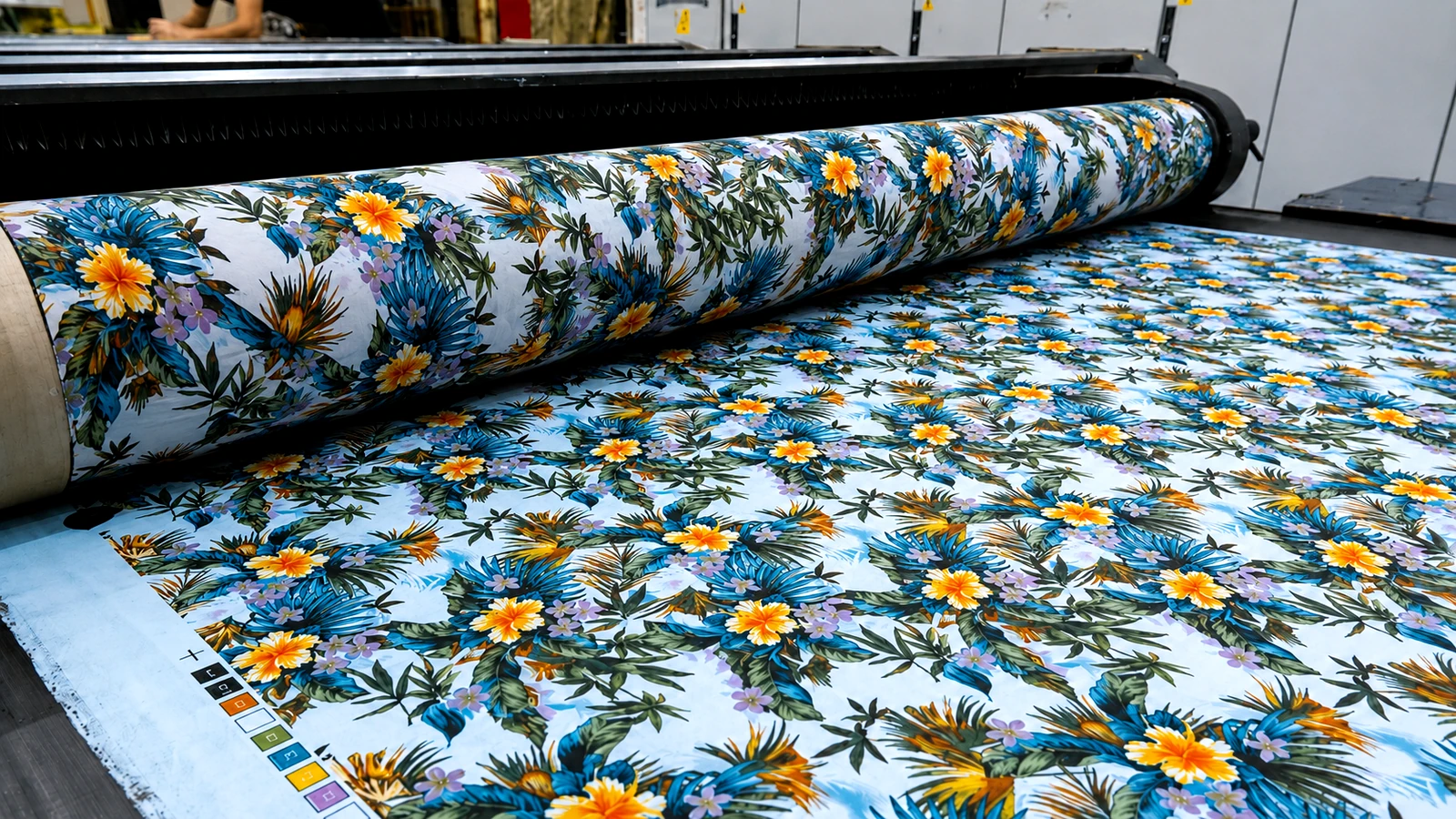
Use a diagnostic test pattern
The test design should include:
- Fine positive lines
- Fine reverse lines
- Small dots
- Diagonal and curved edges
- Solid printed areas
- Adjacent colors where bleeding is a concern
- Light and dark shade areas
Record machine behavior
Observe screen passage, paste release, stringing, foaming, screen blocking, uneven transfer and drying on the screen. These observations should be recorded with defined rating criteria rather than general comments such as “good” or “poor.”
How to Measure Print Definition
Print definition should be evaluated using the same image-capture conditions for every sample. A calibrated scanner, microscope or fixed camera setup can be used.
Line-width change
Compare the printed line width with the original design or screen opening. Increased width may indicate lateral spreading, while reduced or broken lines may indicate poor transfer or insufficient paste release.
Edge raggedness
Inspect whether the printed boundary is smooth or irregular. Edge irregularity may be related to paste rheology, fabric construction, screen condition or incomplete transfer.
Penetration and strike-through
Compare the face and back of the printed fabric. The required penetration depends on the textile product; maximum penetration is not always the objective.
A sharp face print with insufficient internal penetration may be unsuitable for some products, while excessive strike-through may reduce face color strength or pattern definition.
Stage 5: Finished Print Evaluation
Color yield and shade
Measure the printed fabric with a spectrophotometer using fixed instrument settings, sample conditioning, folding or backing and measurement geometry.
Relative color strength or K/S may be used when appropriate, but the measurement method and calculation should remain the same across all samples. Color yield should not be assessed visually alone.
Levelness
Measure several positions across the solid printed area. Report both the average result and variation between positions.
A high average color value may not be acceptable if the print is uneven or contains screen marks.
Se enjuaga
Apply the same washing sequence to every sample. Record water temperature, bath ratio, time, detergent, mechanical action and number of washing stages.
Assess residual thickener, unfixed color, staining, surface deposits and fabric handle. Wash-off should not be confused with wash fastness.
Mango de tela
Handle can be assessed by a controlled panel or an appropriate instrumental method. Panel assessment should use coded samples and consistent conditioning to reduce bias.
Colorfastness
Select fastness tests according to the final textile and customer requirement. ISO 105-C06 provides methods for colorfastness to domestic and commercial laundering, while ISO 105-X12 addresses dry and wet rubbing.
A thickener should not be claimed to guarantee a specific fastness grade. Fastness also depends on dye or pigment selection, fixation, binder, washing and fabric.
Product-Specific Testing Priorities
| Thickener Route | Typical Evaluation Focus | Important Caution |
|---|---|---|
| Alginato de sodio | Reactive-dye compatibility, color yield, print definition, wash-off and viscosity stability | Compare viscosity only under identical concentration and test conditions |
| Carboximetilcelulosa | Degree of substitution, hydration, rheology, dye interaction, wash-off and fabric handle | CMC grades are not interchangeable by product name alone |
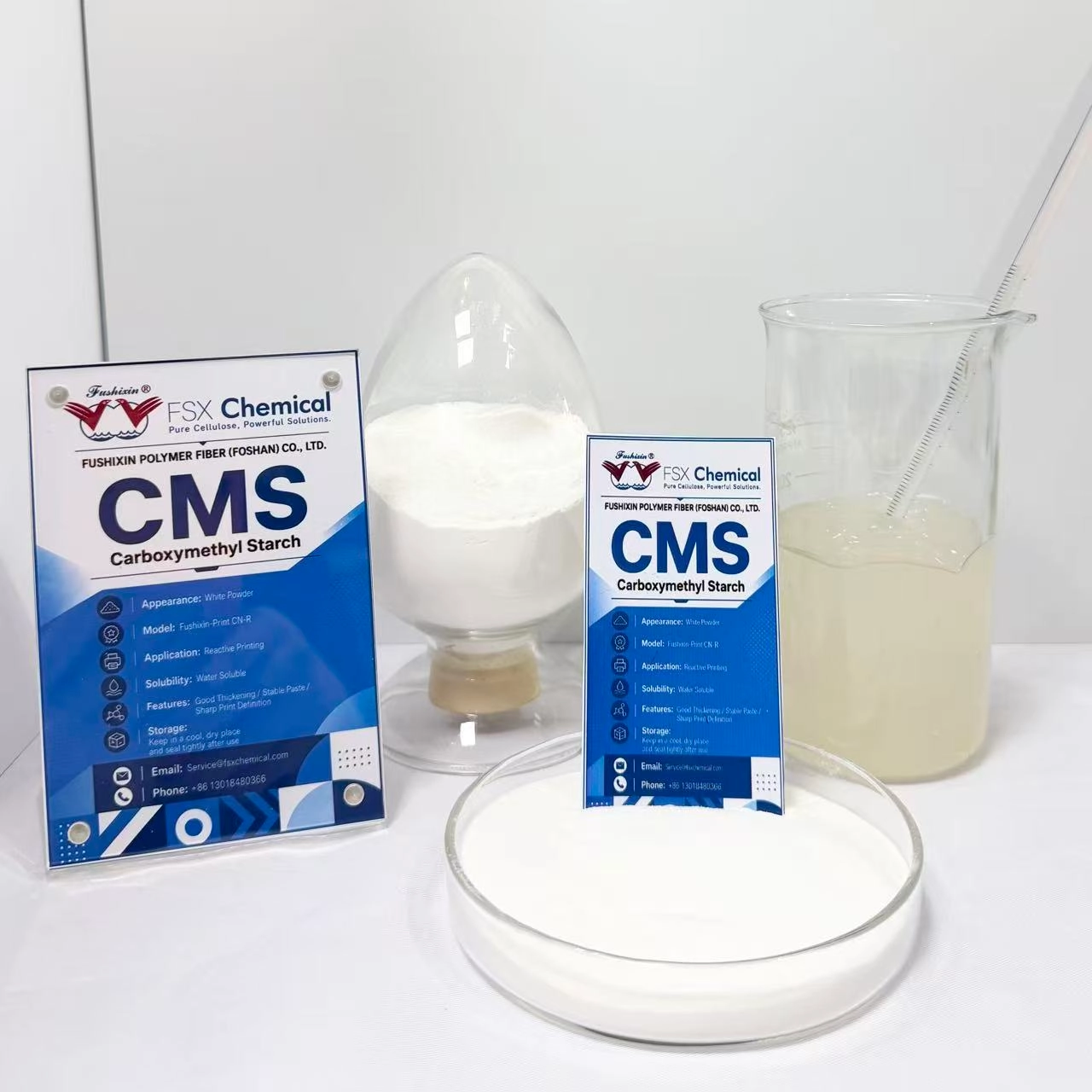
| Almidón carboximetílico | Thickening efficiency, paste body, screen passage, penetration, wash-off and cost in use | Suitability can vary between reactive, disperse, vat and compound systems |
| Compound Thickener | Complete-paste compatibility, storage stability, rheology and printing consistency | Evaluate the supplied formulation rather than only its main polymer |
| Digital Printing Pretreatment Thickener | Filtration, coating uniformity, fabric pickup, ink spreading, color and handle | Do not apply screen-printing viscosity targets to digital pretreatment systems |
How to Compare Samples Correctly
Use replicate preparations
When possible, prepare more than one independent paste from each sample. Repeating only the viscosity reading on the same cup does not measure variation in weighing, dispersion and hydration.
Change one variable at a time
Keep the water, dyes, auxiliaries, fabric, printing conditions and fixation procedure constant while comparing thickeners.
If the complete formulation must be optimized, document each change and use an experimental plan rather than informal adjustments.
Use coded samples where possible
Coded samples reduce bias during visual assessment of powder appearance, print definition and fabric handle.
Report both performance and cost in use
Price per kilogram is not the same as application cost. Calculate the thickener dosage required to reach the target paste behavior and include preparation time, process stability and washing demand where reliable data are available.
Environmental or wastewater benefits should not be claimed unless they are supported by a defined test method and representative data.
Common Laboratory Testing Errors
| Testing Error | Why It Misleads | Better Practice |
|---|---|---|
| Comparing supplier viscosity values directly | Concentration, temperature, spindle and speed may differ | Retest all samples using one internal method |
| Testing only at equal dosage | Measures thickening efficiency but not equal-viscosity performance | Complete both equal-dosage and equal-viscosity comparisons |
| Measuring immediately after mixing | Hydration may be incomplete | Define and verify the required hydration time |
| Ignoring sample temperature | Viscosity is temperature-dependent | Condition and record every sample temperature |
| Using different water sources | Hardness and dissolved salts may change hydration | Use one documented water source for comparisons |
| Testing only the stock paste | Dyes and auxiliaries may change rheology | Test the complete printing formulation |
| Changing fabric lots between samples | Absorbency variation can affect sharpness and color | Use one conditioned fabric lot |
| Reporting only the best print | Hides repeatability and levelness problems | Report replicate results and variation |
Laboratory Report and Approval Decision
The final report should make it possible for another trained person to repeat the evaluation.
Recommended report contents
- Supplier, product, grade and batch identification
- Reference product information
- Test objective and intended printing process
- Dry-powder results
- Stock-paste preparation procedure
- Complete viscosity and rheology conditions
- Complete printing-paste formulation
- Fabric and printing conditions
- Drying, fixation and washing procedure
- Print definition and penetration results
- Color, wash-off, fastness and handle results
- Photographs or instrument files
- Observed limitations and deviations
- Technical and purchasing recommendation
Use a clear decision status
The conclusion may classify a sample as approved, conditionally approved, requiring reformulation, requiring production trial or rejected.
Conditional approval should identify the permitted application and any restrictions. A grade approved for disperse printing should not automatically be approved for reactive printing.
What Buyers Should Request from a Thickener Supplier
- Ficha técnica
- Ficha de datos de seguridad
- Representative sample with batch identification
- Viscosity specification with complete measurement conditions
- Recommended concentration and preparation procedure
- Relevant pH, moisture, DS or particle-size information
- Recommended fabric and printing route
- Compatibility and storage guidance
- Batch COA for confirmed production where applicable
- Grade-matching support based on the current product or TDS
Typical technical values should not be treated as guaranteed batch limits unless they are included in the agreed specification.
Sample and Grade-Matching Support from FSX Chemical
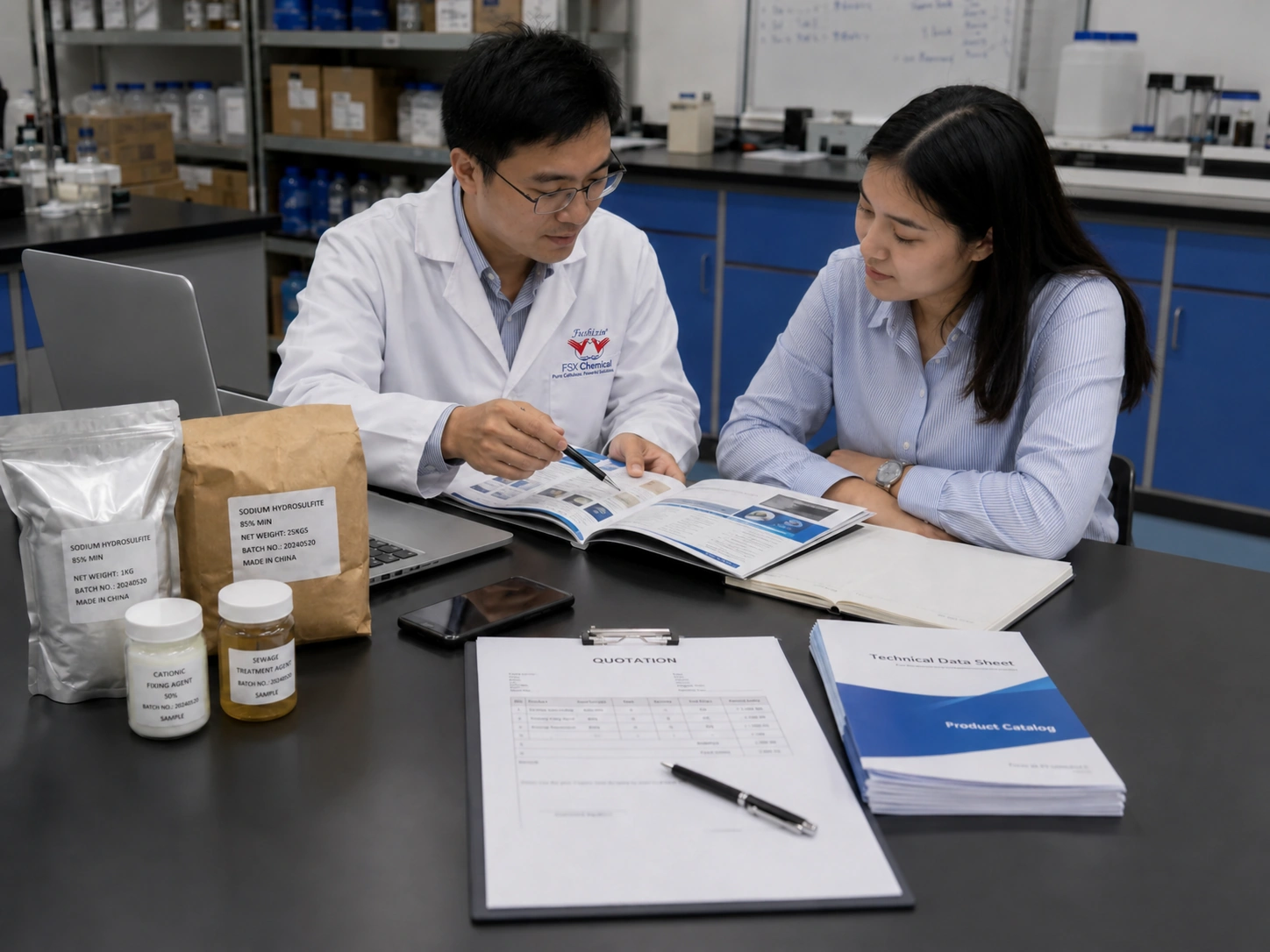
For a laboratory matching request, provide:
- Current thickener name, TDS or physical sample
- Fiber and fabric type
- Sistema de colorantes, pigmentos o tintas
- Printing and fixation method
- Current formulation and thickener dosage
- Target viscosity with concentration, temperature, spindle and speed
- Main issue, such as unstable viscosity, spreading or difficult wash-off
- Required packing and estimated purchasing quantity
Ready to Test a Printing Thickener Sample?
Send FSX Chemical your current TDS, test method, paste formulation, fabric, dye system and target performance. Our team can help identify a suitable CMC, CMS, sodium alginate or printing paste route for comparison📧 Correo electrónico: Service@fsxchemical.com