
 ID
ID  EN
EN  BN
BN  ES
ES  TR
TR  FR
FR  RU
RU  AR
AR  UR
UR  VI
VI  TL
TL  HI
HI  UK
UK  KK
KK  KA
KA  UZ
UZ 
Carboxymethyl cellulose (CMC) can be used in textile sizing and selected printing systems, but the correct grade depends on degree of substitution (DS), viscosity method, purity, salt tolerance and process chemistry. Reactive printing requires particular care: sodium alginate remains a common benchmark, while a purified or high-DS CMC grade or blend should be approved only after compatibility, color-yield and wash-off trials.
\n
Where CMC Fits in Textile Processing
\n\n\n| Aplikasi | CMC role | Qualification priority |
|---|---|---|
| Warp sizing | Film formation, adhesion and viscosity control | Yarn strength, abrasion, add-on and desizing |
| Pencetakan pigmen | Rheology component in compatible binder systems | Binder compatibility, outline, handle and curing |
| Selected reactive printing systems | Possible high-DS or purified CMC/blend after trials | Dye/alkali/salt compatibility, color yield and wash-off |
| Disperse or other printing systems | Grade and route dependent | Rheology, filtration, fixation and residue |
| Digital pretreatment | Separate application—not inferred from screen-printing grade | Jetting risk, filtration, coating uniformity and ink system |
CMC in Textile Sizing
How CMC Works as a Sizing Agent
In warp sizing, yarn is coated with a sizing agent before weaving to reduce breakage caused by friction and mechanical stress on the loom. CMC forms a flexible, water-soluble film around the yarn surface that provides temporary protection during weaving without permanently altering the fiber.
Compared to starch-based sizing agents, CMC is generally more uniform in film formation and easier to remove during desizing — an advantage in downstream processing, particularly where clean fabric is required before dyeing or finishing.
Recommended Viscosity Grades for Sizing
Viscosity is the primary parameter for sizing applications. Medium-viscosity CMC grades are most commonly used, as they provide adequate film strength without making the sizing bath too thick to apply evenly at standard loom speeds.
\nSizing concentration is process-specific. Establish the working solids from yarn count and blend, add-on target, loom conditions, desizing requirement and compatibility with starch or synthetic sizing agents; confirm performance in a controlled loom trial instead of applying a universal dosage.
\nDesizing and Washout Considerations
One practical advantage of CMC in sizing is its water solubility — it can be washed out with warm water without requiring enzymatic or chemical desizing agents, unlike some starch formulations. This simplifies the desizing step and reduces the risk of residual size affecting dye uptake in subsequent dyeing processes.
If your downstream process involves reactive or vat dyeing, confirm with your supplier that the CMC grade you are using is fully water-soluble at your desizing temperature.
CMC in Textile Printing Paste
Function as a Thickener in Paste Formulations
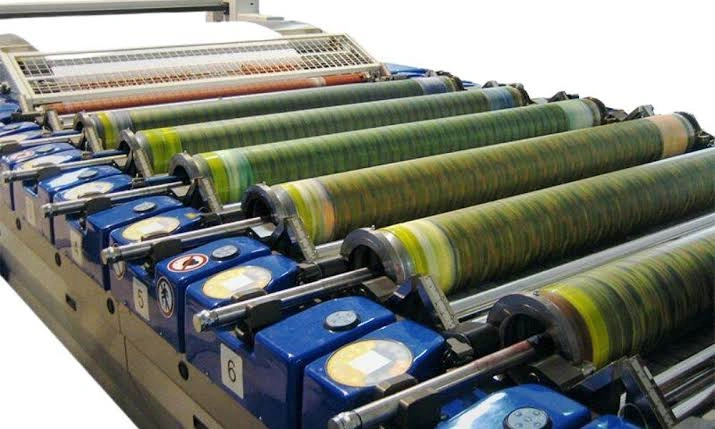
In printing paste, CMC functions as a rheology modifier — it increases paste viscosity during preparation and controls how the paste flows through the screen and transfers onto the fabric. A well-formulated paste maintains its viscosity under the mechanical shear of screen printing but recovers quickly after the squeegee passes.
CMC-based paste is used primarily in pigment printing systems, and occasionally as a co-thickener in blended reactive dye formulations. For pure reactive dye printing on cotton, sodium alginate remains the more common choice.
Recommended DS Range for Printing Applications
\nDo not specify one universal DS range for textile printing. DS affects solubility, electrolyte tolerance and interaction with dyes and auxiliaries; the appropriate value depends on the printing route and the supplier’s grade design. FSX high-DS textile CMC grades, including DS 1.3 and 1.5 options, should be compared under the same paste recipe and test method.
\n \nHigher DS can improve solubility and salt tolerance, but DS alone does not guarantee print performance. Purity, substitution uniformity, molecular-weight distribution and the full dye/alkali/electrolyte system also influence rheology, color yield and wash-off.
\nCompatibility with Pigment and Reactive Dye Systems
Before using CMC in a new paste formulation, run a compatibility check with your binder, fixative, and any other auxiliaries in the recipe. Some combinations can cause viscosity instability or phase separation during storage.
\nDefine paste holding time from the customer’s actual temperature and recipe. Measure viscosity, homogeneity and print result at preparation and at the intended production intervals; do not assume a universal 24- or 48-hour stability claim.
\n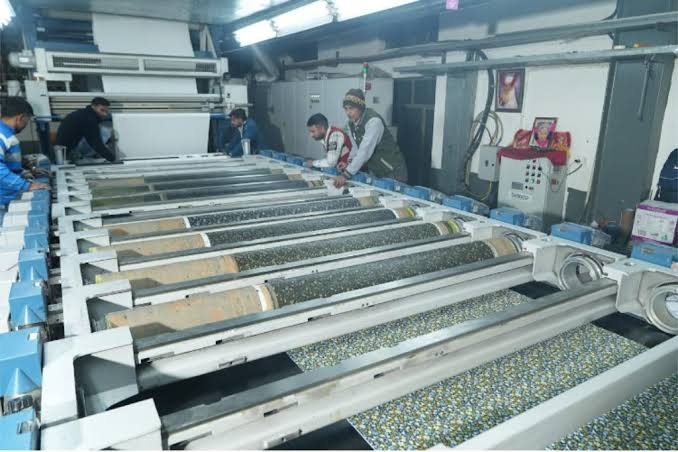
CMC in Textile Dyeing Auxiliaries
Role as a Dispersant and Stabilizer
\nCMC is not a primary dyeing auxiliary in every process. Any use in a dye bath should be treated as a customer-specific formulation question and evaluated for dye chemistry, electrolyte level, liquor flow, filtration and wash-off.
\nApplication Method and Concentration Range
\nAvoid a generic dye-bath dosage. Begin with the dye or machine supplier’s validated process, then screen the CMC grade at laboratory scale and confirm that it does not impair leveling, filtration, shade or fastness.
\nIf you are considering CMC as a dyeing auxiliary, request application guidelines from your supplier and run small-scale trials before adjusting your dye bath chemistry. The interaction between CMC and your specific dye system should be confirmed experimentally.

Selecting the Right CMC Grade for Your Process
Low vs. Medium vs. High Viscosity
CMC viscosity is measured as a percentage solution at a defined temperature — commonly 1% or 2% at 25°C. The appropriate viscosity grade depends on your application:
- Low viscosity grades are suited for dyeing auxiliaries and digital pre-treatment applications where low solution viscosity is required
- Medium viscosity grades are the most common choice for warp sizing, providing a balance of film strength and ease of application
- High viscosity grades are used in printing paste where body and rheology control are the priority
Degree of Substitution (DS) and Its Effect on Performance
DS determines how many hydroxyl groups on the cellulose chain have been substituted with carboxymethyl groups. A higher DS generally means better water solubility and more consistent behavior across a range of temperatures and pH conditions.
\nFor textile procurement, specify DS together with the analytical method and acceptance range. Compare supplier data with solubility, salt-tolerance, viscosity and application tests; a DS number without method and grade context is insufficient.
\n
What to Confirm with Your Supplier
Before ordering, request the following from your CMC supplier:
- TDS (Lembar Data Teknis) — DS range, viscosity specification, purity, and solubility
- SDS (Lembar Data Keselamatan) — kondisi penyimpanan, masa simpan, dan persyaratan penanganan
- CoA (Sertifikat Analisis) — batch-specific test results
- Jumlah sampel — for internal trials before committing to bulk volume
If you are switching from another sizing agent or thickener to CMC, a side-by-side trial comparing your current product with the new grade is the most reliable way to validate performance before full production adoption.
\nPertanyaan yang Sering Diajukan
\n\n\nWhat DS is best for textile-grade CMC?
\nThere is no universal value. Match DS to solubility, electrolyte tolerance and the exact sizing or printing chemistry, and specify the analytical method. FSX offers high-DS textile options for controlled trials.
\nCan CMC replace sodium alginate in reactive printing?
\nNot automatically. Compare a purified or high-DS CMC grade or blend with the alginate reference for rheology, color yield, fixation, wash-off and fabric handle.
\nHow should CMC viscosity be compared between suppliers?
\nUse the same solution concentration, water quality, hydration time, temperature, instrument, spindle and speed. A viscosity number without its method is not comparable.
\nWhat matters when selecting CMC for warp sizing?
\nEvaluate adhesion, film flexibility, yarn abrasion resistance, add-on consistency, loom performance and desizing—not viscosity alone.
\nHow should a mill approve a new CMC grade?
\nReview specification and COA, run controlled lab preparation and filtration checks, then conduct an application trial against the approved reference. Request sample matching with your process conditions.
\nBagaimana FSX Chemical Mendukung Proses Pengadaan Anda
Our technical team can assist with grade selection based on your application — share your fiber type, printing method, or paste formulation details and we will recommend a starting specification.
Langkah selanjutnya:
- Ajukan Permohonan TDS — for the CMC grade that matches your application
- Minta Sampel — to run internal trials before bulk ordering
- Ajukan Permohonan Penyesuaian Nilai — share your process details for a targeted recommendation
- Hubungi Tim Teknis Kami — untuk pertanyaan mengenai peralihan dari pengental pati atau pengental lainnya: Service@fsxchemical.com
