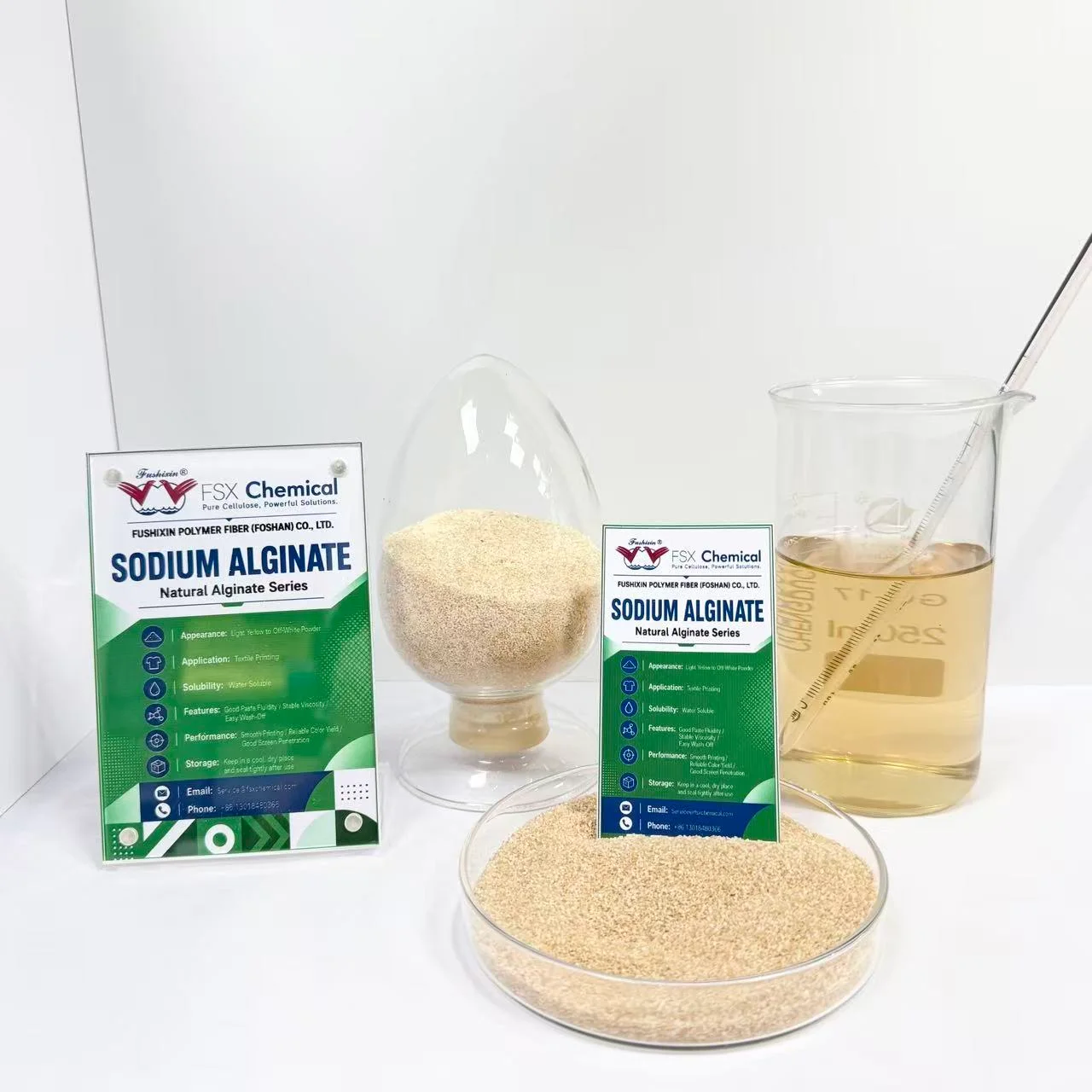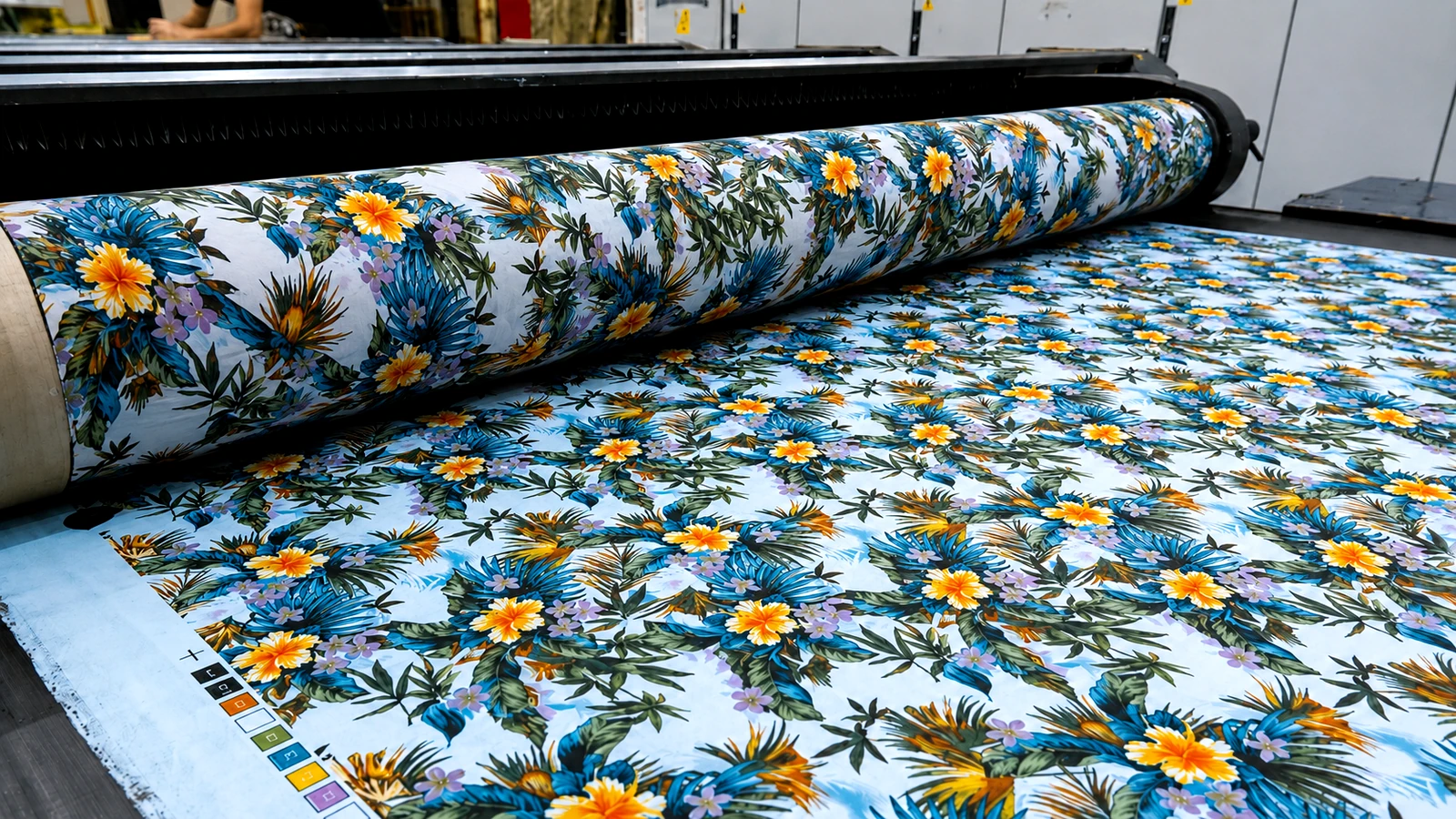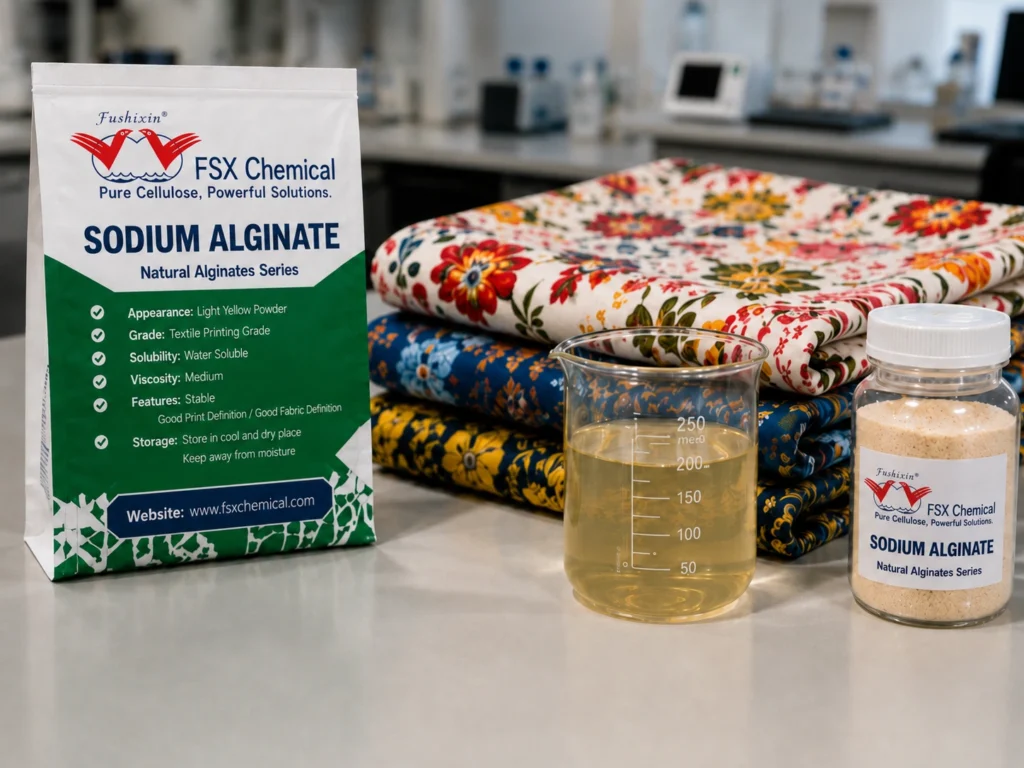
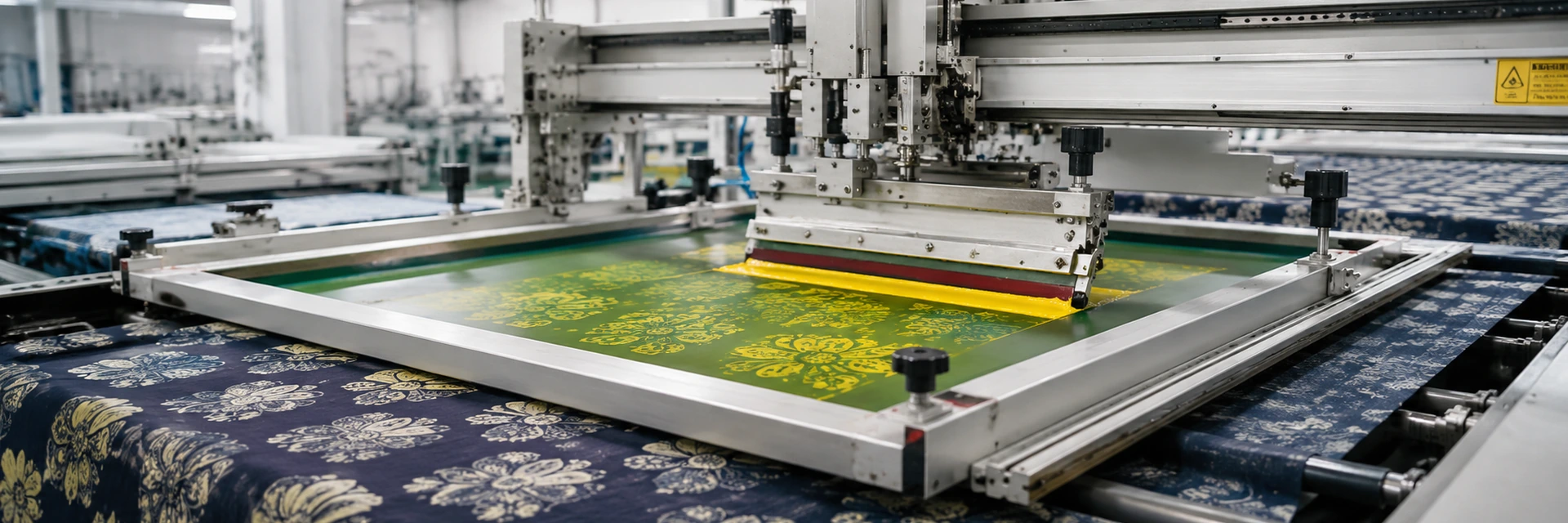
Sodium alginate is primarily a reactive textile printing thickener, not a general dye-bath auxiliary. When a buyer asks for sodium alginate “for dyeing,” first determine whether the product will enter a printing paste, a fabric pretreatment, a coating formulation or the dye bath itself. Only a process-specific trial can establish suitability outside the established reactive-printing route.
\n \nFor reactive printing on cotton or viscose, evaluate textile-grade sodium alginate for paste rheology, filtration, transfer, fixation and wash-off. For direct dye-bath addition, pigment systems, disperse printing or digital pretreatment, select the product route separately and do not infer suitability from the chemical name alone.
\nThis guide explains how buyers can evaluate sodium alginate for textile dyeing and printing applications through specifications, technical documents, sample testing, comparison with current materials, batch consistency, packaging, and export document review.
Application Boundary: Printing Paste or Dye Bath?
\n| Customer process | Sodium alginate position | Approval check |
|---|---|---|
| Reactive screen printing on cotton or viscose | Established thickener route | Viscosity method, filtration, print definition, fixation and wash-off |
| Reactive digital printing pretreatment | Possible formulation component; route-specific | Coating uniformity, filtration, ink response and storage stability |
| Pencetakan pigmen | Not the default thickener decision | Binder compatibility, curing, handle and fastness |
| Pencetakan dispersi pada poliester | Use a disperse-compatible system | Rheology, fixation route, residue and wash-off |
| Dye-bath addition | Do not assume suitability | Dye chemistry, liquor flow, filtration, leveling and final fastness |
Where Sodium Alginate Fits in Textile Applications
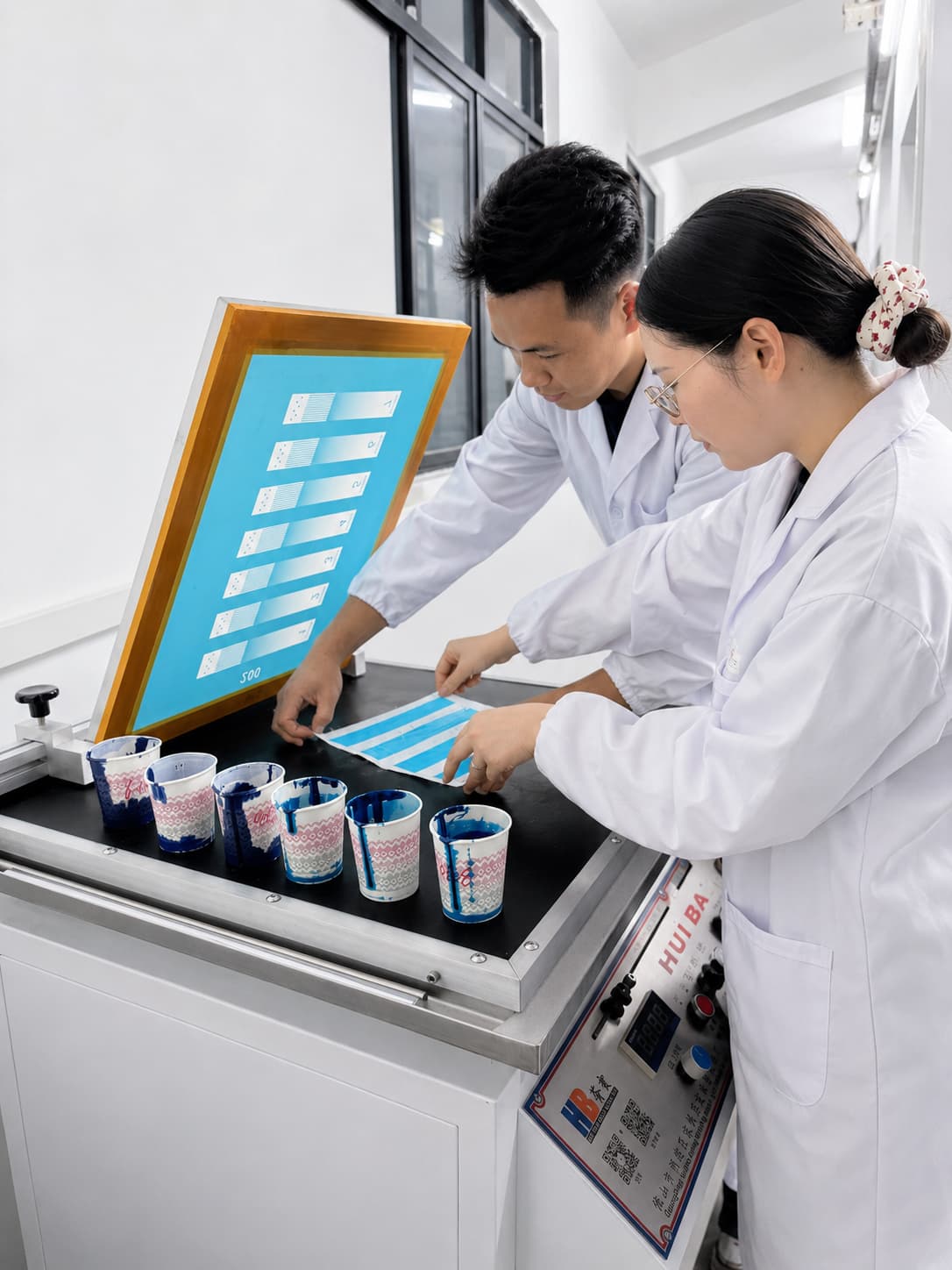
Pasta Cetak Tekstil Reaktif
For this application, buyers usually evaluate viscosity grade, mesh size, dissolution behavior, paste stability, screen passing, and consistency between sample approval and bulk shipment.
Dye Printing and Related Thickening Systems
In some dye printing or related textile formulation systems, sodium alginate may be used to adjust viscosity and support paste handling. The result depends on the full formulation, including dyes, auxiliaries, salts, pH, fabric type, and preparation process.
Buyers should test sodium alginate in their actual formulation instead of relying only on the product name.
Selected Textile Formulation Testing
Some buyers may evaluate sodium alginate together with CMC, CMS, starch-based thickeners, or blended systems. This can be useful when the buyer wants to adjust viscosity, paste smoothness, or formulation cost.
Any replacement or blending decision should be confirmed through sample testing and production evaluation.
Why Application Fit Matters
Fabric Type Affects the Result
Cotton, rayon, linen, silk, polyester, and blended fabrics may respond differently to the same printing or dyeing formulation. Fabric pretreatment, absorbency, surface structure, and finishing process can also affect the final result.
Buyers should share the fabric type and current production conditions before asking for grade matching.
Dye System and Auxiliaries Need Compatibility Testing
Sodium alginate should be tested with the buyer’s actual dye system and auxiliaries. Compatibility issues may appear as viscosity drift, separation, poor leveling, filtration difficulty, uneven printing, or unstable shade performance.
Pengujian hanya di air bersih mungkin tidak cukup untuk memastikan apakah kualitas air tersebut sesuai untuk produksi.
Water Quality and pH Can Influence Performance
Water quality, hardness, pH, temperature, and preparation method can affect dissolution, viscosity development, and paste stability. If the buyer uses hard water or a special process condition, this should be included in the sample testing plan.
These factors are often practical reasons why the same product may behave differently in different factories.
Spesifikasi Utama yang Harus Diperhatikan Pembeli
Viscosity Grade and Testing Method
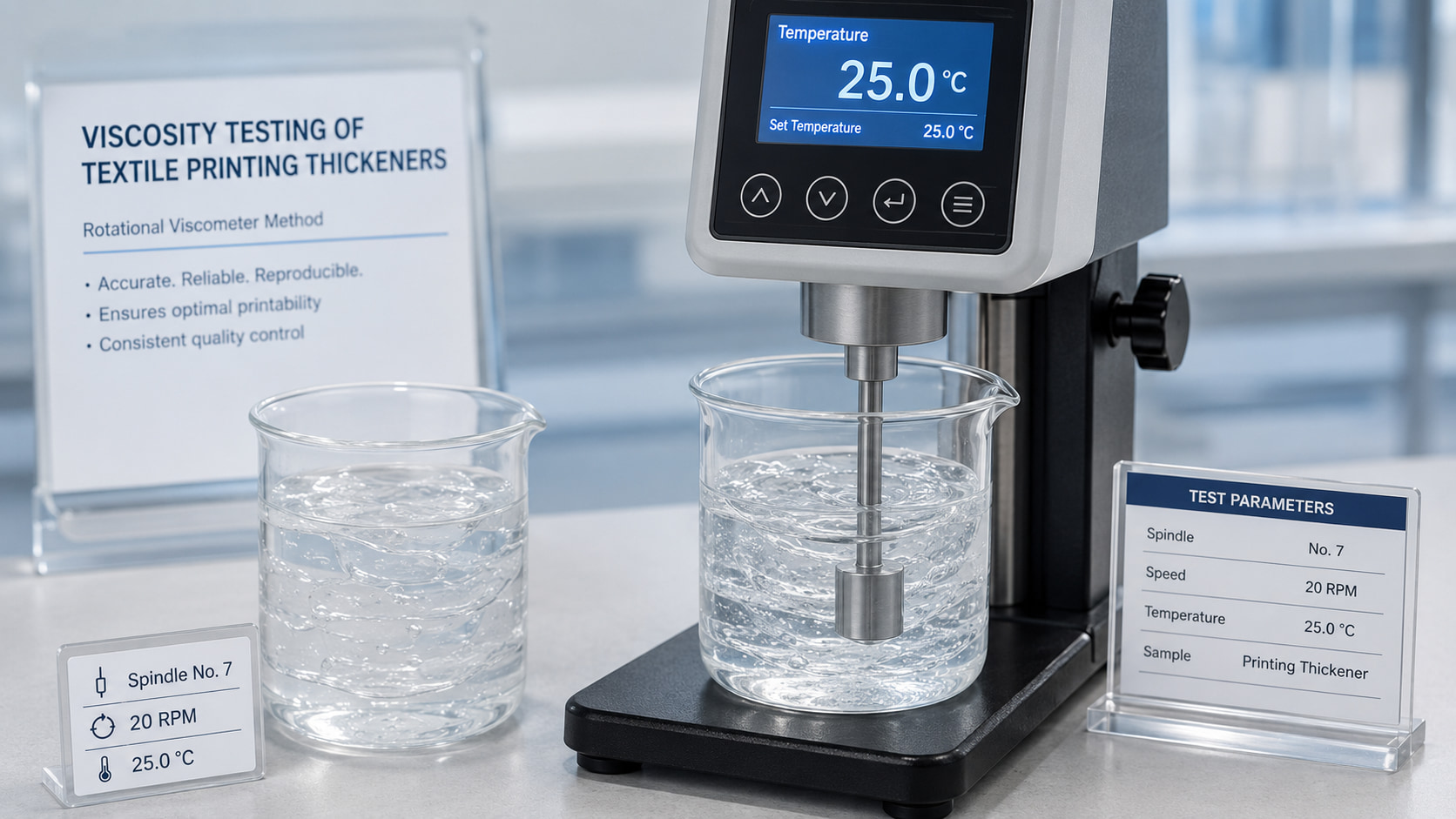
Viscosity is one of the most important parameters for sodium alginate used in textile printing and related thickening systems. Buyers should review the viscosity range together with the test concentration, temperature, instrument method, and unit.
Without a clear viscosity testing method, values from different suppliers may not be directly comparable.
Ukuran Jaring dan Perilaku Pelarutan
Mesh size can influence dispersion and hydration during paste preparation. However, actual dissolution behavior also depends on water quality, stirring speed, addition method, temperature, preparation time, and formulation conditions.
Buyers should test dissolution speed, lump formation, paste smoothness, and filtration behavior under their own production conditions.
Kelembapan, pH, dan Penampilan
Moisture, pH, and appearance are basic but important quality indicators. They affect storage, handling, internal quality control, and repeat purchasing.
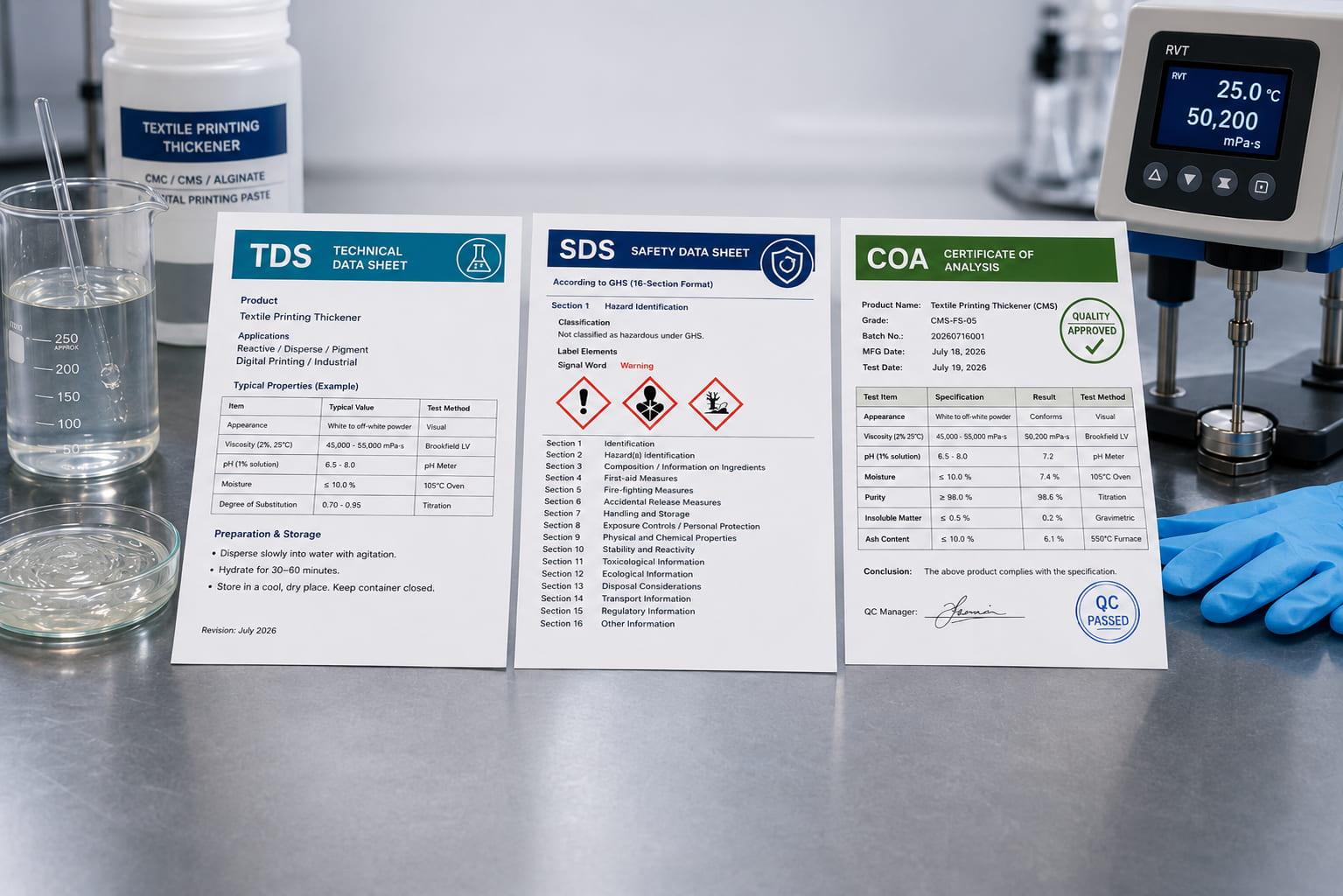
Parameter-parameter ini harus ditinjau dalam TDS dan dikonfirmasi melalui data COA untuk setiap batch produksi.
Paste Smoothness and Filtration
For textile printing paste, paste smoothness and filtration behavior are important practical indicators. Poor dispersion or unstable paste may create screen blocking, uneven application, or extra production adjustment.
These points should be checked in laboratory testing and, when possible, in pilot or production trials.
Dokumen yang Harus Diminta oleh Pembeli
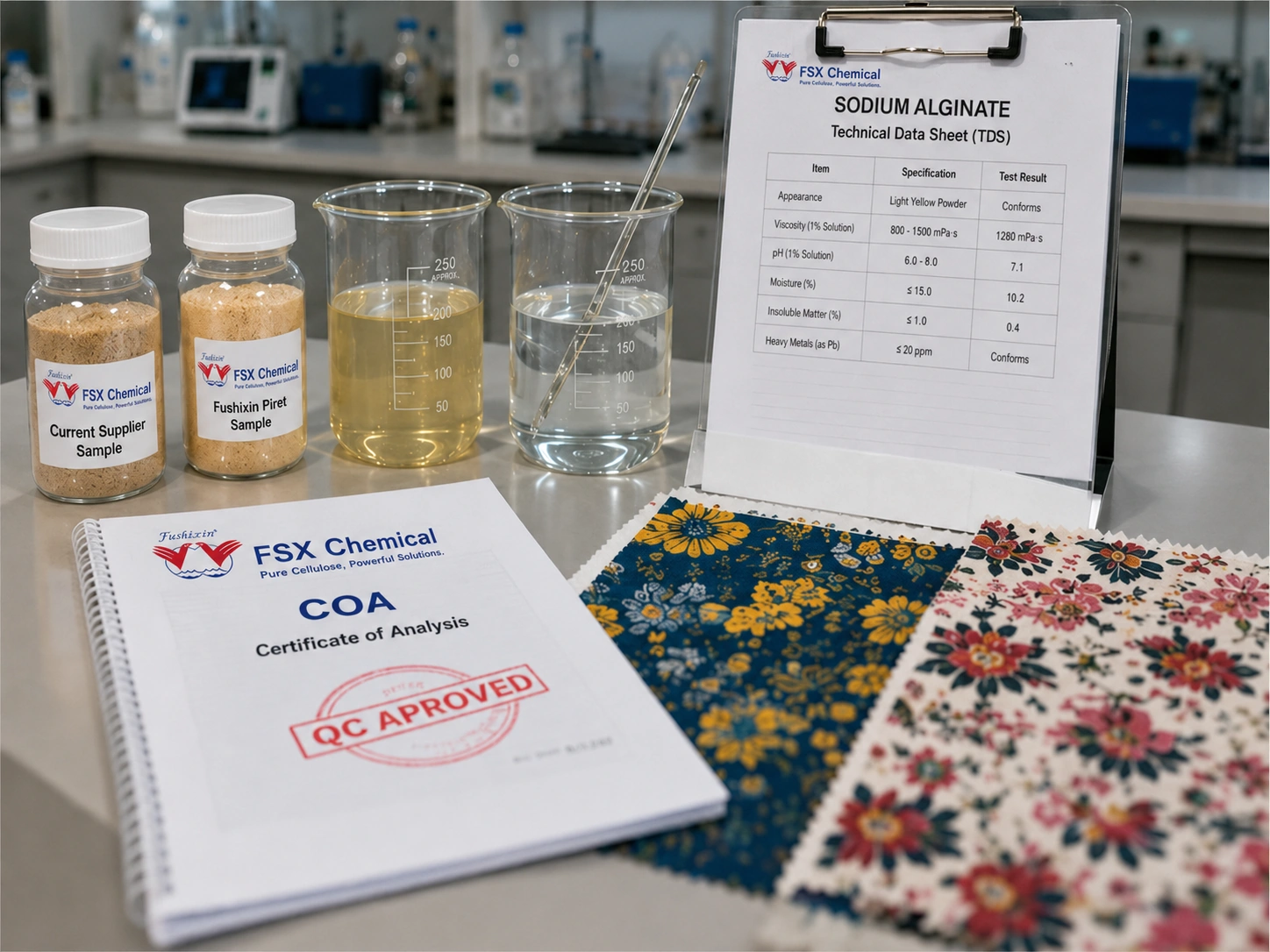
TDS untuk Tinjauan Spesifikasi
The Technical Data Sheet helps buyers review the standard product specification. It should include appearance, viscosity, mesh size, moisture, pH, storage conditions, and testing method.
The TDS supports initial grade screening, but it should not replace sample testing in the buyer’s own formulation.
COA untuk Konfirmasi Batch
Sertifikat Analisis menegaskan data aktual dari suatu batch produksi tertentu. Hal ini penting untuk pesanan dalam jumlah besar, pembelian berulang, pasokan kepada distributor, dan pengendalian mutu internal.
Pembeli dapat membandingkan catatan COA dari berbagai pengiriman untuk memeriksa apakah parameter-parameter utama tetap berada dalam kisaran yang telah disepakati.
SDS for Handling and Shipment Review
The Safety Data Sheet supports handling, storage, transport, and internal safety review. For international purchasing, SDS may also be needed for shipment and customs-related communication.
Buyers should make sure the SDS product name and supplier information match the order documents.
Additional Customer or Compliance Documents
If the buyer needs restricted-substance statements, environmental documents, customer audit questionnaires, certificate copies, or third-party testing support, those requirements should be discussed before order confirmation.
A practical supplier should explain which documents can be provided and which claims require formal third-party testing or certification.
Cara Menguji Sodium Alginat Sebelum Membeli dalam Jumlah Besar
Test in the Actual Formula
Testing only in water may not be enough to confirm whether the sodium alginate grade is suitable for production.
Observe Preparation and Application Behavior
During testing, buyers should observe dissolution speed, lump formation, viscosity development, paste smoothness, filtration behavior, storage stability, screen passing, leveling, penetration, and application handling.
Pengamatan praktis ini seringkali sama pentingnya dengan data spesifikasi yang tercantum dalam TDS.
Compare with the Current Product
If the buyer is replacing an existing sodium alginate, CMC, CMS, starch-based thickener, or blended system, the new sample should be tested against the current material under the same conditions.
This helps the buyer judge whether the recommended grade is technically suitable before discussing bulk supply.
Confirm Sample-to-Bulk Consistency
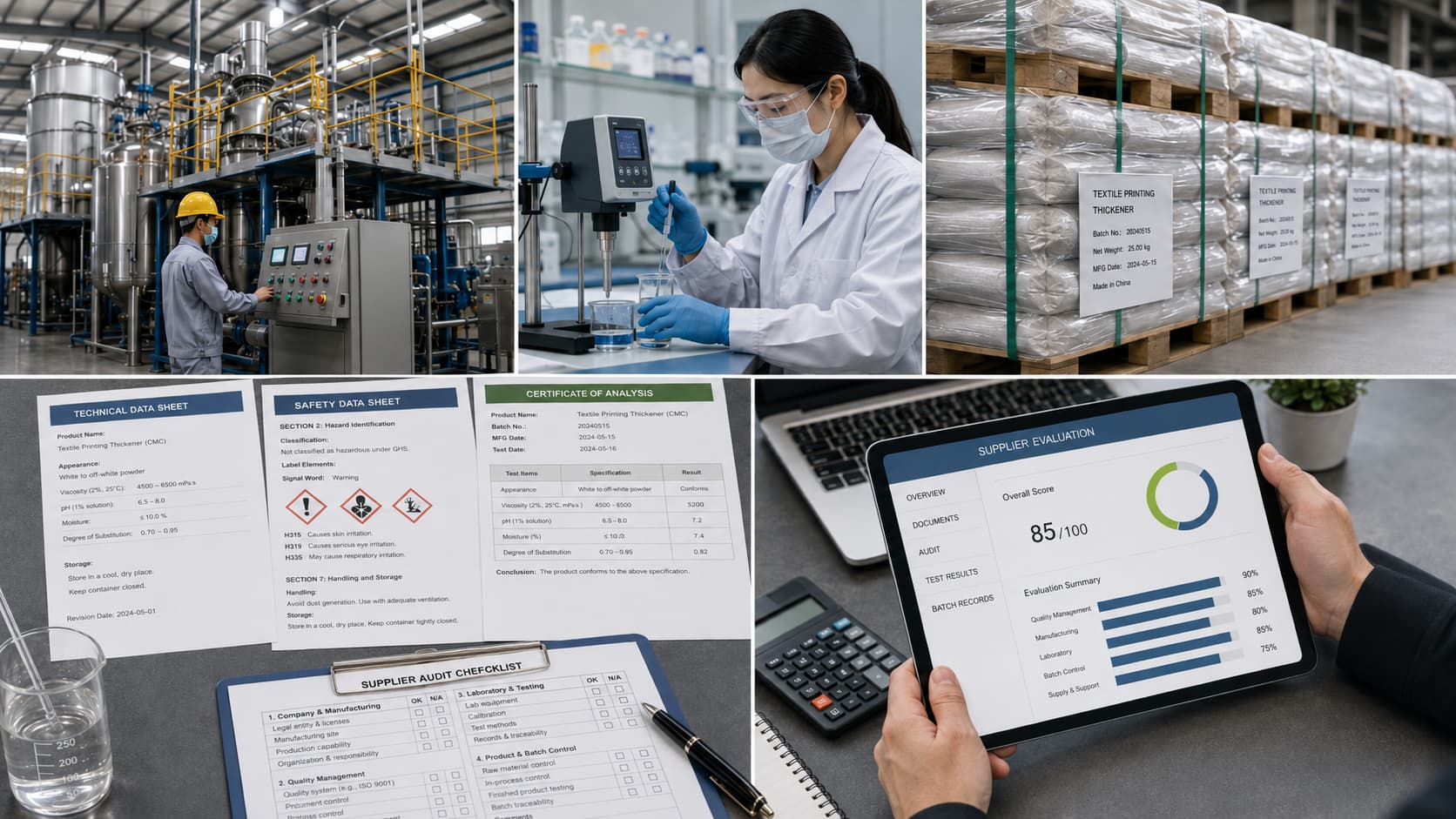
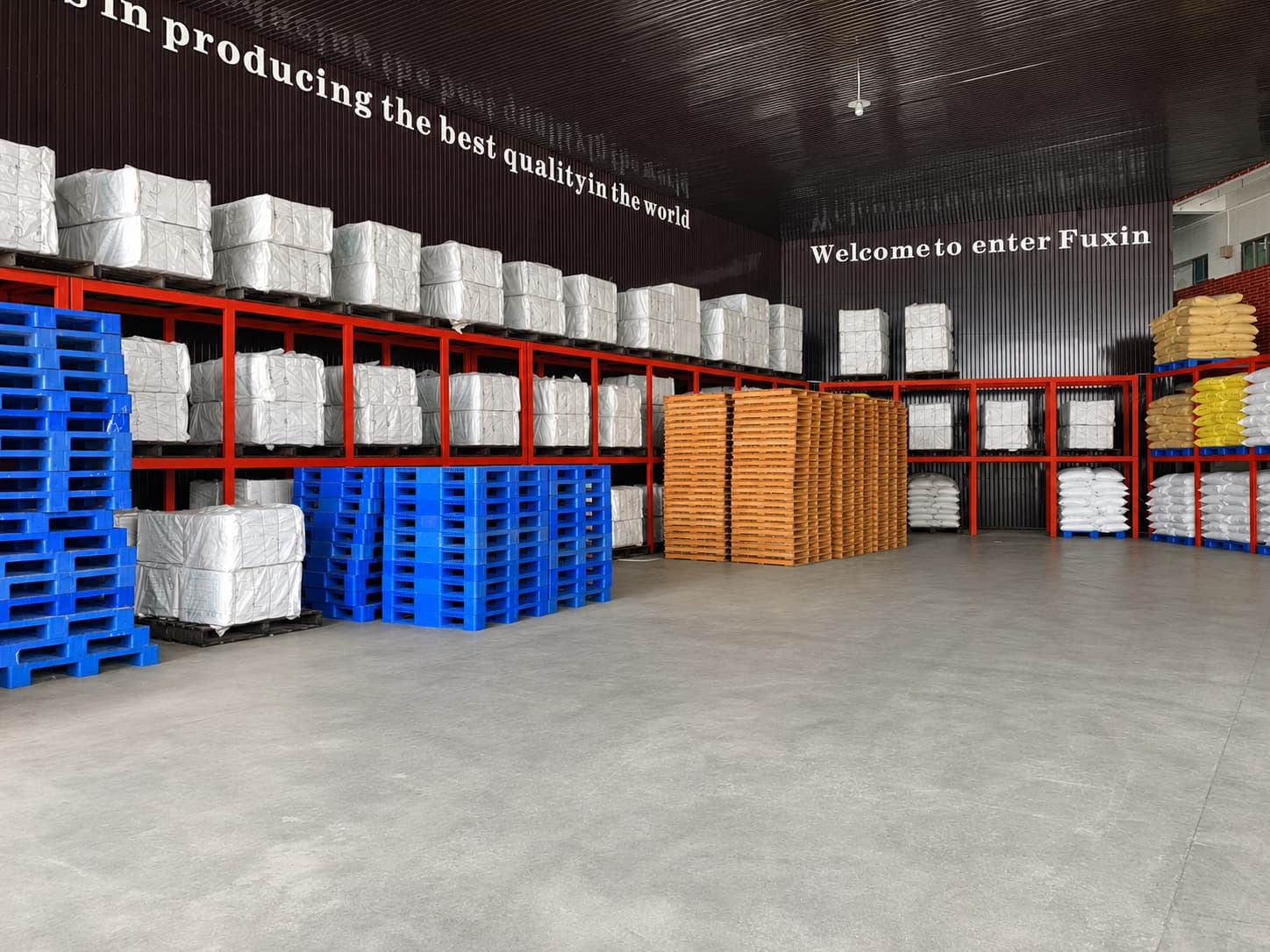
Before confirming a bulk order, buyers should check whether the approved sample and bulk shipment will follow the same viscosity range, mesh size, specification range, packaging format, batch traceability, and COA requirements.
This helps reduce the risk of sample approval but unstable bulk performance later.
Sodium Alginate vs CMC: How Buyers Should Compare
Start from the Application
Sodium alginate and CMC can both be used in selected textile-related thickening or formulation systems, but they are not automatically interchangeable. The suitable choice depends on the dye system, fabric type, viscosity target, solubility, pH, and production process.
Buyers should avoid simple conclusions such as one material always being better than the other.
Compare Under the Same Conditions
If the buyer wants to compare sodium alginate with CMC, CMS, starch, or another thickener, the comparison should be done in the same formulation and under the same preparation method.
Important comparison points may include viscosity, dissolution speed, paste smoothness, filtration, stability, fabric hand feel, application result, and total use cost.
Review Documents and Batch Data
Both sodium alginate and CMC should be compared by technical documents and batch data, not only product names. Buyers should request TDS, COA, SDS where applicable, and sample test results before making a decision.
Common Issues and Troubleshooting Points
Lumps During Preparation
Lumps may be related to fast addition, insufficient dispersion, unsuitable stirring, water quality, or preparation method. Buyers should record the preparation conditions during sample testing.
Unstable Viscosity
Viscosity drift may be caused by water quality, temperature, pH, standing time, formulation compatibility, or grade mismatch.
Buyers should compare production conditions with the supplier’s viscosity testing method.
Uneven Shade or Pattern Control
Uneven results may be related to paste viscosity, leveling, penetration, fabric pretreatment, printing equipment, dye system, or drying process.
The full production system should be reviewed before changing only one raw material.
Screen Blocking or Poor Filtration
Screen blocking or filtration difficulty may come from poor dissolution, formulation incompatibility, particle contamination, unsuitable viscosity, or insufficient filtration before application.
Pertanyaan yang Sering Diajukan
\n\n\nIs sodium alginate used in textile dyeing baths?
\nIt is not a universal dye-bath auxiliary. Its established textile role is as a reactive-printing thickener. Any dye-bath use requires application-specific compatibility and process testing.
\nWhich fabrics are most relevant to sodium alginate reactive printing?
\nCotton and viscose are common cellulosic substrates. Confirm the reactive dye class, fabric pretreatment, paste formulation, fixation and wash-off conditions.
\nCan the same alginate grade be used for screen and digital printing?
\nDo not assume this. Screen paste and digital pretreatment have different filtration, coating, storage and ink-response requirements. Qualify each route separately.
\nHow should two sodium alginate grades be compared?
\nUse equal solution concentration and the same water, hydration time, temperature, instrument, spindle and speed, then compare the complete printing paste and final fabric.
\nWhat information should be sent for grade matching?
\nSend the fabric, dye or ink, printing or pretreatment method, current product and dosage, full viscosity method, additives, fixation route and the main production problem. Use Sampel & Pencocokan Grade for a controlled comparison.
\nBagaimana FSX Chemical Mendukung Para Pembeli Sodium Alginat
Our support is focused on practical grade matching and export procurement. We can provide TDS, COA, SDS where applicable, sample support, and formulation discussion based on the customer’s fabric type, dye system, printing or dyeing process, target viscosity, current formulation, packaging needs, order quantity, and document requirements.
We do not suggest choosing sodium alginate only by product name, broad environmental claims, regional claims, or price. The recommended grade should be reviewed through technical documents and tested in the buyer’s own textile formulation before bulk purchase.
Langkah Selanjutnya
- Bagikan Aplikasi Anda — tell us whether the product will be used in reactive printing paste, dye printing formulation, textile dyeing support, or another textile process.
- Clarify Fabric and Dye System — provide fabric type, dye system, auxiliaries, water quality, pH, and preparation method.
- Tentukan Viskositas Target Anda — provide viscosity range, test concentration, temperature, instrument method, and current product grade if available.
- Permohonan Penyesuaian Nilai — ask for a suitable sodium alginate, CMC, or blended thickener recommendation based on your actual production conditions.
- Ajukan Permohonan TDS — review viscosity, mesh size, pH, moisture, appearance, storage conditions, and testing method.
- Ajukan Permohonan COA — pastikan apakah data batch sesuai dengan rentang spesifikasi yang telah disepakati sebelum pengiriman.
- Request an SDS — check handling, storage, transport, and product information.
- Minta Sampel — test the recommended grade in your own textile formulation before confirming bulk orders.
- Compare with Current Materials — evaluate sodium alginate against your existing CMC, CMS, starch-based thickener, or blended system under similar conditions.
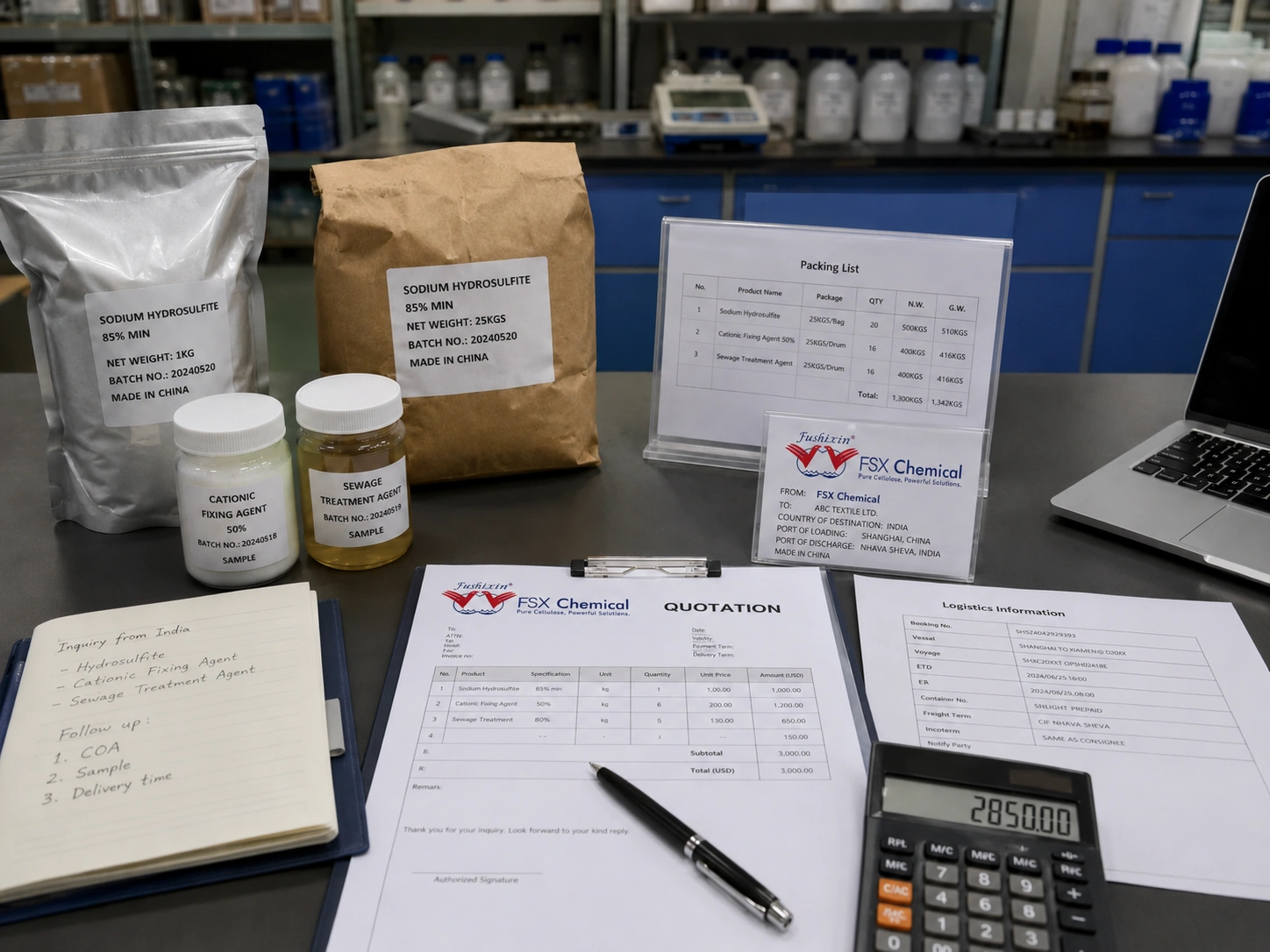
- Memastikan Keabsahan Dokumen Pengemasan dan Ekspor — check bag size, labels, batch traceability, invoice, packing list, COA, SDS, and other required documents before shipment.
- Hubungi Tim Teknis Kami — discuss which sodium alginate grade is suitable for your textile dyeing or printing application📧 Email: Service@fsxchemical.com