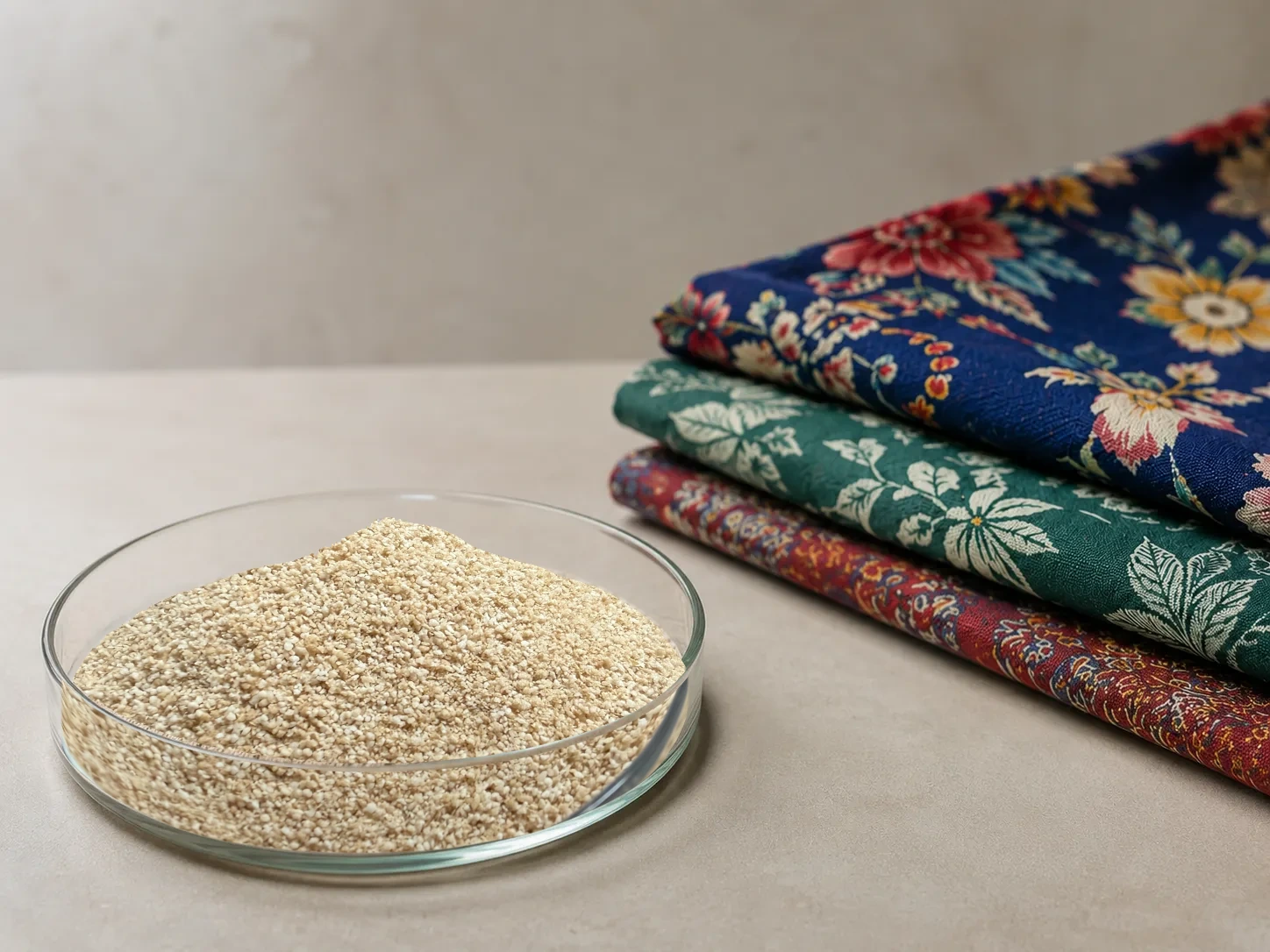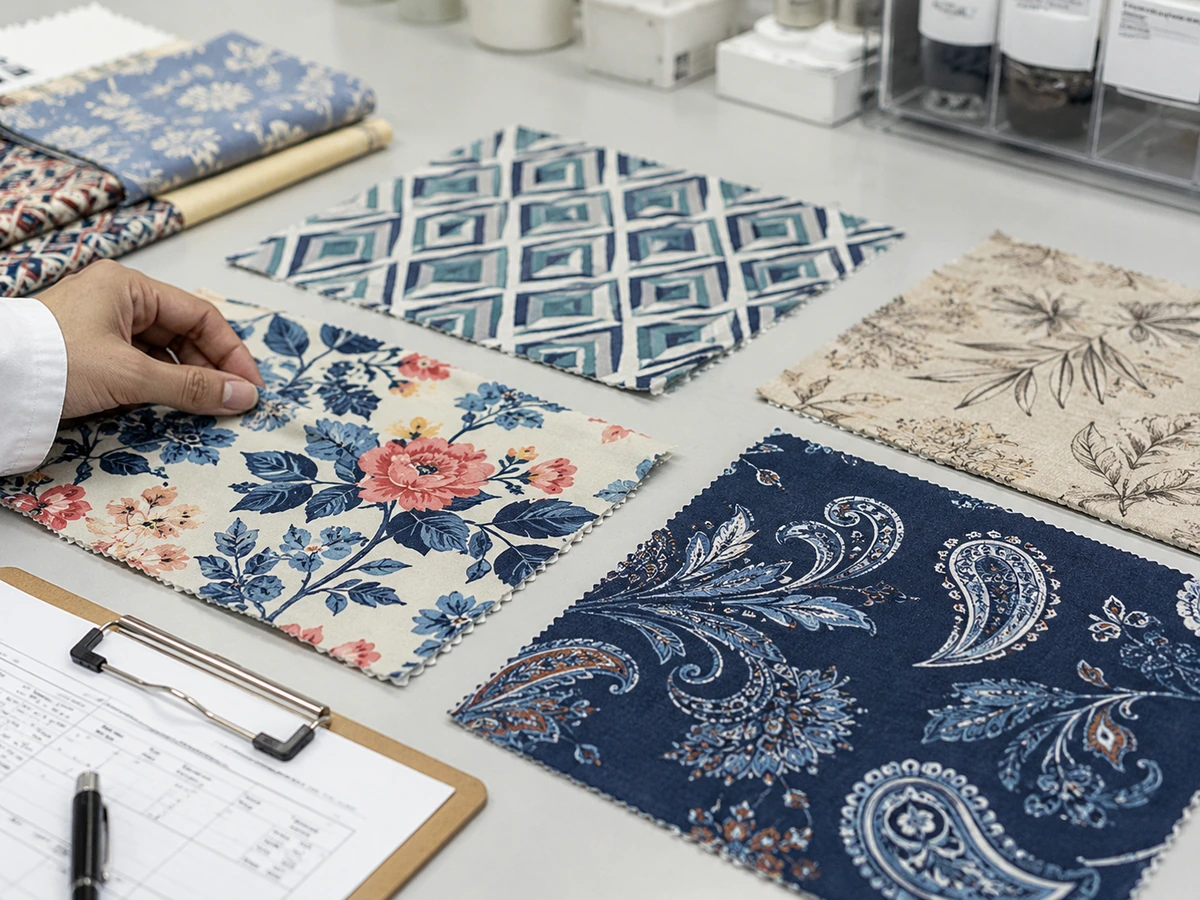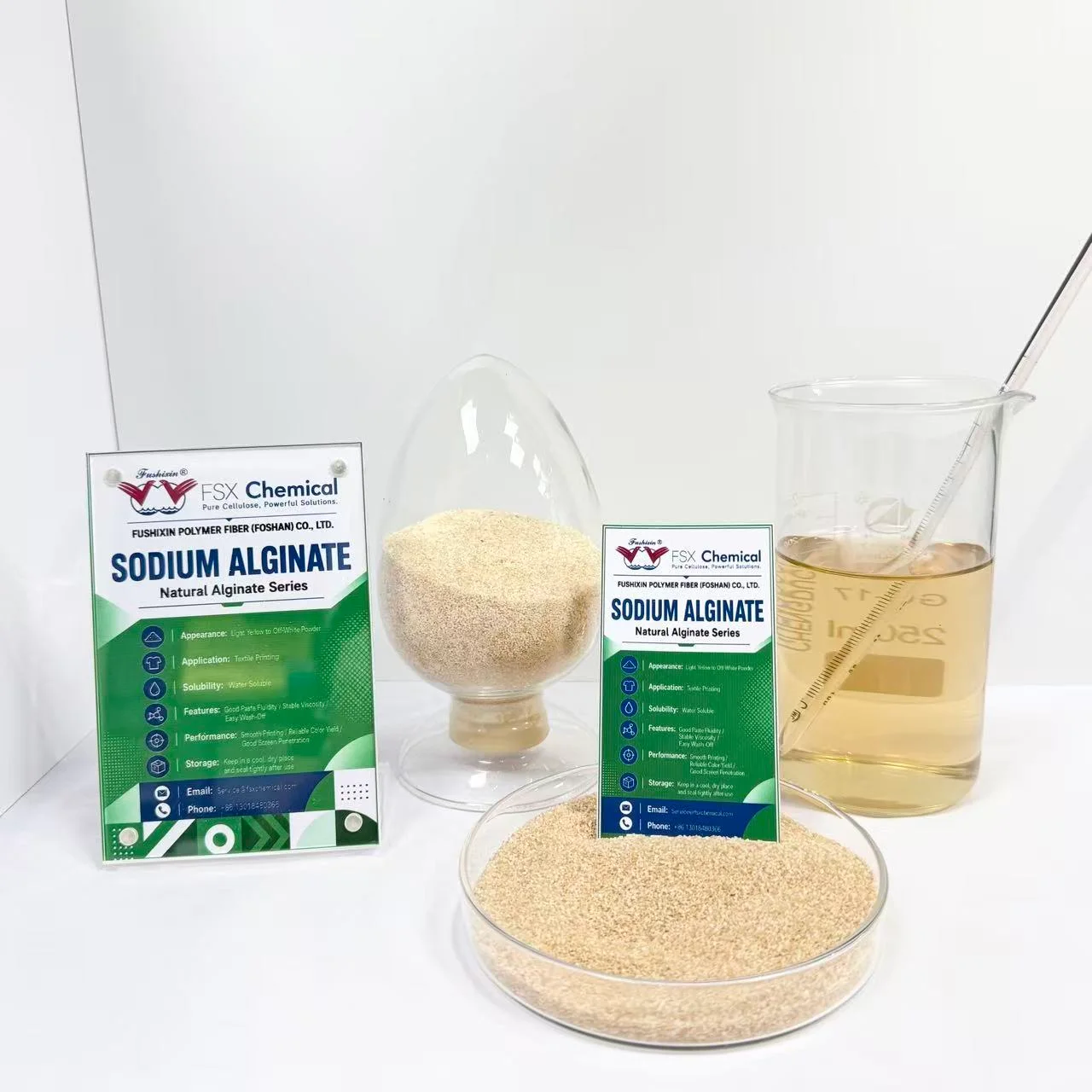















Sodium alginate is primarily a reactive textile printing thickener, not a general dye-bath auxiliary. When a buyer asks for sodium alginate “for dyeing,” first determine whether the product will enter a printing paste, a fabric pretreatment, a coating formulation or the dye bath itself. Only a process-specific trial can establish suitability outside the established reactive-printing route.
For reactive printing on cotton or viscose, evaluate textile-grade sodium alginate for paste rheology, filtration, transfer, fixation and wash-off. For direct dye-bath addition, pigment systems, disperse printing or digital pretreatment, select the product route separately and do not infer suitability from the chemical name alone.
This guide explains how buyers can evaluate sodium alginate for textile dyeing and printing applications through specifications, technical documents, sample testing, comparison with current materials, batch consistency, packaging, and export document review.
Application Boundary: Printing Paste or Dye Bath?
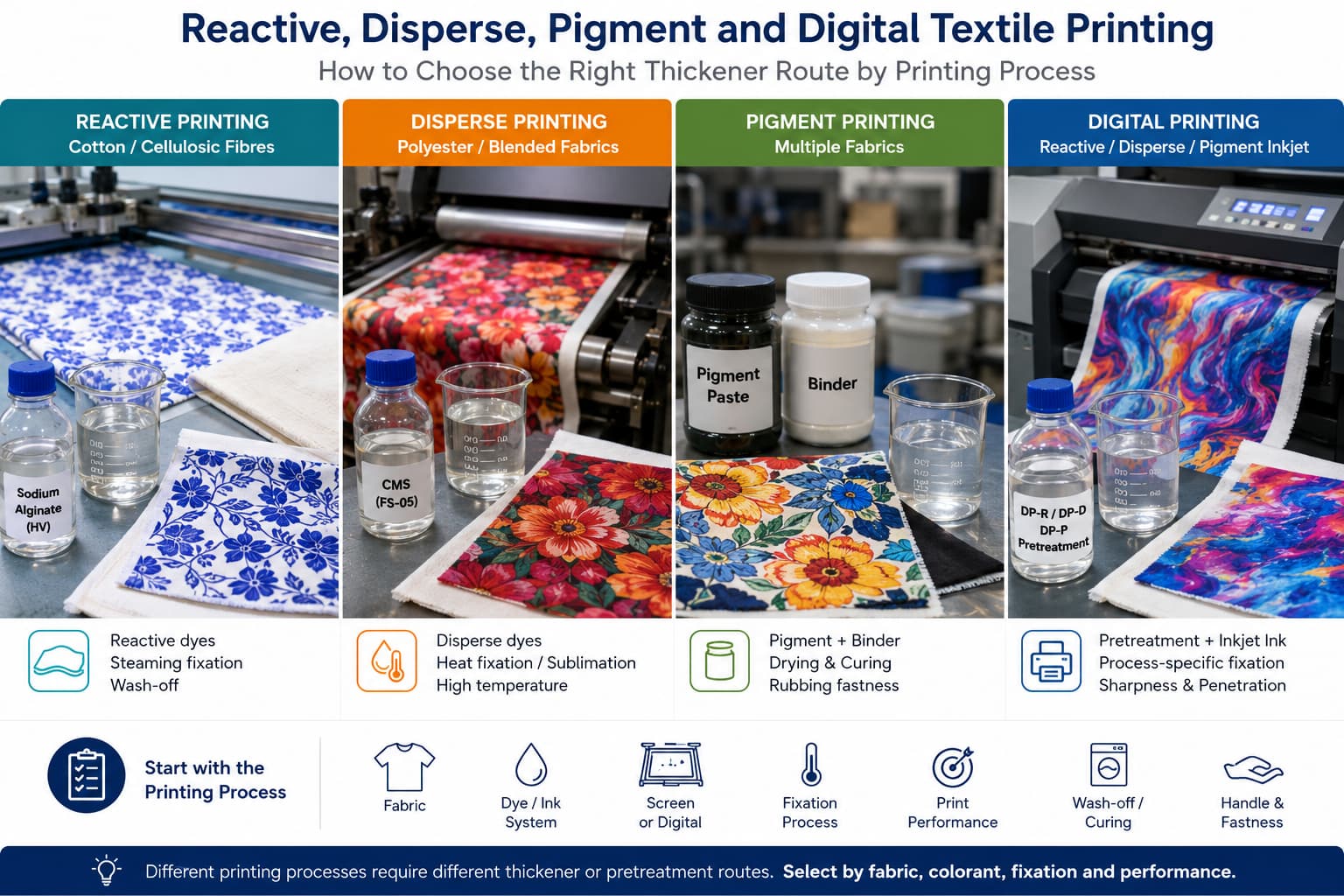
| Customer process | Sodium alginate position | Approval check |
|---|---|---|
| Reactive screen printing on cotton or viscose | Established thickener route | Viscosity method, filtration, print definition, fixation and wash-off |
| Reactive digital printing pretreatment | Possible formulation component; route-specific | Coating uniformity, filtration, ink response and storage stability |
| Impresión con pigmentos | Not the default thickener decision | Binder compatibility, curing, handle and fastness |
| Impresión por dispersión sobre poliéster | Use a disperse-compatible system | Rheology, fixation route, residue and wash-off |
| Dye-bath addition | Do not assume suitability | Dye chemistry, liquor flow, filtration, leveling and final fastness |
Where Sodium Alginate Fits in Textile Applications
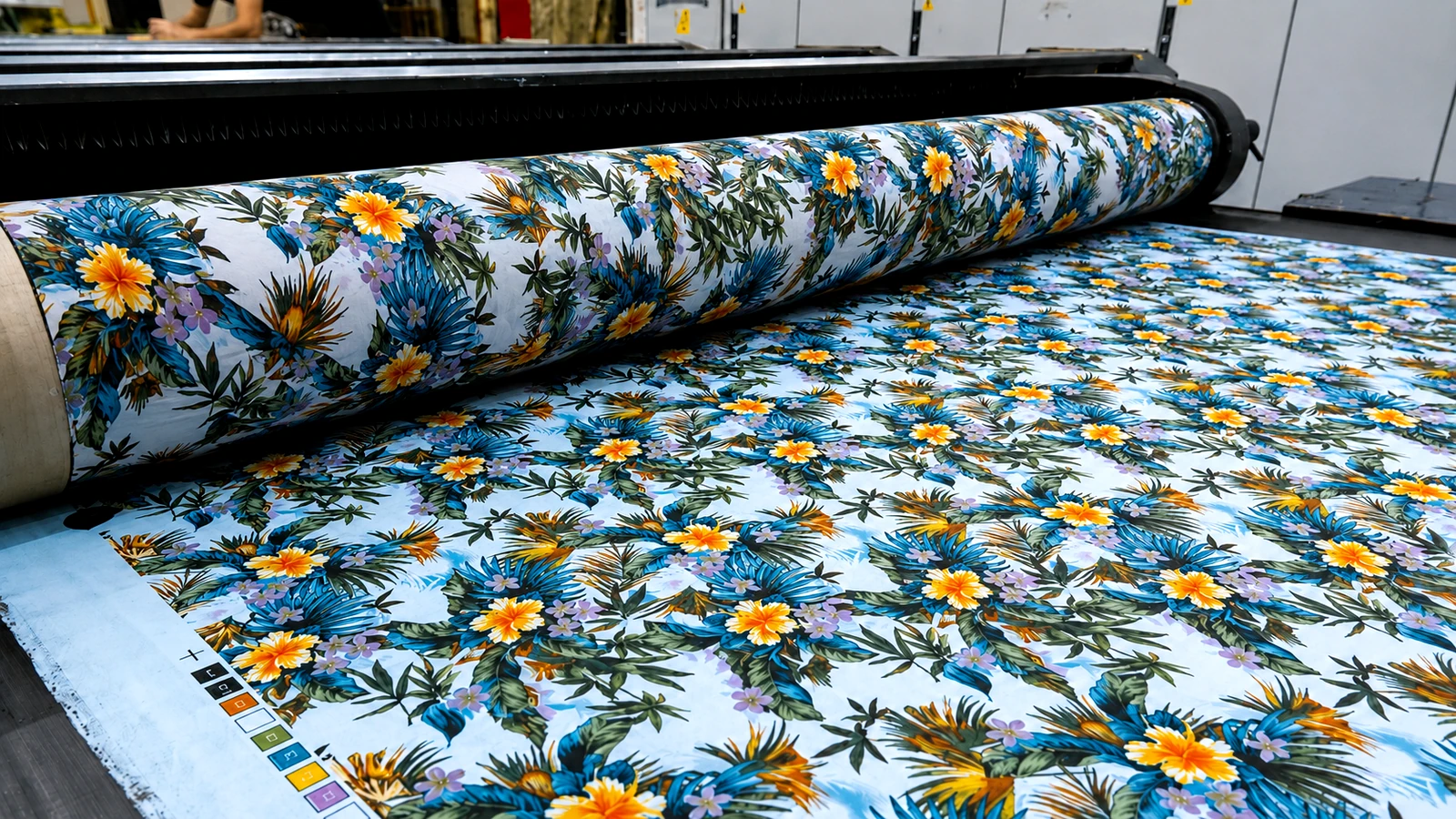
Pasta reactiva para impresión textil
For this application, buyers usually evaluate viscosity grade, mesh size, dissolution behavior, paste stability, screen passing, and consistency between sample approval and bulk shipment.
Dye Printing and Related Thickening Systems
In some dye printing or related textile formulation systems, sodium alginate may be used to adjust viscosity and support paste handling. The result depends on the full formulation, including dyes, auxiliaries, salts, pH, fabric type, and preparation process.
Buyers should test sodium alginate in their actual formulation instead of relying only on the product name.
Selected Textile Formulation Testing
Some buyers may evaluate sodium alginate together with CMC, CMS, starch-based thickeners, or blended systems. This can be useful when the buyer wants to adjust viscosity, paste smoothness, or formulation cost.
Any replacement or blending decision should be confirmed through sample testing and production evaluation.
Why Application Fit Matters
Fabric Type Affects the Result
Cotton, rayon, linen, silk, polyester, and blended fabrics may respond differently to the same printing or dyeing formulation. Fabric pretreatment, absorbency, surface structure, and finishing process can also affect the final result.
Buyers should share the fabric type and current production conditions before asking for grade matching.
Dye System and Auxiliaries Need Compatibility Testing
Sodium alginate should be tested with the buyer’s actual dye system and auxiliaries. Compatibility issues may appear as viscosity drift, separation, poor leveling, filtration difficulty, uneven printing, or unstable shade performance.
Testing only in clean water may not be enough to confirm whether the grade is suitable for production.
Water Quality and pH Can Influence Performance
Water quality, hardness, pH, temperature, and preparation method can affect dissolution, viscosity development, and paste stability. If the buyer uses hard water or a special process condition, this should be included in the sample testing plan.
These factors are often practical reasons why the same product may behave differently in different factories.
Especificaciones clave que los compradores deben revisar
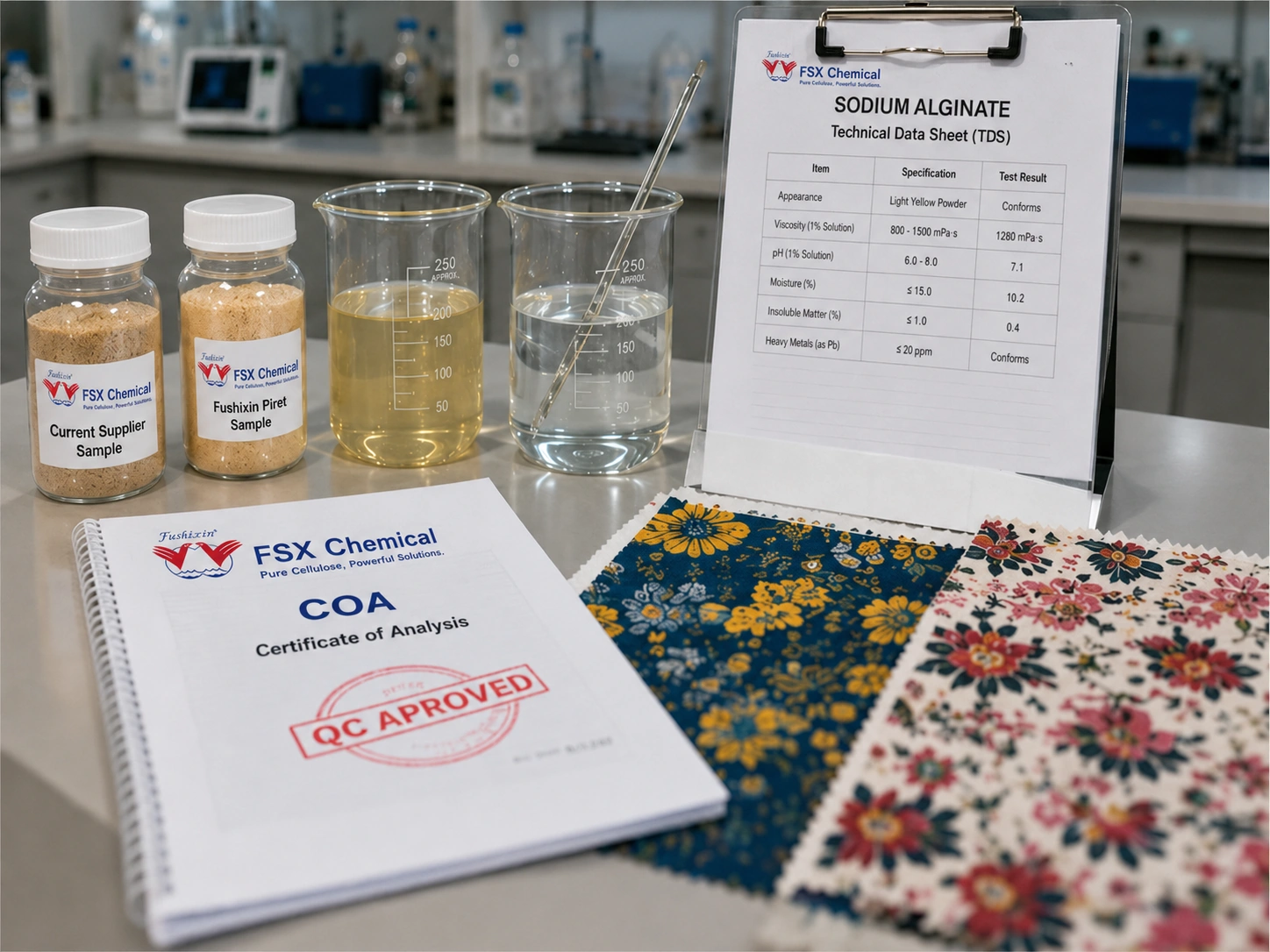
Grado de viscosidad y método de prueba
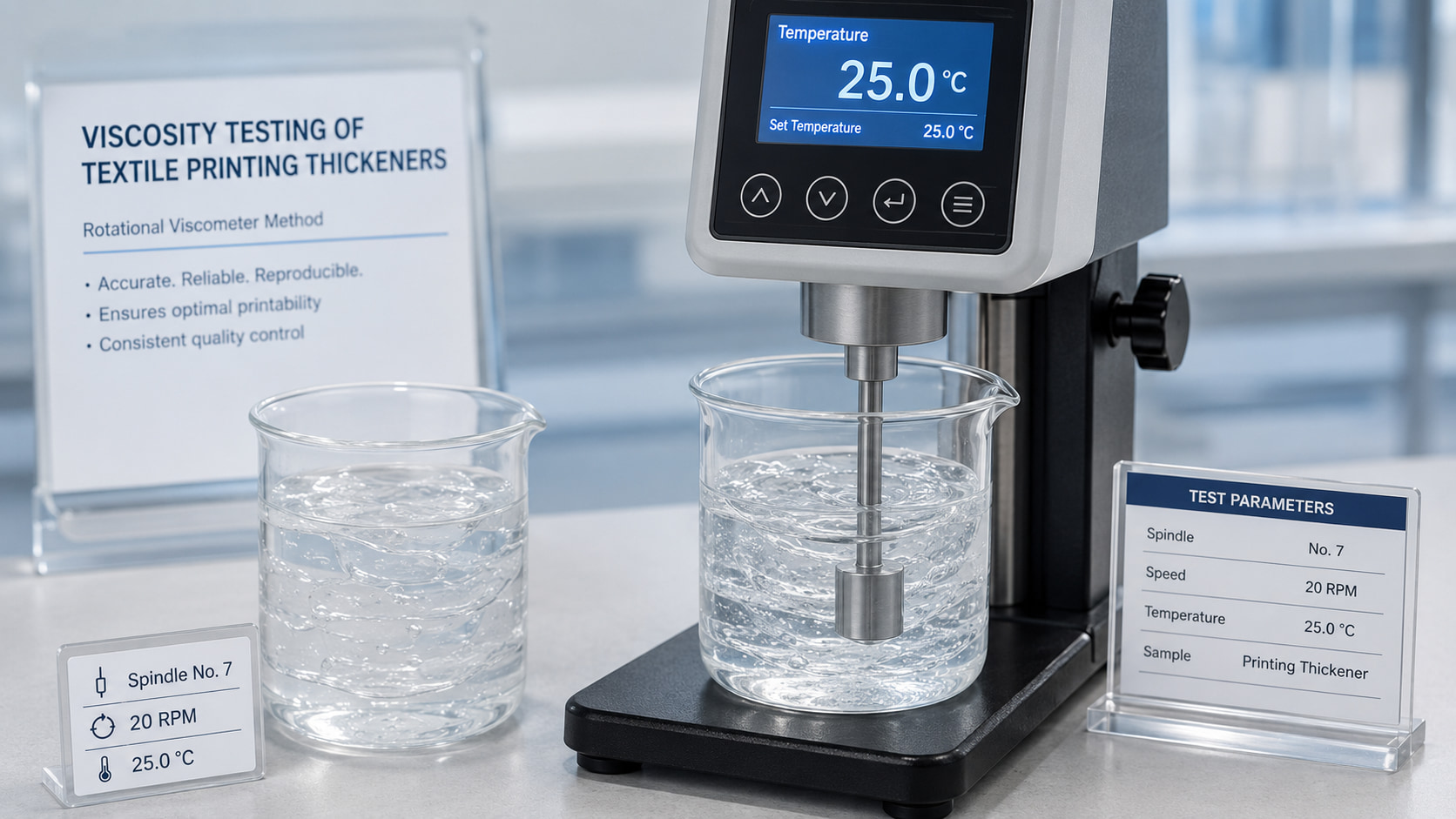
Viscosity is one of the most important parameters for sodium alginate used in textile printing and related thickening systems. Buyers should review the viscosity range together with the test concentration, temperature, instrument method, and unit.
Sin un método claro para medir la viscosidad, es posible que los valores proporcionados por distintos proveedores no sean directamente comparables.
Tamaño de malla y comportamiento de disolución
Mesh size can influence dispersion and hydration during paste preparation. However, actual dissolution behavior also depends on water quality, stirring speed, addition method, temperature, preparation time, and formulation conditions.
Los compradores deben evaluar la velocidad de disolución, la formación de grumos, la textura de la pasta y el comportamiento de filtración en sus propias condiciones de producción.
Humedad, pH y aspecto
La humedad, el pH y la apariencia son indicadores de calidad básicos pero importantes. Influyen en el almacenamiento, la manipulación, el control de calidad interno y la repetición de compras.
Estos parámetros deben revisarse en la ficha técnica del producto (TDS) y confirmarse mediante los datos del certificado de análisis (COA) para cada lote de producción.
Paste Smoothness and Filtration
For textile printing paste, paste smoothness and filtration behavior are important practical indicators. Poor dispersion or unstable paste may create screen blocking, uneven application, or extra production adjustment.
These points should be checked in laboratory testing and, when possible, in pilot or production trials.
Documentos que deben solicitar los compradores
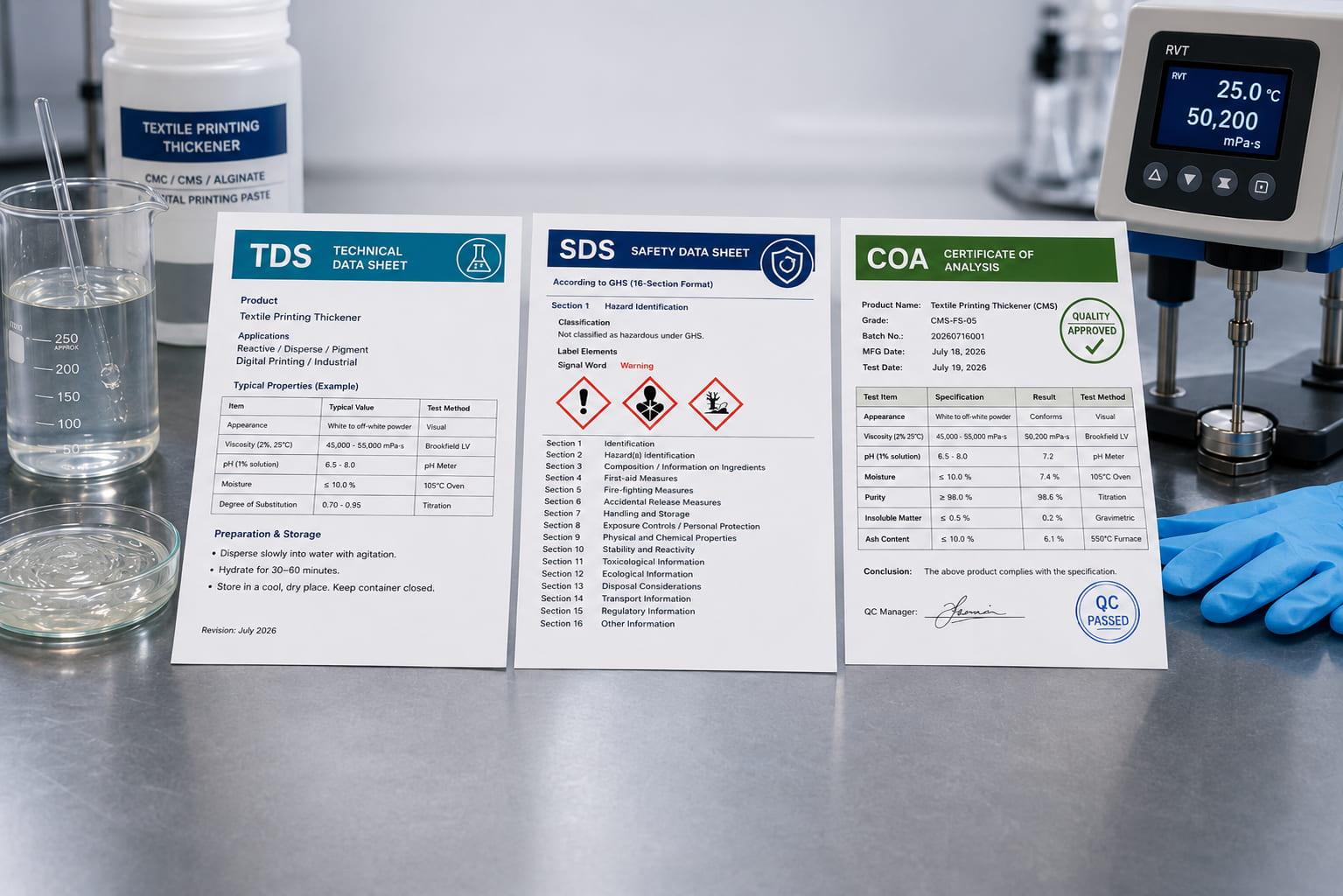
TDS para la revisión de especificaciones
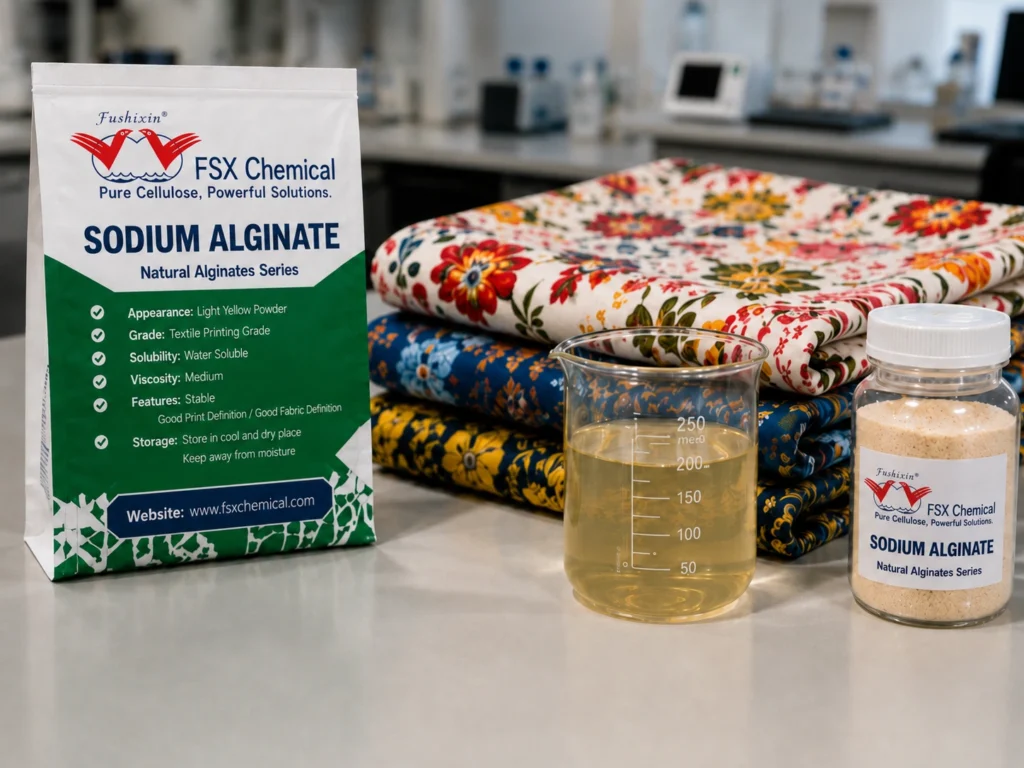
La hoja de datos técnicos ayuda a los compradores a revisar las especificaciones estándar del producto. Debe incluir la apariencia, la viscosidad, el tamaño de malla, la humedad, el pH, las condiciones de almacenamiento y el método de prueba.
El TDS sirve como prueba de clasificación inicial, pero no debe sustituir a los ensayos con muestras de la propia fórmula del comprador.
COA para la confirmación de lotes
El Certificado de Análisis confirma los datos reales de un lote de producción específico. Es importante para los pedidos al por mayor, las compras recurrentes, el abastecimiento a los distribuidores y el control de calidad interno.
Los compradores pueden comparar los registros de los certificados de análisis (COA) de distintos envíos para verificar si los parámetros clave se mantienen dentro del rango acordado.
Revisión de la ficha de datos de seguridad (FDS) para la manipulación y el envío
La hoja de datos de seguridad sirve de guía para la manipulación, el almacenamiento, el transporte y la revisión interna de seguridad. En el caso de las compras internacionales, la hoja de datos de seguridad también puede ser necesaria para el envío y las comunicaciones relacionadas con las aduanas.
Los compradores deben asegurarse de que el nombre del producto que figura en la ficha de datos de seguridad (FDS) y la información del proveedor coincidan con los documentos del pedido.
Documentos adicionales del cliente o de cumplimiento normativo
Si el comprador necesita declaraciones sobre sustancias restringidas, documentos ambientales, cuestionarios de auditoría para clientes, copias de certificados o apoyo en pruebas realizadas por terceros, dichos requisitos deben discutirse antes de la confirmación del pedido.
A practical supplier should explain which documents can be provided and which claims require formal third-party testing or certification.
How to Test Sodium Alginate Before Bulk Purchase
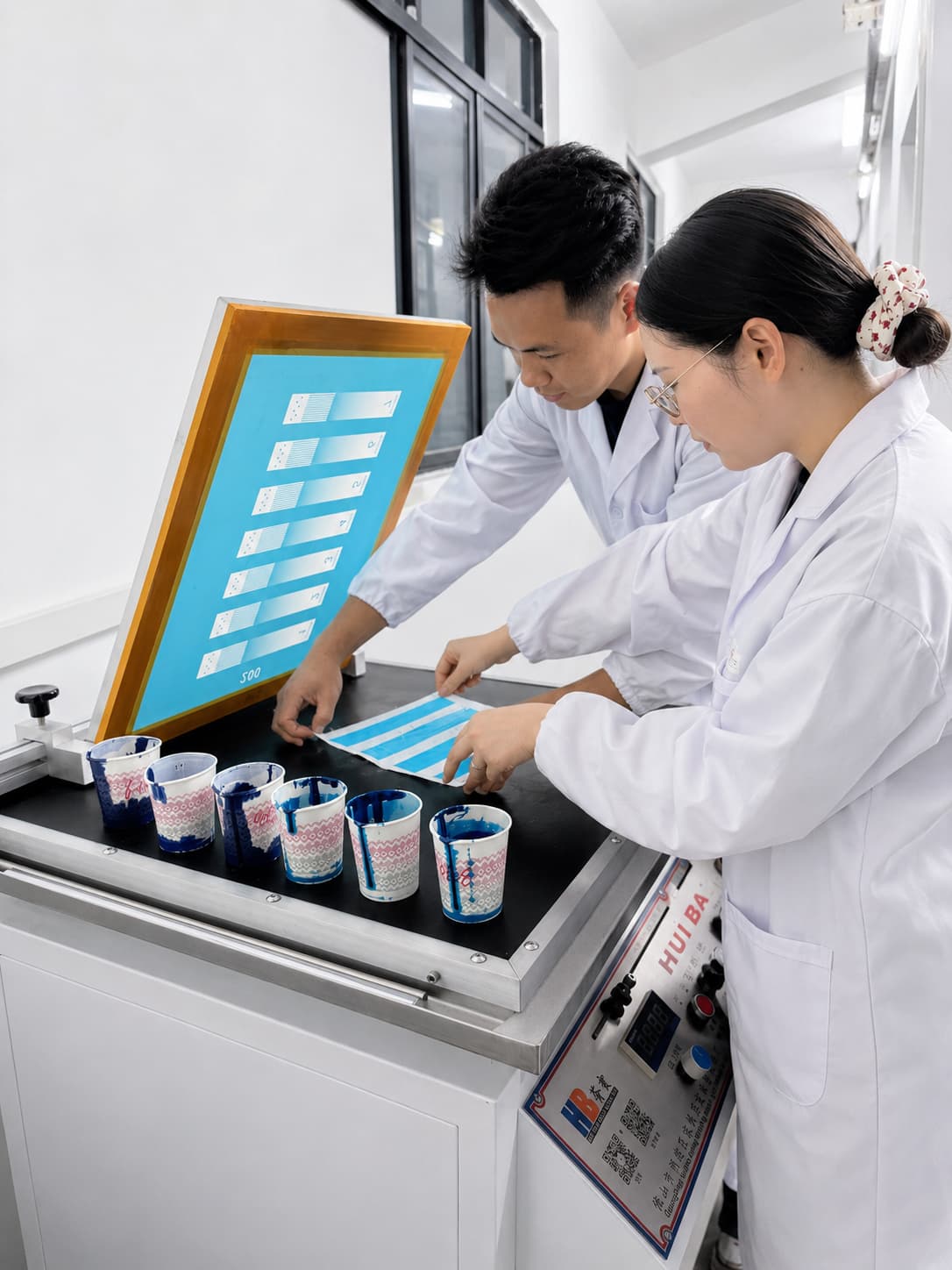
Test in the Actual Formula
Testing only in water may not be enough to confirm whether the sodium alginate grade is suitable for production.
Observe Preparation and Application Behavior
During testing, buyers should observe dissolution speed, lump formation, viscosity development, paste smoothness, filtration behavior, storage stability, screen passing, leveling, penetration, and application handling.
Estas observaciones prácticas suelen ser tan importantes como los datos técnicos que figuran en la ficha técnica (TDS).
Compáralo con el producto actual
If the buyer is replacing an existing sodium alginate, CMC, CMS, starch-based thickener, or blended system, the new sample should be tested against the current material under the same conditions.
Esto ayuda al comprador a evaluar si el grado recomendado es técnicamente adecuado antes de negociar el suministro a granel.
Confirmar la consistencia entre la muestra y el producto a granel
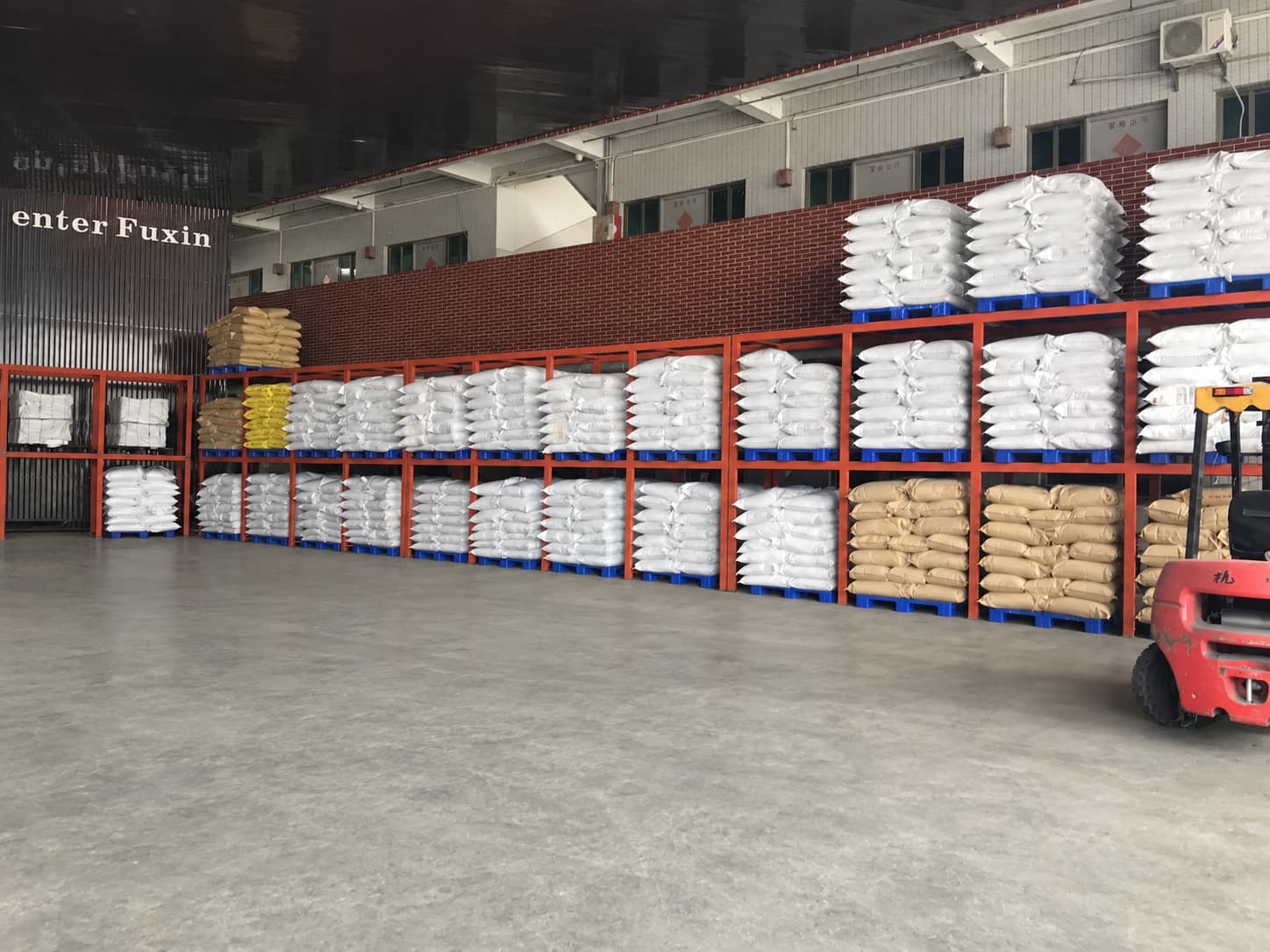
Antes de confirmar un pedido al por mayor, los compradores deben verificar si la muestra aprobada y el envío al por mayor cumplirán con los mismos requisitos en cuanto a rango de viscosidad, tamaño de malla, rango de especificaciones, formato de empaque, trazabilidad de lotes y certificado de análisis (COA).
Esto ayuda a reducir el riesgo de que se apruebe la muestra, pero luego el rendimiento del producto a granel resulte inestable.
Sodium Alginate vs CMC: How Buyers Should Compare
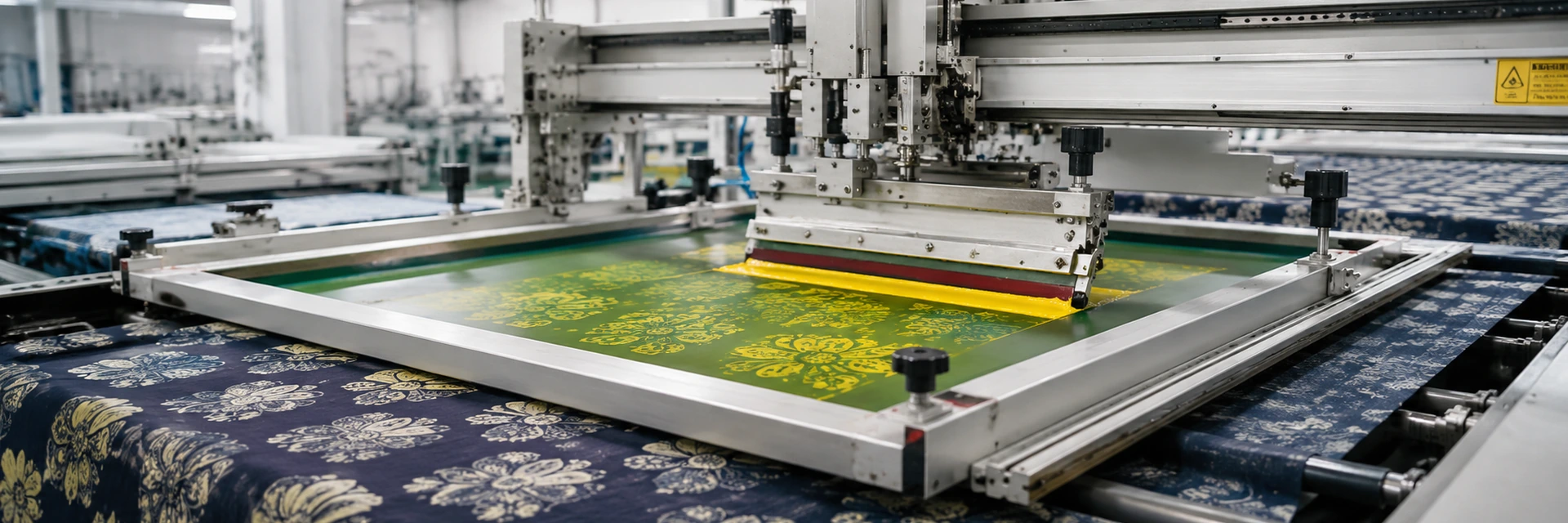
Start from the Application
Sodium alginate and CMC can both be used in selected textile-related thickening or formulation systems, but they are not automatically interchangeable. The suitable choice depends on the dye system, fabric type, viscosity target, solubility, pH, and production process.
Buyers should avoid simple conclusions such as one material always being better than the other.
Compare Under the Same Conditions
If the buyer wants to compare sodium alginate with CMC, CMS, starch, or another thickener, the comparison should be done in the same formulation and under the same preparation method.
Important comparison points may include viscosity, dissolution speed, paste smoothness, filtration, stability, fabric hand feel, application result, and total use cost.
Review Documents and Batch Data
Both sodium alginate and CMC should be compared by technical documents and batch data, not only product names. Buyers should request TDS, COA, SDS where applicable, and sample test results before making a decision.
Problemas comunes y soluciones
Grumos durante la preparación
Lumps may be related to fast addition, insufficient dispersion, unsuitable stirring, water quality, or preparation method. Buyers should record the preparation conditions during sample testing.
Viscosidad inestable
La variación de la viscosidad puede deberse a la calidad del agua, la temperatura, el pH, el tiempo de reposo, la compatibilidad de la formulación o una discrepancia entre los grados.
Los compradores deben comparar las condiciones de producción con el método de prueba de viscosidad del proveedor.
Uneven Shade or Pattern Control
Uneven results may be related to paste viscosity, leveling, penetration, fabric pretreatment, printing equipment, dye system, or drying process.
The full production system should be reviewed before changing only one raw material.
Bloqueo de pantallas o filtración deficiente
Screen blocking or filtration difficulty may come from poor dissolution, formulation incompatibility, particle contamination, unsuitable viscosity, or insufficient filtration before application.
Preguntas frecuentes
Is sodium alginate used in textile dyeing baths?
It is not a universal dye-bath auxiliary. Its established textile role is as a reactive-printing thickener. Any dye-bath use requires application-specific compatibility and process testing.
Which fabrics are most relevant to sodium alginate reactive printing?
Cotton and viscose are common cellulosic substrates. Confirm the reactive dye class, fabric pretreatment, paste formulation, fixation and wash-off conditions.
Can the same alginate grade be used for screen and digital printing?
Do not assume this. Screen paste and digital pretreatment have different filtration, coating, storage and ink-response requirements. Qualify each route separately.
How should two sodium alginate grades be compared?
Use equal solution concentration and the same water, hydration time, temperature, instrument, spindle and speed, then compare the complete printing paste and final fabric.
What information should be sent for grade matching?
Send the fabric, dye or ink, printing or pretreatment method, current product and dosage, full viscosity method, additives, fixation route and the main production problem. Use Muestras y combinación for a controlled comparison.
Cómo FSX Chemical apoya a los compradores de alginato de sodio
Our support is focused on practical grade matching and export procurement. We can provide TDS, COA, SDS where applicable, sample support, and formulation discussion based on the customer’s fabric type, dye system, printing or dyeing process, target viscosity, current formulation, packaging needs, order quantity, and document requirements.
We do not suggest choosing sodium alginate only by product name, broad environmental claims, regional claims, or price. The recommended grade should be reviewed through technical documents and tested in the buyer’s own textile formulation before bulk purchase.
Próximos pasos
- Comparte tu solicitud — tell us whether the product will be used in reactive printing paste, dye printing formulation, textile dyeing support, or another textile process.
- Clarify Fabric and Dye System — provide fabric type, dye system, auxiliaries, water quality, pH, and preparation method.
- Define tu viscosidad objetivo — Indique el rango de viscosidad, la concentración de prueba, la temperatura, el método de medición y el grado actual del producto, si está disponible.
- Solicitar equiparación de calificaciones — ask for a suitable sodium alginate, CMC, or blended thickener recommendation based on your actual production conditions.
- Solicitar un TDS — Revisa la viscosidad, el tamaño de malla, el pH, la humedad, el aspecto, las condiciones de almacenamiento y el método de prueba.
- Solicitar un certificado de análisis (COA) — Verificar que los datos del lote se ajusten al rango de especificaciones acordado antes del envío.
- Solicitar una ficha de datos de seguridad (FDS) — Revisa la manipulación, el almacenamiento, el transporte y la información del producto.
- Solicitar una muestra — test the recommended grade in your own textile formulation before confirming bulk orders.
- Comparar con los materiales actuales — evaluate sodium alginate against your existing CMC, CMS, starch-based thickener, or blended system under similar conditions.
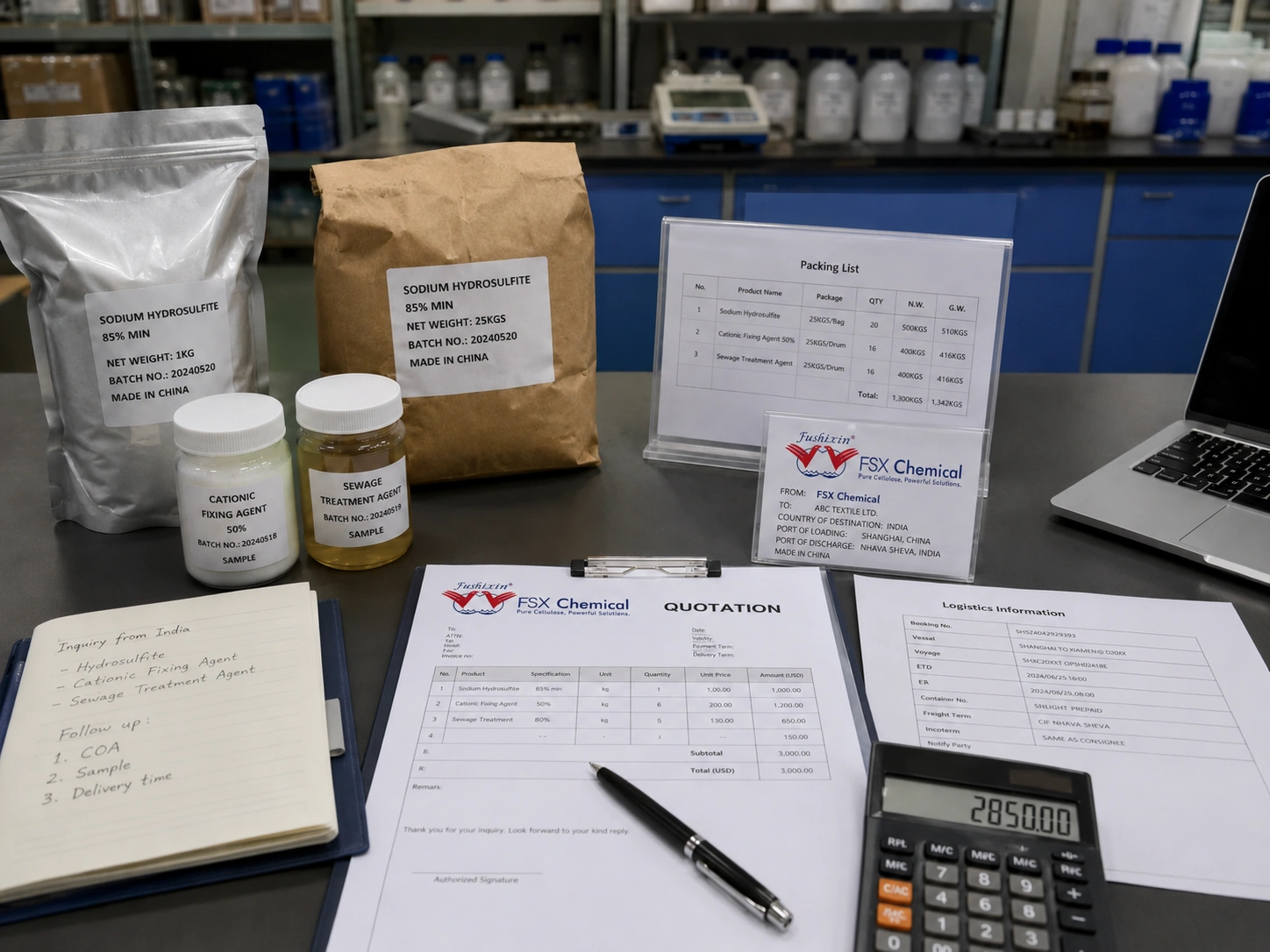
- Confirmar los documentos de embalaje y exportación — Verifica el tamaño de la bolsa, las etiquetas, la trazabilidad del lote, la factura, la lista de empaque, el certificado de análisis (COA), la ficha de datos de seguridad (SDS) y otros documentos requeridos antes del envío.
- Póngase en contacto con nuestro equipo técnico — discuss which sodium alginate grade is suitable for your textile dyeing or printing applicnotificación📧 Correo electrónico: Service@fsxchemical.com