Digital Pretreatment Viscosity vs. Application Method: Why the Same Product Behaves Differently in Padding, Coating and Spray Systems
Digital textile pretreatment viscosity is meaningful only when it is connected to the application method....
Digital textile pretreatment viscosity is meaningful only when it is connected to the application method. A product that performs well in padding may meter poorly through a coating head, while a coating-grade pretreatment may be too structured or difficult to atomize in a spray system. The reason is that padding, coating and spray expose the formulation to different shear rates, residence times, pressure, extensional deformation, surface-wetting conditions and recovery requirements. Therefore, the same Brookfield viscosity does not guarantee the same application behavior. The correct pretreatment should be selected from viscosity together with rheology, filtration, wetting, fabric pick-up, surface localization, holding stability and final printing performance.
Why Does the Same Pretreatment Behave Differently in Padding, Coating and Spray?
Because the pretreatment is not exposed to the same flow conditions in each machine.
Padding, coating and spray impose different combinations of:
Same Product Concentration ≠ Same Application Behavior
and:
Same Brookfield Viscosity ≠ Same Rheological Performance.
The correct pretreatment should be judged by how it behaves inside the actual application method and on the actual fabric.
Viscosity vs. Rheology: What Is the Difference?
Viscosity describes resistance to flow under a defined test condition.
Rheology describes the broader relationship between:
Stress
Shear rate
Time
Structure
Recovery
Two pretreatments can show the same viscosity at one spindle speed but behave differently when:
Pumped
Squeezed through a nip
Dragged under a coating knife
Forced through a spray nozzle
Therefore, viscosity should be treated as one rheological data point—not the full application specification.
Why One Brookfield Number Is Not Enough
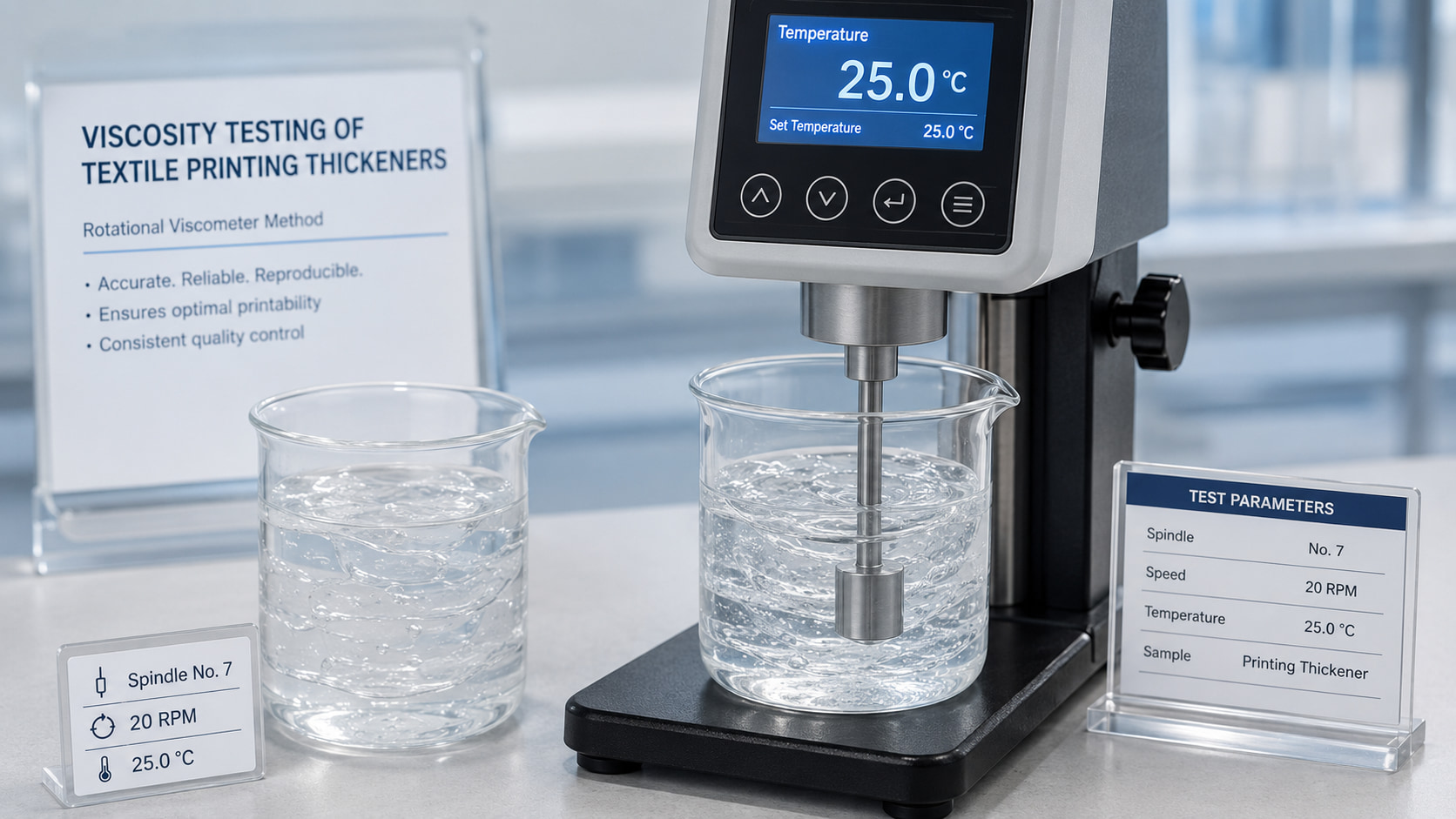
A Brookfield-type rotational reading is useful for batch control because it is simple and repeatable when the method is fixed.
But the reading depends on:
კონცენტრაცია
ტემპერატურა
სპინდლი / როტორი
ბრუნვის სიჩქარე
კითხვის დრო
Preparation history
For non-Newtonian pretreatments, changing spindle speed can produce a different apparent viscosity because the polymer structure responds to shear.
Therefore, a supplier statement such as:
“Viscosity = 2,000 mPa·s”
is incomplete unless the test method is known.
A useful pretreatment TDS should define the viscosity test conditions clearly.
Different Application Methods Create Different Shear Conditions
The apparent viscosity that matters in a storage tank is not necessarily the apparent viscosity that matters at the coating blade or spray nozzle.
The route can expose the product to low, medium or high local shear depending on machine geometry and speed.
This means a formulation can:
Look thick at rest
Flow easily under application shear
Recover after deposition
which may be desirable in one route.
Another formulation can:
Lose structure under shear
Recover too slowly
Penetrate or level too far
which may be undesirable.
Application testing should therefore include more than one shear condition whenever process sensitivity is high.
What Padding Requires from Pretreatment Rheology
Padding requires the pretreatment liquor to wet and penetrate the fabric sufficiently before excess liquor is expressed at the nip.
Useful padding behavior generally requires:
Reliable wetting
Stable bath viscosity
Easy circulation
Low gel / residue
Consistent wet pick-up
Padding does not normally need the same high surface-holding structure as a knife coating system.
Too much structure can slow wetting or produce unstable pickup, while too little structure can increase penetration or reduce surface localization depending on the fabric.
When Padding Viscosity Is Too Low
A very low-viscosity padding liquor can:
Penetrate deeply into absorbent fabrics
Reduce surface localization of polymer
Increase face-to-back chemical distribution
Become more sensitive to fabric absorbency differences
This does not automatically mean low viscosity is wrong.
For some dense fabrics, low-viscosity flow may improve uniform wetting.
The relevant test is:
Wet Pick-Up + Dry Add-On + Surface Distribution + Final Print Performance.
When Padding Viscosity Is Too High
Excessive padding viscosity can:
Slow bath exchange into the fabric
Create uneven wetting
Increase sensitivity to roll speed
Increase foam retention
Reduce easy circulation / filtration
It may also create a false impression that higher viscosity always improves surface color.
If high viscosity reduces wetting uniformity, final shade can become less stable even if the average surface add-on increases.
What Coating Requires from Pretreatment Rheology
Coating requires the pretreatment to be metered into a controlled layer and then remain sufficiently uniform on the textile until drying.
Useful coating behavior often depends on:
Viscosity under coating shear
წევის სიცხარე
Leveling
სტრუქტურული აღდგენა
Penetration resistance
The coating should flow enough under the blade or metering element to form a uniform film.
After application, it should not continue flowing so freely that it penetrates or redistributes uncontrollably before drying.
When Coating Viscosity Is Too Low
Potential symptoms include:
Excess penetration
Low surface hold
Uneven coating weight on absorbent fabrics
Edge flow / drainage
Lower surface color concentration after printing
But apparent low viscosity alone does not prove the coating will fail.
A shear-thinning product can show a modest low-shear reading but still provide useful recovery after coating.
Measure actual coating weight and penetration.
When Coating Viscosity Is Too High
Potential symptoms include:
Poor metering
Ridges or streaks
Blade pressure sensitivity
Insufficient leveling
Widthwise sensitivity to small gap differences
High viscosity can also increase the force required to move the formulation beneath the coating head.
A product that looks “stable” in the beaker can therefore create an uneven surface layer in production.
What Spray Requires from Pretreatment Rheology
Spray adds another requirement: atomization.
The liquid must:
Pump reliably
Pass through filters
Pass through the nozzle
Break into droplets
Deposit uniformly
Wet the fabric without excessive bounce or runoff
This means spray suitability depends on more than rotational viscosity.
High polymer elasticity, stringiness, gel particles or unstable filtration can all cause problems even when the measured viscosity seems acceptable.
When Spray Viscosity Is Too Low
A very low-viscosity spray liquid may atomize easily, but it can also:
Produce very fine droplets depending on nozzle conditions
Increase mist / overspray
Penetrate rapidly into absorbent fabric
Reduce face localization
The nozzle, pressure and flow rate matter.
Do not optimize spray solely by making the pretreatment as thin as possible.
When Spray Viscosity Is Too High
Higher viscosity can create:
Larger droplets
Poor atomization
Uneven spray pattern
Higher nozzle-pressure demand
Nozzle / filter blockage risk
Polymer-rich formulations can also show filament formation or stringing during breakup.
Therefore, spray qualification should include:
Nozzle pattern
Droplet behavior
Widthwise deposition
ფილტრაცია
not only viscosity.
Shear Thinning: Why It Matters
Many polymeric textile pretreatments are shear-thinning.
This means apparent viscosity decreases as shear rate increases.
Shear thinning can be useful because the product can:
Remain structured at rest
Flow under pumping / application
Recover after deposition
But the ideal degree of shear thinning differs by route.
Padding generally prioritizes wetting and pickup stability.
Coating often benefits from a stronger balance between flow under blade shear and post-application recovery.
Spray needs enough flow through the nozzle and predictable atomization.
Yield Stress and Structure at Rest
Some pretreatments behave as if a minimum stress must be applied before they flow significantly.
This structural resistance can help:
Reduce settling
Hold chemistry near the fabric surface
Reduce uncontrolled drainage
But excessive structure can create:
Poor pumpability
Coating ridges
Spray instability
Yield-like behavior can therefore be helpful in coating but problematic in spray if it is too strong.
Do not infer yield behavior from a single low-speed viscosity value alone.
Structural Recovery and Thixotropy
Thixotropic systems lose structure under shear and recover over time after shear is removed.
The recovery rate matters because:
Too-slow recovery can allow coating to penetrate or spread after application.
Too-fast recovery can reduce leveling and create ridges or streaks.
In padding, excessive time dependence can cause bath behavior to change with circulation history.
In spray, recovery after atomization affects droplet spreading on the fabric.
A product with identical initial Brookfield viscosity can therefore behave differently if structural recovery is different.
Extensional Behavior and Spray Atomization
Spray breakup is not governed only by shear viscosity.
As liquid leaves a nozzle, it stretches and breaks into droplets.
Polymer solutions can resist this stretching differently from simple Newtonian liquids.
High extensional resistance can lead to:
Longer liquid filaments
Stringing
Larger or less uniform droplets
This is one reason two pretreatments with similar rotational viscosity can atomize differently.
For spray applications, direct nozzle trials are essential.
Surface Tension and Wetting
Rheology controls flow, but wetting controls how the applied liquid interacts with the fabric surface.
Poor wetting can cause:
Beading
Patchy spray deposition
Poor coating continuity
Slow padding penetration
Excessive wetting can cause:
Too much penetration
Loss of surface localization
Higher bleeding risk later
The correct viscosity must therefore be matched with appropriate wetting behavior.
Filtration, Gel and Particle Control
Digital pretreatment is normally applied to the fabric rather than jetted through the printhead, but filtration still matters.
The product can pass through:
Mixers
Pumps
Filters
Coating heads
Spray nozzles
Gel particles or incomplete hydration can:
Block spray nozzles
Create coating streaks
Deposit unevenly during padding
Use a standardized filtration test with the same sample mass, filter opening and holding time.
Holding Stability Before Application
A pretreatment can meet its viscosity target immediately after preparation but drift during production holding.
Possible changes include:
Viscosity increase
Viscosity decrease
Separation
Gel formation
ქაფი
This can affect each route differently.
Padding may show pickup drift.
Coating may show coating-weight or leveling drift.
Spray may show nozzle-pattern drift.
Evaluate viscosity and application behavior over the real production holding period.
Temperature Sensitivity
Viscosity depends strongly on temperature.
A pretreatment measured at laboratory temperature can become noticeably thinner in a warm production area or warm circulation loop.
Temperature variation can therefore change:
Padding pickup
Coating weight
Spray atomization
Always record temperature with the viscosity result.
For production comparison, measure samples at the same controlled temperature or record the actual process temperature.
Electrolytes, pH and Water Quality
Reactive digital pretreatments can contain:
Alkali
შარდოვანა
მარილები
მყარი წყლის იონები
These can change polymer hydration and rheology.
The same product can therefore show different viscosity when prepared in:
Different plant water
Different alkali system
Different auxiliary package
For sensitive systems, record:
Water hardness
Conductivity
pH
together with viscosity.
Fabric Structure Changes the Viscosity Window
The optimum pretreatment viscosity depends on the textile.
A highly absorbent fabric can pull low-viscosity liquor into the structure quickly.
A dense fabric can require easier flow to achieve uniform wetting.
A stretch knit can be sensitive to mechanical tension in coating or padding.
Therefore, application viscosity should always be validated on the actual:
Fiber
Construction
GSM
Thickness
შთამნთქმელობა
ბამბა
Cotton can be treated by padding, coating or spray depending on construction and target.
Absorbent cotton may allow rapid penetration of lower-viscosity pretreatment.
For cotton, compare:
Face-side add-on
Back-side penetration
Post-wash K/S
Bleeding
rather than selecting viscosity from fiber name alone.
Viscose / Modal
Viscose and modal generally show high swelling and water uptake.
This can make low-viscosity padding liquor penetrate deeply and can make coating or spray rapidly absorb into the fabric.
The useful viscosity window may therefore differ from cotton even when the same reactive ink and pretreatment product are used.
Control:
სველად აღება
მშრალი დამატება
შეღწევა
ნარჩენი ნესტი
ლიოკელა
Lyocell is regenerated cellulose but should not be treated as identical to viscose.
Fabric construction, fibrillation control and finishing history can change wetting and penetration.
Route-specific viscosity should be qualified on the actual lyocell fabric.
Woven vs. Knit
Woven fabrics are generally dimensionally more stable under coating gap and padding pressure.
Knits can change width and thickness under tension, which changes effective coating geometry and wet pickup.
ამიტომ:
Padding viscosity on a knit should be evaluated together with tension and width stability.
Coating rheology should be evaluated together with fabric deflection and thickness.
Spray rheology should be evaluated together with fabric support and motion.
Viscosity vs. Wet Pick-Up / Coating Add-On / Spray Add-On
Viscosity should not be optimized without measuring actual application output.
The cheapest pretreatment per kilogram is not necessarily the lowest-cost application system.
სასარგებლო მოდელია:
Total Cost in Use = Pretreatment + Preparation + Pumping / Filtration + Application Losses + Drying + Ink + Fixation + Rework + Quality Loss
A product with slightly higher unit cost can be commercially better if it:
Applies more uniformly
Reduces nozzle / filter maintenance
Improves coating consistency
Reduces pickup drift
Improves first-pass print quality
Compare cost per acceptable printed meter, not viscosity per dollar or product price per kilogram.
რა ინფორმაცია უნდა გაუგზავნოთ მომწოდებელს?
For useful viscosity/application matching, provide:
Ink system
Fabric fiber / blend
Knit or woven
GSM / thickness
მიმდინარე წინასწარი დამუშავების პროდუქტი / TDS
Current viscosity and full test method
Application method: padding / coating / spray
Wet pick-up or coating / spray add-on
Application equipment details
Line speed
Water hardness / conductivity where relevant
Pretreatment pH / electrolyte system
გამშრობის პირობები
Main issue: pickup, streaking, penetration, atomization, bleeding or weak color
FSX Chemical-ს შეუძლია ამ ინფორმაციის გამოყენება მეშვეობით ნიმუშები და შესაბამისობა to compare rheology and application fit rather than matching only one viscosity number.
Viscosity is a test result; rheology is the broader flow behavior that controls application.
Padding, coating and spray require different balances of wetting, shear thinning, recovery and flow.
Same Brookfield viscosity does not mean the same application performance.
Application output—wet pick-up, coating weight or spray add-on—must be measured together with viscosity.
Fabric structure and water/electrolyte conditions can shift the useful viscosity window.
The best pretreatment is the product whose rheology remains stable in the intended application route and delivers the required post-wash digital-print quality at the lowest practical Total Cost in Use.
ხშირად დასმული კითხვები
1. Can the same pretreatment viscosity be used for padding, coating and spray?
Not automatically. Each application method creates different shear, pressure, wetting and recovery requirements, so the useful viscosity window can differ.
2. Why do two products with the same Brookfield viscosity behave differently?
They can differ in shear thinning, yield structure, recovery, extensional behavior, wetting, filtration and electrolyte tolerance.
3. Is higher viscosity better for padding?
Not always. Excessive viscosity can reduce wetting and bath exchange, while very low viscosity can increase penetration. Measure actual wet pick-up and print performance.
4. Is higher viscosity better for coating?
Only within a useful rheological window. Too little structure can cause penetration and flow; too much can cause poor metering, ridges and poor leveling.
5. Does spray require the lowest viscosity?
No. Spray requires reliable pumping and atomization, but very low viscosity can increase misting or penetration. The nozzle and formulation must be matched together.
6. Why does spray string or form large droplets?
High viscosity, polymer elasticity, extensional resistance, nozzle geometry or pressure can contribute. Direct nozzle testing is necessary.
7. Why is filtration important for fabric pretreatment?
Gel and incompletely hydrated particles can block spray nozzles, create coating streaks or cause uneven application even though the pretreatment is not printed through an inkjet head.
8. Should viscosity always be measured at one speed?
A single speed is useful for routine QC, but multi-speed measurements can help explain shear-thinning differences when products with similar reference viscosity behave differently.
9. Why does production viscosity differ from laboratory viscosity?
Temperature, water quality, holding time, shear history, concentration and mixing can all change apparent viscosity.
10. How does fabric type affect the useful viscosity?
Absorbency, thickness, porosity and stretch determine how quickly pretreatment penetrates and how application geometry behaves.
11. Should I match a competitor product only by viscosity?
No. Match viscosity method, rheology, filtration, add-on, drying and final printing performance. Same viscosity alone does not prove equivalent behavior.
12. What should I send FSX Chemical for viscosity matching?
Send the current TDS or sample, full viscosity test method, application route, fabric, wet/dry add-on, line speed, water/pH conditions and the exact application or printing problem.
Match Pretreatment Rheology to the Machine, Not Just the Viscosity Number
If a digital pretreatment performs well in one machine but becomes unstable in padding, coating or spray, FSX Chemical can help compare the current product by viscosity method, rheology, filtration, application add-on and final printing result.
დაიწყეთ ნიმუშები და შესაბამისობა and provide your current pretreatment, fabric, viscosity test conditions and application route.
The correct viscosity is not the highest, lowest or most familiar laboratory number. It is the rheological window that allows the pretreatment to move correctly through the intended application equipment, deposit uniformly on the actual fabric, survive drying and fixation, and deliver stable post-wash color and definition.
გაიგეთ, რატომ არ შეიძლება ტექსტილის ბეჭდვის გასასქელებლის სიმჭიდროვის მნიშვნელობების შედარება კონცენტრაციის, ტემპერატურის, ხელსაწყოს, ღერძის, სიჩქარის, მომზადების მეთოდისა და გამოცდის დროის შესაბამისობის გარეშე.
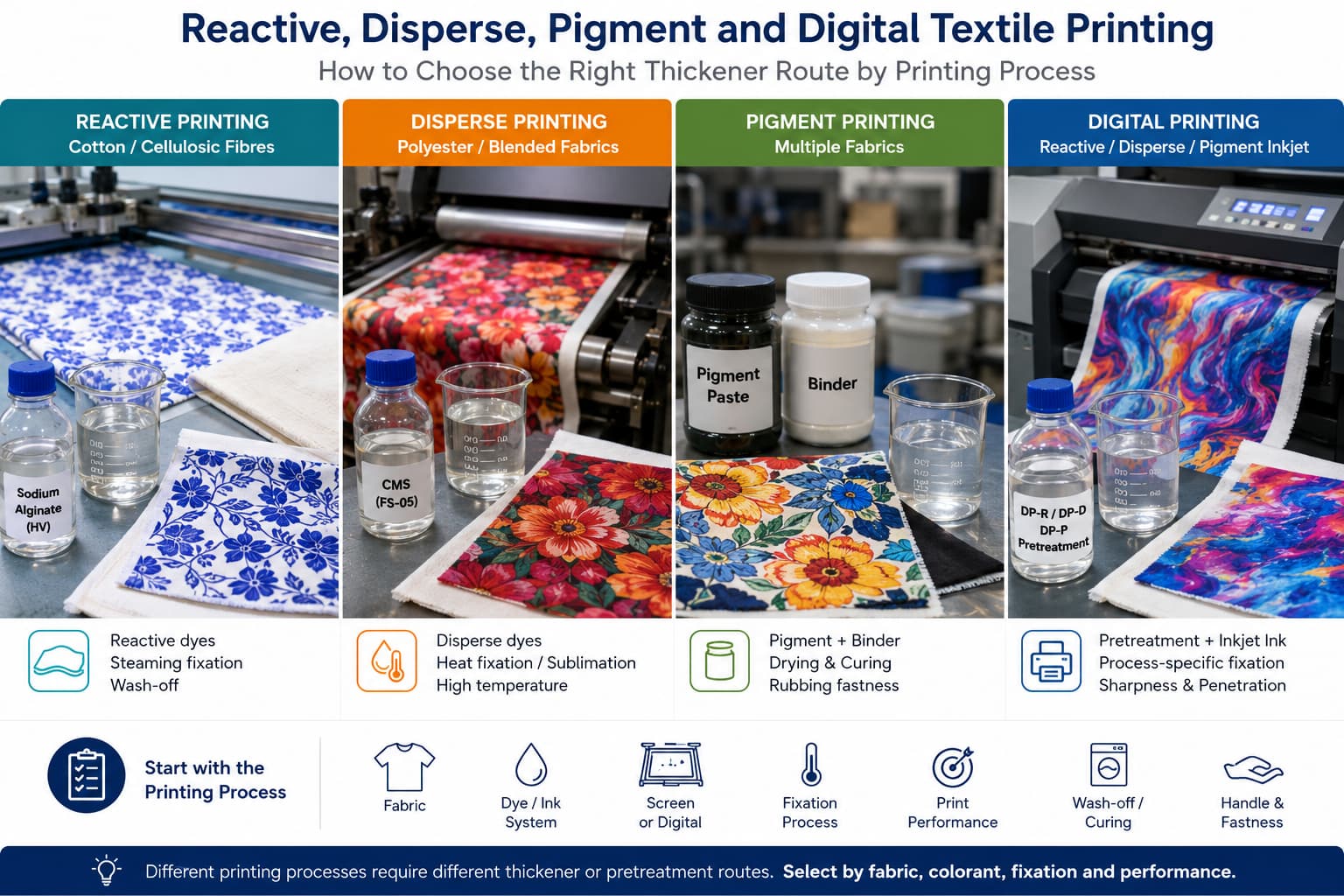
ისწავლეთ, როგორ შეარჩიოთ გამკვრივებელი და წინასწარი დამუშავების მეთოდები რეაქტიული, დისპერსიული, პიგმენტური და ციფრული ტექსტილის ბეჭდვისთვის, ქსოვილის, საღებავის ან მელნის, ფიქსაციის, გარეცხვისა და ბეჭდვის ხარისხის მოთხოვნების გათვალისწინებით.
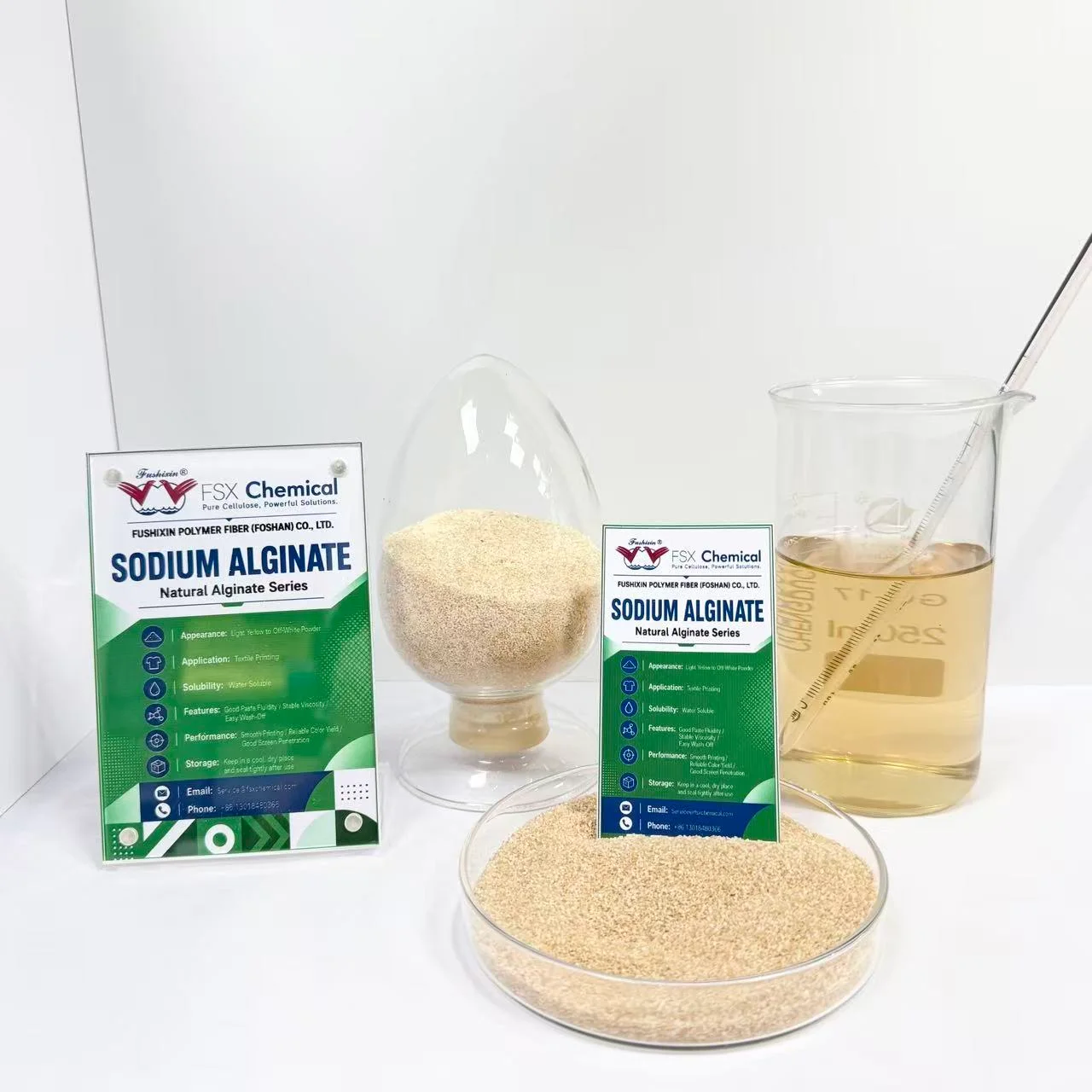
ტექსტილზე ციფრულ ინჯეტ-ბეჭდვას, შედარებით შაბлонურ ბეჭდვასთან, განსხვავებული მოთხოვნები აქვს პასტისადმი და წინასწარი დამუშავებისადმი. ეს სახელმძღვანელო განმარტავს, თუ როგორ გამოიყენება ნატრიუმის ალგინატი ციფრულ ტექსტილის ბეჭდვაში და რა ხარისხის პარამეტრები უნდა მიუთითონ შესყიდვების გუნდებმა.
Sodium alginate for textile coating is a vital bio-based option for global textile/printing firms. It solves key issues like poor adhesion (ideal for cotton) and low durability (boosts polyester coating resilience by 30%), while meeting regional rules—EU REACH (biodegradable) and US OEKO-TEX (non-toxic for babywear). This guide covers application tips (digital printing), alternatives comparison (vs acrylic binders), and how to pick global suppliers like fsxchemical.
Sodium alginate is commonly used as a thickener in reactive textile printing paste, but other textile uses require application-specific validation. This guide compares printing, digital pretreatment, warp sizing, dyeing-related formulations, coating, and finishing by function, technical requirements, risks, documents, and sample tests.
ციფრულ ტექსტილის ბეჭდვაში სიბლანტების კონტროლი ორ სხვადასხვა სისტემას მოიცავს: საღებავის ჯეტინგის სისტემასა და ქსოვილის წინასწარი დამუშავების ფორმულაციას. ეს სახელმძღვანელო განმარტავს, თუ როგორ მოქმედებს ტემპერატურა, ფორმულაცია, გაზომვის მეთოდები და პროცესის პირობები ჯეტინგის სტაბილურობასა და ბეჭდვის ხარისხზე.
საუკეთესო ციფრული ბეჭდვის პასტა არის ის, რომელიც მორგებულია საღებავის ქიმიურ შემადგენლობაზე, ქსოვილსა და დამაგრების მეთოდზე. ეს სახელმძღვანელო ადარებს მცენარეული წარმოშობის ქსოვილებისთვის რეაქტიული ინჯეტ-საღებავით წინასწარ დამუშავებისა და პოლიესტერისთვის პირდაპირი დისპერსიული ინჯეტ-ბეჭდვის მოთხოვნებს და შემდეგ ხსნის, თუ როგორ უნდა შეაფასონ მყიდველებმა ნიმუშები დიდი რაოდენობით შესყიდვამდე.
The future of textile printing thickeners will be shaped by application-specific rheology, digital pretreatment, bio-based materials, hybrid formulations, faster preparation and data-driven process control. This guide explains which trends are commercially relevant and which still require industrial validation.
FSX Chemical offers separate digital printing paste routes for reactive, disperse and pigment systems, supported by application review, sample matching and technical documentation. This guide explains how buyers can evaluate the right route before bulk purchasing.
Matching the right CMC grade requires more than selecting a viscosity number. This guide explains how textile buyers can compare application route, degree of substitution, purity, particle size, hydration, rheology, chemical tolerance and sample performance.
Stable digital printing paste requires more than a target viscosity. This guide explains how product selection, water quality, addition sequence, mixing, pH, temperature, filtration, hygiene, storage and quality records influence pretreatment and production consistency.
Textile printing chemical innovation in 2026 is moving beyond higher viscosity and stronger color. The leading developments focus on safer inputs, renewable polymers, waterborne nano-binders, stable pigment dispersions, lower-energy fixation and multifunctional printing systems.
გაგვიზიარეთ პროდუქტის დასახელება, გამოყენების სფერო, რაოდენობა, დანიშნულების ადგილი და ნებისმიერი TDS, ნიმუშის ფოტო ან დოკუმენტი, რომელიც უკვე გაქვთ. FSX Chemical შეისწავლის ინფორმაციას და გირჩევთ შემდეგ ნაბიჯს ფასის შეთავაზების, ნიმუშთან შესაბამისობის ან პროდუქტის შერჩევისთვის.
პროდუქტის ინფორმაციაპროდუქტის დასახელება, მარკა, მოდელი, ეტიკეტის ფოტო ან მომწოდებლის სარეფერენსო.
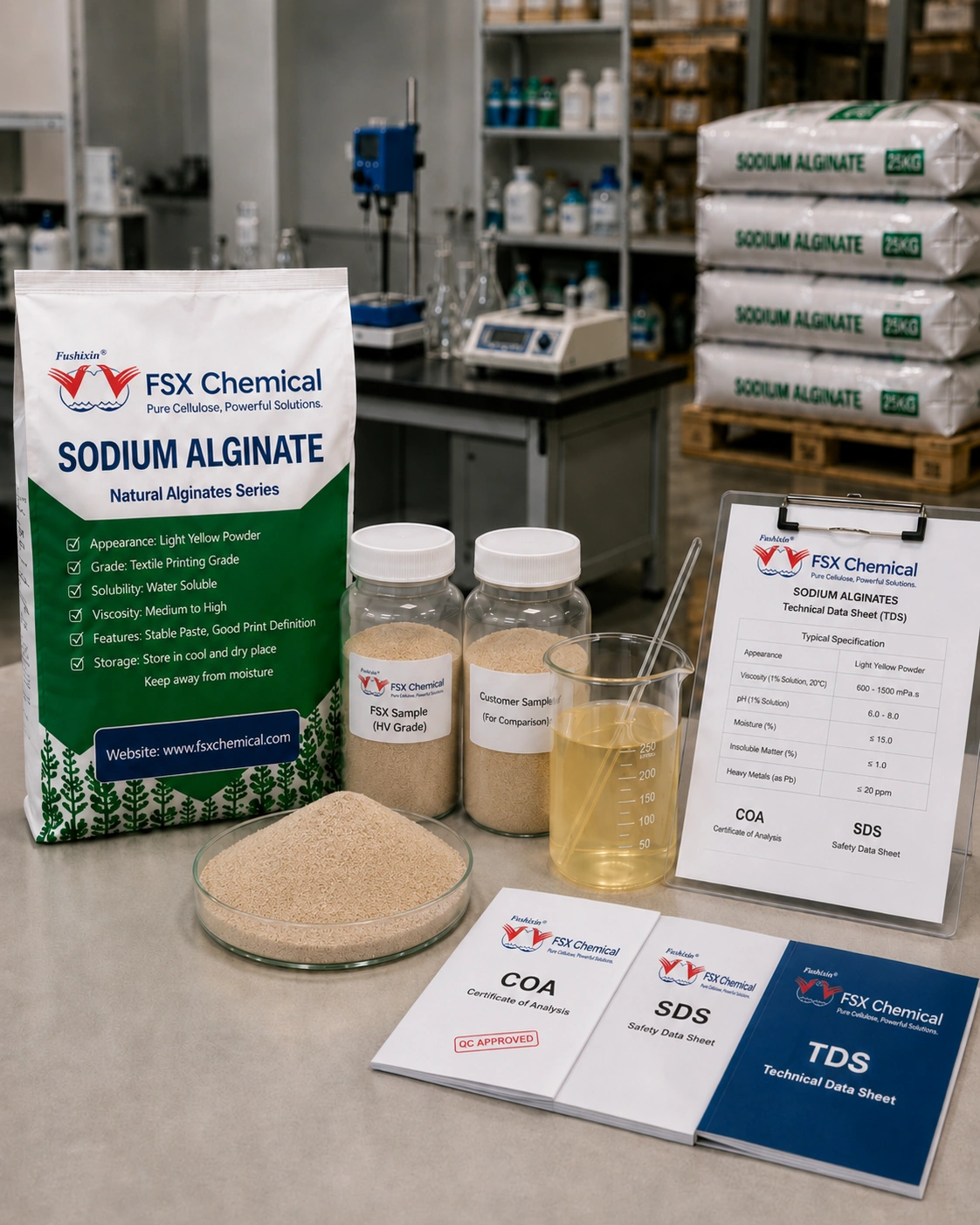
ხელმისაწვდომი დოკუმენტებიTDS, SDS, COA, ნიმუშის ფოტო, პროდუქციის სია ან სატესტო მონაცემები.
შეკვეთის დეტალებიშეფასებული რაოდენობა, შეფუთვა, დანიშნულების ქვეყანა, პორტი ან სავაჭრო პირობა.
განაცხადი ან საკითხიტექსტილის ბეჭდვის პროცესი, ფორმულირების საჭიროება, მიმდინარე პრობლემა ან სამიზნე მახასიათებელი.