Textile Printing Quality Problems: A Process-Based Technical Review
Improving textile printing quality requires more than changing one chemical. This guide explains how FSX...
Improving textile printing quality rarely depends on one chemical or one machine setting. Print definition, color yield, paste stability, wash-off, fastness and fabric handle are influenced by the interaction among the fabric, dye or ink, thickener, auxiliaries, equipment and fixation process.
FSX Chemical supplies sodium alginate, CMC, FSX CMS commercial thickener grades and digital fabric pretreatment products. FSX CMS should not be interpreted as a universal carboxymethyl starch composition. Confirm the selected grade and application scope in current product documentation.
In this article, “expert solutions” means process-based product selection, sample matching, technical-document support and controlled trial guidance. It does not mean that a product can guarantee a specific result without testing under the buyer’s actual production conditions.
Quick takeaway: Begin with the fabric, dye or ink system and production problem. Select a technically relevant product route, test it against the approved reference and confirm the commercial grade before bulk purchasing.
What Does Textile Printing Quality Include?
Printing quality is not a single laboratory value. A product can provide acceptable viscosity but still produce poor screen passage, excessive penetration or difficult wash-off.
Басып шығару анықтамасы
Print definition includes line sharpness, clean edges, small details and control of color spreading. It is influenced by paste rheology, fabric absorbency, screen conditions, ink-drop behavior and drying.
Color Performance
Color performance includes shade depth, color difference, levelness and reproducibility. In dye printing, fixation and washing determine how much color remains on the fabric after processing.
Production Stability
A paste needs to remain sufficiently stable during preparation, storage, pumping and printing. Viscosity drift, separation, foam, gels or incomplete hydration can create machine and quality problems.
Жуып тасталатын және маталы тұтқа
For dye-printing routes that require washing, remove unfixed dye and removable paste components through the specified process. Pigment printing normally retains the cured binder film; its removal is not the wash-off objective. Evaluate shade, rubbing performance and handle under the appropriate route-specific tests.
Batch Reproducibility
Large-scale production requires results to remain within agreed tolerances across raw-material and production batches. This depends on both supplier control and the mill’s preparation and process control.
Quality Area
Possible Measurements
Жіберу
Viscosity, pH, filtration, hydration and holding stability
Басып шығару
Screen passage, line sharpness, bleeding, penetration and levelness
Color
K/S, color difference, shade and batch reproducibility
Finished Fabric
Wash-off, fastness, residue and handle
Production
Paste consumption, downtime, cleaning, rework and rejected fabric
A Process-Based Approach to Printing Problems
Before recommending a product, the printing route and problem should be defined. A statement such as “we need a high-viscosity thickener” does not explain the fabric, dye, machine or defect.
Step 1: Identify the Printing Route
Reactive printing on cotton, viscose or another compatible fiber
Полиэстерге шашыратып басу
Pigment printing with a binder
Vat or discharge printing
Reactive, disperse or pigment digital inkjet printing
Step 2: Define the Defect
Record whether the problem is low viscosity, viscosity drift, bleeding, poor sharpness, screen blockage, low color yield, difficult wash-off or harsh handle.
Step 3: Separate Chemical and Process Causes
A defect may come from the thickener, but it can also come from fabric absorbency, water quality, mixing, screen condition, dye, alkali, binder, drying, fixation or washing.
Changing the chemical before checking the complete process may move the problem rather than solve it.
Step 4: Define an Acceptance Test
The buyer and supplier should agree on how a candidate will be compared. Use the same fabric, formulation, preparation, printing and finishing conditions for the reference and trial product.
FSX Chemical Product Routes
Өнім маршруты
Typical Evaluation Direction
Important Buyer Checks
Натрий алгинаты
Reactive dye printing on cotton and other cellulosic fabrics
Viscosity method, filtration, color yield, definition and wash-off
CMC
Selected printing, viscosity-control and compound thickener systems
Degree of substitution, viscosity, solubility, salt tolerance and compatibility
CMS
Selected reactive, disperse, vat, discharge or compound systems
Paste stability, screen passage, wash-off and total cost in use
Сандық баспа пастасы
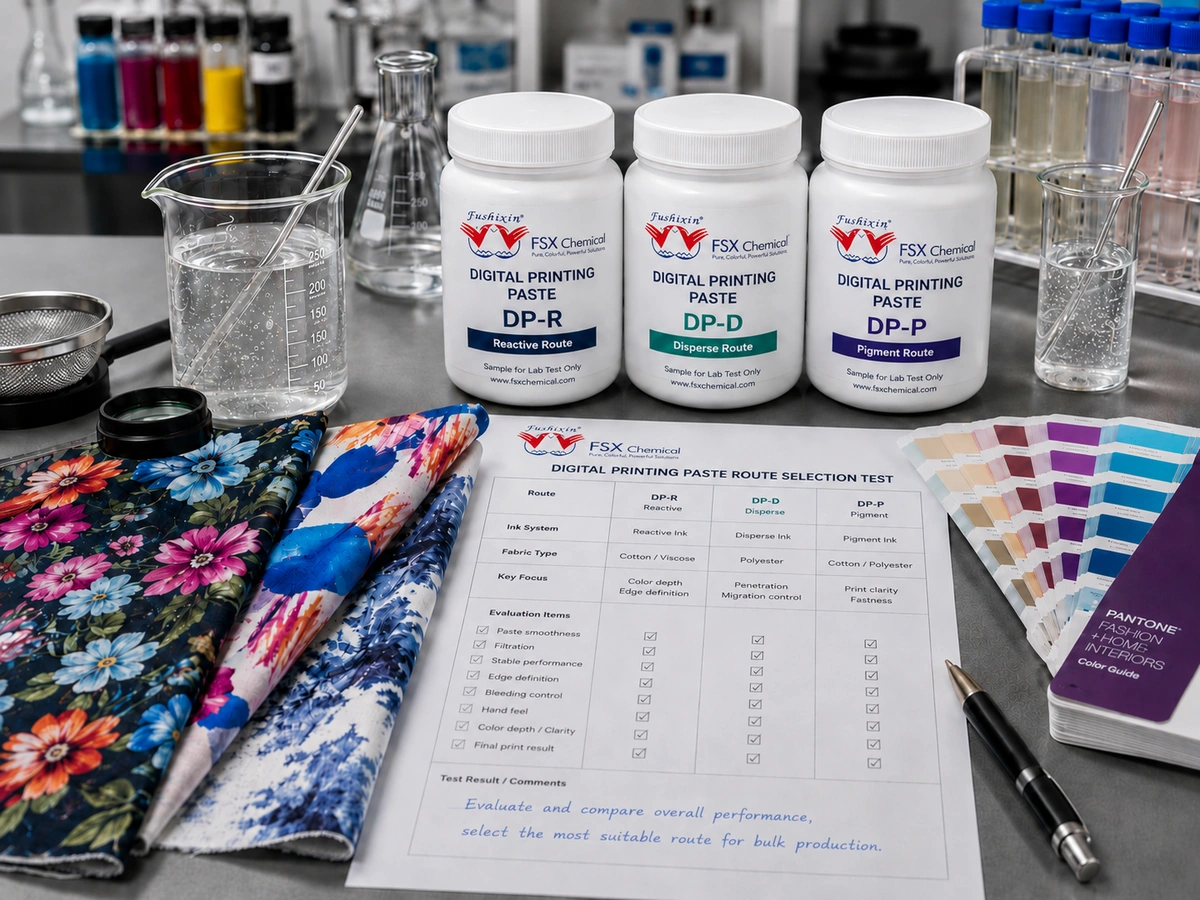
Reactive, direct disperse or pigment digital pretreatment routes
Ink system, fabric, pH, filtration, pickup, fixation and final print result
Custom Matched Route
Current supplier replacement or process-specific requirements
Current TDS, sample, test method, target performance and production validation
Реактивті басып шығаруға арналған натрий алгинаты
Sodium alginate is an established benchmark for reactive printing on suitable cellulosic fabrics. Its relatively low reaction with many reactive dyes reflects its molecular structure; anionic charge alone is not a complete explanation. Print quality and wash-off still depend on the grade and complete process.
Grade selection should consider viscosity, hydration, filtration, water quality and the complete printing recipe. Sodium alginate alone does not guarantee color yield or fastness.
CMC for Selected Printing Systems
CMC is a cellulose ether available in different viscosity and substitution ranges. Selected grades may be evaluated for printing-paste adjustment, compound systems or supplier replacement.
For reactive printing, compatibility depends on the CMC grade, degree of substitution, dye and formulation. General-purpose CMC should not automatically be used as a reactive printing thickener.
CMS for Process and Cost Evaluation
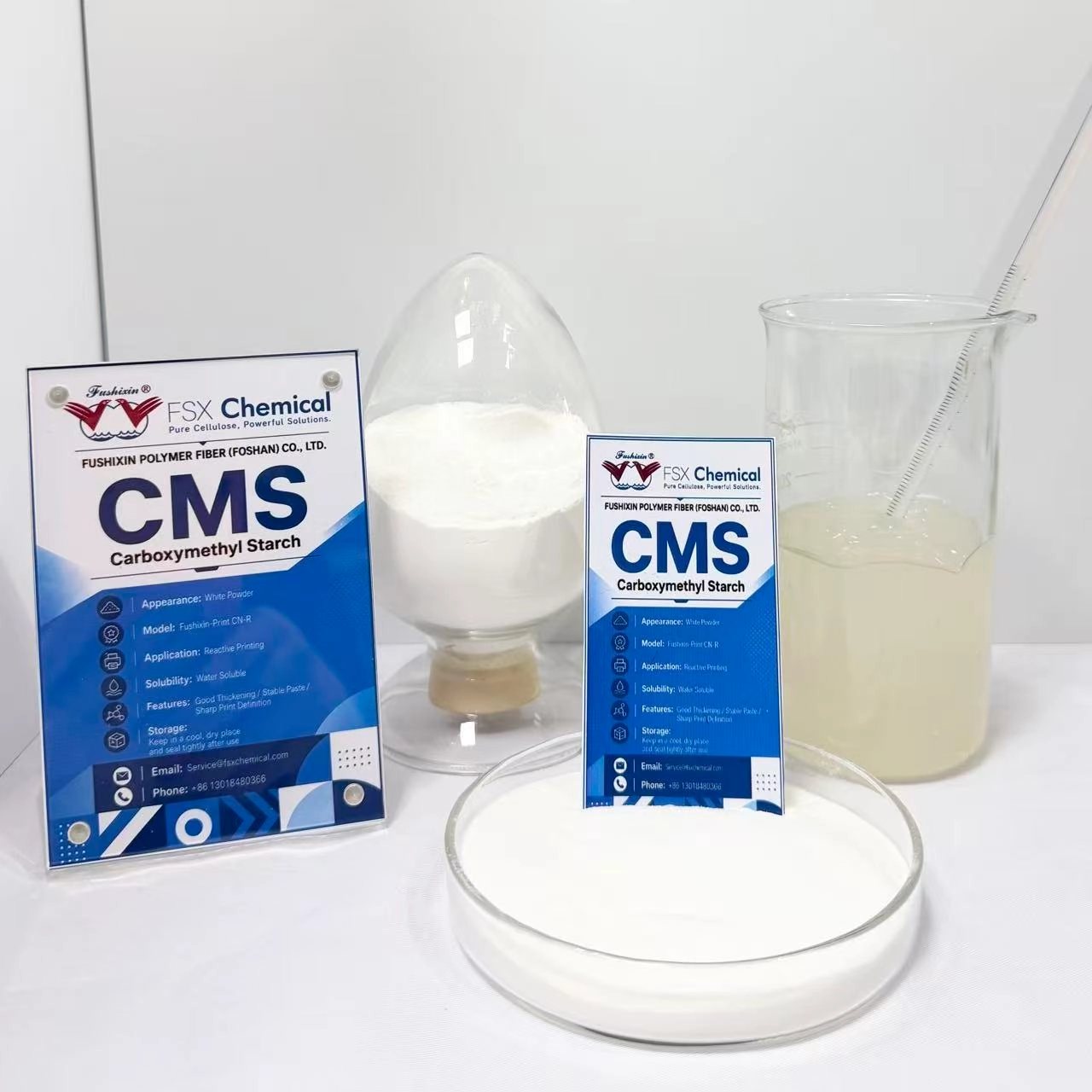
FSX CMS is a commercial synthetic printing-thickener family. Evaluate a documented grade for the specified printing route, preparation method and final-fabric requirements. Do not infer starch origin, degree of substitution or universal substitution behavior from the family name.
A lower material price is not sufficient for approval. Dosage, preparation, print quality and washing should be included in the comparison.
Сандық баспа пастасы
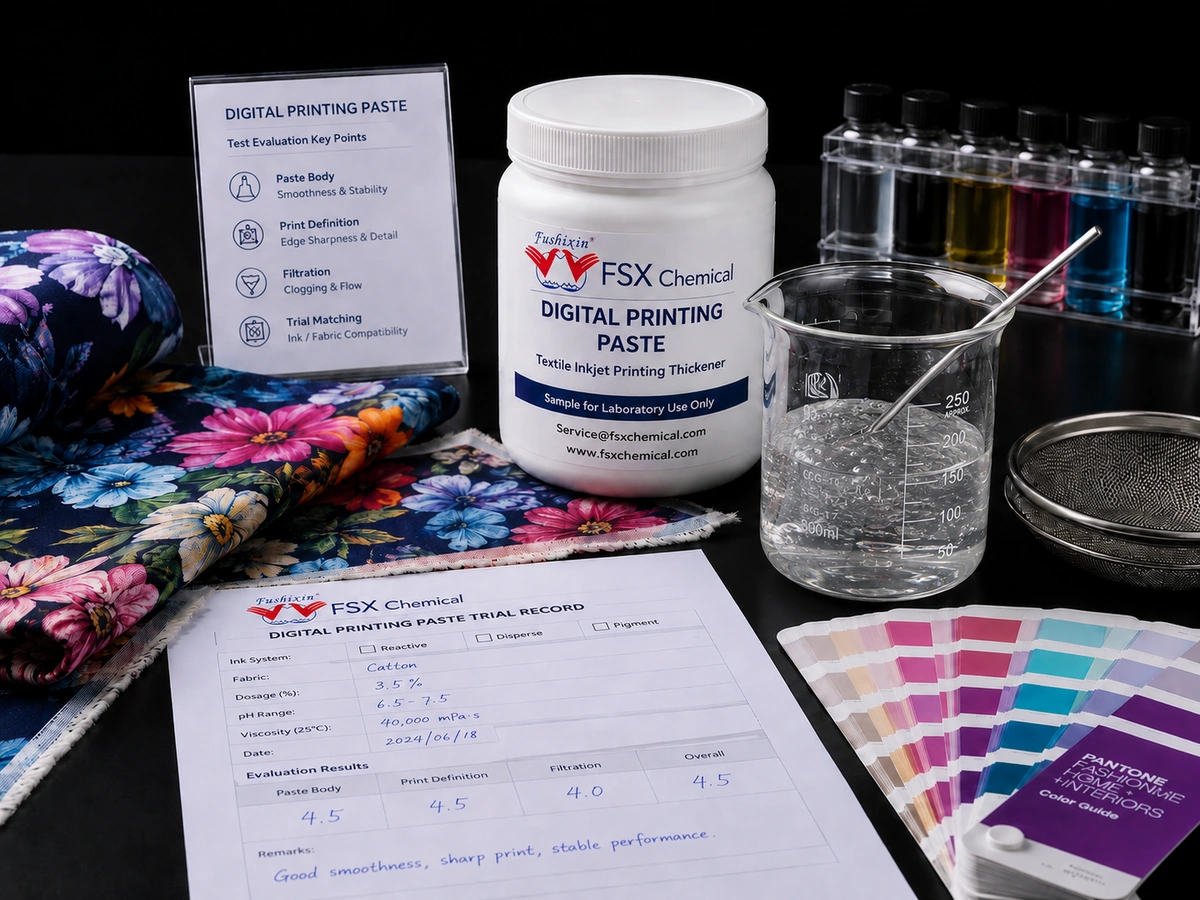
Select digital fabric pretreatment by ink chemistry and application method. DG-20, formerly DP-R, is the confirmed reactive route name. For direct disperse or pigment processes, request the current grade-specific TDS instead of treating an old internal code as proof of availability or suitability. Keep fabric pretreatment separate from jetting ink.
These are internal product directions rather than universal industry codes. The current TDS, ink system and fabric should be reviewed before requesting a sample.
Improving Print Sharpness and Bleeding Control
Begin with Rheology
Paste needs to move under the shear created by a pump, squeegee or screen, then recover enough structure to hold the printed design. A single viscosity number may not describe this behavior completely.
If the paste is too fluid, it may spread or penetrate excessively. If it is too thick, it may reduce transfer, block screens or create uneven coverage.
Check Fabric Absorbency
Highly absorbent or unevenly prepared fabric can change line width and penetration. Test the candidate on the actual production fabric rather than a laboratory fabric only.
Check Paste Add-On
Machine speed, pressure, screen and paste viscosity influence the quantity transferred to the fabric. A thickener change may require production adjustment, but each change should be documented.
Send an Incident Brief That Can Be Investigated
A useful support request identifies when the defect first appeared and the last acceptable run. Keep the description separate from the suspected cause: “specks after filtration” is an observation; “bad alginate” is a hypothesis.
Evidence
What it helps distinguish
Reference and suspect grade, lot and retained samples
Material identity or batch variation
Preparation record, water and paste age
Hydration, dosing or holding differences
Defect location and time during the run
Startup, widthwise application or progressive buildup
Unprinted blank and approved-reference print, where useful
Fabric or shared process effects
Retain filter residue, paste and fabric specimens where practical, with their source and storage history. Do not make several corrective additions before recording the original condition. Agree the next comparison and its success criterion before changing the grade. The brief supports diagnosis; it does not establish the cause or guarantee a corrective result.
How FSX Chemical Can Support the Evaluation
Buyers can provide the current grade, viscosity method, screen process, fabric and defect photographs. A candidate sample can then be compared under the same conditions.
Stabilizing Paste Viscosity and Preparation
Standardize Powder Addition
Adding powder too quickly can create partially hydrated lumps. Record addition rate, mixing time, water temperature and hydration time.
Use the Same Viscosity Method
Concentration, temperature, hydration, viscometer, spindle and speed should be the same when comparing grades. Values from different methods are not directly comparable.
Test the Complete Formulation
A thickener may be stable in water but lose or gain viscosity after dye, salt, alkali, binder or other auxiliaries are added. Measure the complete paste immediately and after the normal holding period.
Use Actual Process Water
Hardness, conductivity and metal ions can affect hydration and filtration. Sodium alginate systems can form gel particles in the presence of multivalent ions such as calcium.
Review Storage and Hygiene
Water-based pastes can change because of temperature, contamination or microbial activity. Do not assume that a prepared paste can be stored indefinitely.
Supporting Wash-Off and Fabric Handle
The thickener needs to perform during printing and then be removed as required after fixation. Residual polymer, hydrolyzed dye or other auxiliaries can affect fabric handle and fastness.
Реактивті басып шығару
Sodium alginate is often selected because it can support clean removal in reactive printing. Actual wash-off still depends on grade, dosage, dye, fixation and washing conditions.
CMC and CMS Systems
Removal behavior varies by grade and formulation. Evaluate the candidate after the complete fixation and washing process rather than judging only the printed fabric before washing.
Measure What Matters
Color depth before and after washing
White-area staining
Dry and wet rubbing fastness
Fabric handle
Visible or measurable residue
Water and washing time required
Do not claim that changing the thickener directly improves fastness unless the complete test conditions and results support that conclusion.
Matching Digital Printing Pretreatment
Реактивті струмельді басып шығару
Reactive pretreatment needs to control ink spreading and provide suitable conditions for dye fixation. Fabric, ink, alkali, moisture, steaming and washing should be evaluated together.
Direct Disperse Inkjet
Direct disperse printing on polyester requires control of wetting, penetration, migration and thermal fixation. It should not be confused with sublimation transfer through coated paper.
Пигментті инкджейт
Pigment systems require compatibility among the pretreatment, pigment ink, binder or fixation chemistry and fabric. Finished-fabric handle and rubbing fastness are important approval criteria.
Digital Trial Requirements
Ink system and printer
Fabric fiber and construction
Application method and pickup
Filtration and coating uniformity
Drying and storage of treated fabric
Fixation and washing route
Color, definition, fastness and handle
Supporting Batch and Procurement Control
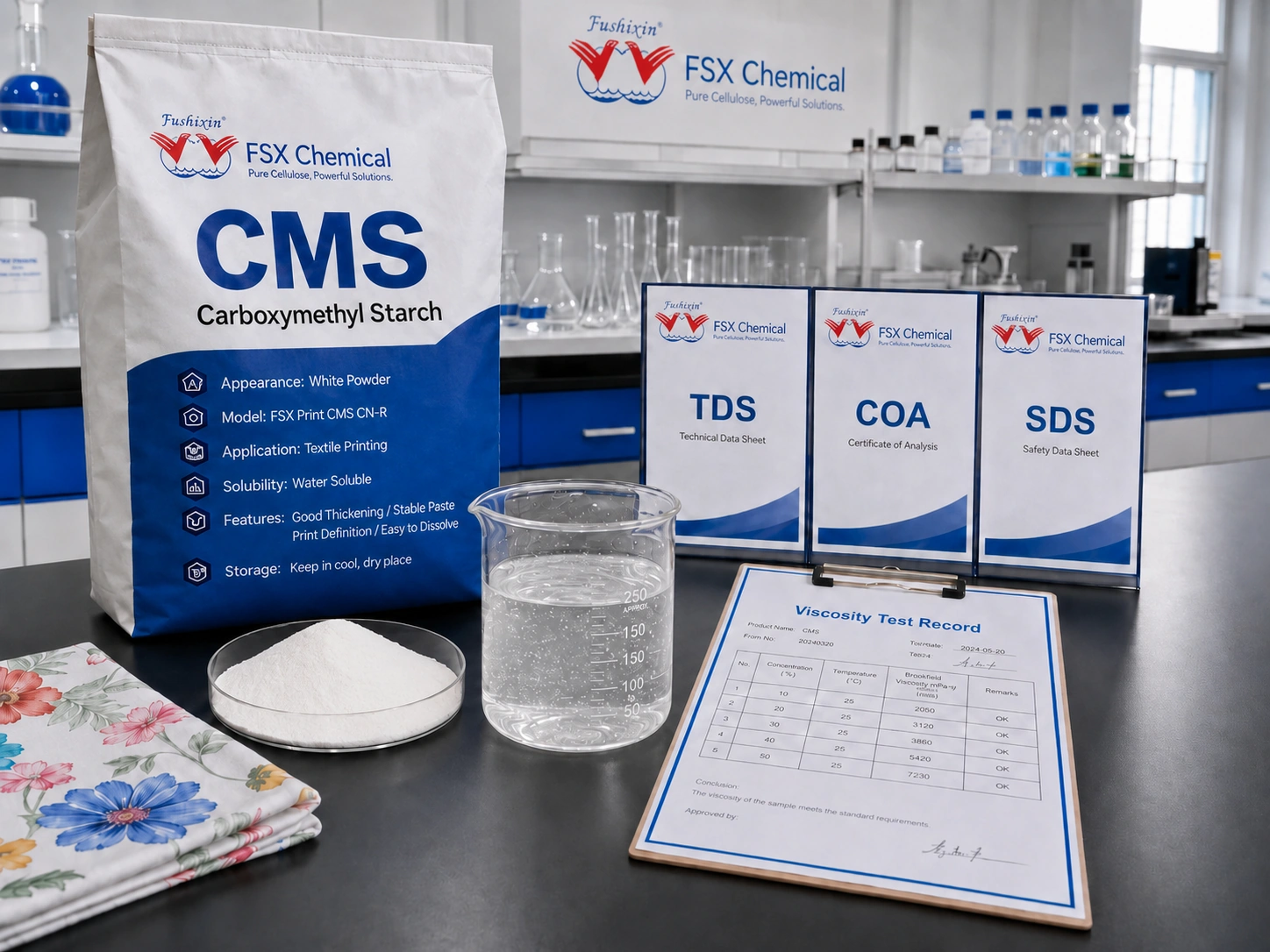
TDS for Product Evaluation
The Technical Data Sheet identifies the product, application direction, typical properties and test information. It supports sample selection but is not a batch-release record.
SDS for Safety Review
The Safety Data Sheet supports handling, storage and workplace review. Buyers should request a current version appropriate to their market where required.
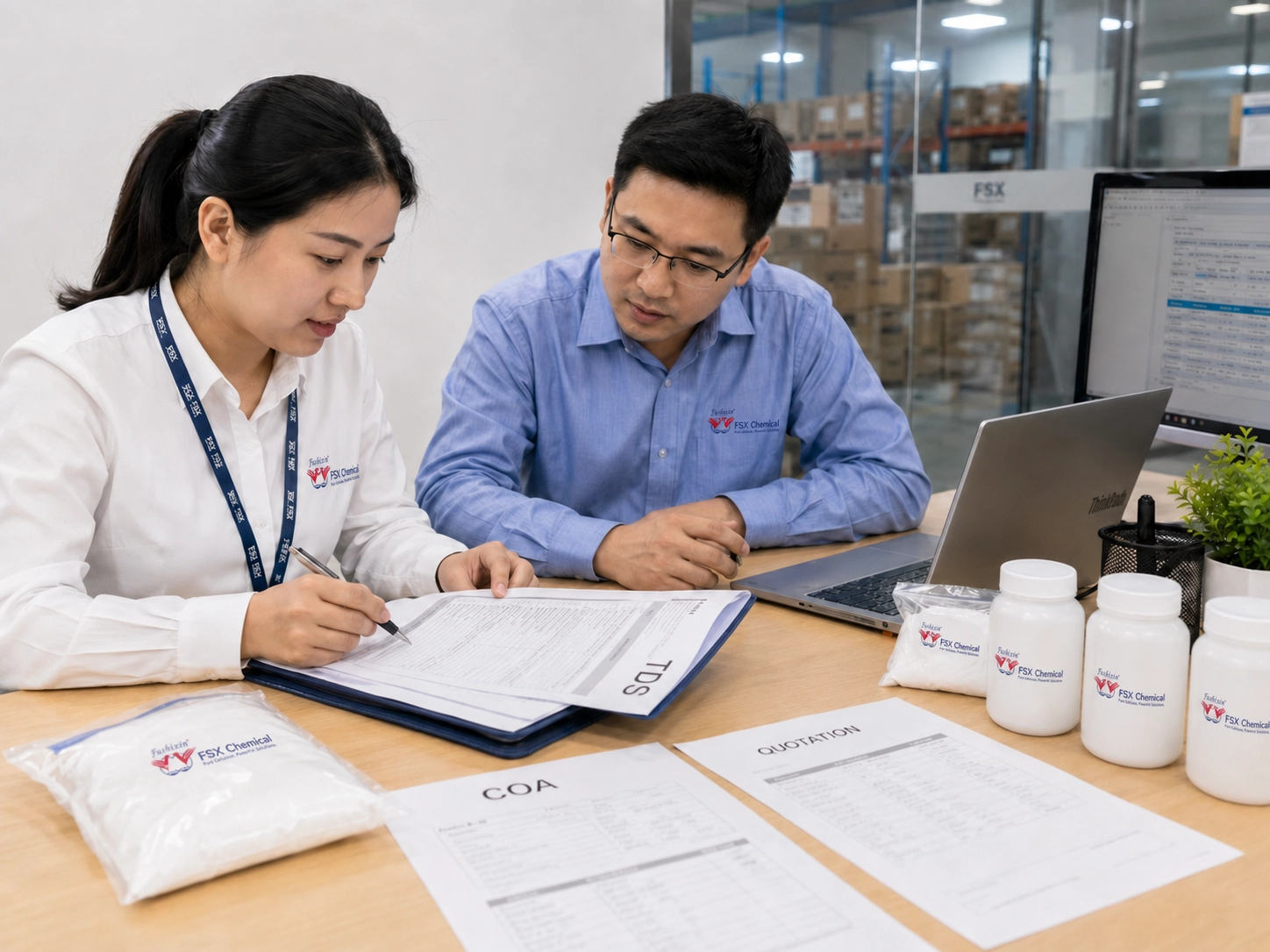
COA for the Confirmed Batch
A batch-specific Certificate of Analysis should identify the product, batch and selected results. COA parameters should be compared with the purchasing specification.
Product Identity Across Documents
The sample label, TDS, quotation, purchase order, package label and COA should use the same approved grade code. This connects the tested sample to the commercial shipment.
Certificates Require Verification
If certificates are required, verify the holder, product scope, issuing organization and validity period. A general website logo is not sufficient evidence.
How the Grade-Matching Process Works
Define the process. Confirm the fabric, dye or ink, printing method and current problem.
Review the reference. Provide the current TDS, grade, sample and viscosity method where available.
Select a product route. Determine whether sodium alginate, CMC, CMS, digital printing paste or a compound system is the appropriate starting point.
Prepare a candidate sample. Request the proposed grade, TDS and preparation instructions.
Run laboratory comparison. Compare hydration, viscosity, filtration and complete-paste stability.
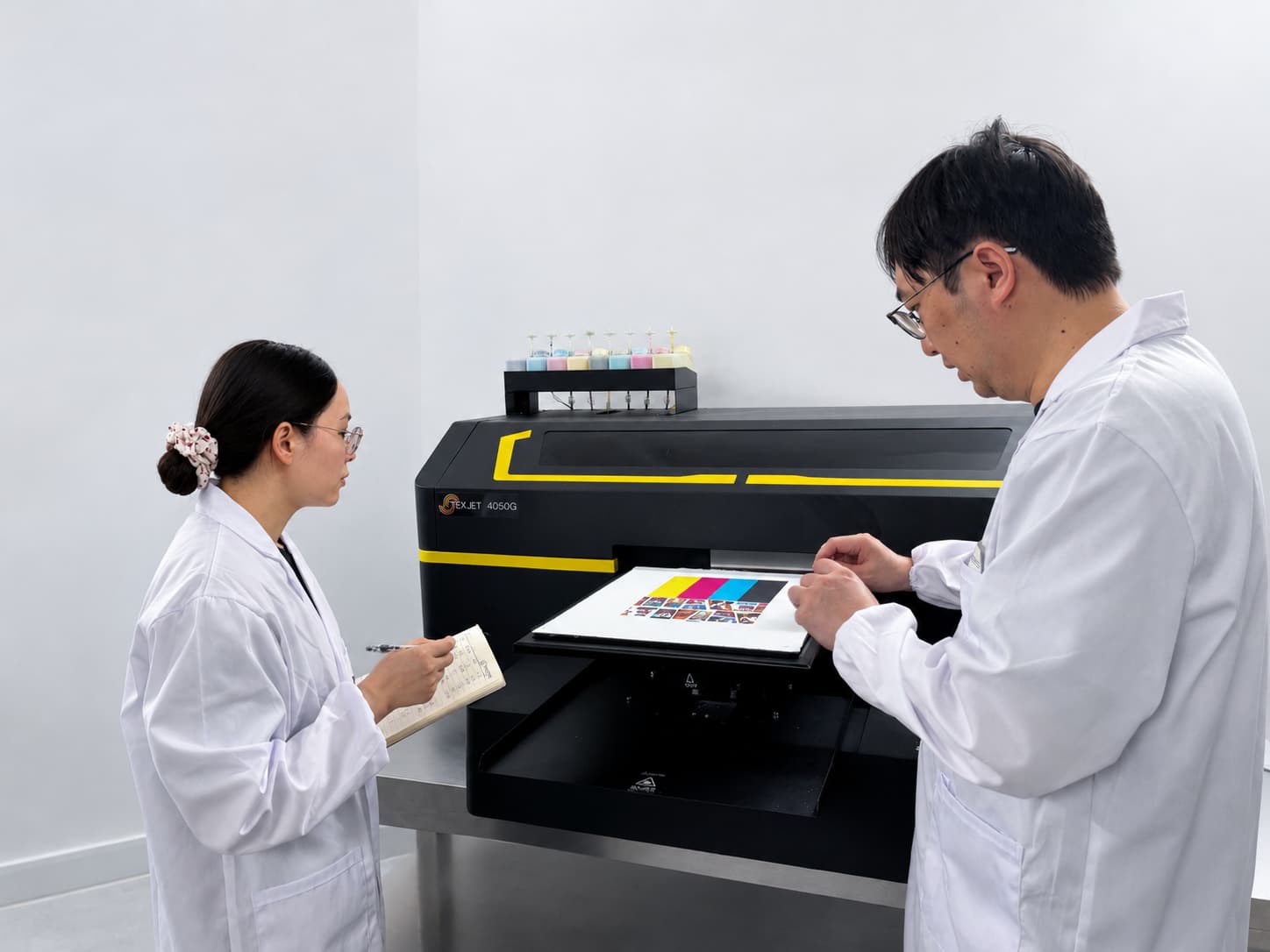
Conduct an application trial. Print, fix and wash the reference and candidate under the same conditions.
Complete a production trial. Confirm preparation and machine behavior at normal operating scale.
Approve the commercial specification. Confirm the grade code, test methods, packaging and batch documents.
A recommendation should be treated as the beginning of testing rather than final proof of suitability.
Information Buyers Should Provide
Flat-screen, rotary-screen or digital printing method
Fabric fiber and construction
Reactive, disperse, pigment, vat or discharge route
Current product, TDS or sample
Current dosage
Target viscosity and complete method
Water quality
Mixing and hydration procedure
Drying, fixation and washing conditions
Main defect or improvement target
Estimated quantity and order frequency
Packaging, destination and document requirements
Providing more relevant process information helps narrow the correct product route. The buyer does not need to disclose unnecessary proprietary details during the initial review.
Recommended Trial and Acceptance Criteria
Trial Stage
Recommended Checks
Product
Appearance, moisture, pH, particle size and product-specific parameters
Дайындау
Dispersion, hydration, foam, filtration and mixing time
Жіберу
Viscosity, rheology, pH, homogeneity and holding stability
Басып шығару
Screen or coating behavior, definition, bleeding, penetration and levelness
Finished Fabric
Color, wash-off, fastness, residue and handle
Commercial
Dosage, cost in use, packaging, MOQ and documents
Use an Approved Reference
Test the candidate against the current approved grade wherever possible. This reduces the influence of normal variation in fabric, dye, water and equipment.
Define Critical Requirements
A serious failure such as dye incompatibility, screen blockage or unacceptable fastness should not be offset by a lower price or a small advantage in another parameter.
Repeat Before Bulk Approval
For critical production, confirm the result in more than one trial or complete a controlled production run before approving a large order.
What Chemical Selection Cannot Fix Alone
A printing thickener cannot correct every production defect. The following factors should be reviewed separately:
Текстиль басып шығаруда CMC, CMS, натрий алгинат және цифрлық басу пасталарын салыстырыңыз. Әрбір әдістің реактивті, дисперсті, пигментті және цифрлық процестерге қалай сәйкес келетінін және үлгі сынау, сортты сәйкестендіру және ірі көлемде сатып алу алдында сатып алушылар нені тексеруі керектігін біліңіз.
Натрий альгинаты реактивті басу пастасы үшін тұрақты әрі жуылатын қалыңдатқыш ретінде тоқыма басуда кеңінен қолданылады. Сатып алар алдында тұтқырлық дәрежесін, тазалық дәрежесін және қолдануға жарамдылығын қалай бағалау керектігін және FSX Chemical компаниясының әлемдік сатып алушыларға техникалық мәліметтер мен үлгілер арқылы қалай қолдау көрсететінін біліңіз.
Match an FSX CMS printing thickener by exact grade, product form, preparation method and printing route. Compare complete-paste stability, filtration and finished-print results before approving sample-to-bulk supply.
Cellulose-based raw materials are used in textile printing, printing paste preparation, thickening, and formulation support. This guide explains how buyers can evaluate CMC, CMS, sodium alginate, textile printing thickeners, and printing paste products by specification, documentation, sample testing, and supplier support.
Chemical formulation support for textile printing should begin with clear application information. This guide explains what buyers should provide when requesting product matching, formulation adjustment, sample testing, TDS, COA, SDS, and technical support for CMC, CMS, sodium alginate, textile printing thickeners, and printing paste products.
CMS can refer to generic carboxymethyl starch or to FSX’s commercial synthetic printing-thickener family. Identify the exact product before evaluating sizing, screen printing or digital fabric pretreatment, and qualify each application separately.
Grade matching is not simply finding a product with a similar viscosity. This guide explains how textile printing mills can compare paste grades through application review, controlled preparation, printing trials and sample-to-bulk verification.
Textile printing performance depends on a coordinated chemical system, not one universal additive. This guide explains ten important chemical groups, their functions, where they fit and what buyers should verify before production trials.
Viscosity control in digital textile printing involves two different systems: the jetting ink and the fabric pretreatment formulation. This guide explains how temperature, formulation, measurement methods and process conditions affect jetting stability and print quality.
Laboratory evaluation of a printing thickener should cover more than one viscosity result. This guide explains powder inspection, stock-paste preparation, rheology, formulation compatibility, printing trials, wash-off and final performance assessment.
Digital printing pastes should be selected by ink chemistry, fabric, application method and post-treatment. This guide compares sodium alginate, CMC, CMS, synthetic polymer and compound pretreatment routes for textile inkjet printing.
Custom grade matching helps textile printers compare a new thickener or printing paste with an approved reference under defined test conditions. This guide explains the information required, the laboratory and production validation stages, and how buyers can move from an initial sample to an agreed commercial specification.
Өнімнің атауын, қолдану саласын, мөлшерін, жеткізу орнын және сізде бар кез келген TDS, үлгі фотосуреті немесе құжатты жіберіңіз. FSX Chemical бұл ақпаратты қарап шығып, баға ұсынысын алу, үлгі сәйкестендіру немесе өнімді таңдау бойынша келесі қадамды ұсынады.
Өнім туралы ақпаратӨнімнің атауы, сорты, моделі, жапсырмадағы фотосурет немесе жеткізушінің сілтемесі.
Қолжетімді құжаттарTDS, SDS, COA, үлгі фотосуреті, өнім тізімі немесе сынақ деректері.
Тапсырыс мәліметтеріЕсептелген мөлшер, қаптама, тағайындалған ел, порт немесе сауда шарты.
Өтінім немесе мәселеТекстиль басу процесі, формулалау қажеттілігі, ағымдағы мәселе немесе мақсатты көрсеткіштер.