Pampalapot na Acrylic para sa Pagpi-print ng Pigment sa Hinabing at Hinabing na Tela: Paano Binabago ng Estruktura ng Tela ang Rheolohiya at Pagpapasok
Knit and woven fabrics can use the same pigment chemistry, but porosity, thickness, compressibility, surface...
Knit and woven fabrics can use the same pigment, binder and acrylic-thickener chemistry, but fabric construction changes how the paste contacts, deforms and penetrates the textile under screen-printing pressure. Knits are often more extensible, compressible and structurally open because of their looped construction, while woven fabrics are generally more dimensionally stable and can present a flatter, more restrained surface. These are tendencies rather than universal rules: pore size, cover factor, GSM, thickness, yarn type, finishing and surface hairiness can override the simple knit-versus-woven label. The correct thickener strategy is therefore to compare rheology, paste add-on, penetration, recovery and finished-print quality on the actual production fabric rather than assigning one viscosity target to all knits or all woven fabrics.
How Does Knit vs. Woven Structure Change Acrylic Thickener Requirements?
Knit and woven fabrics do not automatically require different thickener chemistries, but they can require different rheology and paste-deposit windows.
Knitted fabrics often place more emphasis on:
Controlling penetration through a more deformable structure
Maintaining print definition while the fabric stretches or compresses
Preventing excessive paste deposit in open or bulky structures
Preserving soft hand on apparel knits
Woven fabrics often place more emphasis on:
Uniform surface transfer
Fine-line definition on a dimensionally stable substrate
Controlled coverage across yarn interlacings
Matching paste deposit to weave density and surface texture
The best starting logic is:
Same Controlled Paste → Same Printing Method → Knit vs. Woven Trial → Measure Transfer / Penetration / Definition → Adjust Rheology Only Where the Fabric Requires It
Do not begin with the assumption that knit always needs higher viscosity or woven always needs lower viscosity.
Fabric Construction Matters Beyond Fiber Composition
Two fabrics can both be 100% cotton and still require different pigment-printing conditions.
Important structural variables include:
Knitted or woven construction
GSM
Thickness
Cover factor
Porosity
Bilang ng sinulid
Yarn twist
Surface hairiness
Finishing treatment
These variables determine the size, continuity and orientation of the liquid pathways inside the textile.
They also influence how the fabric deforms under the screen and squeegee.
Therefore:
Same Fiber + Same Paste ≠ Same Penetration.
What Is Structurally Different About Knitted Fabric?
Knitted fabric is built from interconnected loops rather than warp/weft interlacing.
Compared with many woven structures, knitted fabrics often have:
Greater extensibility
Greater compressibility
Higher thickness for a comparable mass
More three-dimensional loop geometry
More surface contour
Many knit constructions also have substantial pore volume.
However, tight interlock or compact knit structures can be dense, while mesh knits can be extremely open.
That is why the word “knit” is only the first classification step.
What Is Structurally Different About Woven Fabric?
Woven fabric is formed by interlacing warp and weft yarns.
Many woven structures are:
More dimensionally stable
Less extensible
Flatter under screen pressure
More predictable in registration
But woven construction can also vary widely.
A dense plain weave, heavy twill, loose gauze-like weave and brushed woven surface do not behave the same.
Woven fabric should therefore be described by construction and cover—not only by the word “woven.”
Why “Knit Is Open / Woven Is Dense” Is Too Simple
Textile structure studies show that liquid transport depends on a combination of:
Porosity
Thickness
Cover factor
Yarn arrangement
Capillary continuity
Pagpupuno
Many knits have lower cover factor and larger open spaces, but compact knits can be dense and open woven fabrics can still show strong through-penetration.
The useful engineering question is:
What is the actual fabric structure and liquid-transport behavior?
How Fabric Structure Connects to Printing-Paste Rheology
The printing paste experiences three key stages:
At Rest on Screen → Under Squeegee Shear → After Transfer to Fabric
The fabric affects the third stage immediately.
After transfer, the paste can:
Remain near the surface
Move laterally
Penetrate through inter-yarn spaces
Be drawn into fiber / yarn capillaries
Therefore, the preferred rheology depends on how quickly the fabric removes liquid and how its structure changes under pressure.
A single Brookfield viscosity cannot describe this complete interaction.
Capillary Penetration and Paste Hold
Liquid penetration into textile structures is influenced by capillary pathways.
These pathways are created by:
Fiber-to-fiber spaces
Yarn structure
Inter-yarn openings
Loops or weave intersections
Lower-viscosity liquid generally penetrates capillary structures more easily than a more viscous system, all other variables being equal.
But actual pigment paste is non-Newtonian.
Therefore, penetration should be evaluated with the real shear-thinning paste rather than predicted from a single low-shear value.
The target is:
Enough Contact and Coverage Without Uncontrolled Through-Penetration.
Compression Under Squeegee Pressure
Knitted fabrics can compress significantly under printing pressure.
Compression can temporarily:
Reduce pore volume
Change surface height
Alter contact with the screen
Change the amount of paste pushed into the structure
After the squeegee passes, the fabric can recover mechanically while the paste is also recovering rheologically.
This interaction is important.
If paste recovery is too slow, the fabric may reopen while the paste is still mobile, allowing more migration or penetration.
If recovery is very fast, surface leveling can suffer.
This is one reason knit printing can be sensitive to both fabric mechanics and rheology.
Stretch and Dimensional Stability
Knitted fabric usually stretches more easily than woven fabric.
During printing, tension differences can change:
Loop dimensions
Fabric width
Pore size
Pattern registration
The same knit printed under different machine tension can therefore show different paste penetration and line width.
Woven fabric is generally more dimensionally stable, but loose constructions can still distort.
When comparing thickeners:
Keep Fabric Tension and Machine Settings Controlled.
Surface Texture, Hairiness and Contact Area
The fabric surface changes how completely the screen-delivered paste contacts the textile.
Relevant variables include:
Raised fibers
Brushed surfaces
Pique texture
Rib peaks and valleys
Twill ridges
Slub yarns
A rough or uneven surface can require enough flow to cover low areas without excessive spreading in high areas.
This can make the optimum balance between:
Flow + Leveling + Structural Recovery
more important than the nominal viscosity value.
Acrylic Thickener for Knitted Pigment Printing
For knitted pigment printing, a useful synthetic thickener should support:
Controlled penetration
Good screen transfer under a deformable substrate
Fast enough recovery to hold pattern edges
Low enough polymer deposit to maintain soft hand
Knitted apparel can be especially sensitive to printed-area stiffness.
Therefore, do not compensate for every knit-printing problem by increasing thickener dosage.
First check:
Fabric tension
Squeegee pressure
Screen deposit
Fabric absorbency
Binder level
Typical Knit-Fabric Risks
Depending on construction, common knit-printing risks include:
Excess penetration through open loops
Print distortion from stretch
Uneven transfer on textured surfaces
High add-on in bulky fabrics
Hard hand after excessive polymer deposit
Pattern spreading after compression / recovery
These are diagnostic possibilities, not universal defects.
A compact interlock may behave very differently from a lightweight single jersey.
Single Jersey, Rib, Interlock, Pique and Fleece
Single Jersey
Check stretch, strike-through and edge definition.
Rib / Pique
Raised or textured zones can challenge coverage, leveling and deposit uniformity.
Interlock
Often more stable and thicker than single jersey; check surface buildup.
Fleece / Brushed Knit
Thickness and surface fibers can increase paste demand and hand sensitivity.
These route-level tendencies should be confirmed on the actual production fabric.
Acrylic Thickener for Woven Pigment Printing
For woven pigment printing, the synthetic thickener should support:
Consistent screen release
Sharp edges
Controlled deposit across warp/weft interlacings
Good large-area uniformity
Stable long-run rheology
Because the substrate is often more dimensionally stable, line-definition differences between thickeners can be easier to diagnose.
However, dense woven fabric can resist penetration while open woven structures can allow significant strike-through.
Typical Woven-Fabric Risks
Depending on construction, common risks include:
Poor coverage on rough or heavy yarn intersections
Excess surface buildup on dense fabrics
Strike-through on open weaves
Mesh / weave interaction visible in fine patterns
Uneven transfer on heavily textured woven surfaces
Again, the relevant variables are weave density, yarn size and surface profile—not the woven label alone.
Plain, Twill and Other Woven Structures
Plain / Twill
Warp/weft intersections, twill ridges and yarn size can change surface contact and coverage.
Satin / Long-Float Structures
Smoother areas may improve apparent coverage but can respond differently to paste hold.
Open Weaves
Larger inter-yarn spaces can increase through-penetration or reverse-side strike-through.
Use actual fabric structure in the trial rather than relying on generic woven assumptions.
Should Knit and Woven Use Different Viscosity Targets?
They may require different working windows, but there is no universal knit or woven viscosity number.
The correct sequence is:
Standardize the complete paste.
Measure viscosity under one defined method.
Print both fabrics.
Compare transfer, penetration and definition.
Adjust the thickener only when a fabric-specific defect is confirmed.
A knitted fabric with a controlled surface may print better at the same viscosity as a woven reference.
Another open or bulky knit may need a different rheology profile.
The production result—not fabric category alone—defines the target.
Shear Thinning and Screen Passage
Acrylic printing thickeners are commonly selected for pseudoplastic or shear-thinning behavior.
Shear ↓ → Structure Recovers → Pattern Is Stabilized
For both knit and woven printing, the useful thickener must balance:
Easy transfer
Controlled penetration
Good recovery
But the substrate changes how much recovery is required after transfer.
Structural Recovery After Transfer
Recovery is particularly important when the substrate can move or deform after the printing stroke.
Too-slow recovery can lead to:
Edge spreading
Pagpasok
Fine-detail loss
Too-fast recovery can lead to:
Mahinang pag-level
Mesh marks
Uneven coverage
Textured knits may need more leveling, while dense woven fabrics may benefit from sharper recovery for fine details. Confirm both tendencies on the machine.
Low-Shear Body and Yield Behavior
Low-shear body helps the paste remain stable on the screen and after transfer.
A useful low-shear structure can reduce:
Flow into deep pores
Uncontrolled spreading
Drainage during pauses
However, excessive body can make:
Screen filling difficult
Pumping harder
Large-solid transfer uneven
Do not maximize low-shear viscosity for open knits.
The objective is a balanced yield / flow behavior that still prints.
Paste Add-On and Deposit Weight
Fabric structure changes how much paste the machine actually deposits.
The transfer amount is influenced by:
Screen opening / engraving
Squeegee pressure
Squeegee speed
Stroke count
Paste rheology
Fabric compressibility
A bulky knit can receive more paste under pressure, while a dense woven fabric may retain more deposit near the surface.
Measure or estimate paste add-on before interpreting color yield.
Screen Mesh, Engraving and Fabric Structure
Screen geometry controls the quantity of paste available for transfer.
Larger openings or deeper engraving generally allow more paste to reach the fabric.
If a knit already receives excessive paste because of high compressibility or open structure, reducing add-on through screen parameters may be more effective than simply raising viscosity.
If a coarse woven surface is under-covered, a different mesh / engraving or deposit strategy may be required.
Thickener and screen should therefore be optimized as one application system.
Squeegee Pressure, Speed and Stroke Count
Squeegee settings can change the fabric as well as the paste.
Higher pressure can:
Increase paste transfer
Compress knitted fabric
Push paste deeper into openings
Increase contact with rough woven surfaces
More strokes can also increase paste deposit.
During a thickener trial, keep:
Pressure
Speed
Angle
Stroke count
controlled.
Otherwise a machine-setting difference can be mistaken for a rheology difference.
Color Yield and Surface Pigment Concentration
Apparent pigment color depends strongly on how much pigment remains near the visible surface.
Excessive penetration can reduce apparent surface color even if the same pigment mass was transferred.
Insufficient transfer can also reduce color yield.
Therefore, compare:
Face-side color
Reverse-side penetration
Actual solid coverage
Paste add-on
when evaluating knit and woven differences.
Large Solid Areas vs. Fine Detail
Use both pattern types in substrate comparison.
Fine Lines and Small Text
Reveal:
Spreading
Recovery
Fabric distortion
Registration
Large Solid Areas
Reveal:
Coverage
Leveling
Paste deposit
Pagpasok
Surface nonuniformity
A knit may pass a fine-line test but fail large-solid coverage, or the reverse.
A woven trial should be evaluated the same way.
Binder Distribution and Rubbing Fastness
The thickener does not directly create pigment fixation.
Binder and curing remain the main fixation variables.
However, structure-dependent penetration can change where pigment and binder are deposited.
If too much paste enters a thick knit structure, the visible surface can receive less binder/pigment than expected.
If a dense woven surface holds a heavy film, rubbing and hand may depend strongly on binder-film uniformity.
Evaluate:
Dry rubbing
Wet rubbing
Surface film
Pagpasok
after controlled curing.
Fabric Hand and Printed-Area Stiffness
Knitted apparel is often especially sensitive to stiffness because softness and stretch are important end-use properties.
A high polymer deposit can reduce:
Drape
Stretch feel
Softness
Woven fabric can also become stiff, but the perceived effect may differ because the base fabric already has different bending and structural properties.
Compare hand at matched:
Kabahagi ng kulay
Fastness
Paste deposit
rather than comparing two prints with very different add-on.
Dark Shades as a Structure Stress Test
Dark shades can reveal substrate-related problems more clearly.
On open or bulky knits, look for:
Excess penetration
Weak surface black
Pinholes / uneven coverage
On woven fabrics, look for:
Weave show-through
Hindi pantay na matitigas na bahagi
Surface buildup
Dark shades also introduce more pigment dispersion, which can alter rheology independently of fabric structure.
Keep the formula constant when the purpose is to isolate the fabric effect.
Build a Knit-vs.-Woven Laboratory Matrix
Test Area
Knit
Woven
Fabric GSM / thickness
Record
Record
Surface / construction
Record loop type
Record weave type
Reference paste
Same formula
Same formula
Paste viscosity
Same test method
Same test method
Transfer / add-on
Measure / compare
Measure / compare
Face-to-back penetration
Ihambing
Ihambing
Fine-line definition
Ihambing
Ihambing
Pagkakapatag ng solidong lugar
Ihambing
Ihambing
Dry / wet rubbing
Pagsusulit
Pagsusulit
Fabric hand
Assess
Assess
This matrix prevents the fabric-structure effect from being confused with uncontrolled formulation changes.
Use the Same Paste First
The cleanest first test is:
One Paste → One Screen / Machine Setup → Knit + Woven
Keep constant:
Thickener grade
Dosis ng pampalapot
Pigmento
Binder
pH
Screen
Squeegee settings
Pagpapagaling
Then identify what changes because the substrate changed.
Only after that should you alter rheology, deposit or binder level.
Record Fabric Data Before Adjusting Thickener
At minimum, record:
Fiber composition
Knit or woven
Specific structure: jersey, rib, interlock, pique, plain, twill, etc.
GSM
Thickness if available
Width / tension condition
Pre-finish / softener / brushing if known
Absorbency or wetting observation
If the same thickener suddenly behaves differently, compare the fabric data before changing the product specification.
Build Fabric-Specific Rheology Windows
After the same-paste test, build a small adjustment matrix only around the failed variable.
If Knit Penetration Is Too High
Evaluate:
Dosis ng pampalapot
Low-shear body / recovery
Squeegee pressure
Screen deposit
Fabric tension
If Knit Coverage Is Poor
Evaluate leveling, surface contour and deposit before simply reducing viscosity.
If Woven Surface Buildup Is Too High
Evaluate add-on, screen geometry and rheology.
If Woven Strike-Through Is Too High
Evaluate weave openness, deposit and recovery.
The final specification should define an acceptable operating range—not one universal viscosity number.
Production Trial Approval
After laboratory screening, run a representative production trial on the actual knit and/or woven route.
Record:
Fabric composition
Construction
GSM / thickness
Thickener grade and dosage
Pigment / binder formula
Final pH
Viscosity test method
Start / mid / end-run viscosity
Screen / engraving
Squeegee pressure / speed / strokes
Machine speed
Fabric tension where relevant
Paste add-on
Pagpasok
I-print ang depinisyon
Pagpapagaling
Dry / wet rubbing
Hand
Approve a fabric-structure-specific working window before bulk conversion.
Common Knit-vs.-Woven Selection Mistakes
1. Assuming All Knits Need Higher Viscosity
Construction, GSM, stretch, screen deposit and rheology profile all matter.
2. Assuming All Woven Fabrics Are Dense
Open woven structures can have significant through-penetration.
3. Changing Thickener Before Controlling Fabric Tension
Knit stretch can change pore geometry and print dimensions.
4. Ignoring Fabric Compression
Squeegee pressure can change knit thickness and paste deposit.
5. Comparing Two Fabrics with Different Paste Add-On
Color yield and hand become difficult to interpret.
6. Using Brookfield Viscosity Alone
Shear thinning and recovery control actual screen-transfer behavior.
7. Ignoring Surface Texture
Rib, pique, fleece and twill surfaces can require different leveling behavior.
8. Changing Several Machine Variables During the Trial
The result can no longer isolate the thickener or fabric-structure effect.
Troubleshooting Table
Napansin na Problema
First Variables to Check
Do Not Assume
Knit print penetrates too deeply
Structure openness, pressure, add-on, recovery
Higher viscosity is always the only fix
Knit print distorts
Fabric tension, stretch, squeegee pressure
Thickener caused the geometry change
Knit solid area is patchy
Surface texture, leveling, foam, add-on
More pigment solves coverage
Knit hand becomes stiff
Binder/thickener solids, deposit weight
Higher viscosity is free of hand cost
Woven fine lines spread
Recovery, pressure, paste deposit
Woven always gives sharp edges
Woven has weak coverage
Surface texture, mesh, transfer, add-on
Thickener dosage alone controls coverage
Open woven shows strike-through
Weave openness, add-on, rheology
All woven fabrics resist penetration
Same paste behaves differently by fabric lot
GSM, construction, finish, absorbency
The thickener batch is automatically responsible
Total Cost in Use
Fabric structure changes cost through its effect on:
Dosis ng pampalapot
Paste add-on
Pigment usage
Binder usage
Machine speed
Rework
Hand / quality rejects
A useful model is:
Total Cost in Use = Thickener + Pigment + Binder + Paste Add-On + Machine Efficiency + Curing + Rework + Quality Loss
A higher-priced thickener can still be more economical if it reduces excess penetration, over-deposit, coverage defects or machine adjustments.
Compare cost per acceptable printed meter on the actual fabric construction.
What Information Should You Send to a Supplier?
For useful knit-vs.-woven matching, provide:
Fiber composition
Knit or woven
Specific fabric structure
GSM and thickness if available
Current acrylic thickener / TDS
Dosis ng pampalapot
Viskosidad at kumpletong pamamaraan ng pagsubok
Pigment and dosage
Binder grade / dosage
Final pH
Flat or rotary screen
Screen mesh / engraving
Squeegee pressure / speed / stroke count
Current paste add-on if measured
Main issue: penetration, coverage, definition, rubbing, hand or cost
FSX Chemical can use this information through Mga Halimbawa at Pagtutugma to define a controlled fabric-structure trial.
How Should a Mill Adjust Acrylic Thickener for Knit vs. Woven Pigment Printing?
A practical control chain is:
Record Fabric Construction → Standardize One Reference Paste → Keep Screen / Squeegee Settings Controlled → Compare Transfer / Add-On / Penetration → Check Fine Lines & Solids → Adjust Rheology Only Where Needed → Cure → Check Rubbing / Hand → Lock Fabric-Specific SOP
The key principles are:
Knit and woven fabrics can use the same pigment chemistry, but their structure changes how the paste is deposited and penetrates.
Knitted fabrics are often more stretchable and compressible, making fabric tension, pressure and structural recovery especially important.
Woven fabrics are generally more dimensionally stable, but weave density and surface texture can still change penetration and coverage significantly.
Porosity, cover factor, GSM, thickness and finishing are more informative than the knit/woven label alone.
There is no universal knit or woven viscosity target; same viscosity does not guarantee the same rheology or penetration.
The best thickener working window is the one that gives controlled add-on, clean definition, acceptable fastness and hand at the lowest practical Total Cost in Use for the actual fabric structure.
Madalas Itanong na Mga Tanong
1. Does knitted fabric always need a higher-viscosity pigment paste?
No. Knit construction can increase penetration or deformation risk, but the correct working window depends on porosity, GSM, thickness, stretch, screen settings and rheology profile.
2. Does woven fabric always need lower viscosity?
No. Dense, open, rough and smooth woven structures can require different transfer and recovery behavior. Test the actual fabric.
3. Why does the same paste penetrate a knit more deeply?
Possible causes include a more open loop structure, higher compressibility, fabric tension and greater paste add-on under squeegee pressure.
4. Why can knit printing distort the pattern?
Knitted fabric can stretch or change loop geometry under tension and pressure. Machine tension and fabric stabilization should be checked before blaming the thickener.
5. Why does a woven print show weak coverage over yarn intersections?
Surface texture, weave ridges, screen deposit and paste leveling can reduce uniform contact across the surface.
6. Is fabric porosity more important than knit vs. woven classification?
It can be. Porosity, cover factor, thickness and yarn arrangement directly affect liquid transport and should be recorded during qualification.
7. How does squeegee pressure affect knitted fabric?
Higher pressure can compress the knit, change pore geometry and push more paste into the structure, increasing deposit or penetration.
8. Should I change screen mesh before changing thickener?
If the main problem is excessive or insufficient paste add-on, screen geometry may be part of the solution. Thickener and application settings should be evaluated together.
9. Why does a knit feel harder after pigment printing?
A bulky or open knit can receive a high paste deposit. Binder and thickener solids can then reduce softness and stretch feel after curing.
10. What is the best first comparison for knit vs. woven?
Use one controlled paste and the same printing conditions first, then compare transfer, penetration, definition, rubbing and hand before changing the formula.
11. What should I measure besides viscosity?
Record fabric construction, GSM, thickness, paste add-on, face-to-back penetration, print definition, solid-area uniformity, rubbing and hand.
12. What should I send FSX Chemical for knit/woven matching?
Send fiber composition, knit/weave structure, GSM, current thickener, dosage, viscosity method, pigment/binder formula, screen, squeegee settings and the specific penetration or coverage problem.
Match Acrylic Thickener to the Actual Fabric Structure
If the same pigment paste gives good definition on woven fabric but excessive penetration on knit, or if a knit formula creates poor solid coverage, stiff hand or unstable registration, FSX Chemical can help structure a controlled fabric-construction comparison.
For a useful technical review, send:
Fiber composition
Knit or woven construction
Specific structure such as jersey, rib, interlock, pique, plain or twill
GSM and thickness if available
Your current acrylic thickener sample, TDS or COA
Thickener dosage and viscosity test method
Pigment / binder formula
Screen mesh or engraving
Squeegee pressure / speed / stroke count
Paste add-on if available
Current problem: penetration, coverage, definition, fastness, hand or cost
Knit versus woven is a useful starting classification, but it is not the final thickener specification. The most reliable pigment-printing decision comes from the actual fabric porosity, thickness, compressibility, surface texture and machine deposit, tested together with the paste rheology under production-relevant conditions.
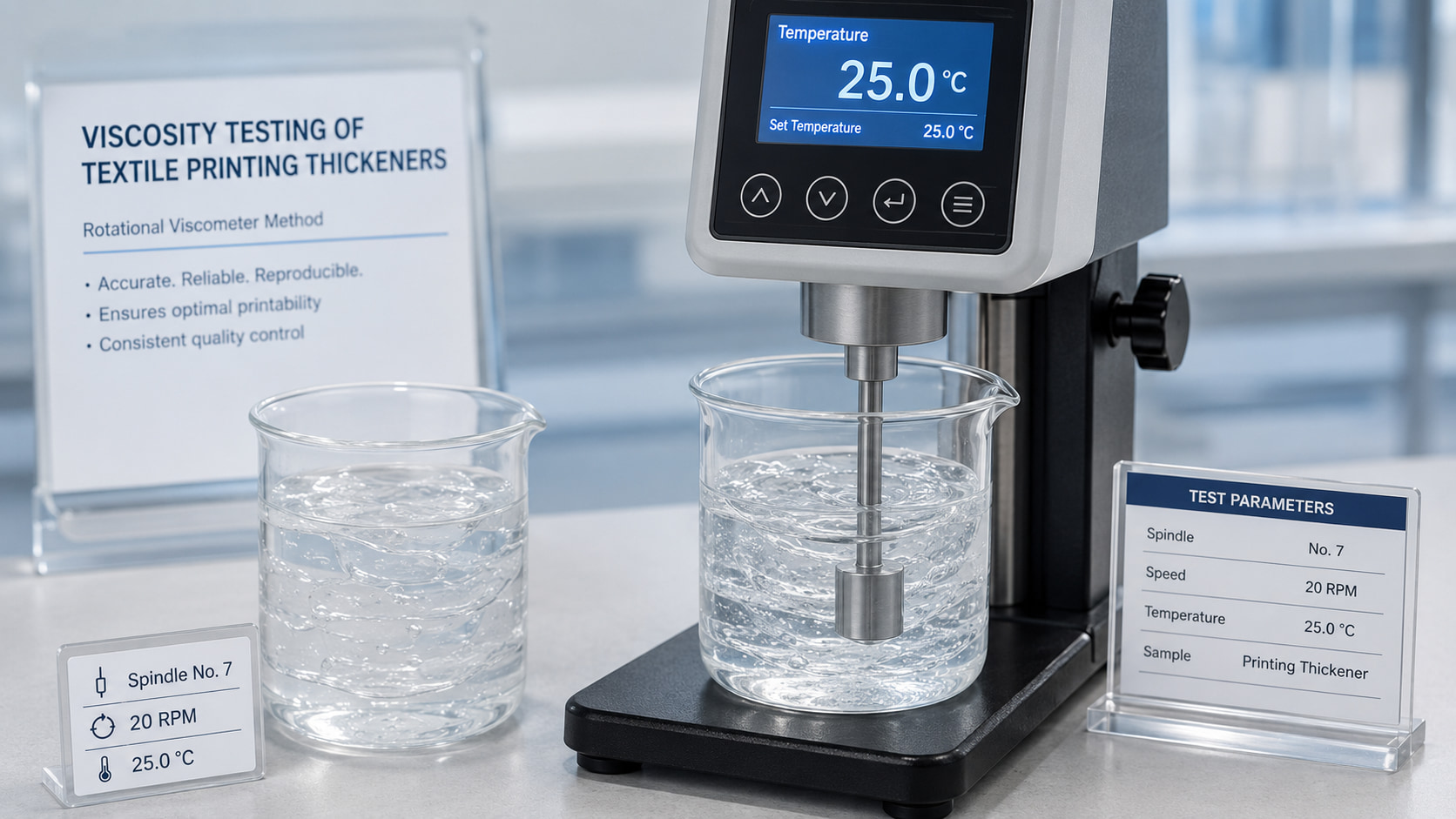
Alamin kung bakit hindi maaaring ikumpara ang mga halaga ng viskosidad ng pampapalapot sa pagpi-print ng tela nang hindi tinutugma ang konsentrasyon, temperatura, instrumento, spindle, bilis, paraan ng paghahanda, at oras ng pagsubok.
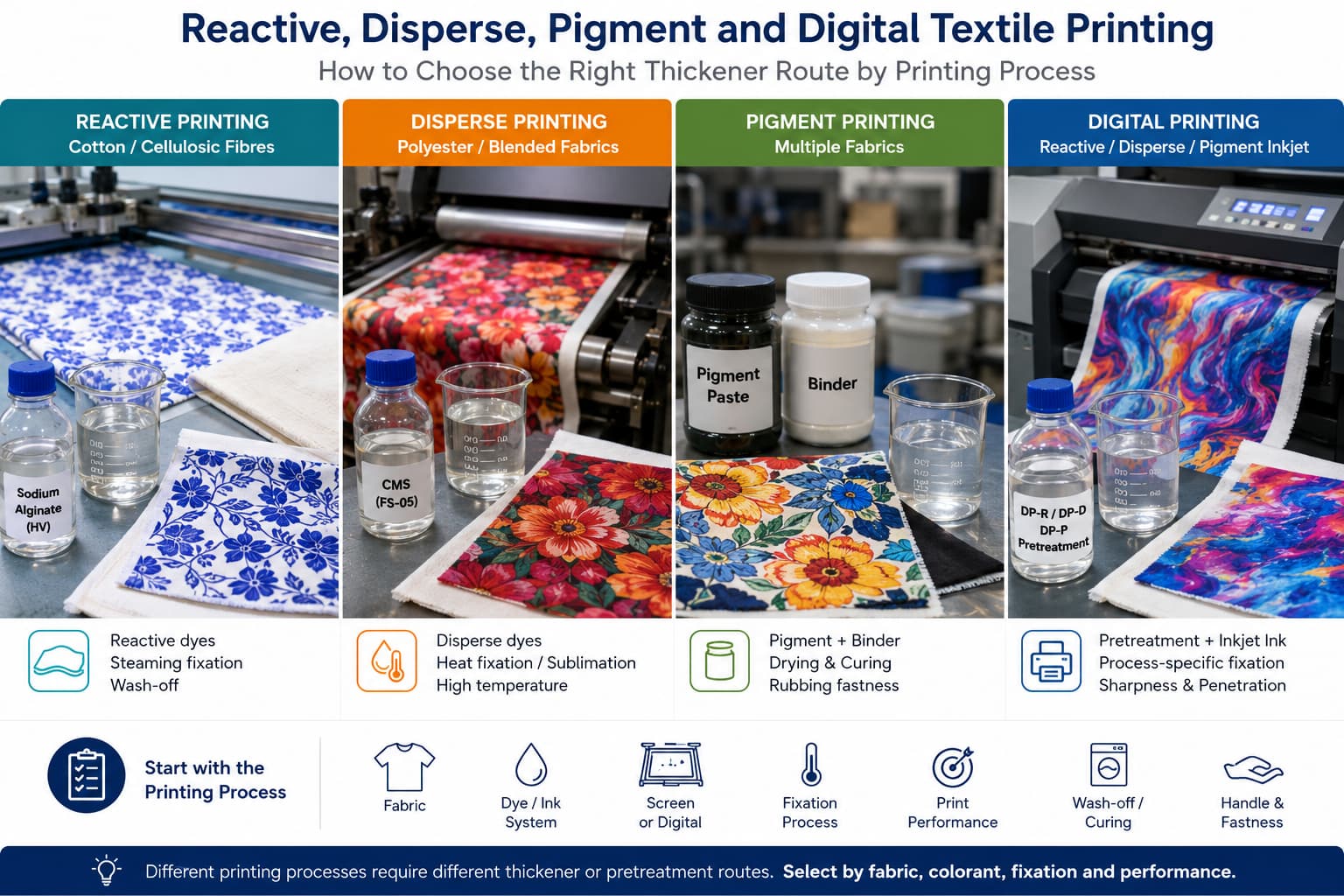
Matutong pumili ng pampatigas at mga paraan ng paunang paggamot para sa reaktibo, disperse, pigment, at digital na pagpi-print sa tela batay sa tela, tina o tinta, fiksasyon, paghuhugas, at mga kinakailangan sa kalidad ng pagpi-print.
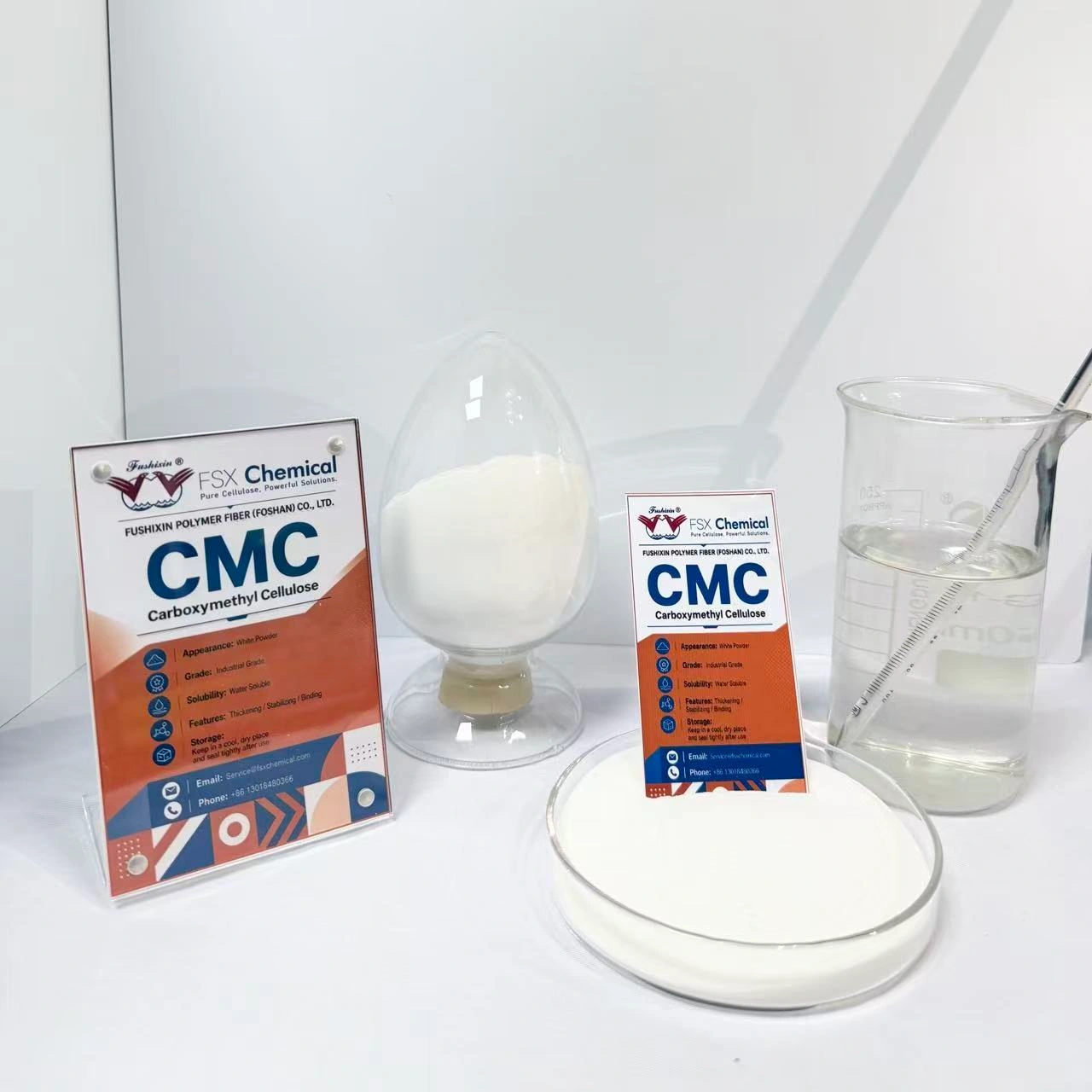
Carboxymethyl cellulose (CMC) ay malawakang ginagamit sa pagpi-print, pagsi-size, at pagtatina ng mga tela. Ipapaliwanag ng gabay na ito kung paano susuriin ang mga grado ng CMC, kung aling mga parameter ang pinakamahalaga, at kung paano makakatulong ang FSX Chemical sa mga desisyon sa pagbili.
Ang CMC-based printing paste ay ginagamit sa pigment, reactive, at digital na pagpi-print ng tela. Ipinapaliwanag ng gabay na ito kung aling mga parameter ang mahalaga, kung paano ihambing ang mga supplier, at kung ano ang dapat hilingin bago maglagay ng maramihang order.
Parehong ginagamit ang sodium alginate at CMC bilang pampalapot sa pagpi-print ng tela, ngunit angkop ang mga ito sa iba't ibang sistema ng pangkulay at kondisyon ng proseso. Ipinapaliwanag ng gabay na ito ang mga pangunahing pagkakaiba at kung kailan dapat gamitin ang bawat isa.
Ang laki ng mga partikulo ng sodium alginate (mesh) ay nakakaapekto sa kung gaano kabilis natutunaw ang pulbos, kung gaano pantay itong nahihydrate, at kung paano gumaganap ang nagresultang pasta sa screen printing. Ipinapaliwanag ng gabay na ito ang mga praktikal na implikasyon ng espesipikasyon ng mesh para sa mga aplikasyon ng pasta sa pagpi-print ng tela.
Sodium alginate purity specifications cover more than a single number. This guide explains what active content, NaCl, insoluble matter, and heavy metal data mean for textile printing paste performance — and when higher purity is worth specifying over a standard industrial grade.
Reactive dye screen printing with sodium alginate requires correct paste formulation, viscosity control, and steaming conditions. This guide covers flat and rotary screen paste requirements, alkali timing, common production defects, and how to diagnose paste-related causes.
The right textile printing thickener is determined by more than fabric type. Buyers should match the thickener to the dye or pigment system, printing method, target rheology, wash-off requirements and actual factory trial conditions.
Ang pagganap ng pagpi-print sa tela ay nakasalalay sa isang pinag-ugnay na sistemang kemikal, hindi sa isang unibersal na additive. Ipinapaliwanag ng gabay na ito ang sampung mahahalagang pangkat ng kemikal, ang kanilang mga tungkulin, kung saan sila nagagamit, at kung ano ang dapat suriin ng mga mamimili bago ang mga pagsubok sa produksyon.
Textile printing thickeners differ in chemistry, rheology, dye compatibility and wash-off behavior. This guide compares the main thickener families, their common application directions and the parameters buyers should verify before production trials.
Ang mga digital printing paste ay dapat piliin batay sa kemistri ng tinta, tela, paraan ng aplikasyon, at post-treatment. Ikinukumpara ng gabay na ito ang sodium alginate, CMC, CMS, sintetikong polymer, at mga compound pretreatment na ruta para sa textile inkjet printing.
Ibahagi ang pangalan ng produkto, aplikasyon, dami, destinasyon, at anumang TDS, larawan ng sample o dokumento na mayroon ka na. Susuriin ng FSX Chemical ang impormasyon at irekomenda ang susunod na hakbang para sa quotation, pagtutugma ng sample, o pagpili ng produkto.
Impormasyon ng ProduktoPangalan ng produkto, grado, modelo, larawan sa etiketa o sanggunian ng tagapagtustos.
Magagamit na mga dokumentoTDS, SDS, COA, larawan ng sample, listahan ng produkto o datos ng pagsubok.
Mga Detalye ng OrderTinatayang dami, pag-iimpake, bansang patutunguhan, pantalan o termino sa kalakalan.
Aplikasyon o IsyuProseso ng pagpi-print sa tela, pangangailangan sa pormulasyon, kasalukuyang isyu o target na pagganap.