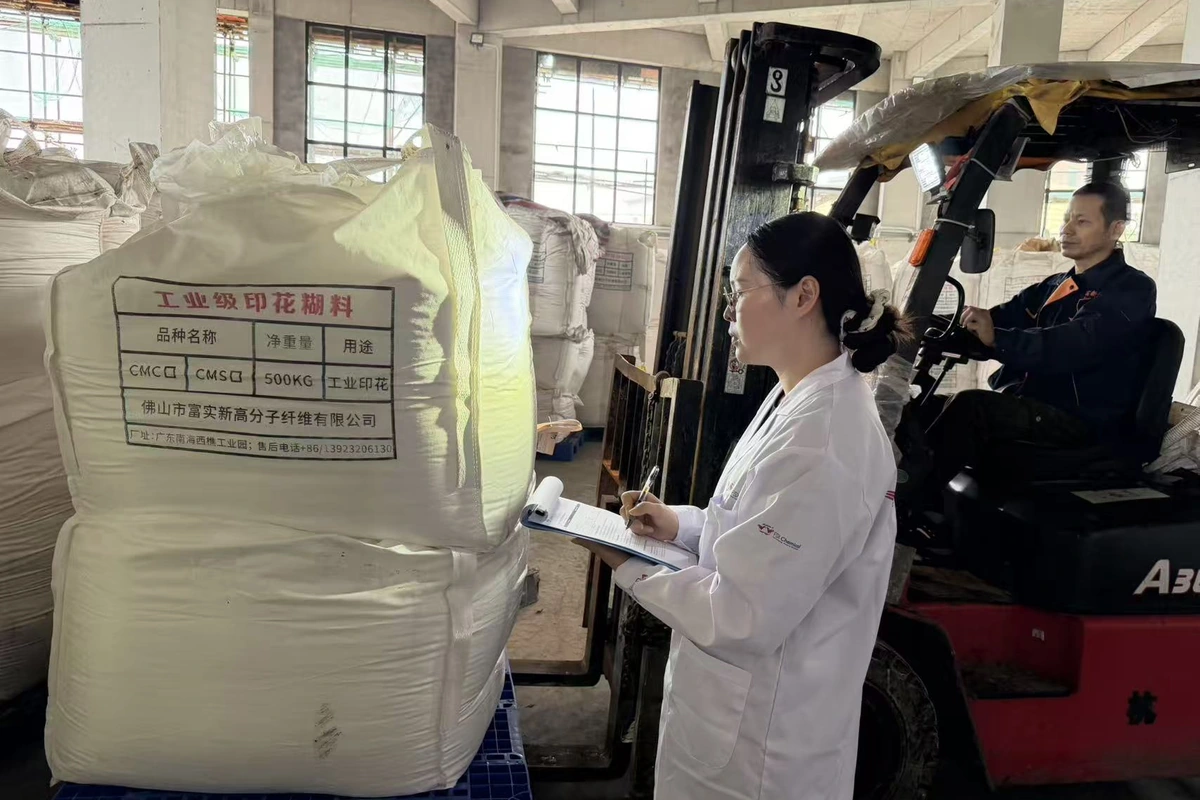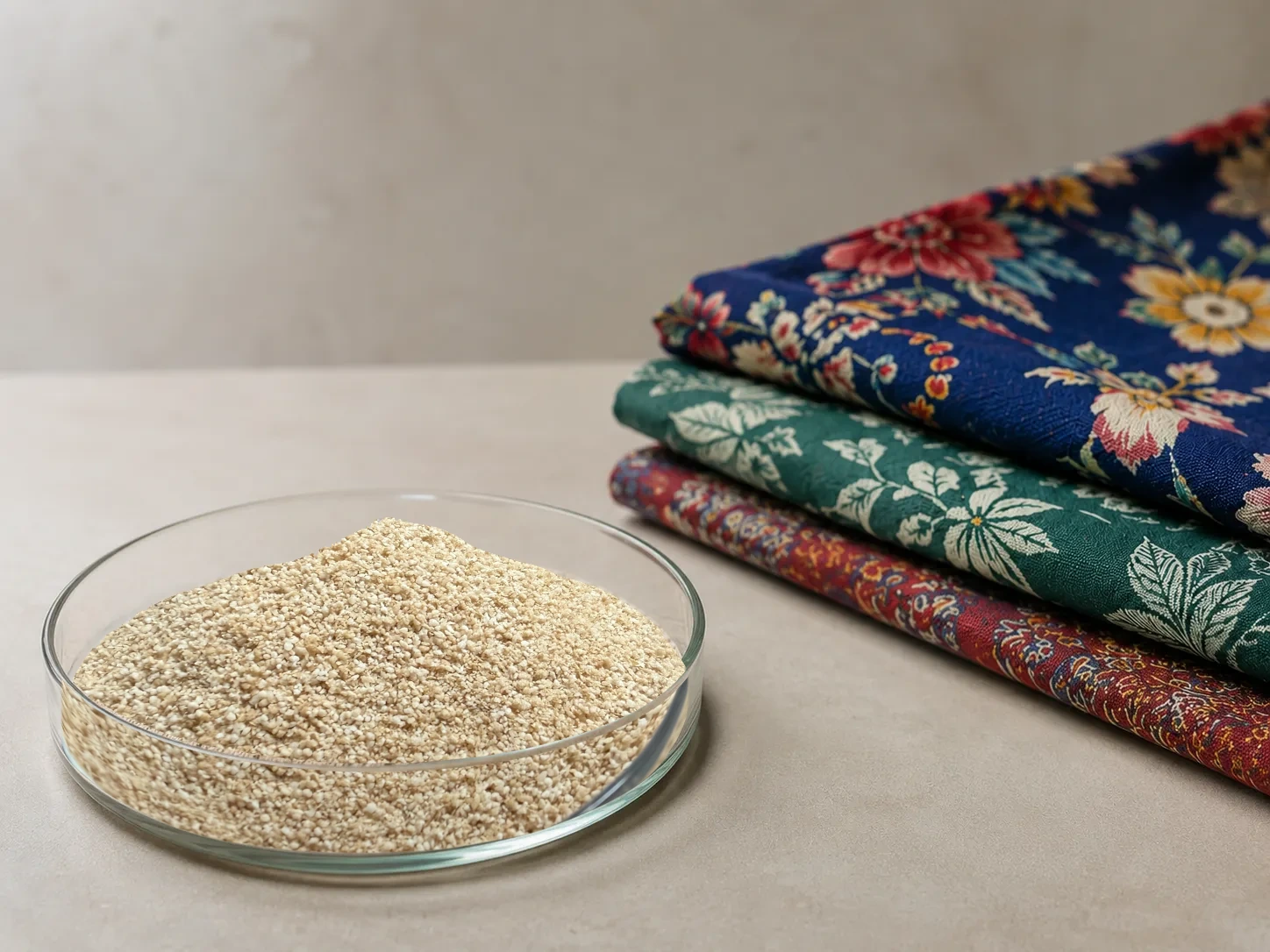















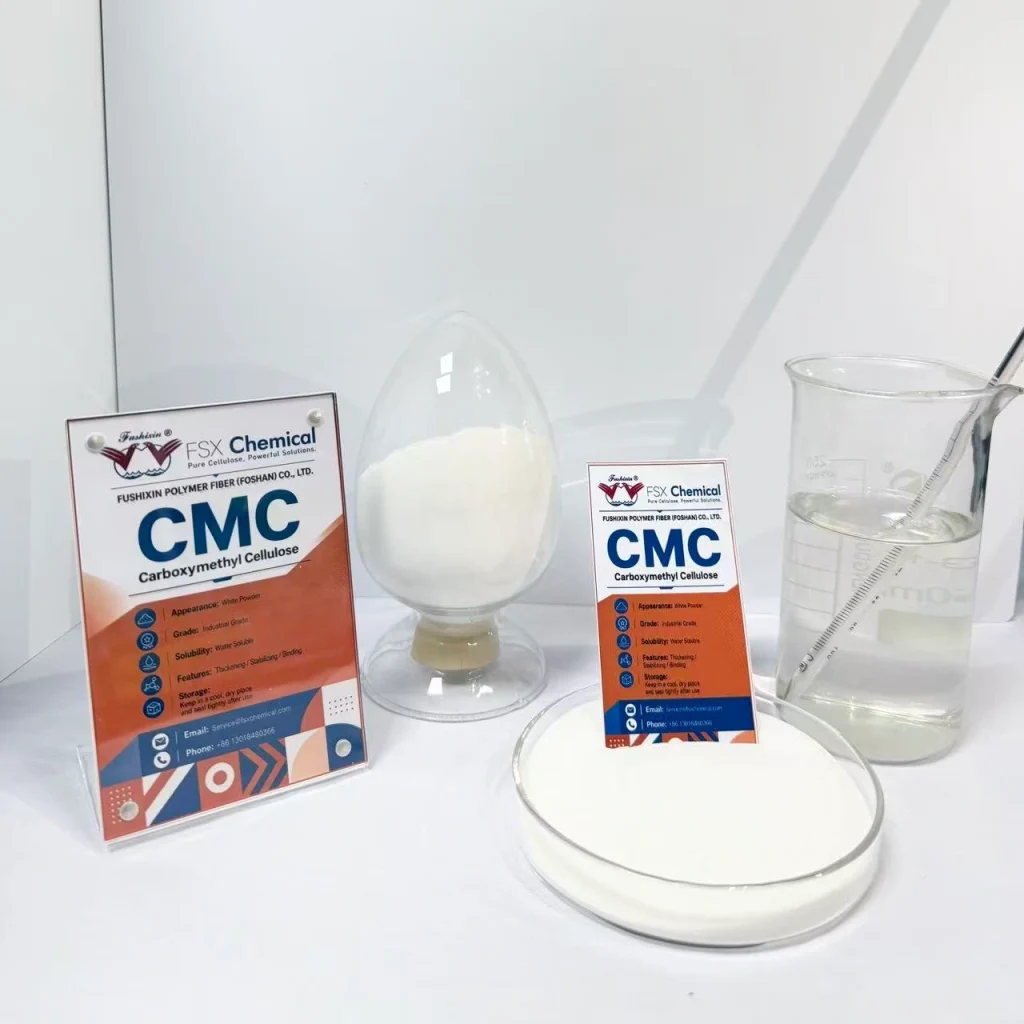
CMC means carboxymethyl cellulose; commercial textile products commonly use its sodium salt. To choose a grade for printing, start with the dye or pigment system and the result required on the fabric. Then compare degree of substitution, viscosity under a defined method, preparation behavior and complete-formulation performance.
A higher viscosity number, a higher DS or a lower price per kilogram is not enough to approve a replacement. The purchasing decision should connect the exact commercial grade to a repeatable trial and a written acceptance specification.
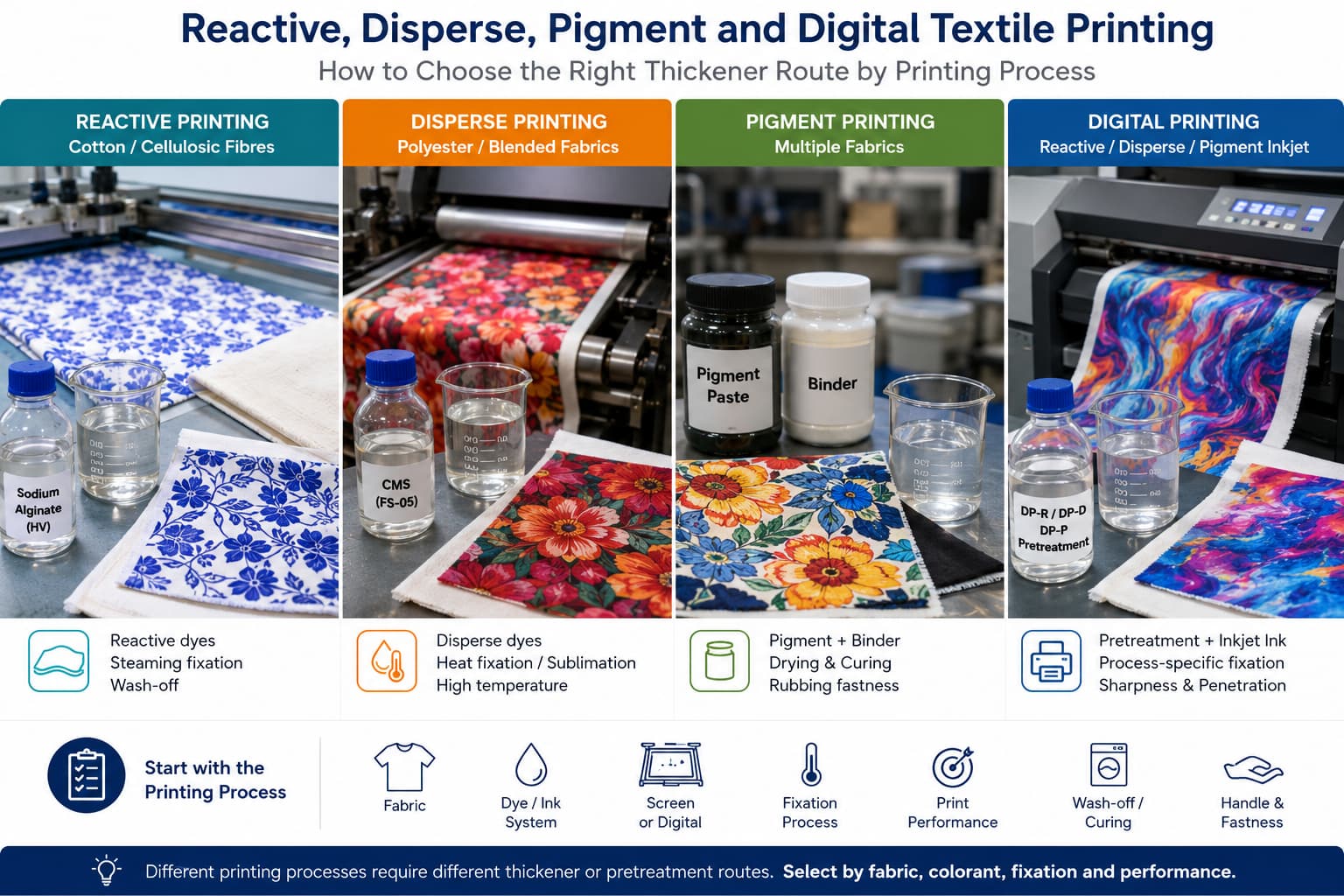
Define the Application Before Comparing Grades
| Aplikasyon | Questions to settle before the trial | What the trial must address |
|---|---|---|
| Reaktibong pagpi-print ng tina | Which dye system, fabric, alkali package, fixation and wash-off process will be used? | Complete-paste compatibility, holding behavior and the printed fabric after the actual fixation and washing sequence |
| Pagpi-print gamit ang pigmento | What binder, pigment dispersion and curing route are specified? | Formulation stability, print behavior and cured-fabric properties; CMC should not be assumed to replace the binder |
| Warp sizing | What yarn, sizing blend, equipment and desizing process are involved? | A separate sizing qualification, rather than approval based only on printing-paste performance |
This guide concentrates on printing procurement. For the broader sizing decision, continue to the existing CMC textile sizing and printing guide. A grade demonstrated in one process should not be described as suitable for every textile use.
Specify DS Without Treating It as a Performance Guarantee
Degree of substitution describes the average substitution of the cellulose units. Ask for the declared DS, its test method and the exact grade identity. Do not impose a universal “textile DS” range across unrelated products or infer complete dye compatibility from that number alone.
If a buyer requests a customized DS, separate the requested value from a confirmed supply specification. Ask whether the supplier has an existing grade, what tolerance and method apply, and whether a representative sample is available. A search phrase such as “highly soluble customized-DS CMC” is a purchasing request, not evidence that any particular manufacturer can supply every requested combination.
Use the CMC degree-of-substitution guide for the deeper technical discussion. Keep the procurement document focused on what is declared, how it is measured and what still requires application testing.

Compare Viscosity Only When the Methods Are Comparable
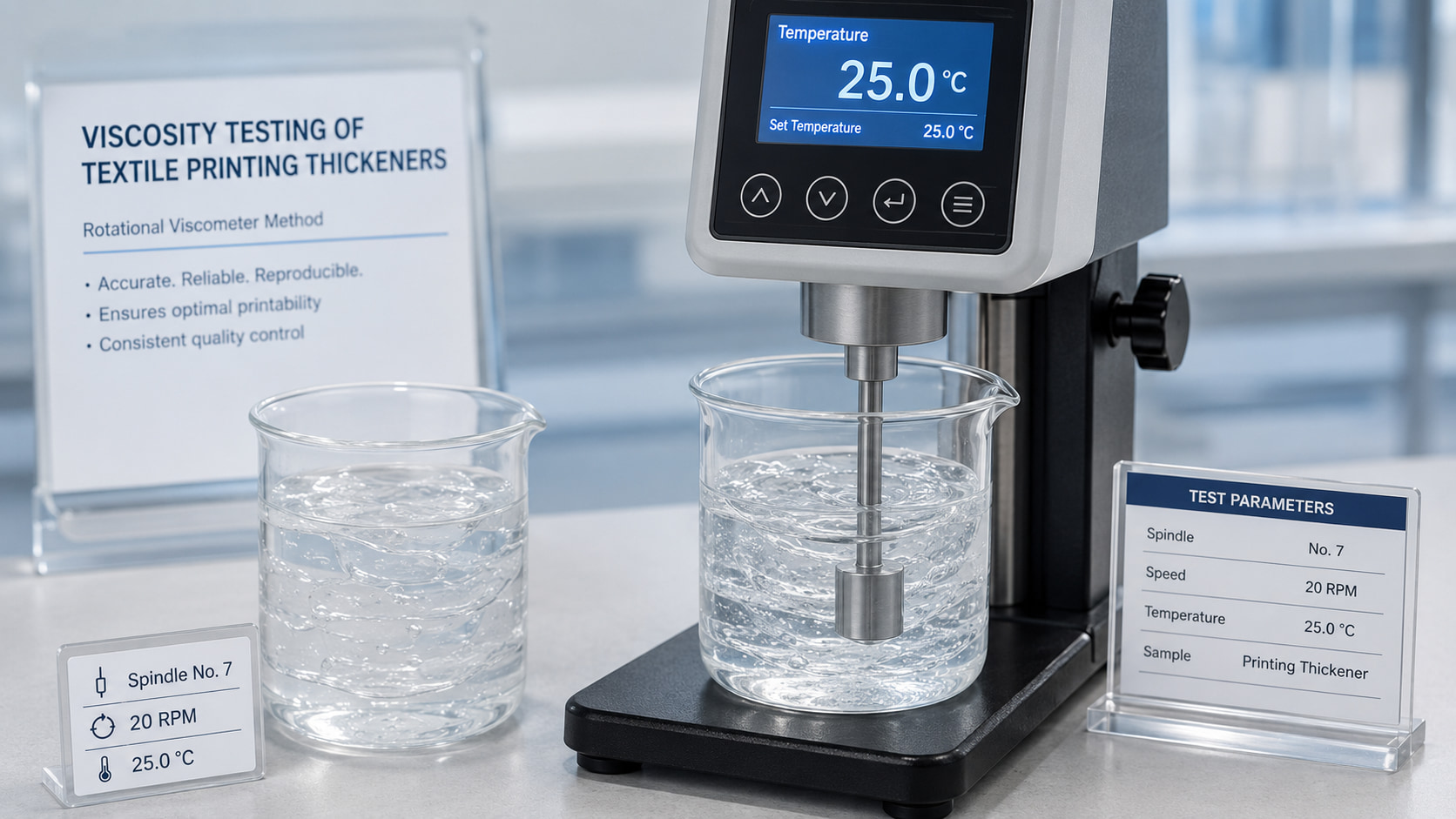
Before comparing two quoted values, request the following information:
- Solution concentration and whether the calculation is based on supplied powder or another stated basis.
- Water quality, powder addition procedure, mixing and hydration conditions.
- Measurement temperature, instrument, spindle or geometry, speed and reading time.
- Whether the number is a typical reference, an agreed acceptance range or a batch result.
A result from one concentration or temperature cannot be treated as equivalent to a result from another without an appropriate comparison. A grade name such as “high viscosity” is also not a shared test method.
Where the available TDS leaves instrument or preparation details unspecified, obtain the missing procedure before setting incoming acceptance limits. The textile thickener viscosity test-method guide provides the method-alignment framework.
Keep Purity, Moisture and Dissolution Separate
Request the reported basis and method for purity or active content, and review moisture separately. Moisture and residual non-polymer material can affect how much active polymer is delivered per kilogram; this does not mean that the cheapest active-polymer cost gives the best printing result.
ASTM D1439 covers separate CMC test areas including moisture, degree of etherification, viscosity, purity and residual salts. Its published scope helps identify what to request, but it is not a textile-grade approval specification and should not be cited as evidence that a particular FSX batch has been tested.
For the calculation and purchasing implications, use the existing CMC purity, residual salt and active-content guide. For preparation behavior, record powder addition, visible agglomerates, the agreed hydration endpoint and any residue checks. Do not infer a dust-free or granular product from a general claim of solubility.
What the Published FSX HD Document Supports
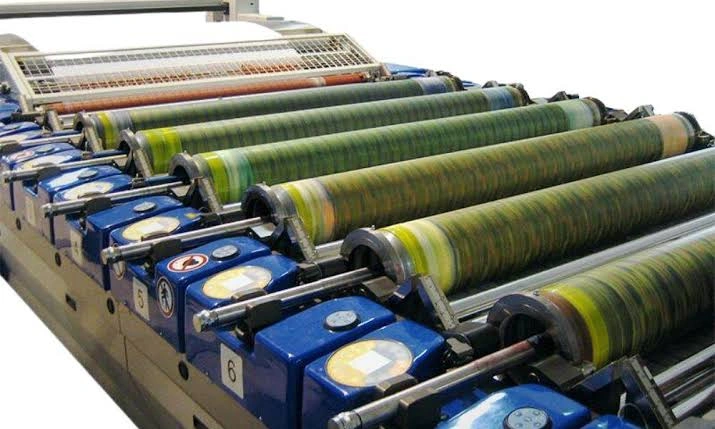
The public Fushixin Print HD TDS, Rev. 04 dated 10 June 2026, identifies a CMC-based powder for textile printing and describes reactive printing and blended-thickener applications. This is a named commercial grade, not a specification for all CMC materials.
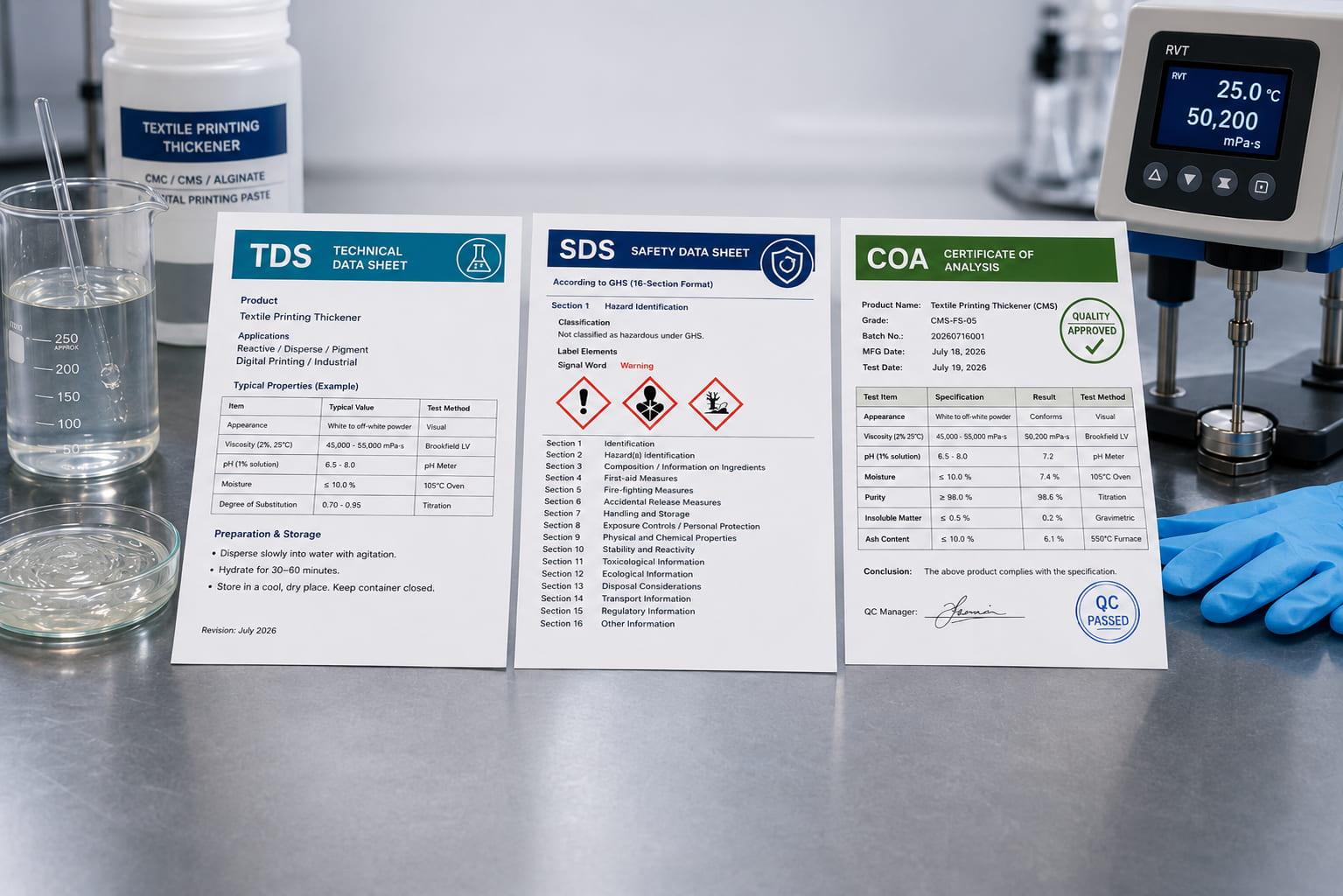
The document gives reference properties and warns that viscosity depends on preparation and test conditions. Use it as an initial selection document, then confirm the current grade specification, the complete measurement method and the intended application with FSX. It does not replace a batch COA or a printing trial.
Although the document discusses alginate replacement, do not assume a one-to-one dosage or universal equivalence. Compare the candidate with the approved reference in the actual formulation, including the downstream process and finished-fabric requirements.
Run a Trial That Can Support a Bulk Order
- Identify the reference. Record the approved thickener, current recipe, production issue and desired improvement.
- Align the laboratory method. Prepare reference and candidate with controlled water and documented conditions. Define how dosage adjustments will be evaluated.
- Check the complete formulation. Record compatibility, holding behavior, filtration and the measurements relevant to the process.
- Print and finish the fabric. Compare definition, penetration, shade and the required downstream properties under the intended fixation, washing or curing conditions.
- Verify production operation. Confirm that the laboratory result translates to the mill’s preparation, equipment and working schedule.
- Agree a purchasing specification. Tie the approved sample, methods and acceptance criteria to repeat supply and incoming checks.
Do not approve a new grade solely because the stock solution matches the reference viscosity. Conversely, an initial difference in viscosity should trigger a controlled method and dosage review rather than an unsupported conclusion about overall quality.

A Purchase Specification That Can Be Checked
| Specification area | What to document | What not to assume |
|---|---|---|
| Commercial identity | Supplier, grade, application and supplied form | All products called CMC are interchangeable |
| Laboratory properties | Agreed DS, moisture, relevant purity information and viscosity method | A typical TDS value is automatically a batch acceptance limit |
| Paghahanda | Water, concentration basis, addition, mixing and hydration procedure | One mixing time or RPM works at every scale |
| Application approval | Reference recipe, substrate, process and agreed finished-fabric criteria | Equal viscosity proves equal print performance |
| Supply control | Batch traceability, required COA items, retained reference and change-notification arrangements | The initial sample alone proves repeat-batch consistency |
| Commercial comparison | Comparable delivery terms and the tested dose needed to meet requirements | The lowest price per kilogram is the lowest cost in use |
For document responsibilities and differences between a TDS, SDS and COA, see the technical-document guide. Agree the required documents and test items before committing to the first bulk order.
Request a CMC Grade Review with Useful Process Information
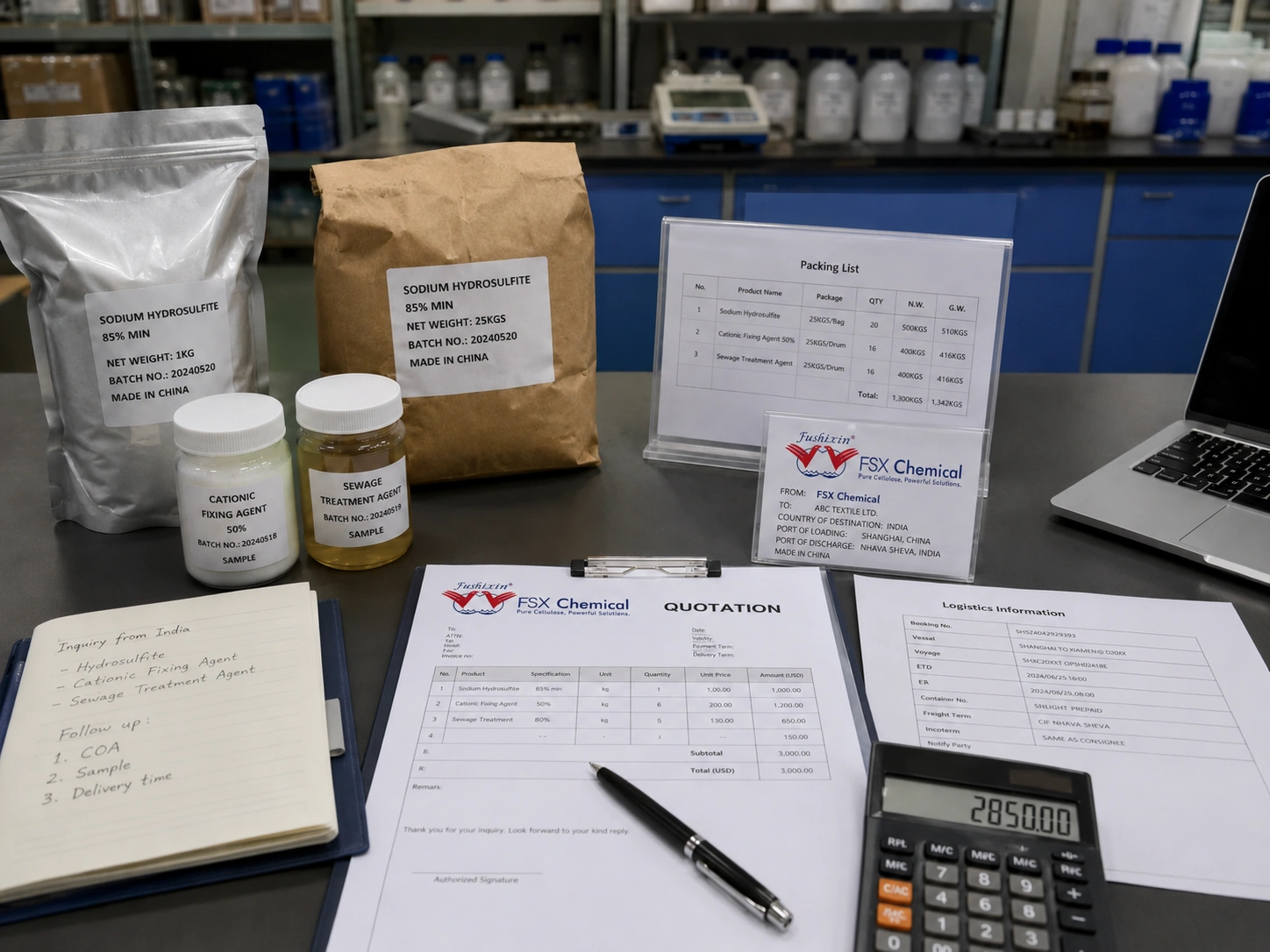
Send FSX the current product or TDS, dye or pigment system, fabric, complete preparation method, target viscosity with its test conditions, expected order quantity and the specific defect or improvement target. Include your trial results if available.
Review the FSX CMC product page at CMC application page, then use Mga Halimbawa at Pagtutugma to request an initial evaluation route. Confirm the exact available grade and documents before treating a proposed DS, physical form or performance target as an agreed supply capability.