Hızlı ve Hassas Tekstil Baskısı için Yüksek Performanslı Kıvam Artırıcılar
High-performance textile thickeners should support both production speed and print precision. Learn how rheology, filtration,...
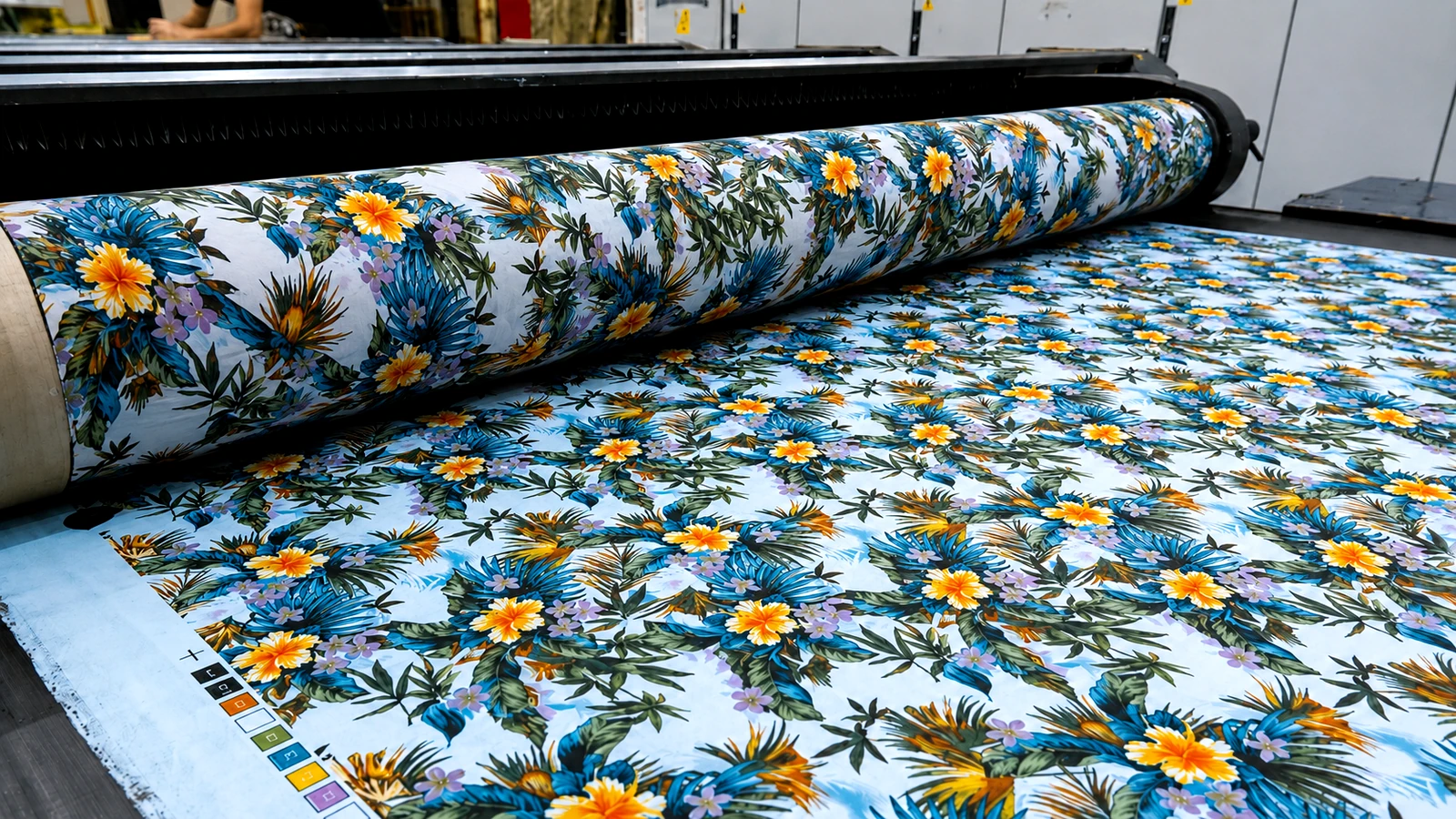
High-performance textile printing thickeners must do more than create high viscosity. For fast and precise printing, the thickener needs to balance rheology, filtration, hydration, screen passage, structural recovery and paste stability while maintaining the required finished- fabric quality.
Textile printing manufacturers are under constant pressure to increase production speed while maintaining sharp pattern edges, fine details, uniform solid colors and stable batch-to-batch quality.
These two objectives can appear to conflict. A paste that is too resistant to flow can slow transfer through the printing system, while a paste with insufficient structure can spread after reaching the fabric and reduce print definition.
This is why high-performance textile printing cannot be defined by one viscosity number. The more important question is how the complete paste behaves under the changing shear conditions of preparation, pumping, screen passage and transfer to fabric.
Sodium alginate, CMC, CMS, digital printing paste and compound thickener systems can all provide useful performance in the correct application, but they should be selected according to printing chemistry, fabric, equipment and production targets.
This guide explains how to evaluate high-performance thickeners for fast and precise textile printing and how to avoid the common mistake of treating higher viscosity as automatically better performance.
What Does “High Performance” Mean in Textile Printing?
High performance should not be defined as the highest viscosity, highest polymer concentration or most expensive grade.
A high-performance thickener is one that provides the required paste behavior across the complete production process.
During preparation
The product should disperse and hydrate in a controlled manner without creating excessive lumps, gels or unnecessary preparation difficulty.
During storage
The stock paste and complete printing paste should remain sufficiently stable during the intended holding period.
During pumping and circulation
The paste needs to flow under shear without creating unnecessary resistance or unstable viscosity changes.
During screen passage
The thickener should support efficient transfer through the screen while maintaining the required paste structure.
After reaching the fabric
The paste needs enough structural recovery to control lateral spreading and penetration according to the design and fabric.
High performance is therefore a balance of preparation, flow, recovery, definition and stability.
Why Printing Speed and Precision Must Be Optimized Together
Faster printing increases the demand placed on the paste.
At higher production speeds, the printing system has less time to tolerate inconsistent flow, incomplete hydration, screen contamination or slow structural recovery.
If the paste is too resistant to flow
Transfer can become difficult and the operator may compensate by changing pressure, speed, dosage or formulation.
If the paste flows too easily
The pattern may spread after transfer, reducing edge sharpness and causing excessive penetration.
The objective is an operating window
A well-selected high-performance thickener should provide enough structure at rest while allowing efficient movement under the shear conditions generated by the printing equipment.
When the mechanical force decreases after paste transfer, suitable recovery can help maintain the intended pattern.
Viscosity Is Important, but Rheology Is More Informative
Viscosity remains an important production and quality-control parameter, but one single-point value cannot completely describe printing-paste behavior.
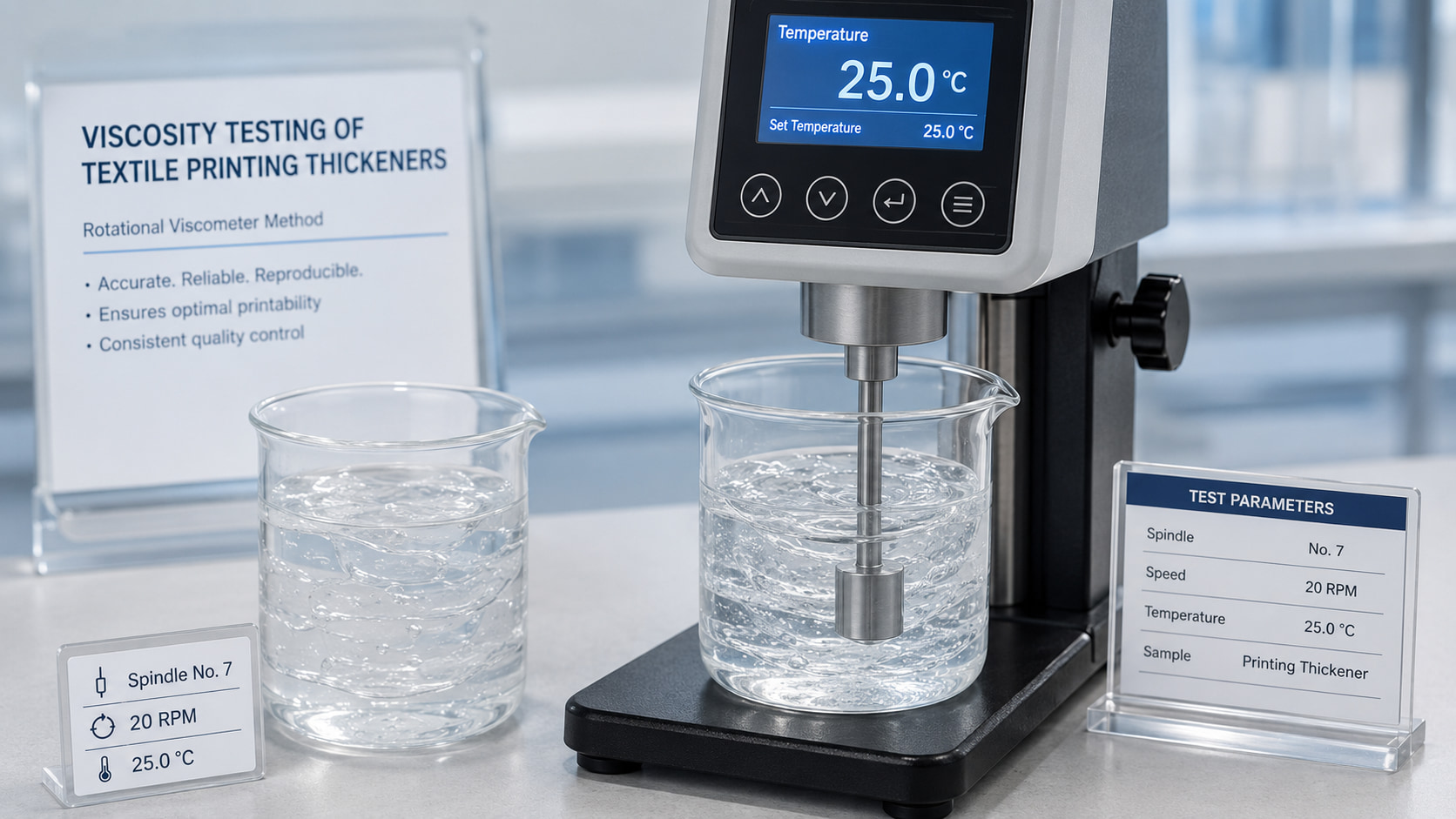
Always define the viscosity method
Ürün konsantrasyonu
Su kaynağı
Karıştırma işlemi
Su içme zamanı
Ölçüm sıcaklığı
Viskometre
Mil, rotor veya geometri
Dönme hızı
Okuma süresi
A value reported at one speed cannot automatically predict behavior at the higher shear conditions found inside a printing machine.
Why multi-speed testing can help
Measuring paste behavior under more than one controlled shear condition can provide additional information about how rapidly the apparent viscosity changes as mechanical force increases.
This is particularly useful when two candidate thickeners have similar standing viscosity but noticeably different screen passage or print definition.
Shear-Thinning Behavior in High-Speed Printing
Many useful textile printing pastes show shear-thinning behavior: their apparent viscosity decreases as shear increases.
This behavior can be advantageous because the paste can maintain useful structure at low shear while becoming easier to move through pumping, circulation and printing zones.
Too little shear thinning
A paste may remain highly resistant during application, potentially making transfer more difficult.
Too much flow without adequate recovery
A paste may transfer easily but continue spreading after reaching the fabric.
High-performance formulation therefore requires a balance between flow under shear and recovery after shear is removed.
Structural Recovery and Sharp Print Definition
Print definition depends partly on what happens immediately after the paste leaves the application zone.
Once the strongest mechanical force is removed, the paste needs to recover enough structure to control unwanted movement.
Insufficient recovery can contribute to
Bulanık ince çizgiler
Yuvarlatılmış köşeler
Küçük metnin kaybolması
Color bleeding across boundaries
Excessive lateral spreading
Excessive structure can also create problems
A paste that does not transfer efficiently may create incomplete coverage, broken patterns or poor solid-area uniformity.
Sharp printing therefore depends on rheological balance rather than maximum viscosity.
Filtreleme ve Elek Geçişi
High production speed becomes difficult to maintain when the paste contains gels, incompletely hydrated polymer or other material that interferes with filtration and screen passage.
Standardize filtration testing
When comparing thickeners, use the same polymer concentration, preparation method, hydration time, filter material, opening size and sample quantity.
Examine retained residue
Residue can come from incomplete hydration, polymer gel, contamination or chemical incompatibility in the complete paste.
Test stock and complete paste
If the thickener solution filters well before other chemicals are added but performs poorly afterward, the problem may originate from formulation compatibility rather than the polymer alone.
Better filtration can support production continuity, but no laboratory filtration test should be interpreted as a guarantee of zero screen blockage in production.
Nemlendirme ve Macun Hazırlığı
Fast printing cannot compensate for slow or inconsistent paste preparation.
Control powder addition
Powdered thickeners should be introduced using a repeatable procedure that minimizes persistent lumps and uneven wetting.
Define hydration time
Viscosity should not be corrected too early if the polymer continues developing structure during hydration.
Use repeatable mixing conditions
Mixer geometry, speed, batch size and preparation temperature can influence laboratory and production results.
Do not overmix automatically
Longer mixing is not always better. Excessive mechanical treatment can introduce air, raise temperature or alter the apparent behavior of the paste.
A high-performance thickener should be evaluated together with a practical preparation procedure.
Holding Stability During Long Production Runs
A paste may perform well immediately after preparation but become less predictable during a long production run.
Monitor realistic checkpoints
Evaluate viscosity, appearance, pH, filtration and physical stability over the holding period relevant to production.
Control temperature
Temperature changes can alter measured viscosity and lead to unnecessary formulation corrections.
Control evaporation
Water loss can increase effective solids and make a stable paste appear to drift upward in viscosity.
Check printing from beginning to end
A production trial should compare fabric printed near the beginning, middle and end of the run.
High-performance behavior should remain useful over the full operating period, not only during the first few minutes.
Chemical Compatibility
A thickener should never be approved only from its behavior in clean water.
The complete printing paste may contain dyes, pigments, salts, alkalis, binders, humectants, wetting agents, defoamers and other polymers.
Use staged addition when troubleshooting
Add formulation components in a controlled sequence and monitor whether viscosity, appearance or filtration changes after a particular addition.
Compatibility becomes more important at high speed
Small paste-instability problems that are manageable at low production speed may create repeated interruptions when the machine is operated closer to its practical production limit.
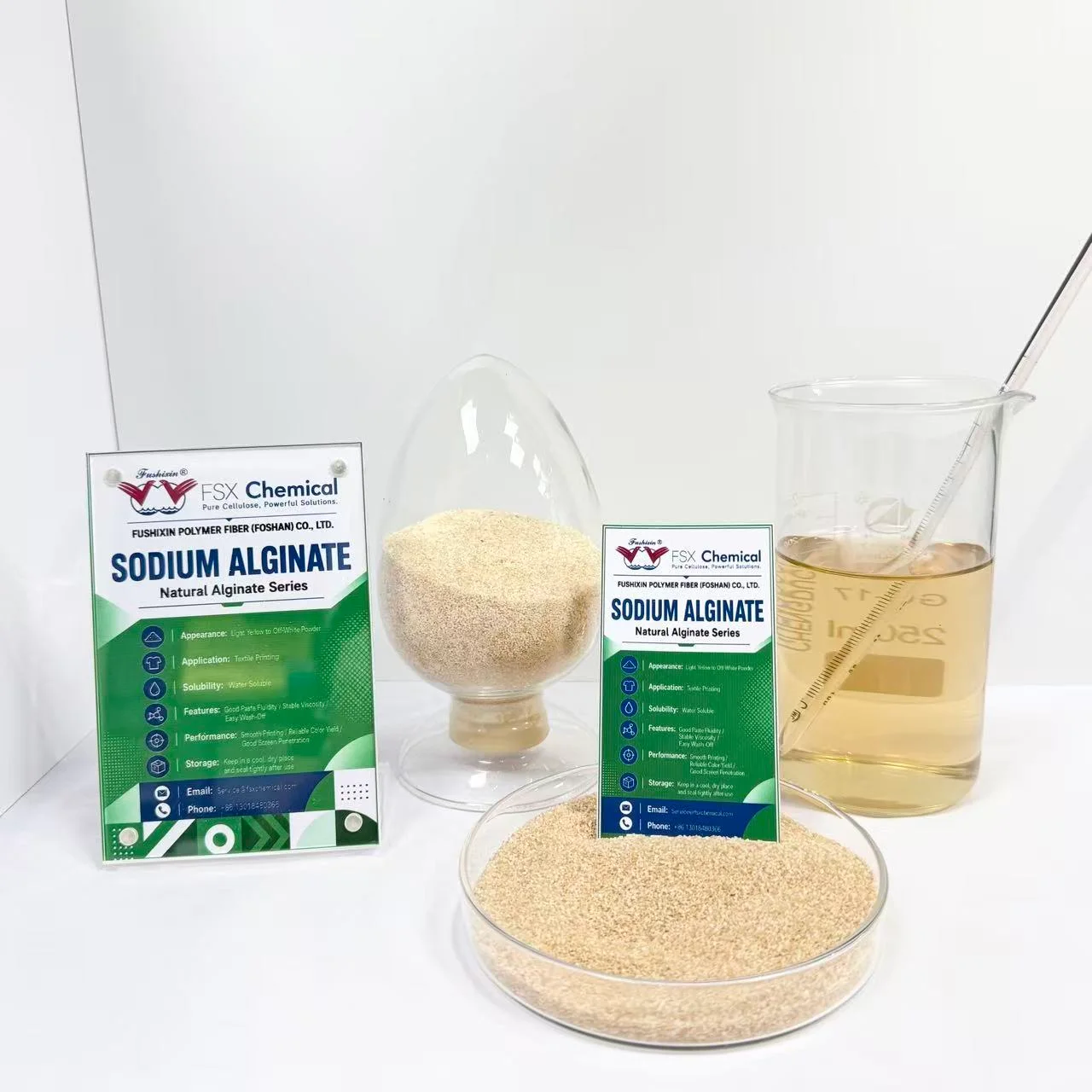
Sodium Alginate for Fast Reactive Printing
Sodyum aljinat is an important thickener route for conventional reactive printing on suitable cellulosic fabrics.
For high-performance reactive printing, sodium alginate should be selected according to more than HV, MV or LV terminology.
Önemli değerlendirme faktörleri arasında şunlar yer almaktadır:
Actual viscosity and test method
Sıvı alımı davranışı
Filtreleme
Reoloji
Ekran bölümü
Reactive-paste compatibility
İnce çizgilerin belirginliği
Solid-area coverage
Fixation and wash-off
Higher viscosity is not automatically faster
An excessively resistant paste may require different machine settings or reduce transfer efficiency. The correct viscosity grade depends on the full formulation and equipment.
Evaluate finished fabric
Reactive printing performance should be judged after the appropriate fixation and washing process rather than only from the wet print.
CMC for Selected High-Performance Systems
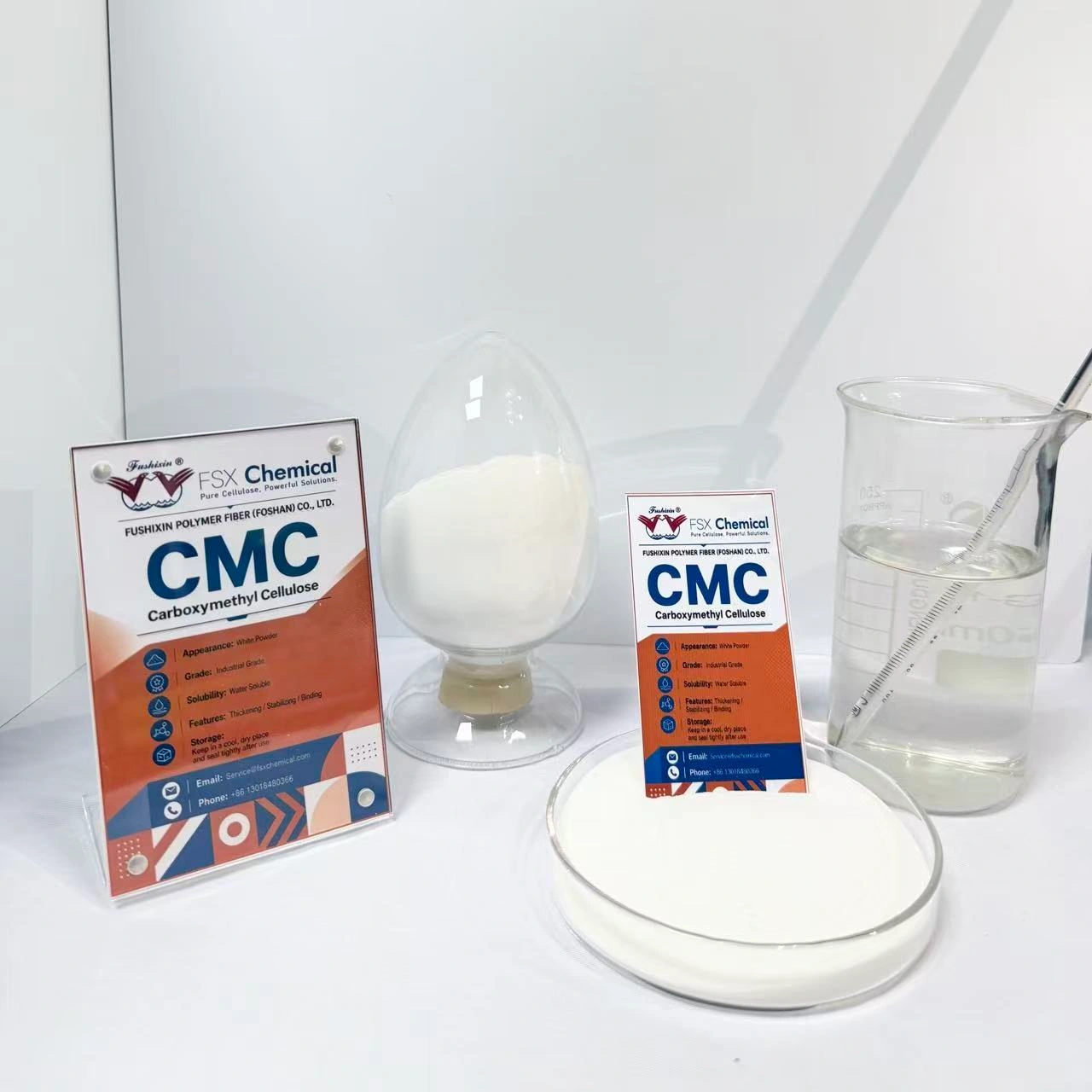
Karboksimetil Selüloz can be evaluated in selected textile printing and compound-thickener systems.
CMC is available in multiple grades that can differ in degree of substitution, viscosity, hydration, purity-related properties and rheological behavior.
When comparing CMC for high-performance printing, check
İlgili olduğu durumlarda ikame derecesi
Viscosity and concentration
Çözünme
Su içme zamanı
Filtreleme
Elektrolit tepkisi
Multi-speed viscosity or rheology
Complete-paste compatibility
Two CMC grades with the same single-point viscosity should not be assumed to provide the same high-speed printing behavior.
CMS for Selected Disperse and Compound Systems
Karboksimetil Nişasta can be evaluated for selected disperse printing, specialty printing and compound thickener systems.
High-performance CMS evaluation can include
Viskozite verimliliği
Sıvı alımı
Filtreleme
Ekran bölümü
Macun stabilitesi
Reoloji
Compatibility with the color system
Bitmiş kumaşın performansı
CMS may also form part of a blended thickener system where different polymers provide complementary functions.
Whether CMS is technically and economically attractive depends on the application rather than its raw-material price alone.
Compound Thickeners for Balanced Performance
Some high-speed printing applications cannot obtain the preferred balance of flow, recovery, stability and cost from one polymer alone.
A compound thickener can combine different materials so that each component contributes a specific function.
A compound system may balance
Temel viskozite
Kesme incelmesi davranışı
Yapısal toparlanma
Filtreleme
Elektrolit toleransı
Tutma stabilitesi
Yazdırma tanımı
Total polymer dosage
Cost in use
Compound systems should still be treated as complete formulations. Increasing the number of ingredients creates additional variables that need to be controlled.
Digital Printing Paste for Precision Inkjet Pretreatment
Dijital Baskı Macunu requires a different approach from conventional printing paste because the pretreatment and ink perform different functions.
Textile pretreatment thickeners should not simply be added directly into digital ink. Instead, the fabric pretreatment system should be matched to the reactive, disperse or pigment printing route.
Precision digital printing evaluation can include
Ön işlemin homojenliği
Viskozite ve reoloji
Filtreleme
Tutma stabilitesi
Kumaş teslim alımı
Mürekkebin yayılması
İnce detayların netliği
Koyu renkli performans
Sabitleme veya sertleştirme
Son halindeki kumaş sap
Reactive, disperse and pigment digital systems should be evaluated separately because their chemistry and post-treatment requirements are different.
Fine Lines vs Large Solid Areas
A thickener that performs well on one design may show weaknesses on another.
Fine lines test recovery and spreading control
Small text, fine lines, sharp corners and narrow color boundaries can reveal insufficient structural recovery or excessive penetration.
Large solid areas test transfer and uniformity
Large blocks of color can reveal incomplete transfer, uneven paste delivery, poor leveling or inconsistent fabric penetration.
Use both in product evaluation
A high-performance thickener should not be approved from only one simple laboratory design.
A diagnostic pattern containing both fine details and large solid areas creates a more demanding and useful comparison.
Why Dark Colors Are a Useful Stress Test
Black and other dark shades can be useful during thickener evaluation because defects are often easier to observe.
Dark solid areas can reveal
Uneven transfer
Weak coverage
Aşırı penetrasyon
Surface nonuniformity
Kenar yayılması
However, strong black performance should not be attributed to the thickener alone.
Dye or pigment concentration, colorant quality, fabric, fixation, binder chemistry and machine settings also influence the final result.
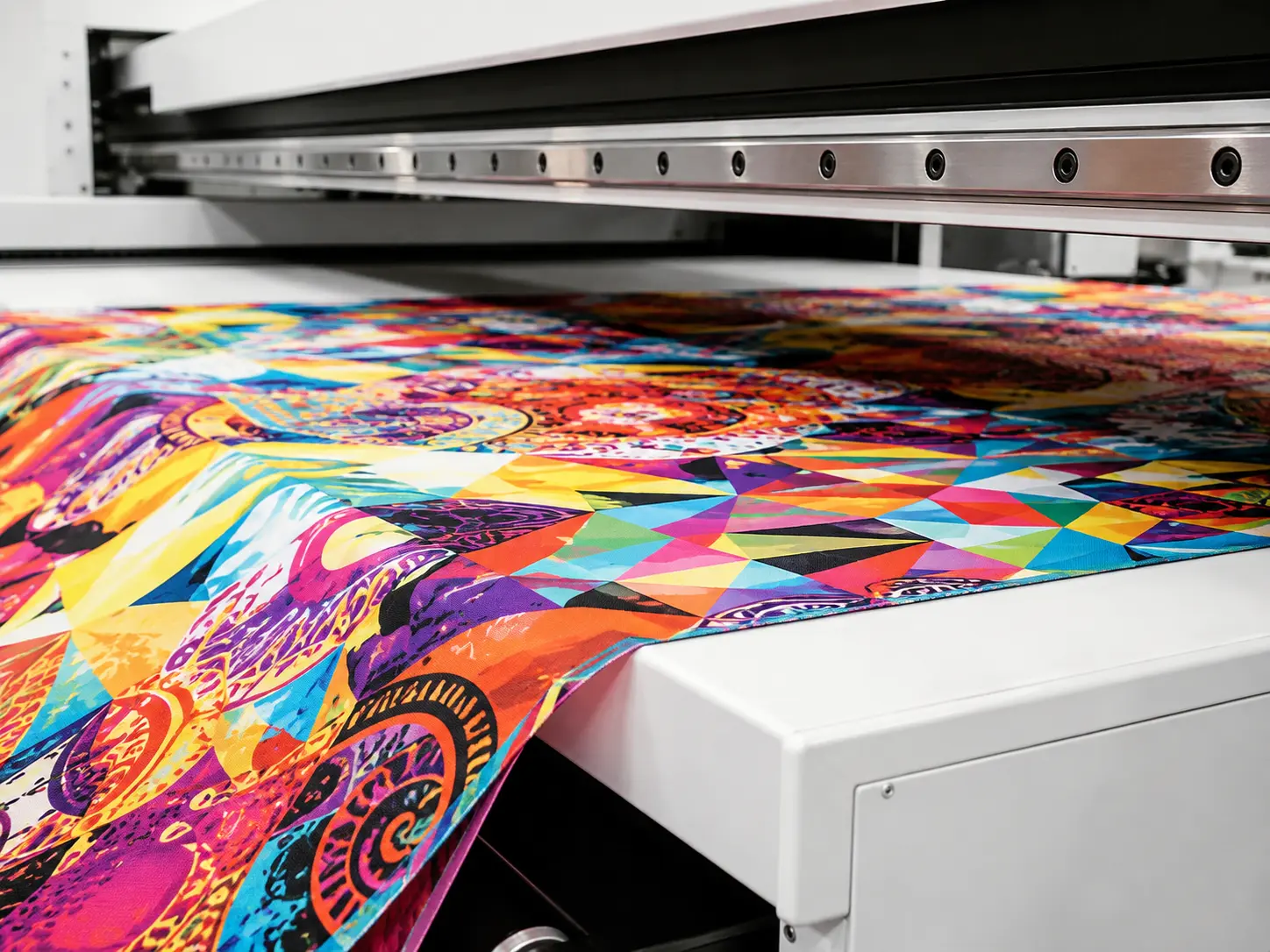
High-Speed Rotary-Screen Printing
Rotary-screen printing places strong emphasis on continuous paste flow, screen passage and stability over long runs.
Important thickener characteristics include
Tutarlı hazırlık
Good practical filtration
Suitable shear-thinning behavior
Stable pumping and circulation
Controlled structural recovery
Long-run paste stability
Evaluate at production speed
A paste that performs well during a short laboratory or low-speed test should still be verified at a production-relevant speed.
Machine speed should be increased only after print definition, screen behavior and paste stability remain acceptable.
Flat-Screen Printing
Flat-screen printing also requires controlled flow and recovery, but the mechanical application pattern differs from continuous rotary printing.
Önemli değerlendirme alanları arasında şunlar yer almaktadır:
Silecekle aktarım
Ekran bölümü
Macun düzleştirme
Pattern edge definition
Penetrasyon
Tekrarlanan tutarlılık
Squeegee pressure, speed, screen parameters and fabric construction should remain controlled when comparing two thickener grades.
Dijital Tekstil Baskısı
Precision is particularly visible in digital printing because the technology can reproduce very fine image detail.
Pretreatment that allows excessive ink migration can reduce the apparent resolution produced by the printer.
At the same time, excessive pretreatment can create surface residue, stiffness or post-treatment problems.
A balanced digital pretreatment should consider
Kumaşın emiciliği
Ön işleme sırasında toplama
Kurutma koşulları
Mürekkep sistemi
Yazıcı ayarları
Definition
Renk oluşumu
Sabitleme veya sertleştirme
Wash-off where applicable
How to Compare Two High-Performance Thickeners
A supplier comparison should begin with a controlled technical baseline rather than price or viscosity alone.
Değerlendirme Alanı
Reference Product
Candidate Product
Ticari Sınıf
Record exact approved grade
Kalıcı aday derecesini kaydet
Konsantrasyon
Use standardized baseline
Use same baseline initially
Sıvı alımı
Record preparation behavior
Compare under identical conditions
Viskozite
"Record complete" yöntemi
Measure with same method
Reoloji
Reference shear behavior
Compare flow and recovery
Filtreleme
Referans kalıntı maddesi
Compare using same filter
Tümünü Yapıştır
Mevcut formülasyon
Same formulation initially
Yazdırma
Current approved result
Same machine and fabric
Tedavi Sonrası
Standart süreç
Same process
Dozaj
Current optimized level
Optimize after technical baseline
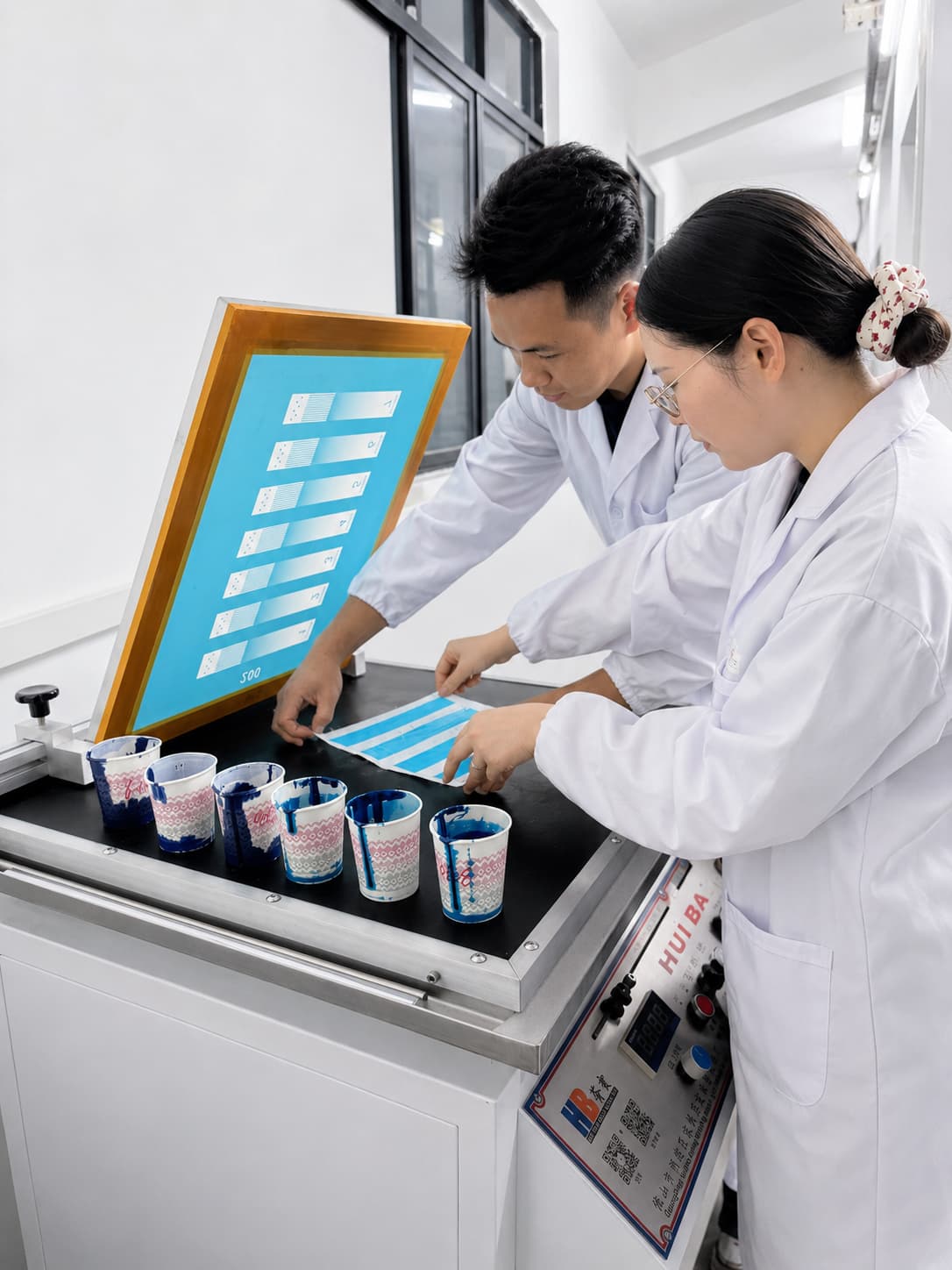
Recommended Laboratory Test
Step 1: Define the objective
Decide whether the target is higher printing speed, better definition, improved filtration, stronger paste stability or a combination.
Step 2: Establish the current benchmark
Use a representative sample of the product already performing successfully in production.
Step 3: Align the test method
Standardize concentration, water, mixing, hydration, temperature and viscosity measurement.
Step 4: Compare hydration
Observe powder dispersion, lump formation, hydration time and solution uniformity.
Step 5: Compare viscosity and rheology
Use the same instrument conditions and, where possible, compare more than one shear condition.
Step 6: Compare filtration
Use identical filter conditions and inspect retained residue.
7. Adım: Baskı macununun tamamını hazırlayın
Add the actual dyes, pigments and auxiliaries used by the customer.
8. Adım: Tutma kararlılığını test etme
Repeat relevant measurements after a production-representative holding period.
Step 9: Print a diagnostic design
Include fine lines, small text, sharp corners and large solid areas.
Step 10: Complete normal post-treatment
Evaluate the finished fabric after fixation, washing or curing as required by the process.
Üretim Denemesi
Laboratory testing is necessary, but high-speed performance must ultimately be confirmed on production equipment.
Begin with a controlled production condition
Do not change thickener, formulation, machine speed and several other variables at the same time.
Monitor machine behavior
Pompalama
Dolaşım
Ekran bölümü
Cleaning frequency
Macun tüketimi
Üretim kesintileri
Monitor print quality
İnce çizgi bütünlüğü
Kenar keskinliği
Katı alan homojenliği
Penetrasyon
Color consistency
Increase speed progressively
If higher production speed is the target, increase it in controlled stages while monitoring the same quality criteria.
The practical maximum speed is determined by the complete process, not by the thickener alone.
Troubleshooting Speed and Definition Problems
Sorun
Possible Thickener-Related Cause
Neler Kontrol Edilmeli
Ekran geçişi yetersiz
Excessive resistance, gels or poor filtration
Viscosity method, hydration, residue and rheology
Edges become less sharp at higher speed
Insufficient structural recovery or excessive spreading
Rheology, fabric pickup, pressure and formulation
İnce çizgiler eksik
Poor transfer or screen-related restriction
Viscosity, screen, pressure, filtration and paste transfer
Solid areas are uneven
Transfer or leveling imbalance
Paste supply, rheology, screen and fabric condition
Paste thickens during long runs
Evaporation, temperature or stability issue
Tank condition, temperature, solids and holding time
Viscosity matches but printing differs
Different rheology or compatibility
Multi-speed behavior and complete formula
Lab sample works but bulk production fails
Scale-up or sample-to-bulk difference
Mixing, batch identity, QC and production conditions
Troubleshooting should examine the complete system. Not every printing defect should automatically be attributed to the thickener.
Toplam Kullanım Maliyeti
High-performance products should also be evaluated economically, but purchase price alone does not define performance value.
Etkili dozajları karşılaştırın
Calculate the amount of thickener required to produce the approved printing result.
Hazırlık maliyetlerini karşılaştırın
Hydration, mixing, filtration and operator correction should be included.
Üretim verimliliğini karşılaştırın
Printing speed, cleaning frequency, screen interruptions and machine downtime can materially influence total cost.
Compare quality loss
Reprinting, rejected fabric and additional post-treatment can easily exceed a small difference in thickener price.
The preferred high-performance thickener is therefore the product that achieves the required combination of speed, precision, consistency and acceptable total cost in use.
FSX Chemical’ın Sınıf Eşleştirmeyi Nasıl Desteklediği
Customers looking for higher production speed, better print definition or improved screen passage can begin with their current approved product as the technical benchmark.
Aracılığıyla Örnekler ve Eşleştirme , buyers can provide their current TDS, physical sample and actual printing conditions for candidate-grade evaluation.
Yararlı bilgiler arasında şunlar yer almaktadır:
Mevcut ürün ve ticari sınıf
TDS veya güncel COA
Fiziksel referans numune
Viskozite ve tam test yöntemi
Mevcut kıvam arttırıcı dozu
Formülün yazdırılması
Reactive, disperse, pigment or digital route
Kumaş bileşimi
Flat-screen, rotary-screen or digital equipment
Screen mesh or relevant application information
Current production speed
Main problem such as screen passage, bleeding or weak definition
The objective is to identify a technically relevant candidate for side-by-side testing rather than claim that one product will automatically increase production speed or replace another grade without validation.
Sık Sorulan Sorular
What makes a textile printing thickener high performance?
High performance is a combination of controlled viscosity, suitable rheology, hydration, filtration, paste stability, screen passage, printing definition and reliable application performance.
Is higher viscosity better for high-speed printing?
Not automatically. Excessive viscosity or unsuitable rheology can make pumping and paste transfer more difficult. The correct viscosity depends on the complete printing process.
What thickener is best for sharp reactive printing?
Sodium alginate is a common starting route for conventional reactive printing on suitable cellulosic fabrics. The correct grade still needs to be selected by viscosity method, rheology, filtration and actual printing performance.
Why do two thickeners with the same viscosity print differently?
They may have different shear-thinning behavior, structural recovery, hydration, filtration, polymer concentration or chemical compatibility.
How can I improve screen passage?
Check hydration, filtration, actual viscosity, rheology, complete formulation compatibility, screen condition and machine settings rather than simply reducing thickener dosage.
How can I improve print edge sharpness?
Evaluate rheological recovery, paste transfer, fabric absorbency, dosage, screen parameters and chemical formulation. Increasing viscosity alone may not solve the problem.
Is CMC suitable for high-performance textile printing?
Selected CMC grades can be evaluated in suitable printing and compound thickener systems. Suitability depends on degree of substitution, viscosity, rheology, filtration and the complete formulation.
Can CMS be used for high-speed textile printing?
Suitable CMS grades can be evaluated in selected disperse, specialty and compound systems. Application testing is required to determine screen passage, stability and finished-fabric performance.
Does better filtration guarantee no screen blockage?
No. Filtration is an important indicator, but screen blockage can also be influenced by hydration, formulation compatibility, contamination, screen condition and production parameters.
How should I test a new high-performance thickener?
Compare it against the current approved product using standardized preparation, viscosity, rheology and filtration methods, then test the complete paste, actual fabric, normal post-treatment and a controlled production run.
Need a Thickener for Faster and More Precise Textile Printing?
Send FSX Chemical the TDS or physical sample of the thickener you currently use together with your printing process, fabric, viscosity method, current dosage and production speed.
If your current challenge is poor screen passage, unclear edges, excessive penetration, weak fine-line reproduction or unstable paste during long production runs, include these details with the inquiry.
A sodium alginate, CMC, CMS, digital printing paste or compound thickener candidate can then be selected according to the application and evaluated through controlled side-by-side testing.
Konsantrasyon, sıcaklık, ölçüm cihazı, mil, hız, hazırlık yöntemi ve test süresi gibi faktörler eşleştirilmeden tekstil baskı kıvam arttırıcılarının viskozite değerlerinin neden karşılaştırılamayacağını öğrenin.
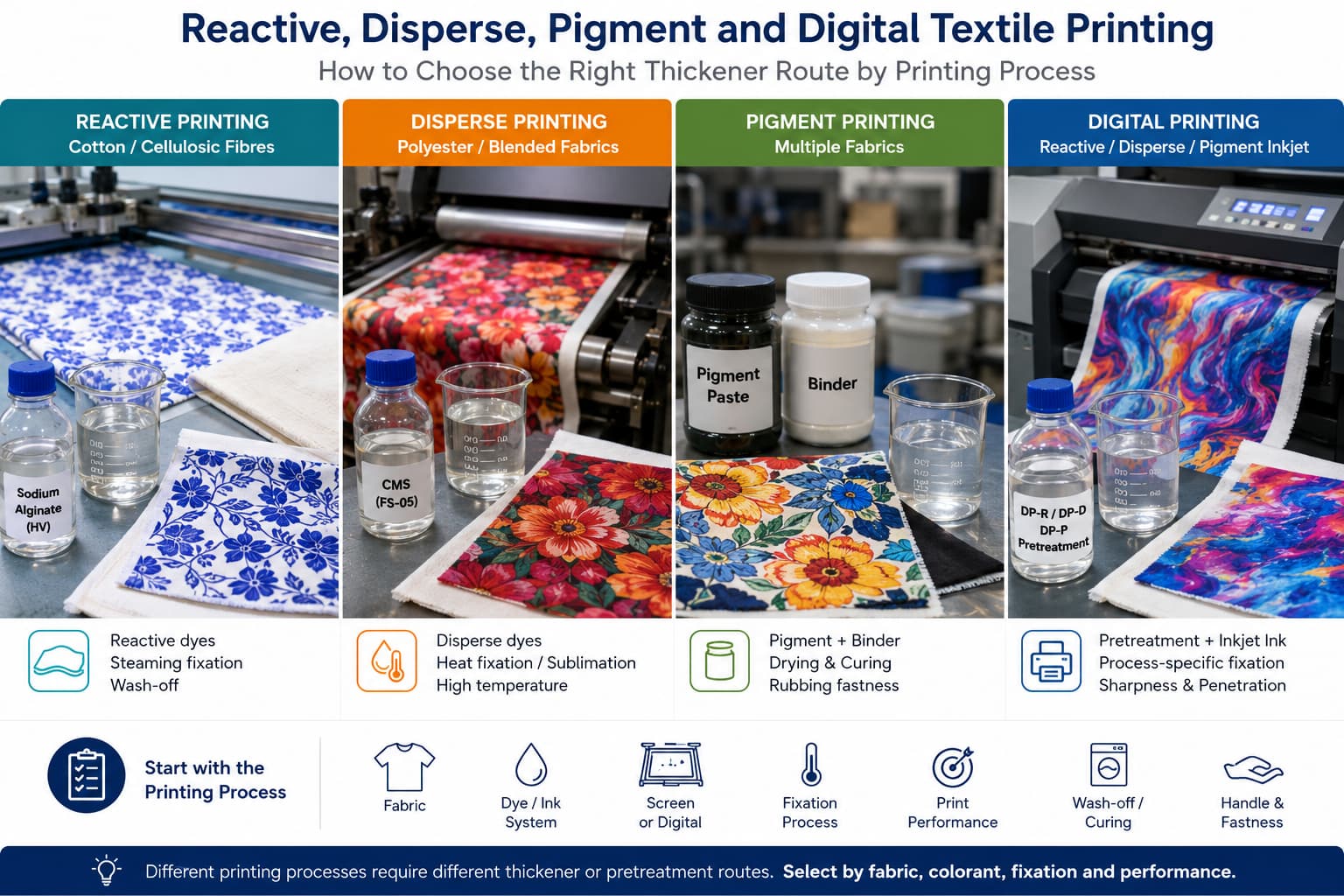
Kumaş, boya veya mürekkep, sabitleme, yıkama ve baskı kalitesi gereksinimlerine göre reaktif, dispers, pigment ve dijital tekstil baskısı için kıvam arttırıcı ve ön işlem yöntemlerini nasıl seçeceğinizi öğrenin.
Tekstil baskısı için CMC, CMS, sodyum aljinat ve dijital baskı macununu karşılaştırın. Her bir yöntemin reaktif, dispers, pigment ve dijital baskı süreçlerine nasıl uyum sağladığını ve alıcıların numune testi, kalite eşleştirme ve toplu satın alma öncesinde nelere dikkat etmeleri gerektiğini öğrenin.
Sodyum aljinat, tekstil baskıcılığında reaktif baskı macunu için kararlı ve yıkanabilir bir kıvam arttırıcı olarak yaygın olarak kullanılmaktadır. Satın almadan önce viskozite derecesini, saflığı ve uygulamaya uygunluğu nasıl değerlendireceğinizi öğrenin; ayrıca FSX Chemical’ın teknik veriler ve numunelerle küresel alıcılara nasıl destek sağladığını keşfedin.
Karboksimetil selüloz (CMC), tekstil ürünlerinin baskı, apre ve boyama işlemlerinde yaygın olarak kullanılmaktadır. Bu kılavuzda, CMC türlerinin nasıl değerlendirileceği, hangi parametrelerin en önemli olduğu ve FSX Chemical’ın satın alma kararlarında nasıl destek olabileceği açıklanacaktır.
Karboksimetil selüloz, su bazlı mürekkeplerde, gravür baskıda ve mürekkep püskürtmeli baskı ön işlemlerinde kıvam arttırıcı ve stabilizatör olarak kullanılır. Bu kılavuz, satın alma ekipleri için temel kalite parametrelerini ve tedarikle ilgili hususları ele almaktadır.
Hem sodyum aljinat hem de CMC, tekstil baskısında kıvam arttırıcı olarak kullanılır; ancak bunlar farklı boyama sistemlerine ve işlem koşullarına uygundur. Bu kılavuzda, aralarındaki temel farklar ve her birinin ne zaman kullanılması gerektiği açıklanmaktadır.
Tekstillerde dijital mürekkep püskürtmeli baskı, serigrafi baskıya kıyasla farklı macun ve ön işlem gereksinimlerine sahiptir. Bu kılavuz, dijital tekstil baskısında sodyum aljinatın nasıl kullanıldığını ve tedarik ekiplerinin hangi kalite parametrelerini belirtmeleri gerektiğini açıklamaktadır.
Gıda sınıfı ve endüstriyel sınıf CMC, aynı temel kimyasal yapıya sahiptir ancak saflık, DS aralığı ve yasal gereklilikler açısından önemli farklılıklar gösterir. Bu kılavuz, temel farklılıkları ve yanlış sınıfın kullanılmasının neden üretim sorunlarına yol açtığını açıklamaktadır.
Reaktif boya ile tekstil baskısında, macunun doğru şekilde hazırlanması, renk tonu seçimi kadar önemlidir. Bu kılavuzda sodyum aljinatın çözünme yöntemleri, uygulamaya göre konsantrasyon aralıkları, saklama koşulları ve hazırlık aşamasında sık karşılaşılan sorunların nasıl giderileceği ele alınmaktadır.
Sodyum aljinat, doğal ve biyolojik olarak parçalanabilir bir polimerdir; ancak tekstil baskısında kullanılması, yönetilmesi gereken atık su oluşumuna neden olmaktadır. Bu kılavuz, sodyum aljinatın çevresel profilini, yıkama atık sularının özelliklerini ve tedarik ekiplerinin kıvam arttırıcı seçimi ve çevresel etki konusunda bilmesi gerekenleri ele almaktadır.
Reaktif boya baskısında boya sabitlenme oranı, renk verimini, yıkama haslığını ve atık su yükünü doğrudan etkiler. Bu kılavuzda, sodyum aljinatın boya sabitlenmesini nasıl desteklediği, hangi macun parametrelerinin sabitlenme oranını etkilediği ve üretimde düşük sabitlenme sorunlarının nasıl giderileceği açıklanmaktadır.
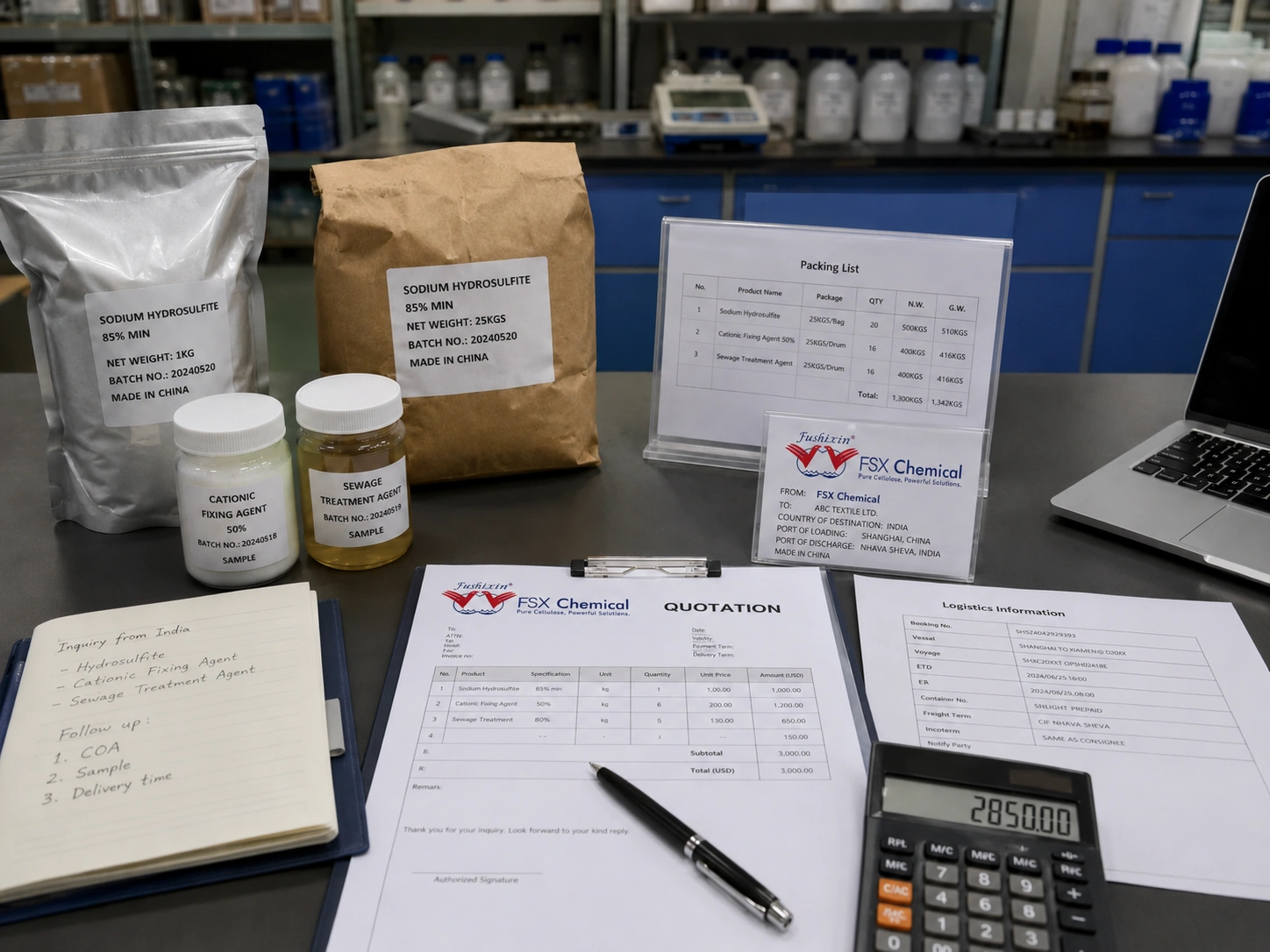
Ürün adını, kullanım alanını, miktarı, teslimat yerini ve elinizde bulunan TDS,
örnek fotoğraf veya belgeleri bizimle paylaşın. FSX Chemical bu
bilgileri inceleyerek fiyat teklifi, numune eşleştirme
veya ürün seçimi için atılması gereken bir sonraki adımı önerecektir.
Ürün BilgileriÜrün adı, sınıfı, modeli, etiket fotoğrafı veya tedarikçi referansı.
Mevcut BelgelerTDS, SDS, COA, numune fotoğrafı, ürün listesi veya test verileri.
Sipariş DetaylarıTahmini miktar, ambalaj, varış ülkesi, liman veya ticaret şartı.
Başvuru veya SorunTekstil baskı süreci, formülasyon gereksinimi, mevcut sorun veya hedeflenen performans.