Tekstil Kimyasalları Üretiminde Toplu Kalite Kontrolüne İlişkin En İyi Uygulamalar
Consistent textile chemical quality starts long before the final COA. Learn how raw-material control, process...
Effective batch quality control in textile chemical manufacturing is not limited to checking a few final specifications before shipment. A robust QC system connects raw-material verification, controlled manufacturing, in-process testing, finished-batch release, retained samples, traceability and application-relevant verification so that each commercial batch can be supplied with greater consistency and lower production risk.
Batch consistency is one of the most important purchasing concerns for textile printing chemicals. A product may perform well during the first sample trial, but long-term supplier value depends on whether later commercial batches continue to operate inside the customer’s approved production window.
This is especially important for textile thickeners and printing auxiliaries. Small changes in raw materials, moisture, substitution characteristics, viscosity, hydration, filtration or rheological behavior can affect paste preparation and printing even when the commercial product name remains the same.
Good batch quality control therefore begins before production and continues after the finished material has been packed. Incoming-material control, process parameters, in-process measurements, final testing, release authority, retained samples and traceability all contribute to a stronger quality system.
This guide explains practical best practices for batch quality control in textile chemical manufacturing, with particular attention to sodium alginate, CMC, CMS, compound thickeners and digital printing paste used in textile printing applications.
What Does Batch Quality Control Mean?
Batch quality control is the set of checks used to determine whether a specific production batch conforms to the defined commercial product and is suitable for release.
A strong batch QC system answers several questions:
Were the correct raw materials used?
Were the manufacturing parameters kept inside the approved process?
Is the finished batch sufficiently homogeneous?
Do critical laboratory properties meet the approved specification?
Can the batch be traced back to relevant raw materials and production records?
Does the product remain connected to the grade previously approved by the customer?
The purpose is not to eliminate every small numerical difference between batches. The practical objective is to control variation tightly enough that the customer’s manufacturing process remains stable.
Batch QC vs Quality Assurance
Quality control and quality assurance are related but not identical.
Quality control
QC focuses on measurement and release. It asks whether a particular raw material, in-process sample or finished batch meets defined requirements.
Quality assurance
QA focuses on the broader system used to make reliable quality possible, including procedures, training, document control, change management, corrective actions, calibration and audit practices.
A batch can pass a laboratory test, but long-term consistency still depends on the surrounding quality system. Strong textile chemical manufacturing needs both.
1. Build a Product-Specific Control Plan
The first best practice is to avoid using one generic QC checklist for every textile chemical.
Sodium alginate, CMC, CMS, liquid digital pretreatment and compound thickeners have different chemistry and application risks.
A product-specific control plan should define
Critical raw materials
Critical process parameters
In-process checks
Finished-batch tests
Test yöntemleri
Acceptance ranges
Sampling points
Release responsibility
Retained-sample requirements
Traceability records
Tests should be selected because they help control product identity, process stability or application performance, not simply because they are commonly listed on another product’s COA.
2. Control Incoming Raw Materials
Finished-batch consistency begins with the materials entering the factory.
Incoming inspection should focus on raw-material characteristics that can meaningfully affect the product or manufacturing process.
Depending on the material, checks can include
Supplier and material identity
Supplier lot number
Görünüm
Nem
Purity-related information where relevant
pH or other chemistry-related parameters
Packaging integrity
Supplier documentation
The incoming specification should be linked to actual manufacturing risk. More testing is not automatically better if the selected tests do not predict product performance.
3. Track Raw-Material Supplier Lots
Raw materials that share the same name may still vary between supplier lots.
A batch record should make it possible to identify which raw-material lots entered each finished production batch.
This becomes valuable when
A finished batch shows unusual viscosity
Filtration changes unexpectedly
A customer reports a production difference
A raw-material supplier changes its process
Several batches show a similar trend
Without lot-level traceability, root-cause investigation often becomes guesswork.
4. Control Weighing and Batch Charging
Formulation accuracy depends on correct weighing and material addition.
Good practice includes
Verified material identity before charging
Appropriate weighing equipment
Recorded actual quantities
Controlled addition sequence
Clear handling of corrections
A weighing or charging error can later appear as a raw-material quality problem, viscosity problem or batch-consistency problem.
Production records should allow the manufacturer to reconstruct what actually entered the batch rather than rely only on the intended formula.
5. Define Critical Process Parameters
Textile chemical quality is influenced not only by ingredients but also by the manufacturing conditions used to convert them into the finished product.
Depending on the process, critical parameters can include
Reaction temperature
Reaction time
pH
Addition rate
Karıştırma yoğunluğu
Washing or purification conditions
Kurutma koşulları
Milling or particle-size control
Sieving
Final blending
The important principle is to identify which process variables influence the critical quality attributes of each product and keep those variables under controlled limits.
6. Use In-Process Testing
Waiting until the finished product is packed before discovering a problem is inefficient.
In-process testing can detect drift while correction is still practical.
Useful in-process checks may include
pH
Reaction endpoint indicators
Moisture during drying
Intermediate viscosity
Görünüm
Particle or sieving characteristics
The exact tests depend on the chemistry. A strong process-control plan chooses measurements that give useful information before final release.
7. Standardize Batch Sampling
Laboratory accuracy cannot compensate for an unrepresentative sample.
Sampling procedures should define when, where and how the sample is taken.
The procedure should consider
Parti büyüklüğü
Powder or liquid form
Potential segregation
Blending history
Sampling location
Örnek miktarı
Container cleanliness
Sample labeling
If the final product can segregate, taking a convenient sample from one location may not adequately represent the entire batch.
8. Standardize Laboratory Test Methods
Batch-to-batch comparison is meaningful only when the test method remains controlled.
Written methods should define
Sample preparation
Konsantrasyon
Water source where relevant
Hydration or conditioning time
Sıcaklık
Enstrüman
Calibration requirements
Measurement sequence
Calculation and reporting unit
Changing a method without documenting the change can make a stable product appear inconsistent.
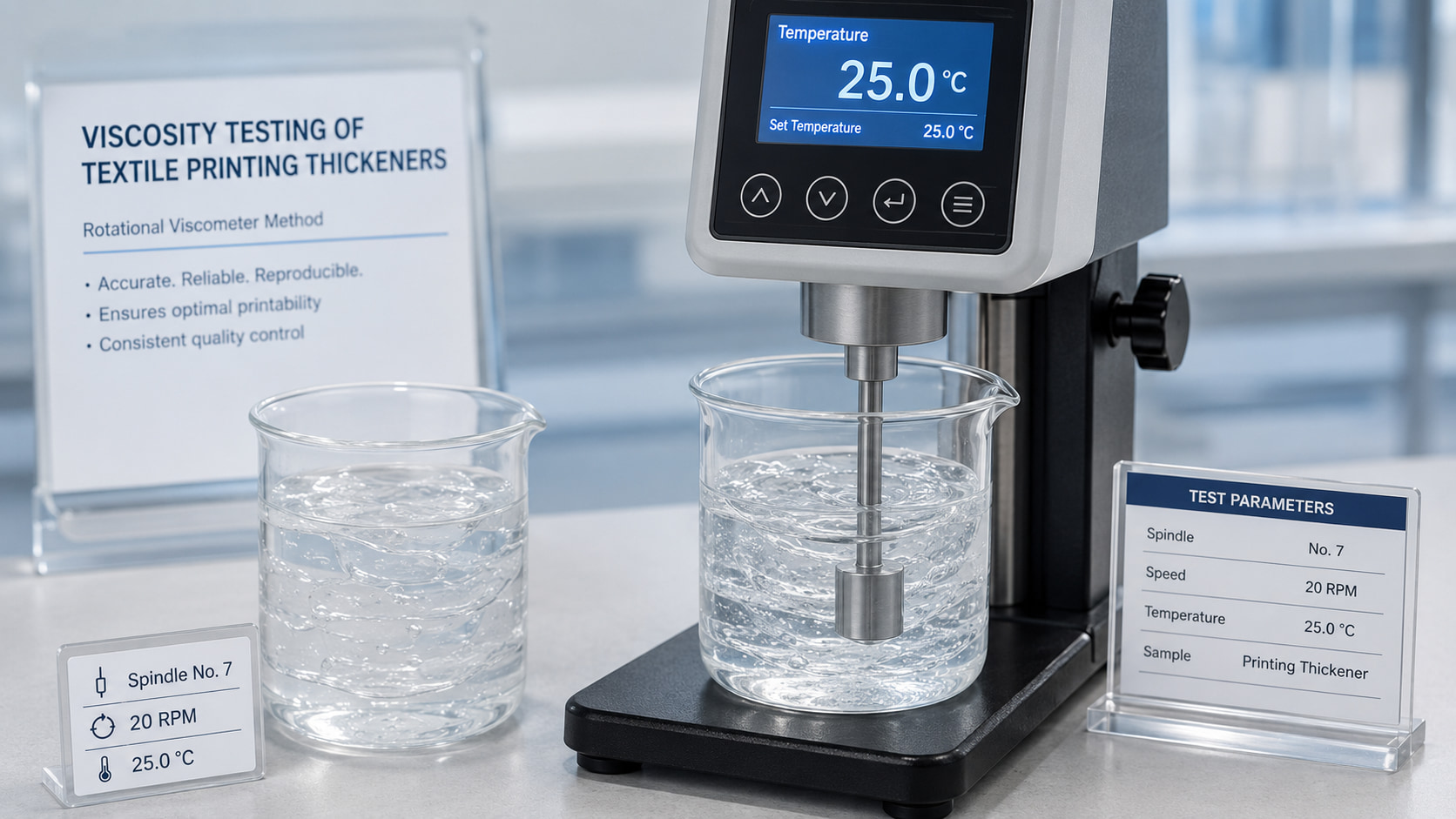
9. Control Viscosity by Method, Not Number Alone
Viscosity is a critical QC parameter for many textile thickeners, but the number has meaning only under defined conditions.
For a useful viscosity specification, define
Ürün konsantrasyonu
Su kalitesi
Karıştırma işlemi
Su içme zamanı
Sıcaklık
Viskometre
Spindle or geometry
Dönme hızı
Okuma süresi
A supplier should not compare one batch measured under different conditions with another batch and treat the numerical difference as a true product difference.
Viscosity should also be connected to application behavior. A batch can meet a single-point viscosity specification and still require further investigation if filtration or printing performance changes.
10. Monitor pH, Moisture or Solids Where Relevant
pH, moisture and solids can be useful finished-batch controls, but their importance varies by product.
Nem
Moisture is especially relevant for powdered products because it can influence effective solids, storage behavior and dosage.
Solids
Solids content can be more relevant for liquid formulated products.
pH
pH can support identity, stability and formulation control depending on the chemistry.
Acceptance limits should come from the defined product specification and process understanding rather than one universal textile-chemical standard.
11. Evaluate Hydration and Dissolution
For powdered textile thickeners, preparation performance can be as important as a final viscosity result.
Değerlendir
Wetting
Lump formation
Su içme zamanı
Solution uniformity
Visible gel particles
Poor hydration can create filtration losses, preparation delays and unstable viscosity even when the dry product passes basic chemical specifications.
Hydration testing is particularly useful when a customer reports differences between commercial batches.
12. Include Filtration Where It Predicts Application Risk
Filtration is a valuable application-related quality parameter for many textile printing thickeners.
A controlled filtration method should define
Konsantrasyon
Hazırlama yöntemi
Su içme zamanı
Örnek miktarı
Filter opening
Basınç veya yerçekimi koşulları
Residue evaluation
Filtration can reveal incomplete hydration, gel formation, contamination or other behavior that may affect screen printing or pretreatment equipment.
It should not be interpreted as a guarantee of zero screen blockage because machine, formulation and fabric factors also matter.
13. Use Rheology for Deeper Investigation
Routine release may use a standardized single-point viscosity test, but rheological testing can provide additional information when performance differences are difficult to explain.
Two batches with the same viscosity can differ in shear-thinning behavior or structural recovery.
Rheology can help investigate differences in
Pompalama
Ekran bölümü
Yapıştırma aktarımı
Spreading
İnce çizgilerin belirginliği
Rheology does not need to appear on every COA to be valuable. It can serve as a development, troubleshooting and supplier-comparison tool.
14. Control Final Batch Blending and Homogeneity
Final blending can reduce within-batch variation and create a more uniform commercial product.
This is especially relevant when intermediate material from different production stages or lots is combined before packing.
Manufacturers should define
Blend size
Blending time
Ekipman
Sampling after blending
Homogeneity criteria where relevant
A batch release sample should represent the final material that will actually be packed and shipped.
15. Establish a Formal Batch Release Decision
Testing is only useful if the manufacturer defines who can release a batch and what evidence is required.
A release decision can include
Completed production record
Completed laboratory results
Critical parameters inside specification
Deviation review where applicable
Correct product and batch labeling
Approval by authorized QC or quality personnel
Production pressure should not override the agreed release process without documented evaluation.
16. Use the COA Correctly
A Certificate of Analysis is a batch-specific quality document reporting selected results against the commercial specification.
It should contain parameters that are meaningful for the product and use clearly defined methods where method dependence is important.
A COA should not be treated as
A guarantee of customer production performance
A substitute for application qualification
A universal list of every possible product property
Evidence of a compliance claim unless the document actually supports it
The strongest use of a COA is as one part of the sample-to-bulk and batch-traceability system.
17. Keep Retained Samples
Retained samples create a physical reference for future investigation.
They can support
Complaint investigation
Batch-to-batch comparison
Method verification
Storage-stability investigation
Supplier or customer technical discussion
Retained samples should be labeled with batch identity and stored under defined conditions appropriate to the product.
18. Maintain End-to-End Traceability
A strong batch system connects the finished product back to manufacturing and raw-material records.
A useful traceability chain can connect
Raw-Material Lot → Production Record → In-Process Data → Finished Batch → QC Results → Package Label → COA → Customer Shipment
This makes it possible to investigate whether multiple customer complaints share a common raw material, process condition or production period.
19. Control Deviations and Rework
Not every out-of-target result means the product must immediately be discarded, but every deviation should be evaluated systematically.
Before rework or correction, determine
What parameter is outside target?
Is the test result valid?
Was the sample representative?
What is the likely process cause?
Can the batch be corrected without creating another quality risk?
How will the correction be documented and verified?
Rework should not become an undocumented method for forcing every batch back toward one laboratory number.
20. Trend Batch Data Instead of Reviewing Batches in Isolation
A batch may technically remain inside specification while showing a gradual shift over time.
Trending helps identify this movement before it becomes a customer problem.
Useful trend parameters can include
Viskozite
Nem
pH
Filtreleme
Su içme zamanı
Application results
The objective is not to eliminate natural process variation. The objective is to detect unusual drift early and keep the product inside a stable operating window.
21. Verify the First Commercial Batch
The transition from laboratory sample to commercial production is one of the most important points in supplier qualification.
A sample can be produced under small-scale conditions that differ from the normal manufacturing line.
The first commercial batch should confirm
Permanent commercial grade identity
Relevant finished-batch specifications
Similarity to the approved sample
Application performance where risk justifies testing
Correct package and batch documentation
Customers should apply stronger incoming verification to the first bulk order before moving to routine sampling.
22. Connect Laboratory QC with Application Performance
Textile chemical manufacturing should not treat laboratory specifications as completely separate from the customer’s printing process.
For key grades, application testing can help determine whether the chosen QC parameters actually predict production performance.
Application checks can include
Hisse senedi-macun hazırlığı
Complete formulation stability
Ekran bölümü
Yazdırma tanımı
Penetrasyon
Sabitleme veya sertleştirme
Yıkanarak çıkarılır
Bitmiş kumaş kalitesi
Not every commercial batch needs a full printing trial, but application knowledge should help determine which laboratory parameters matter most.
Batch QC for Sodium Alginate
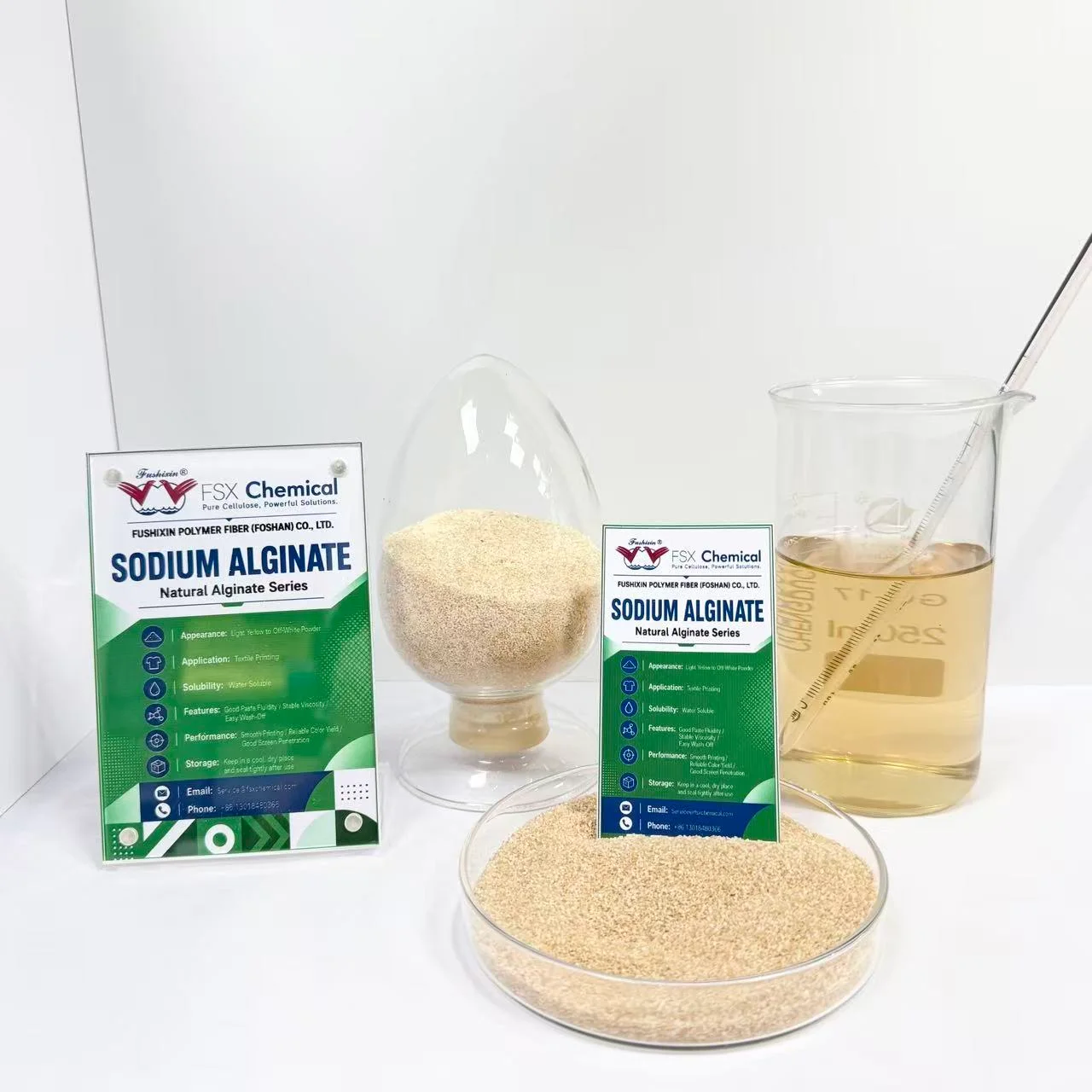
Sodyum aljinat is commonly evaluated for conventional reactive textile printing.
Depending on the confirmed commercial specification, useful controls can include
Görünüm
Nem
Uygun olduğu durumlarda pH
Viscosity under the agreed method
Sıvı alımı
Filtreleme
Parti tutarlılığı
For application qualification, reactive-paste compatibility, definition, fixation and wash-off should also be considered.
HV, MV and LV labels should remain secondary to the actual specification and test method.
Batch QC for CMC
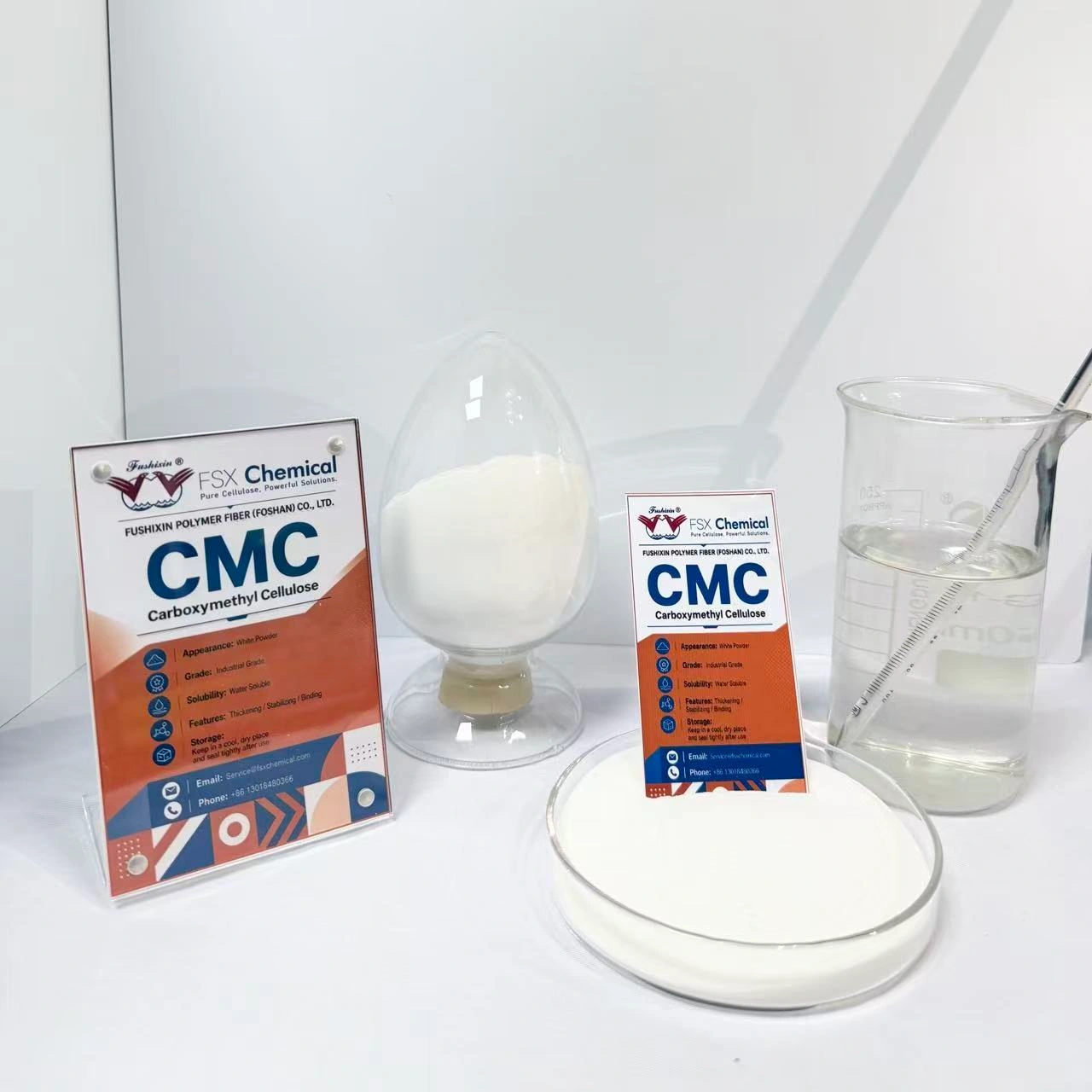
Karboksimetil Selüloz requires a product-specific QC plan because viscosity alone does not describe the complete grade.
Depending on the grade, controls can include
Görünüm
Nem
pH
Viskozite
Degree of substitution where specified
Purity-related parameters where relevant
Hydration or dissolution
Filtration for application-sensitive grades
Similar DS and viscosity do not prove that two CMC grades are functionally identical. Application behavior still needs to be considered when qualifying a new grade.
Batch QC for CMS
Karboksimetil Nişasta can be used in selected textile printing and compound-thickener systems.
Relevant batch controls may include
Görünüm
Nem
pH
Viskozite
Sıvı alımı
Filtreleme
Macun stabilitesi
Application-sensitive grades can also be compared for screen passage, complete-paste behavior and effective dosage.
Batch QC for Digital Printing Paste
Dijital Baskı Macunu requires process-specific control because reactive, disperse and pigment digital printing use different chemistry.
Depending on the route, batch evaluation can include
Görünüm
pH
Uygun olduğu durumlarda viskozite
Dispersion or preparation behavior
Filtreleme
Tutma stabilitesi
Ön işlemin homojenliği
During qualification, the product should also be evaluated with the actual fabric, ink system, drying and fixation or curing process.
Digital textile pretreatment should be treated separately from the digital ink formulation.
Batch QC for Compound Thickeners
Compound thickeners can contain multiple functional components, so batch consistency depends on both raw-material consistency and formulation control.
Useful controls can include
Görünüm
Viskozite
pH
Solids or moisture depending on product form
Hydration or dispersion
Filtreleme
Tutma stabilitesi
Rheological comparison during development or investigation
Because several components may contribute to performance, one single laboratory specification should not be expected to explain the complete application behavior.
Örnek ile Toplu Ürün Arasındaki Tutarlılık
A high-quality supplier should maintain a clear connection between the grade approved in the laboratory and the product delivered commercially.
A strong sample-to-bulk chain connects
Customer application requirement
Candidate commercial grade
TDS and defined test methods
Temsili örneklem
Customer trial
Approved operating conditions
Ticari teklif
Üretim partisi
Package label
Batch-specific COA or relevant quality data
İlk sevkiyat doğrulaması
The sample should not be an unidentified laboratory material that cannot later be connected to normal production.
Supplier QC vs Customer Incoming QC
Supplier QC and customer incoming QC serve different roles.
Supplier QC
The manufacturer controls the batch against its commercial specification and manufacturing process.
Customer incoming QC
The printing mill confirms the parameters most important to its own production risk.
These two systems should be aligned where practical, especially for method-dependent parameters such as viscosity.
A customer may also choose to perform a quick application check on new suppliers or critical first shipments even when the supplier COA passes.
Complaint Investigation and Root-Cause Analysis
When a customer reports a problem, the first task is to define the difference precisely.
Useful complaint information includes
Finished product batch number
Customer receiving date
Customer test method
Observed viscosity or filtration result
Current formula
Kumaş
Makine
Comparison with a previous successful batch
Photos or retained samples where useful
The manufacturer can then review
Raw-material lots
Production records
In-process data
Finished QC results
Saklanan numune
Related batches
This structured approach is more useful than assuming immediately that either the customer or the supplier is responsible.
What Buyers Should Look for During Supplier Qualification
Buyers do not need access to every confidential manufacturing detail, but they should understand whether the supplier has a credible batch-control system.
Area
Useful Question
Raw Materials
Are critical incoming materials identified and controlled?
Process Control
Are important manufacturing parameters recorded?
Test Methods
Are method-dependent tests clearly defined?
Parti Serbest Bırakma
Is there a formal release step before shipment?
COA
Is the COA connected to the shipped batch?
İzlenebilirlik
Can a finished lot be traced through production records?
Retained Samples
Can previous batches be physically compared when needed?
Değişiklik Kontrolü
How are important product or process changes evaluated?
Uygulama Teknik Desteği
Can the supplier investigate a printing-performance difference?
Common Batch QC Mistakes
Using the same QC panel for every product
Different chemistries require different critical controls.
Testing only the final product
Incoming and in-process controls can identify problems earlier.
Using poorly defined viscosity methods
Concentration, temperature, instrument and speed must be controlled.
Assuming a passing COA guarantees application performance
The customer’s complete formulation and process remain separate validation steps.
Ignoring sampling quality
An unrepresentative sample can create a misleading laboratory result.
Forcing every batch toward one exact number
A controlled operating range is normally more meaningful than an unrealistic zero-variation target.
Approving the laboratory sample but not checking the first bulk batch
Commercial-scale production should remain connected to the approved sample.
Failing to trend data
Gradual drift can remain hidden when each batch is reviewed independently.
How FSX Chemical Approaches Manufacturing and Batch Control
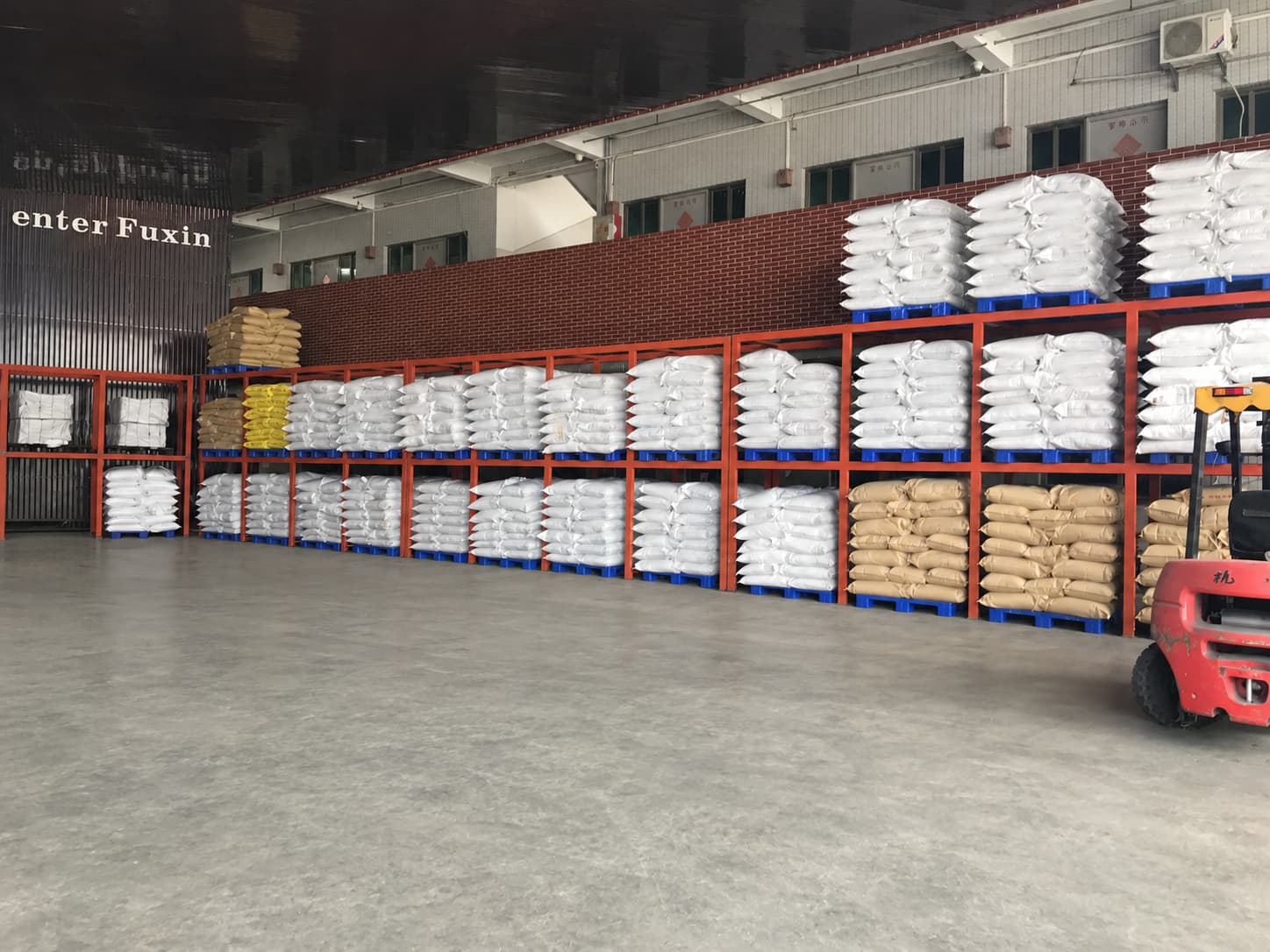
Manufacturing quality control should connect incoming materials, controlled production, finished-batch testing and application-relevant evaluation rather than rely on one isolated laboratory result.
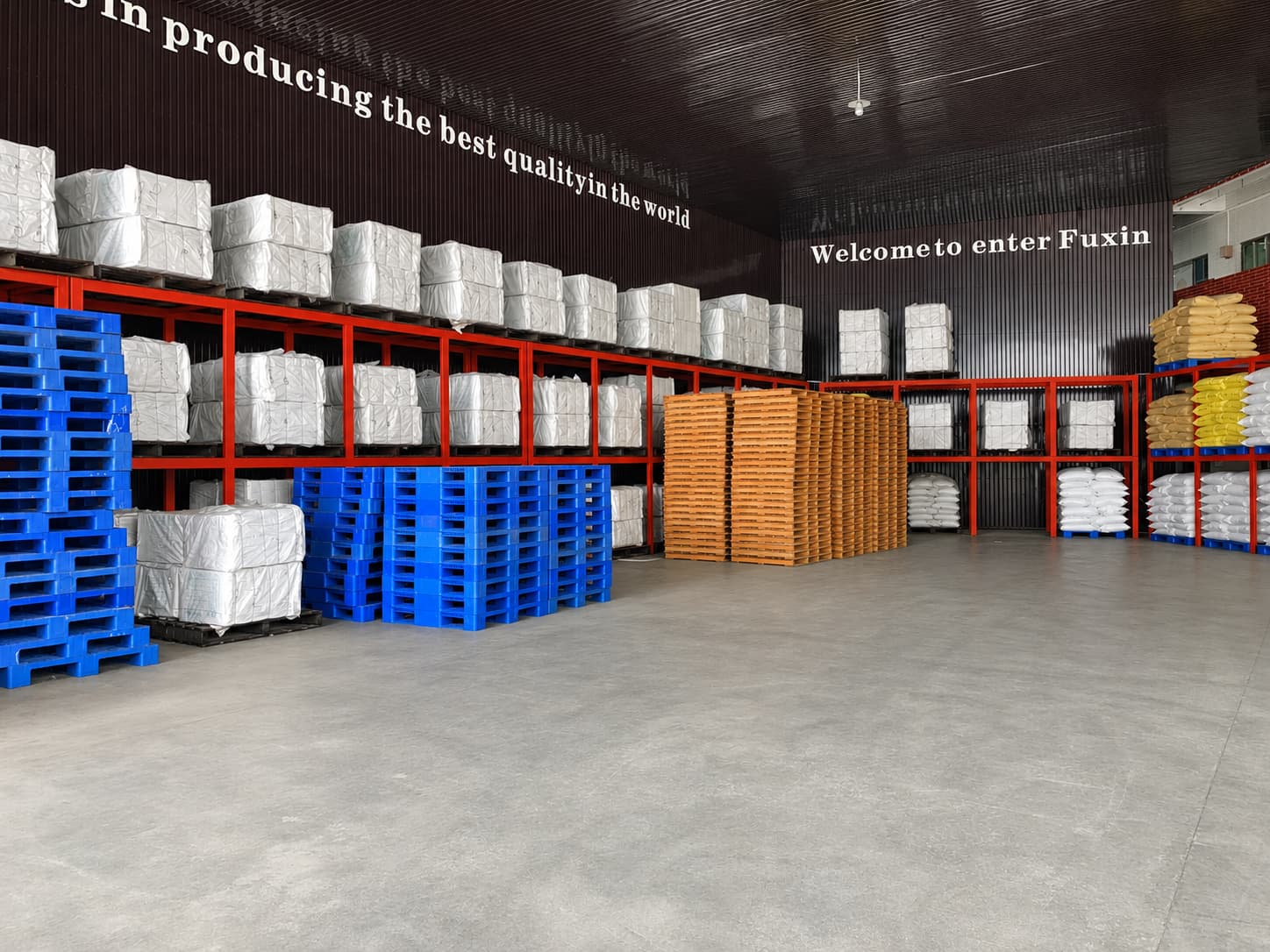
Buyers can review FSX Chemical’s Üretim ve Kalite information and use Örnekler ve Eşleştirme when comparing a current commercial grade with an FSX candidate.
Useful information for a matching or batch-consistency project includes
Güncel üretici ve ticari sınıf
TDS veya güncel COA
Fiziksel referans numune
Viskozite ve tam test yöntemi
Mevcut doz
Formülün yazdırılması
Kumaş
Reaktif, dispers, pigment veya dijital baskı yöntemi
Baskı ekipmanları
Current batch-consistency or application issue
The objective is to select and qualify a permanent commercial grade whose production batches can be compared through defined QC methods and actual printing performance where required.
Sık Sorulan Sorular
What is batch quality control in textile chemical manufacturing?
It is the system used to verify that a specific production batch meets the defined commercial product requirements before release and can be traced through relevant manufacturing and quality records.
What are the most important QC parameters for textile thickeners?
The answer depends on the product. Common parameters can include appearance, viscosity, pH, moisture or solids, hydration and filtration, while some grades require additional chemistry- or application-specific controls.
Is viscosity enough for batch release?
Usually not by itself. A product-specific release panel should include the critical parameters that have proven important for identity, consistency and application risk.
Should every textile chemical use the same COA?
No. A COA should reflect the confirmed commercial specification of that product. Sodium alginate, CMC, CMS and digital printing paste can require different parameters.
What is the difference between QC and QA?
QC focuses on testing and release of materials and batches, while QA includes the broader procedures, training, change control, calibration and management systems used to maintain reliable quality.
Why is sampling important in batch QC?
Even a highly accurate test produces misleading information if the sample does not represent the finished batch.
Why should manufacturers keep retained samples?
Retained samples support complaint investigation, batch-to-batch comparison and verification of previous production when a difference is reported later.
Does a passing COA guarantee printing performance?
No. A COA confirms selected batch-specific properties. Final suitability still depends on the customer’s formula, fabric, equipment and production conditions.
Why should the first commercial batch receive extra testing?
Laboratory samples and commercial production can involve different scale and equipment. First-bulk verification confirms that the commercial grade remains connected to the sample that was approved.
How much batch-to-batch variation is acceptable?
There is no universal numerical answer. Critical parameters should remain within the approved product and process range that maintains stable customer production.
How can a manufacturer investigate a batch complaint?
Compare the customer information with production records, raw-material lots, finished QC data, retained samples and previous successful batches, then test the suspected variable under controlled conditions.
Can FSX Chemical match a current textile thickener and support batch comparison?
Customers can provide the current TDS, COA or physical sample together with the test method and printing conditions so that a technically relevant commercial grade can be selected for controlled comparison.
Need More Consistent Textile Printing Chemical Batches?
Send FSX Chemical the TDS, recent COA or physical sample of the textile thickener or printing paste you currently use together with your laboratory method and production application.
If your current issue is batch-to-batch viscosity variation, hydration differences, filtration residue, unstable paste, inconsistent screen passage or a difference between the approved sample and bulk supply, include these details with your inquiry.
A relevant sodium alginate, CMC, CMS, compound thickener or digital printing paste grade can then be selected for controlled sample, laboratory and production evaluation📧 E-posta: Service@fsxchemical.com
Konsantrasyon, sıcaklık, ölçüm cihazı, mil, hız, hazırlık yöntemi ve test süresi gibi faktörler eşleştirilmeden tekstil baskı kıvam arttırıcılarının viskozite değerlerinin neden karşılaştırılamayacağını öğrenin.
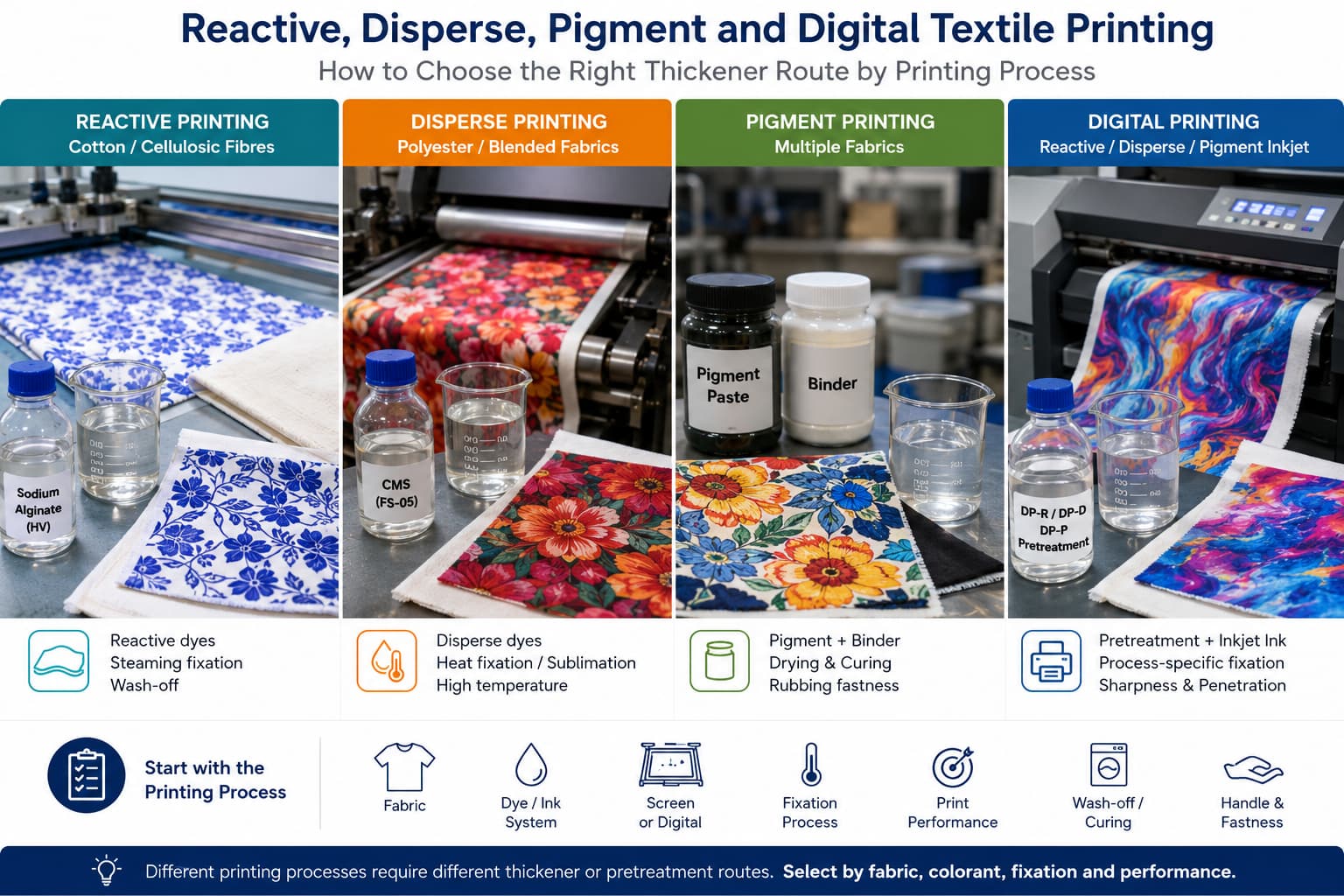
Kumaş, boya veya mürekkep, sabitleme, yıkama ve baskı kalitesi gereksinimlerine göre reaktif, dispers, pigment ve dijital tekstil baskısı için kıvam arttırıcı ve ön işlem yöntemlerini nasıl seçeceğinizi öğrenin.
Tekstil baskısı için CMC, CMS, sodyum aljinat ve dijital baskı macununu karşılaştırın. Her bir yöntemin reaktif, dispers, pigment ve dijital baskı süreçlerine nasıl uyum sağladığını ve alıcıların numune testi, kalite eşleştirme ve toplu satın alma öncesinde nelere dikkat etmeleri gerektiğini öğrenin.
Sodyum aljinat, tekstil baskıcılığında reaktif baskı macunu için kararlı ve yıkanabilir bir kıvam arttırıcı olarak yaygın olarak kullanılmaktadır. Satın almadan önce viskozite derecesini, saflığı ve uygulamaya uygunluğu nasıl değerlendireceğinizi öğrenin; ayrıca FSX Chemical’ın teknik veriler ve numunelerle küresel alıcılara nasıl destek sağladığını keşfedin.
Karboksimetil selüloz (CMC), tekstil ürünlerinin baskı, apre ve boyama işlemlerinde yaygın olarak kullanılmaktadır. Bu kılavuzda, CMC türlerinin nasıl değerlendirileceği, hangi parametrelerin en önemli olduğu ve FSX Chemical’ın satın alma kararlarında nasıl destek olabileceği açıklanacaktır.
Karboksimetil selüloz, su bazlı mürekkeplerde, gravür baskıda ve mürekkep püskürtmeli baskı ön işlemlerinde kıvam arttırıcı ve stabilizatör olarak kullanılır. Bu kılavuz, satın alma ekipleri için temel kalite parametrelerini ve tedarikle ilgili hususları ele almaktadır.
Doğru CMC tedarikçisini seçmek, sadece fiyatları karşılaştırmaktan ibaret değildir. Bu kılavuz, satın alma ekiplerinin toplu sipariş vermeden önce uymaları gereken değerlendirme kriterlerini, belge kontrol listesini ve deneme sürecini ele almaktadır.
CMC bazlı baskı macunu, pigmentli, reaktif ve dijital tekstil baskı alanlarında kullanılmaktadır. Bu kılavuzda, hangi parametrelerin önemli olduğu, tedarikçilerin nasıl karşılaştırılacağı ve toplu sipariş vermeden önce nelerin talep edilmesi gerektiği açıklanmaktadır.
Hem sodyum aljinat hem de CMC, tekstil baskısında kıvam arttırıcı olarak kullanılır; ancak bunlar farklı boyama sistemlerine ve işlem koşullarına uygundur. Bu kılavuzda, aralarındaki temel farklar ve her birinin ne zaman kullanılması gerektiği açıklanmaktadır.
Tekstillerde dijital mürekkep püskürtmeli baskı, serigrafi baskıya kıyasla farklı macun ve ön işlem gereksinimlerine sahiptir. Bu kılavuz, dijital tekstil baskısında sodyum aljinatın nasıl kullanıldığını ve tedarik ekiplerinin hangi kalite parametrelerini belirtmeleri gerektiğini açıklamaktadır.
Gıda sınıfı ve endüstriyel sınıf CMC, aynı temel kimyasal yapıya sahiptir ancak saflık, DS aralığı ve yasal gereklilikler açısından önemli farklılıklar gösterir. Bu kılavuz, temel farklılıkları ve yanlış sınıfın kullanılmasının neden üretim sorunlarına yol açtığını açıklamaktadır.
Reaktif boya ile tekstil baskısında, macunun doğru şekilde hazırlanması, renk tonu seçimi kadar önemlidir. Bu kılavuzda sodyum aljinatın çözünme yöntemleri, uygulamaya göre konsantrasyon aralıkları, saklama koşulları ve hazırlık aşamasında sık karşılaşılan sorunların nasıl giderileceği ele alınmaktadır.
Ürün adını, kullanım alanını, miktarı, teslimat yerini ve elinizde bulunan TDS,
örnek fotoğraf veya belgeleri bizimle paylaşın. FSX Chemical bu
bilgileri inceleyerek fiyat teklifi, numune eşleştirme
veya ürün seçimi için atılması gereken bir sonraki adımı önerecektir.
Ürün BilgileriÜrün adı, sınıfı, modeli, etiket fotoğrafı veya tedarikçi referansı.
Mevcut BelgelerTDS, SDS, COA, numune fotoğrafı, ürün listesi veya test verileri.
Sipariş DetaylarıTahmini miktar, ambalaj, varış ülkesi, liman veya ticaret şartı.
Başvuru veya SorunTekstil baskı süreci, formülasyon gereksinimi, mevcut sorun veya hedeflenen performans.