To prepare sodium alginate powder for textile printing, disperse it gradually into circulating water, allow the selected grade to hydrate, then check viscosity and filterability before adding the full dye-and-auxiliary system. Confirm the concentration basis, water source, temperature and measurement method. Persistent lumps or gel-like particles need diagnosis before filtration or dosage adjustment; a smooth-looking paste alone does not prove complete hydration.
Sodium alginate is commonly used as a thickener in reactive textile printing paste. Its role is mainly related to viscosity control, paste structure, and handling during preparation and printing. It should not be treated as a single solution for color fastness, environmental compliance, or every printing defect, because final performance depends on the complete dye, fabric, auxiliary, fixation, washing, and process system.
This guide covers powder preparation for conventional textile printing pastes. A grade intended for fabric pretreatment must be validated for that separate application; ordinary paste-grade powder is not automatically suitable for direct addition to printhead ink.
Why Sodium Alginate Powder Preparation Matters
Powder Grade Alone Does Not Determine the Result
Two factories may receive the same sodium alginate grade but obtain different paste behavior because they use different water quality, addition methods, mixing speeds, temperatures, standing times, or filtration procedures.
For meaningful supplier comparison, buyers should control the preparation method and record the same process conditions for each sample.
Poor Dispersion Can Create False Quality Conclusions
If sodium alginate powder is added too quickly, the outer surface may hydrate before the inner particles are properly dispersed. This can create lumps that are difficult to break down later.
A lumpy paste may be interpreted as a raw material problem even when the main cause is the preparation process.
Viscosity Needs Time to Develop
Sodium alginate may not reach its final measurable viscosity immediately after addition. Hydration and viscosity development can continue during mixing and standing.
Buyers should define when viscosity is measured, because comparing one sample immediately and another after standing can produce misleading results.
Step-by-Step Preparation Method
Step 1: Fix the Test Conditions
Before preparation, record the powder lot, concentration basis, water source and mass, water temperature, pH, mixer geometry, batch size, addition time, total mixing time and conditioning time. State whether the concentration is based on as-received powder or dry solids. For viscosity, record the instrument, spindle or geometry, speed or shear rate, temperature and reading time.
Step 2: Use Representative Process Water
Use production-representative water for the application trial and a defined reference water for incoming-QC comparisons. Calcium can increase alginate viscosity or form gel-like material, so record water hardness or calcium where available. If a sample hydrates in reference water but forms particles in mill water, investigate water quality and formulation ingredients before rejecting the powder lot.
Step 3: Add the Powder Gradually
Introduce the powder in a controlled and gradual manner while sufficient circulation is maintained. Dumping the full quantity into one area can increase surface hydration and lump formation.
Step 4: Maintain Effective Mixing
Mixing should be strong enough to disperse the powder and appropriate for the equipment and batch size. Operators should observe whether powder remains on the surface, collects on the vessel wall, or forms visible lumps.
Step 5: Allow Hydration and Standing Time
Use the supplier’s preparation guidance as the trial starting point. At defined conditioning times, compare viscosity, visible particles and screen residue under the same method. Set the release point from the grade and process validation rather than adopting one hydration time for every alginate. Record the permitted holding conditions as well; longer standing is not automatically better.
Step 6: Filter Before Printing
Use a filter or test screen selected for the printing equipment and formulation. Record the mesh or opening, filtered sample mass, residue and any pressure or flow change. Check whether retained material is swollen powder, calcium-related gel or foreign matter. Filtration removes retained material; it does not establish that the powder has hydrated correctly or replace investigation of a repeated residue problem.
How to Reduce Lumps During Dissolution
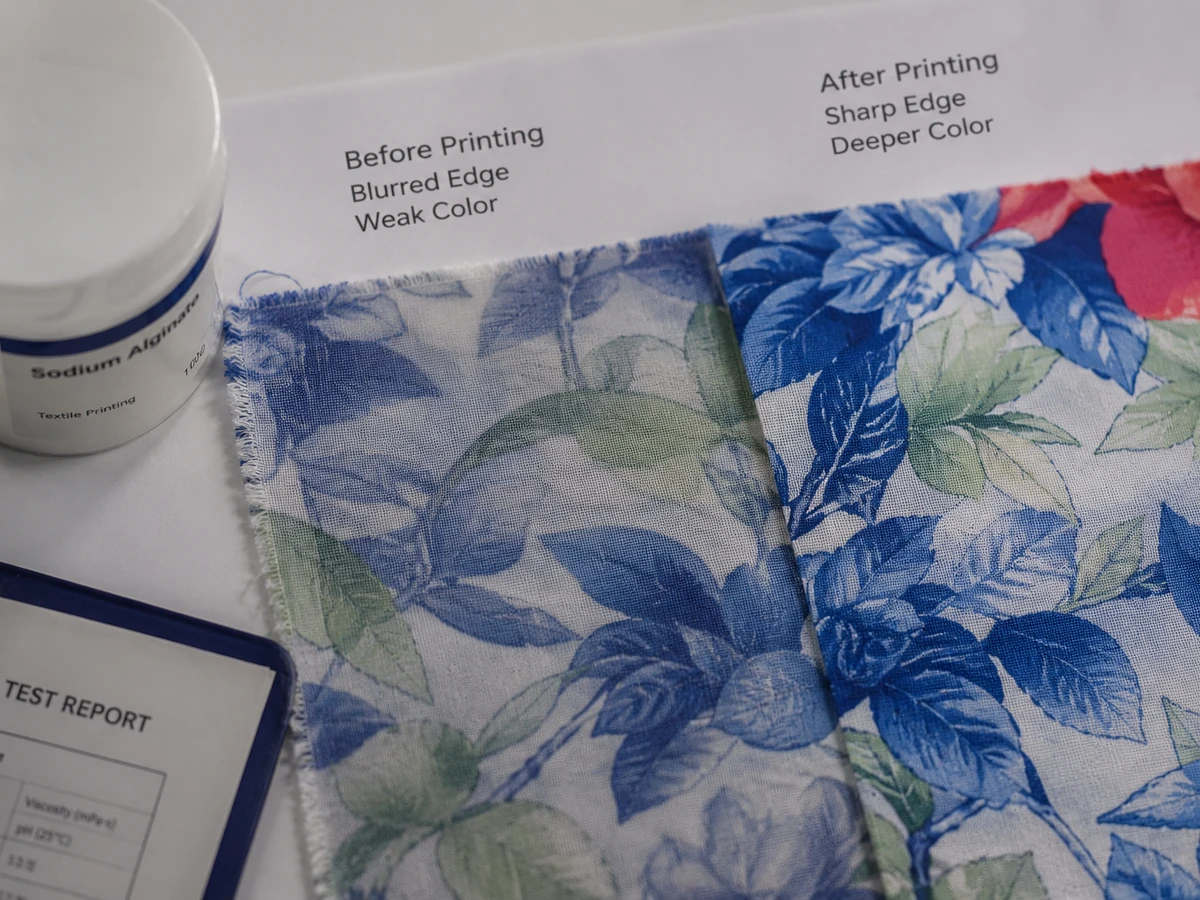
Avoid Fast Localized Addition
Adding too much powder into one point can create a hydrated outer layer around partially dry material. Gradual addition over a wider circulation area is usually easier to control.
Check Powder Storage Before Use
Moisture exposure can affect powder flow and make uniform addition more difficult. Bags should remain properly sealed and stored under dry conditions according to the supplier’s storage guidance.
Match the Mixer to the Batch Size
A laboratory mixer may behave differently from a production tank. When a sample passes laboratory testing but causes production problems, buyers should compare circulation, batch size, addition rate, and mixing geometry.
Use a Standard Preparation Record
A simple record should include operator, batch number, water source, addition time, mixing time, standing time, viscosity, filtration result, and visual observations. This helps separate raw material variation from process variation.
How to Evaluate Solubility and Hydration
Do Not Judge Only by Visual Appearance
A paste may look uniform while still containing partially hydrated material. Buyers should evaluate visual smoothness, filtration behavior, and viscosity development over time.
Record Viscosity at Defined Time Points
For accurate comparison, record concentration, temperature, instrument, method, unit, and standing time. Without these details, viscosity values from different suppliers may not be directly comparable.
Gerçek Baskı Formülünde Test
Clean-water testing is useful for initial comparison, but final evaluation should include the buyer’s actual dyes, auxiliaries, salts, pH adjusters, and water quality.
Viscosity Control During Paste Preparation
Separate Raw Material Viscosity from Final Paste Viscosity
The viscosity shown in a TDS usually refers to a defined laboratory solution or test condition. Final printing paste viscosity may differ because dyes, salts, auxiliaries, concentration, and process conditions affect the system.
Investigate Viscosity Drift
Viscosity drift may be related to incomplete hydration, temperature change, pH, water quality, standing time, formulation compatibility, or batch variation.
When drift appears, buyers should review the complete preparation record before deciding that the sodium alginate grade is unsuitable.
Suggested release checks before color-paste preparation
Set acceptance limits with the approved grade and process. The following is a proposed record, not an FSX test result or a universal specification.
| Kontrol et | Record | Decision |
|---|---|---|
| Dispersion | Visible lumps, vessel-wall deposits and circulation during addition | Correct addition or mixing if dry-centered lumps persist. |
| Hidrasyon | Viscosity at defined conditioning times under the same method | Use the validated release time; investigate continuing drift. |
| Water compatibility | Reference-water and process-water results; hardness where available | Investigate gel-like residue or a water-dependent viscosity change. |
| Filterability | Opening size, sample mass, residue and flow observation | Identify the residue before approving a lot or adjusting dosage. |
| Complete color paste | Ingredient order, final viscosity and validated hold period | Confirm compatibility after dye and auxiliaries are added. |
Powder Handling and Storage Checklist
Keep Packaging Properly Closed
Opened bags should be resealed after use. Moisture exposure may affect powder flow, handling, and repeat preparation.
Follow Product-Specific Storage Guidance
Storage recommendations should follow the TDS, SDS, label, and supplier guidance. Buyers should not assume that every sodium alginate grade has identical storage requirements.
Use Batch Identification
Each bag or lot should be linked to a batch number where applicable. Batch identification supports COA matching, internal quality control, repeat orders, and problem investigation.
Review Workplace Handling
Powder transfer and mixing should follow the factory’s internal procedures and applicable SDS. Dust control, ventilation, personal protective equipment, housekeeping, and spill handling should be managed according to workplace requirements.
How to Compare Sodium Alginate Powder Samples
All samples should be prepared with the same concentration, water source, addition time, mixing method, standing time, and viscosity test method.
A practical comparison can include:
- Powder appearance and flow
- Dispersion during addition
- Lump formation
- Su içme zamanı
- Paste smoothness
- Viscosity and viscosity stability
- Filtreleme davranışı
- Compatibility with the actual printing formula
- Printing behavior under the buyer’s process
- COA data and batch consistency
Mevcut Ürünle Karşılaştırın
If the buyer is replacing an existing sodium alginate, the new sample should be tested against the current product under the same conditions.
Örnek ile Toplu Ürün Arasındaki Tutarlılığı Doğrulama
Before a bulk order, buyers should confirm that the approved sample and commercial shipment follow the agreed viscosity range, specification, packaging, batch traceability, and COA requirements.
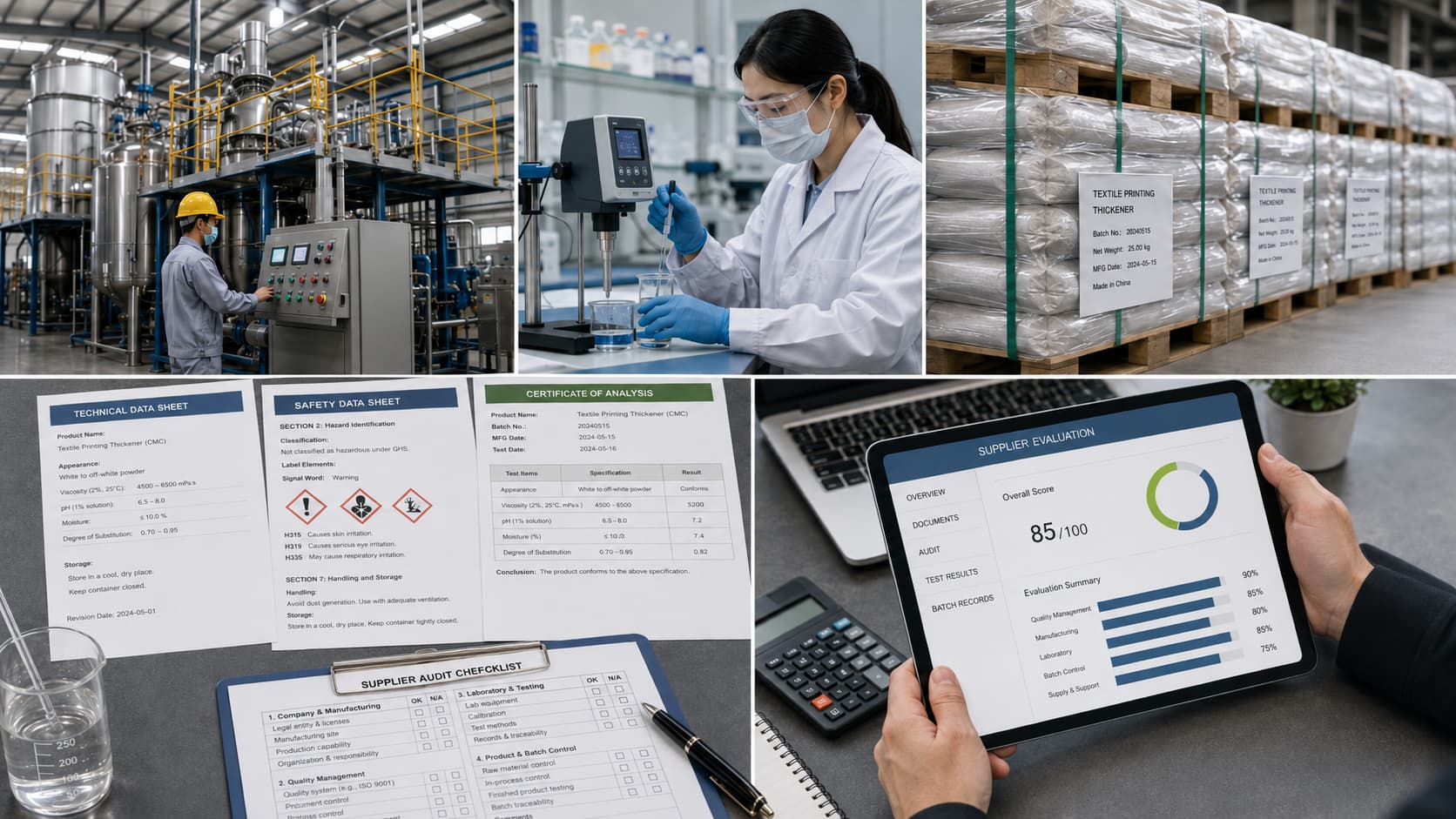
Documents to Request Before Bulk Purchase
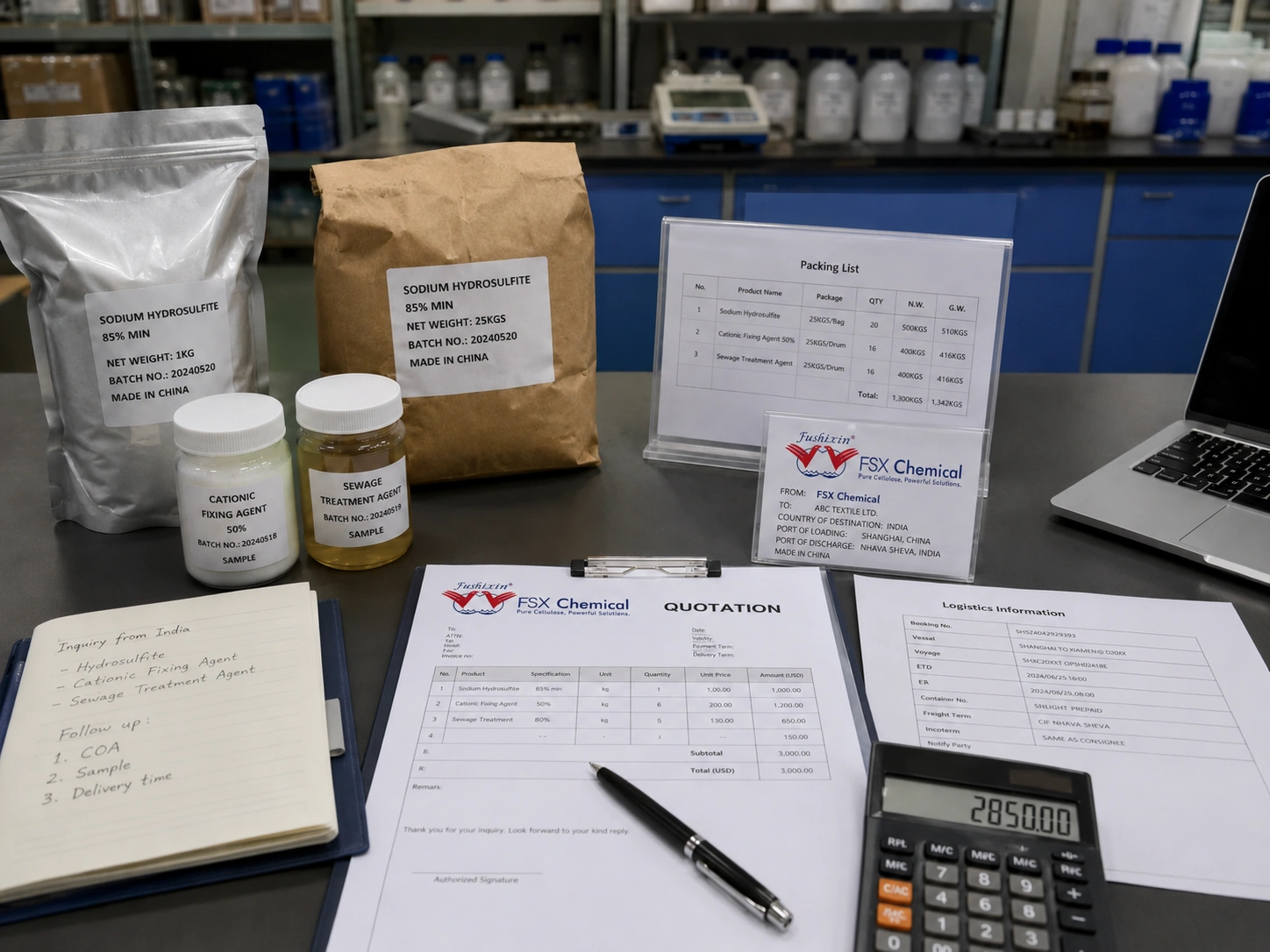
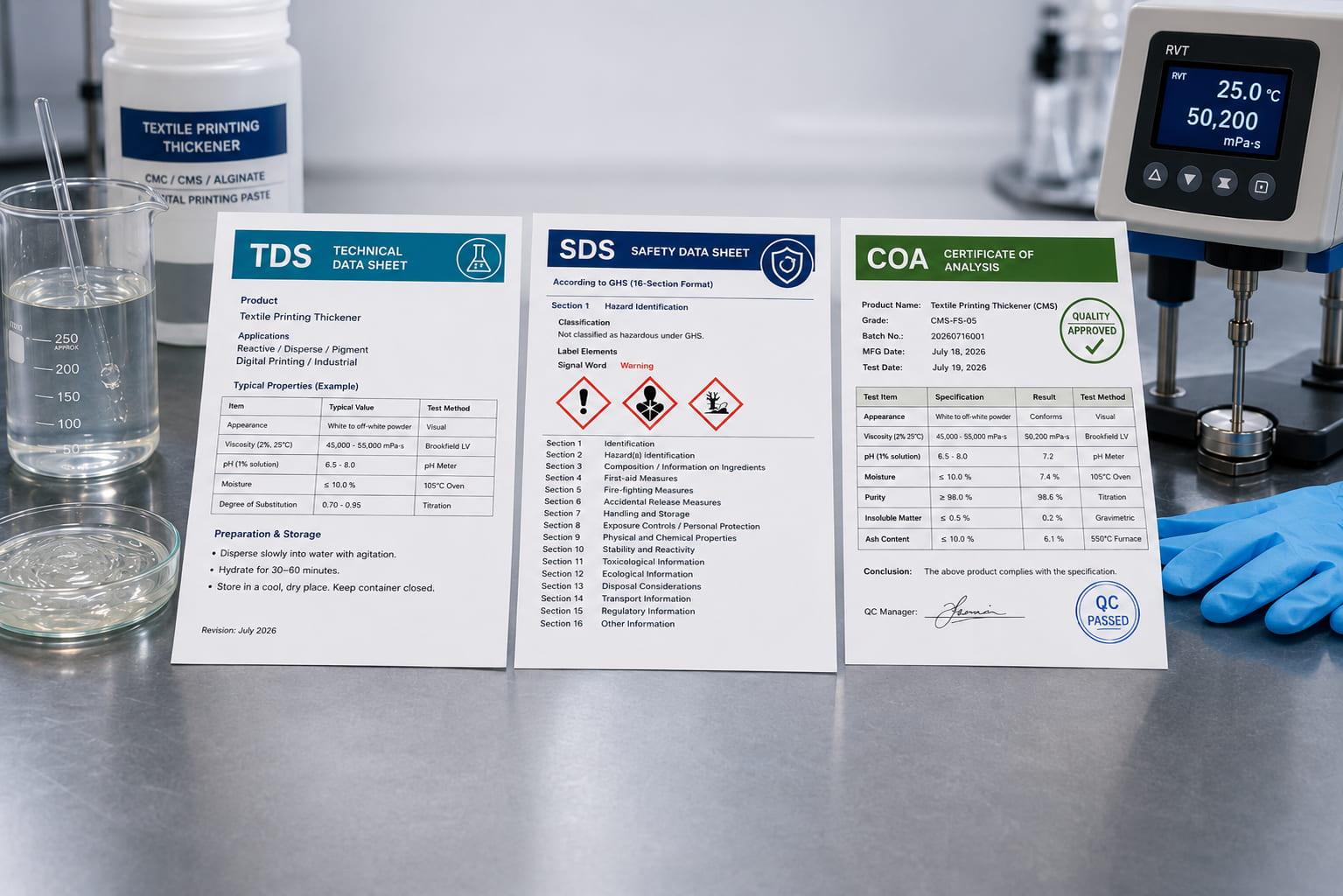
TDS for Product Specifications
The Technical Data Sheet should provide the product description and relevant parameters such as appearance, viscosity, mesh size, pH, moisture, storage guidance, and testing method where applicable.
COA for Batch Data
The Certificate of Analysis should relate to the supplied batch and help buyers verify whether key parameters fall within the agreed range.
Taşıma ve Nakliyeye İlişkin Güvenlik Bilgi Formu (SDS) İncelemesi
The Safety Data Sheet supports workplace handling, storage, shipment, and internal safety review. The product name and supplier details should match the order documents.
Additional Statements When Required
If the buyer needs restricted-substance statements, environmental documentation, customer questionnaires, certificate copies, or third-party testing, these requirements should be discussed before order confirmation.
Claims such as biodegradable, eco-friendly, compliant, food grade, or suitable for a regulated application should not be assumed without appropriate product-specific documents.
Common Preparation Problems
Persistent Lumps
Possible causes include fast addition, weak circulation, moisture-affected powder, unsuitable mixer scale, or insufficient dispersion before hydration.
Slow Viscosity Development
Possible causes include low temperature, water quality, incomplete hydration, unsuitable preparation time, or grade mismatch.
High Filtration Residue
Possible causes include incomplete dissolution, foreign material, formulation incompatibility, or preparation inconsistency.
Viscosity Changes After Standing
Possible causes include continued hydration, temperature change, pH influence, water quality, formulation interaction, or inconsistent test timing.
Laboratory Test Passes but Production Fails
Possible causes include scale-up differences, mixer geometry, batch size, addition rate, water source, filtration setup, or production standing time.
How FSX Chemical Supports Sodium Alginate Powder Buyers
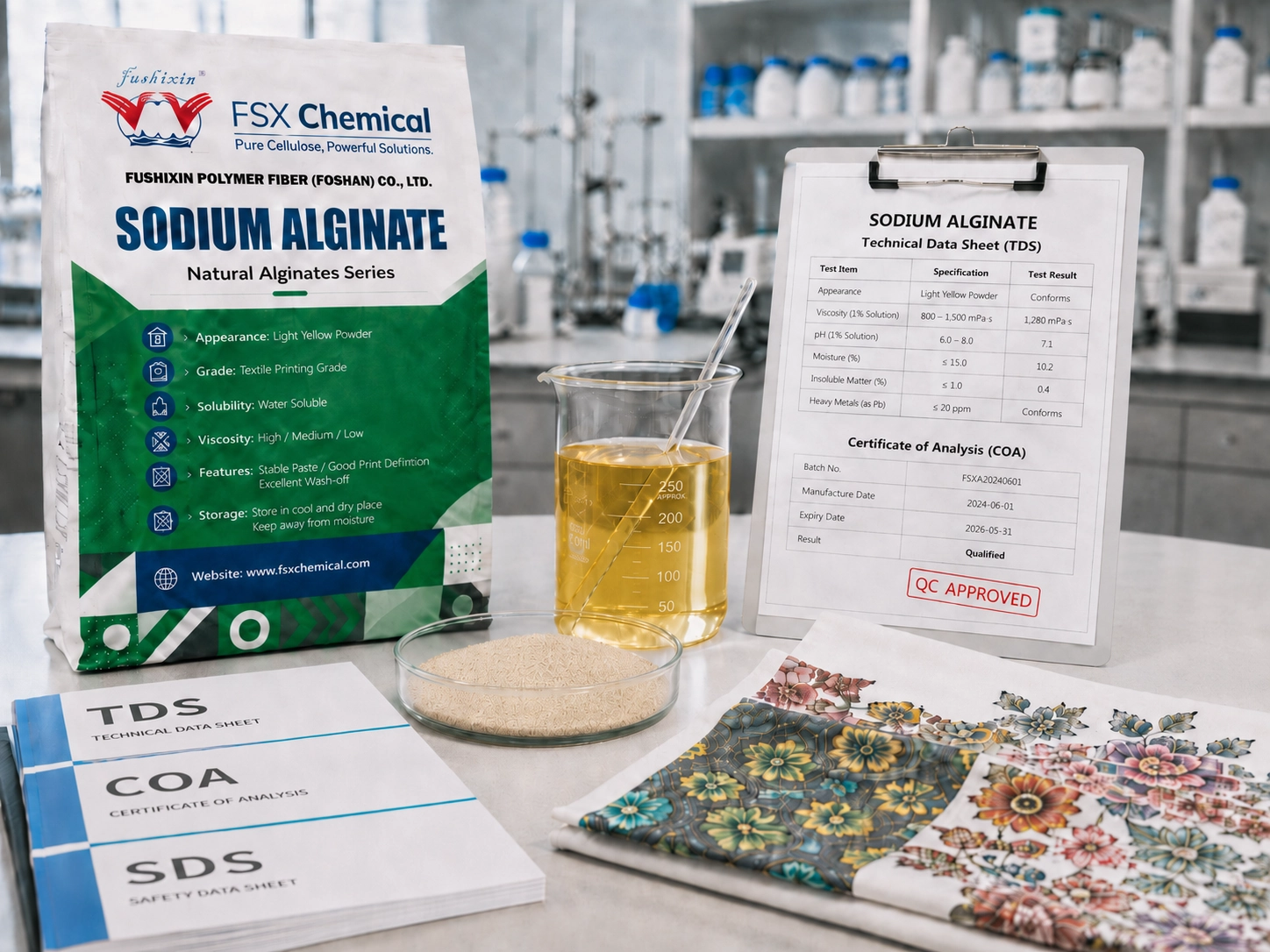
FSX Chemical supplies sodium alginate, CMC, CMS, printing paste, and related textile printing chemicals for textile printing factories, dyeing and printing mills, and chemical distributors.
Our support focuses on practical grade matching and export procurement. Based on the customer’s printing process, target viscosity, water conditions, preparation method, current product, packaging needs, order quantity, and document requirements, we can provide TDS, COA, SDS where applicable, sample support, and technical discussion.
We do not recommend choosing sodium alginate powder only by claims such as high performance, environmental friendliness, fastest dissolution, or lowest price. The grade should be evaluated through a controlled preparation method and tested in the buyer’s actual printing formula before bulk purchase.
İnceleme sodium alginate grades for the product route. For a preparation comparison, use sample matching and provide the current TDS, powder lot, water results, preparation record and retained filter residue observations.
Technical reference: FAO: alginate solution viscosity, calcium effects and preparation variables. These general principles do not specify the acceptance limits of an individual FSX grade.
Sonraki Adımlar
- Başvurunuzu Paylaşın — explain whether the product will be used in reactive printing paste, screen printing, rotary printing, digital pretreatment, or another textile process.
- Share Your Preparation Method — provide concentration, water source, temperature, mixer type, addition method, mixing time, and standing time.
- Define the Target Viscosity — provide the viscosity range, concentration, temperature, instrument method, and current grade.
- Describe Current Problems — explain whether you see lumps, slow hydration, unstable viscosity, filtration residue, screen blocking, or production inconsistency.
- TDS Talep Et — review viscosity, mesh size, pH, moisture, appearance, storage guidance, and testing method.
- COA Talep Et — confirm batch data and compare it with the agreed specification.
- Bir SDS talep edin — review handling, storage, and shipment information.
- Örnek İsteyin — compare the recommended grade with your current product under the same preparation conditions.
- Örnek ile Toplu Ürün Arasındaki Tutarlılığı Doğrulama — check packaging, labels, batch traceability, COA, and commercial shipment specifications.
- Teknik Ekibimizle İletişime Geçin — discuss preparation and grade matching for your textile printing process📧 E-posta: Service@fsxchemical.com