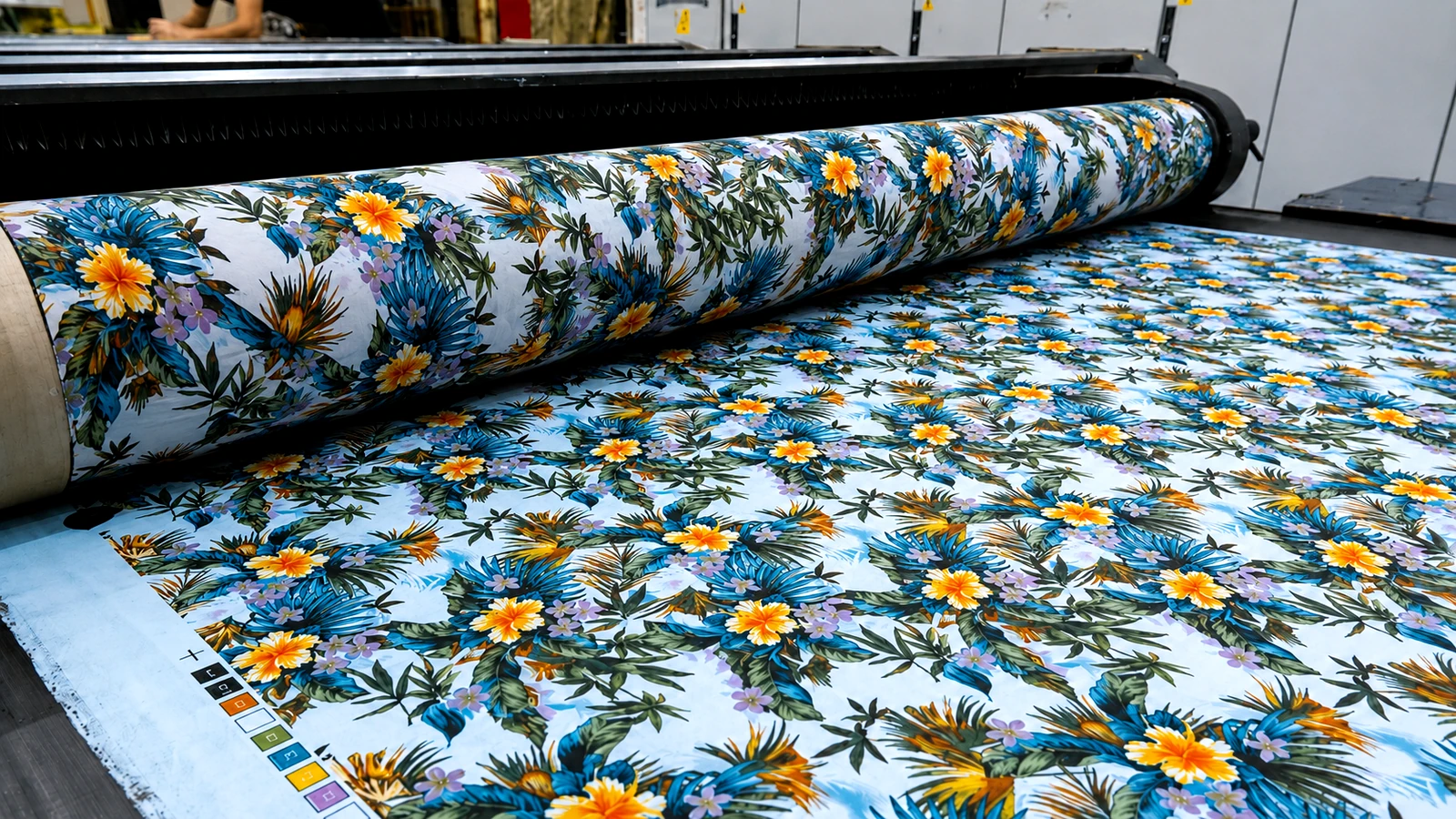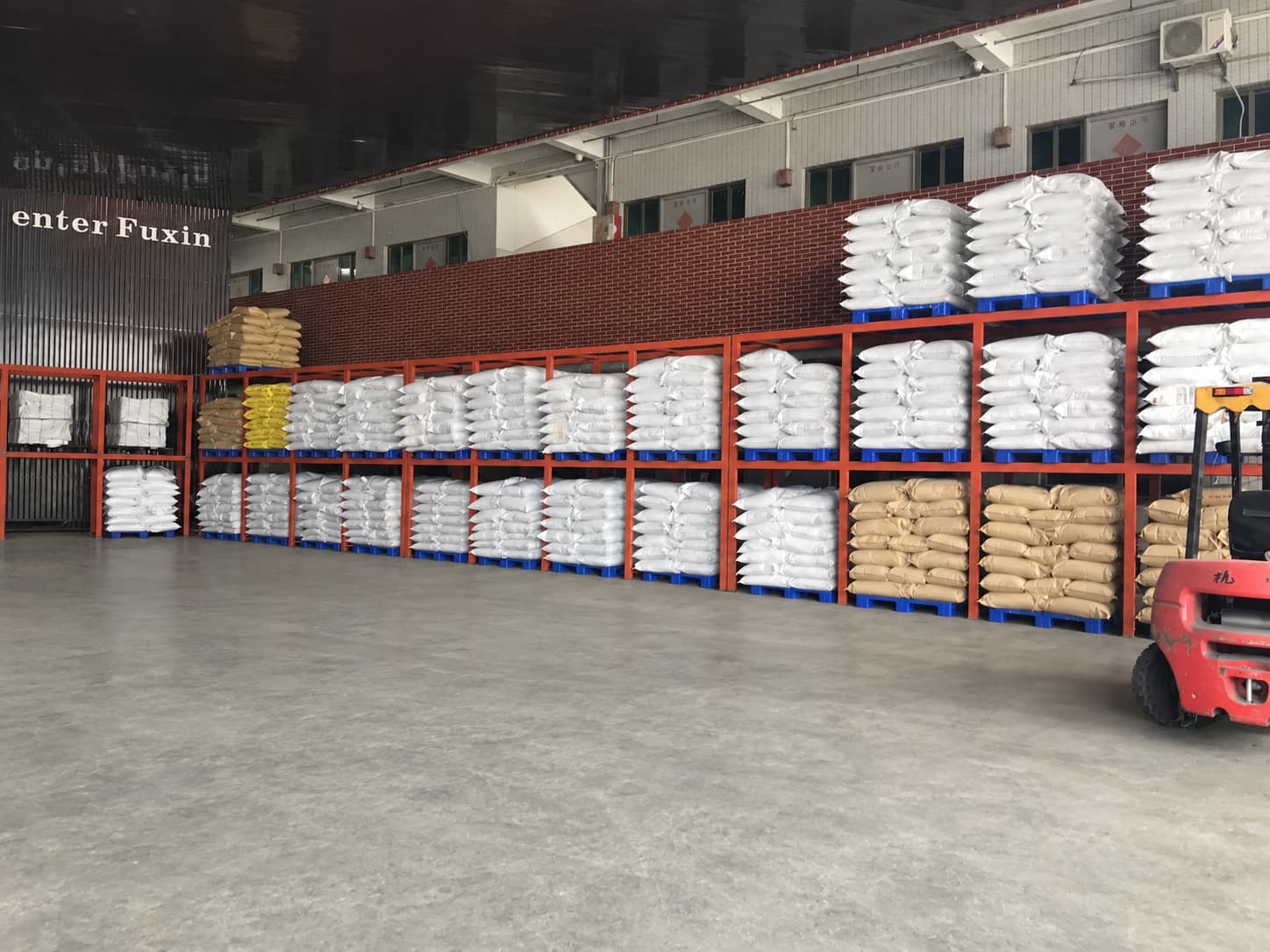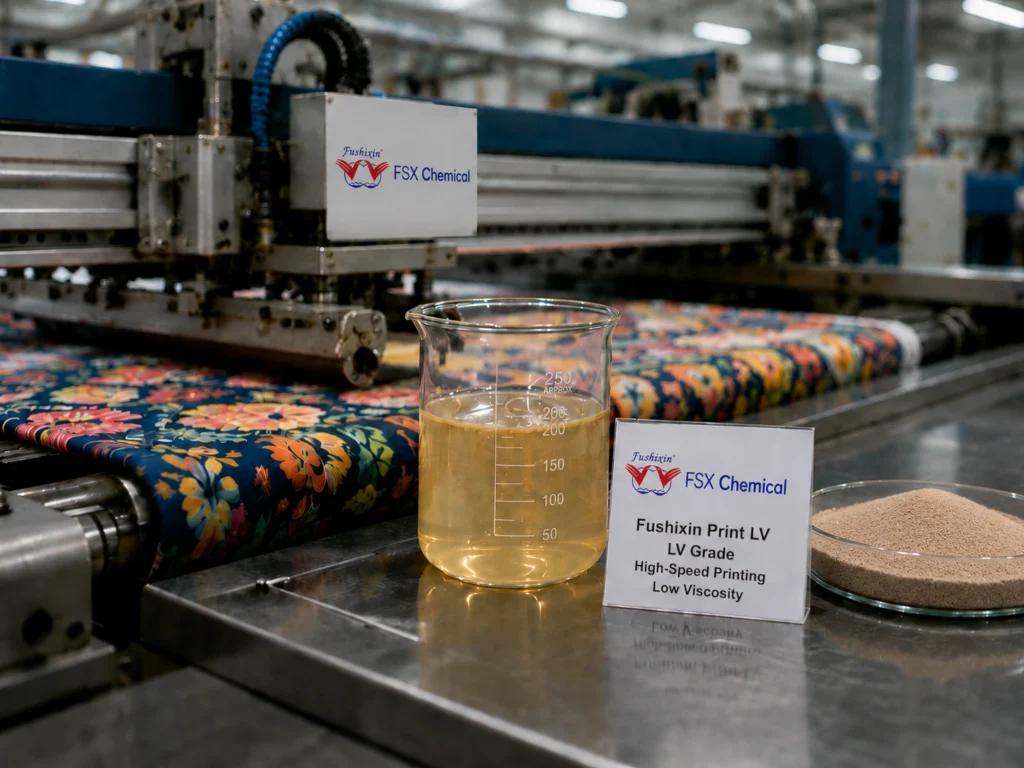
This guide focuses on a practical question: how should textile printers evaluate sodium alginate when color quality and process control are the main concerns?
| Observed result | Possible contributors | Controlled check |
|---|---|---|
| Düzensiz gölge | Incomplete dissolution, paste-age variation, fabric absorbency, unequal steaming or wash-off | Compare preparation records, filtration, fabric pretreatment and widthwise process conditions. |
| Blurred edges or spreading | Unsuitable rheology, excessive pickup, low structural recovery or absorbent fabric | Measure with one viscosity method and compare print definition at controlled add-on. |
| Low color depth after washing | Dye or alkali condition, insufficient moisture or steaming, poor dye release, excessive wash-off loss | Compare K/S after standardized wash-off while holding dye, paste, steam and fabric constant. |
| Specks or screen blockage | Undissolved particles, insoluble matter, contamination or damaged screen | Standardize hydration and filtration; inspect and record the retained residue. |
| Batch-to-batch shade drift | Grade identity, method difference, moisture, viscosity or process variation | Compare COA, retained samples and complete-paste printing under the approved method. |
What Sodium Alginate Can and Cannot Do in Textile Printing
It Can Support Viscosity and Paste Handling
In reactive textile printing paste, sodium alginate is commonly used to build and control viscosity. A suitable grade can help the paste remain workable during preparation, filtration, screen passing, and application.
Buyers should confirm the viscosity grade, testing method, mesh size, dissolution behavior, and paste smoothness before bulk purchase.
It Does Not Alone Guarantee Color Fastness
Color fastness depends on the dye system, fabric pretreatment, fixation conditions, washing process, auxiliaries, and testing standard. Sodium alginate may influence paste behavior, but it should not be described as a single solution for color fastness problems.
If color fastness is a concern, buyers should test the complete printing process and compare results with their current product under the same conditions.
It Does Not Replace Compliance Documents
If a buyer needs restricted-substance statements, customer questionnaires, environmental documents, or third-party testing support, those requirements should be discussed before order confirmation.
Broad claims such as “compliant,” “eco-friendly,” or “safe” should be supported by appropriate documents when they are important to the buyer’s approval process.
Color Quality Factors Buyers Should Evaluate
Shade Consistency
Shade consistency can be affected by paste viscosity, dye dispersion, fabric absorbency, printing pressure, drying conditions, fixation, and washing. Buyers should test sodium alginate in the same formulation and process used in production.
For repeat orders, COA data and batch consistency are important because changes in viscosity or dissolution behavior may affect formulation adjustment.
Pattern Edge Control
Pattern edge control depends on paste rheology, fabric surface, screen or printing method, paste penetration, and drying behavior. A sodium alginate grade that is too low or too high in viscosity may not match the target application.
Buyers should evaluate edge control during sample testing, not only by checking the TDS.
Macun Pürüzsüzlüğü ve Filtreleme
Poor dissolution or unstable paste may create lumps, filtration difficulty, screen blocking, or uneven printing. Buyers should observe dissolution speed, paste smoothness, lump formation, filtration behavior, and standing stability.
These practical observations are often as important as numerical viscosity data.
Compatibility with Dye and Auxiliaries
Sadece temiz suda yapılan testler, söz konusu kalitenin üretime uygun olup olmadığını doğrulamak için yeterli olmayabilir.
Key Specifications to Review Before Buying
Viskozite Sınıfı ve Test Yöntemi

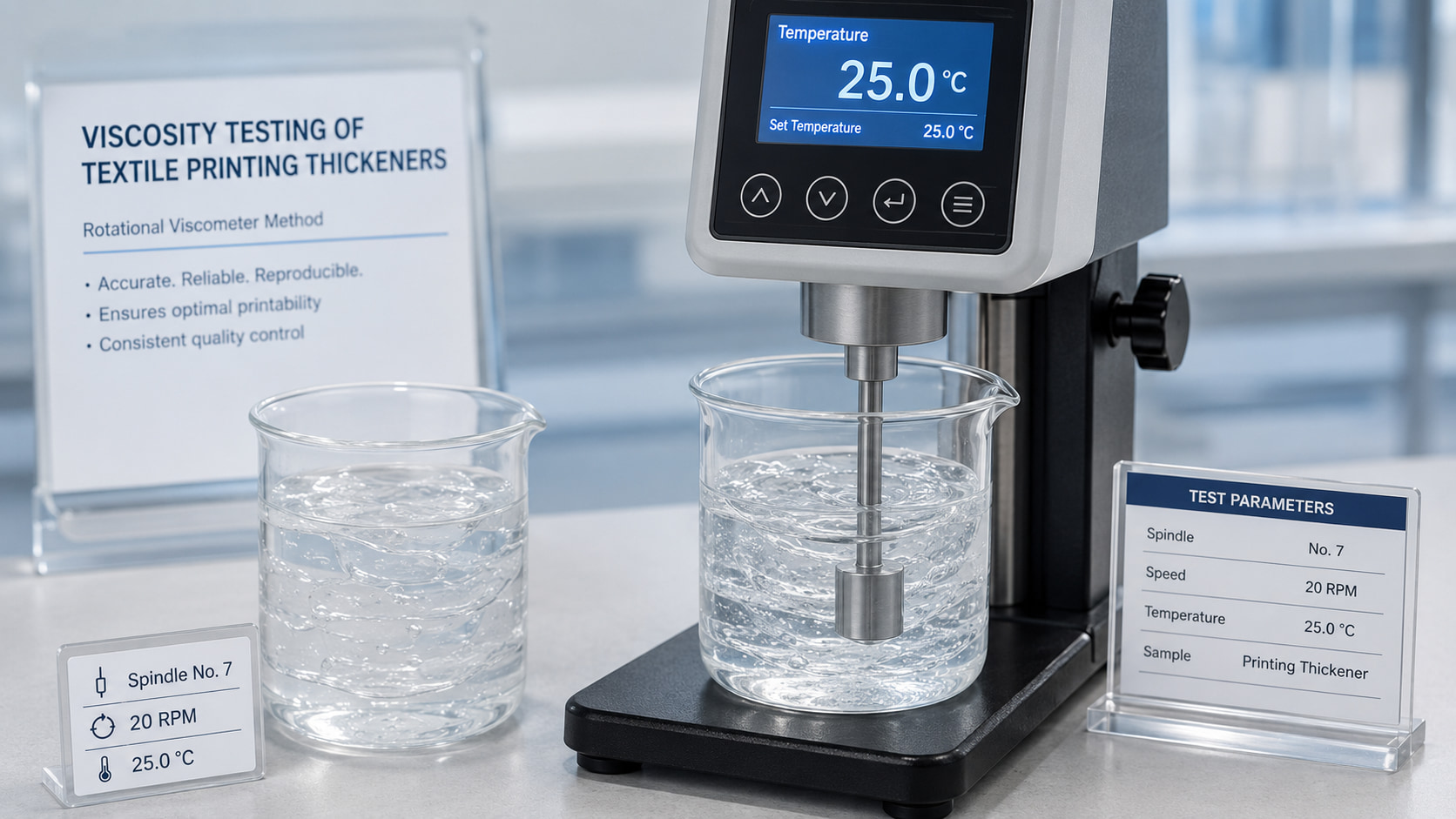
Net bir viskozite test yöntemi olmadan, farklı tedarikçilerden gelen değerler doğrudan karşılaştırılamayabilir.
Ağ Gözü Boyutu ve Çözünme Davranışı
Ağ gözü boyutu, macun hazırlığı sırasında dağılım ve hidrasyonu etkileyebilir. Bununla birlikte, gerçek çözünme davranışı aynı zamanda su kalitesine, karıştırma hızına, ilave yöntemine, sıcaklığa, hazırlık süresine ve formülasyon koşullarına da bağlıdır.
Alıcılar, kendi üretim koşulları altında çözünme hızını, topaklanma durumunu, macunun pürüzsüzlüğünü ve süzülme davranışını test etmelidir.
Nem, pH ve Görünüm
Nem, pH ve görünüm temel ancak önemli kalite göstergeleridir. Bunlar, depolama, elleçleme, iç kalite kontrol ve tekrar satın almayı etkiler.
Bu parametreler, TDS’de gözden geçirilmeli ve her üretim partisi için COA verileriyle teyit edilmelidir.
Storage and Handling Conditions
Storage conditions can affect powder handling and repeat use. Buyers should check whether the supplier provides clear storage suggestions, packaging details, and shelf-life information where applicable.
For distributors and import buyers, packaging and label information should be confirmed before shipment.
How to Build a Practical Sample Testing Plan
Step 1: Define the Current Printing System
Before requesting a sodium alginate sample, buyers should define their fabric type, dye system, printing method, target viscosity, paste preparation method, fixation process, washing process, and current product grade if available.
This helps the supplier recommend a more suitable starting grade.
Step 2: Prepare the Paste Under Real Conditions
The sample should be prepared using the buyer’s actual water quality, mixing equipment, addition method, preparation temperature, stirring time, and standing time.
During preparation, buyers should record dissolution behavior, viscosity development, paste smoothness, lumps, and filtration behavior.
Step 3: Test Printing and Color Quality
The test should be performed on the buyer’s actual fabric or a representative fabric. Buyers may evaluate shade consistency, pattern edge control, penetration, leveling, fabric hand feel, and color fastness according to their internal test method or customer requirements.
The new sample should be compared against the current product under the same conditions.
Step 4: Confirm Repeatability Before Bulk Purchase
If the sample result is acceptable, buyers should confirm whether the bulk shipment will follow the same viscosity range, specification range, packaging format, batch traceability, and COA requirements.
This reduces the risk of sample approval but unstable bulk production performance.
Alıcıların Talep Etmesi Gereken Belgeler
Teknik Şartname İncelemesi için TDS
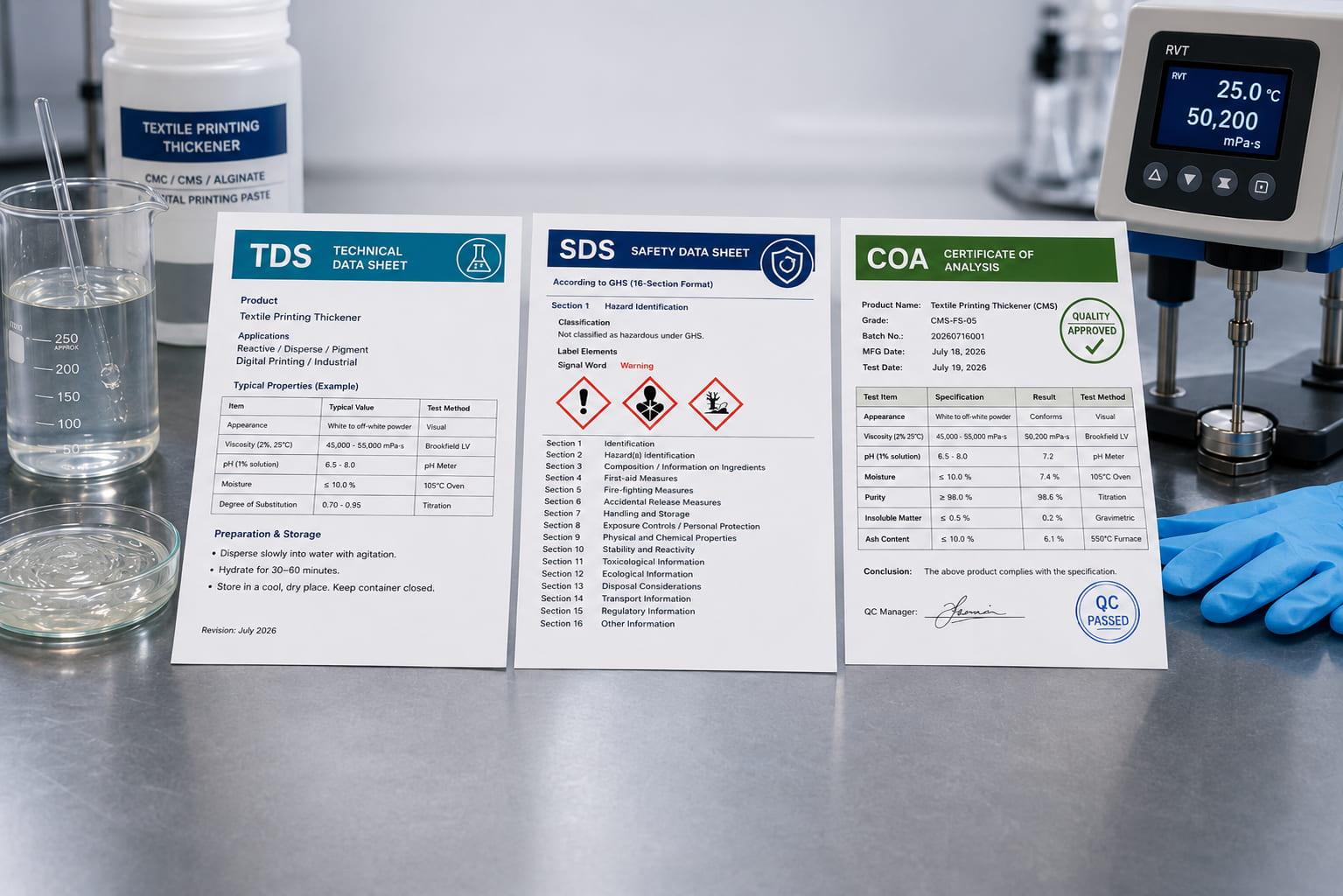
Teknik Veri Sayfası, alıcıların standart ürün özelliklerini incelemelerine yardımcı olur. Bu sayfada görünüm, viskozite, elek gözü boyutu, nem, pH, depolama koşulları ve test yöntemi gibi bilgiler yer almalıdır.
TDS, ilk kalite kontrolünü destekler; ancak alıcının kendi baskı formülasyonunda yapılacak numune testlerinin yerini almamalıdır.
Toplu Onay için COA
Analiz Sertifikası, belirli bir üretim partisine ait gerçek verileri teyit eder. Bu belge, toplu siparişler, tekrar alımlar, distribütör tedarikleri ve kurum içi kalite kontrolü açısından önemlidir.
Alıcılar, sevkiyatlar arasındaki COA kayıtlarını karşılaştırarak temel parametrelerin kararlaştırılan aralıkta kalıp kalmadığını kontrol edebilirler.
Taşıma ve Sevkiyatla İlgili Güvenlik Bilgi Formu (SDS) İncelemesi
Güvenlik Bilgi Formu (SDS), ürünün kullanımı, depolanması, nakliyesi ve şirket içi güvenlik değerlendirmelerine destek sağlar. Uluslararası satın alımlarda ise sevkiyat ve gümrükle ilgili iletişim için SDS’ye ihtiyaç duyulabilir.
Alıcılar, SDS’deki ürün adı ve tedarikçi bilgilerinin sipariş belgelerindeki bilgilerle uyumlu olduğundan emin olmalıdır.
Customer or Compliance Documents When Required
If a buyer needs restricted-substance statements, environmental documents, customer audit questionnaires, certificate copies, or third-party testing support, those requirements should be discussed before order confirmation.
A practical supplier should explain which documents can be provided, which product or site they apply to, and which claims require formal third-party testing.
How to Avoid Overlapping Product Claims
Do Not Treat All Textile Printing Systems the Same

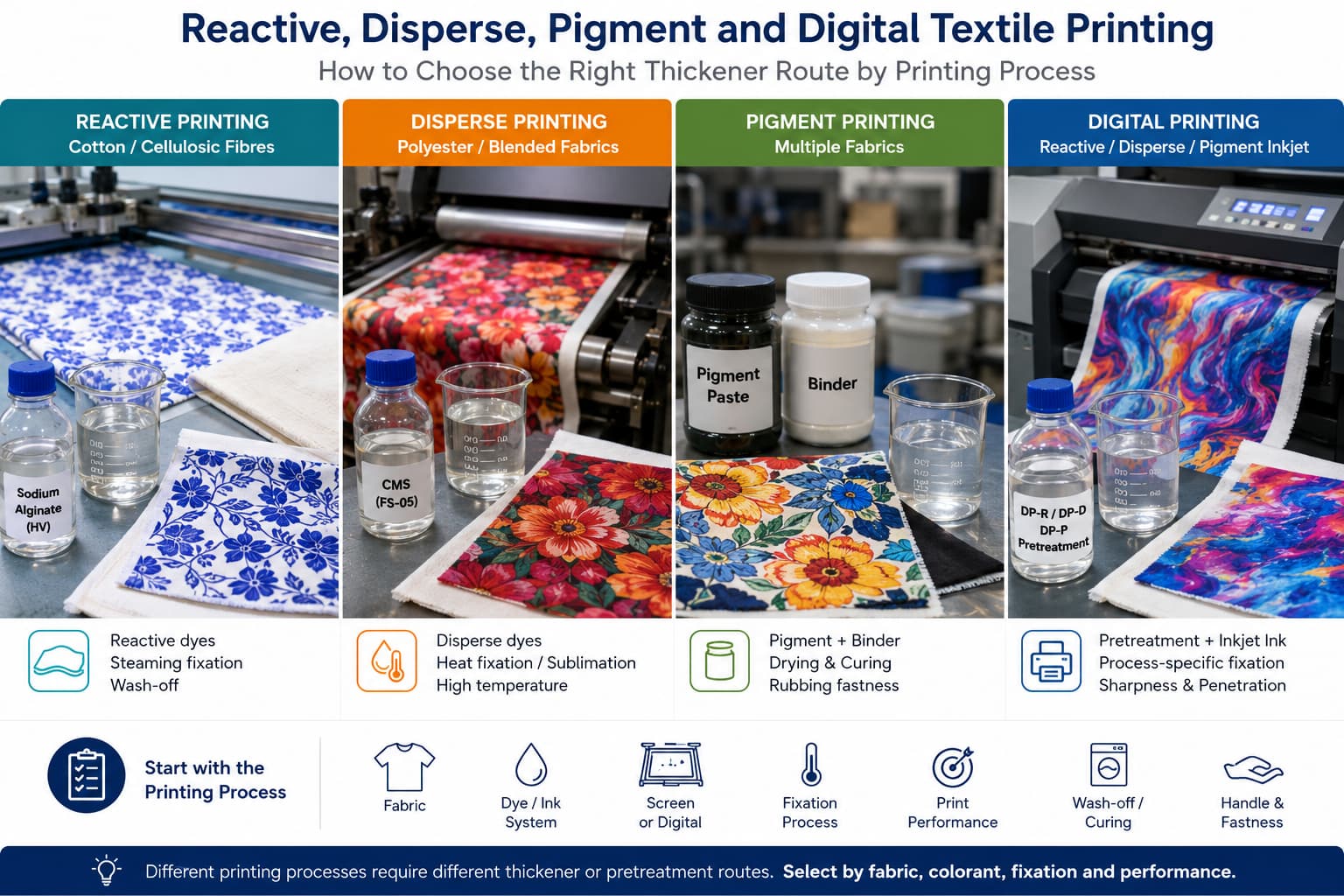
Reactive printing, pigment printing, digital printing pretreatment, screen printing, and rotary printing may require different paste behavior. A sodium alginate grade that works in one process may not match another process.
Do Not Choose Only by “High Viscosity” or “Low Viscosity”
The right viscosity depends on target paste behavior, equipment, fabric type, and formulation. Higher viscosity does not always mean better printing performance, and lower viscosity does not always mean easier production.
Do Not Compare Suppliers Without Matching Test Methods
Two suppliers may show similar viscosity data, but if the concentration, temperature, instrument, or unit is different, the data may not be comparable.
Do Not Confirm Bulk Orders Before Sample Approval
For textile printing applications, sample testing is necessary before bulk purchase, especially when changing supplier, changing grade, or replacing an existing thickener.
Common Color and Process Issues to Check
Uneven Shade
Uneven shade may be related to paste viscosity, dye dispersion, fabric pretreatment, printing pressure, fixation, washing, or formulation compatibility.
Tek bir hammaddeyi değiştirmeden önce, baskı sisteminin tamamı gözden geçirilmelidir.
Desende Renk Akması
Pattern bleeding may be related to low paste structure, fabric absorbency, drying speed, penetration, or unsuitable viscosity. Buyers should test different grades under the same printing conditions.
Ekran Engelleme veya Yetersiz Filtreleme
Ekran tıkanması veya filtreleme zorluğu, yetersiz çözünme, formülasyon uyumsuzluğu, partikül kontaminasyonu, uygun olmayan viskozite veya uygulama öncesinde yetersiz filtrelemeden kaynaklanabilir.
Color Fastness Not Meeting Target
Color fastness issues may involve dye selection, fixation conditions, washing process, fabric pretreatment, auxiliaries, or the full paste formulation.
Sık Sorulan Sorular
Does higher sodium alginate viscosity always produce better color quality?
No. Viscosity must be measured under a defined method and matched to rheology, fabric, screen or machine and paste pickup. Excessive viscosity can reduce transfer or penetration.
Can sodium alginate alone improve color fastness?
No. Fastness depends mainly on dye selection, fixation, hydrolysis control and removal of unfixed dye. The thickener influences paste placement and wash-off but does not replace process control.
How should two sodium alginate grades be compared?
Use the same water, concentration, addition method, hydration time, temperature, instrument and reading conditions. Then compare complete-paste stability, filtration, printing, steaming and wash-off.
What should be checked when shade changes between batches?
Confirm product and batch identity, moisture, viscosity method, dissolution, complete formulation, paste age, fabric pretreatment, steaming and washing before assigning the cause to the alginate.
Which documents are useful before bulk purchase?
Review the exact-grade TDS and SDS, agreed specification, representative sample and a batch-specific COA. Link the approved sample and first commercial batch through traceable grade and batch codes.
FSX Chemical, Tekstil Baskı Sektöründeki Alıcıları Nasıl Destekliyor?
Our support is focused on practical grade matching and export procurement. We can provide TDS, COA, SDS where applicable, sample support, and formulation discussion based on the customer’s fabric type, dye system, printing process, target viscosity, current formulation, packaging needs, order quantity, and document requirements.
We do not suggest choosing sodium alginate only by broad claims about color fastness, compliance, sustainability, or global performance. The recommended grade should be reviewed through technical documents and tested in the buyer’s own textile printing system before bulk purchase.
Sonraki Adımlar
- Baskı Sürecinizi Paylaşın — tell us whether you use reactive printing, screen printing, rotary printing, digital pretreatment, pigment printing, or another process.
- Kumaş ve Boyama Sisteminin Açıklanması — kumaş türünü, boyama sistemini, yardımcı maddeleri, su kalitesini, pH değerini ve hazırlama yöntemini belirtin.
- Hedef Viskozitenizi Belirleyin — Viskozite aralığını, test konsantrasyonunu, sıcaklığı, kullanılan ölçüm yöntemini ve mümkünse mevcut ürün sınıfını belirtiniz.
- Clarify Color Quality Targets — explain whether you are testing shade consistency, pattern edge control, filtration, hand feel, washing, or customer-specific quality requirements.
- Not Eşleştirme Talebi — ask for a suitable sodium alginate grade based on your actual production conditions.
- TDS Talep Et — viskozite, elek gözü boyutu, pH, nem, görünüm, depolama koşulları ve test yöntemini gözden geçirin.
- COA Talep Et — sevkiyat öncesinde parti verilerinin kararlaştırılan spesifikasyon aralığına uygun olup olmadığını doğrulayın.
- Bir SDS talep edin — işleme, depolama, nakliye ve ürün bilgilerini kontrol edin.
- Örnek İsteyin — test the recommended grade in your own printing formulation before confirming bulk orders.
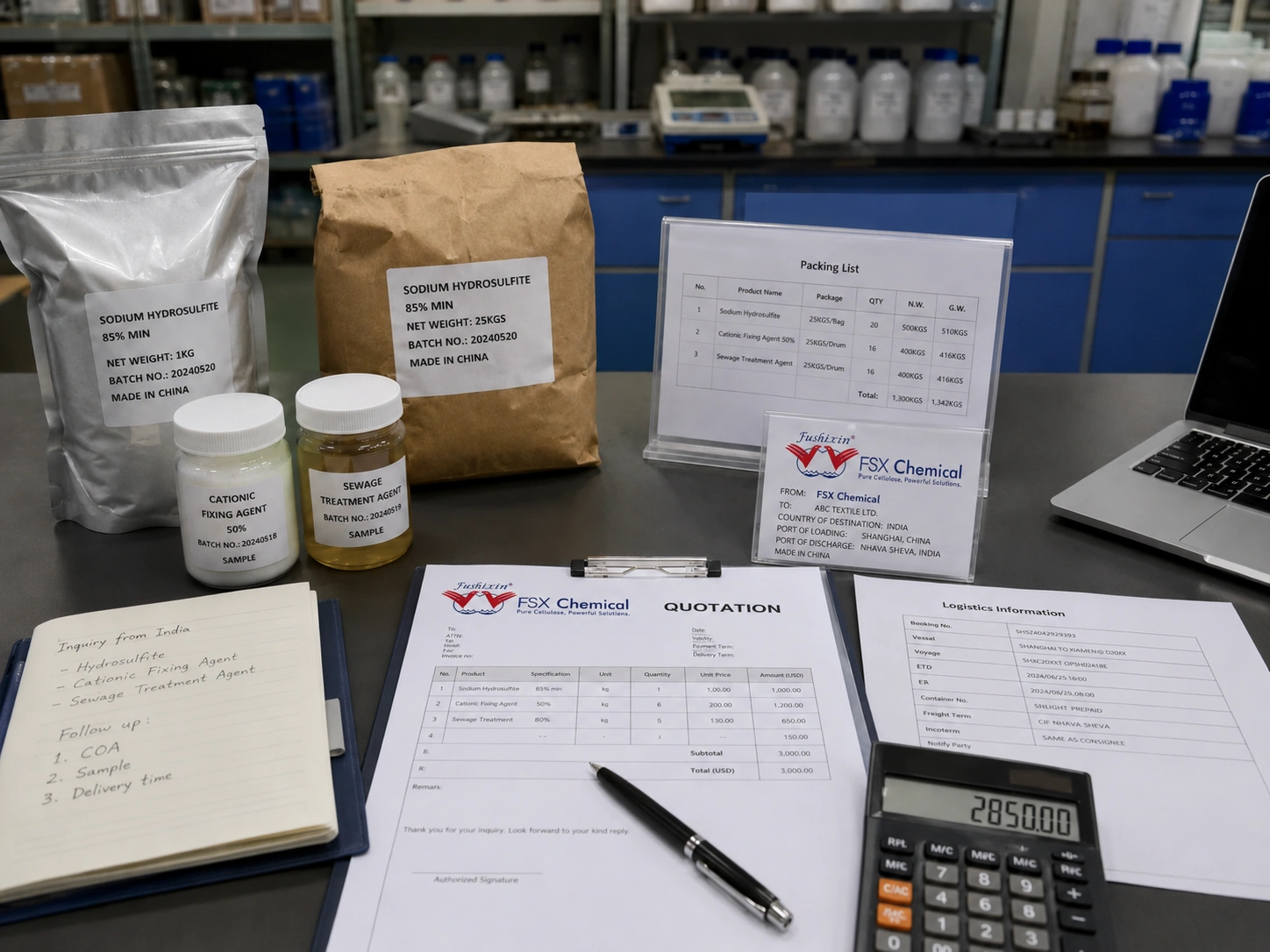
- Ambalaj ve İhracat Belgelerini Doğrulama — Sevkiyat öncesinde çanta boyutunu, etiketleri, parti izlenebilirliğini, faturayı, sevk irsaliyesini, COA’yı, SDS’yi ve diğer gerekli belgeleri kontrol edin.
- Teknik Ekibimizle İletişime Geçin — discuss which sodium alginate grade is suitable for your textile printing process📧 E-posta: Service@fsxchemical.com