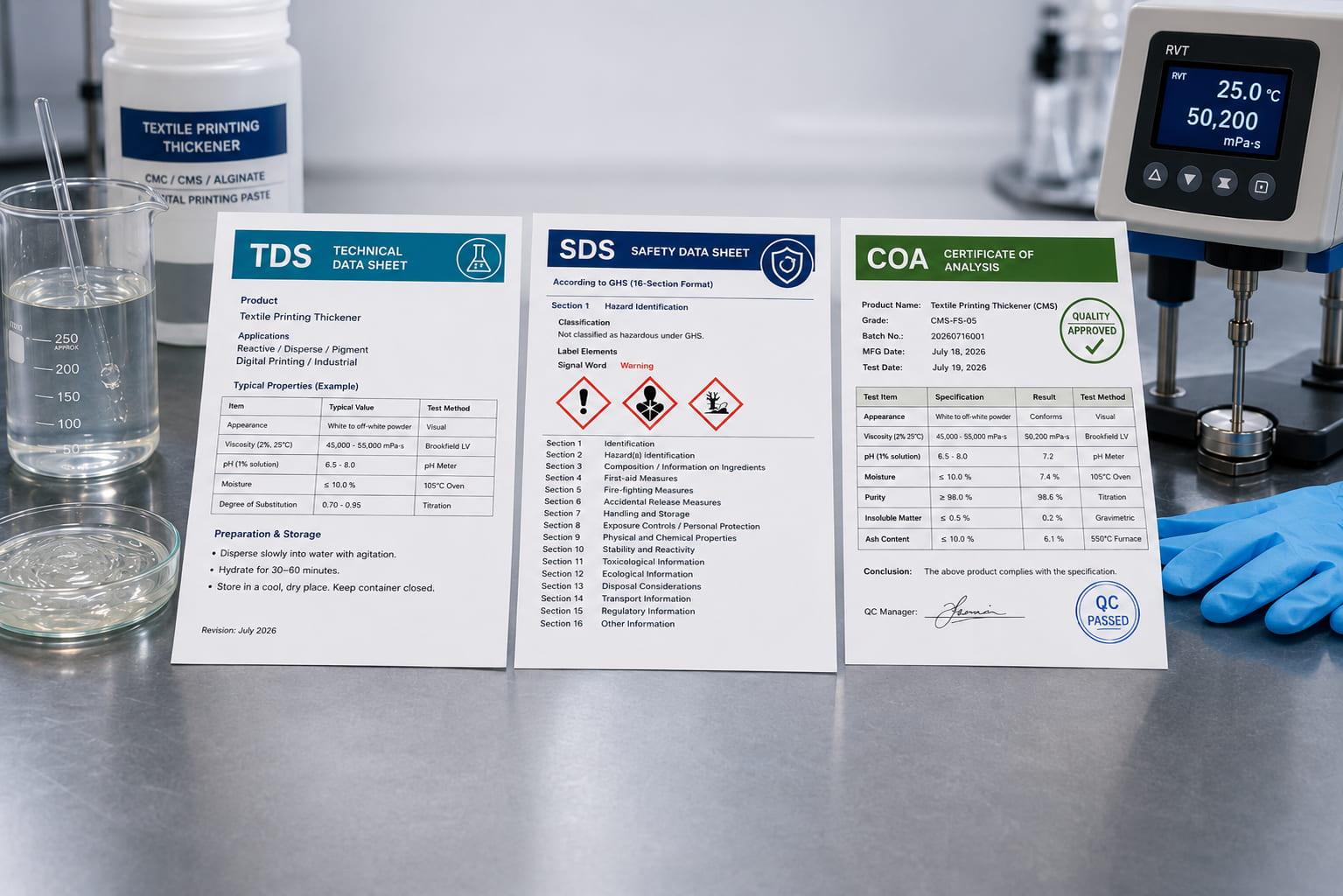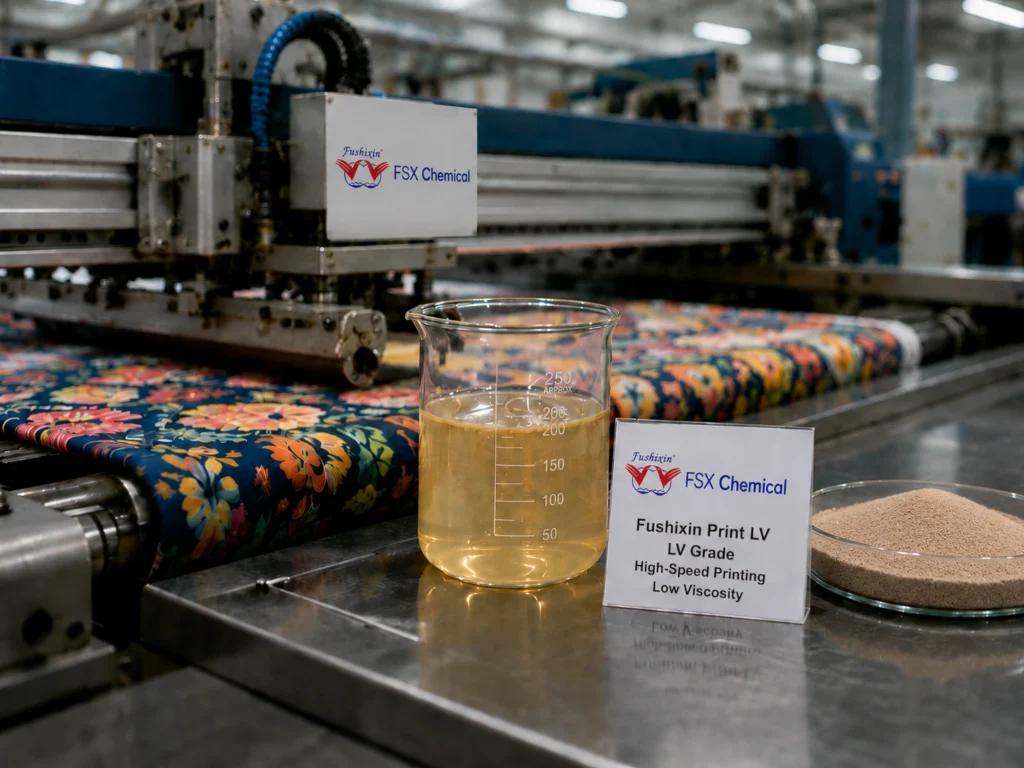
This guide focuses on a practical question: how should textile printers evaluate sodium alginate when color quality and process control are the main concerns?
| Observed result | Possible contributors | Controlled check |
|---|---|---|
| Uneven shade | Incomplete dissolution, paste-age variation, fabric absorbency, unequal steaming or wash-off | Compare preparation records, filtration, fabric pretreatment and widthwise process conditions. |
| Blurred edges or spreading | Unsuitable rheology, excessive pickup, low structural recovery or absorbent fabric | Measure with one viscosity method and compare print definition at controlled add-on. |
| Low color depth after washing | Dye or alkali condition, insufficient moisture or steaming, poor dye release, excessive wash-off loss | Compare K/S after standardized wash-off while holding dye, paste, steam and fabric constant. |
| Specks or screen blockage | Undissolved particles, insoluble matter, contamination or damaged screen | Standardize hydration and filtration; inspect and record the retained residue. |
| Batch-to-batch shade drift | Grade identity, method difference, moisture, viscosity or process variation | Compare COA, retained samples and complete-paste printing under the approved method. |
What Sodium Alginate Can and Cannot Do in Textile Printing
It Can Support Viscosity and Paste Handling
In reactive textile printing paste, sodium alginate is commonly used to build and control viscosity. A suitable grade can help the paste remain workable during preparation, filtration, screen passing, and application.
Buyers should confirm the viscosity grade, testing method, mesh size, dissolution behavior, and paste smoothness before bulk purchase.
It Does Not Alone Guarantee Color Fastness
Color fastness depends on the dye system, fabric pretreatment, fixation conditions, washing process, auxiliaries, and testing standard. Sodium alginate may influence paste behavior, but it should not be described as a single solution for color fastness problems.
If color fastness is a concern, buyers should test the complete printing process and compare results with their current product under the same conditions.
It Does Not Replace Compliance Documents
If a buyer needs restricted-substance statements, customer questionnaires, environmental documents, or third-party testing support, those requirements should be discussed before order confirmation.
Broad claims such as “compliant,” “eco-friendly,” or “safe” should be supported by appropriate documents when they are important to the buyer’s approval process.
Color Quality Factors Buyers Should Evaluate
Shade Consistency
Shade consistency can be affected by paste viscosity, dye dispersion, fabric absorbency, printing pressure, drying conditions, fixation, and washing. Buyers should test sodium alginate in the same formulation and process used in production.
For repeat orders, COA data and batch consistency are important because changes in viscosity or dissolution behavior may affect formulation adjustment.
Pattern Edge Control
Pattern edge control depends on paste rheology, fabric surface, screen or printing method, paste penetration, and drying behavior. A sodium alginate grade that is too low or too high in viscosity may not match the target application.
Buyers should evaluate edge control during sample testing, not only by checking the TDS.
Paste Smoothness and Filtration
Poor dissolution or unstable paste may create lumps, filtration difficulty, screen blocking, or uneven printing. Buyers should observe dissolution speed, paste smoothness, lump formation, filtration behavior, and standing stability.
These practical observations are often as important as numerical viscosity data.
Compatibility with Dye and Auxiliaries
Testing only in clean water may not be enough to confirm whether the grade is suitable for production.
Key Specifications to Review Before Buying
Cấp độ độ nhớt và phương pháp thử nghiệm

Nếu không có phương pháp kiểm tra độ nhớt rõ ràng, các giá trị từ các nhà cung cấp khác nhau có thể không thể so sánh trực tiếp với nhau.
Kích thước mắt lưới và đặc tính hòa tan
Mesh size can influence dispersion and hydration during paste preparation. However, actual dissolution behavior also depends on water quality, stirring speed, addition method, temperature, preparation time, and formulation conditions.
Người mua nên tiến hành thử nghiệm tốc độ hòa tan, hiện tượng vón cục, độ mịn của hỗn hợp và đặc tính lọc trong điều kiện sản xuất thực tế của mình.
Độ ẩm, độ pH và hình thức
Độ ẩm, độ pH và hình thức là những chỉ số chất lượng cơ bản nhưng quan trọng. Chúng ảnh hưởng đến việc bảo quản, xử lý, kiểm soát chất lượng nội bộ và việc mua hàng lặp lại.
Các thông số này cần được rà soát trong Bảng dữ liệu kỹ thuật (TDS) và được xác nhận thông qua dữ liệu trong Giấy chứng nhận phân tích (COA) cho từng lô sản xuất.
Storage and Handling Conditions
Storage conditions can affect powder handling and repeat use. Buyers should check whether the supplier provides clear storage suggestions, packaging details, and shelf-life information where applicable.
For distributors and import buyers, packaging and label information should be confirmed before shipment.
How to Build a Practical Sample Testing Plan
Step 1: Define the Current Printing System
Before requesting a sodium alginate sample, buyers should define their fabric type, dye system, printing method, target viscosity, paste preparation method, fixation process, washing process, and current product grade if available.
This helps the supplier recommend a more suitable starting grade.
Step 2: Prepare the Paste Under Real Conditions
The sample should be prepared using the buyer’s actual water quality, mixing equipment, addition method, preparation temperature, stirring time, and standing time.
During preparation, buyers should record dissolution behavior, viscosity development, paste smoothness, lumps, and filtration behavior.
Step 3: Test Printing and Color Quality
The test should be performed on the buyer’s actual fabric or a representative fabric. Buyers may evaluate shade consistency, pattern edge control, penetration, leveling, fabric hand feel, and color fastness according to their internal test method or customer requirements.
The new sample should be compared against the current product under the same conditions.
Step 4: Confirm Repeatability Before Bulk Purchase
If the sample result is acceptable, buyers should confirm whether the bulk shipment will follow the same viscosity range, specification range, packaging format, batch traceability, and COA requirements.
This reduces the risk of sample approval but unstable bulk production performance.
Các tài liệu mà người mua nên yêu cầu
Tài liệu kỹ thuật (TDS) để rà soát thông số kỹ thuật
Bảng dữ liệu kỹ thuật giúp người mua xem xét các thông số kỹ thuật tiêu chuẩn của sản phẩm. Bảng này cần bao gồm các thông tin về hình thức bên ngoài, độ nhớt, kích thước mắt lưới, độ ẩm, độ pH, điều kiện bảo quản và phương pháp thử nghiệm.
Hệ thống TDS hỗ trợ việc sàng lọc cấp độ ban đầu, nhưng không nên thay thế cho việc kiểm tra mẫu trong công thức in của chính người mua.
COA cho việc xác nhận lô hàng
Giấy chứng nhận phân tích xác nhận các dữ liệu thực tế của một lô sản xuất cụ thể. Giấy chứng nhận này rất quan trọng đối với các đơn hàng số lượng lớn, việc mua hàng định kỳ, việc cung ứng cho nhà phân phối và công tác kiểm soát chất lượng nội bộ.
Người mua có thể so sánh các hồ sơ COA giữa các lô hàng để kiểm tra xem các thông số chính có vẫn nằm trong phạm vi đã thỏa thuận hay không.
Xem xét Bảng dữ liệu an toàn hóa chất (SDS) về việc xử lý và vận chuyển
Bảng dữ liệu an toàn (SDS) hỗ trợ các hoạt động xử lý, bảo quản, vận chuyển và đánh giá an toàn nội bộ. Đối với hoạt động mua hàng quốc tế, SDS cũng có thể cần thiết cho việc vận chuyển và trao đổi thông tin liên quan đến hải quan.
Người mua cần đảm bảo rằng tên sản phẩm trên Bảng dữ liệu an toàn hóa chất (SDS) và thông tin nhà cung cấp phải khớp với các tài liệu đặt hàng.
Customer or Compliance Documents When Required
If a buyer needs restricted-substance statements, environmental documents, customer audit questionnaires, certificate copies, or third-party testing support, those requirements should be discussed before order confirmation.
A practical supplier should explain which documents can be provided, which product or site they apply to, and which claims require formal third-party testing.
How to Avoid Overlapping Product Claims
Do Not Treat All Textile Printing Systems the Same

Reactive printing, pigment printing, digital printing pretreatment, screen printing, and rotary printing may require different paste behavior. A sodium alginate grade that works in one process may not match another process.
Do Not Choose Only by “High Viscosity” or “Low Viscosity”
The right viscosity depends on target paste behavior, equipment, fabric type, and formulation. Higher viscosity does not always mean better printing performance, and lower viscosity does not always mean easier production.
Do Not Compare Suppliers Without Matching Test Methods
Two suppliers may show similar viscosity data, but if the concentration, temperature, instrument, or unit is different, the data may not be comparable.
Do Not Confirm Bulk Orders Before Sample Approval
For textile printing applications, sample testing is necessary before bulk purchase, especially when changing supplier, changing grade, or replacing an existing thickener.
Common Color and Process Issues to Check
Uneven Shade
Uneven shade may be related to paste viscosity, dye dispersion, fabric pretreatment, printing pressure, fixation, washing, or formulation compatibility.
Cần rà soát toàn bộ hệ thống in trước khi thay đổi chỉ một loại nguyên liệu thô.
Pattern Bleeding
Pattern bleeding may be related to low paste structure, fabric absorbency, drying speed, penetration, or unsuitable viscosity. Buyers should test different grades under the same printing conditions.
Chặn màn hình hoặc khả năng lọc kém
Screen blocking or filtration difficulty may come from poor dissolution, formulation incompatibility, particle contamination, unsuitable viscosity, or insufficient filtration before application.
Color Fastness Not Meeting Target
Color fastness issues may involve dye selection, fixation conditions, washing process, fabric pretreatment, auxiliaries, or the full paste formulation.
Các câu hỏi thường gặp
Does higher sodium alginate viscosity always produce better color quality?
No. Viscosity must be measured under a defined method and matched to rheology, fabric, screen or machine and paste pickup. Excessive viscosity can reduce transfer or penetration.
Can sodium alginate alone improve color fastness?
No. Fastness depends mainly on dye selection, fixation, hydrolysis control and removal of unfixed dye. The thickener influences paste placement and wash-off but does not replace process control.
How should two sodium alginate grades be compared?
Use the same water, concentration, addition method, hydration time, temperature, instrument and reading conditions. Then compare complete-paste stability, filtration, printing, steaming and wash-off.
What should be checked when shade changes between batches?
Confirm product and batch identity, moisture, viscosity method, dissolution, complete formulation, paste age, fabric pretreatment, steaming and washing before assigning the cause to the alginate.
Which documents are useful before bulk purchase?
Review the exact-grade TDS and SDS, agreed specification, representative sample and a batch-specific COA. Link the approved sample and first commercial batch through traceable grade and batch codes.
Cách FSX Chemical hỗ trợ các nhà mua hàng trong lĩnh vực in ấn dệt may
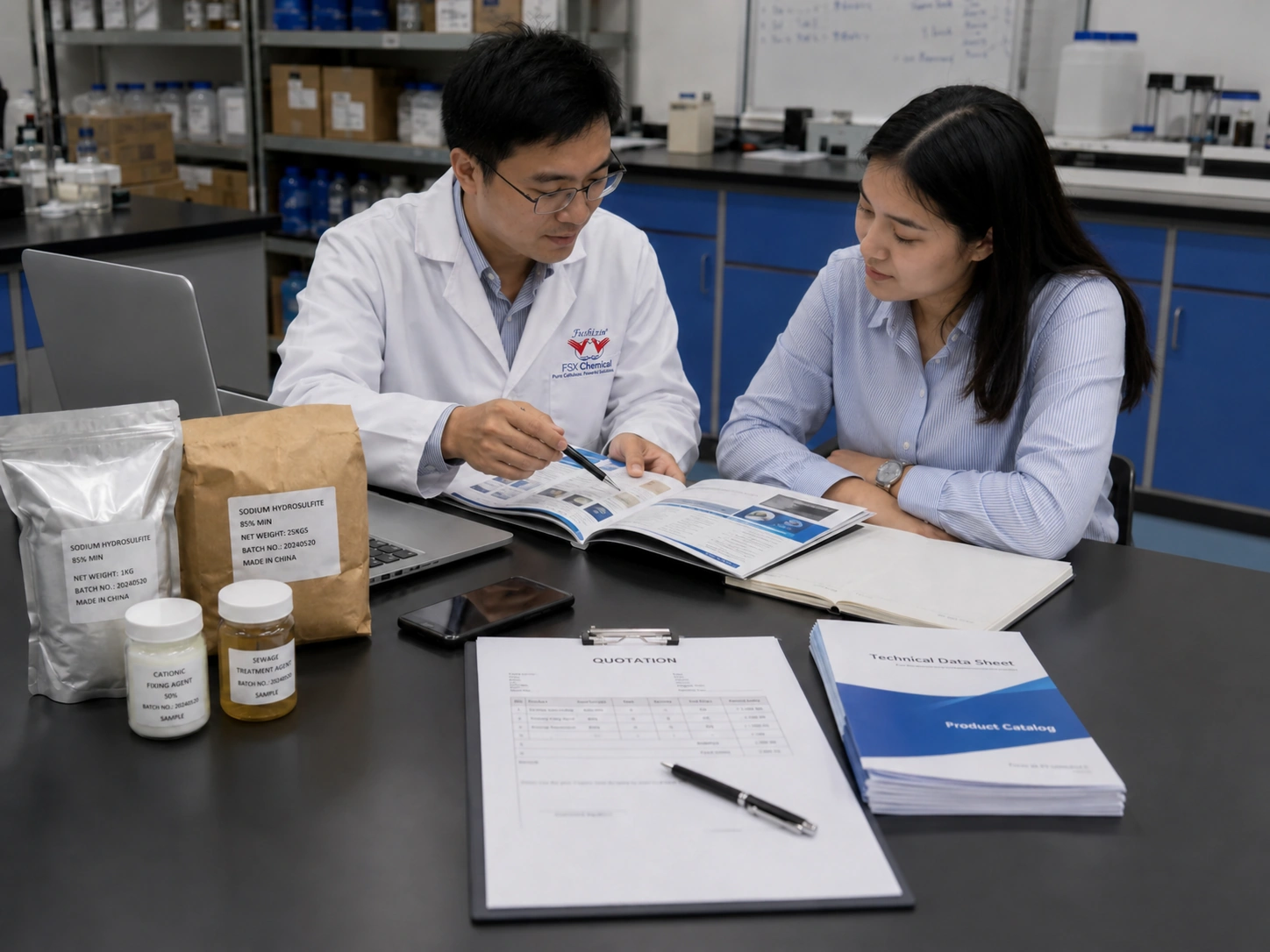
Our support is focused on practical grade matching and export procurement. We can provide TDS, COA, SDS where applicable, sample support, and formulation discussion based on the customer’s fabric type, dye system, printing process, target viscosity, current formulation, packaging needs, order quantity, and document requirements.
We do not suggest choosing sodium alginate only by broad claims about color fastness, compliance, sustainability, or global performance. The recommended grade should be reviewed through technical documents and tested in the buyer’s own textile printing system before bulk purchase.
Các bước tiếp theo
- Chia sẻ quy trình in ấn của bạn — Vui lòng cho chúng tôi biết bạn đang sử dụng phương pháp in phản ứng, in lụa, in quay, xử lý trước kỹ thuật số, in bằng bột màu hay một quy trình khác.
- Clarify Fabric and Dye System — provide fabric type, dye system, auxiliaries, water quality, pH, and preparation method.
- Xác định độ nhớt mục tiêu — Vui lòng cung cấp dải độ nhớt, nồng độ thử nghiệm, nhiệt độ, phương pháp đo bằng thiết bị và loại sản phẩm hiện tại (nếu có).
- Clarify Color Quality Targets — explain whether you are testing shade consistency, pattern edge control, filtration, hand feel, washing, or customer-specific quality requirements.
- Yêu cầu điều chỉnh điểm — ask for a suitable sodium alginate grade based on your actual production conditions.
- Yêu cầu bản TDS — kiểm tra độ nhớt, kích thước mắt lưới, pH, độ ẩm, hình thức, điều kiện bảo quản và phương pháp thử nghiệm.
- Yêu cầu cấp Giấy chứng nhận xuất xứ (COA) — Xác nhận xem dữ liệu lô hàng có phù hợp với phạm vi thông số kỹ thuật đã thỏa thuận hay không trước khi xuất hàng.
- Yêu cầu cung cấp SDS — Kiểm tra quy trình xử lý, bảo quản, vận chuyển và thông tin sản phẩm.
- Yêu cầu mẫu thử — Hãy thử nghiệm loại mực được khuyến nghị trong công thức in của bạn trước khi xác nhận các đơn hàng số lượng lớn.
- Xác nhận các tài liệu đóng gói và xuất khẩu — Kiểm tra kích thước kiện hàng, nhãn mác, khả năng truy xuất nguồn gốc lô hàng, hóa đơn, phiếu đóng gói, Giấy chứng nhận phân tích (COA), Bảng dữ liệu an toàn hóa chất (SDS) và các tài liệu bắt buộc khác trước khi giao hàng.
- Liên hệ với đội ngũ kỹ thuật của chúng tôi — discuss which sodium alginate grade is suitable for your textile printing process📧 Email: Service@fsxchemical.com