
















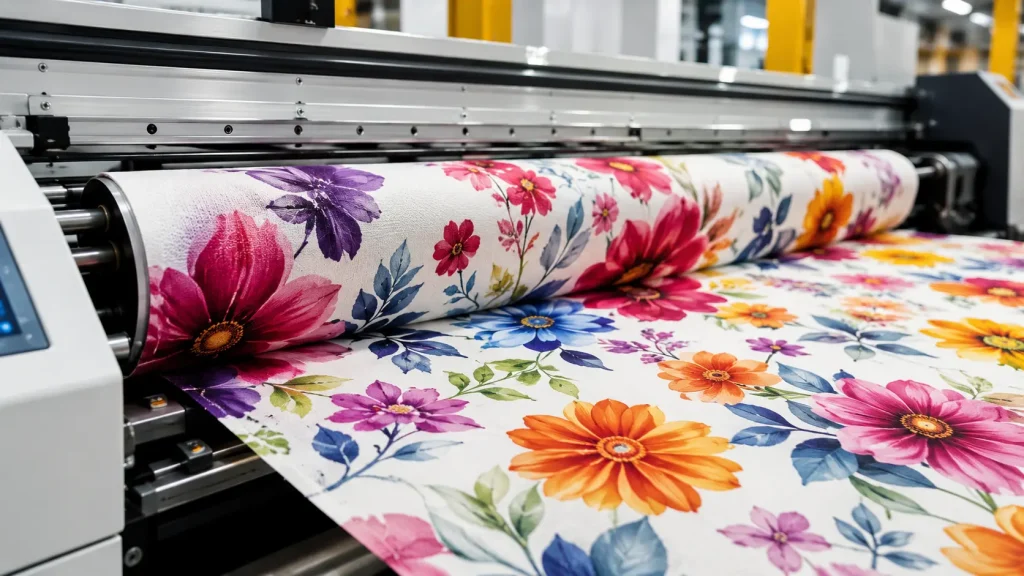
For reactive dye printing on cotton or viscose, sodium alginate is usually the lower-risk starting thickener because it has low reactivity toward reactive dyes and generally good wash-off. Guar gum may be considered in pigment printing or in selected modified and blended systems, but raw guar is not a universal 1:1 substitute for sodium alginate.
Choose between them by dye system first, then compare rheology, paste stability, print definition, penetration, color yield, wash-off and total cost in use. A lower powder price or a similar viscosity value does not prove equivalent printing performance.
Sodium Alginate vs Guar Gum: Quick Decision Table
| Decision factor | Альгінат натрію | Guar gum or derivative |
|---|---|---|
| Реактивний друк | Common starting route for cotton and viscose | Raw guar is not a default 1:1 replacement; modified grades require testing |
| Pigment printing | Possible but not normally selected for dye-inertness alone | Can be considered with the binder and pigment system |
| Chemical compatibility | Low reactivity toward many reactive dyes under normal process conditions | Depends strongly on modification, formulation and dye system |
| Реологія | Grade-dependent flow and screen release | Often efficient viscosity development; flow profile must be measured |
| Wash-off and handle | Generally favorable in reactive printing | Residue and handle must be checked on the actual fabric |
| Cost decision | Evaluate use level, yield and production consistency | Lower powder cost may not equal lower cost in use |
| Replacement approval | Use as the reference where already qualified | Approve only after laboratory and production trials |
Because viscosity labels are not standardized between suppliers, use the same method described in our textile thickener viscosity comparison guide.
What Guar Gum Is and How It Is Used in Textile Printing
Origin and Basic Chemistry
Guar gum is a polysaccharide derived from the endosperm of the guar bean (Cyamopsis tetragonoloba), cultivated primarily in India and Pakistan. It is a galactomannan — a polymer of mannose and galactose units — which gives it different chemical properties from sodium alginate, a polyuronic acid derived from seaweed.
Guar gum is water-soluble and can develop substantial viscosity at low concentration. Commercial grades differ in viscosity and preparation behavior; compare the actual grade and method rather than treating this as proof of greater printing efficiency than alginate. Guar is used in several industrial and food applications, including selected textile formulations.
Where Guar Gum Is Used in Textile Printing
A guar or modified-guar candidate may be evaluated in pigment paste with the actual binder, pigment and auxiliary package. Use the declared grade identity and intended-use information to define any screen-printing or blended-formulation trial.
For reactive printing, distinguish native guar from a specifically modified derivative or blend. A lower quotation is a commercial observation to verify for the offered grades, not an inherent property of the polymer names. Approve dye compatibility and finished-fabric quality before comparing cost in use.
Dye System Compatibility: The Most Important Differentiator
Sodium Alginate in Reactive Dye Systems
Sodium alginate is a common reference thickener for reactive printing on cellulosic fabrics because of its relatively low reactivity toward reactive dyes. It is not absolutely inert, and its use does not preserve every dye molecule for fixation. Evaluate the complete dye, alkali and thickener paste through the actual fixation and wash-off route.
Guar Gum in Reactive Dye Systems
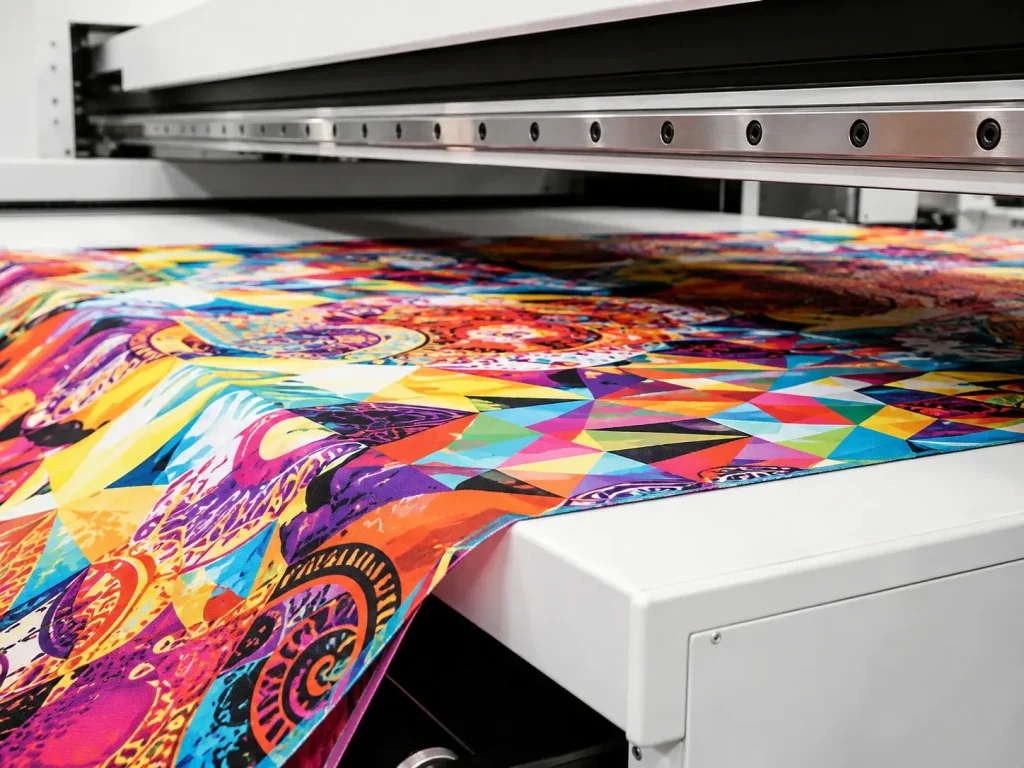
Native guar and modified guar should not be treated as the same printing material. Available hydroxyl groups and the particular chemical modification can affect interaction with reactive dyes. A candidate needs its own complete-paste and finished-fabric assessment; performance cannot be assigned from the name “guar gum” alone.
If viscosity changes after alkali addition, record grade identity, concentration basis, preparation, pH, temperature and paste age. Compare the reference and candidate using the same procedure. A viscosity decrease alone does not identify chain hydrolysis; investigate the measured change rather than assuming a universal alkali-catalyzed mechanism.
Measure color response, required fastness, wash-off and handle after the defined fixation and washing sequence. Do not assume that one polymer family always gives lower yield or poorer fastness at the same nominal concentration. A specifically modified guar or blend can behave differently from native guar.
Guar Gum in Pigment Printing
In pigment printing, where fixation occurs through a binder film rather than a chemical reaction with the fiber, the dye-thickener reactivity issues that limit guar gum in reactive systems are not relevant. Guar gum can function effectively as a thickener in pigment printing paste, providing adequate viscosity and paste body for screen application.
For pigment printing, evaluate a guar or derivative only with the actual binder and pigment system. Confirm paste stability, screen transfer, curing, rubbing performance and handle before deciding whether its measured consumption and current quotation offer a cost advantage.
Rheology and Viscosity Behavior
Shear-Thinning Behavior
Solutions and printing pastes based on alginate or guar can show shear-thinning behavior: apparent viscosity decreases as shear rate increases. This describes the flow response, not the speed or completeness of recovery after a printing stroke. Compare the actual grade, concentration and complete paste.
Where recovery matters, use a separate timed shear-history test. Keep the initial low-shear condition, high-shear interval, return condition, temperature and evaluation times consistent. Then check deposited paste and print definition on the actual fabric; a flow curve alone does not establish pattern stability.
Concentration Efficiency
Build a dosage-versus-working-paste-performance comparison for the exact grades. Use the same stated concentration basis and viscosity method, then retain the dosage that meets the complete printing requirements. A lower dose to match one water-viscosity value does not by itself demonstrate lower consumption at equivalent print quality.
For a reactive-printing substitution, keep unchanged-recipe and separately optimized-recipe trials identifiable. Compare final shade, fastness, wash-off and handle before calculating cost. Neither an assumed guar disadvantage nor an assumed alginate advantage replaces the finished-fabric evidence.
Viscosity Stability Over Time and Temperature
Test fresh paste and the intended maximum holding time at the actual temperature and with the actual alkali system. Measure both reference and candidate with the same preparation, concentration and viscosity procedure. Holding stability is a result for that grade and formulation, not a universal ranking of all alginate and guar products.
If production paste is prepared in advance, record storage temperature, container and evaporation control, mixing history and time since alkali addition. Investigate a deviation before changing the grade; a viscosity result alone does not separate composition change, preparation history and polymer degradation.
Washout Behavior and Post-Printing Processing
Sodium Alginate Washout
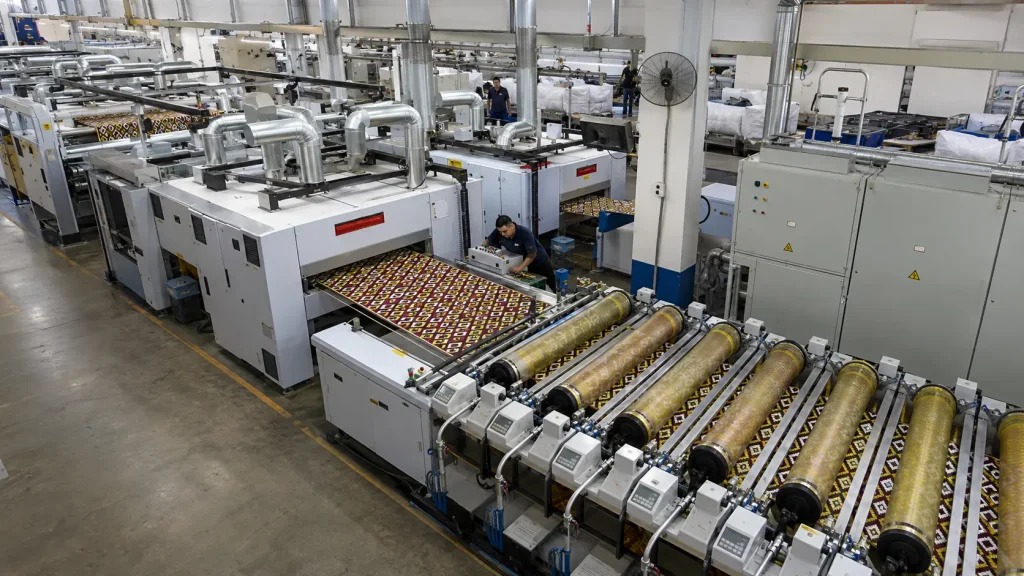
Sodium alginate is water-soluble, but wash-off in a print must be assessed after the actual fixation process and paste deposit. Use the approved washing sequence and check residual material and fabric handle; solubility alone does not guarantee complete removal from every fabric or formulation.
When thickener removal is verified in the approved process, it supports finished-fabric cleanliness. Assess the required fastness separately after the actual dye fixation and wash-off sequence; removal of the thickener alone does not establish wash-fastness performance.
Guar Gum Washout
For a guar or modified-guar paste, check removal and fabric handle after the same route-specific fixation and wash-off procedure used for its reference. Deposit, modification, formulation and fabric construction can change the result; do not infer complete removal or a fixed ranking from water solubility alone.
If residue remains, first identify the material and compare deposit, fixation and washing records. Any change in washing time, temperature or chemistry should stay within the fabric and dye system’s approved conditions and be checked on the finished textile.
Cost Considerations: When the Economics Favor Each Option
When Guar Gum Is Cost-Effective
Compare current delivered quotations and measured consumption only after each candidate meets the same finished-print requirements. Material cost per batch equals delivered price per kilogram of product as received multiplied by kilograms consumed. Allocate other costs consistently and divide by accepted fabric output.
Record quotation date, offered grade, quantity, delivery scope and currency. Recheck those commercial inputs when the order changes; historical commodity-price narratives do not establish the price relationship for the two grades being evaluated.
When to Keep the Qualified Alginate Reference
Where sodium alginate is already qualified for reactive printing, retain it as the production reference. Approve any guar derivative or blend through a controlled comparison. The economic decision depends on accepted output, measured dye and thickener consumption, corrections and post-treatment, not a presumed color-yield difference.
Where shade and fastness must meet a defined customer requirement, treat any unqualified candidate or recipe change as a production risk until it passes the agreed trials. This applies to changes within the same polymer family as well as changes between alginate, guar or a blend.
Guar Gum Derivatives: Modified Options Worth Considering
Hydroxyethyl Guar and Other Derivatives
Modified guar products differ by the modification and its extent; hydroxyethyl, hydroxypropyl, oxidized and other grades should not share one assumed dye-compatibility or alkaline-stability claim. Obtain the exact identity and current technical documents, then evaluate the candidate in the complete printing formulation.
Original research on modified guar in cotton reactive printing reports results for defined modified materials and trial conditions. It supports testing the specific derivative; it does not establish a universal performance gap, replacement ratio or cost advantage for a commercial grade.
Blended Thickener Systems
Blends of sodium alginate and a suitable modified guar grade may be evaluated for a defined dye and printing system. Neither dye compatibility nor lower cost follows from the ingredient names alone. Compare the actual grade quotations, dosage needed to meet the same print-quality criteria, preparation losses, wash-off and rejects. A blend is economical only if its measured total cost at acceptable quality supports that conclusion.
Blended systems require careful formulation — the ratio of components, compatibility in the paste, and behavior under steaming conditions all need to be validated through trial. The performance of a blend is not simply the average of its components; interaction effects between thickeners and with other paste components can produce unexpected results in either direction.
Summary: Which Thickener for Which Application
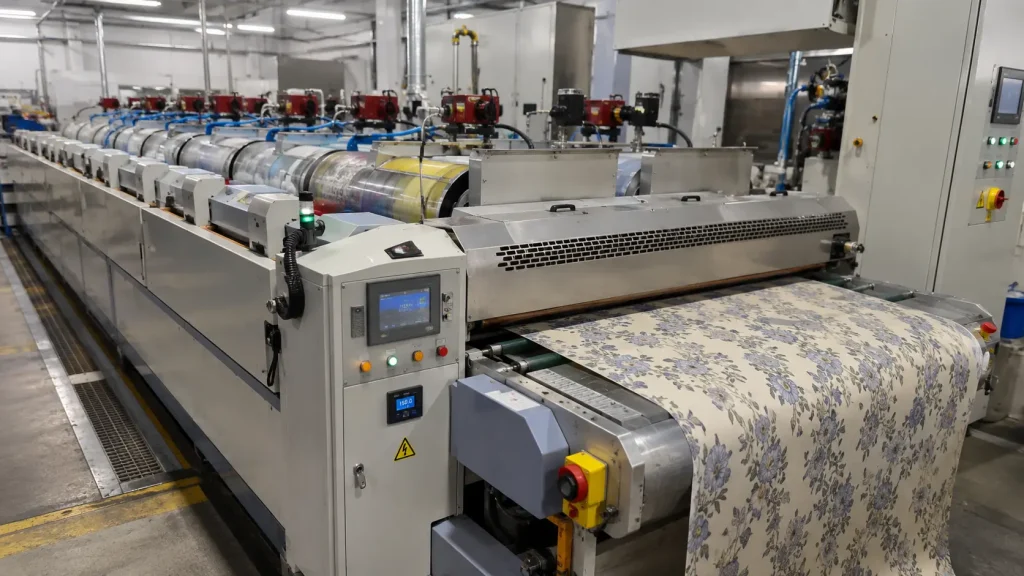
- Reactive printing on cellulosic fabric — use the current qualified alginate paste as a reference where applicable; test the exact guar derivative or blend rather than assuming a 1:1 replacement.
- Pigment printing → Either sodium alginate or guar gum (or derivatives) can be used; selection based on cost, binder compatibility, and paste stability requirements. Trial recommended before switching.
- Digital fabric pretreatment — use a grade specifically proposed for the ink, fabric and application equipment. A screen-paste approval does not establish pretreatment suitability or approval for addition to printhead ink.
- Експлуатаційні витрати — compare current quotations and measured recipe consumption at equivalent finished-print acceptance, including dye, thickener, corrections, wash-off and rejected output.
Replacement Test Protocol
- Keep fabric, dye or pigment, auxiliaries, water quality and fixation conditions unchanged.
- Record concentration, temperature, instrument, spindle, speed and hydration time for every viscosity result.
- Compare flow, screen release, penetration, outline sharpness and paste stability.
- Measure color yield, wash-off, fabric handle and residue after the same fixation and washing process.
- Calculate total cost from workable use level, corrections, rework and batch consistency—not powder price alone.
Поширені запитання
Can guar gum replace sodium alginate 1:1 in reactive printing?
It should not be assumed. Raw guar, modified guar and blended products behave differently. Match the viscosity method, then verify dye compatibility and printing results before selecting a replacement ratio.
Which thickener is cheaper?
Powder price alone cannot answer this. Compare the workable concentration, color yield, paste stability, wash-off, correction time and rejected fabric risk.
Does the same viscosity mean the same printing performance?
No. Equal viscosity can still produce different shear response, penetration, outline sharpness, stability and wash-off. Use one test method and one printing recipe for qualification.
How FSX Chemical Supports Your Thickener Evaluation
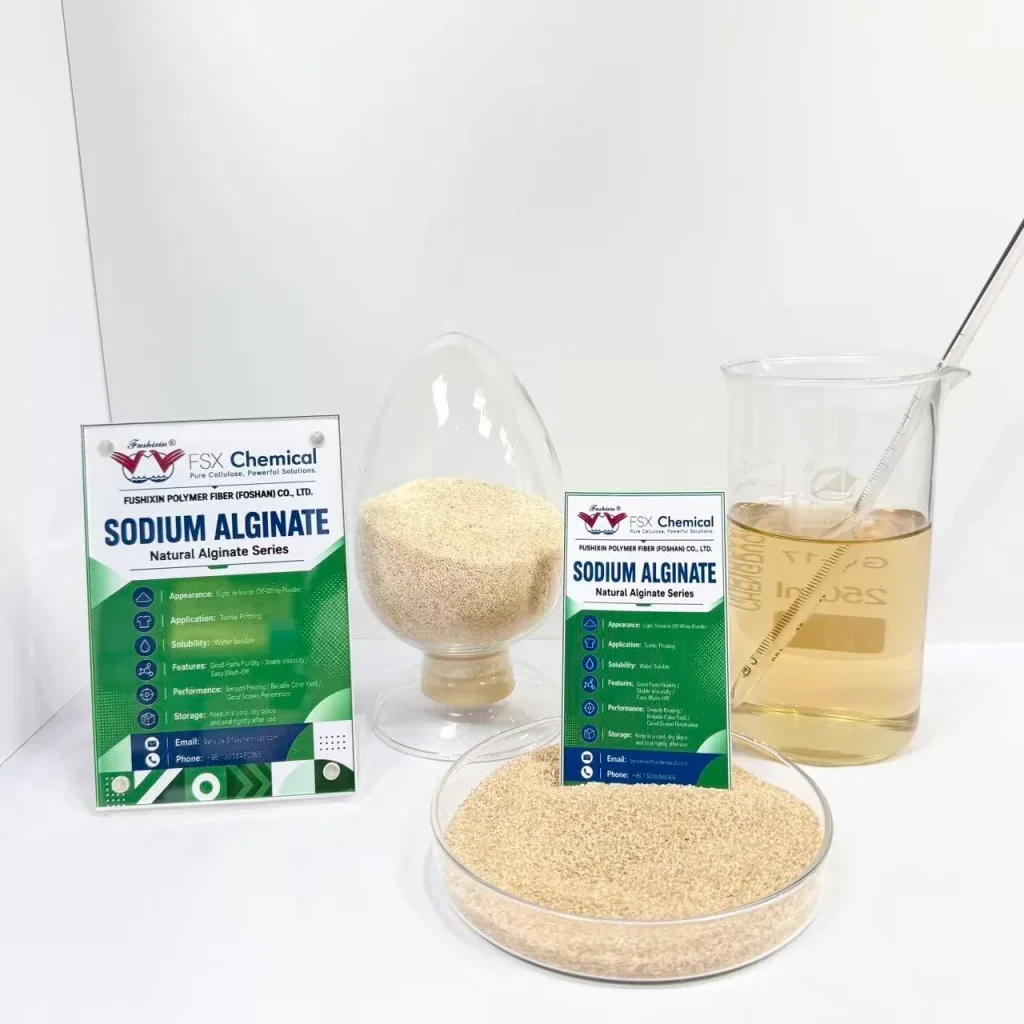
FSX Chemical supplies sodium alginate for reactive dye and pigment textile printing applications. If you are evaluating sodium alginate as an alternative to guar gum or another thickener, we can provide samples for comparative paste trials alongside technical datasheets for grade selection.
Our technical team can assist with formulation guidance for switching from guar gum to sodium alginate — including concentration adjustment recommendations, dissolution method, and paste stability considerations for your specific dye system and production conditions.
Наступні кроки:
- Request a TDS — review sodium alginate grade specifications for your target application
- Замовити зразок — run comparative paste trials against your current guar gum formulation
- Ask for Grade Matching — share your dye system, fabric type, and current paste parameters for a specific recommendation
- Request grade and sample matching — share the current TDS, printing route, fabric and the result to improve before a controlled comparison.
