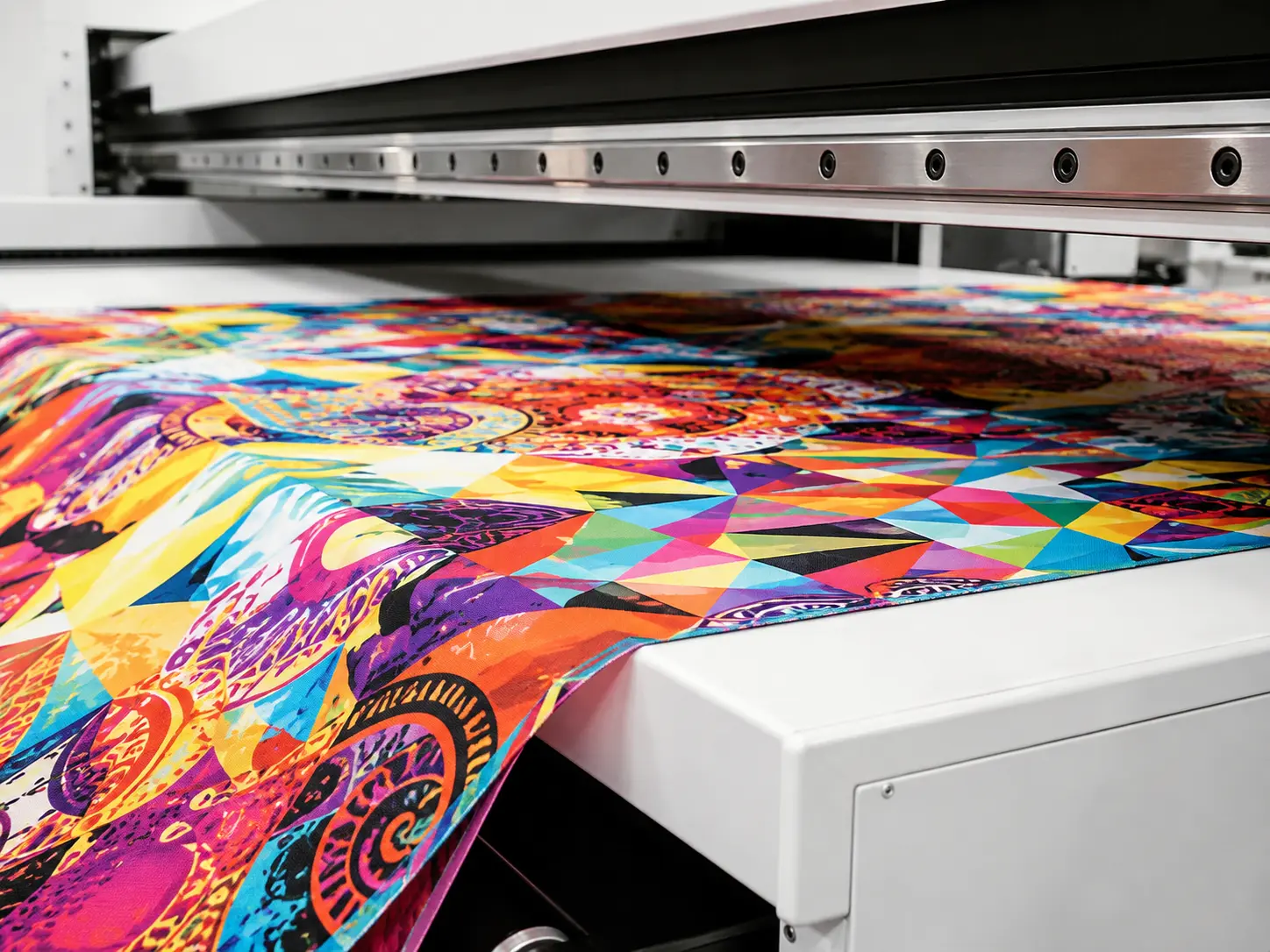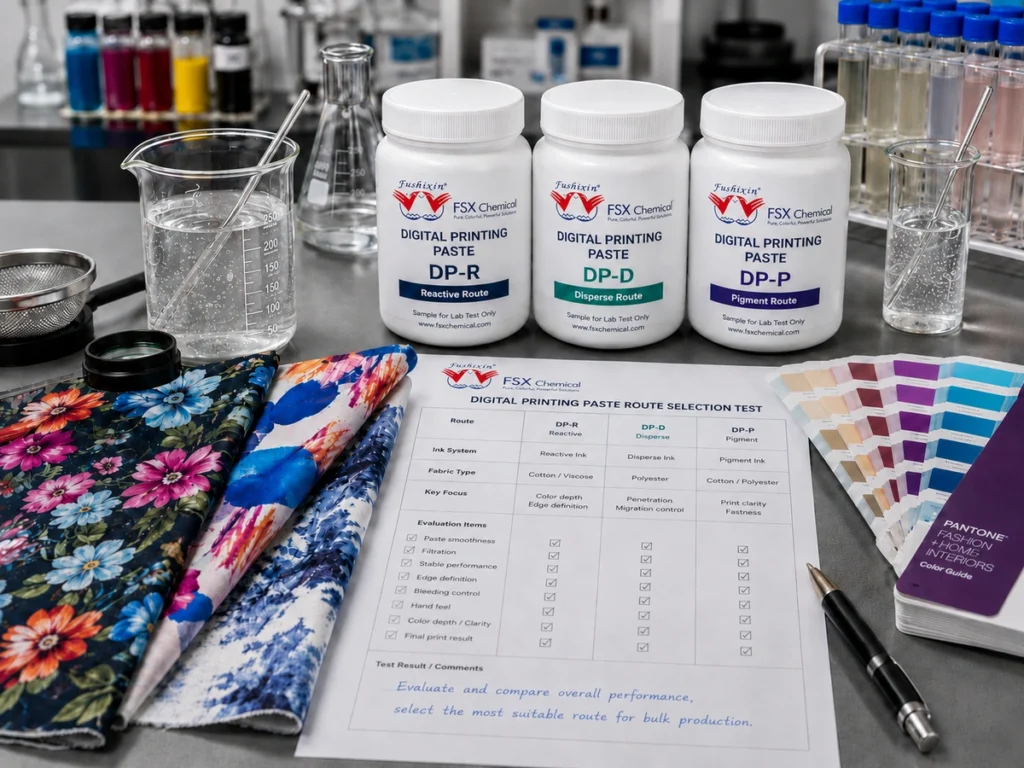
Digital printing pastes should be selected by ink chemistry, fabric, application method and post-treatment. This guide compares sodium alginate, CMC, CMS, synthetic polymer and compound pretreatment routes for textile inkjet printing.
There is no single digital printing paste that is best for every inkjet textile process. Reactive ink on cotton, disperse ink on polyester and pigment ink on blended fabric require different pretreatment chemistry, coating behavior, fixation and washing conditions.
The five families in this guide are formulation directions rather than a ranking of commercial brands or five mutually exclusive alternatives. A compound product may combine several of them. Their value must be assessed for the same defined fabric-treatment task.
Final selection should always be confirmed by a controlled sample trial using the actual fabric, ink, printer, drying system and fixation process.
What “Digital Printing Paste” Means in Textile Inkjet Printing
In digital textile printing, the term “printing paste” often refers to a pretreatment or coating formulation applied to the fabric before inkjet printing. It may contain a thickener together with alkali, humectants, wetting agents, salts, binders or other application-specific auxiliaries.
Its function is to control the interaction between the ink droplets and the textile surface. Depending on the system, the pretreatment can influence spreading, penetration, colorant fixation, line definition, wash-off and fabric handle.
Important: Conventional high-viscosity textile printing paste should not be fed into an inkjet printhead. The paste discussed in this article is normally applied to the fabric by padding, coating or spraying unless the equipment and ink supplier specify another method.
What a Digital Printing Paste Needs to Control
- Uniform fabric pickup or coating weight
- Ink-droplet spreading on the textile surface
- Penetration into the yarn and fabric structure
- Migration during drying and fixation
- Availability of fixation chemicals near the print surface
- Color yield and shade consistency
- Line sharpness and small-detail reproduction
- Wash-off or curing behavior
- Tay cầm bằng vải hoàn thiện
Quick Comparison of the Top Five Digital Printing Paste Routes
| Paste Route | Typical Evaluation Direction | Main Selection Strength | Main Technical Risk |
|---|---|---|---|
| Sodium alginate-based paste | Reactive inkjet printing on cotton, viscose and selected cellulose fabrics | Established reactive-dye compatibility and wash-off route | Water quality, polyvalent ions, viscosity grade and insoluble residue |
| CMC or cellulose-ether paste | Selected reactive, acid and specialty inkjet pretreatments | Water retention, viscosity control and adjustable film behavior | Grade-dependent dye interaction, residual film and handle |
| CMS-based paste | Selected cost-focused or blended pretreatment formulations | Paste body and potential cost-in-use adjustment | Process-specific wash-off, penetration and residue behavior |
| Synthetic polymer paste | Pigment and selected disperse, reactive or specialty pretreatments | High thickening efficiency and tunable rheology | Film formation, binder compatibility, handle and compliance review |
| Application-specific compound paste | Reactive, disperse or pigment systems matched to a defined process | Reduced formulation work and route-specific performance | Proprietary composition, limited flexibility and supplier dependence |
1. Sodium Alginate-Based Pretreatment Paste
Sodium alginate is an established thickener route for reactive dye printing. Its anionic structure generally provides limited interaction with anionic reactive dyes compared with many polysaccharides containing more available reactive hydroxyl groups.
In reactive inkjet printing, an alginate-based pretreatment can help hold alkali and other fixation auxiliaries near the fabric surface while controlling droplet spreading and penetration.
Typical application direction
- Reactive dye inkjet printing on cotton
- Reactive printing on viscose and selected cellulose fabrics
- Selected reactive or acid inkjet pretreatment formulations
- Benchmark testing for alternative thickener systems
Potential advantages
- Established use in reactive dye printing
- Suitable starting point for reactive ink compatibility
- Controlled surface viscosity and ink penetration when correctly formulated
- Water-removable thickener route after fixation
Limitations and purchasing checks
Sodium alginate performance can be affected by viscosity grade, molecular structure, particle size, insoluble matter, storage condition and water quality. Calcium or other polyvalent ions may change solution behavior or contribute to gel formation.
Buyers should request the viscosity test method, recommended concentration, pH, moisture, solubility information and preparation procedure. The sample should be tested using the mill’s actual water and reactive ink system.
Best starting point when
An alginate-based route is a practical starting point when the mill prints reactive inks on cellulose fibers and prioritizes established dye compatibility, print definition and controlled wash-off.
2. CMC and Cellulose-Ether-Based Digital Printing Paste
Carboxymethyl Cellulose (CMC) and other cellulose ethers can be used to control viscosity, water retention and film formation in selected textile inkjet pretreatments.
Their performance depends strongly on chemical substitution, molecular weight, solution rheology and interactions with the fabric and dye system. Two cellulose-ether products should not be assumed to be interchangeable because they share the same general chemical family.
Typical application direction
- Selected reactive inkjet pretreatments
- Reactive or acid printing on wool and silk where a tested grade is suitable
- Blended formulations with sodium alginate or another thickener
- Pretreatments requiring additional water retention or film control
Potential advantages
- Flexible viscosity and water-retention adjustment
- Cold-water-soluble grades are available
- Useful as a rheology modifier in blended systems
- Different DS and viscosity routes can be evaluated for grade matching
Limitations and purchasing checks
In reactive systems, an unsuitable CMC grade may interact with dyes or contribute to difficult wash-off and a firmer fabric handle. Degree of substitution is relevant, but it is not the only selection parameter.
Buyers should compare DS, viscosity method, solution clarity, hydration, substitution route, salt tolerance and complete-formulation compatibility. Final approval should include printing, steaming and washing.
Best starting point when
A CMC or cellulose-ether route can be evaluated when the mill needs adjustable water retention, rheology modification or an alternative pretreatment film structure and can complete grade-specific compatibility testing.
3. CMS-Based Digital Printing Paste
In general chemical usage, CMS can mean carboxymethyl starch. FSX uses CMS in its commercial textile thickener range, with separate reactive, disperse and specialty printing routes. That range label alone does not establish that every supplied grade is a single carboxymethyl-starch polymer or approved for digital pretreatment. Confirm the exact grade, product identity and intended application before an inkjet trial.
A product offered under the FSX CMS range should not be treated as a universal direct replacement for sodium alginate or CMC. For a declared starch derivative, starch source and substitution can be relevant; for a proprietary compound, request the applicable product specification and preparation information. Do not assign a starch DS or composition to an unidentified grade.
Typical application direction
- Selected disperse or reactive pretreatment trials
- Cost-performance adjustment in compound printing pastes
- Blended thickener systems requiring additional paste body
- Processes where a CMS grade has already been application-tested
Potential advantages
- Can provide substantial paste body
- May support formulation cost adjustment
- Can be combined with other polymers to modify flow behavior
- Multiple viscosity routes can be developed for different application methods
Limitations and purchasing checks
Depending on grade and dosage, CMS may produce different penetration, residue, wash-off and fabric-handle results. A high solids requirement can reduce the expected cost advantage if more material and washing are needed.
Buyers should compare application viscosity, active dosage, hydration, filtration, coating uniformity, wash-off and final handle. Published results from one fabric or printing recipe should not be generalized to all CMS grades.
Best starting point when
CMS is most appropriate as a trial route when the mill wants to evaluate cost in use or blended-paste performance and has the ability to test the complete pretreatment and post-treatment process.
4. Synthetic Polymer Pretreatment Paste
Synthetic thickeners may include polyacrylate, polyacrylamide or other engineered polymer systems. They can provide high thickening efficiency at relatively low dosage and can be designed for specific pH, electrolyte or application conditions.
A synthetic polymer may be evaluated as a rheology modifier in a pigment pretreatment containing a separately identified binder or immobilization component. A generic acrylic thickener is not automatically a pigment binder, and an anionic thickener is not automatically compatible with a cationic treatment. Confirm product role and compatibility at the intended application sequence rather than treating the polymer family as an approval.
Typical application direction
- Pigment inkjet printing on cotton, polyester or blends
- Pretreatments containing binder or fixation polymers
- Low-solids formulations requiring strong viscosity development
- Specialized coating and surface-modification systems
Potential advantages
- High thickening efficiency
- Rheology can be engineered for padding, coating or spraying
- Low dosage may reduce the amount of thickener solids
- Specialized electrolyte- or pH-tolerant grades are available
Limitations and purchasing checks
The retained treatment assembly can influence fabric handle, absorbency and durability. Film-forming binder, thickener and immobilization components have different functions; total nonvolatile solids do not identify each contribution. Review neutralization, pH, electrolytes and the actual binder/cationic system for the grade being evaluated. Request declared solids, preparation or activation instructions, storage stability and relevant residual-monomer or restricted-substance documentation. A generic acrylic-thickener description is insufficient for selection.
Buyers should request information about solids, activation conditions, residual monomers where relevant, restricted-substance compliance, storage stability and binder compatibility. A generic “acrylic thickener” description is not sufficient for technical selection.
Best starting point when
A synthetic route is a practical candidate for pigment systems, specialized coatings or processes requiring efficient viscosity development and tunable application rheology.
5. Application-Specific Compound Digital Printing Paste
A compound digital printing paste combines two or more thickeners or functional components into a product designed for a defined ink, fabric or application route. It may be supplied as a powder, liquid concentrate or ready-to-dilute system.
Compound products are intended to reduce formulation work and balance properties that may be difficult to obtain from one polymer. Research on pretreatment systems has shown that combining thickeners with different structures can change ink penetration and coloring behavior.
Typical application direction
- Reactive inkjet pretreatment for cellulose fabrics
- Disperse direct-printing pretreatment for polyester
- Pigment printing pretreatment containing binder-compatible components
- Customer-specific formulations matched to existing production
Potential advantages
- Designed around a defined application route
- Can balance viscosity, coating, penetration and wash-off
- Reduces the number of raw materials weighed by the mill
- May simplify preparation and batch control
Limitations and purchasing checks
Compound formulations may provide less flexibility when the mill needs to adjust one property independently. Their detailed composition may also be proprietary, increasing reliance on supplier consistency and change control.
Buyers should confirm the exact ink route, fabric, application method, dosage, pH, storage stability, filtration and post-treatment instructions. Sample-to-bulk consistency is especially important.
Best starting point when
A compound paste is appropriate when the mill wants a route-specific starting formulation, fewer preparation steps and technical matching based on its existing process.
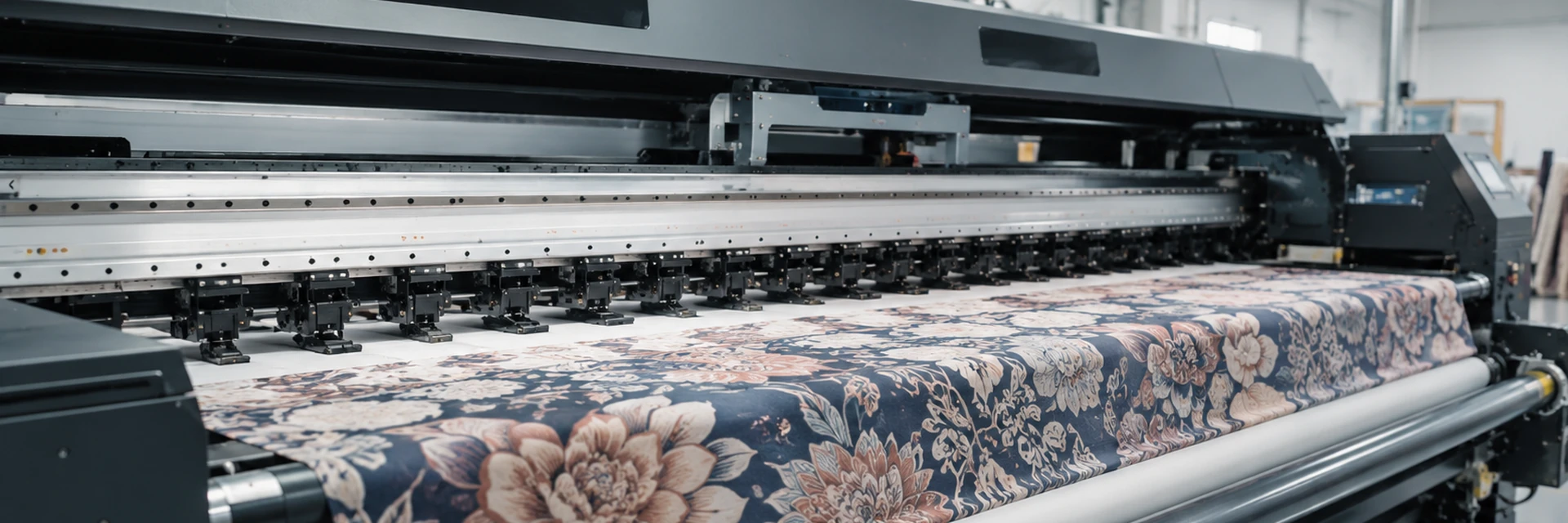
Require a Route Card Before Comparing Paste Quotations
The five families above are not mutually exclusive: a compound pretreatment can contain a cellulose ether, a synthetic rheology modifier and other functional ingredients. A family name therefore cannot establish that two quotations replace the same process component. Ask each supplier to identify what is supplied, where it is applied and which approved ink–fabric workflow it supports.
| Route-card field | Minimum useful record | Decision it supports |
|---|---|---|
| Application position | Fabric padding/coating/spray, integrated fabric treatment, or another specifically approved position | Prevents confusing a fabric-treatment product with a printhead ink ingredient |
| Supply and functional role | Powder or liquid; thickener, complete pretreatment, binder-containing system or auxiliary; required additions and water balance | Separates an ingredient quotation from a complete-system quotation |
| Declared basis | Use concentration and viscosity method; declared nonvolatile solids and any separately identified active component | A total-solids result must not be relabeled as binder or active thickener content |
| Workflow | Ink and fabric; white-underbase requirement; wet or dried application; approved drying, fixation/curing and wash-off | Shows which production stages actually belong to the candidate route |
| Release evidence | Measured deposit, print quality and route-specific finished-fabric tests, with identified lots and trial conditions | Supports a production decision rather than a chemistry-label ranking |
Compare candidates within the same defined application first. Keep necessary route differences visible: reactive fixation and wash-off are not a generic prescription for pigment ink, and a sublimation transfer-paper coating is a different product position from a fabric pretreatment. A supplier-approved fabric auxiliary must not be added to the printhead ink without a separate ink-formulation and equipment approval.
For a pigment system, document whether binder is supplied through ink, fabric treatment or another approved layer. Lubrizol’s descriptions of separate ink-binder and pretreatment technologies illustrate why those roles need separate identification. They do not establish that every synthetic thickener binds pigment.
This route card is a proposed buyer worksheet. Approval still requires a controlled trial of the actual ink, fabric, application equipment and finished-product specification; a shared family name or matched viscosity is insufficient.
How to Match Paste Type to Ink and Fabric
| Ink and Fabric Route | Practical Starting Direction | Critical Evaluation Points |
|---|---|---|
| Reactive ink on cotton or viscose | Sodium alginate or application-specific reactive compound paste | Alkali compatibility, ink spreading, color yield, fixation and wash-off |
| Reactive or acid ink on wool or silk | Tested alginate, CMC, cellulose-ether or compound route | Fabric surface, penetration, steaming, sharpness and handle |
| Disperse direct ink on polyester | Disperse-specific compound, CMS blend or synthetic polymer route | Migration, drying, thermofixation, penetration and residue |
| Sublimation transfer printing | Confirm whether fabric pretreatment is required at all | Transfer paper, ink, polyester content, heat transfer and migration |
| Pigment ink on cotton or blends | Synthetic or pigment-specific compound pretreatment | Binder compatibility, color gamut, curing, dry and wet rubbing |
Some modern ink systems are designed to reduce or eliminate conventional fabric pretreatment. Buyers should follow the ink and printer supplier’s approved workflow rather than assuming that every process requires a thickened coating.
How to Test a Digital Printing Paste Sample
Step 1: Define the current production system
Record the fabric, ink type, printer, pretreatment application method, drying, fixation and washing process. Use the current approved paste as the reference.
Step 2: Standardize paste preparation
Record concentration, water quality, addition order, mixer speed, mixing time, hydration time and sample temperature. Prepare repeat samples when possible.
Step 3: Measure viscosity and rheology
State the instrument, spindle, rotational speed, concentration, temperature and conditioning time. For shear-dependent materials, use more than one speed or an appropriate rheological method.
Step 4: Check complete formulation compatibility
Add the actual alkali, humectant, salt, binder, cationic agent or other auxiliaries. Measure pH, viscosity, filtration and storage stability after the complete formulation is prepared.
Step 5: Apply pretreatment uniformly
Use a controlled padding, coating or spraying method. Record wet pickup, coating weight, line pressure, speed and drying conditions.
Step 6: Print a diagnostic design
Include fine lines, reverse lines, dots, solid areas, gradients and adjacent colors. Use the same printer settings and ink lot for every candidate.
Step 7: Apply identical post-treatment
Within one defined ink route, keep the approved post-treatment conditions matched when isolating paste differences. Record any necessary candidate-specific process change separately. Reactive fixation and wash-off, disperse fixation and any required clearing, and pigment curing/durability testing are different workflows; do not prescribe all of these stages to every digital system.
Step 8: Evaluate the final fabric
- Line width and edge definition
- Ink penetration and strike-through
- Color strength and color gamut
- Shade and levelness
- Wash-off or curing behavior
- Dry and wet rubbing fastness
- Washing fastness where required
- Tay cầm bằng vải
- Residual film or surface deposits
Buyer Comparison Matrix
| Selection Parameter | What to Request | Tại sao điều này lại quan trọng |
|---|---|---|
| Recommended application | Ink, fabric and pretreatment route | Prevents selection by product name alone |
| Độ nhớt | Value plus concentration, temperature, spindle and speed | Allows meaningful supplier comparison |
| Solids or active dosage | Recommended use level and calculation basis | Supports cost-in-use calculation |
| Hydration and preparation | Mixing order, time and temperature | Affects production practicality |
| pH and electrolyte tolerance | Recommended formulation range | Influences compatibility and viscosity stability |
| Filtration or residue | Applicable filter or screen test | Supports coating uniformity and process cleanliness |
| Lưu trữ | Powder and prepared-paste storage guidance | Reduces viscosity drift and contamination risk |
| Batch control | TDS, sample and batch COA where applicable | Supports repeat purchasing |
| Compliance | SDS and applicable current supporting documents | Supports supplier and market review |
Common Mistakes When Comparing Digital Printing Pastes
Choosing one paste for every ink system
Reactive, disperse and pigment inks use different fixation mechanisms. Pretreatment chemistry should be matched to the actual ink and fiber.
Comparing viscosity values from different methods
Values measured at different concentrations, temperatures, spindle speeds or hydration times are not directly comparable.
Testing only color strength
High color strength does not automatically mean good line definition, levelness, fastness, handle or production stability.
Ignoring pretreatment pickup
Two fabrics can produce different results even with the same paste if the applied quantity is not controlled.
Assuming a natural polymer is automatically compliant
Natural origin does not confirm the status of preservatives, additives, impurities or the complete commercial formulation. Review the exact product documents.
Calculating cost from price per kilogram only
Compare the active dosage, preparation time, stability, washing demand and reject risk. A lower-priced product may not provide the lowest total cost in use.
Digital Printing Paste FAQ
Is digital printing paste one universal product?
No. Select the paste by ink chemistry, fabric, where it enters the process, drying conditions, fixation method and washing route. A formulation that works for reactive ink on cotton may be unsuitable for disperse ink on polyester or pigment ink on blended fabric.
Where is thickener used in textile inkjet printing?
In many systems, the thickener is used in a fabric pretreatment or coating rather than added to the ink supplied to the printhead. Confirm whether the product will be applied by padding, coating, screen or another route before evaluating viscosity and filtration.
Can the same paste be used for sublimation transfer and direct disperse printing?
Usually not without process validation. Sublimation transfer prints paper before heat transfer, while direct disperse printing places ink on the fabric and may need a process-specific pretreatment to control penetration, sharpness and fixation.
What information should a buyer provide for sample matching?
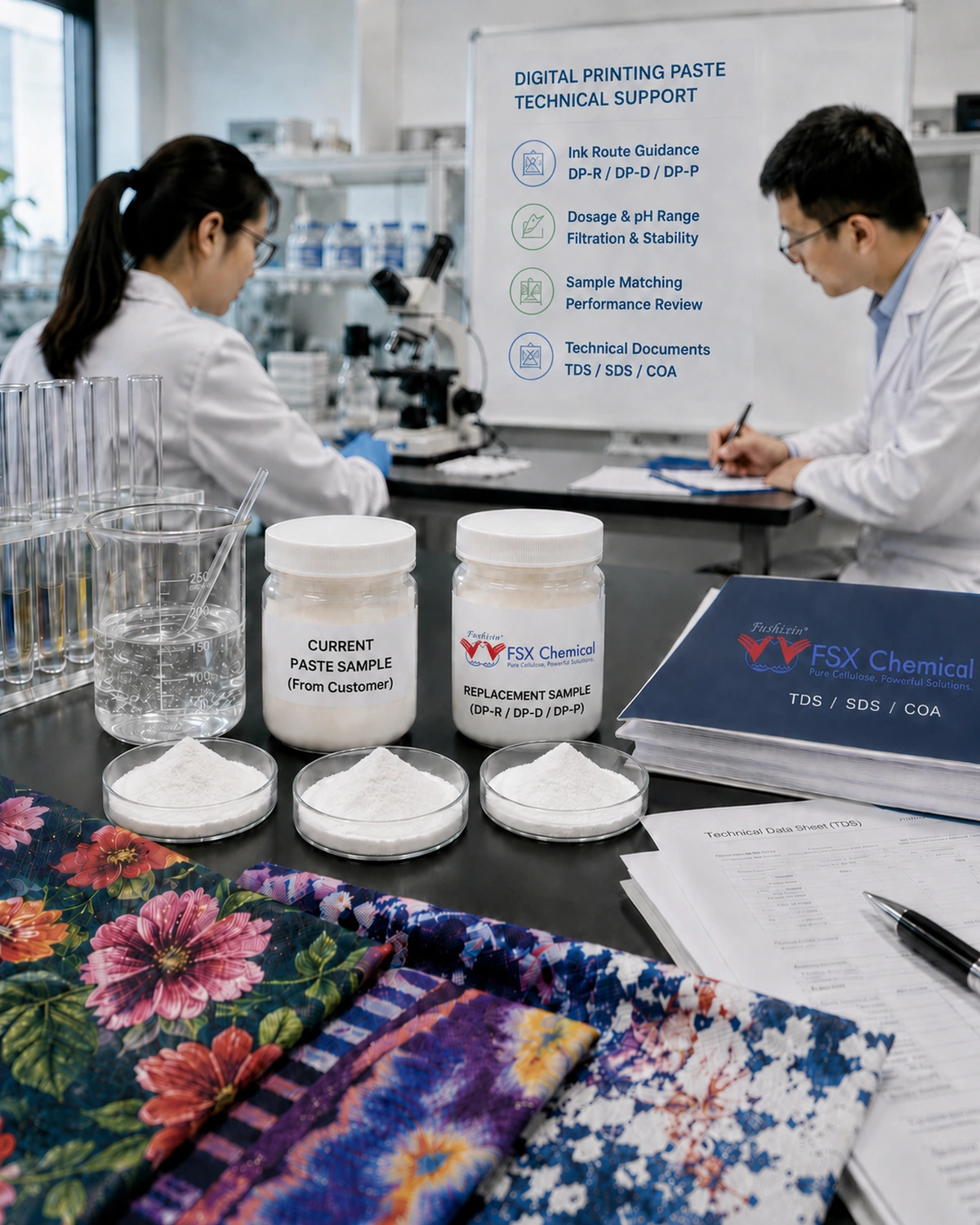
Provide the fabric composition and construction, ink type, printer, application method, wet pickup or coating amount, drying and fixation conditions, current product, viscosity test method and the production problem to be solved. This information makes lab screening more representative of the production line.
Digital Printing Paste Support from FSX Chemical
To request a sample or grade-matching review, provide:
- Reactive, disperse, pigment or acid ink system
- Fiber composition and fabric construction
- Padding, coating or spraying method
- Current pretreatment formulation
- Current product TDS or physical sample
- Target viscosity with complete test conditions
- Wet pickup or coating-weight target
- Drying, fixation and washing process
- Main issue, such as bleeding, penetration, low color or hard handle
FSX Chemical can use this information to recommend a practical sample route. Final suitability should be confirmed on the customer’s actual production equipment before bulk purchasing.
Need Help Selecting a Digital Printing Paste?
Send FSX Chemical your fabric, ink system, current formulation, viscosity method and target print performance. Our team can review whether a sodium alginate, CMC, CMS or application-specific compound route should be tested📧 Email: Service@fsxchemical.com