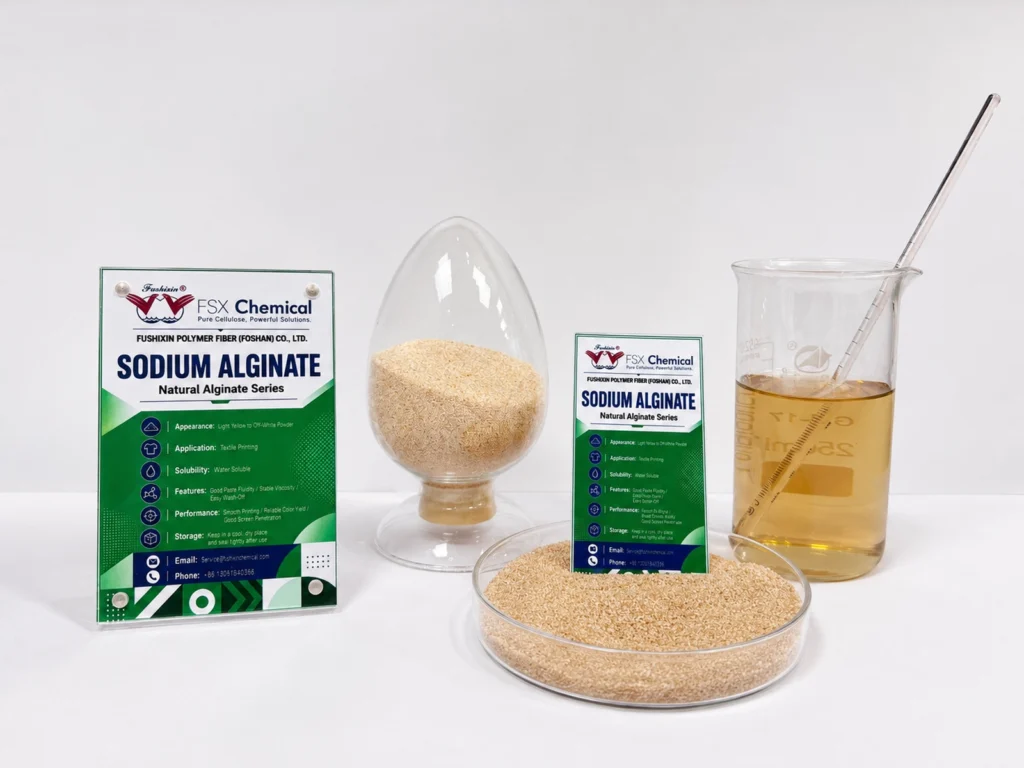
Sodium alginate does not have one shelf-life limit that applies to every grade and every form. Store dry powder according to its current supplier documentation, and establish a separate, validated holding limit for prepared solution or printing paste. The expiry date on the powder bag is not a use-by date for the paste made from it.
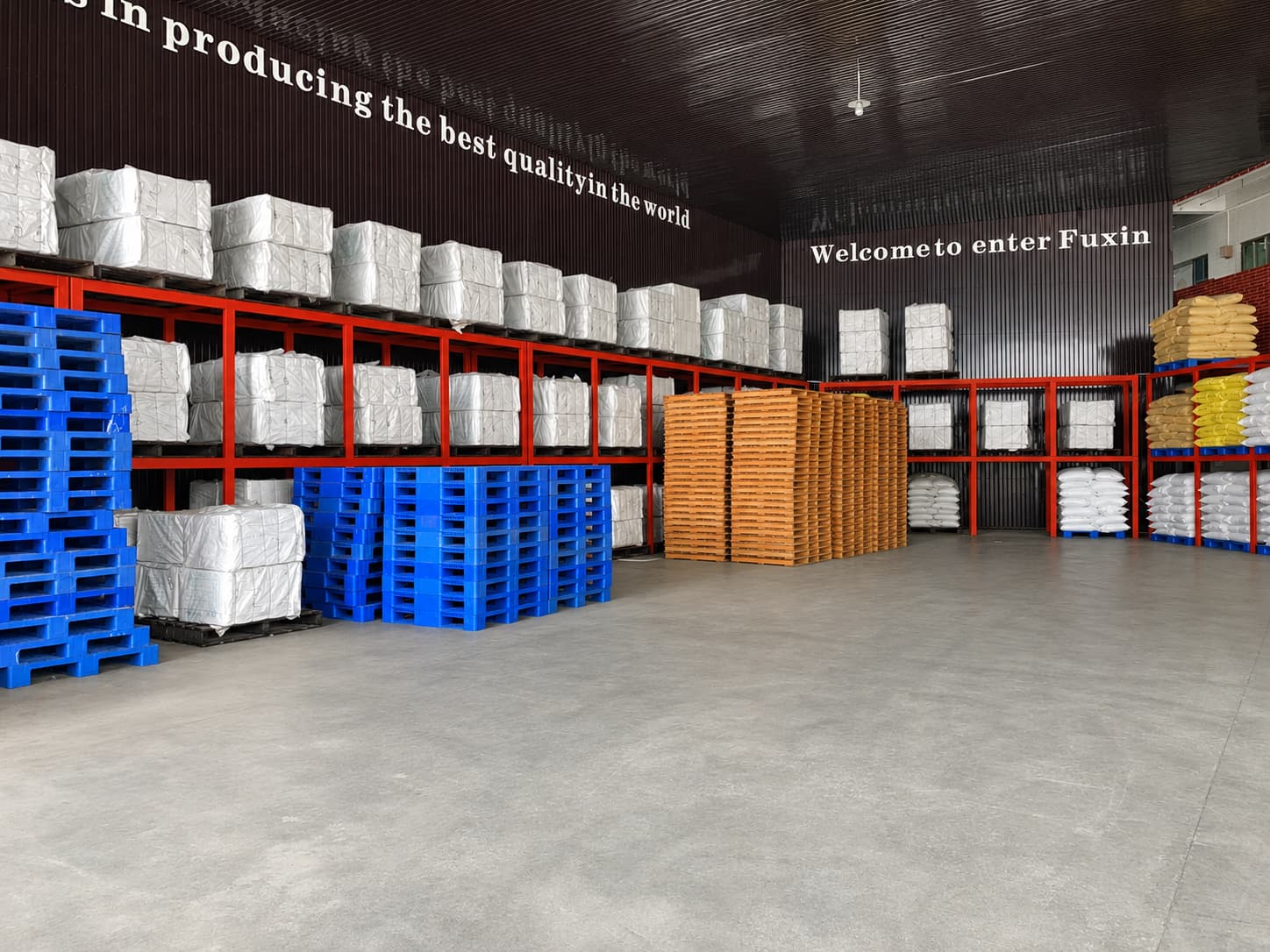
For a specific FSX example, the published Fushixin Print HV TDS, Rev. 04 dated 22 June 2026, recommends a shelf life of 12 months from production under proper storage conditions. It calls for a cool, dry, ventilated warehouse and tightly closed bags. That statement applies to the named grade; confirm the current document and supplied batch before making an inventory decision.
Start by Identifying What You Are Storing
| Material state | What controls the decision? | What should the mill record? |
|---|---|---|
| Unopened powder | Grade-specific storage instructions, manufacture date, shelf-life statement and packaging condition | Supplier, grade, batch, receipt date, storage location and any transport damage |
| Opened powder | The same grade requirements, plus exposure and handling history | Opening date, resealing method, contamination or moisture incidents and remaining quantity |
| Prepared stock solution | A holding limit validated for the grade, concentration, water, container and actual temperature | Preparation time, formula, water source, temperature history, test method and release status |
| Complete printing paste | Validation of the full formulation and printing process | Dyes, alkali and auxiliaries, addition times, holding conditions and finished-fabric results |
Keep these categories separate in the inventory system. A holding study on a plain alginate solution does not automatically qualify a complete dye paste, and a complete-paste trial does not establish the unopened powder shelf life.
How to Store Sodium Alginate Powder
Follow the current TDS, SDS and agreed packaging instructions for the supplied grade. Keep the original moisture barrier intact, protect the material from humidity and direct sunlight, and use a storage location where labels and batch identity remain readable.
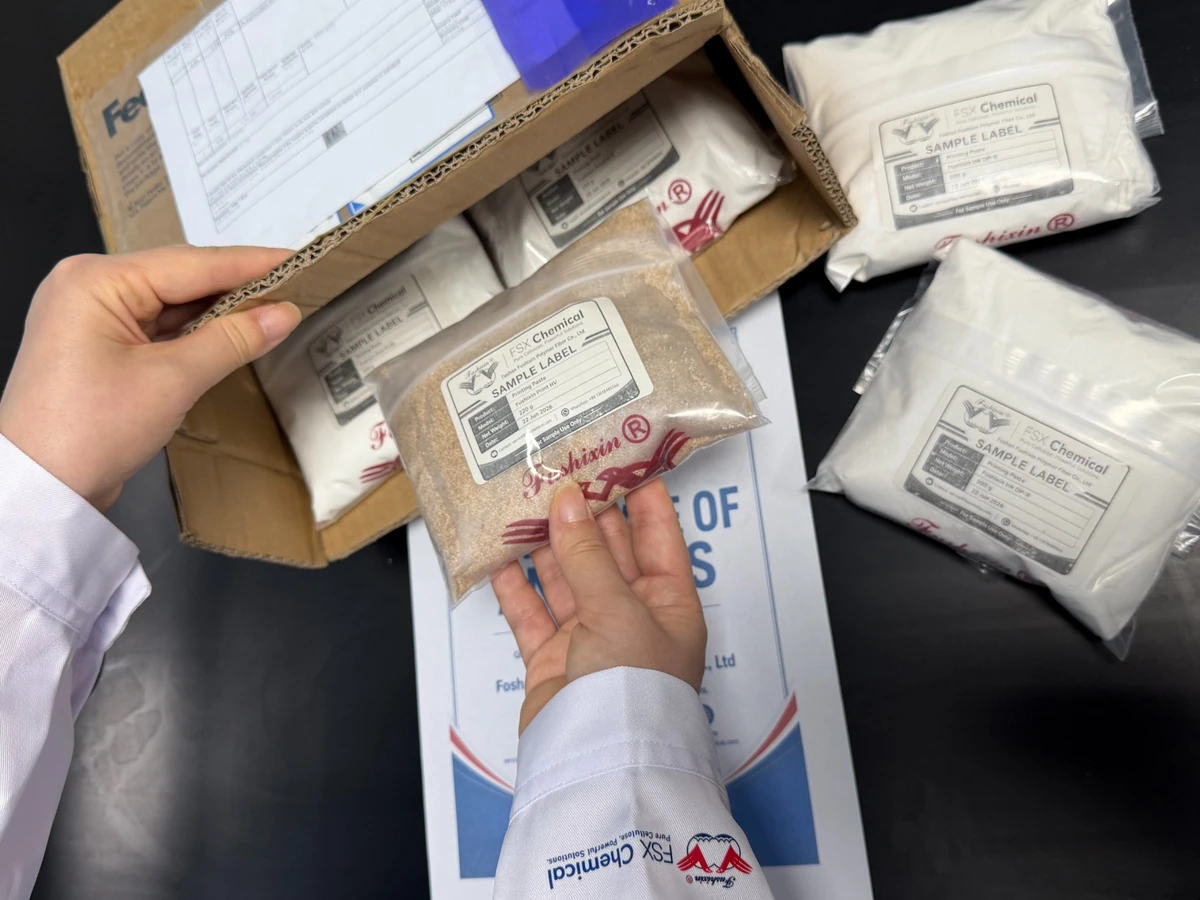
After taking material from a bag, close it using the approved resealing method. If a transfer container is necessary, confirm its compatibility, cleanliness and closure, and transfer the grade and batch information with the powder. Do not use an unidentified container or return spilled material to the batch.
Keep powder handling separate from incompatible chemical handling. Follow the SDS for segregation requirements; prevent contamination from cleaning residues, process water and other textile auxiliaries. Use clean, dry tools and avoid carrying wet scoops into stored powder.
At receipt, document torn packaging, damaged liners, wet surfaces, unusual appearance or an unreadable label. Caking is a reason to investigate exposure and handling; it does not, by itself, prove the exact cause or establish that the polymer has failed.
Does Sodium Alginate Expire?
Use the supplier’s stated shelf-life or retest conditions as a control point. If a batch has reached the stated limit, place it on hold and ask the responsible quality team and supplier to define its disposition. Do not extend the date simply because the powder looks normal or one viscosity reading seems acceptable.
A documented reassessment may be appropriate where the supplier’s instructions and the mill’s quality procedure permit it. The assessment should consider identity, storage history, packaging, agreed laboratory checks and the intended printing application. Any extension requires an authorized decision; this article does not authorize continued use of expired material.
The reverse is equally important: a batch within its stated shelf life still needs investigation if its packaging has been compromised or its performance has changed.
How Long Does Sodium Alginate Solution Last?
There is no defensible universal number of hours for all textile alginate solutions. Grade, concentration, water quality, hygiene, temperature and added ingredients differ between mills. A fixed “24-hour” or “72-hour” rule should not replace a holding study for the actual system.
Alginate technical literature describes temperature, chemical conditions and microorganisms as factors that can affect solution viscosity. This explains why holding conditions matter, but it does not provide a validated use-by time for your FSX grade or printing formulation.
Use covered, compatible containers and a controlled preparation procedure. Label each batch with its preparation time and full identity. Keep old and newly prepared material separate so that the age and release status of each batch remain traceable.
Do not adopt refrigeration or freezing as a general solution without supplier guidance and process validation. When comparing stored samples, condition them to the agreed measurement temperature; a temperature difference can make viscosity results misleading.

Build a Holding-Time Check Around the Actual Process
- Define the material. Record the exact grade, concentration basis and complete recipe. Separate stock-solution testing from complete-paste testing.
- Set the conditions. Use the intended water, mixing procedure, containers and realistic storage conditions. Include the conditions the production team expects during the working period.
- Establish a baseline. After the approved preparation and hydration step, record appearance and the agreed laboratory measurements.
- Check at planned intervals. Choose intervals that cover the intended production schedule. Record actual conditions and sample handling, rather than inventing a universal timetable.
- Assess production relevance. Confirm filtration or screen passage, printing behavior and the required finished-fabric properties using retained samples where appropriate.
- Approve a limit. Have the responsible team define the holding limit, test requirements and action when a limit is exceeded. Reassess after a material, recipe or process change.
For a broader investigation of complete-paste aging, use the existing printing paste aging guide. This storage article focuses on inventory and release decisions, not on replacing a complete formulation study.
Retest Stored Material with a Comparable Method
A viscosity result is useful only when the sample preparation and measurement conditions are known. Match concentration and its mass basis, water, hydration procedure, temperature, instrument, spindle or geometry, speed and reading time. Compare against the agreed specification or approved reference using that same method.
Do not use a blanket percentage drop as an acceptance limit for every grade. Establish limits with the supplier and quality team, taking the method and application into account. A result outside the agreed range calls for investigation; it does not automatically identify moisture uptake, polymer degradation or contamination as the cause.
| Observation | Initial action | Evidence needed before release |
|---|---|---|
| Damaged seal, wet packaging or unexplained caking | Hold and document the affected material | Packaging history, representative sample and agreed quality checks |
| Unexpected viscosity or filtration result | Verify the preparation and measurement method | Repeatable results against the approved specification or reference |
| Unusual odor, color, surface film or separation | Isolate and investigate; do not rely on visual inspection alone | Quality assessment, including appropriate contamination checks when indicated |
| Shelf-life or validated holding limit exceeded | Stop routine release | Documented supplier guidance and authorized quality disposition |
Normal appearance and an acceptable viscosity reading do not establish microbiological quality. Do not add chemicals, blend in fresh material or adjust concentration merely to conceal a failed check. Follow the site’s approved quality and disposal procedures.

What to Send FSX for a Storage Review
Provide the product grade, batch label, current TDS and available COA, together with storage conditions, opening or preparation time, recipe, water information and the exact test method. Include clear photographs of packaging or appearance changes where relevant.
Start with the FSX sodium alginate grade overview and the sodium alginate application page. For a controlled comparison before a new purchase, submit the process details through Mẫu và việc kết hợp. Request the current documents for the exact grade rather than applying HV guidance to every alginate product.