Lựa chọn loại mực in kỹ thuật số phù hợp cho in ấn dệt may thân thiện với môi trường
Choosing a digital printing paste for eco-friendly textile printing requires more than selecting a product...
Choosing a digital printing paste for eco-friendly textile printing requires more than selecting a product described as “green,” “natural” or “low viscosity.” The most meaningful environmental improvements usually come from process efficiency: lower effective dosage, stable pretreatment, reduced waste, fewer reprints, controlled drying and fixation, and efficient washing or curing. This guide explains how to evaluate digital printing pastes for reactive, disperse and pigment textile printing while balancing print quality, production stability and environmental performance.
What Does Eco-Friendly Mean in Digital Textile Printing?
In textile manufacturing, “eco-friendly” should not be treated as a simple product label.
A digital printing paste or pretreatment can influence several parts of the production process:
Chemical dosage
Mixing and preparation
Pretreatment pick-up
Sấy khô
Ink spreading and print accuracy
Sự cố định
Washing or curing
In lại
Vải bị loại
Machine cleaning
Waste paste
A more sustainable choice is therefore usually the product that helps the mill achieve the required printed result with fewer avoidable losses across the full process.
The correct evaluation chain is:
Ink Chemistry → Fabric → Pretreatment → Digital Printing → Fixation → Washing/Curing → Finished Fabric → Waste and Resource Use
This is a better framework than assuming that one polymer name or one “green” marketing claim automatically creates a lower environmental impact.
Why “Natural” or “Low Dosage” Does Not Automatically Mean More Sustainable
Several simplified claims are common in textile chemical marketing:
Natural means more sustainable.
Lower dosage always means lower environmental impact.
Higher viscosity means less chemical use.
A biodegradable polymer is automatically the greener printing option.
A product with a lower purchase price must also reduce total production cost.
These statements can be misleading without process data.
For example, a product used at a lower dosage may still create:
Longer hydration time
Higher drying demand
More difficult washing
Lower print accuracy
Higher reject rates
More reprinting
Likewise, a material described as natural may still require an energy- or water-intensive production route depending on the application.
The better principle is:
Environmental performance should be evaluated from the complete printing process, not from the polymer name alone.
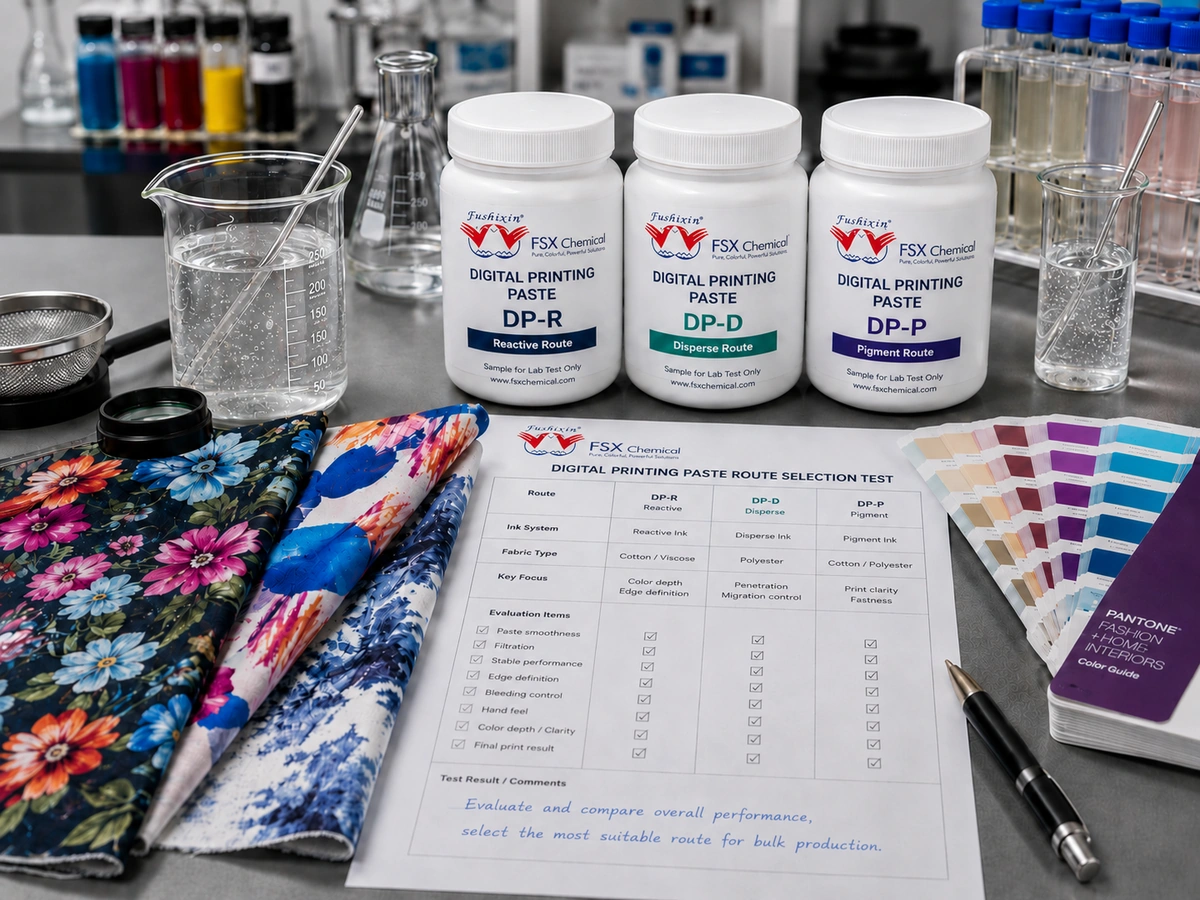
Three Digital Printing Routes Require Different Sustainability Logic
Digital Route
Typical Fabric
Main Chemical Focus
Environmental Efficiency Focus
Phản ứng
Cotton, viscose and suitable cellulosic fibers
Pretreatment, alkali/salt system, moisture control
Fixation efficiency, wash-off demand, color yield, reprint reduction
Because the chemistry differs, there is no universal digital printing paste that can be called the most eco-friendly for all three routes.
1. Reactive Digital Printing Paste and Pretreatment
Reactive digital printing is commonly used on cotton, viscose and other suitable cellulosic fibers.
The pretreatment typically needs to support:
Controlled ink spreading
Fine-line definition
Color development
Reactive dye fixation
Hiệu quả rửa trôi
The process may include:
Pretreatment → Drying or Controlled Wet State → Digital Printing → Drying → Steaming → Washing → Finishing
From an eco-efficiency perspective, the key questions include:
Can the pretreatment achieve the required result at an optimized dosage?
Does it improve color yield without creating excessive wash-off demand?
Does it help reduce reprinting caused by bleeding or poor sharpness?
Does it remain stable during the intended production window?
Can the process avoid unnecessary overdosing of alkali, salt or thickener?
For reactive digital printing, good environmental performance is closely connected to printing accuracy and wash-off efficiency.
A pretreatment that gives deeper color but significantly increases washing demand may not be the best overall choice.
2. Disperse Digital Printing Paste for Polyester
Disperse digital printing is mainly associated with polyester and suitable polyester blends.
The pretreatment route should be evaluated separately from reactive printing because the dye chemistry and fixation mechanism are different.
Important technical factors include:
Uniform pretreatment application
Ink spreading control
Surface stability
Drying behavior
Thermal fixation compatibility
Độ đồng đều của vùng rắn
Color development
Environmental efficiency can be influenced by:
Pretreatment dosage
Drying energy
Thermal fixation efficiency
Độ đồng nhất về màu sắc
Vải bị loại
Need for reprinting
A technically stable pretreatment can support more consistent production and reduce waste caused by uneven color or print defects.
The correct product should therefore be selected specifically for the polyester disperse route rather than borrowed from a reactive-printing formulation.
3. Pigment Digital Printing Paste and Pretreatment
Pigment digital printing introduces a different sustainability profile because pigment particles require binder chemistry for fixation.
Important variables include:
Pigment dispersion compatibility
Khả năng tương thích của chất kết dính
Độ đồng đều trong quá trình tiền xử lý
Rheology
Độ sắc nét khi in
Curing conditions
Dry and wet rubbing fastness
Cảm giác khi chạm vào vải
One potential advantage of pigment systems is that they may reduce or eliminate some washing stages depending on the complete process.
However, this does not automatically make every pigment process more sustainable.
The curing step, binder dosage, durability and reject rate must also be considered.
An efficient pigment digital system should aim for:
Controlled pretreatment
Optimized binder use
Stable curing
Acceptable fastness
Acceptable hand feel
Low rework
Eight Factors for Selecting a More Efficient Digital Printing Paste
1. Liều lượng hiệu quả
Compare the amount actually required to reach the approved result.
Do not assume that the lowest recommended dosage is automatically the best option.
2. Preparation Efficiency
Review:
Thời gian trộn
Thời gian bù nước
Bọt
Lọc
Ease of preparation
3. Pretreatment Uniformity
Uneven application can create local differences in color and sharpness, leading to rework or rejected fabric.
4. Ink-Spreading Control
The product should control lateral migration without creating excessive surface film or poor penetration.
5. Color Performance
Better color efficiency may help reduce over-application of ink or chemicals, but it must be evaluated after the full post-treatment process.
6. Post-Treatment Compatibility
Reactive, disperse and pigment systems require different fixation logic.
7. Production Stability
A product that remains stable through a full production shift can reduce waste and operator intervention.
8. Repeatability
Batch-to-batch consistency helps prevent process readjustment and quality variation.
Why Viscosity Alone Is a Poor Sustainability Metric
Viscosity is important for QC, but it does not measure environmental performance.
A viscosity number is meaningful only when the test method is defined, including:
Nồng độ
Chất lượng nước
Bổ sung nước
Nhiệt độ
Viscometer
Spindle or rotor
Tốc độ quay
Thời gian đọc
Even when two products show the same viscosity:
Độ nhớt như nhau không có nghĩa là hiệu suất in cũng như nhau.
The products may differ in:
Shear response
Structural recovery
Surface retention
Fabric penetration
Phản ứng điện giải
Ink compatibility
Drying behavior
For eco-efficient selection, the buyer should focus on whether the candidate reduces unnecessary resource use while maintaining print quality.
Water, Energy and Post-Treatment Considerations
Digital printing is often promoted as a route to more efficient textile production, but actual resource use depends on the full process.
In phản ứng
Important resource areas include:
Pretreatment preparation
Sấy khô
Hấp
Rửa trôi
A more efficient reactive pretreatment may help improve fixation or reduce defects, but washing requirements still need to be considered.
In phân tán
Energy use is strongly linked to drying and thermal fixation.
Uniform pretreatment can reduce the need for corrective reprocessing.
In bằng mực màu
Pigment routes may reduce washing in some systems, but curing energy and binder performance become more important.
The most useful sustainability comparison should therefore include both water and energy rather than focusing on one metric only.
How Paste Waste and Reprinting Affect Environmental Performance
One of the largest hidden inefficiencies in textile printing is avoidable rework.
Waste can come from:
Unstable pretreatment
Incorrect viscosity
Uneven application
Ink bleeding
Poor fixation
Color inconsistency
Screening or filtration loss
Excess leftover paste
A product that helps reduce these losses may create more environmental value than a product with a slightly lower nominal dosage but poorer production stability.
This is why reject rate and reprinting should be included in environmental evaluation.
Laboratory Workflow for Eco-Efficiency Evaluation
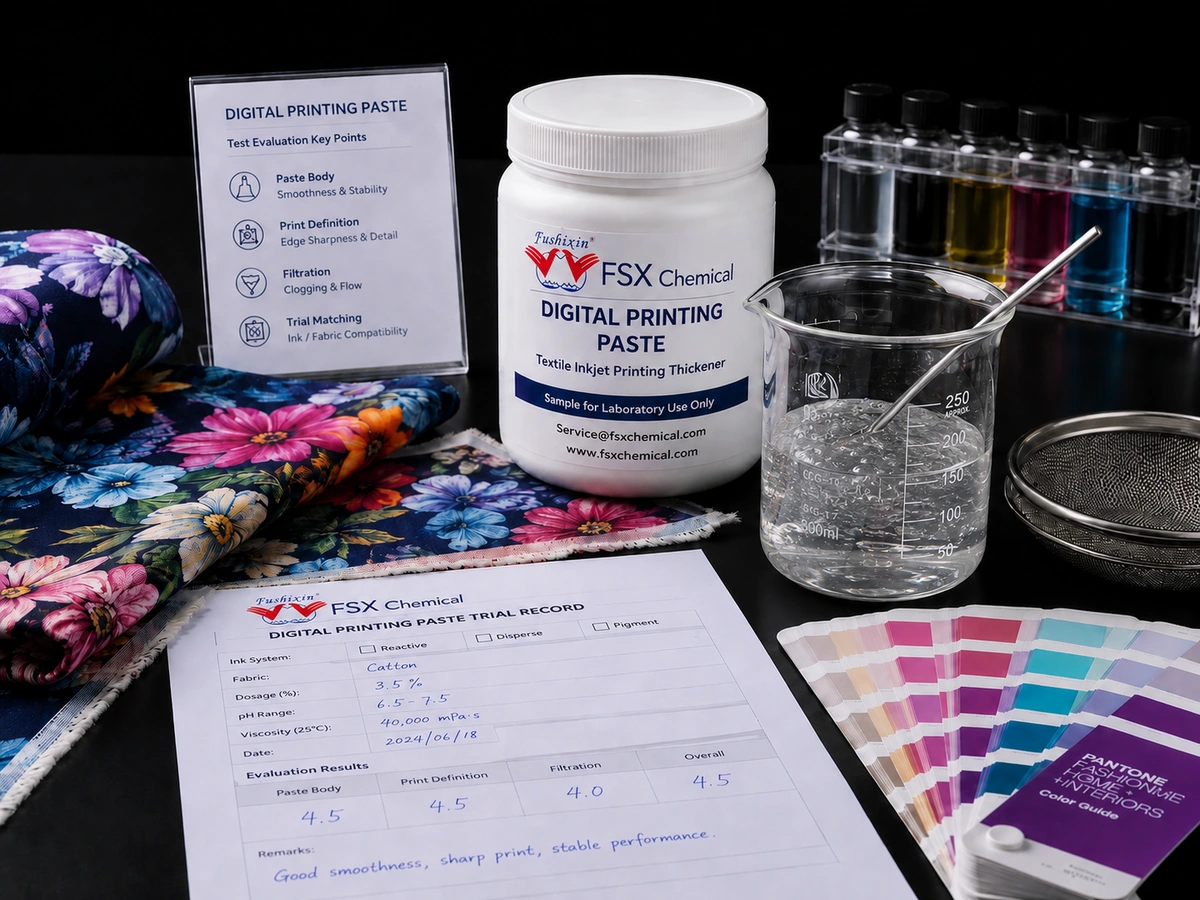
Step 1: Define the Printing Route
Confirm whether the application uses reactive, disperse or pigment ink.
Step 2: Define the Fabric
Record fiber composition, construction and relevant pretreatment history.
Step 3: Record the Current Benchmark
Document:
Current product
Liều lượng hiện tại
TDS hiện tại
Current application method
Current energy- or water-intensive steps
Step 4: Standardize Laboratory Preparation
Use the same water, concentration, mixing, hydration and temperature.
Step 5: Apply the Same Pretreatment Method
Control pick-up or application amount as closely as possible.
Step 6: Print with the Same Ink and Printer Conditions
A fair comparison requires the same ink chemistry and printer settings.
Step 7: Complete the Real Fixation Process
Use steaming, thermal fixation or curing according to the actual route.
Step 8: Complete Washing Where Required
Reactive printing should be evaluated after wash-off rather than before.
Step 9: Evaluate the Finished Textile
So sánh:
Độ sắc nét
Bleeding
Hiệu suất màu
Uniformity
Fastness
Cảm giác khi chạm vào vải (nếu có liên quan)
Step 10: Record Resource Indicators
Where practical, compare:
Product dosage
Thời gian chuẩn bị
Drying conditions
Steaming or curing conditions
Washing demand
Sửa lại
Chất thải
Step 11: Optimize Dosage
Each suitable candidate should be optimized before final comparison.
How to Compare Cost and Environmental Performance Together
Economic and environmental efficiency often overlap.
For example, reducing waste paste can lower both disposal burden and production cost.
Reducing reprinting can lower:
Chemical use
Ink use
Năng lượng
Nước
Machine time
A useful combined evaluation includes:
Delivered product cost
Liều lượng hiệu quả
Preparation efficiency
Drying demand
Fixation or curing demand
Washing demand
Chất thải
Vải bị loại
In lại
This supports a broader version of Total Cost in Use:
Total Production Value = Chemical Cost + Process Efficiency + Quality Yield + Resource Efficiency
This model is more useful than selecting a product because it has the lowest price or the strongest sustainability claim.
A Practical Environmental Performance Framework for Textile Mills
Many mills do not have a full life-cycle assessment for every printing chemical. That does not prevent them from making better process decisions.
A practical internal comparison can use a small set of production indicators measured under the same printing conditions.
Indicator
What to Record
Tại sao điều này lại quan trọng
Chemical efficiency
Effective dosage per unit of pretreatment or fabric
Shows whether the product can achieve the target result without unnecessary overdosing
Preparation efficiency
Mixing time, hydration time, foam and filtration loss
Highlights hidden labor, energy and material losses
Application efficiency
Pick-up consistency, coating or padding uniformity and leftover paste
Links chemical behavior to real fabric application
Printing yield
First-pass acceptance, reprinting and rejected fabric
Quality losses often create much larger resource waste than small dosage differences
Post-treatment demand
Drying, steaming, curing and washing conditions
Captures process energy and water that are not visible in the product price
Repeatability
Batch-to-batch variation and production adjustments
Stable supply can reduce rework and repeated machine optimization
This type of framework does not replace a formal environmental assessment, but it creates a more evidence-based comparison than selecting a product from marketing language alone.
When a supplier uses terms such as “eco-friendly,” “sustainable” or “low-impact,” buyers can ask whether the claim is supported by a defined metric, test method, certification or process improvement.
Where no supporting data are available, it is safer to treat the statement as a positioning claim rather than a demonstrated production benefit.
What to Ask a Digital Printing Paste Supplier
When sustainability is part of the purchasing objective, ask the supplier for technical information rather than generic “eco-friendly” statements.
Useful questions include:
Which ink system is the product designed for?
Which fibers and fabrics are recommended?
What is the recommended dosage range?
What application method is recommended?
How is viscosity measured?
What preparation and hydration conditions are required?
What fixation or curing process is expected?
What washing steps are required?
Can the supplier support a side-by-side production trial?
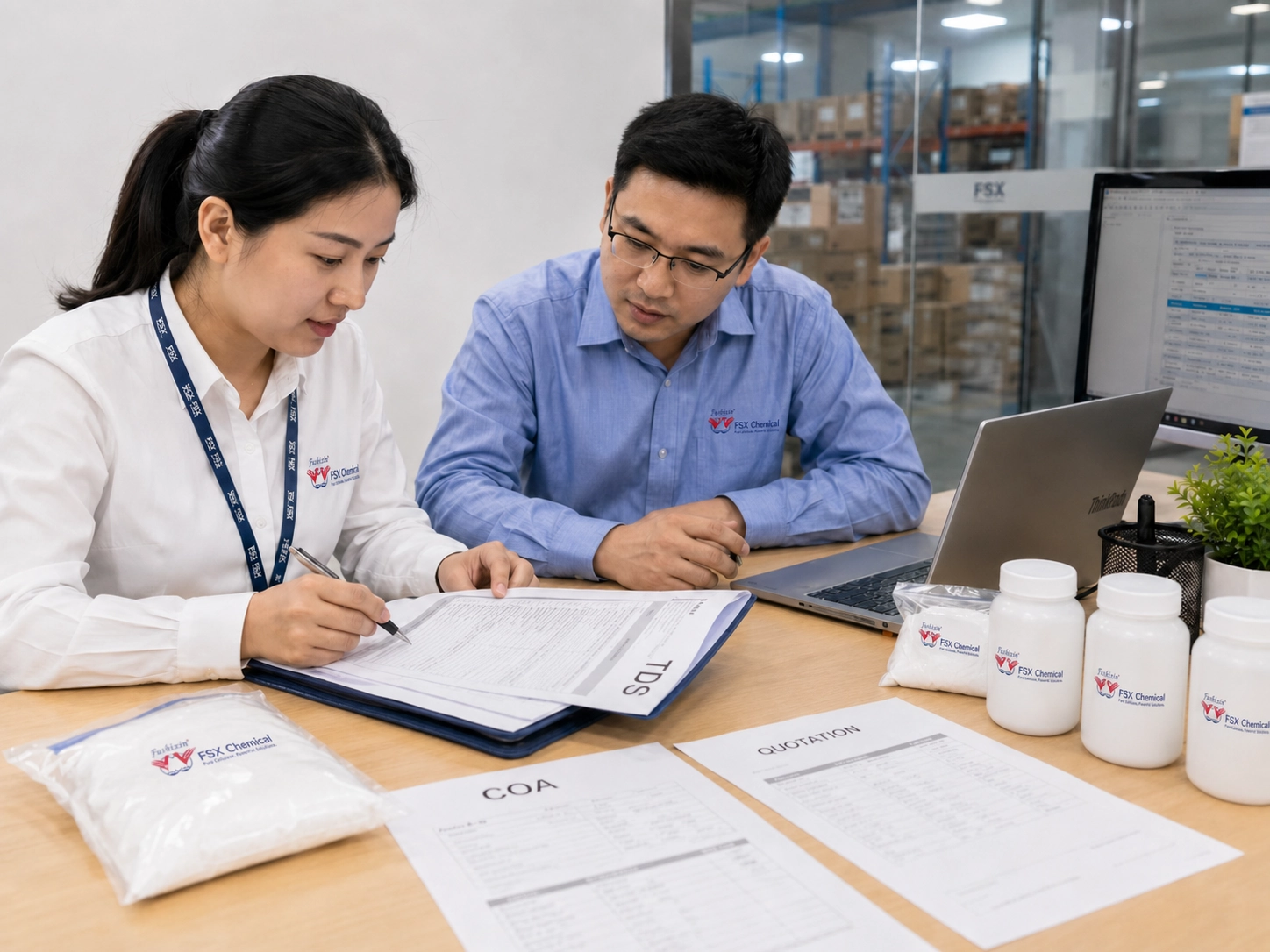
Can the supplier provide TDS, SDS and batch-specific quality data where appropriate?
If the supplier makes an environmental claim, the buyer should ask what specific process metric supports it.
For example:
Lower effective dosage?
Reduced washing?
Lower curing temperature?
Reduced rework?
Less waste?
This creates a more evidence-based sustainability discussion.
How Should You Choose the Right Digital Printing Paste for Eco-Friendly Textile Printing?
The selection process should follow this sequence:
Ink System → Fiber → Pretreatment Route → Candidate Grade → Laboratory Test → Digital Printing → Fixation → Washing/Curing → Finished Fabric → Resource and Cost Evaluation
The most important principles are:
Do not assume that one polymer is automatically more sustainable.
Do not use viscosity as the only performance metric.
Evaluate effective dosage rather than nominal dosage alone.
Include drying, steaming, curing and washing in the comparison.
Include rejected fabric and reprinting in the environmental calculation.
Validate the candidate under the actual production process.
For many mills, the most practical eco-efficiency improvement is not a dramatic change in chemistry.
It is a more stable process that uses the right product at the right dosage and reduces avoidable losses.
Các câu hỏi thường gặp
1. What makes a digital printing paste eco-friendly?
No single feature defines an eco-friendly paste. A better evaluation includes effective dosage, preparation efficiency, drying, fixation, washing, waste, reprinting and finished-fabric quality.
2. Is a natural thickener automatically a more sustainable choice?
No. Polymer origin alone does not determine total environmental impact. Process energy, water use, dosage, waste and production efficiency also matter.
3. Does lower dosage always mean lower environmental impact?
Not necessarily. A low-dosage product may still require more drying, washing or rework. The complete process should be compared.
4. Which digital printing paste is best for reactive ink?
The best candidate depends on fabric, pretreatment method, ink chemistry, dosage, steaming and washing. It should be selected through controlled testing.
5. Can the same eco-friendly pretreatment be used for reactive and disperse printing?
It should not be assumed. Reactive and disperse systems use different fibers, dye chemistry and fixation routes.
6. Is pigment digital printing automatically more sustainable because it may require less washing?
No. Reduced washing can be an advantage in some systems, but binder dosage, curing energy, fastness and reject rates must also be considered.
7. Why is viscosity not enough to select a sustainable digital printing paste?
Viscosity does not describe ink compatibility, fabric penetration, drying, fixation, washing or production waste. Similar viscosity can still produce different process results.
8. How can a mill reduce waste in digital textile printing?
Improve pretreatment uniformity, stabilize preparation, optimize dosage, control ink spreading, reduce reprinting and verify batch consistency.
9. How should environmental claims from suppliers be evaluated?
Ask what measurable process factor supports the claim, such as lower dosage, reduced washing, reduced curing energy, less waste or lower reject rates.
10. How does Total Cost in Use relate to sustainability?
Many production inefficiencies increase both cost and environmental burden. Waste, downtime, reprinting and extra washing are examples.
11. Can FSX Chemical match a digital printing paste to my process?
FSX Chemical can identify a technically relevant candidate when the ink system, fabric, current pretreatment, application method and process conditions are known. Production validation is still required.
12. What information should I send for digital paste matching?
Provide your ink type, fabric, current product or TDS, dosage, pretreatment method, drying conditions, fixation or curing process, washing conditions and current technical target.
Evaluate a Digital Printing Paste for Better Process Efficiency
If you are looking for a digital printing paste that supports stable printing and more efficient use of chemicals, water, energy and production time, FSX Chemical can help identify a technically relevant candidate for controlled testing.
Để việc khớp thông tin được chính xác hơn, vui lòng gửi cho chúng tôi:
Your ink system
Fabric composition
Current pretreatment product or TDS
Liều lượng hiện tại
Application method
Dry or wet printing route
Drying conditions
Fixation, steaming or curing process
Washing requirements
Current quality, cost or sustainability target
Bắt đầu bằng Mẫu và việc kết hợp to establish a controlled comparison under your own production conditions.
The right digital printing paste should support print quality and production efficiency at the same time. Eco-friendly selection should be based on measurable process performance—not on a polymer name or an unsupported green claim.
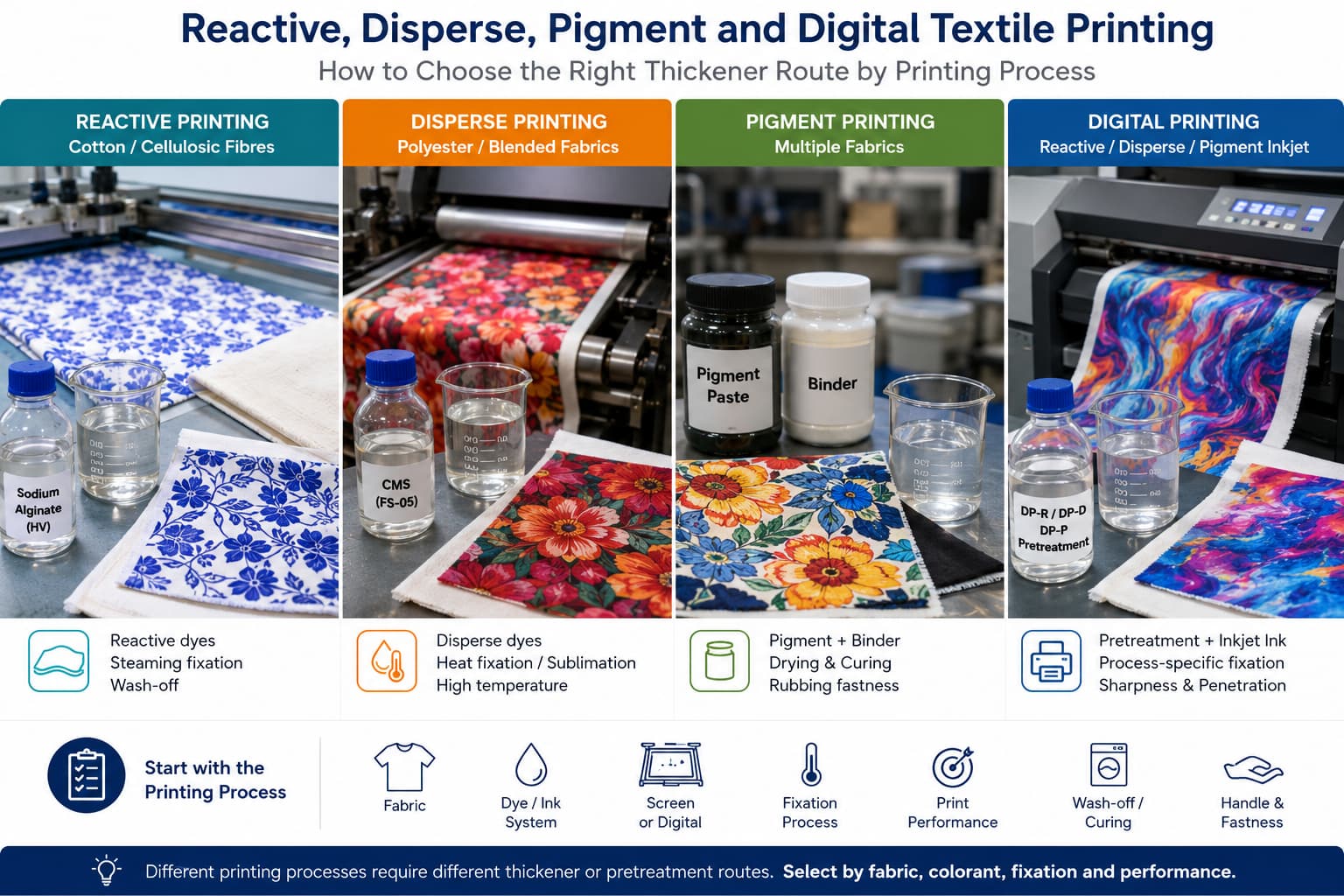
Tìm hiểu cách lựa chọn chất làm đặc và quy trình tiền xử lý cho các phương pháp in dệt phản ứng, in phân tán, in sắc tố và in kỹ thuật số, dựa trên các yêu cầu về vải, thuốc nhuộm hoặc mực in, quá trình cố định màu, khả năng rửa trôi và chất lượng in.
So sánh CMC, CMS, natri alginat và mực in kỹ thuật số trong in ấn dệt may. Tìm hiểu cách thức từng loại nguyên liệu phù hợp với các quy trình in phản ứng, in phân tán, in sắc tố và in kỹ thuật số, cũng như những yếu tố mà người mua cần xem xét trước khi thử mẫu, đối chiếu chất lượng và mua số lượng lớn.
Hỗn hợp in dựa trên CMC được sử dụng rộng rãi trong in vải bằng bột màu, in phản ứng và in kỹ thuật số. Hướng dẫn này giải thích các thông số quan trọng, cách so sánh các nhà cung cấp và những yêu cầu cần đưa ra trước khi đặt hàng số lượng lớn.
Cả natri alginat và CMC đều được sử dụng làm chất làm đặc trong in vải, nhưng chúng phù hợp với các hệ thống thuốc nhuộm và điều kiện quy trình khác nhau. Hướng dẫn này giải thích những điểm khác biệt chính và thời điểm nên sử dụng từng loại.
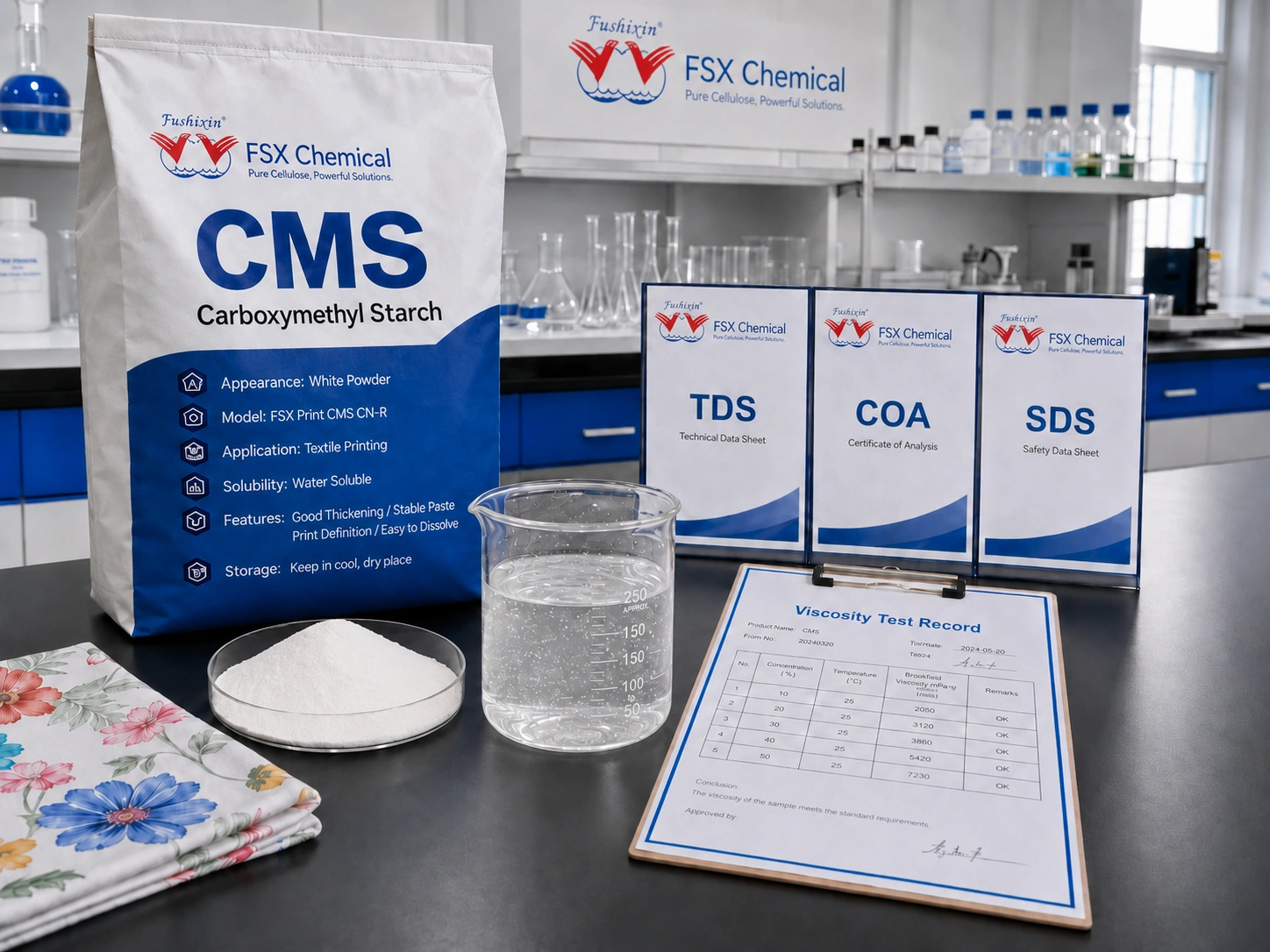
Tinh bột carboxymethyl (CMS) có thể được đánh giá để ứng dụng trong các hệ thống công thức chọn lọc dành cho chất làm cứng vải, bột in và in kỹ thuật số. Hướng dẫn này giải thích cách người mua nên xem xét các yếu tố như cấp độ độ nhớt, tính chất hòa tan, độ pH, độ ẩm, tính chất màng, khả năng tương thích công thức, TDS, COA, SDS, thử nghiệm mẫu và tính nhất quán giữa các lô trước khi mua số lượng lớn.
Việc lựa chọn chất làm đặc phù hợp cho in ấn trên vải không chỉ phụ thuộc vào loại vải. Người mua nên lựa chọn chất làm đặc sao cho phù hợp với hệ thống thuốc nhuộm hoặc bột màu, phương pháp in, tính lưu biến mong muốn, yêu cầu về khả năng rửa trôi và các điều kiện thử nghiệm thực tế tại nhà máy.
Hiệu quả in trên vải phụ thuộc vào một hệ thống hóa học phối hợp nhịp nhàng, chứ không phải chỉ dựa vào một chất phụ gia duy nhất. Cẩm nang này giải thích về mười nhóm hóa chất quan trọng, chức năng của chúng, vị trí ứng dụng cũng như những điều người mua cần kiểm tra trước khi tiến hành thử nghiệm sản xuất.
Các chất làm đặc dùng trong in vải có sự khác biệt về thành phần hóa học, tính lưu biến, khả năng tương thích với thuốc nhuộm và đặc tính phai màu khi giặt. Hướng dẫn này so sánh các nhóm chất làm đặc chính, các hướng ứng dụng phổ biến của chúng và các thông số mà người mua cần kiểm tra trước khi tiến hành thử nghiệm sản xuất.
Việc kiểm soát độ nhớt trong in kỹ thuật số trên vải liên quan đến hai hệ thống khác nhau: hệ thống phun mực và công thức xử lý sơ bộ vải. Hướng dẫn này giải thích cách nhiệt độ, công thức, phương pháp đo lường và điều kiện quy trình ảnh hưởng đến độ ổn định của quá trình phun mực và chất lượng in.
Việc lựa chọn chất nhão in kỹ thuật số cần dựa trên thành phần hóa học của mực, loại vải, phương pháp in và quy trình xử lý sau in. Hướng dẫn này so sánh các phương pháp tiền xử lý sử dụng alginat natri, CMC, CMS, polymer tổng hợp và hỗn hợp trong in phun trên vải.
Loại bột in kỹ thuật số tốt nhất là loại phù hợp với thành phần hóa học của mực, chất liệu vải và quy trình cố định màu. Hướng dẫn này so sánh các yêu cầu về xử lý trước đối với công nghệ in phun phản ứng trên vải cellulose và công nghệ in phun phân tán trực tiếp trên polyester, sau đó giải thích cách người mua nên đánh giá mẫu thử trước khi đặt hàng số lượng lớn.
Để nâng cao chất lượng in trên vải, không chỉ đơn thuần là thay đổi một loại hóa chất. Hướng dẫn này giải thích cách FSX Chemical hỗ trợ quá trình lựa chọn dựa trên quy trình đối với natri alginat, CMC, CMS và bột in kỹ thuật số, tiếp theo là thử nghiệm mẫu, xác nhận sản xuất và rà soát tài liệu lô hàng.
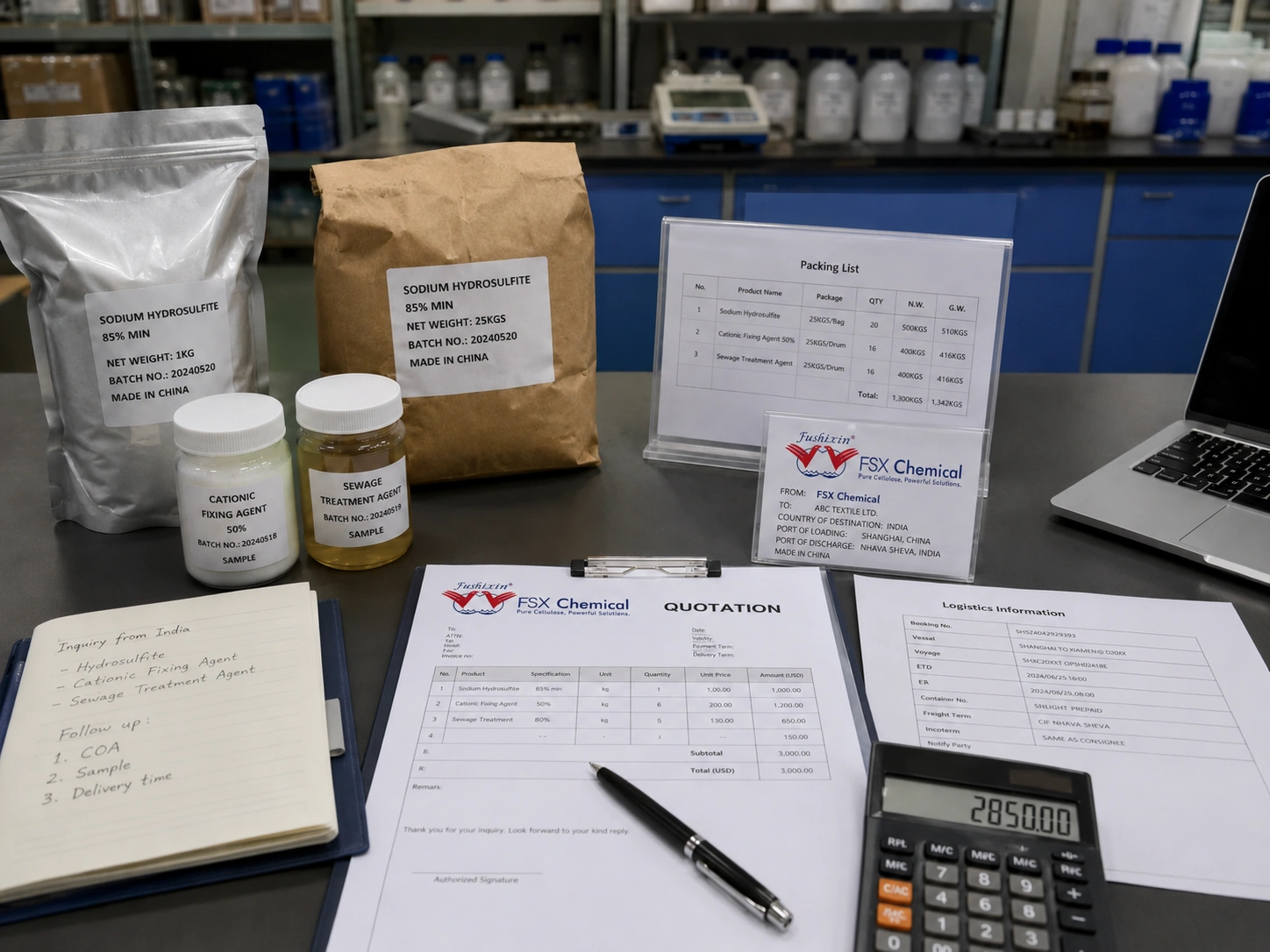
Vui lòng cung cấp tên sản phẩm, ứng dụng, số lượng, điểm đến và bất kỳ tài liệu kỹ thuật (TDS),
hình ảnh mẫu hoặc tài liệu nào mà quý khách đã có. FSX Chemical sẽ xem xét
thông tin này và đề xuất bước tiếp theo liên quan đến báo giá, đối chiếu mẫu
hoặc lựa chọn sản phẩm.
Thông tin sản phẩmTên sản phẩm, cấp loại, mẫu mã, ảnh nhãn mác hoặc mã tham chiếu của nhà cung cấp.
Các tài liệu có sẵnTDS, SDS, COA, ảnh mẫu, danh mục sản phẩm hoặc dữ liệu thử nghiệm.
Chi tiết đơn hàngSố lượng dự kiến, hình thức đóng gói, nước nhập khẩu, cảng hoặc điều kiện thương mại.
Yêu cầu hoặc Vấn đềQuy trình in trên vải, yêu cầu về công thức, vấn đề hiện tại hoặc chỉ tiêu hiệu suất.