
التصنيع في مركز CMC ومراقبة جودة الدُفعات

بدءًا من توريد ألياف القطن وصولاً إلى الإنتاج الخاضع للرقابة لمادة CMC، واختبار الدُفعات، وإمكانية تتبع شهادات التحليل (COA)، والتعبئة للتصدير.

وظيفته في المعجون

Functional characteristics of CMC in textile printing

CMC (carboxymethyl cellulose) is used as a textile printing thickener, viscosity modifier and paste stabilizer. It helps printing mills improve paste body, print definition, water retention and cost control in selected reactive, disperse and industrial textile printing systems.

زيادة اللزوجة بكفاءة

Provides practical paste viscosity and body at controlled dosage, helping mills adjust printing paste flow and application stability.

Clear print definition

Supports stable paste transfer and cleaner pattern edges when the grade, viscosity and formula are matched to the printing process.

Controlled paste flow

Helps balance flow, penetration and screen release for rotary screen, flat screen and selected textile coating or printing applications.

Water retention support

Improves paste moisture retention and working stability, helping reduce drying issues during preparation, storage and printing.

Formula compatibility

Can be evaluated with dyes, auxiliaries and existing thickener systems to improve paste handling under customer-specific conditions.

Cost-control option

CMC can be used as a cost-adjustment route in selected printing systems after lab matching and small-batch production testing.
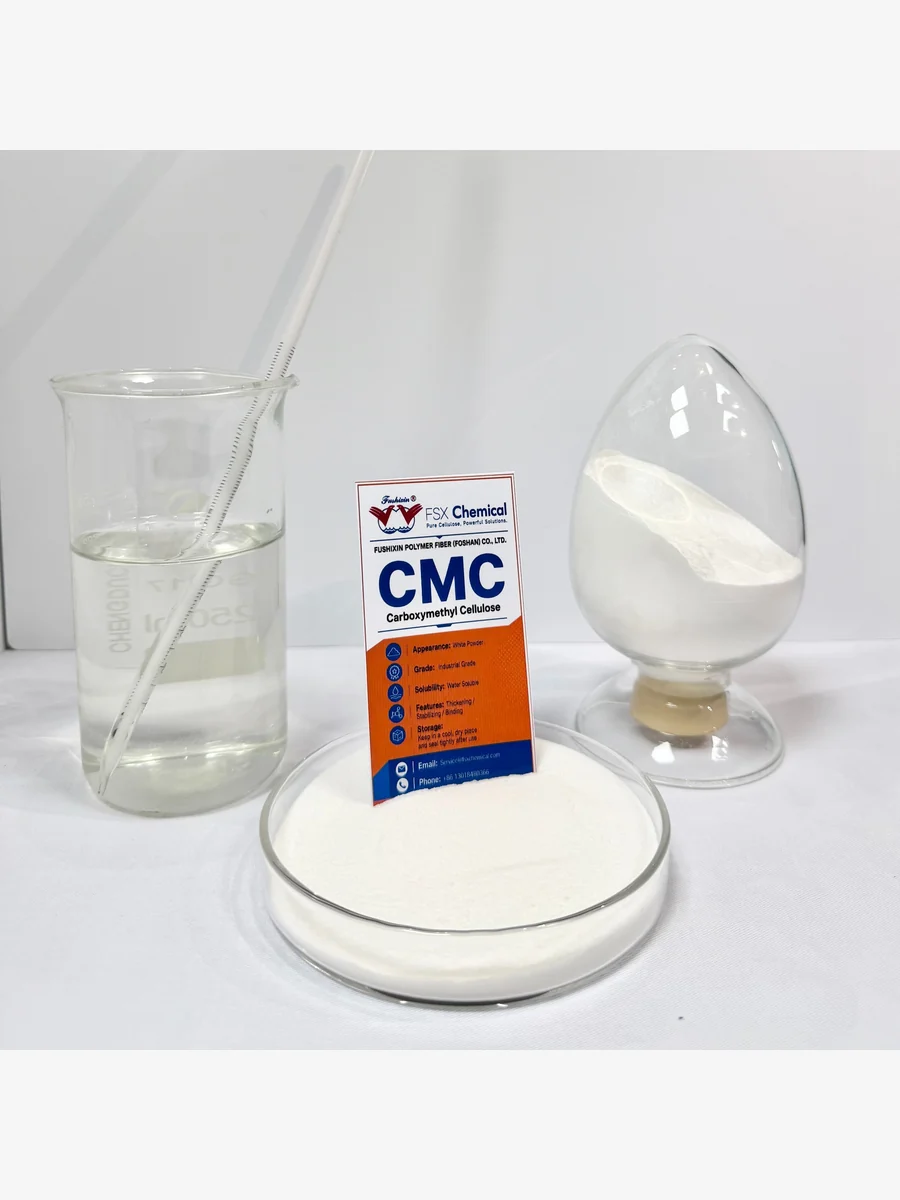
CMC powder and prepared stock paste for textile printing thickener application

CMC Grade Matching by Function

High viscosity CMC For strong paste body Used when higher viscosity, paste stability and stronger thickening effect are required.
Medium viscosity CMC For balanced printing paste Suitable for viscosity control, paste transfer and general textile printing evaluation.
Low viscosity / custom CMC For formula adjustment Recommended when flow, penetration, dosage or compatibility needs fine adjustment.
في أي مرحلة من العملية يتم تطبيقه

Where CMC Works in the Textile Printing Workflow

CMC can influence textile printing paste from preparation to washing. The highlighted steps show where viscosity control, paste body, transfer stability and wash-off behavior are most directly evaluated.

لصق
Preparation
CMC is dispersed and dissolved under controlled mixing; viscosity grade, dosage and dissolution behavior are checked at this stage.
Thickener
Adjustment
CMC may be blended with alginate, synthetic thickener or existing paste systems to adjust rheology, paste body and application feel.
Colour Paste
Mixing
Dyes or inks, auxiliaries and alkali where required are added; CMC helps maintain paste body and handling stability during mixing.
Printing
During rotary or flat-screen printing, paste transfer, edge definition and penetration are influenced by CMC grade, dosage and formulation conditions.
Drying /
Fixing
Drying and fixation conditions depend on fabric, dye system and equipment; paste behavior after drying should be checked before production scale-up.
Washing
After washing, mills evaluate wash-off, background clarity, hand feel and whether any paste residue affects the final fabric surface.
Finishing
Softening or other finishing steps are applied according to fabric feel, customer requirements and downstream processing needs.
الخطوات الموضحة show where CMC most directly affects paste preparation, viscosity adjustment, printing performance and wash-off evaluation. Steaming, drying, washing and fixation conditions vary by fabric type, dye system and equipment. All parameters should be treated as reference only and confirmed through laboratory trials under actual production conditions.
كيفية تقييم النتيجة

How to Evaluate CMC Printing Results After Washing

When testing a CMC-based or CMC-blended thickener system, focus on print definition, paste stability, wash-off performance and fabric hand feel to judge whether the route is suitable for your application.

CMC-thickened printed fabric samples after washing showing print definition and background clarity

Results depend on fabric type, dye system, CMC grade, dosage and process conditions. Always confirm the result through laboratory trials before moving into bulk production.

Key Result Indicators to Check

Use these six process and quality indicators when comparing a CMC-based or blended thickener system against your current printing paste.

Paste body consistency

Check whether paste viscosity and body remain stable from preparation to the end of the print run.

Print definition

Pattern outlines should stay clean, with acceptable sharpness and accurate reproduction of the screen design.

Blending compatibility

Check for phase separation, uneven thickening, gel particles or unexpected viscosity changes before scaling up.

Wash-off and background clarity

After washing, the unprinted ground should remain clear, without visible haze, residue or background staining.

Fabric hand feel

The fabric should keep an acceptable hand feel after proper washing. Residual stiffness may mean the formula or process needs adjustment.

Batch-to-batch reproducibility

Compare paste viscosity, shade consistency and print effect across trial batches before moving into bulk production.
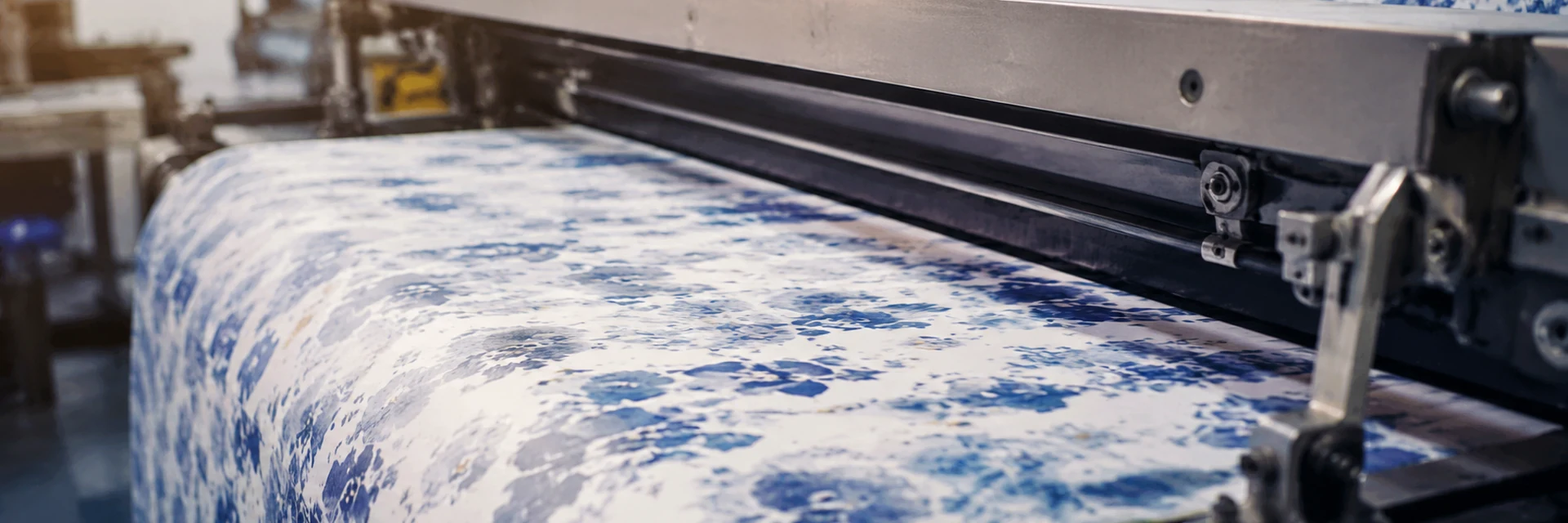

CMC-based textile printing paste application on printed fabric in industrial screen printing process
تقييم المسار

CMC as a Blending Route for Printing Paste Adjustment

CMC route comparison for formulation review

Practical orientation before lab sample matching — not a fixed performance ranking

Rheology
control

Useful for viscosity build-up, paste body adjustment and flow control

Strong
Blending
compat.

Can be tested with alginate, synthetic thickeners or existing paste systems

Good
Batch
consistency

Stable paste preparation can support repeatable production trials

Strong
Print
definition

Helps when paste transfer, edge control and screen release are properly matched

Moderate–good
Cost
adjustment

Direct factory supply helps customers evaluate a practical cost-adjustment route

Favourable
Special
processes

Not the preferred route for vat discharge or alkali burn-out systems

Limited scope

When a CMC Route Is Worth Testing

CMC is not a simple one-to-one replacement for sodium alginate, and it is not the same route as CMS. Its value lies in how it adjusts paste structure: CMC can help stabilize rheology, improve blending compatibility and support more consistent paste handling in selected textile printing systems.

For mills already using alginate, synthetic thickeners or blended paste systems, a CMC trial can be useful when the target is to improve paste body, adjust viscosity behavior, reduce formulation pressure or compare a more cost-efficient route before changing the full system.

FSX Chemical manufactures CMC in our China factory and provides direct factory supply, factory price quotation and sample matching support for textile printing, dyeing and industrial formulation customers.

CMC should not be added directly into digital inkjet inks. For digital printing pretreatment or digital printing paste applications, evaluate a dedicated digital printing paste route instead.

CMC grade selection should be based on your fabric type, dye system, current thickener route and target viscosity range. Final selection — including whether to use CMC alone or as a blending component — should be confirmed through laboratory sample testing and small-batch production trials under your actual production conditions.
محدد الدرجة

Choose a Starting CMC Grade for Your Printing Paste Trial

Select your printing situation below to compare FSX Chemical CMC starting grades. We manufacture CMC in our Foshan factory and can provide direct factory samples, factory price quotation and technical matching support before final grade and dosage confirmation.

High DS Grade

فوشيشين برينت HD

FSX Chemical CMC Textile Printing Thickener — CAS 9004-32-4

Degree of substitution DS 1.9–2.0
اللزوجة المرجعية 800–1,800 mPa.s (1%, 20°C)
الرقم الهيدروجيني (1%) 7.0–9.0
Best for Reactive printing systems requiring higher DS, improved solubility and compatibility
General Grade

فوشيشين برينت إم دي

FSX Chemical CMC Textile Printing Thickener — CAS 9004-32-4

Degree of substitution DS 1.5–1.6
اللزوجة المرجعية 800–1,800 mPa.s (1%, 20°C)
الرقم الهيدروجيني (1%) 7.0–9.0
Best for General reactive printing and alginate-blended paste systems
Broad Compatibility

فوشيشين برينت LD

FSX Chemical CMC Textile Printing Thickener — CAS 9004-32-4

Degree of substitution DS 1.3–1.4
اللزوجة المرجعية 1,500–3,000 mPa.s (1%, 20°C)
الرقم الهيدروجيني (1%) 7.0–9.0
Best for Reactive or disperse printing, synthetic thickener and alginate blend systems
الاستفسارات والدعم الفني بشأن المنتجات

أرسل متطلبات منتجك

يرجى إرسال اسم المنتج، والتطبيق، والكمية، والوجهة، وأي بيانات تقنية (TDS)، أو صورة عينة أو مستند متوفر لديكم بالفعل. وستقوم شركة FSX Chemical بمراجعة هذه المعلومات وتقديم توصية بشأن الخطوة التالية سواء كانت تقديم عرض أسعار، أو مطابقة العينة، أو اختيار المنتج.

معلومات عن المنتج اسم المنتج، الدرجة، الطراز، صورة الملصق أو مرجع المورد.
الوثائق المتاحة TDS، SDS، COA، صورة العينة، قائمة المنتجات أو بيانات الاختبار.
تفاصيل الطلب الكمية التقديرية، والتعبئة، وبلد المقصد، والميناء، أو الشروط التجارية.
الطلب أو المشكلة عملية طباعة المنسوجات، متطلبات التركيبة، المشكلات الحالية أو الأداء المستهدف.