
CMC Manufacturing & Batch Quality Control
From cotton-linter sourcing to controlled CMC production, batch testing, COA traceability and export packing.
Functional characteristics of CMC in textile printing
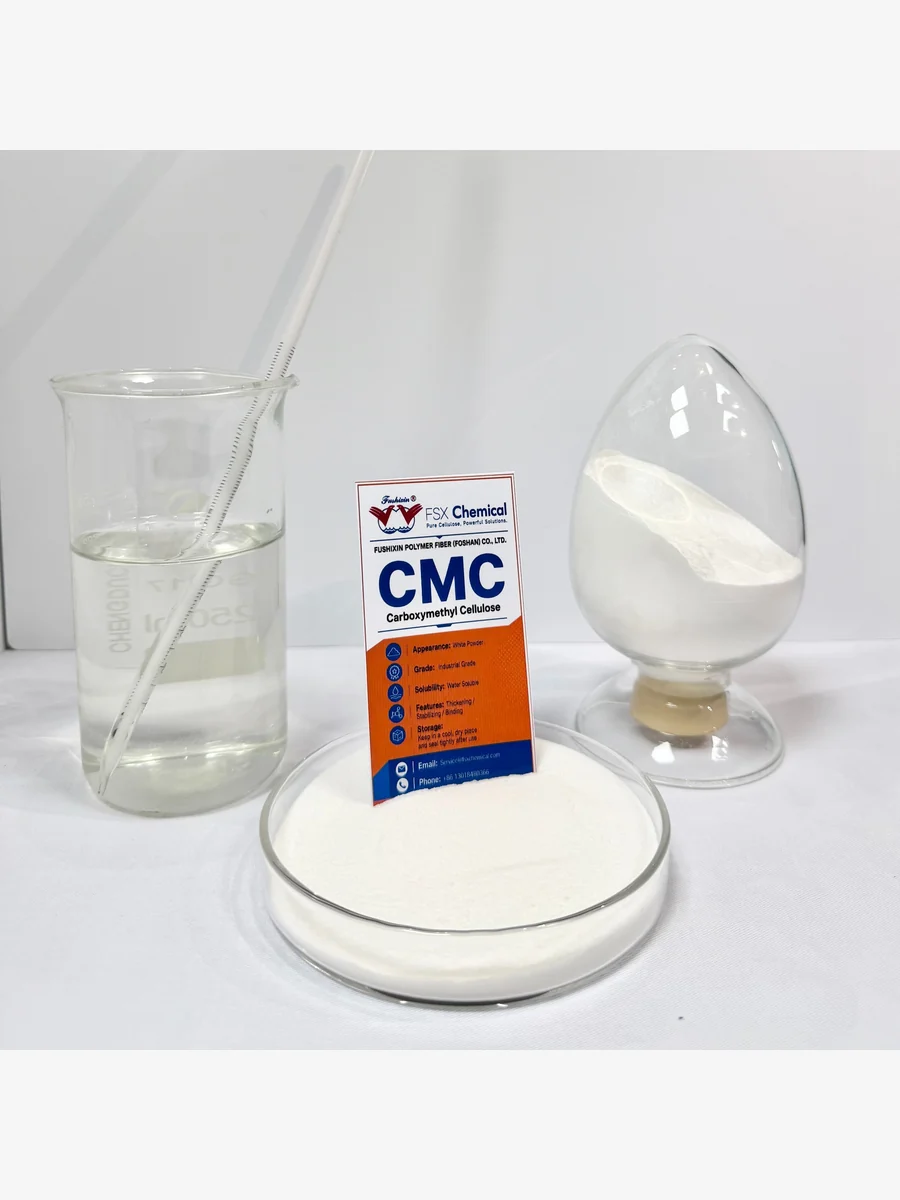
CMC (carboxymethyl cellulose) is used as a textile printing thickener, viscosity modifier and paste stabilizer. It helps printing mills improve paste body, print definition, water retention and cost control in selected reactive, disperse and industrial textile printing systems.
Efficient viscosity build-up
Provides practical paste viscosity and body at controlled dosage, helping mills adjust printing paste flow and application stability.
Clear print definition
Supports stable paste transfer and cleaner pattern edges when the grade, viscosity and formula are matched to the printing process.
Controlled paste flow
Helps balance flow, penetration and screen release for rotary screen, flat screen and selected textile coating or printing applications.
Water retention support
Improves paste moisture retention and working stability, helping reduce drying issues during preparation, storage and printing.
Formula compatibility
Can be evaluated with dyes, auxiliaries and existing thickener systems to improve paste handling under customer-specific conditions.
Cost-control option
CMC can be used as a cost-adjustment route in selected printing systems after lab matching and small-batch production testing.
CMC Grade Matching by Function
Where CMC Works in the Textile Printing Workflow
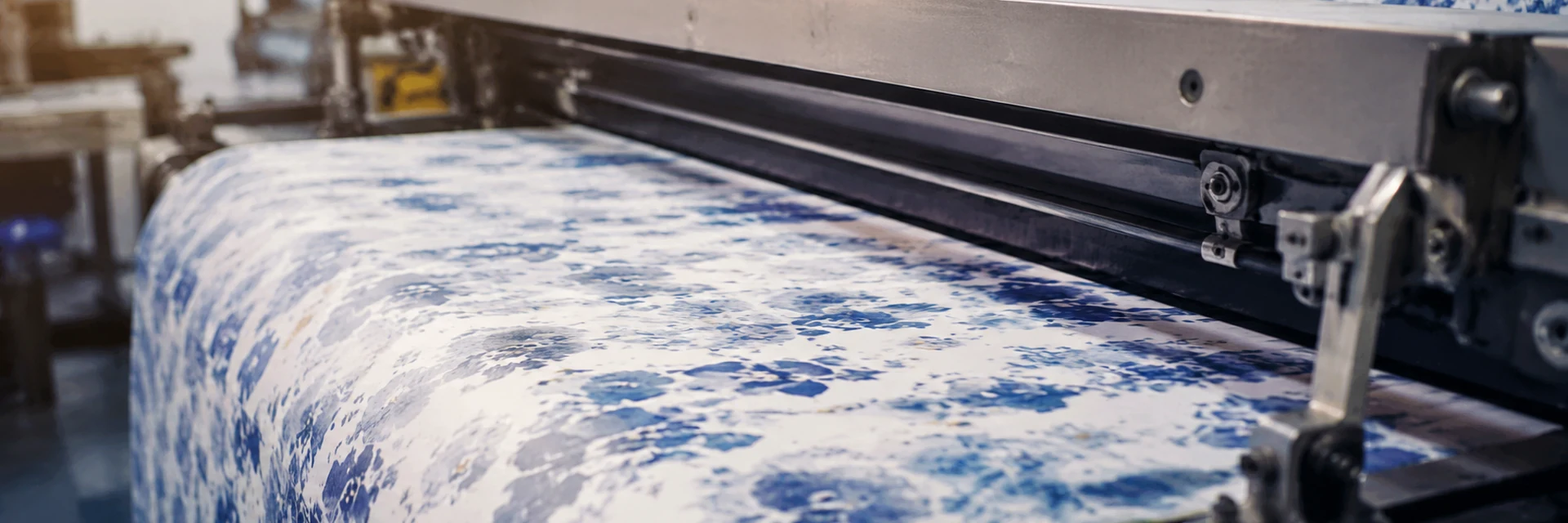
CMC can influence textile printing paste from preparation to washing. The highlighted steps show where viscosity control, paste body, transfer stability and wash-off behavior are most directly evaluated.
Persiapan
Adjustment
Pencampuran
Fixing
How to Evaluate CMC Printing Results After Washing
When testing a CMC-based or CMC-blended thickener system, focus on print definition, paste stability, wash-off performance and fabric hand feel to judge whether the route is suitable for your application.

Results depend on fabric type, dye system, CMC grade, dosage and process conditions. Always confirm the result through laboratory trials before moving into bulk production.
Key Result Indicators to Check
Use these six process and quality indicators when comparing a CMC-based or blended thickener system against your current printing paste.
Paste body consistency
Check whether paste viscosity and body remain stable from preparation to the end of the print run.
Print definition
Pattern outlines should stay clean, with acceptable sharpness and accurate reproduction of the screen design.
Blending compatibility
Check for phase separation, uneven thickening, gel particles or unexpected viscosity changes before scaling up.
Wash-off and background clarity
After washing, the unprinted ground should remain clear, without visible haze, residue or background staining.
Fabric hand feel
The fabric should keep an acceptable hand feel after proper washing. Residual stiffness may mean the formula or process needs adjustment.
Batch-to-batch reproducibility
Compare paste viscosity, shade consistency and print effect across trial batches before moving into bulk production.
CMC as a Blending Route for Printing Paste Adjustment
CMC route comparison for formulation review
Practical orientation before lab sample matching — not a fixed performance ranking
control
Useful for viscosity build-up, paste body adjustment and flow control
compat.
Can be tested with alginate, synthetic thickeners or existing paste systems
consistency
Stable paste preparation can support repeatable production trials
definition
Helps when paste transfer, edge control and screen release are properly matched
adjustment
Direct factory supply helps customers evaluate a practical cost-adjustment route
processes
Not the preferred route for vat discharge or alkali burn-out systems
When a CMC Route Is Worth Testing
CMC is not a simple one-to-one replacement for sodium alginate, and it is not the same route as CMS. Its value lies in how it adjusts paste structure: CMC can help stabilize rheology, improve blending compatibility and support more consistent paste handling in selected textile printing systems.
For mills already using alginate, synthetic thickeners or blended paste systems, a CMC trial can be useful when the target is to improve paste body, adjust viscosity behavior, reduce formulation pressure or compare a more cost-efficient route before changing the full system.
FSX Chemical manufactures CMC in our China factory and provides direct factory supply, factory price quotation and sample matching support for textile printing, dyeing and industrial formulation customers.
CMC should not be added directly into digital inkjet inks. For digital printing pretreatment or digital printing paste applications, evaluate a dedicated digital printing paste route instead.
Choose a Starting CMC Grade for Your Printing Paste Trial
Select your printing situation below to compare FSX Chemical CMC starting grades. We manufacture CMC in our Foshan factory and can provide direct factory samples, factory price quotation and technical matching support before final grade and dosage confirmation.
Fushixin Print HD
FSX Chemical CMC Textile Printing Thickener — CAS 9004-32-4
Fushixin Print MD
FSX Chemical CMC Textile Printing Thickener — CAS 9004-32-4
Fushixin Print LD
FSX Chemical CMC Textile Printing Thickener — CAS 9004-32-4
Kirimkan Persyaratan Produk Anda
Berikan nama produk, kegunaan, jumlah, tujuan pengiriman, serta TDS, foto sampel, atau dokumen lain yang sudah Anda miliki. FSX Chemical akan meninjau informasi tersebut dan merekomendasikan langkah selanjutnya terkait penawaran harga, pencocokan sampel, atau pemilihan produk.