














Why CMS Grade Matching Matters in Textile Printing Paste
Different Factories Need Different Viscosity Behavior
A CMS grade that works well in one printing factory may not perform the same way in another formulation. Printing paste concentration, stirring method, water quality, fabric type, and production speed can all affect the final paste behavior.
For buyers, it is better to define the target viscosity range and application requirement before asking for a quotation. This helps the supplier recommend a more suitable starting grade.
CMS Performance Depends on the Full Formulation
This is why a simple price comparison is not enough. Buyers should also check whether the CMS grade can dissolve well, form a smooth paste, and remain stable during normal production use.

Sample Testing Reduces Purchasing Risk
Before placing a bulk order, sample testing helps reduce the risk of viscosity mismatch, poor dispersion, filtration problems, or unstable paste behavior.
A small laboratory trial can help buyers confirm whether the CMS grade is suitable for their own process before moving to larger production testing.
What CMS Can Support in Printing Paste Formulations
Viscosity Adjustment
CMS can help build and adjust the viscosity of textile printing paste. A suitable viscosity allows the paste to be mixed, handled, and applied more consistently.
If the viscosity is too low, the paste may spread too easily. If the viscosity is too high, it may be difficult to stir, filter, or apply evenly.
Paste Smoothness and Handling
Good paste smoothness is important for practical production. A suitable CMS grade should disperse properly and help form a uniform paste under correct mixing conditions.
Poor dispersion may lead to lumps, uneven texture, longer preparation time, or extra filtration work.
Formulation Stability During Production
In textile printing, paste stability affects production control. A stable paste is easier for operators to handle and helps reduce frequent adjustment during production.
However, stability should always be tested in the buyer’s own formulation. Water quality, pH, storage time, and auxiliary chemicals can all influence the final result.
Key Parameters to Confirm Before Buying CMS
Viscosity Range
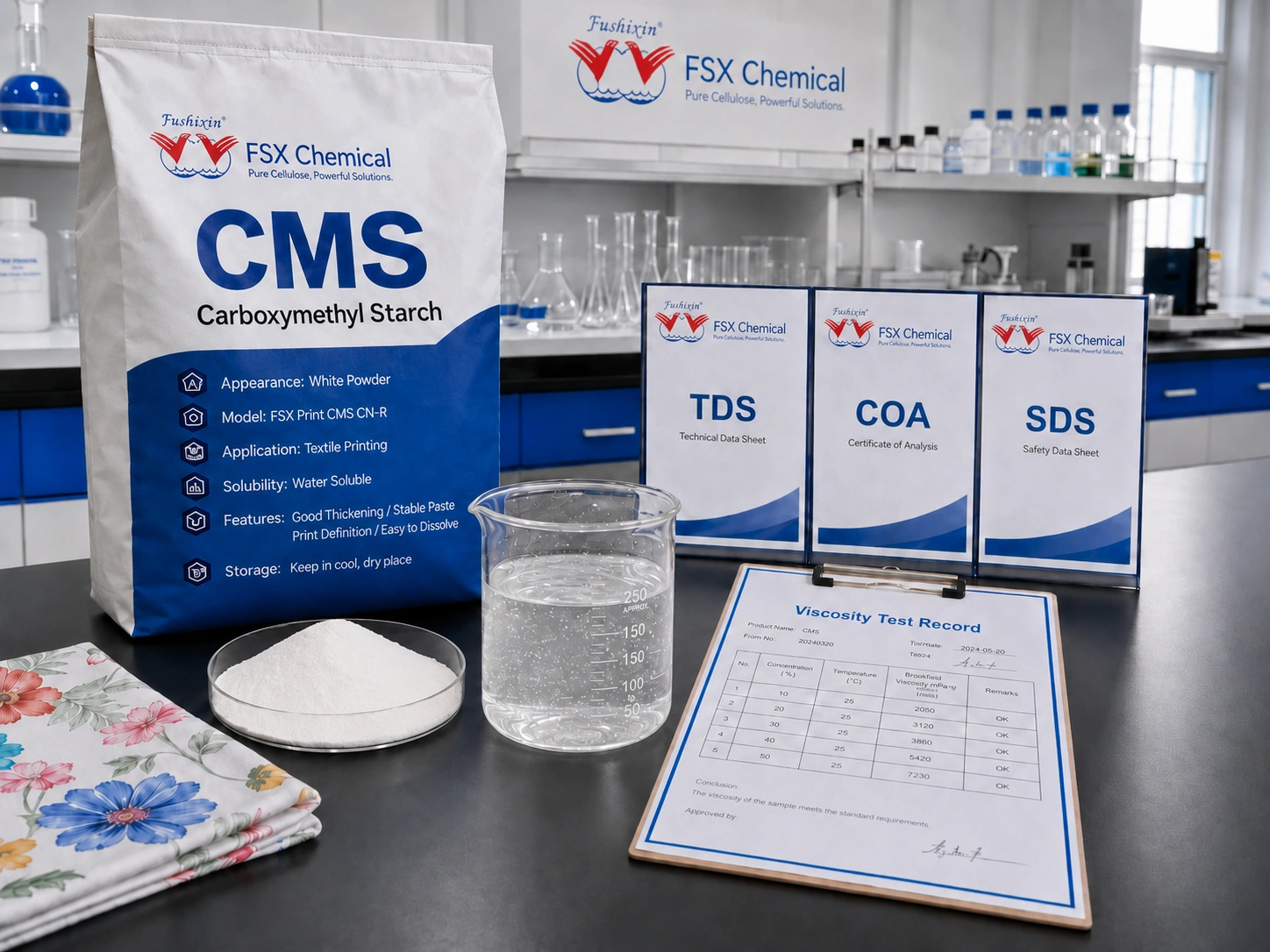
Viscosity is one of the most important parameters for CMS selection. Buyers should ask for the viscosity range, testing concentration, testing temperature, and unit shown in the TDS.

Degree of Substitution
If the buyer is replacing an existing product, sharing the current DS and viscosity range can help the supplier recommend a closer match.
Solubility and Dispersion
Solubility and dispersion performance affect paste preparation efficiency. A suitable CMS grade should disperse well and form a smooth paste under proper mixing conditions.
Buyers should pay attention to whether the paste has lumps, particles, uneven texture, or filtration difficulty during testing.
pH, Moisture and Batch Consistency
pH and moisture should be checked in the TDS and COA. These parameters are important for storage, quality control, and repeat purchasing.
Batch consistency is especially important for distributors and factories that need long-term stable supply.
How to Test CMS Before Bulk Purchase
Prepare a Small Paste Trial
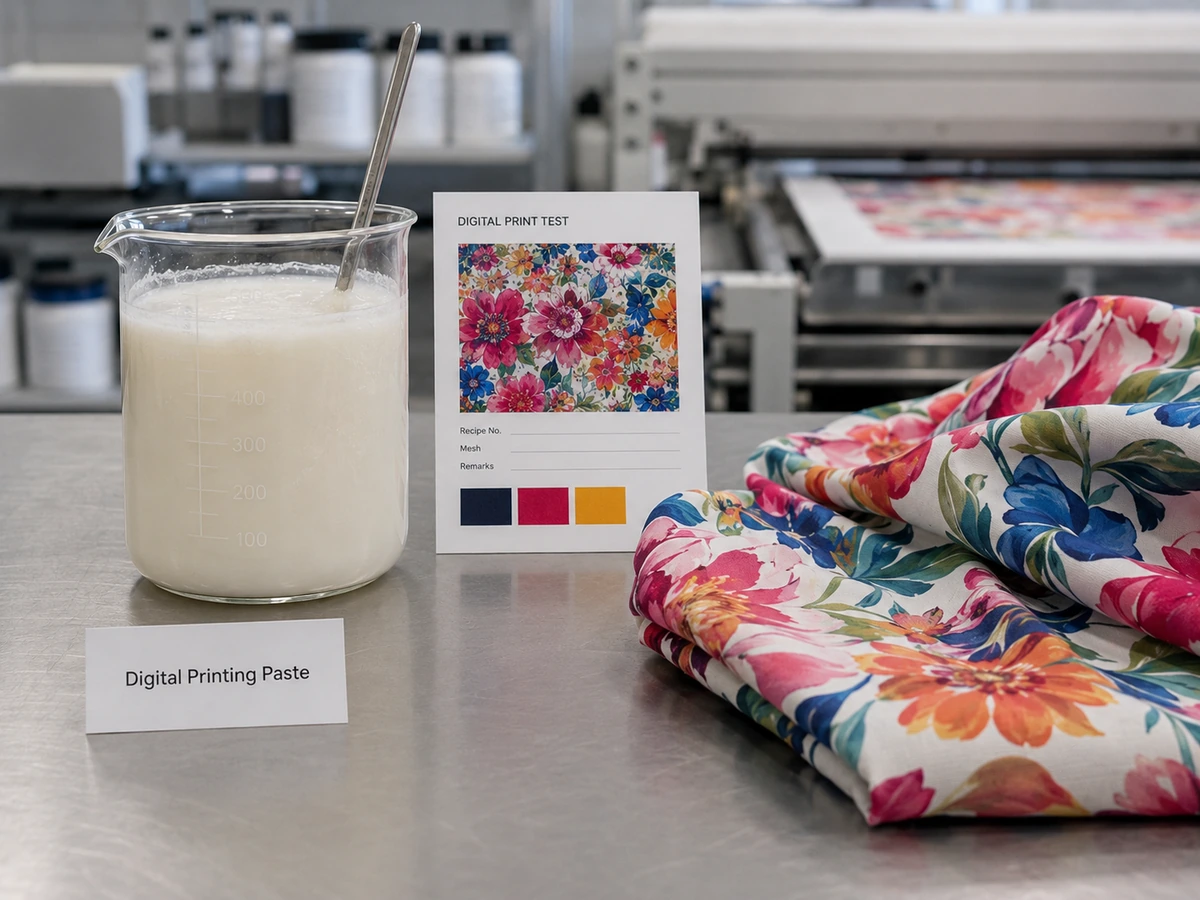
The first step is to test the CMS sample in a small paste preparation trial. The buyer should follow the same water quality, stirring method, concentration, and preparation process used in daily production.
This helps make the test result closer to real factory conditions.
Check Mixing and Filtration Behavior
If the paste is difficult to filter or contains obvious particles, the grade may not be suitable for that formulation.

Compare Print Handling Under Real Conditions
After paste preparation, buyers should evaluate handling performance during application. Important observations include paste flow, spreading behavior, edge control, and overall production stability.
The final decision should be based on both technical data and actual application testing.
What Information Should Buyers Send to the Supplier?
Current Formulation or Target Application
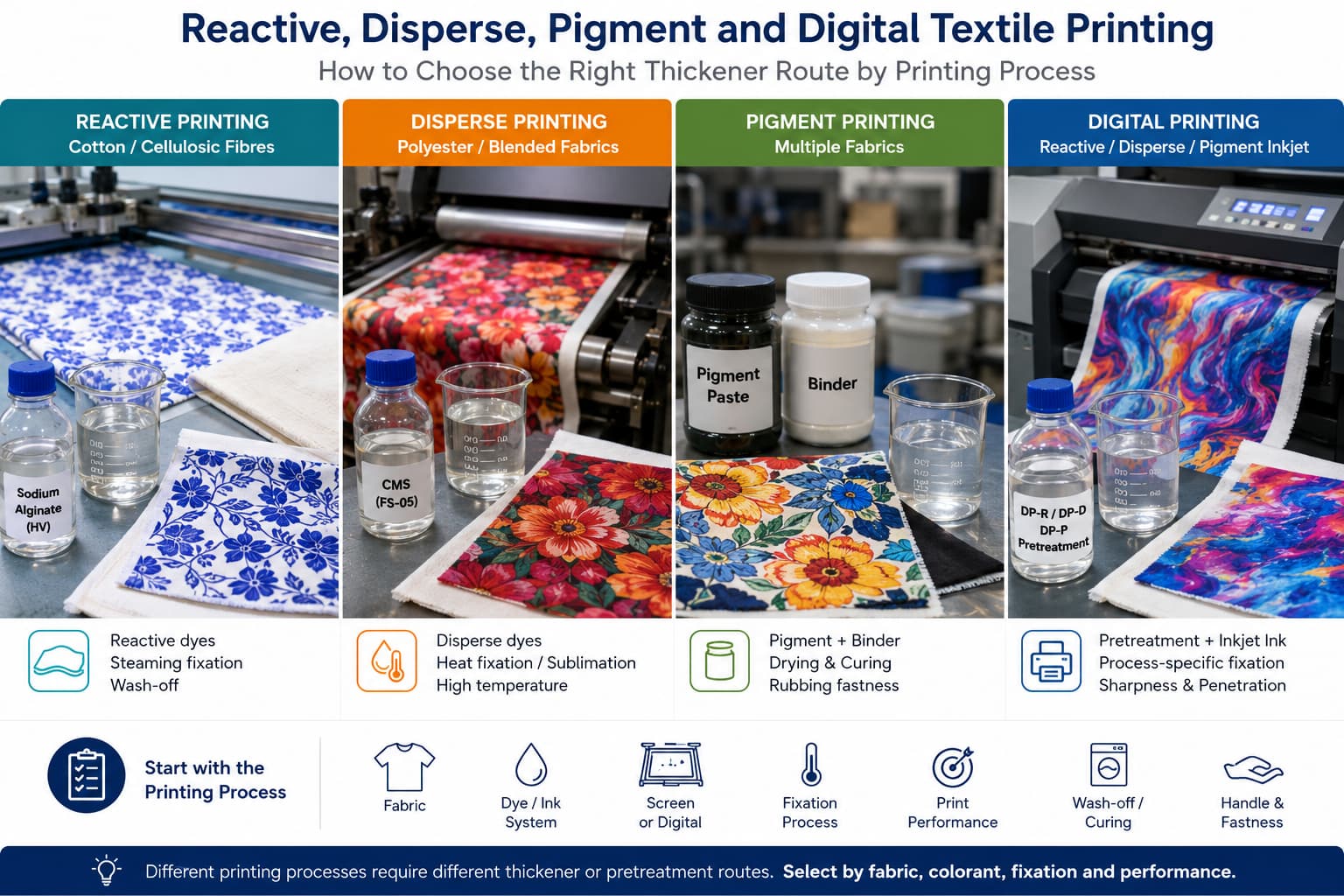
To recommend a suitable CMS grade, the supplier needs to understand the buyer’s application. Useful information includes the printing process, paste system, fabric type, and target performance.
If the buyer has an existing formulation, sharing the current thickener type and dosage can make grade matching more accurate.
Required Viscosity and Testing Method
Buyers should provide the required viscosity range if available. It is also helpful to specify the testing concentration, temperature, and instrument method.
Different testing methods can produce different viscosity results, so clear communication is important.
Fabric Type and Printing Process
CMS performance may vary depending on fabric type and process conditions. Buyers should tell the supplier whether the product will be used for cotton, blended fabric, or other textile materials.
The printing process, production scale, and application method should also be confirmed before sample selection.
How FSX Chemical Approaches CMS Grade Matching
Next Steps
- Request a TDS — review viscosity range, DS, pH, moisture, appearance, storage conditions, and testing method.
- Ask for Grade Matching — share your target viscosity, printing process, fabric type, and current formulation for a more practical recommendation.
- Request a Sample — test the recommended CMS grade in your own paste preparation and printing conditions before committing to volume.
- Contact Our Technical Team — discuss whether the grade can realistically match your application requirements 📧 Email: Service@fsxchemical.com