 BN
BN  EN
EN  ES
ES  TR
TR  FR
FR  ID
ID  RU
RU  AR
AR  UR
UR  VI
VI  TL
TL  HI
HI  UK
UK  KK
KK  KA
KA  UZ
UZ 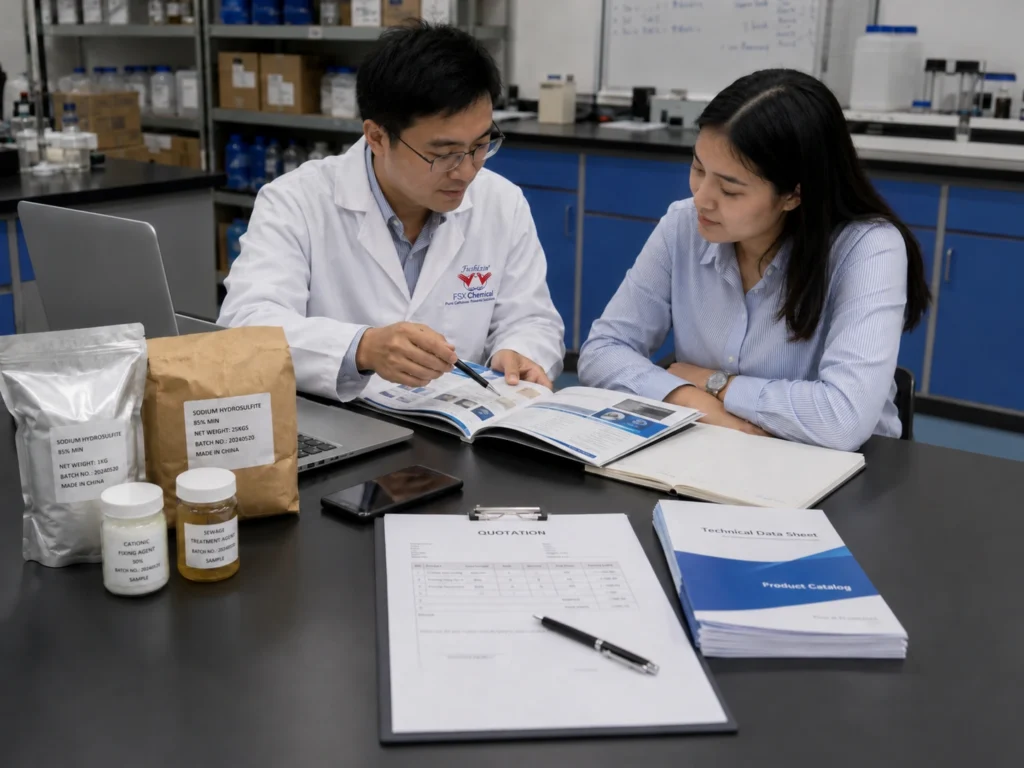
Custom grade matching is a structured process used to identify and validate a product that meets the buyer’s defined technical and commercial requirements. It may begin with an existing TDS, a retained sample, a target specification or a production problem that needs to be solved.
The objective is not to copy another supplier’s confidential formula. The objective is to find a reproducible grade or formulation route that performs acceptably in the buyer’s actual textile printing process.
মূল বিষয়: Grade matching is not complete when two samples have the same viscosity. A candidate grade should also be evaluated for paste preparation, rheology, dye or ink compatibility, print quality, fixation, wash-off, cost in use and commercial supply.
What Is Custom Grade Matching?
Custom grade matching is the process of comparing a target product or performance requirement with one or more candidate grades. The comparison uses defined laboratory methods and application tests rather than relying only on a commercial product name.
The target may be an existing sodium alginate, CMC, CMS, compound thickener or digital printing paste. In other cases, the buyer may not have a reference product and instead needs to solve a specific production problem.
Reference-Based Matching
Reference-based matching begins with an existing product. The buyer provides a TDS, sample, test method or approved production data, and the supplier recommends the closest available grade for comparison.
This route is commonly used when changing suppliers, reducing supply-chain risk or developing an alternative source. The proposed grade should be treated as a candidate until the buyer completes comparative testing.
Performance-Based Matching
Performance-based matching begins with a required outcome rather than a competitor’s grade. Examples include improving screen passage, reducing paste bleeding, changing viscosity, improving wash-off or finding a product for a new dye system.
The supplier needs enough information to understand the process constraint. A request for “high-viscosity printing thickener” is normally too broad to produce a reliable recommendation.
Specification-Based Matching
Some buyers work from a purchasing specification containing viscosity, pH, moisture, particle size, degree of substitution or other requirements. The supplier reviews whether an existing grade can meet the specification or whether a modified route needs to be evaluated.
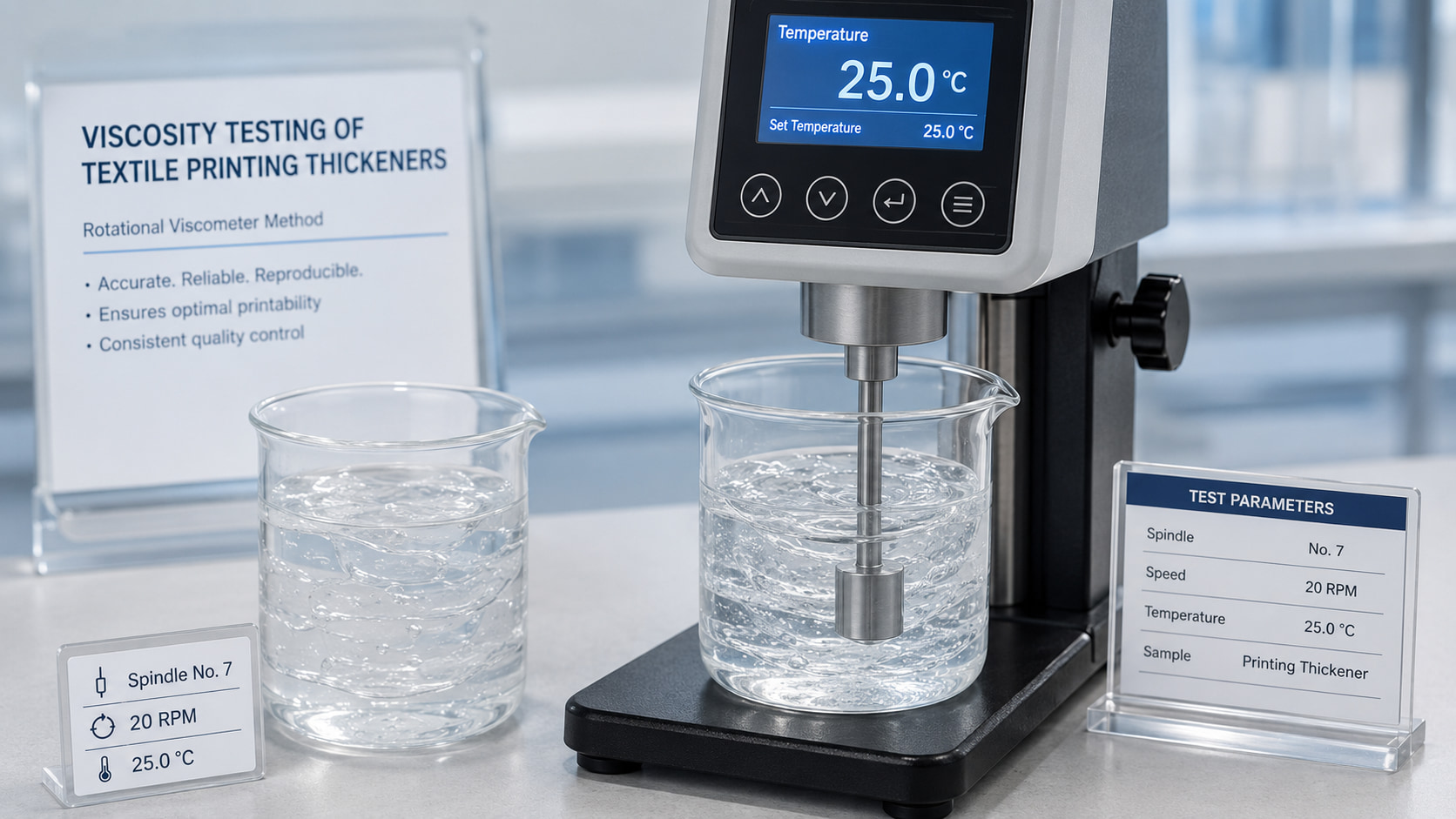
A specification should include test methods as well as acceptance ranges. A viscosity requirement without concentration, temperature, instrument, spindle and speed is incomplete.
What Grade Matching Does Not Mean
It Is Not Exact Formula Duplication
A supplier may be able to identify a functionally similar product without knowing or copying the original manufacturer’s proprietary formulation. Functional matching focuses on agreed performance and specification rather than confidential intellectual property.
If the buyer shares proprietary formulation information, both parties should define how the information may be used and protected. Only information necessary for the evaluation should be disclosed.
It Is Not Matching One Viscosity Number
Viscosity depends on concentration, water quality, temperature, hydration, instrument and shear condition. Two samples with the same reported value may have different flow, recovery, filtration and printing behavior.
Matching should include both the test value and the method used to produce it. Where supplier methods differ, the buyer’s internal method can be used for side-by-side testing.
It Is Not an Automatic One-to-One Replacement
A new grade may require a different dosage or preparation method. The chemistry may also interact differently with dyes, pigments, binders, salts or alkali.
For this reason, a supplier should not promise an exact replacement before reviewing the process and testing a sample.
It Is Not Complete After One Laboratory Test
A laboratory screening test can identify unsuitable candidates, but it may not reproduce production mixing, storage, screen, machine-speed and washing conditions.
Critical applications should progress from laboratory comparison to pilot or controlled production testing before commercial approval.
When Should Buyers Request Grade Matching?
Replacing an Existing Supplier
A mill or distributor may need a second source because of price changes, supply interruption, inconsistent documents or a business-continuity requirement. Grade matching creates a structured method for comparing the alternative.
The objective should be defined clearly: technical equivalence, acceptable functional performance, improved commercial terms or a combination of these factors.
Moving from Laboratory to Larger-Scale Production
A product that performs well in a small beaker may behave differently in a large mixing vessel. Hydration time, mixing energy, heat generation and holding time can change with scale.
Grade matching may be used to select a product that fits the intended production equipment rather than only the initial laboratory procedure.
Changing Fabric or Dye System
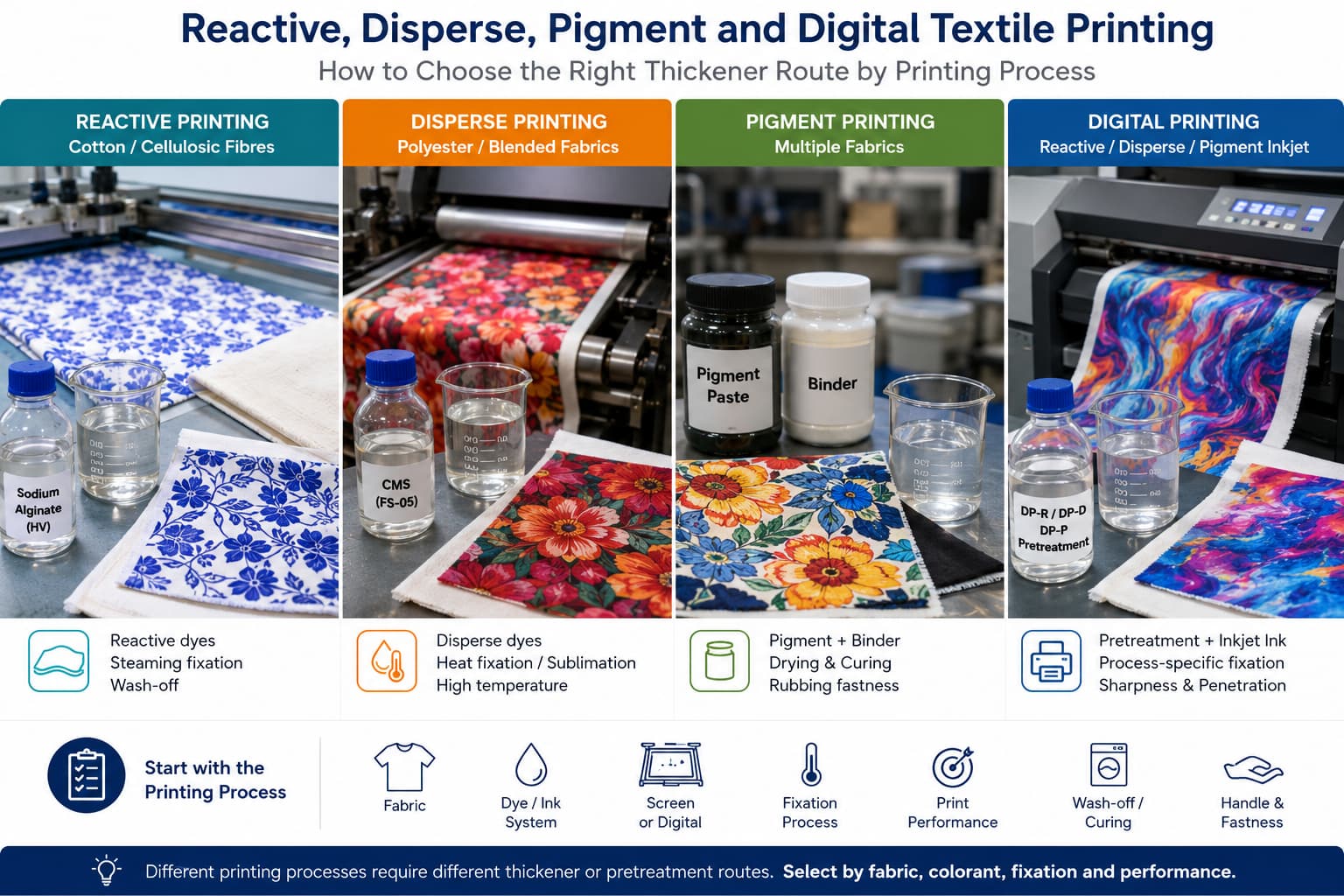
A thickener approved for reactive printing on cotton should not automatically be used for disperse printing on polyester or pigment printing with a binder. Each route has different chemical and rheological requirements.
Digital inkjet pretreatment also requires separate evaluation for filtration, residue, coating uniformity and interaction with the ink and fabric.
Solving a Production Problem
Grade matching may be useful when the current paste causes bleeding, screen blockage, uneven viscosity, poor wash-off, low color yield or excessive residue. The production problem should be documented before samples are requested.
The thickener may not be the only cause. Water quality, mixing, dye, alkali, binder, screen condition, fixation and washing should also be reviewed.
Developing a Distributor Product Range
Chemical distributors may need different grades for reactive, disperse, pigment and digital printing customers. A matching service can help build a product matrix based on real applications rather than offering one universal printing paste.
Each grade should have a clear code, TDS, sample label and recommended application direction.
Four Levels of Printing Paste Matching
| Matching Level | What Is Compared? | What It Can Confirm |
|---|---|---|
| 1. Document Match | TDS, SDS, product description, grade code and stated specifications | Whether a candidate is suitable for initial sampling |
| 2. Physical Property Match | Appearance, viscosity, pH, moisture, particle size, DS and solubility | Whether basic product properties are comparable |
| 3. Paste Behavior Match | Hydration, rheology, filtration, storage, electrolyte response and complete-paste stability | Whether the candidate behaves acceptably in the formulation |
| 4. Application Performance Match | Screen passage, print definition, penetration, fixation, wash-off, fastness and fabric handle | Whether the product can be considered for production approval |
A document match alone is not proof of application equivalence. Each level should be completed in proportion to the risk of changing the material.
Functional Equivalence vs. Chemical Equivalence
Two products can provide similar application performance without having identical composition. This may be acceptable when the buyer’s goal is functional performance.
If chemical identity, labeling, regulatory status or customer approval requires the same material route, that requirement should be stated at the beginning of the project.
Information Buyers Should Provide
Current Product Information
- Product name, grade or model code
- Current supplier TDS
- Viscosity specification and complete test method
- Available SDS or COA
- Photographs of the powder, liquid, package and label
- Physical sample where available
ছাপানোর প্রক্রিয়া
- Flat-screen, rotary-screen or digital printing
- Reactive, disperse, pigment, vat or discharge route
- Fabric fiber and construction
- Screen mesh or relevant equipment information
- Drying, fixation, steaming, curing and washing conditions
Paste Formulation
- Current thickener dosage
- রঞ্জক, পিগমেন্ট বা কালি ব্যবস্থা
- Alkali, salt, binder and main auxiliaries
- Mixing sequence and hydration time
- Process-water quality
- Normal paste holding time
Target Performance
- Required viscosity range
- পেস্টের স্থিতিশীলতা
- Screen passage or filtration requirement
- Print sharpness and penetration
- Color yield and shade tolerance
- Wash-off and fastness
- ফ্যাব্রিক হ্যান্ডেল
Commercial Requirements
- Estimated order volume and frequency
- Required packaging
- Destination country and port
- Required technical and shipping documents
- Target date for laboratory or production evaluation
The full proprietary recipe is not always necessary. Buyers can initially provide ingredient types, approximate conditions and the parameters most relevant to product selection.
Step-by-Step Grade Matching Process
Step 1: Define the Matching Objective
The first step is to define what “matched” means for the project. The buyer may require equivalent viscosity, similar printing performance, lower cost in use, better filtration or an approved backup supplier.
Critical requirements should be separated from desirable improvements. This prevents the project from expanding into an undefined search for a product that is better in every possible parameter.
Step 2: Review the Current TDS and Sample
The supplier reviews the product family, viscosity method, application direction and any available analytical data. A retained sample can provide additional information about appearance, hydration, solution behavior and viscosity.
Sample condition should be documented. An opened, humid or expired sample may no longer represent the current commercial product.
Step 3: Select the Product Route
Before selecting an exact grade, determine whether the application should begin with sodium alginate, CMC, CMS, a compound thickener or a digital printing paste.
Choosing the correct chemistry route is more important than selecting a grade from the wrong product family based only on price or viscosity.
Step 4: Standardize the Test Method
The buyer and supplier should agree on concentration, water, mixing, hydration, temperature and viscosity measurement. If the buyer uses an internal method, candidate samples should be evaluated with that method.
Any difference between the supplier’s TDS method and the buyer’s method should remain documented.
Step 5: Screen Candidate Samples
Initial screening may compare appearance, dispersion, hydration, viscosity, pH and filtration. Clearly unsuitable candidates can be removed before more expensive printing trials.
Where multiple grades are tested, each sample should have a unique code and preparation record.
Step 6: Test the Complete Printing Paste
The selected candidate should be added to the buyer’s real dye, pigment or ink formulation. Monitor viscosity immediately after preparation and after the normal holding period.
Check for separation, viscosity loss, gel formation, foaming, filtration problems and interaction with salts, alkali or binder.
Step 7: Conduct a Comparative Printing Trial
Print the reference and candidate under the same machine or laboratory conditions. Use the same fabric, paste add-on, screen, drying, fixation and washing process.
Include more than one shade depth where practical. A thickener that works in a light shade may behave differently in a concentrated dark paste.
Step 8: Review the Results Against Acceptance Criteria
Compare viscosity, print definition, penetration, color, wash-off, fastness and fabric handle. Commercial factors such as dosage and preparation time should be evaluated separately.
A candidate should not pass by averaging a serious failure with several minor advantages. Critical requirements should have individual pass-or-fail criteria.
Step 9: Complete a Pilot or Production Trial
Laboratory approval should be followed by an appropriately controlled production trial where the purchasing risk justifies it. This confirms behavior under actual mixing, storage, machine and washing conditions.
Record any dosage or process adjustment required for the new product.
Step 10: Establish the Commercial Specification
After approval, confirm the grade code, test methods, acceptance ranges, packaging and batch-document requirements. These details should appear in the purchasing specification or order confirmation.
If the approved sample was customized, confirm how the commercial grade will be manufactured and identified.
Matching by Printing Application
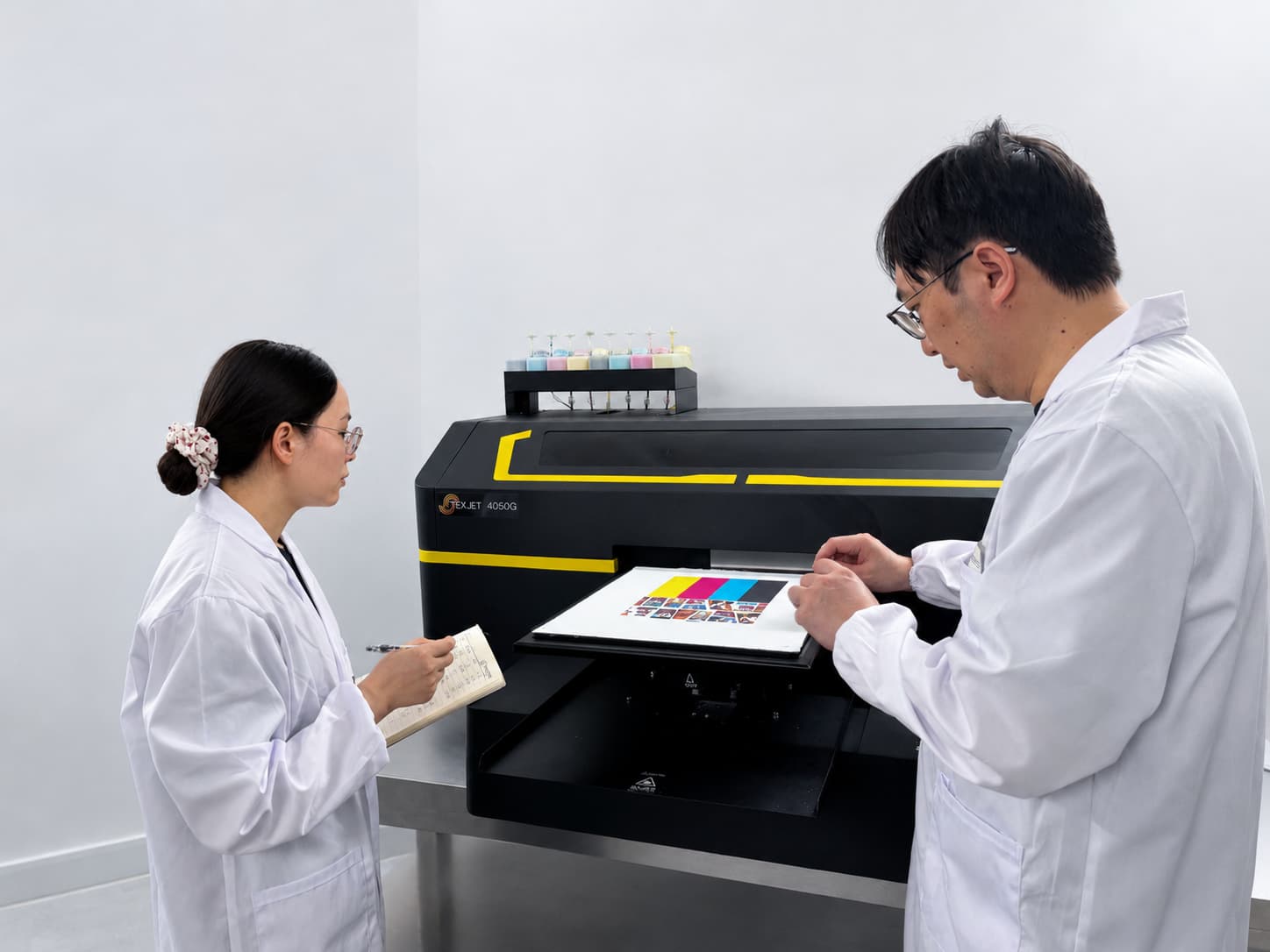
প্রতিক্রিয়াশীল রঞ্জক প্রিন্টিং
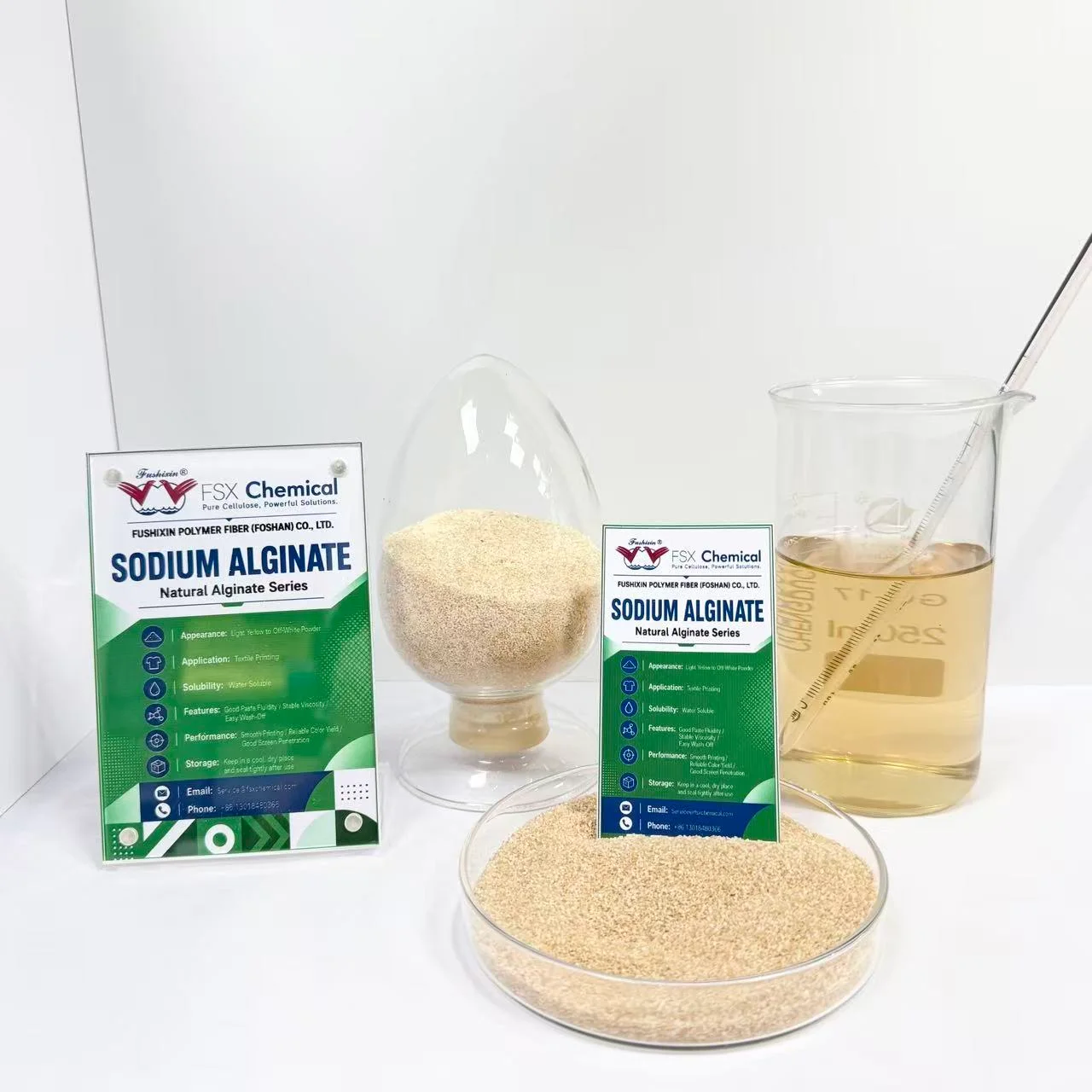
Sodium alginate is commonly used as the benchmark thickener for reactive printing on cotton and other cellulosic fabrics. Matching should evaluate dye compatibility, paste rheology, color yield, print definition and wash-off.
Selected CMC, CMS or compound routes may be evaluated where technically appropriate, but they are not universal one-to-one replacements for sodium alginate.
ডিপার্জ ডাই প্রিন্টিং
Disperse printing on polyester may use CMC, CMS, synthetic or compound thickener systems depending on the formulation and fixation route. The candidate should maintain dye dispersion and screen performance.
Evaluate filtration, outline definition, penetration, fixation residue, washing and fabric handle.
পিগমেন্ট প্রিন্টিং
Pigment paste performance depends on interaction among the thickener, pigment dispersion, binder and other auxiliaries. A candidate grade should be tested in the complete binder system.
Important results include viscosity stability, print definition, handle, rubbing fastness and equipment cleanability.
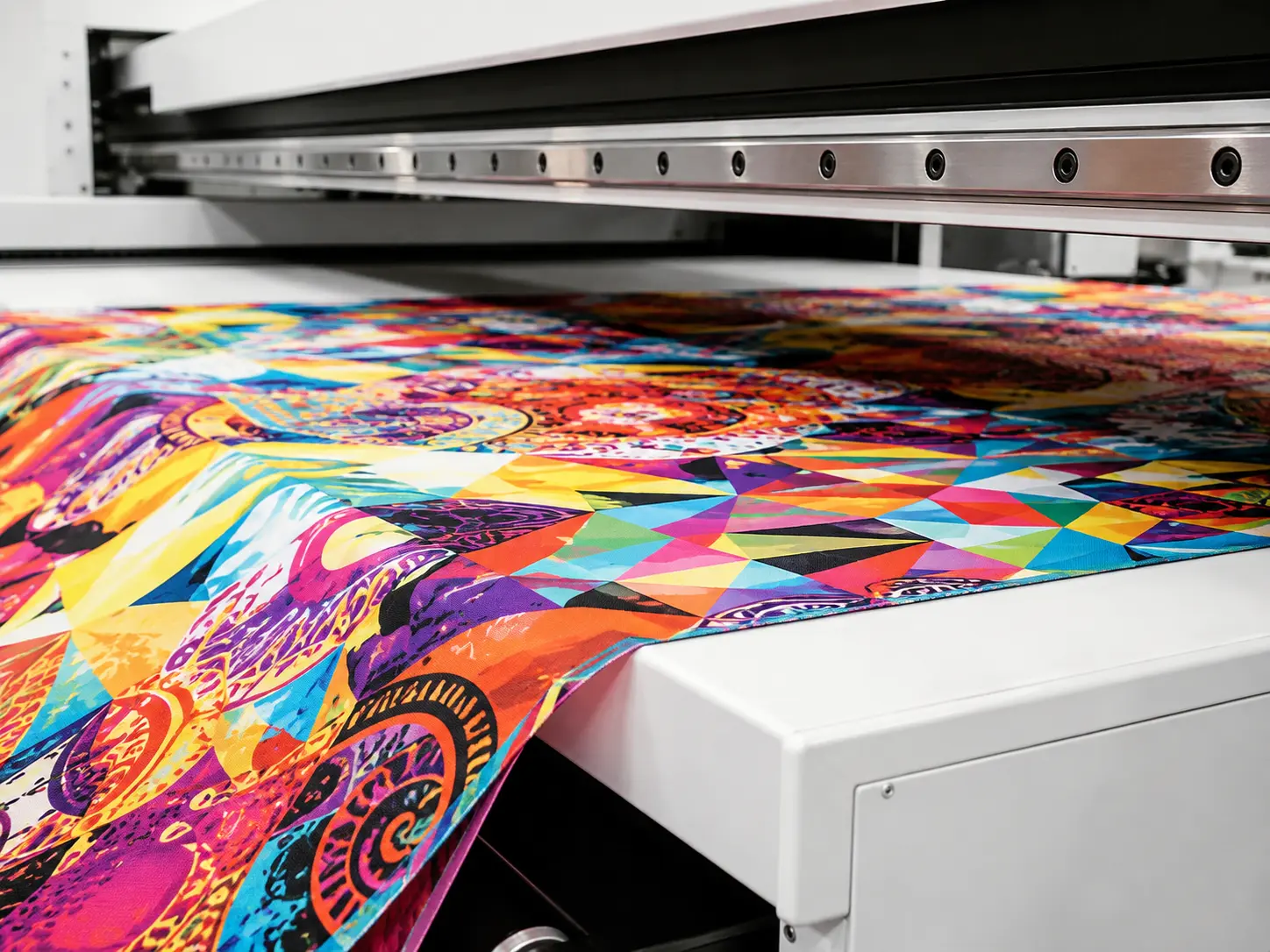
ডিজিটাল টেক্সটাইল প্রিন্টিং
Reactive, disperse and pigment inkjet systems require different pretreatment or paste routes. Matching should begin with ink chemistry and fabric rather than with a generic digital printing paste description.
Evaluate filtration, dried residue, coating uniformity, bleeding, print definition, storage stability and final fabric performance.
Compound Thickener Systems
Blending products can adjust rheology, wash-off or total cost, but blend behavior is not always a weighted average of the individual materials.
Record the exact blend ratio, mixing order and test conditions. Any production blend should have its own grade code and specification.
How to Define Acceptance Criteria
| Evaluation Area | Possible Acceptance Criteria |
|---|---|
| Powder or Product | Appearance, moisture, pH, particle size, solubility and agreed chemical parameters |
| সান্দ্রতা | Defined range using an agreed concentration, temperature, instrument, spindle and speed |
| পেস্ট প্রস্তুতি | Dispersion, hydration time, foam, filtration and absence of unacceptable lumps |
| পেস্টের স্থিতিশীলতা | Viscosity retention, homogeneity and compatibility during the approved holding time |
| প্রিন্টিং | Screen passage, line sharpness, penetration, solid-area levelness and machine behavior |
| সমাপ্ত বস্ত্র | Color difference, after-wash color yield, fastness, residue and handle |
| Commercial | Dosage, cost in use, packaging, MOQ, documents and supply plan |
Separate Critical and Noncritical Requirements
A critical requirement is one that can stop production or make the fabric unacceptable, such as severe screen blockage, dye incompatibility or failed fastness.
A noncritical preference may include a minor difference in powder color or preparation time. Classifying requirements makes the approval decision more consistent.
Use the Approved Reference as a Control
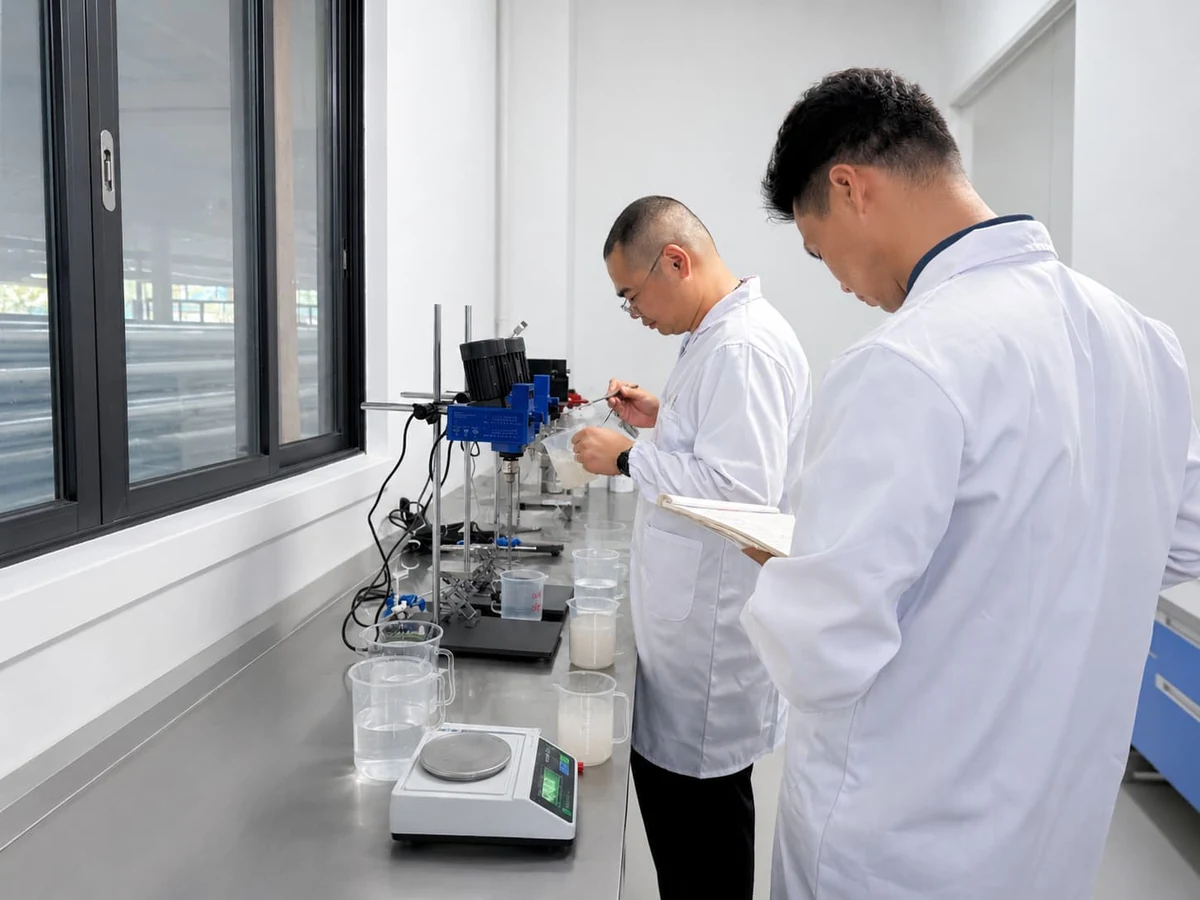
Every trial should include the current approved product where possible. Testing the candidate alone makes it difficult to separate product effects from normal variation in fabric, dye, water or equipment.
Documents Required Before Approval
During Initial Review
- Candidate product TDS
- Current SDS
- Sample label and grade code
- Recommended preparation method
- Defined viscosity test method
After Sample Approval
- Agreed commercial specification
- Approved grade code
- Packaging and label specification
- Required batch test parameters
- Change-control or notification requirements where agreed
For Commercial Shipment
- Batch-specific COA
- Commercial invoice and packing list
- Required origin or shipping documents
- Product and batch identification
Certificates should be requested only where relevant. Verify the holder, applicable product, scope, issuer and validity period before relying on a certificate for approval.
Common Grade Matching Mistakes
Matching Only by Product Name
CMC, CMS and sodium alginate are product families rather than complete specifications. Grades within the same family can have significantly different behavior.
Comparing Viscosity from Different Test Methods
Numbers produced at different concentrations, temperatures or instrument settings are not directly comparable. Always request the full method.
Providing an Unrepresentative Sample
An old, contaminated or moisture-damaged sample may produce the wrong matching direction. Label the sample with its batch, opening date and storage history where possible.
Changing Several Process Variables at Once
If dosage, alkali, dye, steaming and washing are changed together, the effect of the candidate thickener cannot be isolated.
Testing Only One Color
Dye concentration and chemistry can affect paste behavior. Include more than one representative shade where the production range justifies it.
Ignoring Water Quality
A sample prepared with laboratory water may behave differently in factory water. Use actual process water or include a separate water-quality sensitivity test.
Approving a Custom Laboratory Sample Without a Production Plan
Confirm whether the exact sample can be reproduced at commercial scale. The final product needs a permanent grade code, specification and batch-release method.
Comparing Price Before Dosage and Performance
A lower price per kilogram does not guarantee a lower cost per batch of printing paste. Include dosage, preparation, filtration, washing, rework and rejected fabric in the cost comparison.
From Approved Sample to Commercial Batch
Lock the Product Identity
The approved sample, TDS, quotation, purchase order, package label and COA should use the same product and grade code. Avoid purchasing a general product family after approving a specific grade.
Confirm the First-Batch Control Plan
For the first commercial order, confirm which parameters will be reported on the COA and which incoming tests the buyer will perform.
Retain samples from the approved reference, candidate trial and first commercial batch for comparison where practical.
Conduct Incoming Inspection
Check packaging, batch number, appearance and documents before opening multiple bags. Conduct the agreed viscosity or application test before releasing the entire shipment to production.
Monitor the First Production Runs
Record preparation, dosage, paste viscosity, machine behavior, print result and wash-off. This creates a practical baseline for future batch monitoring.
Manage Future Changes
If the product specification, raw-material route or production process changes significantly, the buyer may need to repeat part of the qualification. Change-notification expectations should be discussed during commercial approval.
How FSX Chemical Supports Grade Matching
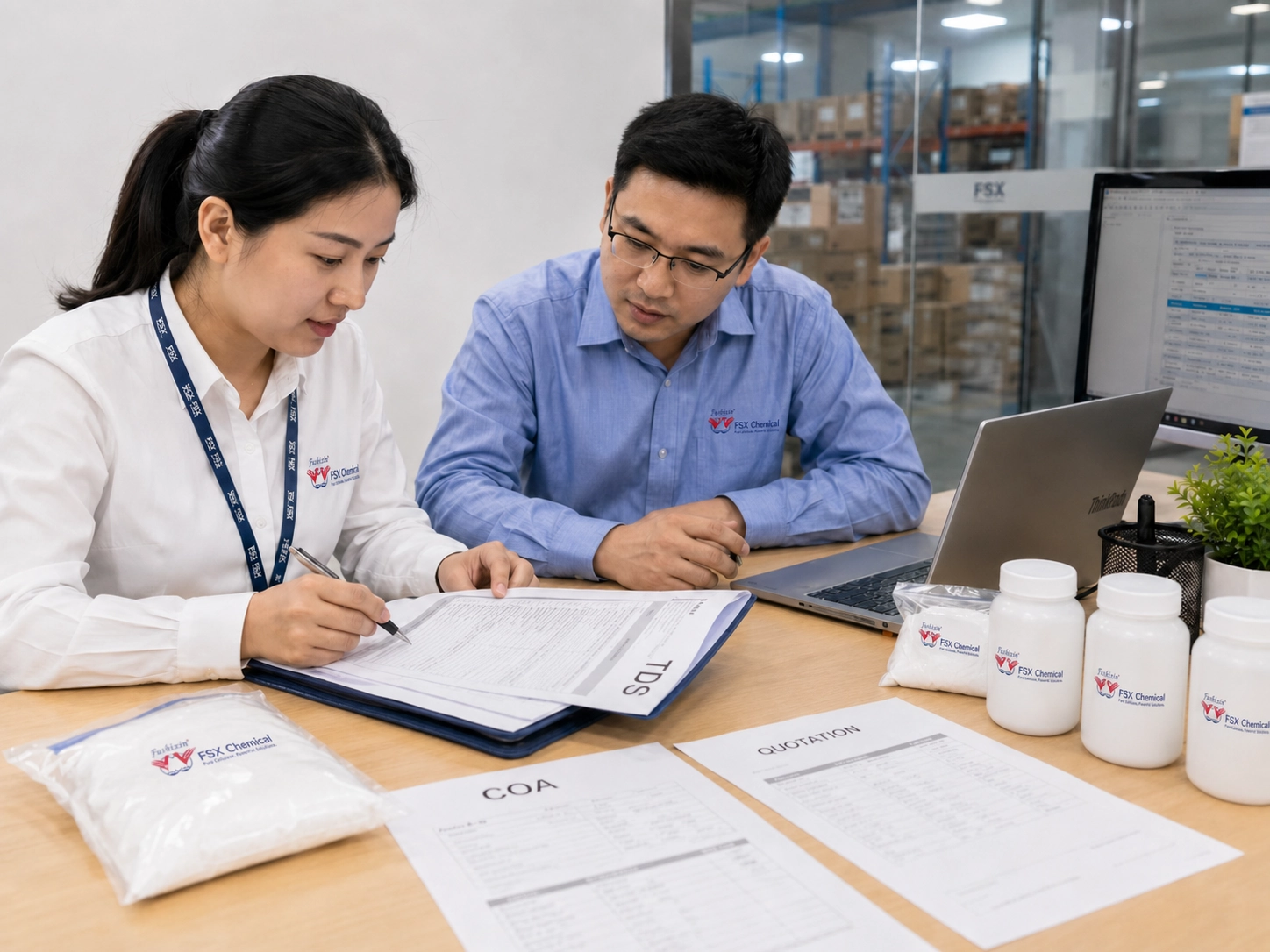
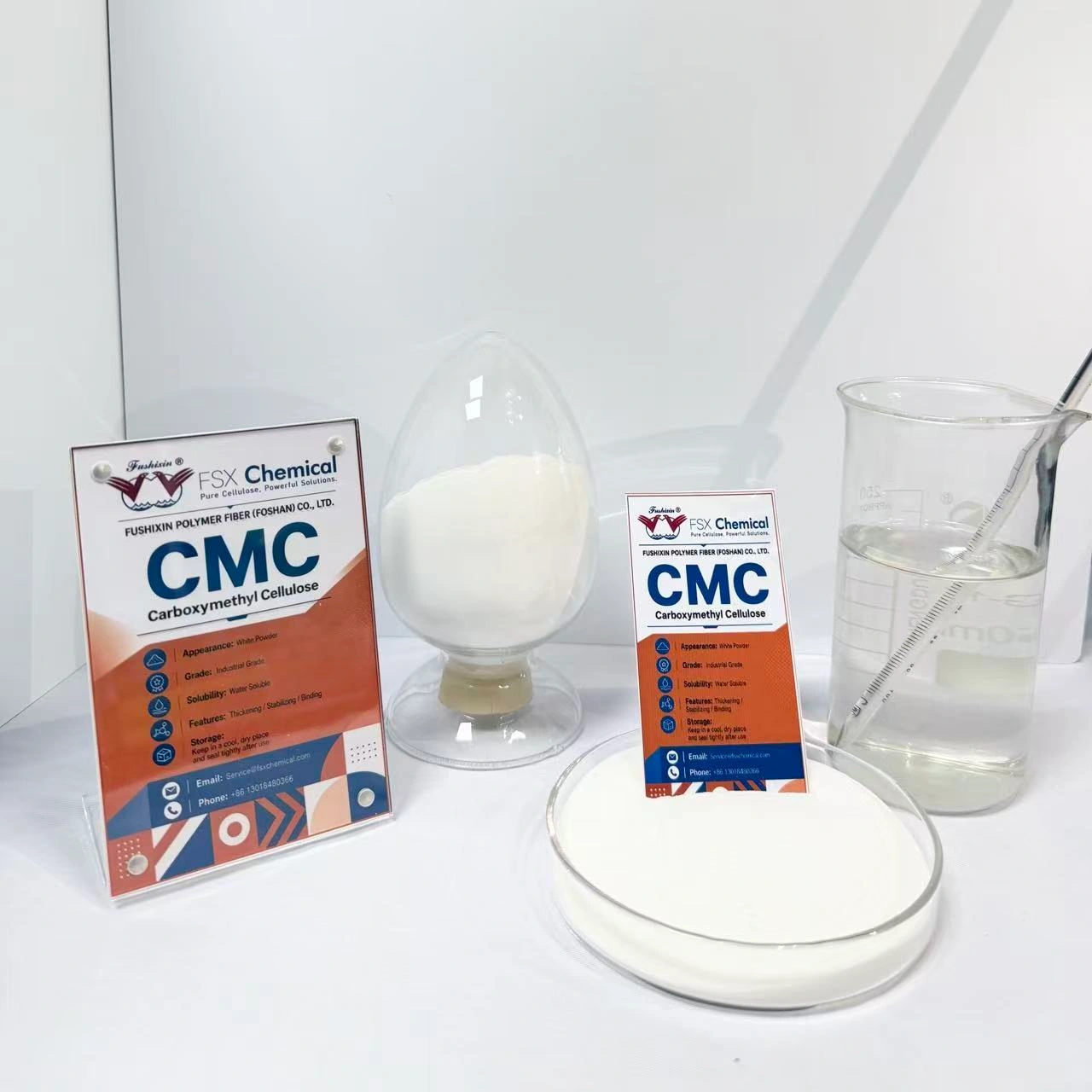
FSX Chemical supplies CMC, CMS, sodium alginate and digital printing paste for different textile printing routes. Buyers can begin the matching process by submitting an existing TDS, retained sample, target viscosity or description of the production problem.
Based on the available information, FSX Chemical can identify a suitable product family and recommend a starting grade for evaluation. The recommendation remains subject to the buyer’s laboratory and production testing.
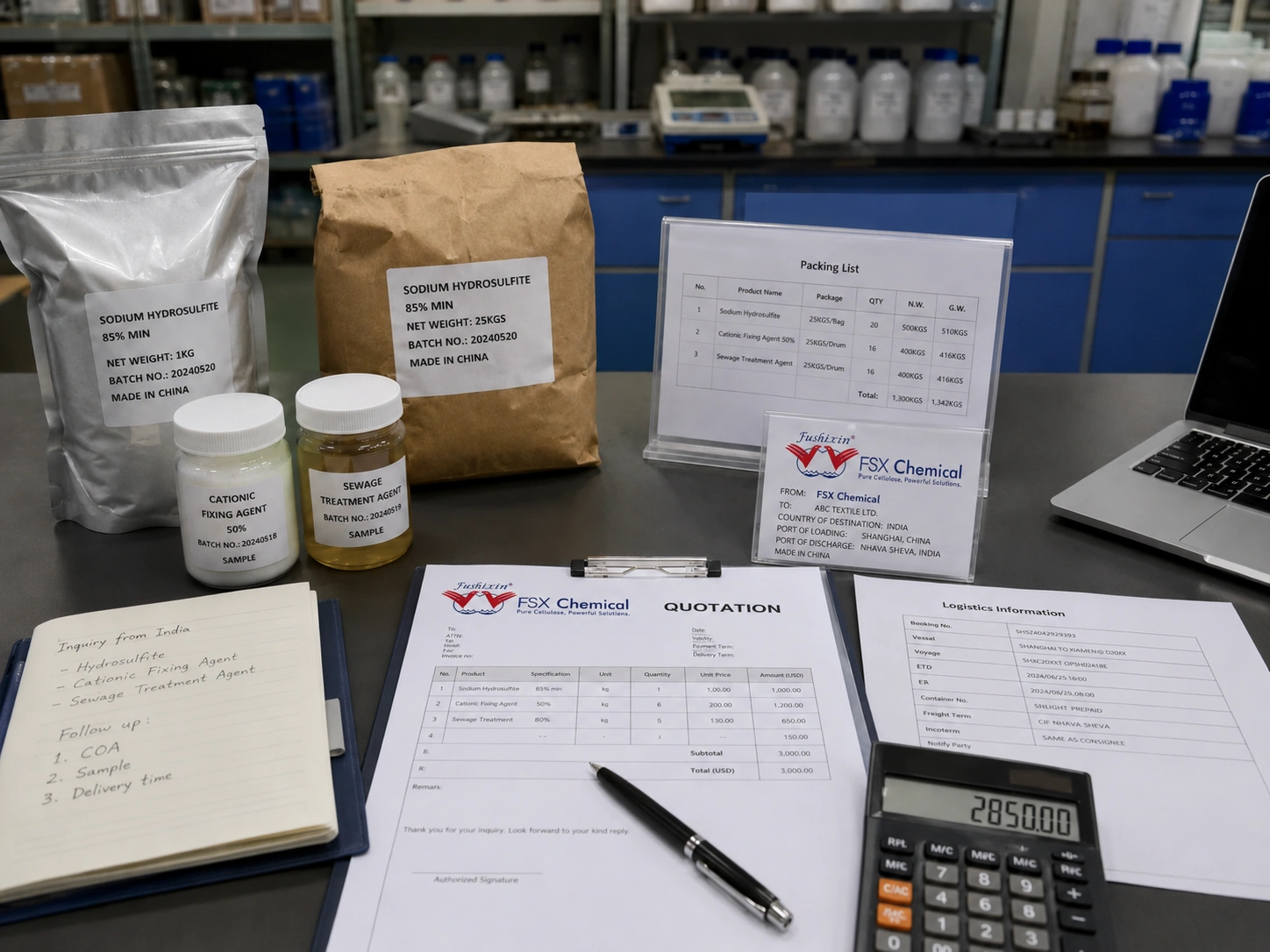
Product-specific TDS and SDS documents can be requested for the proposed grade. Batch-specific COA requirements should be confirmed after the product and commercial batch are established.
What to Send FSX Chemical
- Current TDS or product label
- Physical sample where available
- তন্তু এবং রঞ্জক, পিগমেন্ট বা কালি ব্যবস্থা
- Printing method and equipment
- Target viscosity and full test method
- Current dosage and preparation method
- Main performance problem
- Estimated quantity, packaging and destination
What Buyers Can Request
- Recommended product route
- Candidate sample
- Product TDS and SDS
- Preparation and comparison guidance
- Formal quotation after the grade and commercial requirements are confirmed📧 ইমেইল: Service@fsxchemical.com