Why Choose FSX Chemical as Your Textile Printing Chemicals Supplier
Evaluate FSX Chemical for a specific textile thickener grade through documented manufacturing and QC responsibilities,...
FSX Chemical can be evaluated as a textile printing thickener supplier when the buyer needs a process-specific grade and a documented sample-to-bulk qualification route. Start with the current product TDS, printing process and main technical issue. Approval should depend on a matched-method comparison, a print trial on the actual fabric and traceability from the approved sample to the first commercial lot. Product-family names and a quotation alone do not establish suitability.
A reliable supplier should be able to help a printing mill or distributor answer several practical questions. Which thickener route fits the printing process? How should two grades be compared? Can the supplier review an existing TDS or physical sample? Can the candidate product be tested before a bulk order? How are commercial batches identified and controlled? What technical and shipment documents are available?
FSX Chemical focuses on textile printing thickeners and related formulation materials, including CMC, CMS, sodium alginate and digital printing paste. Rather than treating every inquiry as a request for one universal product, the selection process can begin with the customer’s printing method, fabric, dye or ink system, target viscosity and current product.
This guide explains the main reasons printing mills, paste formulators, chemical importers and distributors may consider FSX Chemical when qualifying a textile printing chemicals supplier.
Why the Right Textile Printing Chemicals Supplier Matters
A textile thickener is not simply a powder or liquid purchased against a generic specification. Its real performance appears after it enters the customer’s complete printing process.
Sodium alginate, CMC, CMS and compound thickeners can differ in viscosity, rheology, hydration, filtration, electrolyte response, wash-off and application behavior. Two products with similar names or even similar viscosity values may therefore perform differently in production.
The supplier affects more than raw-material cost
Supplier performance can influence laboratory workload, paste preparation, machine interruptions, filter or screen cleaning, rejected fabric, purchasing lead time and inventory planning.
Technical information reduces purchasing risk
When buyers can review a TDS, understand the viscosity test method and compare a representative sample before ordering, supplier qualification becomes more controlled.
A successful laboratory sample has limited value if the buyer cannot connect it with a permanent commercial grade and future production batches.
This combination of product, process, documentation and supply support is what should be evaluated when choosing a textile printing chemicals supplier.
1. A Focused Textile Printing Chemical Portfolio
One advantage of working with a supplier focused on textile printing thickeners is the ability to compare several polymer routes instead of forcing one material into every application.
The FSX Chemical product range includes several major thickener families used or evaluated in textile printing.
Carboxymethyl Cellulose — CMC
সিএমসি is a cellulose-derived polymer available in different grades for viscosity control, rheology adjustment and selected textile printing or compound-thickener formulations.
FSX CMS — Synthetic Printing Thickener Family
FSX CMS is a commercial synthetic printing-thickener family. The CMS abbreviation on this site does not establish carboxymethyl starch composition. Confirm the exact grade, product form and documented printing route in the current TDS before evaluating paste behavior or cost in use.
সোডিয়াম অ্যালজিনেট
সোডিয়াম অ্যালজিনেট is an important thickener route for reactive dye printing on suitable cellulosic fabrics such as cotton and viscose.
ডিজিটাল প্রিন্টিং পেষ্ট
ডিজিটাল প্রিন্টিং পেষ্ট and pretreatment routes can be selected according to reactive, disperse or pigment digital printing requirements.
The value of a broader product portfolio is not that every product is suitable for every customer. It allows the selection process to begin with the printing chemistry instead of one predetermined material.
2. Manufacturing Scope and Production Support
For many industrial buyers, direct access to a manufacturer can simplify technical communication and commercial qualification.
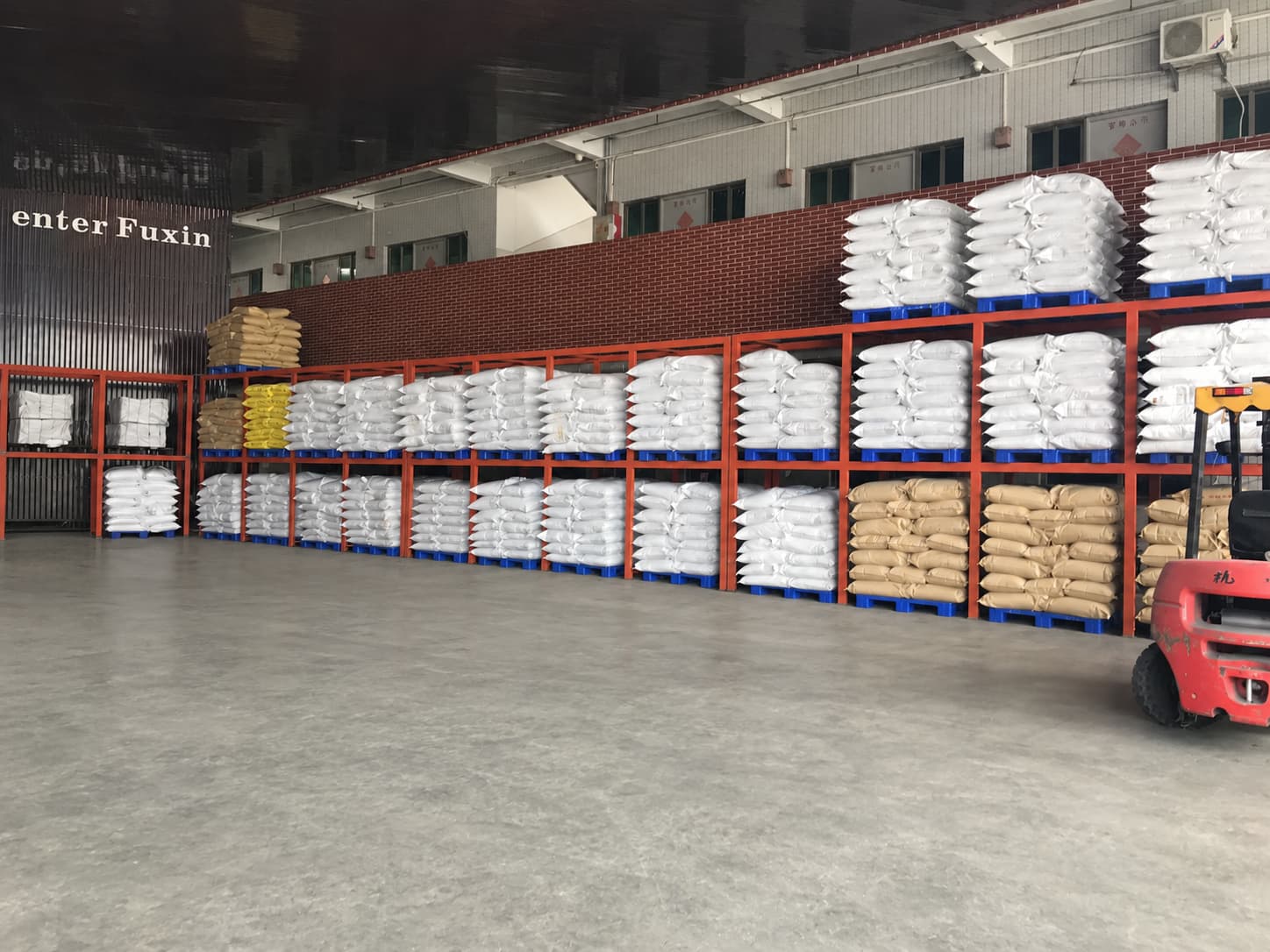
For the proposed FSX grade, confirm which legal entity and site manufacture or blend it, who performs the specified QC, and who handles packing and export. Record which activities are performed directly and which involve another party. A portfolio page does not establish that one entity owns or performs every operation.
Why manufacturing control matters
Textile thickener performance can be influenced by raw materials, processing conditions, moisture, particle characteristics, blending and final batch handling.
Evaluate whether the supplier can obtain the relevant grade and lot records, investigate discrepancies and control changes, regardless of the commercial route. Manufacturing status alone does not prove the quality of those controls.
Production capability should still be verified
“Factory direct” should not be treated as a substitute for supplier due diligence. Buyers should still review the relevant product, manufacturing capability, specification, quality documents and trial sample.
Review the stated production and quality-control scope through উৎপাদন ও গুণমান .
3. Product Selection Based on the Printing Process
A useful textile printing chemical recommendation begins with the application rather than the product name.
প্রিন্ট করার পথ
Reactive, disperse, pigment, discharge, conventional screen and digital printing systems can require different thickener behavior.
কাপড়
Cotton, viscose, polyester and blended fabrics differ in surface properties, absorbency and fixation chemistry.
Dye or ink system
The thickener must be evaluated with the actual colorant chemistry and auxiliaries rather than only in water.
Target viscosity and rheology
A viscosity value should be interpreted together with concentration, temperature, instrument and application conditions.
Production equipment
Flat-screen, rotary-screen, coating and digital pretreatment systems expose pastes to different shear and application conditions.
FSX grade selection can therefore begin with the customer’s complete printing process instead of assuming that one high-viscosity grade is automatically better.
4. Grade Matching Based on Your Current Product
Many buyers are not developing a formulation from zero. They already use a sodium alginate, CMC, CMS or compound thickener and need an alternative supplier.
In this situation, the existing product becomes a valuable technical reference.
Buyers can provide
Current product name and supplier grade
Current TDS or COA
Physical sample where available
সান্দ্রতা এবং সম্পূর্ণ পরীক্ষণ পদ্ধতি
Current dosage and preparation method
Printing process and fabric
Main production problem or improvement target
Why a sample is more useful than a product name
Commercial terms such as high viscosity, medium viscosity, printing grade or premium grade are not universal technical specifications.
A physical reference and complete test method allow the candidate product to be compared using more meaningful indicators.
FSX Chemical offers a Samples & Grade Matching route for customers qualifying an alternative grade.
5. Sample Testing Before Bulk Purchasing
A technically suitable supplier should encourage verification rather than asking the customer to make a large conversion based only on a quotation.
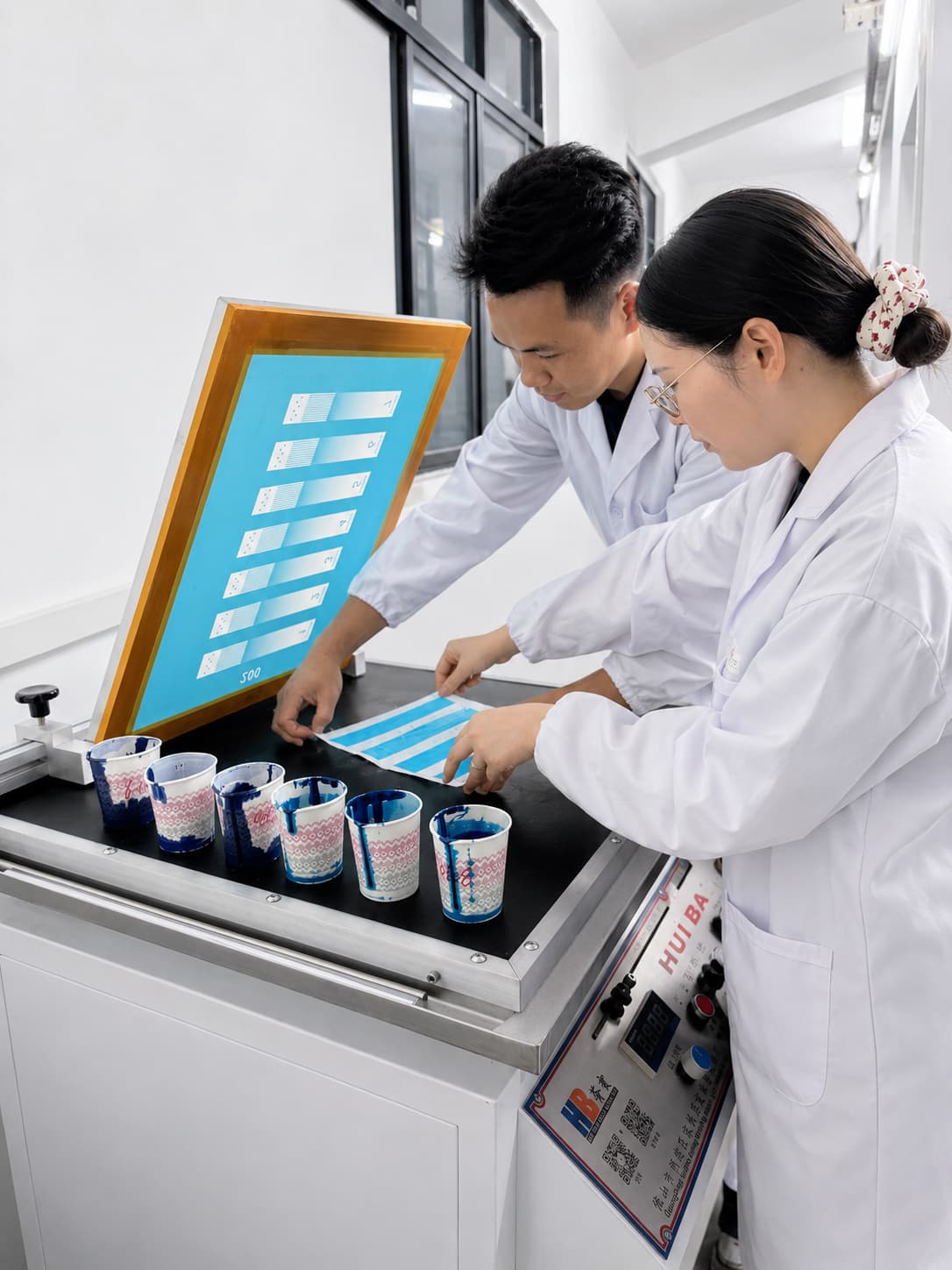
Laboratory testing can compare
Dispersion and hydration
সান্দ্রতা
রিওলজি
পিএইচ
ছাঁকন
Chemical compatibility
স্থিতিশীলতা বজায় রাখা
Printing trials can compare
Screen or application behavior
সংজ্ঞা মুদ্রণ করুন
Fine-line reproduction
ঘন-ক্ষেত্রের সমতা
প্রবেশ
Color response
Fixation or curing
ধুয়ে ফেলার
চূড়ান্ত কাপড়ের হ্যান্ডেল
A sample that looks suitable in water should not automatically be approved for commercial production. Final evaluation should use the customer’s real formulation, fabric and process.
6. Application-Oriented Technical Support
Textile printing problems rarely come from one parameter alone. A customer may report low viscosity, poor black sharpness, difficult screen passage or weak color, but the real cause can involve several variables.
A useful technical review considers
Thickener family and grade
সমন্বয়
Viscosity test method
Water quality
Hydration procedure
Dyes, pigments or inks
Salt, alkali, binder and auxiliaries
Fabric construction
ছাপাখানা
Fixation and post-treatment
This process-based approach is particularly important when replacing an existing product. Matching one viscosity number is usually not enough to prove equivalent application performance.
Technical support is most useful when the customer shares real operating data. The more clearly the current process and problem are defined, the more efficiently a candidate grade can be selected.
7. Batch QC and Sample-to-Bulk Verification
Sample approval is only the first stage of supplier qualification. The next question is whether the commercial batch corresponds to the product that was tested.
A strong sample-to-bulk process should connect
Approved sample
Permanent commercial grade
বর্তমান টিডিএস
Commercial quotation
Purchase order
Production batch
Package label
ব্যাচ COA
Product-specific QC matters
Depending on the product, relevant batch checks may include viscosity, pH, moisture, solids, appearance, filtration or other specified parameters.
The first commercial batch deserves special attention
Buyers qualifying a new supplier can reduce conversion risk by comparing the first commercial batch against the approved reference before moving to routine purchasing.
Batch QC should control meaningful variation within an agreed range rather than claiming that every production batch will be numerically identical.
8. Technical and Export Document Support
International chemical purchasing requires both product information and shipment documentation.
Technical Data Sheet — TDS
A TDS helps buyers review product identity, typical technical properties, test conditions and intended application before trial.
Safety Data Sheet — SDS
The SDS supports handling, storage, transportation and internal safety review.
Certificate of Analysis — COA
A batch-specific COA can report selected results for the confirmed commercial lot against the applicable product specification.
Export documents
Industrial orders may also require commercial invoices, packing lists, labels, packing details and other documents according to the shipment and destination.
Review the listed certificate and technical-document categories through সনদপত্র ও দলিলপত্র .
Confirm which documents are available for the exact grade, entity, lot and destination, including their revision and delivery timing. For any certificate, verify the holder, scope, issuer and current validity before formal supplier approval. A document-category listing is not proof that the requested document applies to the proposed material.
9. Commercial Structure and Delivered Cost
Price is important in textile chemical purchasing, but the lowest quoted price is not always the lowest manufacturing cost.
Confirm the seller, manufacturer, invoicing entity and technical contact in the offer. Compare the delivered cost and response responsibilities of each route; a factory-direct description does not by itself establish a lower price or a shorter qualification process.
But quotation comparison should include
Actual product grade
প্রয়োজনীয় মাত্রা
Delivered price
প্যাকিং
Freight and trade terms
Preparation cost
Filtration and waste
Machine performance
Finished-fabric quality
A lower-priced thickener that requires more product, increases screen cleaning or creates more rejected fabric may have a higher total cost in use.
FSX quotations can therefore be evaluated together with sample performance rather than price per kilogram alone.
10. Support for Repeat Supply and Product Development
Supplier selection becomes more valuable when it supports both current purchasing and future formulation changes.
Repeat supply
Once a grade is approved, buyers can use the permanent product identity, specification and batch records as a basis for future orders.
Alternative supplier qualification
A printing mill may keep its current product while qualifying FSX Chemical as an additional supply route for procurement flexibility.
Formula optimization
Customers may also evaluate alternative viscosity grades, compound thickeners or different polymer routes when trying to improve screen passage, print definition, stability or total cost.
New printing processes
A customer moving from conventional printing into digital printing, or introducing a different dye system, may require a different thickener route rather than a simple modification of the old formula.
Which FSX Product Route Fits Your Process?
পণ্যের পথ
Typical Evaluation Direction
Important Selection Factors
সোডিয়াম অ্যালজিনেট
প্রতিক্রিয়াশীল রঞ্জক প্রিন্টিং
Viscosity, rheology, filtration, color response, definition and wash-off
সিএমসি
Selected printing and compound formulations
Viscosity method, DS, chemical compatibility, hydration and rheology
সিএমএস
Selected reactive, disperse and specialty systems
Paste stability, screen passage, rheology, wash-off and cost in use
ডিজিটাল প্রিন্টিং পেষ্ট
Digital textile pretreatment and thickener systems
Ink route, fabric, viscosity, filtration, storage and print definition
যৌগিক ঘনকারী
Application-specific formulation development
Polymer balance, viscosity efficiency, stability, printing performance and economics
These are selection directions rather than universal substitution rules. The final grade should be confirmed through controlled testing.
FSX Chemical for Reactive Textile Printing
Reactive dye printing requires careful control of thickener behavior, chemical compatibility, pattern definition, fixation and wash-off.
Sodium alginate is a common benchmark route for reactive printing on cotton, viscose and suitable cellulosic fabrics.
Buyers evaluating sodium alginate can compare
Viscosity grade and complete test method
জলসঞ্চার
ছাঁকন
রিওলজি
Compatibility with the actual reactive paste
সূক্ষ্ম রেখা সংজ্ঞা
Solid-area performance
Wash-off and final handle
Selected CMC, CMS or compound systems may also be evaluated for particular formulations, but they should not be treated as universal one-to-one replacements for sodium alginate.
FSX Chemical for Disperse Textile Printing
Disperse printing is associated mainly with polyester, and the appropriate thickener route depends on the printing and fixation system.
CMS, selected CMC grades and application-specific compound thickeners may be evaluated according to the required paste stability, transfer, filtration and thermal process.
Important trial results include
Paste uniformity
স্ক্রিন প্যাসেজ
সংজ্ঞা মুদ্রণ করুন
Solid-area levelness
Thermal fixation behavior
Final polyester surface quality
FSX Chemical for Pigment Printing
Pigment printing requires the thickener to operate together with pigment dispersion, binder and curing chemistry.
Supplier evaluation should therefore include complete-formula compatibility rather than only polymer viscosity.
Important pigment-printing factors include
বাইন্ডার সামঞ্জস্যতা
রিওলজি
Color-paste stability
Definition
Curing behavior
ফ্যাব্রিক হ্যান্ডেল
Required rubbing performance
An application-specific compound route may be more appropriate than selecting CMC, CMS or another polymer from viscosity alone.
FSX Chemical for Digital Textile Printing
Digital textile printing requires a different approach from conventional screen-printing paste.
A conventional screen-printing thickener should not automatically be transferred into digital pretreatment without application testing.
How to Evaluate FSX Chemical as a New Supplier
Buyers do not need to rely on marketing statements alone. A controlled supplier qualification can test whether FSX Chemical fits the actual purchasing requirement.
Qualification gate
Record to review with FSX
Buyer decision
Company and scope
Manufacturing entity, product scope and responsible technical contact
Confirm who manufactures the proposed grade and who resolves a technical discrepancy.
Commercial grade
Product code, form, current TDS revision and sample batch reference
Keep an abbreviation or similar product name from being treated as proof of identical chemistry.
পদ্ধতি সামঞ্জস্য
Concentration basis, water, preparation, temperature, instrument, spindle, speed and reading time
Resolve method differences before comparing viscosity or accepting a substitute.
State the process covered by approval; a screen-print result does not approve inkjet use.
First commercial lot
Purchase specification, lot label, COA, retained reference and agreed incoming checks
Hold release if lot identity or a critical result differs; document the investigation.
Repeat supply
Revision history and notification procedure for product or specification changes
Decide which changes require a new comparison trial before the next production run.
This process provides more meaningful evidence than choosing a supplier from quotation price or website claims alone.
Price vs Total Cost in Use
Compare the actual delivered offer and the qualified process cost. Supplier labels such as factory direct do not replace a common cost basis or documented application acceptance.
Calculate material cost
Compare delivered price together with the optimized dosage required to achieve acceptable performance.
Calculate preparation cost
Include mixing, hydration, labor, filtration and any formula adjustments.
Calculate machine cost
Include screen cleaning, filter changes, downtime and production speed.
Calculate quality cost
Rework, rejected fabric, additional washing and customer claims should be included where relevant.
Compare only technically acceptable products
A lower-cost product should not be considered economically superior until it meets the same required printing and finished-fabric quality.
Who Should Consider Working with FSX Chemical?
Textile printing mills
Mills can compare a current thickener with an alternative FSX grade before changing bulk supply.
Dyeing and printing factories
Factories using several printing routes can evaluate different thickener families for reactive, disperse, pigment or digital applications.
Printing-paste formulators
Formulators can evaluate CMC, CMS, sodium alginate and compound systems according to target rheology and cost-performance.
Chemical importers and distributors
Distributors can develop a product portfolio using permanent commercial grades, technical documents, samples and bulk-supply planning.
Buyers qualifying a backup supplier
Customers do not necessarily need to replace an existing source immediately. FSX Chemical can be evaluated as an additional qualified supply option through controlled comparison.
How to Start a Supplier Evaluation
Begin with the current TDS, printing route and main technical issue. Additional method, recipe or purchasing details can follow when needed for a meaningful comparison. Share confidential formulation information only through an authorized exchange.
Step 1: Share your current product
Provide the product name, supplier grade, TDS, COA or physical sample if available.
Step 2: Share the application
Identify reactive, disperse, pigment or digital printing together with the fabric type.
Step 3: Share the technical target
Provide viscosity, test method, dosage, filtration requirement or current printing problem.
Step 4: Share commercial information
Include estimated quantity, required packing, destination, port and preferred trade term where available.
Step 5: Review the candidate grade
Compare the proposed product and available technical documents with the current requirement.
Step 6: Test the sample
Use controlled laboratory and production-relevant conditions.
Step 7: Confirm the commercial grade
After successful testing, confirm product code, specification, price, packing and order terms.
Step 8: Verify the first bulk batch
Check the batch COA and repeat critical incoming or application tests before routine production use.
প্রায়শই জিজ্ঞাসিত প্রশ্নাবলী
What textile printing chemicals does FSX Chemical supply?
The main textile printing product routes include CMC, CMS, sodium alginate, digital printing paste and application-specific compound thickener solutions.
Is FSX Chemical a manufacturer or trading company?
Confirm the manufacturing and supply arrangement for the exact offered grade. Ask FSX to identify the manufacturing entity or site, relevant QC responsibilities, and packing and shipment responsibilities. This qualification should be based on current records and the offer rather than assuming the same arrangement for every product family.
Can FSX Chemical match my current thickener?
Customers can provide a current sample, TDS, viscosity method, application and performance requirements. A candidate FSX grade can then be selected for comparison testing.
Can I test a sample before placing a bulk order?
Request a representative sample and confirm its grade, lot reference, quantity, availability and any charges or freight terms. Evaluate it in the intended formulation and production conditions before bulk approval; supply terms should be agreed for the specific request.
Can FSX Chemical provide TDS and SDS?
Request the current TDS and SDS for the exact proposed grade and confirm their availability, revision, language and timing with FSX before qualification. Use them for their stated scope; a general product brochure is not a substitute for grade-specific documentation.
Can FSX Chemical provide a batch COA?
Agree whether a lot-specific COA is included, which methods and limits it reports, and when it will be provided. Check that its grade and lot match the shipment before release; the COA covers the reported checks and does not replace required application approval.
Does FSX Chemical offer sodium alginate for reactive printing?
Yes. Textile-grade sodium alginate is one of the product routes available for reactive dye printing, with grade selection based on viscosity and application requirements.
Does FSX Chemical supply CMC and CMS for textile printing?
Yes. Different CMC and CMS grades can be evaluated for selected printing and compound-thickener applications according to their technical characteristics.
Does FSX Chemical supply digital printing paste?
Yes. Digital printing paste and pretreatment routes are available for evaluation according to ink system, fabric and digital printing process.
How should I compare FSX Chemical with my current supplier?
Align incoming QC methods first, and record a common preparation-SOP challenge separately if process interchangeability matters. Then prepare each candidate according to its documented grade instructions and confirm readiness before application trials on the same reference fabric. Record any changes to water, dose, auxiliaries or processing; a changed recipe compares qualified systems rather than isolating the polymer alone. Compare costs only after agreed application criteria are met, and verify the first commercial lot.
Looking for a Textile Printing Chemicals Supplier?
Send FSX Chemical your current thickener TDS or physical sample together with your printing process, fabric, dye or ink system, target viscosity and main performance requirement.
If you are qualifying a second supplier, the current commercial product can be used as the reference for controlled grade matching rather than changing your formulation without a benchmark.
For a commercial quotation, include the estimated quantity, packaging, destination port or country and preferred trade term.
জানুন কেন টেক্সটাইল প্রিন্টিং থিকেনার সান্দ্রতা (ভিসকোসিটি) মানগুলো তুলনা করা যায় না যদি না সেগুলোর ঘনত্ব, তাপমাত্রা, যন্ত্র, স্পিন্ডল, গতি, প্রস্তুতি পদ্ধতি এবং পরীক্ষার সময় মিল থাকে।.
কাপড়, রঞ্জক বা কালি, স্থিরীকরণ, ধুয়ে ফেলার এবং মুদ্রণ-মানের প্রয়োজনীয়তার ভিত্তিতে প্রতিক্রিয়াশীল, বিচ্ছুরিত, পিগমেন্ট এবং ডিজিটাল টেক্সটাইল প্রিন্টিংয়ের জন্য ঘনকারী ও প্রিট্রিটমেন্ট পদ্ধতি কীভাবে নির্বাচন করবেন তা শিখুন।.
টেক্সটাইল প্রিন্টিংয়ের জন্য CMC, CMS, সোডিয়াম অ্যালজিনেট এবং ডিজিটাল প্রিন্টিং পেষ্টের তুলনা করুন। প্রতিটি পদ্ধতি কীভাবে রিয়্যাক্টিভ, ডিসপার্স, পিগমেন্ট এবং ডিজিটাল প্রক্রিয়ার সঙ্গে খাপ খায় এবং নমুনা পরীক্ষা, গ্রেড মিলान ও বৃহৎ পরিমাণে ক্রয়ের আগে ক্রেতাদের কী কী বিষয় পর্যালোচনা করা উচিত তা শিখুন।.
সোডিয়াম অ্যালজিনেট টেক্সটাইল প্রিন্টিং-এ রিঅ্যাক্টিভ প্রিন্টিং পেষ্টের জন্য একটি স্থিতিশীল ও ধোয়াযোগ্য ঘনকারী হিসেবে ব্যাপকভাবে ব্যবহৃত হয়। কেনার আগে সান্দ্রতা গ্রেড, বিশুদ্ধতা এবং প্রয়োগের উপযোগিতা কীভাবে মূল্যায়ন করবেন এবং FSX কেমিক্যাল কীভাবে প্রযুক্তিগত তথ্য ও নমুনা দিয়ে বিশ্বব্যাপী ক্রেতাদের সহায়তা করে তা জানুন।.
Choose CMC for textile printing by application, DS, viscosity method and formulation trials. Use a practical checklist to compare grades before bulk purchase.
কার্বক্সিমেথাইল সেলুলোজ জল-ভিত্তিক ইঙ্ক, গ্র্যাভুর প্রিন্টিং এবং ইঙ্কজেট প্রি-ট্রিটমেন্টে ঘনকারী ও স্থিতিশীলকারী হিসেবে ব্যবহৃত হয়। এই গাইডে ক্রয় দলের জন্য মূল গ্রেড পরামিতি এবং উৎস নির্ধারণ সংক্রান্ত বিবেচনাসমূহ অন্তর্ভুক্ত রয়েছে।.
টেক্সটাইল প্রিন্টিং-এ ঘনকারী হিসেবে সোডিয়াম অ্যালজিনেট এবং CMC উভয়ই ব্যবহৃত হয়, তবে এগুলো ভিন্ন রঞ্জক ব্যবস্থা ও প্রক্রিয়া শর্তের জন্য উপযুক্ত। এই গাইডে মূল পার্থক্যগুলো এবং কখন কোনটি ব্যবহার করতে হবে তা ব্যাখ্যা করা হয়েছে।.
টেক্সটাইল ডিজিটাল ইঙ্কজেট প্রিন্টিং-এ স্ক্রিন প্রিন্টিং-এর তুলনায় ভিন্ন ধরনের পেস্ট এবং পূর্ব-প্রক্রিয়াকরণ প্রয়োজন। এই গাইডে ব্যাখ্যা করা হয়েছে কীভাবে সোডিয়াম অ্যালজিনেট ডিজিটাল টেক্সটাইল প্রিন্টিং-এ ব্যবহৃত হয় এবং ক্রয় দলগুলিকে কোন গ্রেড পরামিতি নির্ধারণ করা উচিত।.
Food-grade and industrial-grade CMC labels do not define one universal DS, viscosity or purity comparison. Textile buyers should verify grade-specific assay and methods, then test the complete formulation; food-contact or pharmaceutical use needs separate, applicable documentation.
Prepare sodium alginate printing paste with a grade-specific concentration and controlled powder dispersion. Validate hydration, viscosity, filtration, air removal and holding time before production.
Assess sodium alginate in reactive-printing wastewater using measured COD load, product-specific biodegradation evidence and controlled process comparisons. Includes a buyer checklist and illustrative load calculation.
Separate reactive dye fixation from retained color and fastness. Review alginate preparation, application, alkali, paste age, steaming and wash-off through defined control comparisons; shade or rinse color alone does not establish fixation percentage.
পণ্যের নাম, ব্যবহার, পরিমাণ, গন্তব্য এবং আপনার কাছে থাকা যেকোনো TDS, নমুনা ছবি বা ডকুমেন্ট শেয়ার করুন। FSX Chemical এই তথ্য পর্যালোচনা করবে এবং কোটেশন, নমুনা মিলানো বা পণ্য নির্বাচনের পরবর্তী ধাপের জন্য পরামর্শ দেবে।.
পণ্যের তথ্যপণ্যের নাম, গ্রেড, মডেল, লেবেলের ছবি বা সরবরাহকারীর রেফারেন্স।.