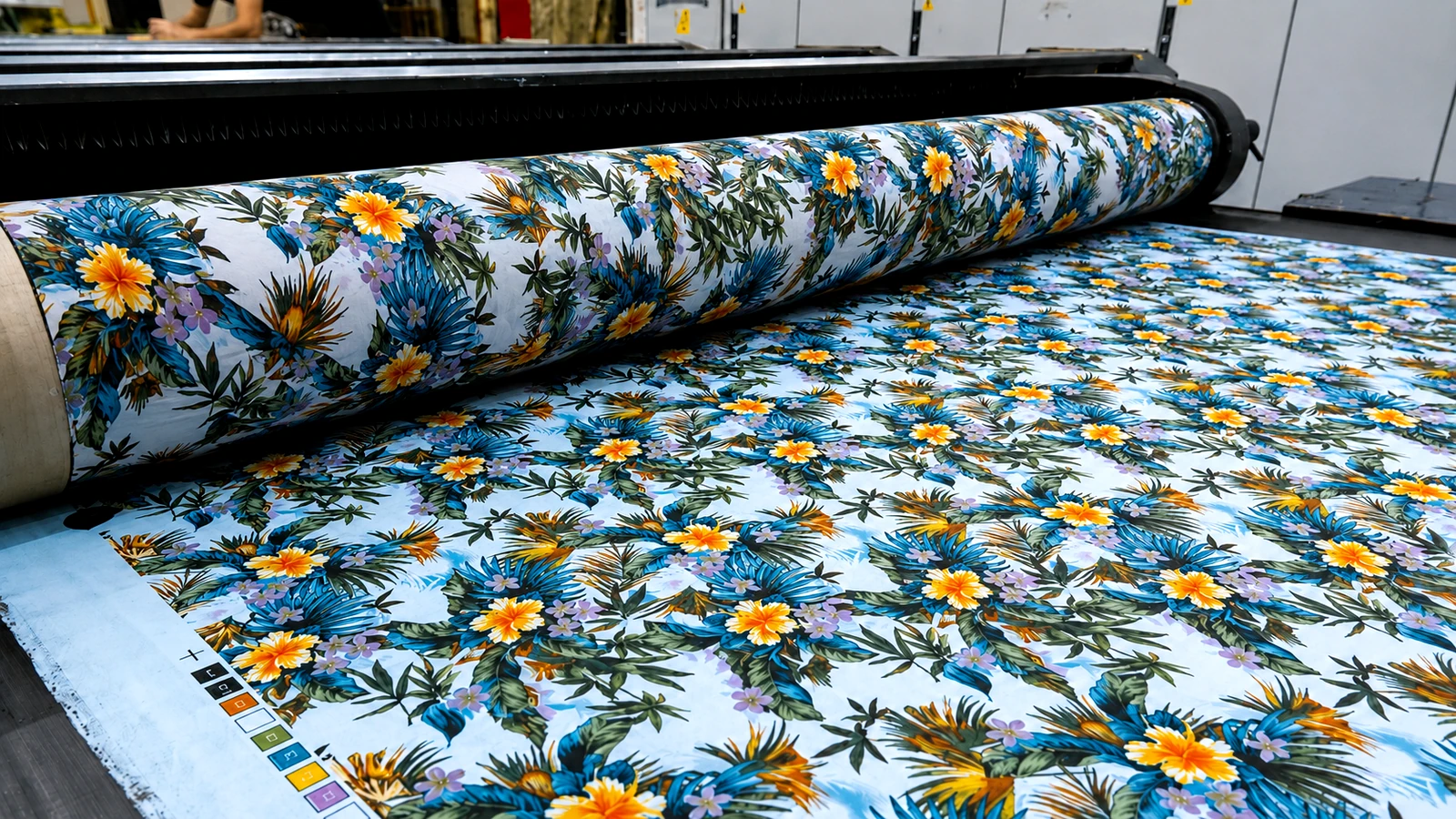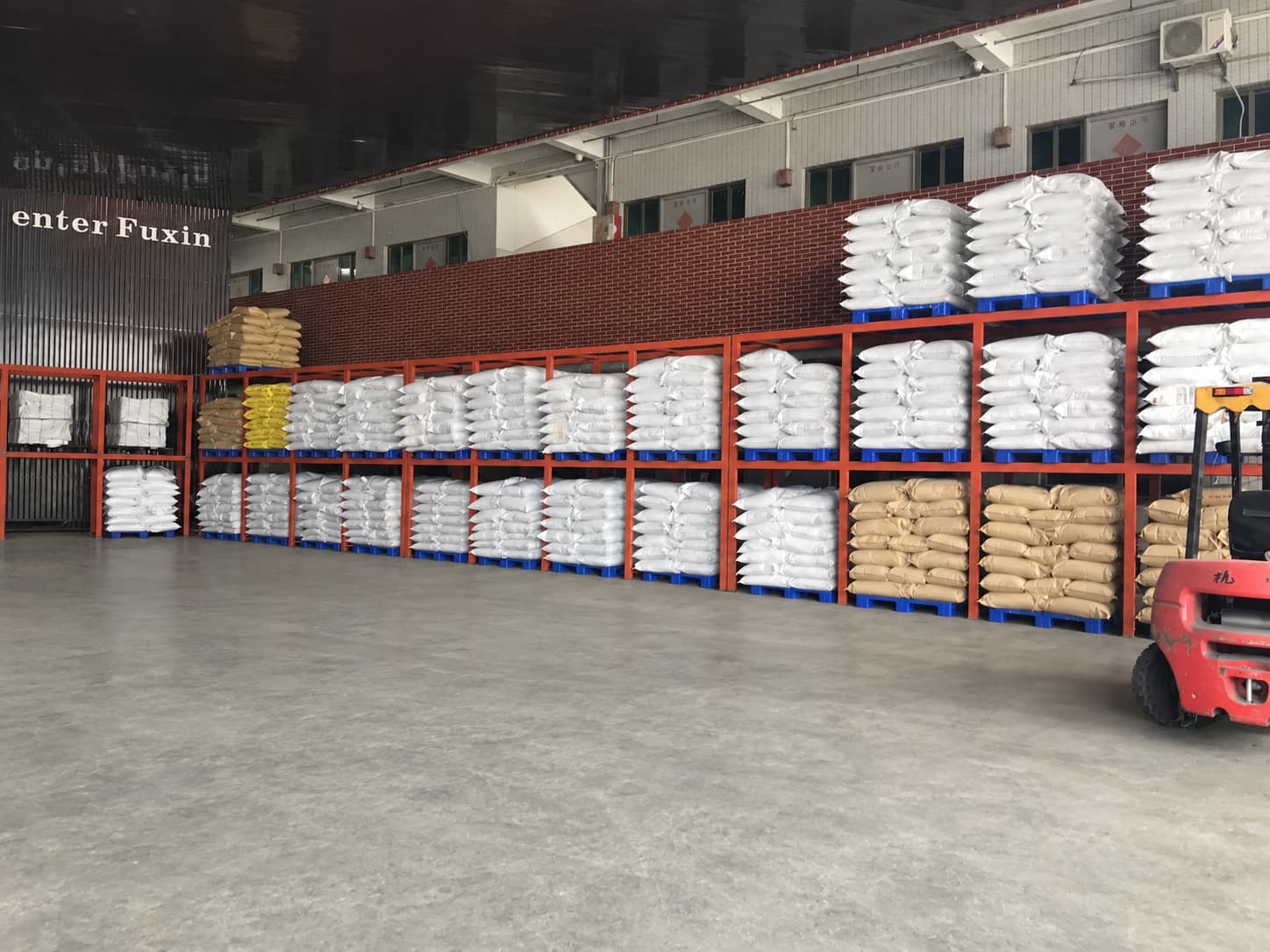















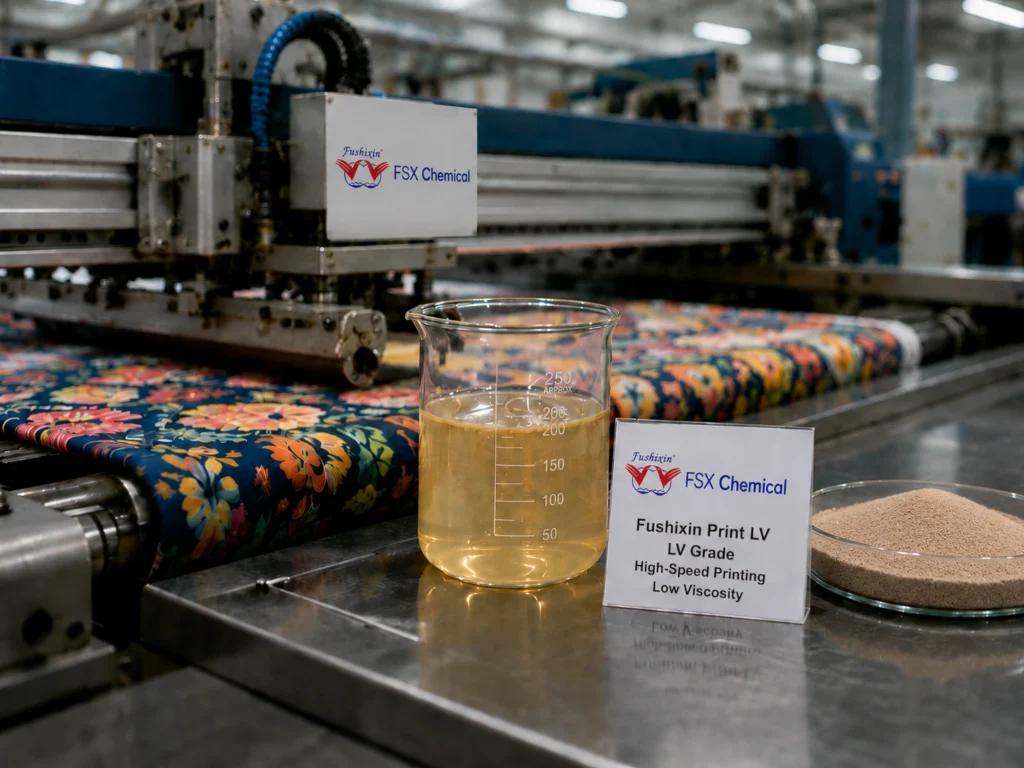
This guide focuses on a practical question: how should textile printers evaluate sodium alginate when color quality and process control are the main concerns?
| Observed result | Possible contributors | Controlled check |
|---|---|---|
| Sombra irregular | Incomplete dissolution, paste-age variation, fabric absorbency, unequal steaming or wash-off | Compare preparation records, filtration, fabric pretreatment and widthwise process conditions. |
| Blurred edges or spreading | Unsuitable rheology, excessive pickup, low structural recovery or absorbent fabric | Measure with one viscosity method and compare print definition at controlled add-on. |
| Low color depth after washing | Dye or alkali condition, insufficient moisture or steaming, poor dye release, excessive wash-off loss | Compare K/S after standardized wash-off while holding dye, paste, steam and fabric constant. |
| Specks or screen blockage | Undissolved particles, insoluble matter, contamination or damaged screen | Standardize hydration and filtration; inspect and record the retained residue. |
| Batch-to-batch shade drift | Grade identity, method difference, moisture, viscosity or process variation | Compare COA, retained samples and complete-paste printing under the approved method. |
What Sodium Alginate Can and Cannot Do in Textile Printing
It Can Support Viscosity and Paste Handling
In reactive textile printing paste, sodium alginate is commonly used to build and control viscosity. A suitable grade can help the paste remain workable during preparation, filtration, screen passing, and application.
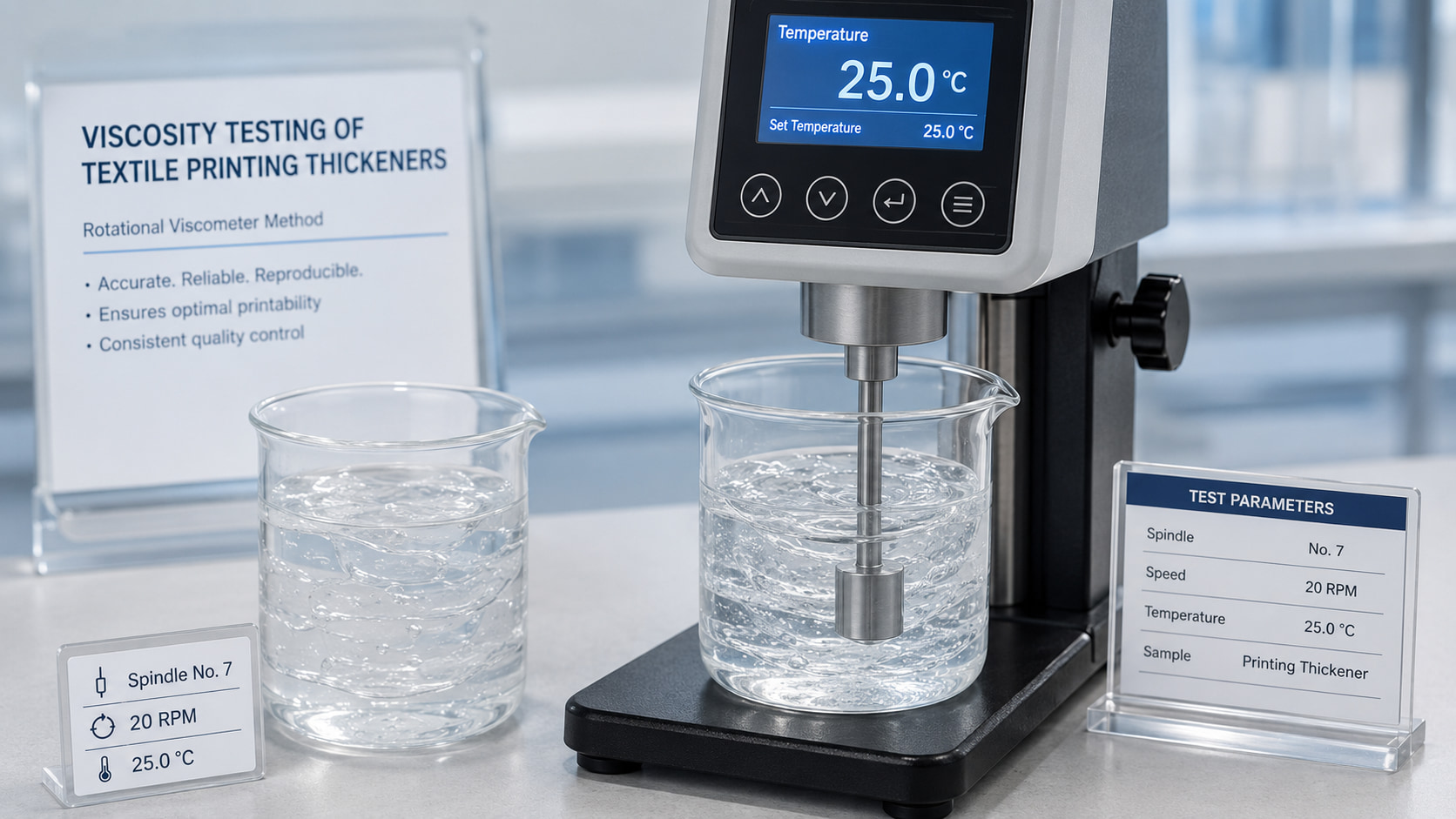
Buyers should confirm the viscosity grade, testing method, mesh size, dissolution behavior, and paste smoothness before bulk purchase.
It Does Not Alone Guarantee Color Fastness
Color fastness depends on the dye system, fabric pretreatment, fixation conditions, washing process, auxiliaries, and testing standard. Sodium alginate may influence paste behavior, but it should not be described as a single solution for color fastness problems.
If color fastness is a concern, buyers should test the complete printing process and compare results with their current product under the same conditions.
It Does Not Replace Compliance Documents
If a buyer needs restricted-substance statements, customer questionnaires, environmental documents, or third-party testing support, those requirements should be discussed before order confirmation.
Broad claims such as “compliant,” “eco-friendly,” or “safe” should be supported by appropriate documents when they are important to the buyer’s approval process.
Color Quality Factors Buyers Should Evaluate
Shade Consistency
Shade consistency can be affected by paste viscosity, dye dispersion, fabric absorbency, printing pressure, drying conditions, fixation, and washing. Buyers should test sodium alginate in the same formulation and process used in production.
For repeat orders, COA data and batch consistency are important because changes in viscosity or dissolution behavior may affect formulation adjustment.
Pattern Edge Control
Pattern edge control depends on paste rheology, fabric surface, screen or printing method, paste penetration, and drying behavior. A sodium alginate grade that is too low or too high in viscosity may not match the target application.
Buyers should evaluate edge control during sample testing, not only by checking the TDS.
Paste Smoothness and Filtration
Poor dissolution or unstable paste may create lumps, filtration difficulty, screen blocking, or uneven printing. Buyers should observe dissolution speed, paste smoothness, lump formation, filtration behavior, and standing stability.
These practical observations are often as important as numerical viscosity data.
Compatibility with Dye and Auxiliaries
Testing only in clean water may not be enough to confirm whether the grade is suitable for production.
Key Specifications to Review Before Buying
Grado de viscosidad y método de prueba

Sin un método claro para medir la viscosidad, es posible que los valores proporcionados por distintos proveedores no sean directamente comparables.
Tamaño de malla y comportamiento de disolución
Mesh size can influence dispersion and hydration during paste preparation. However, actual dissolution behavior also depends on water quality, stirring speed, addition method, temperature, preparation time, and formulation conditions.
Los compradores deben evaluar la velocidad de disolución, la formación de grumos, la textura de la pasta y el comportamiento de filtración en sus propias condiciones de producción.
Humedad, pH y aspecto
La humedad, el pH y la apariencia son indicadores de calidad básicos pero importantes. Influyen en el almacenamiento, la manipulación, el control de calidad interno y la repetición de compras.
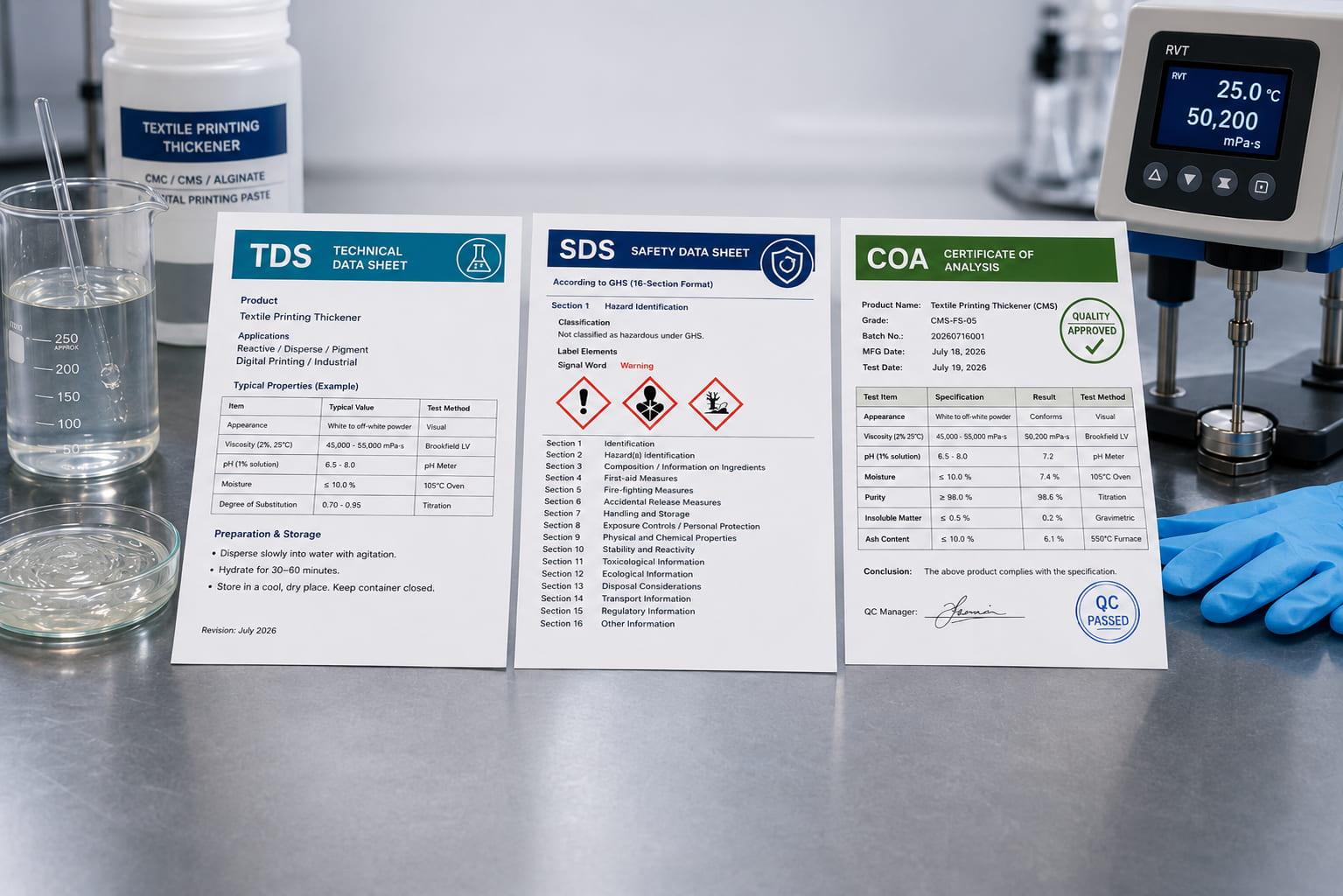
Estos parámetros deben revisarse en la ficha técnica del producto (TDS) y confirmarse mediante los datos del certificado de análisis (COA) para cada lote de producción.
Storage and Handling Conditions
Storage conditions can affect powder handling and repeat use. Buyers should check whether the supplier provides clear storage suggestions, packaging details, and shelf-life information where applicable.
For distributors and import buyers, packaging and label information should be confirmed before shipment.
How to Build a Practical Sample Testing Plan
Step 1: Define the Current Printing System
Before requesting a sodium alginate sample, buyers should define their fabric type, dye system, printing method, target viscosity, paste preparation method, fixation process, washing process, and current product grade if available.
This helps the supplier recommend a more suitable starting grade.
Step 2: Prepare the Paste Under Real Conditions
The sample should be prepared using the buyer’s actual water quality, mixing equipment, addition method, preparation temperature, stirring time, and standing time.
During preparation, buyers should record dissolution behavior, viscosity development, paste smoothness, lumps, and filtration behavior.
Step 3: Test Printing and Color Quality
The test should be performed on the buyer’s actual fabric or a representative fabric. Buyers may evaluate shade consistency, pattern edge control, penetration, leveling, fabric hand feel, and color fastness according to their internal test method or customer requirements.
The new sample should be compared against the current product under the same conditions.
Step 4: Confirm Repeatability Before Bulk Purchase
If the sample result is acceptable, buyers should confirm whether the bulk shipment will follow the same viscosity range, specification range, packaging format, batch traceability, and COA requirements.
This reduces the risk of sample approval but unstable bulk production performance.
Documentos que deben solicitar los compradores
TDS para la revisión de especificaciones
La hoja de datos técnicos ayuda a los compradores a revisar las especificaciones estándar del producto. Debe incluir la apariencia, la viscosidad, el tamaño de malla, la humedad, el pH, las condiciones de almacenamiento y el método de prueba.
El TDS sirve de guía para la clasificación inicial, pero no debe sustituir a las pruebas con muestras realizadas con la propia fórmula de impresión del comprador.
COA para la confirmación de lotes
El Certificado de Análisis confirma los datos reales de un lote de producción específico. Es importante para los pedidos al por mayor, las compras recurrentes, el abastecimiento a los distribuidores y el control de calidad interno.
Los compradores pueden comparar los registros de los certificados de análisis (COA) de distintos envíos para verificar si los parámetros clave se mantienen dentro del rango acordado.
Revisión de la ficha de datos de seguridad (FDS) para la manipulación y el envío
La hoja de datos de seguridad sirve de guía para la manipulación, el almacenamiento, el transporte y la revisión interna de seguridad. En el caso de las compras internacionales, la hoja de datos de seguridad también puede ser necesaria para el envío y las comunicaciones relacionadas con las aduanas.
Los compradores deben asegurarse de que el nombre del producto que figura en la ficha de datos de seguridad (FDS) y la información del proveedor coincidan con los documentos del pedido.
Customer or Compliance Documents When Required
If a buyer needs restricted-substance statements, environmental documents, customer audit questionnaires, certificate copies, or third-party testing support, those requirements should be discussed before order confirmation.
A practical supplier should explain which documents can be provided, which product or site they apply to, and which claims require formal third-party testing.
How to Avoid Overlapping Product Claims
Do Not Treat All Textile Printing Systems the Same

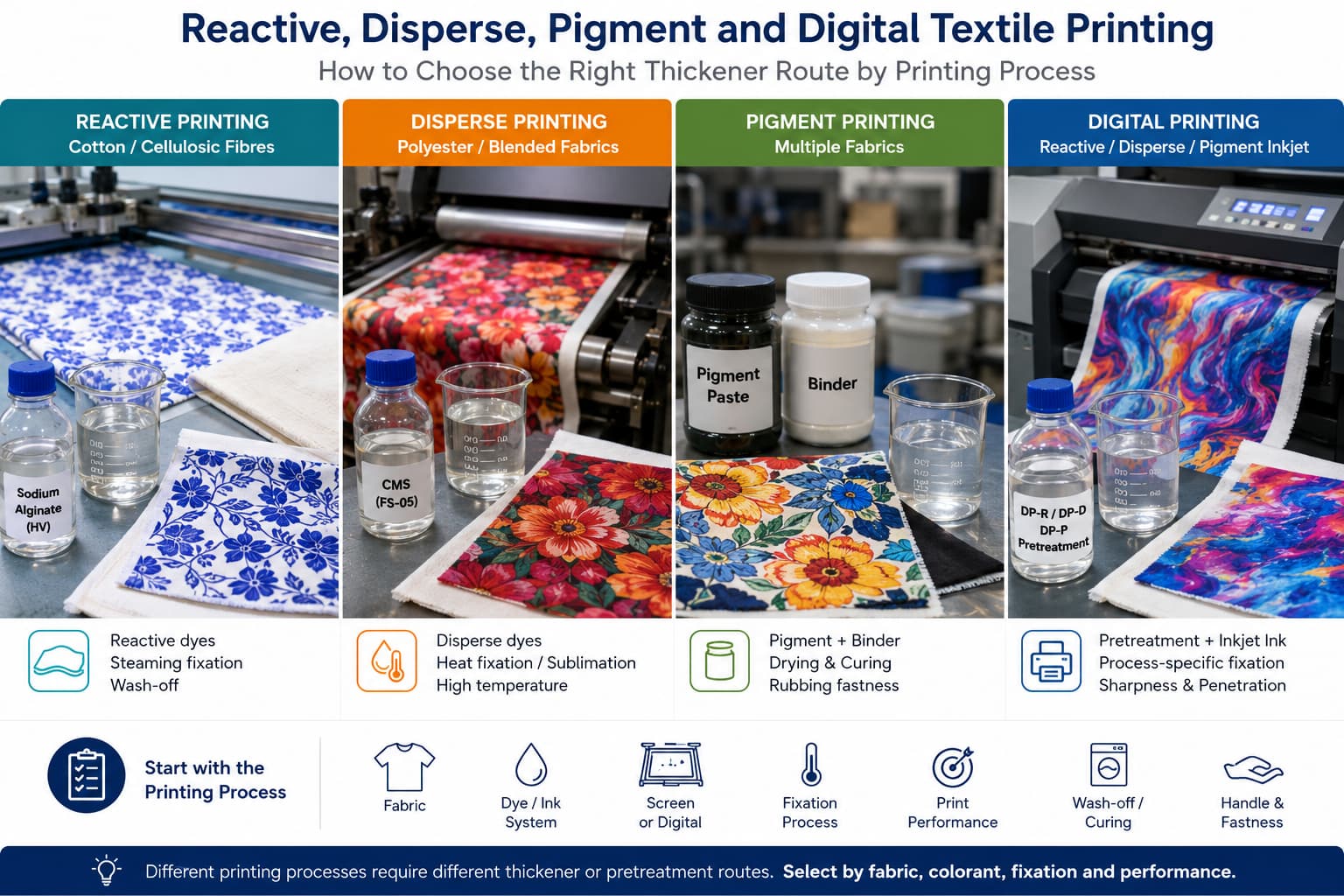
Reactive printing, pigment printing, digital printing pretreatment, screen printing, and rotary printing may require different paste behavior. A sodium alginate grade that works in one process may not match another process.
Do Not Choose Only by “High Viscosity” or “Low Viscosity”
The right viscosity depends on target paste behavior, equipment, fabric type, and formulation. Higher viscosity does not always mean better printing performance, and lower viscosity does not always mean easier production.
Do Not Compare Suppliers Without Matching Test Methods
Two suppliers may show similar viscosity data, but if the concentration, temperature, instrument, or unit is different, the data may not be comparable.
Do Not Confirm Bulk Orders Before Sample Approval
For textile printing applications, sample testing is necessary before bulk purchase, especially when changing supplier, changing grade, or replacing an existing thickener.
Common Color and Process Issues to Check
Uneven Shade
Uneven shade may be related to paste viscosity, dye dispersion, fabric pretreatment, printing pressure, fixation, washing, or formulation compatibility.
Se debe revisar todo el sistema de impresión antes de cambiar solo una materia prima.
Pattern Bleeding
Pattern bleeding may be related to low paste structure, fabric absorbency, drying speed, penetration, or unsuitable viscosity. Buyers should test different grades under the same printing conditions.
Bloqueo de pantallas o filtración deficiente
Screen blocking or filtration difficulty may come from poor dissolution, formulation incompatibility, particle contamination, unsuitable viscosity, or insufficient filtration before application.
Color Fastness Not Meeting Target
Color fastness issues may involve dye selection, fixation conditions, washing process, fabric pretreatment, auxiliaries, or the full paste formulation.
Preguntas frecuentes
Does higher sodium alginate viscosity always produce better color quality?
No. Viscosity must be measured under a defined method and matched to rheology, fabric, screen or machine and paste pickup. Excessive viscosity can reduce transfer or penetration.
Can sodium alginate alone improve color fastness?
No. Fastness depends mainly on dye selection, fixation, hydrolysis control and removal of unfixed dye. The thickener influences paste placement and wash-off but does not replace process control.
How should two sodium alginate grades be compared?
Use the same water, concentration, addition method, hydration time, temperature, instrument and reading conditions. Then compare complete-paste stability, filtration, printing, steaming and wash-off.
What should be checked when shade changes between batches?
Confirm product and batch identity, moisture, viscosity method, dissolution, complete formulation, paste age, fabric pretreatment, steaming and washing before assigning the cause to the alginate.
Which documents are useful before bulk purchase?
Review the exact-grade TDS and SDS, agreed specification, representative sample and a batch-specific COA. Link the approved sample and first commercial batch through traceable grade and batch codes.
Cómo FSX Chemical apoya a los compradores del sector de la impresión textil
Our support is focused on practical grade matching and export procurement. We can provide TDS, COA, SDS where applicable, sample support, and formulation discussion based on the customer’s fabric type, dye system, printing process, target viscosity, current formulation, packaging needs, order quantity, and document requirements.
We do not suggest choosing sodium alginate only by broad claims about color fastness, compliance, sustainability, or global performance. The recommended grade should be reviewed through technical documents and tested in the buyer’s own textile printing system before bulk purchase.
Próximos pasos
- Comparte tu proceso de impresión — Indíquenos si utiliza impresión reactiva, serigrafía, impresión rotativa, pretratamiento digital, impresión con pigmentos u otro proceso.
- Clarify Fabric and Dye System — provide fabric type, dye system, auxiliaries, water quality, pH, and preparation method.
- Define tu viscosidad objetivo — Indique el rango de viscosidad, la concentración de prueba, la temperatura, el método de medición y el grado actual del producto, si está disponible.
- Clarify Color Quality Targets — explain whether you are testing shade consistency, pattern edge control, filtration, hand feel, washing, or customer-specific quality requirements.
- Solicitar equiparación de calificaciones — ask for a suitable sodium alginate grade based on your actual production conditions.
- Solicitar un TDS — Revisa la viscosidad, el tamaño de malla, el pH, la humedad, el aspecto, las condiciones de almacenamiento y el método de prueba.
- Solicitar un certificado de análisis (COA) — Verificar que los datos del lote se ajusten al rango de especificaciones acordado antes del envío.
- Solicitar una ficha de datos de seguridad (FDS) — Revisa la manipulación, el almacenamiento, el transporte y la información del producto.
- Solicitar una muestra — Prueba el grado recomendado en tu propia fórmula de impresión antes de confirmar los pedidos a granel.
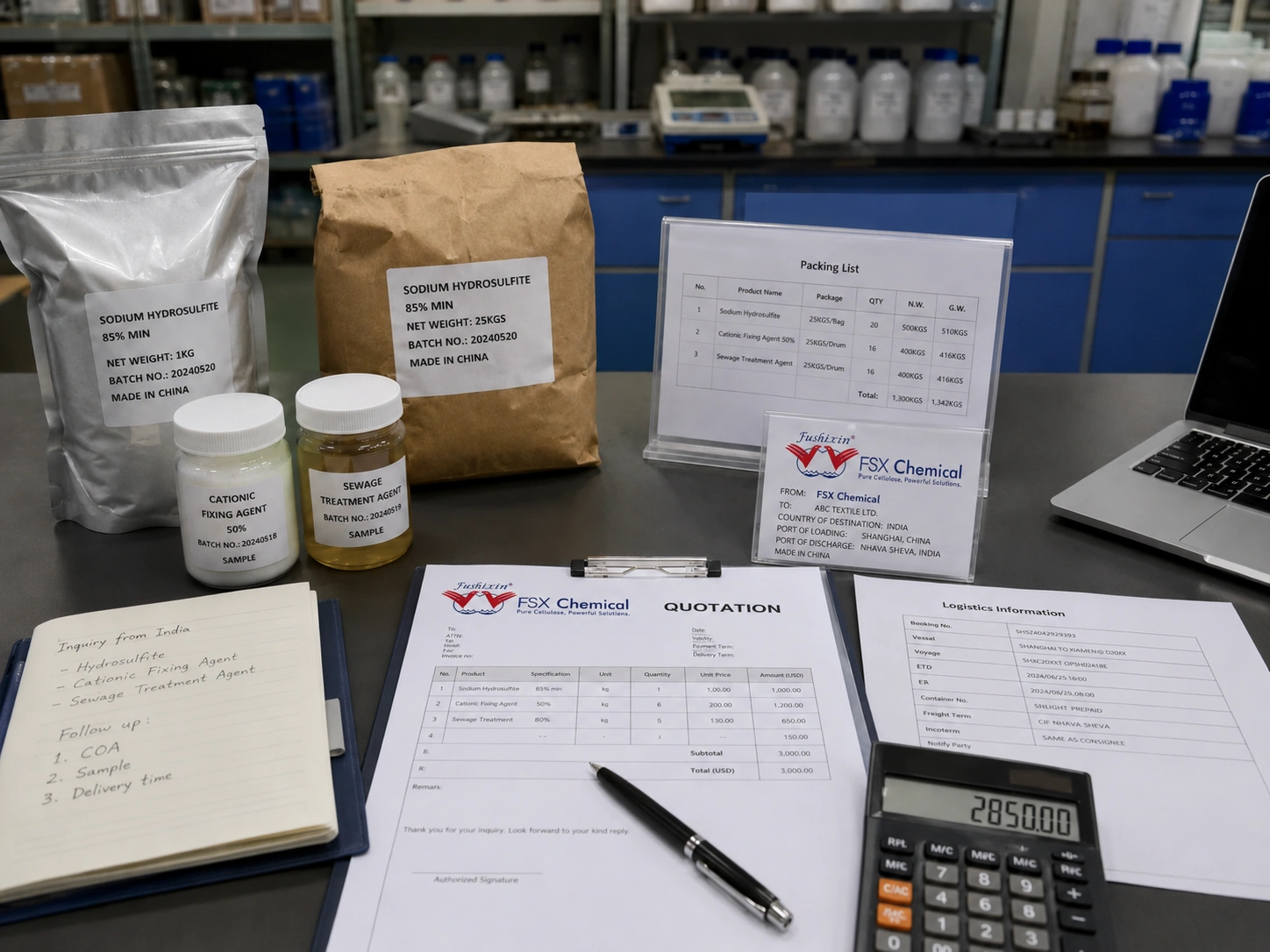
- Confirmar los documentos de embalaje y exportación — Verifica el tamaño de la bolsa, las etiquetas, la trazabilidad del lote, la factura, la lista de empaque, el certificado de análisis (COA), la ficha de datos de seguridad (SDS) y otros documentos requeridos antes del envío.
- Póngase en contacto con nuestro equipo técnico — discuss which sodium alginate grade is suitable for your textile printing process📧 Correo electrónico: Service@fsxchemical.com