How to Select the Right Textile Printing Thickener for Your Fabric
The right textile printing thickener depends on more than the dye system. Fibre composition, fabric...
Textile printing thickener selection often begins with a question about viscosity, product price or dye compatibility. These factors are important, but they do not provide enough information to select the correct product.
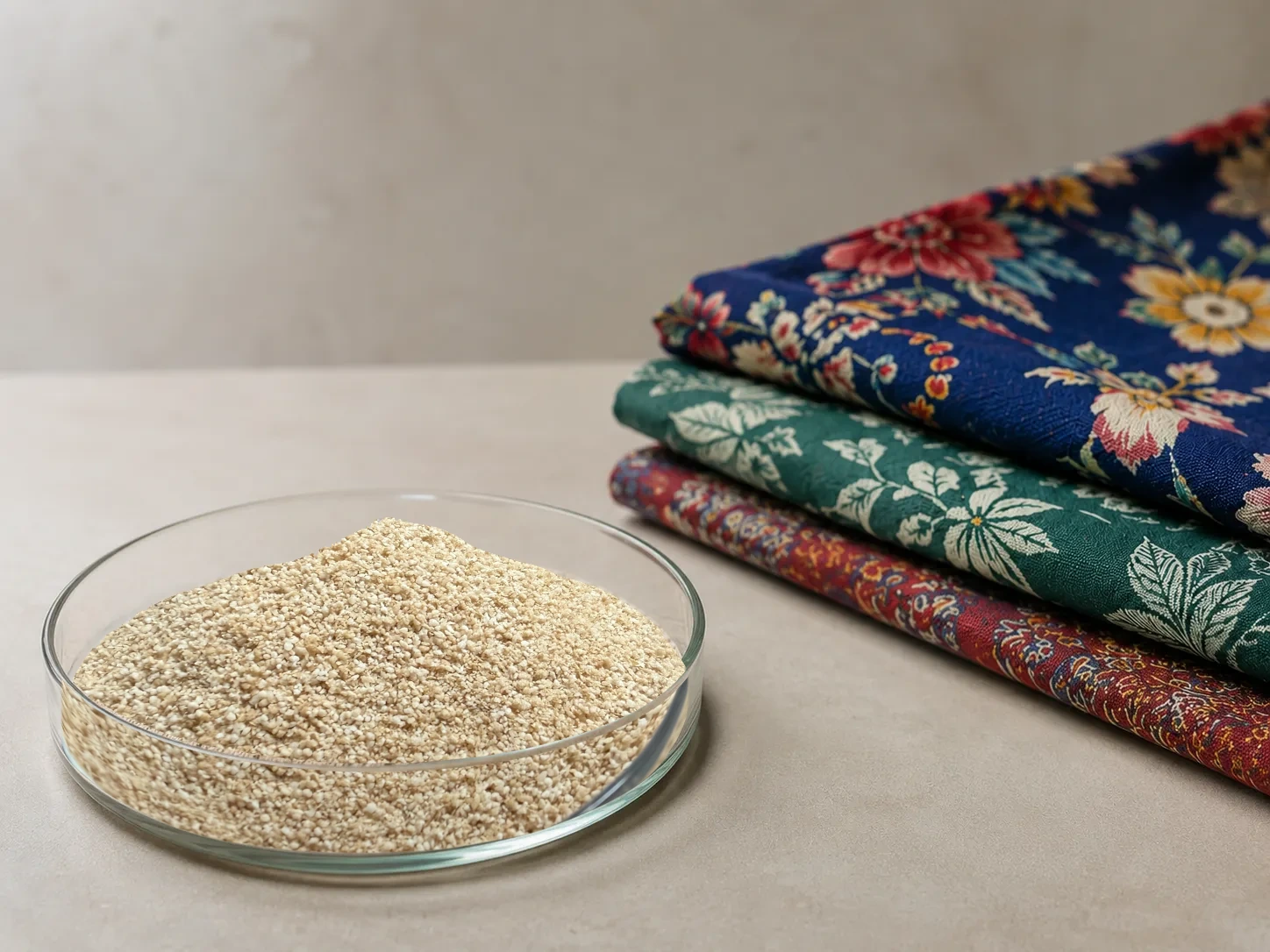
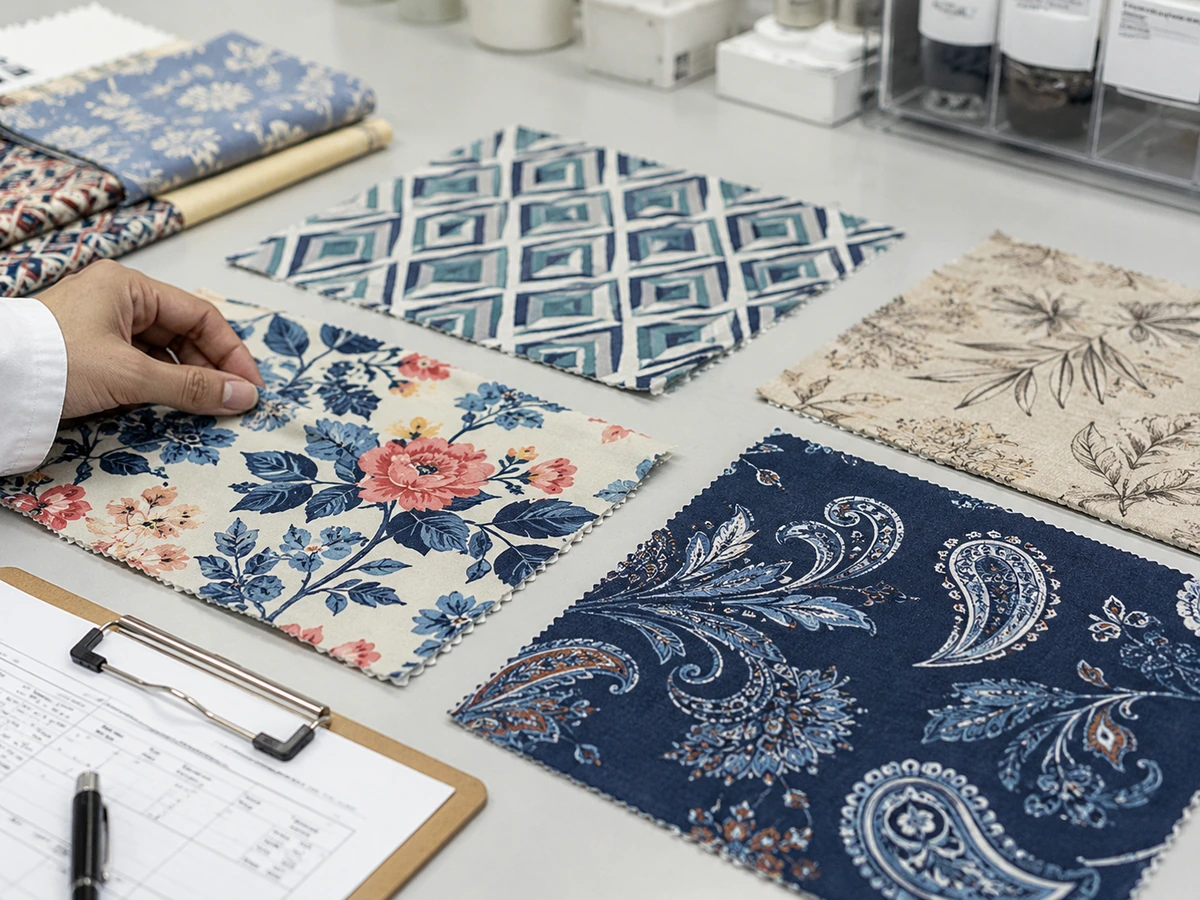
The fabric itself is one of the most important parts of the selection process. Cotton, viscose, polyester, nylon, silk, wool and blended fabrics interact differently with water, dyes, pigments, binders and printing pastes.
Even two fabrics made from the same fibre can produce different results. Fabric weight, weave or knit structure, yarn density, absorbency, surface finish and previous chemical treatments can change paste pickup, penetration, spreading and drying.
For this reason, the correct textile printing thickener should be selected with the production fabric rather than from the product specification alone. A suitable candidate must provide the required preparation, rheology, filtration and stability while producing an acceptable finished textile.
Why Fabric Should Come First in Thickener Selection
A printing thickener controls how the color paste or pretreatment moves before, during and after application. The fabric determines how that paste is accepted by the textile surface.
Fabric influences paste pickup
Open, textured or absorbent fabrics may accept more paste than dense, smooth or previously treated fabrics. The same machine settings can therefore produce different application quantities.
Fabric influences penetration
Some textile constructions allow the paste to move quickly through the surface, while others retain more material near the top of the fabric.
Fabric influences print definition
Fine lines and small details can appear sharp on one fabric but spread or break on another because the surface, yarn structure and absorbency are different.
Fabric influences drying and fixation
Fabric weight, moisture content and construction can change drying speed, heat transfer and the behavior of the colorant during fixation or curing.
Fabric influences final handle
A formulation that leaves an acceptable surface on a heavy fabric may create noticeable stiffness or residue on a lightweight textile.
The fabric should therefore be part of the original inquiry, laboratory comparison and production trial.
Build a Fabric Profile Before Requesting Samples
A useful fabric profile helps the supplier identify a practical thickener route before sending unrelated samples.
Record the fibre composition
100% cotton
Viscose or rayon
Polyester
Naylon
İpek
Yün
Cotton-polyester blend
Other natural, synthetic or blended fibres
Record the fabric construction
Woven or knitted
Kumaş ağırlığı
Yarn count
Thread or loop density
Surface texture
Stretch or dimensional movement
Single-layer or raised construction
Record previous treatments
Scouring
Bleaching
Mercerizing
Heat setting
Optical brightening
Water-repellent treatment
Softener or finishing treatment
Digital printing pretreatment
Record the printing route
Confirm the colorant system, printing machine, application method, fixation process and final quality target.
Provide a representative fabric sample
A physical sample or production lot provides more useful information than a description such as “cotton fabric” or “polyester cloth” alone.
Main Textile Printing Thickener Families
Different product families provide different viscosity, rheology, chemical compatibility and post-treatment characteristics. The following table provides starting directions rather than automatic recommendations.
Thickener Family
Common Starting Route
Important Fabric Considerations
Main Caution
Sodyum aljinat
Reactive printing on suitable cellulosic fabrics
Fabric absorbency, construction, penetration, wash-off and handle
Not a universal route for pigment, disperse or every digital process
Karboksimetil Selüloz
Selected printing, compound thickener, coating and sizing formulations
Surface film, penetration, electrolyte response and removal
Similar viscosity does not prove equivalent fabric performance
Karboksimetil Nişasta
Selected disperse, compound and specialized printing formulations
Film behavior, paste transfer, wash-off and fabric handle
Not an automatic one-to-one replacement for sodium alginate
Synthetic thickener
Pigment printing and specialized formulations
Binder compatibility, surface coverage, curing and handle
Performance depends on pH, binder and complete formula
Compound thickener
Application-specific reactive, pigment or disperse systems
Fabric-specific rheology, penetration, pickup and stability
Compound products with similar viscosity may have different compositions
Dijital baskı macunu
Reactive, disperse or pigment digital pretreatment
Uniform pickup, ink spreading, drying, fixation and surface handle
Must be matched to the specific fabric and ink route
Cotton and viscose are cellulosic fibres commonly printed with reactive dyes. A suitable thickener must be evaluated together with the dye, alkali, salt, humectant, fabric and fixation process.
Sodium alginate as a starting route
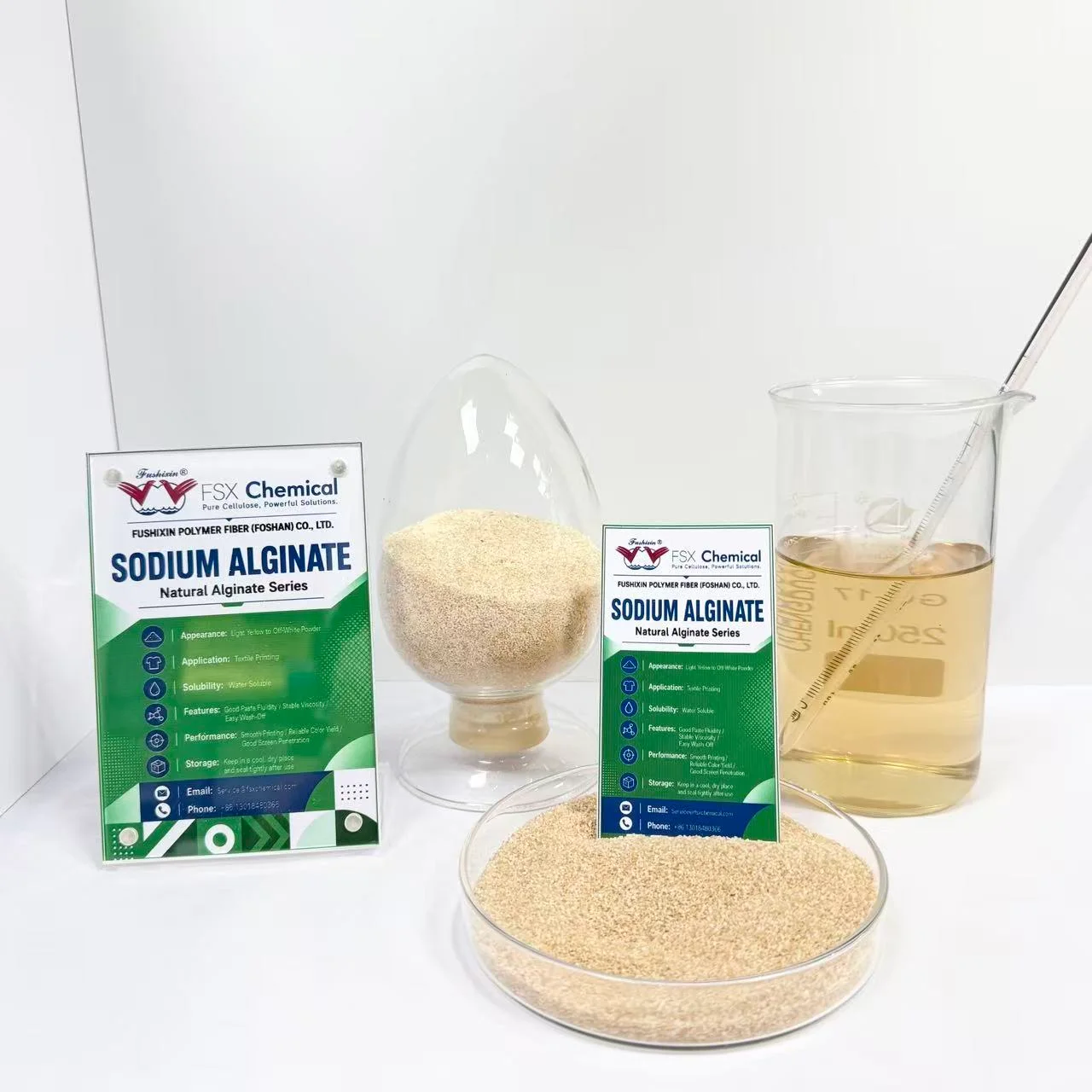
Sodyum aljinat is a common starting route for reactive printing on suitable cellulosic fabrics. Commercial grades can differ in viscosity, hydration, filtration and rheological behavior.
Cotton and viscose are not identical
Viscose may show different moisture absorption and paste penetration from a cotton fabric of similar weight. The dosage and rheological balance should therefore be confirmed separately.
Evaluate fabric absorbency
Highly absorbent material may allow excessive paste penetration or edge spreading. A less absorbent or tightly constructed fabric may require stronger transfer and leveling.
Check wash-off and handle
Evaluate the finished fabric after the complete steaming and washing process. Residual thickener or incomplete removal may affect the surface and handle.
Consider a compound route carefully
CMC, CMS or another polymer may be evaluated as part of a controlled reactive compound system. It should not be treated as an automatic direct replacement for sodium alginate.
2. Selecting a Thickener for Polyester
Polyester can be printed through disperse or pigment routes, and it is widely used in digital textile production. Each route requires a different starting formulation.
Dağınık serigrafi baskı
CMS, selected synthetic thickeners or application-specific compound products may be evaluated according to the disperse dye, paste stability, printing equipment and fixation process.
Pigment printing on polyester
The thickener must remain compatible with the pigment dispersion, binder, crosslinking system and curing conditions.
Dağınık dijital baskı
A dedicated disperse digital printing paste should be evaluated with the actual polyester fabric, application method, ink, drying and fixation route.
Heat setting may influence the surface
Previously heat-set or finished polyester may accept pretreatment differently from unfinished material. Use the production fabric during approval.
Check migration and surface quality
Final evaluation should include shade uniformity, definition, surface appearance, fixation and any color movement during thermal processing.
3. Selecting a Thickener for Nylon, Silk and Wool
Nylon, silk and wool are commonly associated with acid-dye or specialized printing routes. These fibres should not automatically use a formulation developed for reactive printing on cotton.
Confirm the dye system first
Identify whether the application uses acid dyes, metal-complex dyes, pigments or another colorant route.
Protect sensitive fabric handle
Silk and lightweight wool fabrics can show residual stiffness or surface buildup more clearly than heavy fabrics.
Control penetration
Fine, open or highly absorbent constructions may require careful control of paste transfer and structural recovery.
Check pH and chemical compatibility
The thickener must remain stable under the pH and auxiliary conditions used by the selected acid or specialized printing process.
Request an application-specific grade
Do not assume that a general sodium alginate, CMC, CMS or digital paste is automatically approved for nylon, silk or wool. Request a suitable candidate and complete fabric testing.
4. Selecting a Thickener for Blended Fabrics
Blended fabrics can be more difficult because each fibre component may respond differently to water, colorants, binders and fixation.
Cotton-polyester blends
The printing route may target one fibre, use pigments across both fibres or require a combined process. The thickener should be selected according to the actual colorant strategy.
Different absorption within one fabric
One fibre may absorb or retain more liquid than another, which can affect local penetration, sharpness and shade.
Different fixation requirements
A combined dye process may use more complicated thermal or chemical conditions than a single-fibre system.
Pigment routes may simplify coloration but still require testing
Pigments can color multiple fibre types through a binder film, but binder compatibility, curing, rubbing performance and handle remain important.
Use the actual blend ratio and fabric construction
A candidate tested on 100% cotton or 100% polyester cannot automatically represent a blended production fabric.
5. Consider Fabric Weight and Construction
Fibre composition describes the material, but construction determines how yarns, loops and open spaces interact with the printing paste.
Lightweight fabrics
Lightweight materials may be more sensitive to strike-through, excessive penetration and residual stiffness.
Heavy fabrics
Heavy or dense fabrics may require sufficient transfer and penetration to avoid weak surface coverage or incomplete coloration.
Open woven structures
Open structures can allow the paste to move through the fabric more easily. Back-side contamination and loss of definition should be checked.
Dense woven structures
Tight constructions may retain more paste near the surface and require appropriate flow and leveling.
Knitted fabrics
Knitted textiles may stretch or distort during application and drying. Paste pickup and pattern dimensions should be monitored.
Raised or textured fabrics
Fleece, brushed, ribbed or textured surfaces may require different transfer and penetration from a smooth plain weave.
6. Evaluate Fabric Absorbency
Absorbency influences how quickly liquid moves into and across the fabric. It should be measured or compared rather than assumed from fibre name alone.
High absorbency may cause
Rapid penetration
Loss of surface color concentration
Wider print edges
Uneven pickup across variable fabric areas
Greater sensitivity to application quantity
Low absorbency may cause
Excessive surface retention
Slow drying
Uneven leveling
Poor wetting
Surface smearing before fixation
Do not correct absorbency only by increasing viscosity
A higher viscosity may reduce flow but can also reduce transfer or create an excessive surface film. Pretreatment, wetting, application quantity and rheology should be reviewed together.
Test several fabric lots when necessary
Scouring, finishing and raw-material variation may cause absorbency differences between production lots.
7. Check Surface Treatments and Residual Chemicals
Previous textile processing can influence wetting, chemical compatibility and print uniformity.
Residual oils or waxes
Incomplete preparation may create poor wetting, missing areas or uneven paste pickup.
Softener residues
Some finishing materials may change surface energy or interact with binders, pretreatments and colorants.
Water-repellent finishes
A water-repellent surface can prevent uniform paste application. Changing the thickener alone may not solve the problem.
Variable pH or residual chemicals
Residual alkali, acid, salt or detergent can alter the local printing chemistry.
Optical brighteners and other finishes
These materials may affect apparent shade, curing or final evaluation.
Compare prepared and untreated fabric where practical
This can help determine whether a defect originates from the printing paste or the incoming textile.
8. Match the Thickener to the Printing Method
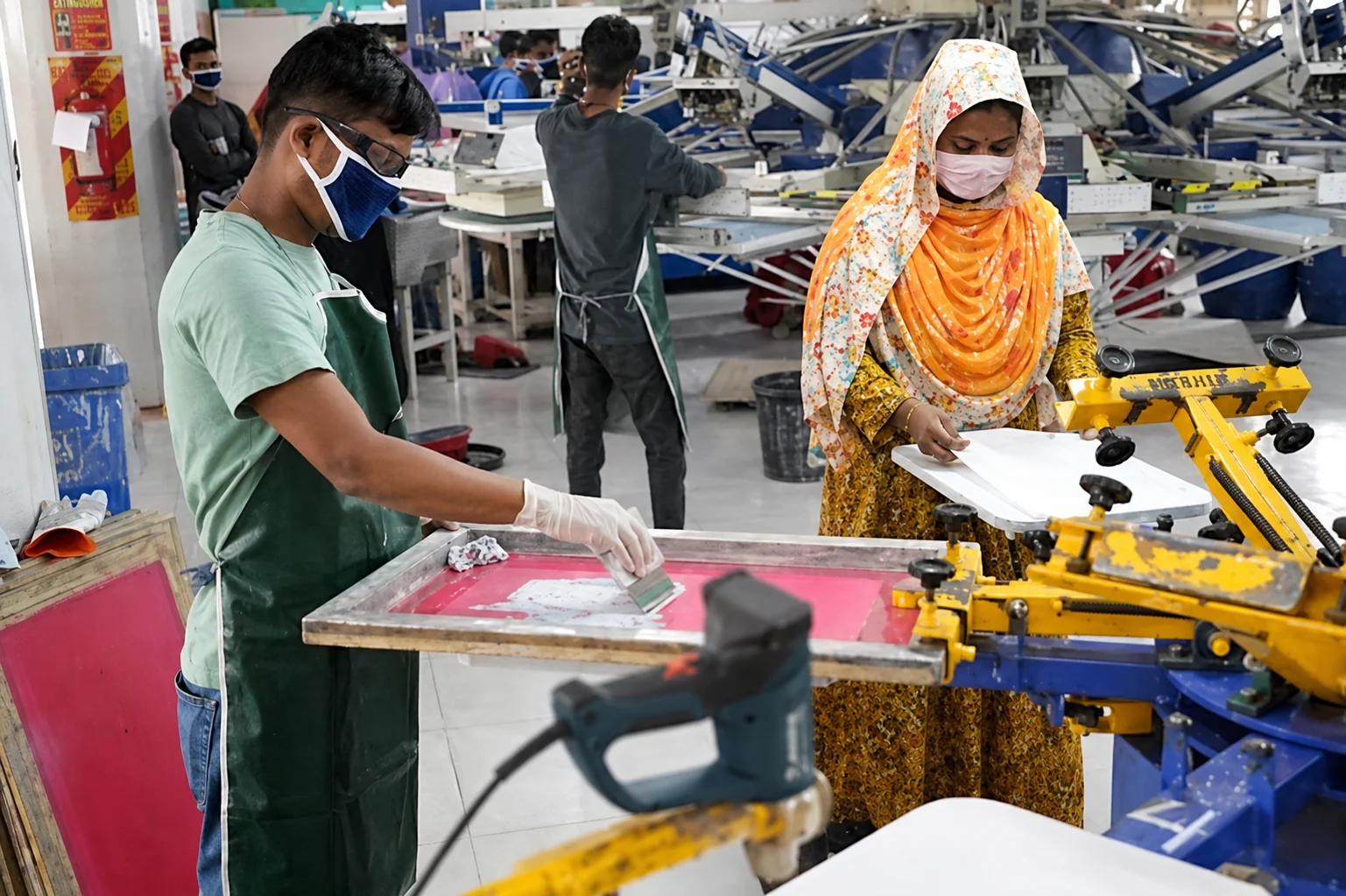
The same fabric may require different paste behavior when printed by flat-screen, rotary-screen or digital equipment.
Flat-screen printing
Evaluate screen passage, squeegee transfer, pattern definition, penetration and paste recovery after application.
Rotary-screen printing
The paste must also circulate and pass through the rotary screen under repeated production shear. Long-run stability becomes especially important.
Digital textile printing
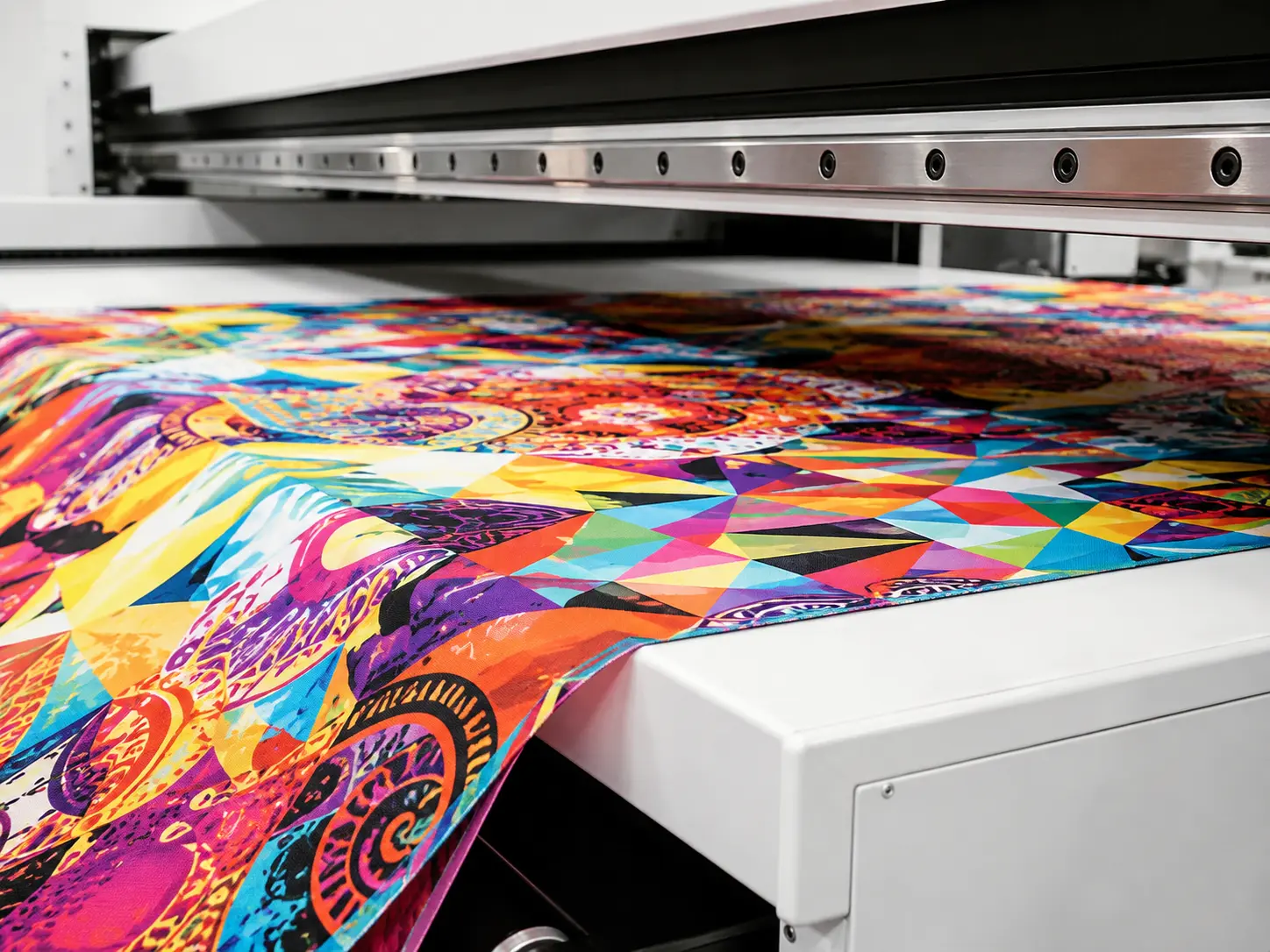
In many digital systems, the thickening function is part of a fabric pretreatment applied before inkjet printing. Uniform pickup and controlled ink spreading are central evaluation points.
Padding or coating
The formulation must provide uniform wet pickup or coating weight across the fabric width without excessive foam or leveling defects.
Do not transfer a screen-printing formula directly to digital use
The equipment, application quantity and role of the paste are different. Use an application-specific digital printing route.
9. Define the Required Viscosity and Rheology
Viscosity provides a useful control value, but fabric performance depends on how the paste flows and recovers under different conditions.
Use a complete viscosity method
Sample concentration
Su kaynağı
Mixing and hydration procedure
Ölçüm sıcaklığı
Instrument and spindle
Dönme hızı
Reading time and unit
Evaluate flow during application
The paste should move sufficiently through the screen or application equipment and transfer uniformly onto the fabric.
Evaluate structural recovery
After application, the paste should recover enough structure to control spreading and penetration without causing poor leveling.
The fabric changes the preferred rheology
A highly absorbent lightweight fabric may require a different balance from a dense, smooth and low-absorbency textile.
Do not select the highest viscosity automatically
Excessive viscosity can reduce transfer, produce uneven solid areas or increase machine resistance.
10. Test Chemical Compatibility
The thickener must remain suitable after dyes, pigments, salts, alkalis, binders and auxiliaries are added.
Reactive formulations
Test the selected sodium alginate or compound route with representative reactive dyes, alkali, salt and humectant levels.
Pigment formulations
Confirm compatibility with the actual pigment dispersion, binder, crosslinker and curing system.
Disperse formulations
Evaluate paste stability, dye distribution, fixation conditions and final polyester surface quality.
CMC and CMS formulations
CMC ve CMS may respond differently to pH, electrolytes, dyes and other polymers.
Record immediate and delayed changes
Check viscosity, appearance, separation and filtration immediately after formulation and after the normal holding period.
11. Review Filtration and Paste Stability
A thickener that produces the correct initial viscosity may still be unsuitable when it creates residue or changes during storage and production.
Test filtration using a defined method
Record filter material, opening size, sample quantity, filtration condition and time.
Geri tutulan malzemeyi inceleyin
Determine whether residue consists of incompletely hydrated powder, gel, precipitated chemicals, fibre contamination or foreign matter.
Check holding stability
Viscosity drift
Ayrılık
Settling
Foam retention
Skin formation
Gel development
Depolama sonrası filtrelenebilirlik
Use the actual factory holding period
A short laboratory observation may not represent a paste stored or circulated for several hours.
Connect stability with fabric performance
Print or apply both fresh and stored paste to determine whether changes affect pickup, definition, shade or handle.
Quick Selection Matrix by Fabric and Printing Route
Fabric and Route
Practical Starting Thickener Route
Critical Fabric Tests
Cotton reactive screen printing
Sodium alginate or validated reactive compound thickener
Definition, penetration, dye compatibility, wash-off and handle
Viscose reactive printing
Matched sodium alginate or reactive compound route
Absorbency, spreading, penetration, shade and residual handle
Polyester disperse screen printing
CMS, synthetic or application-specific compound thickener
Transfer, fixation, migration, levelness and surface appearance
Polyester pigment printing
Binder-compatible synthetic or compound thickener
Coverage, curing, rubbing performance and fabric handle
Cotton-polyester pigment printing
Validated pigment thickener and binder system
Uniformity across both fibres, curing, rubbing and handle
Reactive digital printing on cotton
Dedicated reactive digital printing paste
Pretreatment pickup, definition, fixation, wash-off and handle
Disperse digital printing on polyester
Dedicated disperse digital printing route
Uniform application, drying, fixation and migration behavior
Pigmentli dijital baskı
Dedicated binder-compatible pigment pretreatment
Ink spreading, curing, rubbing performance and handle
Nylon, silk or wool printing
Application-specific acid or specialized printing thickener
pH compatibility, definition, fixation, washing and softness
This matrix identifies initial product families only. The final commercial grade requires controlled testing on the actual production fabric.
Recommended Laboratory Evaluation
Step 1: Select the production fabric
Use the actual fabric or a technically representative production lot.
Step 2: Select the current reference
Include the thickener or paste currently approved for routine production.
Step 3: Define acceptance criteria
Record the required preparation, viscosity, filtration, stability, transfer and final fabric performance.
Step 4: Standardize paste preparation
Use the same water source
Use the same concentration basis
Use identical containers and mixers
Control addition time
Control mixing and hydration time
Measure at the same temperature
Step 5: Test the stock paste
Dispersion or powder wetting
Lump formation
Su içme zamanı
Viskozite
Filtreleme
Foam and physical stability
Step 6: Prepare the complete formulation
Add the actual dyes, pigments, salts, alkalis, binders and auxiliaries in the normal sequence.
Step 7: Test the holding period
Measure and inspect the completed paste after the normal factory holding time.
Step 8: Apply to the fabric
Use representative screen, coating, padding or digital pretreatment conditions.
Step 9: Complete post-treatment
Follow the normal drying, steaming, fixation, curing and washing process.
Step 10: Compare finished fabric
Evaluate definition, penetration, shade, levelness, handle and relevant durability before making a commercial decision.
How to Evaluate the Printed Fabric
Final approval should be based on the finished textile rather than the prepared paste alone.
Print-edge definition
Inspect fine lines, small text, corners and closely spaced pattern elements.
Penetrasyon
Check the face and reverse side of the fabric. The preferred depth depends on the design, construction and end use.
Color spreading
Determine whether color moves beyond the intended pattern boundary.
Katı alan düzgünlüğü
Inspect large printed areas for mottling, uneven pickup, foam marks or incomplete transfer.
Shade and color strength
Compare candidates after identical fixation and post-treatment rather than from the wet print.
Wash-off or curing
Evaluate residual material, binder performance and the effectiveness of the normal downstream process.
Kumaş sap
Check stiffness, stickiness, surface buildup and differences between printed and unprinted areas.
Relevant fastness or durability
Complete the testing required by the buyer’s product and customer standards.
How to Move from One Fabric to Another
A formula approved for one fabric should not be transferred automatically to another material, even when the fibre name is the same.
Change one variable at a time
Begin by keeping the approved formula and recording how the new fabric changes pickup, penetration and definition.
Compare fabric preparation
Confirm whether both fabrics have the same scouring, bleaching, heat setting or finishing history.
Compare absorbency and construction
Record fabric weight, density, thickness, surface texture and wetting behavior.
The new fabric requires its own fixation, wash-off, curing, handle and durability checks.
Create separate approved recipes when necessary
Maintaining different controlled formulas for different fabric groups may be more reliable than forcing one recipe to cover every textile.
How to Compare Total Cost in Use
The lowest thickener price does not automatically produce the lowest cost per acceptable metre of printed fabric.
Malzeme maliyeti
Include delivered price and actual optimized dosage.
Hazırlık maliyeti
Include powder addition, mixing, hydration, heating, cooling, labor and filtration.
Application cost
Include machine speed, pickup control, screen cleaning, filter changes and corrective additions.
Waste cost
Include unused paste, filter residue, tank residue and rejected batches.
Fabric-quality cost
Include reprinting, additional washing, off-quality fabric and customer claims.
Fabric-change cost
A thickener that requires major reformulation for every fabric may create additional laboratory, inventory and production complexity.
Compare products only after they meet the same finished-fabric and production requirements.
Information to Send to the Supplier
Fabric information
Fibre composition and blend ratio
Woven or knitted construction
Kumaş ağırlığı
Surface texture
Absorbency or wetting information
Previous preparation or finishing treatment
Representative fabric sample
Printing information
Reactive, disperse, pigment, acid or digital route
Boya, pigment veya mürekkep sistemi
Flat-screen, rotary-screen or digital equipment
Current printing speed or application conditions
Fixation, curing or steaming process
Washing and finishing process
Current product information
Current thickener name and grade
Current TDS, SDS or COA
Mevcut doz
Viskozite ve tam test yöntemi
Hazırlık prosedürü
Current paste or powder sample
Performance information
Main printing defect
Desired definition or penetration
Required fabric handle
Filtration or stability problem
Cost or dosage objective
Printed-fabric photographs or sample
Common Fabric-Based Selection Mistakes
Selecting only by fibre name
Two cotton fabrics can differ in weight, construction, absorbency and preparation.
Using one formula for every fabric
A formula approved for a heavy woven fabric may not suit a lightweight knit or open construction.
Choosing the highest viscosity
Excessive viscosity may reduce transfer and produce uneven surface coverage.
Ignoring fabric preparation
Residual oils, softeners or water-repellent finishes can create defects that cannot be corrected by changing the thickener alone.
Testing only in clean water
The final dyes, pigments, binders and auxiliaries may change the paste behavior.
Evaluating only the wet print
Shade, definition, wash-off and handle may change after fixation and washing.
Approving one small fabric area
The test should represent normal fabric variation and production application.
Skipping the first-batch verification
The first commercial thickener batch should be compared with the approved sample before routine production use.
Troubleshooting Fabric-Related Printing Problems
Gözlemlenen Sorun
Possible Fabric or Paste Causes
Önerilen Kontroller
Print edges spread
High absorbency, slow structural recovery, excessive pickup or low paste body
Review fabric wetting, rheology, dosage and application quantity
Excessive reverse-side penetration
Lightweight or open construction, excessive pressure or low paste structure
Review fabric construction, machine pressure, pickup and rheology
Poor surface coverage
Dense or textured fabric, insufficient transfer, excessive viscosity or poor wetting
Review transfer, paste flow, fabric surface and application amount
Uneven solid areas
Variable absorbency, foam, poor leveling or inconsistent fabric preparation
Compare fabric lots, paste uniformity, foam and preparation
Weak color after washing
Insufficient fixation, excessive penetration, incompatible thickener or incorrect dye conditions
Review formulation, fabric preparation, fixation and wash-off
Fabric feels stiff
Excessive paste pickup, poor removal, binder film or heavy surface deposition
Review dosage, pickup, washing, curing and thickener route
Pretreatment applies unevenly
Variable fabric wetting, unstable viscosity, foam or coating equipment variation
Check absorbency, paste stability, filtration and pickup records
One fabric lot prints differently
Different preparation, absorbency, weight, construction or residual finish
Compare incoming-fabric data and conduct a controlled wetting test
Correct viscosity but poor definition
Unsuitable rheology, fabric absorbency, excessive application or surface treatment
Review multi-speed behavior, fabric profile and application conditions
How FSX Chemical Supports Fabric-Based Grade Matching
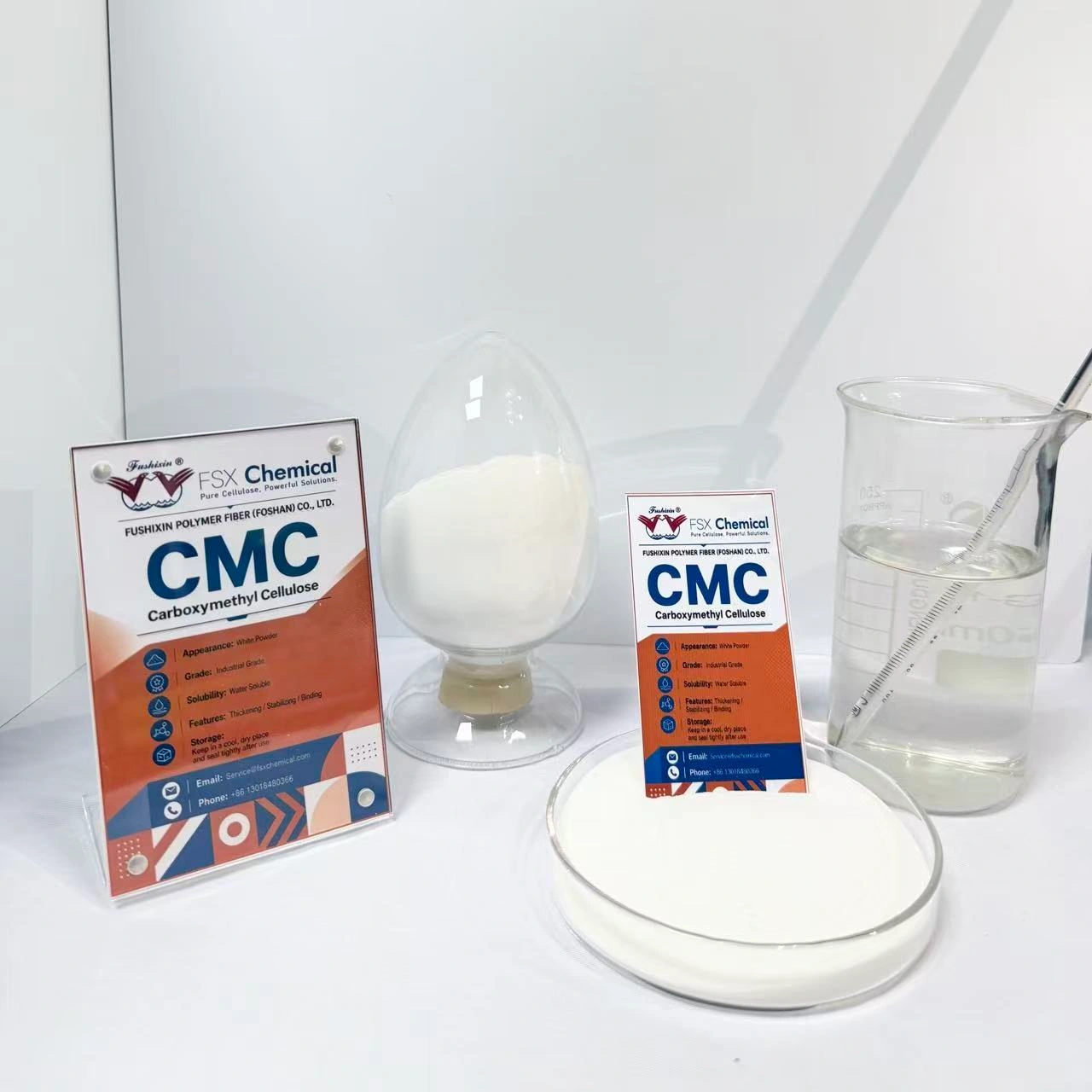
FSX Chemical supplies sodium alginate, CMC, CMS, digital printing paste and related textile printing thickener routes for printing mills, formulators, importers and distributors.
Fabric-based grade matching begins by identifying the fibre, construction, printing route and final textile requirement before selecting a candidate commercial grade.
Buyers can provide
Fabric composition, weight and construction
Representative fabric sample
Boya, pigment veya mürekkep sistemi
Printing or pretreatment equipment
Current thickener TDS or sample
Mevcut dozaj ve hazırlama yöntemi
Viscosity value and complete test method
Printed-fabric photographs or samples
Main definition, penetration, stability or handle problem
Tahmini miktar, ambalaj ve varış yeri
Technical review may include
Identification of a suitable thickener family
Review of the current product specification
Alignment of viscosity and preparation methods
Recommendation of a candidate commercial grade
Provision of relevant TDS and SDS information
Representative sample support
Guidance for side-by-side fabric testing
Review of laboratory and production-trial results
Batch documentation for the confirmed commercial grade
A recommended product remains a candidate for controlled evaluation. Final approval depends on the customer’s fabric, complete formulation, equipment, fixation process and finished-textile requirements📧 E-posta: Service@fsxchemical.com
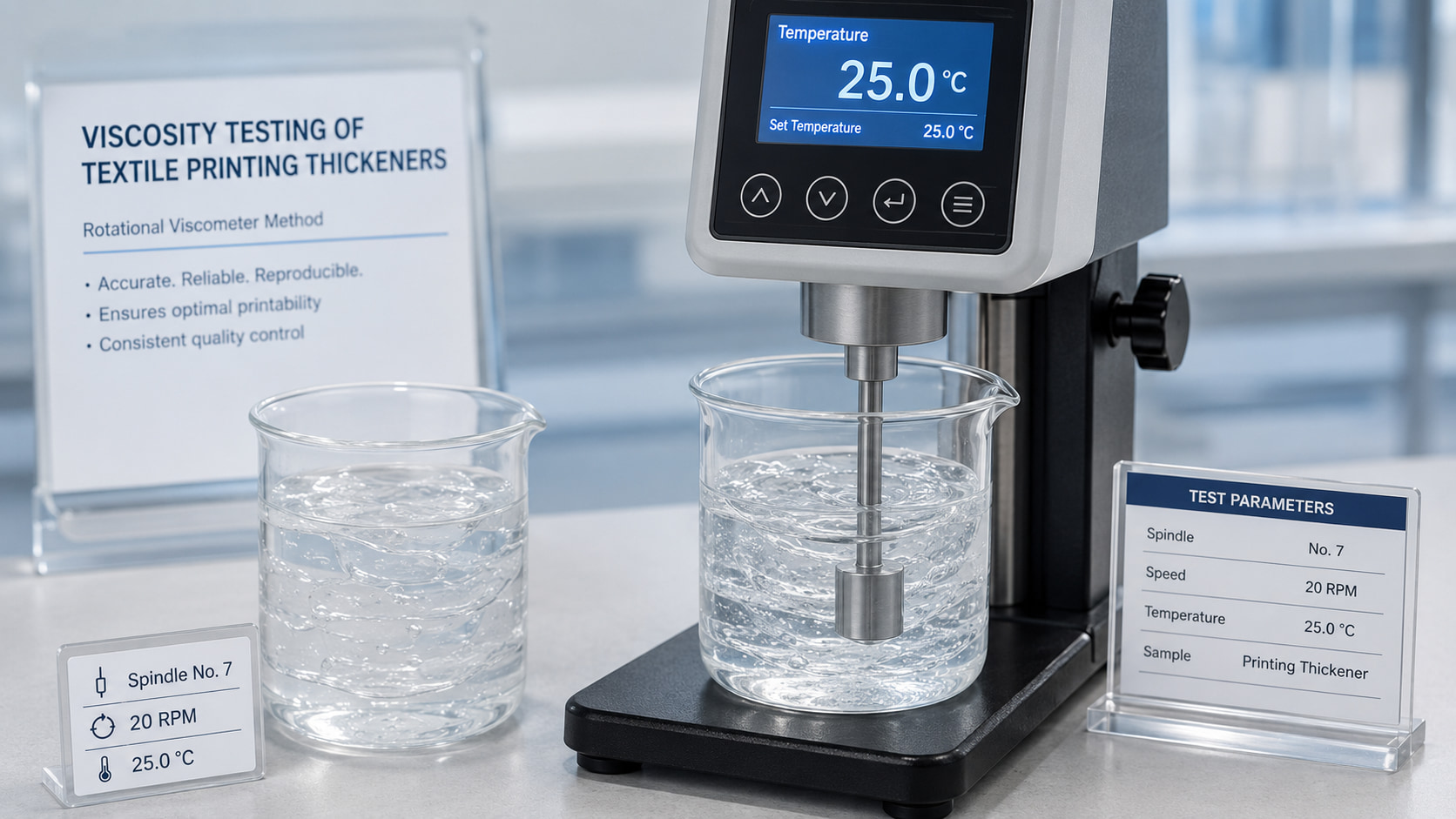
Konsantrasyon, sıcaklık, ölçüm cihazı, mil, hız, hazırlık yöntemi ve test süresi gibi faktörler eşleştirilmeden tekstil baskı kıvam arttırıcılarının viskozite değerlerinin neden karşılaştırılamayacağını öğrenin.
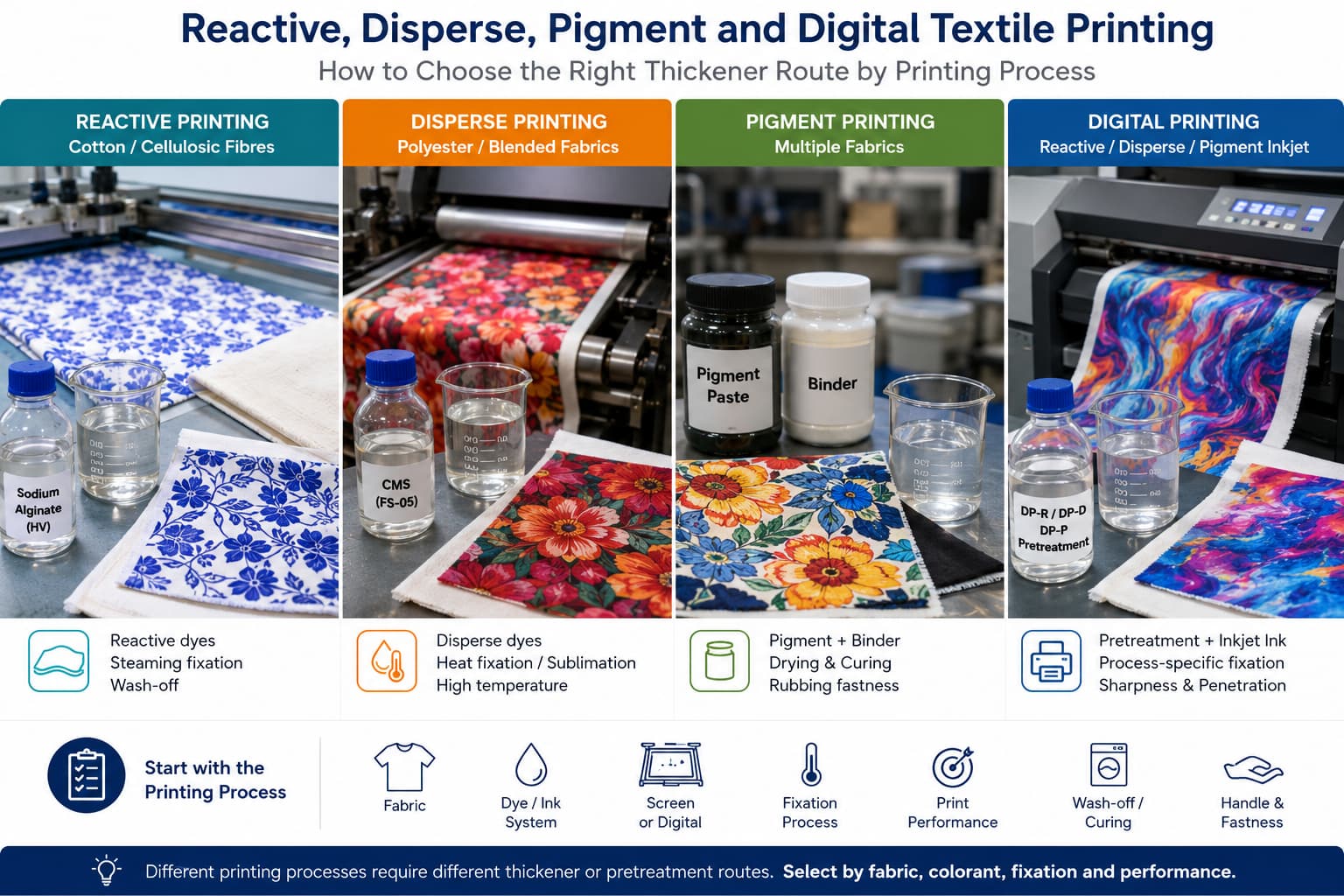
Kumaş, boya veya mürekkep, sabitleme, yıkama ve baskı kalitesi gereksinimlerine göre reaktif, dispers, pigment ve dijital tekstil baskısı için kıvam arttırıcı ve ön işlem yöntemlerini nasıl seçeceğinizi öğrenin.
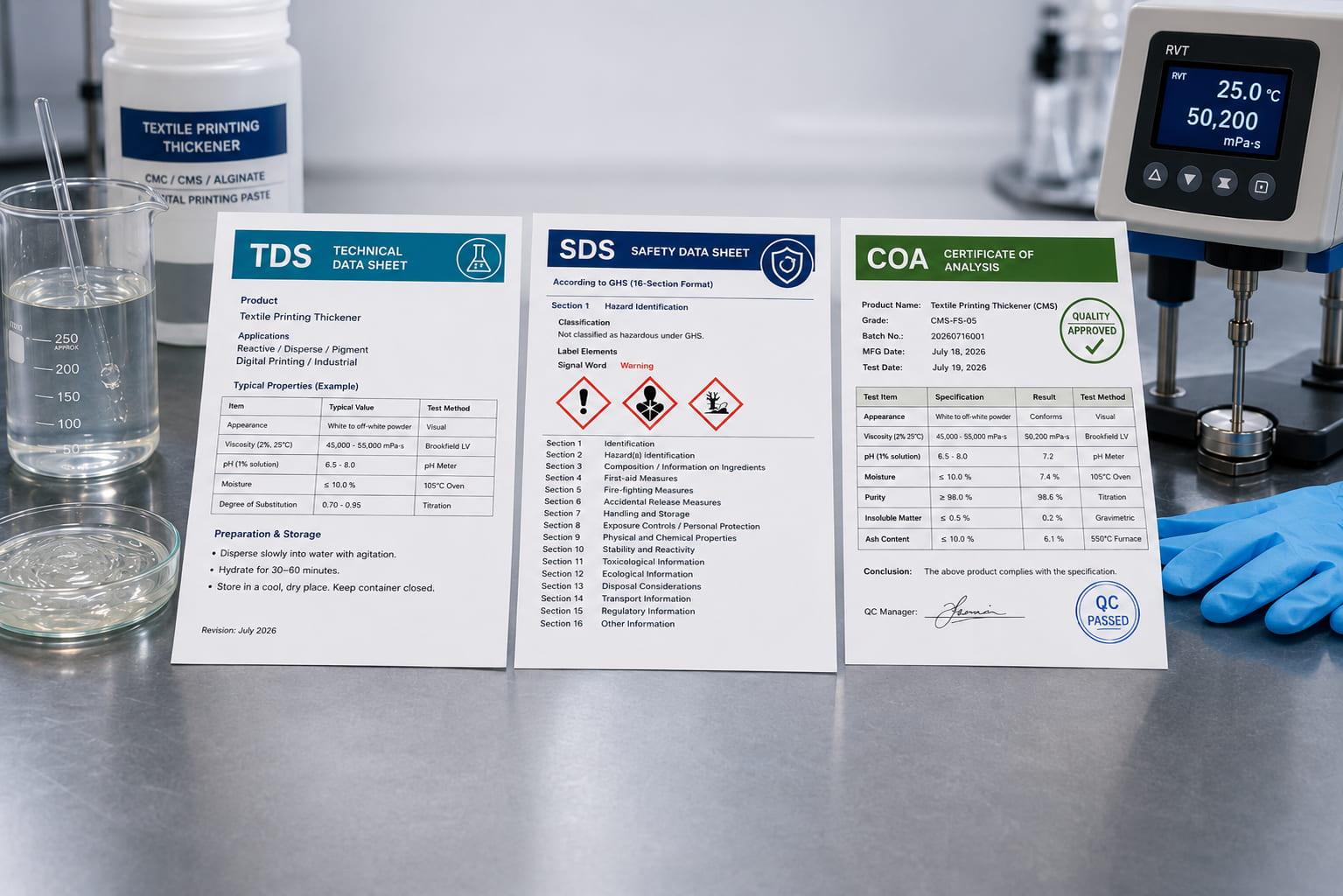
TDS, SDS ve COA belgeleri arasındaki farkları, tekstil baskı alıcılarının neleri doğrulaması gerektiğini ve teknik özellikleri, güvenlik verilerini, test yöntemlerini, parti sonuçlarını ve belge düzenleyicilerini nasıl kontrol edebileceğinizi öğrenin.
Tekstil baskısı için CMC, CMS, sodyum aljinat ve dijital baskı macununu karşılaştırın. Her bir yöntemin reaktif, dispers, pigment ve dijital baskı süreçlerine nasıl uyum sağladığını ve alıcıların numune testi, kalite eşleştirme ve toplu satın alma öncesinde nelere dikkat etmeleri gerektiğini öğrenin.
Sodyum aljinat, tekstil baskıcılığında reaktif baskı macunu için kararlı ve yıkanabilir bir kıvam arttırıcı olarak yaygın olarak kullanılmaktadır. Satın almadan önce viskozite derecesini, saflığı ve uygulamaya uygunluğu nasıl değerlendireceğinizi öğrenin; ayrıca FSX Chemical’ın teknik veriler ve numunelerle küresel alıcılara nasıl destek sağladığını keşfedin.
Karboksimetil selüloz (CMC), tekstil ürünlerinin baskı, apre ve boyama işlemlerinde yaygın olarak kullanılmaktadır. Bu kılavuzda, CMC türlerinin nasıl değerlendirileceği, hangi parametrelerin en önemli olduğu ve FSX Chemical’ın satın alma kararlarında nasıl destek olabileceği açıklanacaktır.
Karboksimetil selüloz, su bazlı mürekkeplerde, gravür baskıda ve mürekkep püskürtmeli baskı ön işlemlerinde kıvam arttırıcı ve stabilizatör olarak kullanılır. Bu kılavuz, satın alma ekipleri için temel kalite parametrelerini ve tedarikle ilgili hususları ele almaktadır.
Doğru CMC tedarikçisini seçmek, sadece fiyatları karşılaştırmaktan ibaret değildir. Bu kılavuz, satın alma ekiplerinin toplu sipariş vermeden önce uymaları gereken değerlendirme kriterlerini, belge kontrol listesini ve deneme sürecini ele almaktadır.
CMC bazlı baskı macunu, pigmentli, reaktif ve dijital tekstil baskı alanlarında kullanılmaktadır. Bu kılavuzda, hangi parametrelerin önemli olduğu, tedarikçilerin nasıl karşılaştırılacağı ve toplu sipariş vermeden önce nelerin talep edilmesi gerektiği açıklanmaktadır.
Hem sodyum aljinat hem de CMC, tekstil baskısında kıvam arttırıcı olarak kullanılır; ancak bunlar farklı boyama sistemlerine ve işlem koşullarına uygundur. Bu kılavuzda, aralarındaki temel farklar ve her birinin ne zaman kullanılması gerektiği açıklanmaktadır.
Tekstillerde dijital mürekkep püskürtmeli baskı, serigrafi baskıya kıyasla farklı macun ve ön işlem gereksinimlerine sahiptir. Bu kılavuz, dijital tekstil baskısında sodyum aljinatın nasıl kullanıldığını ve tedarik ekiplerinin hangi kalite parametrelerini belirtmeleri gerektiğini açıklamaktadır.
Gıda sınıfı ve endüstriyel sınıf CMC, aynı temel kimyasal yapıya sahiptir ancak saflık, DS aralığı ve yasal gereklilikler açısından önemli farklılıklar gösterir. Bu kılavuz, temel farklılıkları ve yanlış sınıfın kullanılmasının neden üretim sorunlarına yol açtığını açıklamaktadır.
Ürün adını, kullanım alanını, miktarı, teslimat yerini ve elinizde bulunan TDS,
örnek fotoğraf veya belgeleri bizimle paylaşın. FSX Chemical bu
bilgileri inceleyerek fiyat teklifi, numune eşleştirme
veya ürün seçimi için atılması gereken bir sonraki adımı önerecektir.
Ürün BilgileriÜrün adı, sınıfı, modeli, etiket fotoğrafı veya tedarikçi referansı.
Mevcut BelgelerTDS, SDS, COA, numune fotoğrafı, ürün listesi veya test verileri.
Sipariş DetaylarıTahmini miktar, ambalaj, varış ülkesi, liman veya ticaret şartı.
Başvuru veya SorunTekstil baskı süreci, formülasyon gereksinimi, mevcut sorun veya hedeflenen performans.

 TR
TR  EN
EN  BN
BN  ES
ES  FR
FR  ID
ID  RU
RU  AR
AR  UR
UR  VI
VI  TL
TL  HI
HI  UK
UK  KK
KK  KA
KA  UZ
UZ