TR
TR  EN
EN  BN
BN  UR
UR  ID
ID  RU
RU  AR
AR 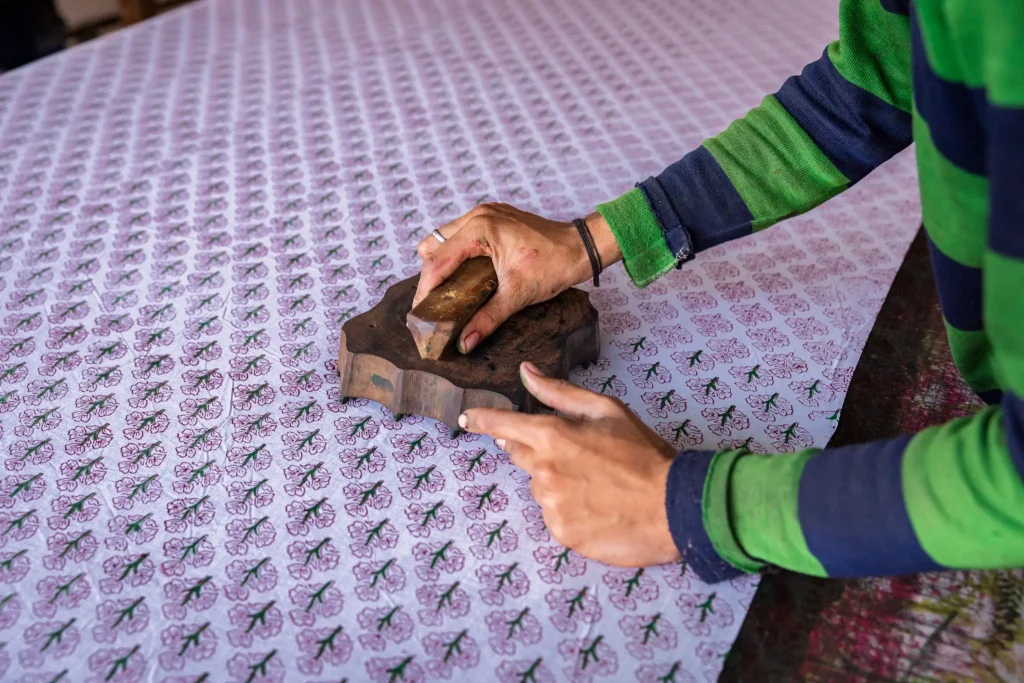
How Block Printing Differs from Screen Printing in Paste Requirements
Manual Application and Paste Body
The paste needs to be thick enough to coat the block face evenly without dripping, hold its shape on the block surface between the paste tray and the fabric, and release cleanly onto the fabric when the block is pressed and lifted. Paste that is too fluid will drip from the block, spread unevenly, and bleed on the fabric. Paste that is too thick will not coat the block evenly and may leave gaps in the pattern.
Compared to rotary screen printing paste — which is engineered for continuous high-speed application — block printing paste is typically prepared at higher viscosity and tested manually for its behavior on the block before production begins.
Pattern Definition and Dye Migration Control
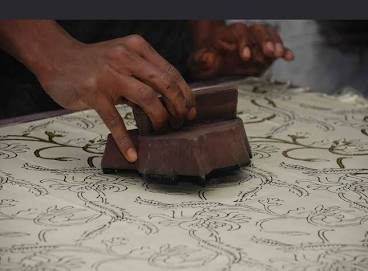
After transfer, the dye in the paste must remain in position until fixation. If paste viscosity is inadequate, capillary action in the fabric draws the dye outward from the stamped area, creating bleeding at pattern edges. Sodium alginate’s pseudoplastic behavior — high viscosity at rest, lower viscosity under applied pressure — is well suited to block printing because the paste flows readily when the block is pressed but holds position once pressure is released.
Batch Size and Preparation Scale
Block printing operations — whether traditional artisan workshops or small commercial operations — typically prepare paste in small batches compared to industrial screen printing. Paste quantities per color are often measured in liters rather than hundreds of liters, and paste preparation is done manually or with small-scale mixing equipment.
This small-batch context has practical implications for sodium alginate grade selection and dissolution method. Cold water dissolution is the standard method, and mixing time matters more at small scale where temperature and shear conditions are less controlled than in industrial mixing equipment. Finer mesh grades that dissolve more readily under gentle manual mixing may be more practical than coarser grades that require extended mixing to dissolve fully.
Sodium Alginate in Reactive Dye Block Printing Paste
Standard Paste Components for Reactive Dye Block Printing
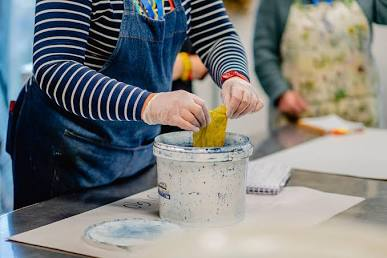
A reactive dye block printing paste contains the same core components as screen printing paste — sodium alginate, reactive dye, alkali, urea, and anti-reducing agent — but the proportions may differ to achieve the higher viscosity typically needed for block application.
In traditional artisan settings, paste formulation is often developed empirically — adjusted by the printer based on visual and tactile assessment of paste behavior rather than viscometer measurement. For operations transitioning from empirical to measured formulation, establishing a target viscosity range through measurement and correlating it with known good paste behavior is a useful first step.
Alkali Management in Small-Batch Block Printing
In industrial screen printing, alkali-containing paste is prepared in large batches and used within a defined time window. In small-batch block printing, the same principle applies but with different practical constraints — small batches may be prepared and used intermittently across a day, and paste may be left in the tray between printing sessions.
Alkali-catalyzed degradation of sodium alginate proceeds continuously once alkali is added to the paste, and the rate increases with temperature. In warm workshop environments, paste viscosity can drop noticeably over a few hours after alkali addition. The practical options are:
- Prepare paste without alkali and add alkali immediately before the printing session, discarding unused alkali-containing paste at the end of the session
- Use sodium bicarbonate rather than sodium carbonate as the alkali — bicarbonate gives slower-onset alkalinity and extends paste pot life compared to carbonate
- Keep paste in a cool environment between printing sessions to slow degradation
If paste viscosity drops noticeably during a printing session and print quality deteriorates, alkali degradation is the most likely cause if temperature has remained constant and no other variables have changed.
Natural Dye Traditions and Sodium Alginate Compatibility
Some South Asian block printing traditions use natural dyes alongside or instead of reactive synthetic dyes. The compatibility of sodium alginate with natural dye systems depends on the specific dye and mordant chemistry involved.
For mordant-based natural dye block printing — where a metal salt mordant is applied to the fabric before printing, and the natural dye fixes to the mordant during steaming or aging — sodium alginate can function as a thickener if it is chemically compatible with the mordant system in use. Compatibility should be confirmed through trial, as some mordant systems (particularly those containing calcium or multivalent metal salts) can cause sodium alginate gelling or viscosity change.
For natural dye systems that use acidic or strongly alkaline mordant chemistry, the pH tolerance of sodium alginate becomes relevant. Sodium alginate is stable at moderately alkaline pH but can degrade under strongly acidic conditions or at high pH with elevated temperature. Confirm pH compatibility with your supplier for any natural dye system outside the neutral to moderately alkaline range.
Ajrak and Related South Asian Block Printing Traditions
Ajrak Printing: Process and Paste Requirements
Ajrak is a traditional resist and direct printing technique practiced in Sindh (Pakistan) and parts of Rajasthan (India), characterized by deep indigo and madder-red colors in geometric patterns. Traditional Ajrak uses natural dyes with complex multi-stage resist and mordant processes; contemporary Ajrak production sometimes incorporates reactive dyes with traditional block printing methods.
Where reactive dyes are used in Ajrak printing, sodium alginate paste formulation follows the same principles as other reactive dye block printing. The key requirements are paste viscosity adequate for the block face geometry and pattern fineness, paste stability across the typically extended production process (Ajrak involves multiple printing and aging stages), and dye compatibility with the other chemicals in the multi-stage process.
If you are producing Ajrak-style printing with reactive dyes and experiencing color bleeding or paste stability problems, confirm whether the sodium alginate grade you are using is compatible with all chemicals present across the full multi-stage process — not just in the reactive dye paste stage alone.
Bagru and Sanganer Block Printing (India)
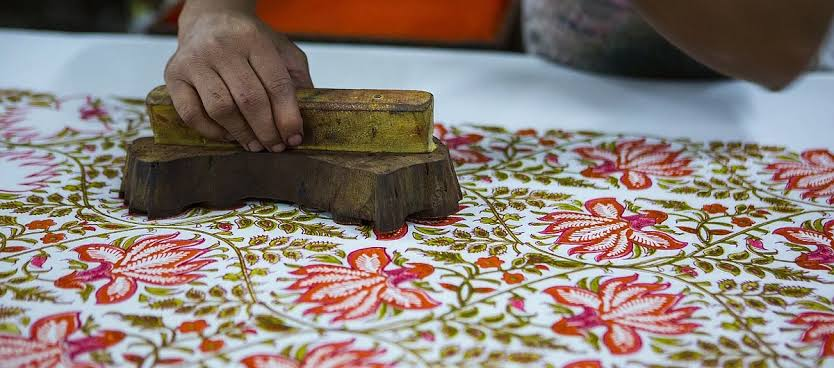
Bagru and Sanganer are block printing traditions from Rajasthan, India, known for resist printing with natural dyes and mordants. Contemporary Bagru and Sanganer workshops increasingly use reactive dyes alongside traditional techniques, and sodium alginate is used as a thickener in reactive dye paste formulations in these settings.
The small-batch, artisan scale of Bagru and Sanganer workshops means that paste preparation convenience and consistent dissolution at small scale are practical priorities. Medium viscosity sodium alginate grades with good cold water solubility are well suited to these operations.
Batik and Wax Resist Printing
Batik — a wax resist printing technique practiced across Southeast Asia, particularly in Indonesia and Malaysia — uses a different resist mechanism from block printing but sometimes incorporates reactive dye paste in the dye application stage. Where sodium alginate is used in batik dye application, the paste requirements focus on controlled dye penetration into exposed fabric areas while the wax resist prevents dye uptake in covered areas.
Paste viscosity in batik dye application is typically lower than in direct block printing, as the dye needs to penetrate the fabric structure rather than simply coating the surface. Low to medium viscosity sodium alginate grades are more appropriate for batik dye application than the higher viscosity grades used in block printing paste.
Grade Selection for Artisan and Small-Scale Block Printing
Viscosity Grade Considerations
For hand block printing paste, medium to high viscosity sodium alginate grades are typically most appropriate. The manual block application method requires paste body that holds on the block face without dripping — a characteristic that low viscosity grades do not provide at typical use concentrations.
If you are switching from an empirically formulated paste to a specified sodium alginate grade, start by measuring the viscosity of your existing paste at a defined temperature and use that as your target for the new grade. This connects the grade specification to your known working paste behavior.
Dissolution Method for Small-Scale Preparation
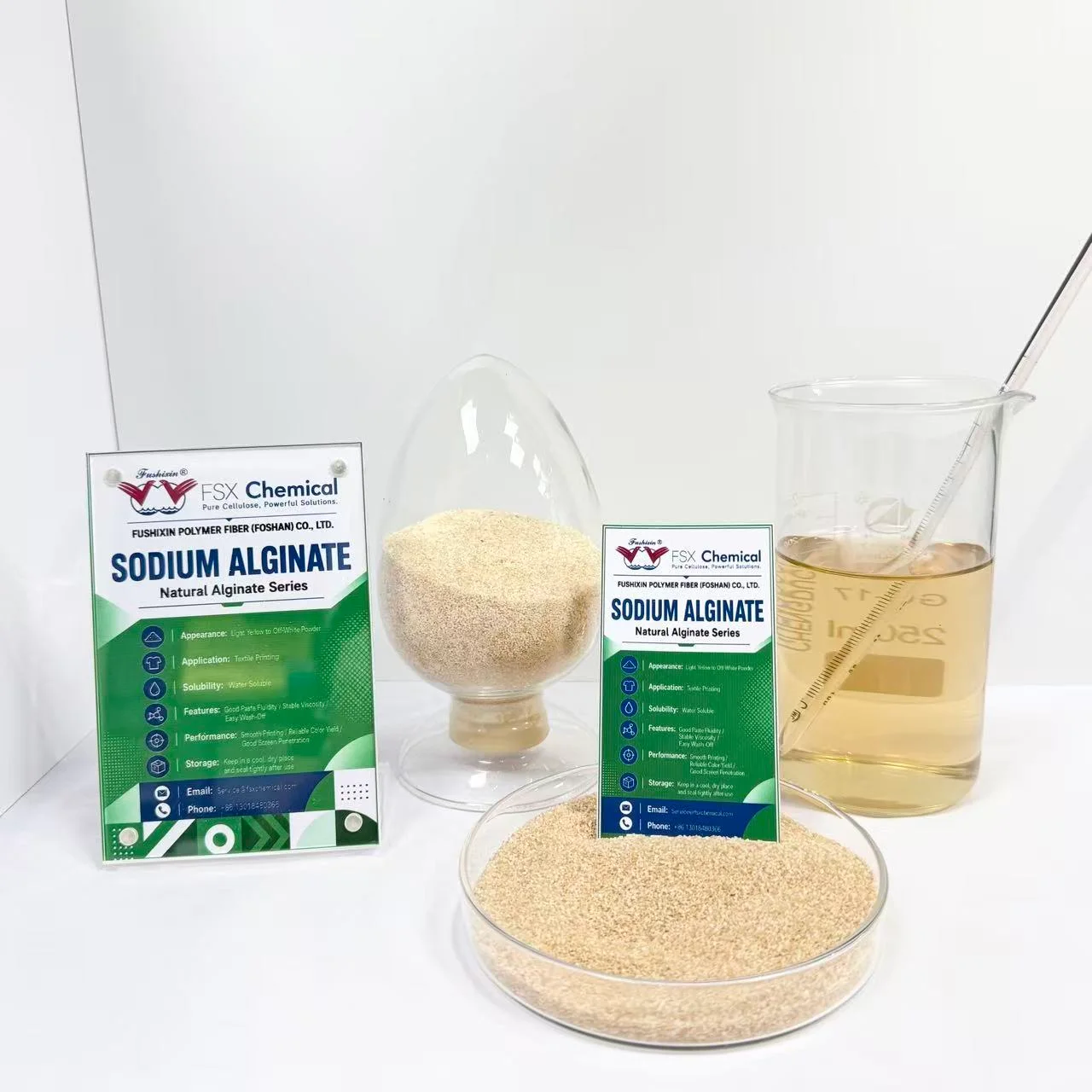
For small-batch preparation in artisan settings, cold water dissolution is practical and avoids the need for heating equipment. The key is adding the powder gradually to water under continuous stirring — a wooden or plastic paddle is adequate for small volumes — and allowing sufficient time for complete hydration before use.
Finer mesh grades (60 mesh and above) dissolve more readily than coarser grades under gentle manual mixing conditions. For artisan operations where mixing equipment is basic and mixing time is limited, finer mesh grades reduce the risk of inadequate dissolution and lump formation in the paste.
Purity and Solubility for Clean Pattern Definition
In block printing, insoluble particles in the paste can cause uneven coating of the block face and small voids in the printed pattern — defects that are particularly visible in fine-detail patterns. For fine-line block printing where pattern definition is critical, specifying a sodium alginate grade with low insoluble matter (water-insoluble content ≤ 0.5%) reduces this risk.
Heavy metal content in the sodium alginate may be relevant if the printed fabric will be subject to buyer specifications on heavy metal content in textile chemicals — increasingly common for export orders from major retail markets. Request heavy metal data from your supplier if this is a requirement for your end market.
Practical Paste Assessment for Block Printing
Simple Viscosity Tests Without a Viscometer
In artisan block printing settings where viscometers are not available, paste viscosity can be assessed qualitatively using simple tests that correlate with block printing behavior:
- Drip test — lift a paddle from the paste and observe whether the paste drips continuously or holds briefly before flowing; paste with adequate body for block printing should hold for 2–3 seconds before the first drip
- Block face test — press the block into the paste tray and lift; the paste on the block face should coat evenly without dripping from the lowest points of the carved design
- Stamp test — stamp the paste-loaded block onto a sample of your production fabric and assess whether pattern edges are sharp or bleeding
These qualitative assessments are not substitutes for viscosity measurement but provide a practical check on paste suitability for your specific block geometry and fabric type.
Establishing a Reference Paste for Consistency
For operations that prepare paste empirically, preparing a reference batch at confirmed working parameters — measured concentration, measured viscosity, documented sodium alginate grade and lot number — and keeping this as a quality reference gives you a repeatable standard to compare future batches against. This is particularly useful when switching sodium alginate lots or suppliers, where a direct side-by-side comparison with the reference batch identifies any performance difference before it affects production.
How FSX Chemical Supports Artisan and Small-Scale Printing Operations
Next steps:
- Request a TDS — review viscosity, mesh, and dissolution specifications for block printing applications
- Request a Sample — evaluate paste behavior on your blocks and fabric before bulk ordering
- Ask for Grade Matching — share your block printing tradition, dye system, and paste preparation method for a specific recommendation
- Contact Our Technical Team — for formulation support or troubleshooting in artisan printing applications📧 Email: Service@fsxchemical.com