Екологічні загусники для друку на текстилі: посібник з вибору на основі наукових даних
Sustainable textile printing depends on more than choosing a “green” chemical. Explore five FSX textile...
Evaluate sustainable textile printing thickeners using measured resource use per accepted finished fabric and evidence for the exact commercial grade. Compare dosage, water, energy, waste and rework within the same production boundary. Natural origin, a lower purchase price or a compliant document alone does not establish a lower overall environmental impact.
Sustainability has become an increasingly important consideration in textile printing, but the term can easily become too broad to guide real production decisions.
A printing chemical should not be considered sustainable only because it comes from a natural raw-material source. Its actual impact also depends on how much is used, how reliably it performs, how much paste is wasted, whether it creates filtration or machine problems, and whether the printed fabric passes quality requirements without repeated processing.
For this reason, FSX Chemical approaches textile printing chemical selection from a process perspective. Sodium alginate, CMC, CMS, digital printing paste and compound thickener solutions serve different technical roles and should be evaluated according to the dye or ink system, fabric, machine and finished-textile requirements.
The five products and solution routes in this guide are not presented as a universal industry ranking. They represent practical FSX product directions that can be evaluated when textile manufacturers want to improve resource efficiency while maintaining acceptable printing performance.
What Does Sustainable Textile Printing Really Mean?
In practical textile manufacturing, sustainability should be connected to measurable process decisions rather than one marketing claim.
The printing chemistry influences not only the amount of raw material purchased but also preparation, filtration, machine operation, fixation, washing, rejected fabric and production consistency.
A more useful sustainability framework considers
Material efficiency
Effective chemical dosage
Paste waste
Filtration losses
Machine cleaning and downtime
First-pass print quality
Fixation and post-treatment efficiency
Batch-to-batch consistency
A textile chemical that performs consistently at an optimized dosage may support more resource-efficient production than a lower-priced product that creates greater waste, repeated adjustments or rejected fabric.
Sustainability Starts with Process Efficiency
Chemical selection should be considered as part of the complete printing process.
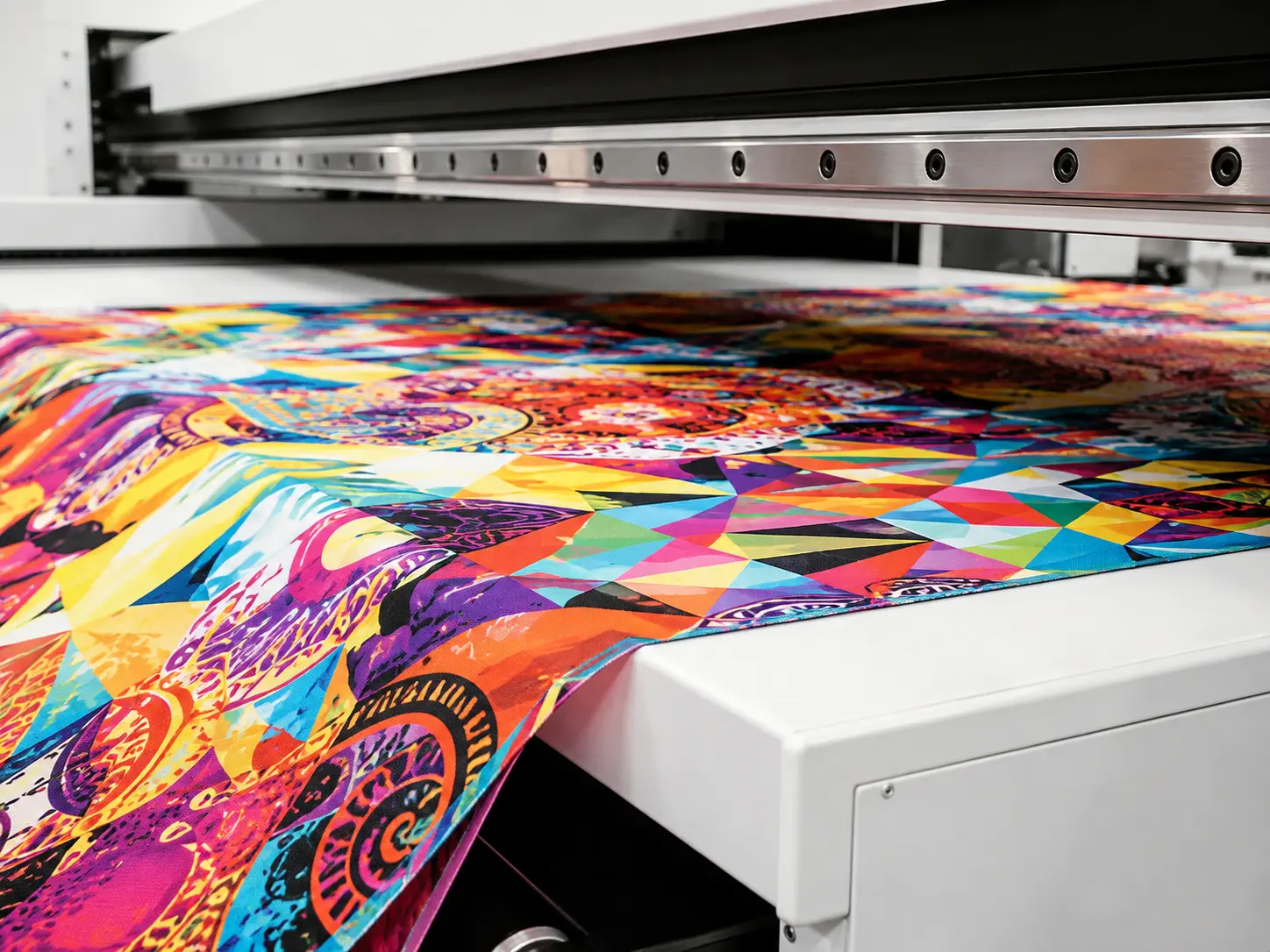
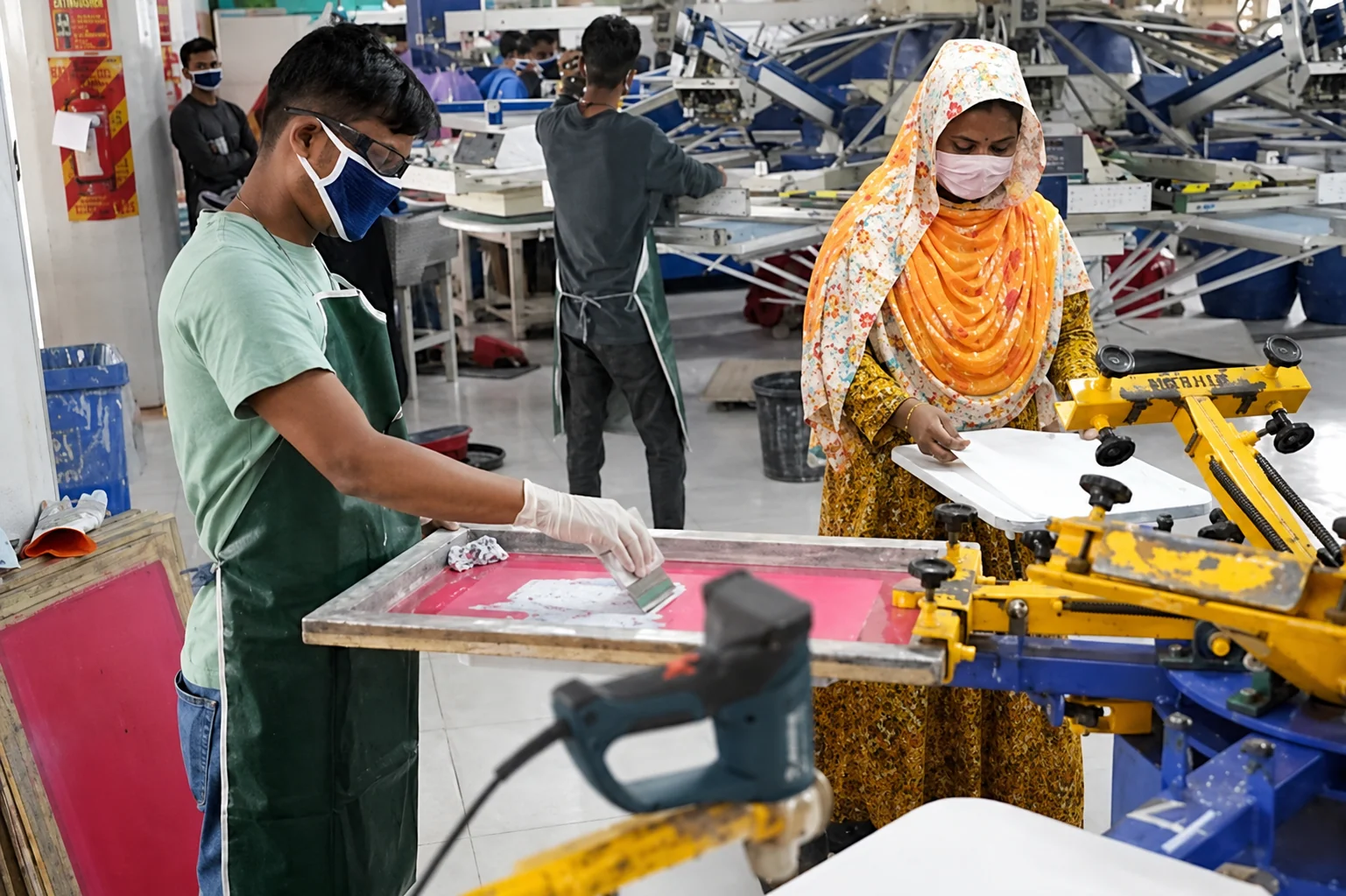
A thickener influences how a paste is prepared, pumped, transferred through a screen or applied to fabric. It can also influence print definition, penetration, fixation and the amount of post-treatment needed to produce an acceptable textile.
Reducing waste before printing
Better dispersion, hydration and preparation control can reduce lumps, filter residue and off-specification paste.
Reducing waste during printing
Suitable rheology and filtration can help maintain more stable machine operation and reduce avoidable interruptions.
Reducing waste after printing
Maintaining print definition, color uniformity and appropriate post-treatment performance can reduce the need for reprinting or additional processing.
Sustainable chemistry therefore begins with selecting the correct product for the process rather than simply replacing one chemical with another described as environmentally friendly.
Compare Five Textile Printing Product Routes
Маршрут постачання продукції
Primary Evaluation Direction
Resource-Efficiency Focus
Альгінат натрію
Conventional reactive printing
Rheology, filtration, print quality and wash-off
CMC
Selected printing and compound systems
Grade optimization, dosage, hydration and formulation stability
CMS
Selected disperse and compound systems
Polymer efficiency, cost-performance and blend optimization
Паста для цифрового друку
Reactive, disperse or pigment digital pretreatment
Pretreatment control, definition and reduction of failed printing
Compound Thickener
Application-specific printing formulations
Balanced polymer use, rheology and total cost in use
These routes are not interchangeable. Each should be matched to the actual printing process before sustainability or cost benefits are evaluated.
1. Sodium Alginate for Reactive Textile Printing
Альгінат натрію is an important thickener route for conventional reactive dye printing on suitable cellulosic textiles such as cotton and viscose.
Sodium alginate is derived from brown algae and belongs to the polysaccharide family. However, its renewable origin should not be the only reason for selecting it.
Why it is useful in reactive printing
A suitable textile-grade sodium alginate can provide the viscosity and rheological behavior required for paste preparation, screen passage and controlled transfer to the fabric.
Its performance should be assessed together with the reactive dye, alkali, electrolyte, printing equipment and subsequent fixation and washing process.
Sustainability considerations
Optimize the viscosity grade instead of automatically selecting HV
Reduce unnecessary polymer dosage
Control hydration to minimize lumps and waste
Check filtration to reduce avoidable screen cleaning
Evaluate wash-off at the finished-fabric stage
Monitor batch consistency to reduce formulation corrections
Higher viscosity is not automatically more sustainable
A higher-viscosity grade may reach a target viscosity at a different concentration, but the final decision should also consider screen passage, transfer, definition, wash-off and actual polymer dosage.
Sustainability therefore comes from selecting the correct alginate grade for the process, not from choosing the highest viscosity.
2. CMC for Selected Textile Printing Systems
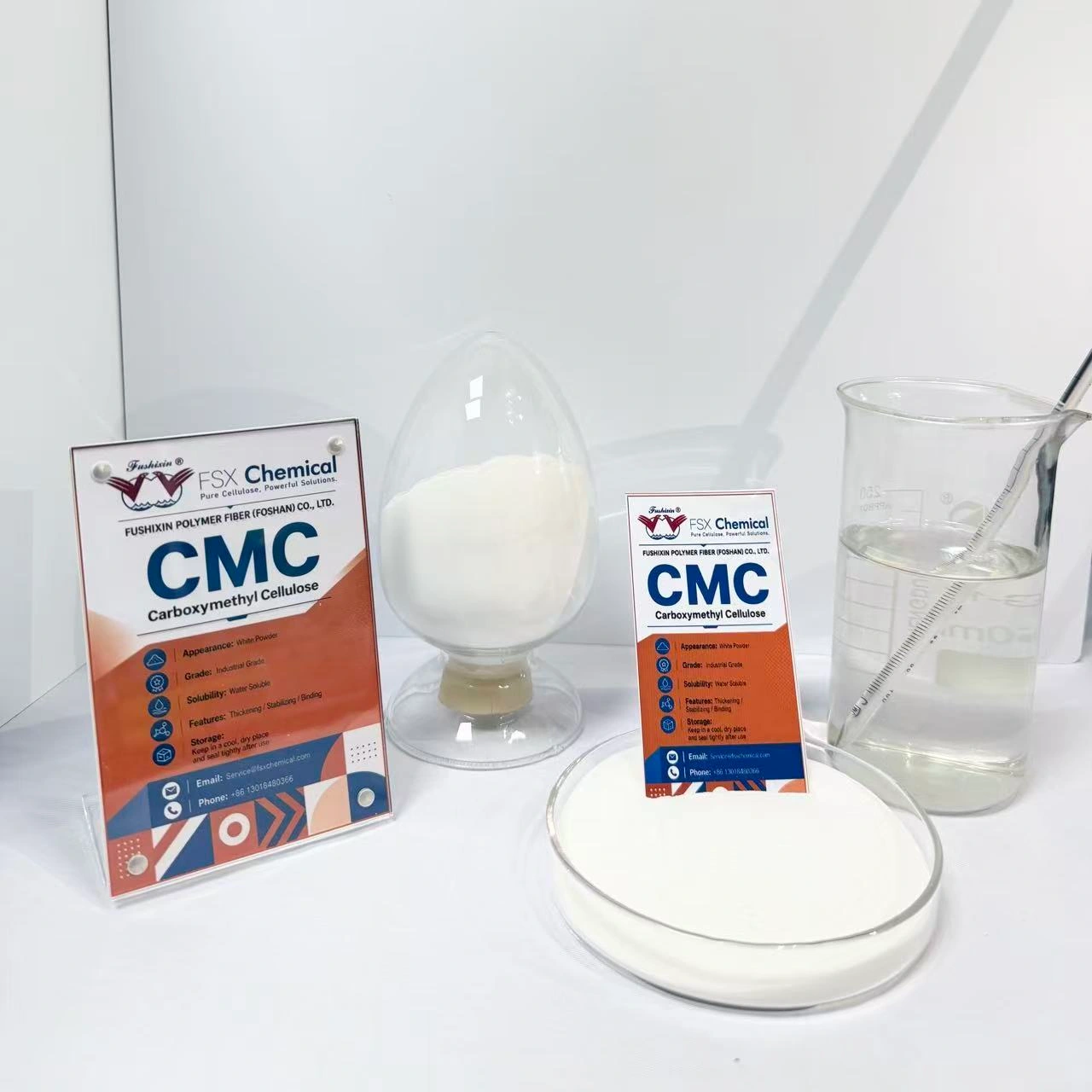
Карбоксиметилцелюлоза , commonly abbreviated as CMC, is a cellulose-derived water-soluble polymer available in multiple commercial grades.
CMC can be evaluated in selected textile printing, viscosity-control and compound-thickener systems where its grade characteristics are compatible with the complete formulation.
Important CMC selection parameters include
Ступінь заміщення, де це доречно
Viscosity and test concentration
Dissolution and hydration
Фільтрація
Реологія
Реакція електролітів
Complete-formula compatibility
How CMC can support material efficiency
Correct grade selection can help avoid using excessive polymer simply to reach a target viscosity. Buyers can compare several viscosity and substitution routes and then determine the minimum practical dosage that still meets printing requirements.
Do not assume CMC can replace sodium alginate directly
Changing from sodium alginate to CMC changes the polymer chemistry. In reactive printing, this should be treated as formulation development rather than a simple weight-for-weight substitution.
A technically unsuccessful substitution can create more waste than it saves.
3. CMS for Cost- and Resource-Efficient Formulations
The FSX CMS route should be evaluated using the current commercial grade identity and product-specific evidence. Do not infer starch origin, composition or biodegradability from the CMS name alone.
CMS is particularly interesting when formulators are looking for a different balance among viscosity, rheology, printing performance and cost.
Potential CMS evaluation areas include
Ефективність в'язкості
Гідратація
Paste uniformity
Фільтрація
Уривок з фільму
Стабільність утримання
Compatibility with the dye system
Finished-fabric quality
Verify Product Identity Before Feedstock Claims
If a product is confirmed to be carboxymethyl starch, its modified-starch origin still does not establish the environmental profile of the complete formulation. For an FSX CMS grade, obtain supporting composition and environmental evidence before making any feedstock claim.
CMS can also be evaluated in blended systems
In some applications, CMS can form part of a compound thickener designed to balance different polymer functions.
The objective should be to achieve acceptable printing at an efficient total polymer level rather than simply maximizing the percentage of the lowest-cost component.
4. Digital Printing Paste for Process-Specific Pretreatment
Паста для цифрового друку represents a different product-selection route because digital textile printing should not be treated as conventional screen printing with a different machine.
Reactive, disperse and pigment digital printing use different ink, fibre and fixation systems. Pretreatment chemistry should therefore be selected according to the specific digital route.
Reactive digital printing
Pretreatment should be evaluated for suitable cellulosic fabrics, reactive ink behavior, print definition, fixation and washing.
Disperse digital printing
Polyester and disperse ink systems require a different evaluation around pretreatment uniformity, thermal processing and final surface quality.
Pigment digital printing
Pigment systems require attention to binder compatibility, curing, rubbing performance, definition and fabric handle.
Where sustainability enters the discussion
A well-matched pretreatment can help reduce failed prints caused by uncontrolled spreading, uneven application or poor compatibility. However, digital printing should not automatically be described as environmentally superior without evaluating the complete production system.
The relevant sustainability question is whether the chosen pretreatment helps the specific digital process produce acceptable fabric with less avoidable waste and correction.
5. Compound Thickener Solutions
A compound thickener combines different rheology or polymer components to achieve an application-specific balance.
Instead of asking one polymer to provide every required property, a compound system can assign different functions to different components.
A compound system may be designed around
Базова в'язкість
Властивість розрідження під дією зсуву
Відновлення конструкції
Фільтрація
Стабільність пасти
Толерантність до електролітів
Визначення терміна «друк»
Commercial cost
Why this can support resource efficiency
If the blend allows the required printing result to be achieved at a more efficient overall formulation, it may reduce unnecessary use of one expensive or inefficient component.
Compound formulation can also help address cases where one polymer provides suitable viscosity but inadequate rheology, filtration or application stability.
Compound does not automatically mean better
More components also create more formulation variables. A compound system should therefore be validated through controlled laboratory and production testing.
Natural-Origin Does Not Automatically Mean Sustainable
Alginate and CMC have different biological feedstock origins, but this does not by itself establish a lower life-cycle impact. Confirm the composition of an FSX CMS grade separately. Include manufacturing, application dosage, resource use and waste treatment within the declared assessment boundary.
Production chemistry, purification, energy, packaging, transportation, dosage, processing and end-of-process waste all matter.
This is why procurement teams should avoid making sustainability decisions from labels such as natural, bio-based or biodegradable alone.
A better supplier discussion asks
What product amount is required?
Does it reduce or increase filtration loss?
Does it improve process stability?
Does it reduce rejected fabric?
How does it behave during washing or curing?
Does the supplier provide relevant compliance documentation?
Can the commercial batch remain consistent?
How Thickener Selection Can Improve Material Efficiency
Chemical dosage is one of the most direct links between product selection, cost and resource efficiency.
Define the Dose Basis Before Comparing
A same-dose screen can be useful when both products suit the declared concentration and process. State whether the dose is as-supplied product, dry matter or a documented active component. Equal as-supplied doses of a powder and a liquid do not establish equal polymer amounts; nonvolatile solids are not automatically active polymer. Prepare each grade adequately before measuring, and keep this screen separate from its validated application dose.
Then optimize each grade separately
Once the candidate has demonstrated acceptable behavior, gradually adjust its dosage to determine the practical operating window.
Do not optimize only to viscosity
A lower polymer concentration may appear efficient but can become inefficient if print definition, stability or machine performance deteriorates.
The correct target is the lowest practical total formulation cost and resource use that still produces acceptable finished fabric.
How Rheology Influences Sustainable Printing
Rheology describes how a paste flows and changes structure under different mechanical conditions.
Textile printing paste experiences relatively low shear during storage, higher shear during pumping and strong mechanical forces during application.
Appropriate rheology can support
Stable paste storage
Efficient pumping
Reliable screen passage
Controlled paste transfer
Sharp print boundaries
Reduced unwanted spreading
Two thickeners with the same single-point viscosity can have different rheological behavior. Selecting only from one viscosity number can therefore lead to avoidable waste and troubleshooting.
How Filtration Affects Material Efficiency
Filter residue represents more than a laboratory observation. In production, it can represent purchased material that does not reach the fabric.
Excessive residue can increase
Material loss
Filter consumption
Частота прибирання
Operator time
Machine interruptions
Standardize filter opening, material, sample quantity, temperature and pressure or gravity conditions. First prepare each grade adequately by its documented process. Record the concentration and preparation endpoint; separate a common-concentration screen from filtration at each candidate’s validated use level so incomplete hydration is not misreported as unavoidable material waste.
The source of residue should also be investigated. It may come from incomplete hydration, polymer gel, contamination or incompatibility in the complete paste.
Reducing Reprints and Rejected Fabric
One of the largest hidden sustainability losses in textile printing is producing fabric that cannot be accepted the first time.
Common problems include
Unclear pattern edges
Bleeding
Broken fine lines
Uneven solid colors
Excessive or insufficient penetration
Fixation problems
Difficult wash-off
Unacceptable fabric handle
Reprinting consumes more fabric, chemistry, machine time, water and energy.
A printing chemical that improves process consistency may therefore support sustainability even when its purchase price is not the lowest.
Consider Fixation and Post-Treatment
Sustainability evaluation should not stop when the fabric leaves the printing machine.
Реактивний друк
The final comparison should include fixation and wash-off. A paste that prints well but creates difficult post-treatment may not provide the best overall process.
Disperse printing
Thermal fixation and any required cleaning should be included in the technical and economic evaluation.
Pigment printing
Curing, binder performance, rubbing properties and fabric handle should be evaluated together.
Digital printing
Pretreatment, drying, inkjet printing, fixation or curing and final washing should be considered as one connected process.
Sustainable Printing and Total Cost in Use
Sustainability and cost efficiency often overlap because waste is expensive.
Область оцінювання
Economic Impact
Resource-Efficiency Impact
Effective Dosage
Chemical consumption
Material use
Гідратація
Labor and preparation time
Energy and off-spec paste
Фільтрація
Filter and labor cost
Material waste
Machine Stability
Downtime and production speed
Cleaning and wasted production
Якість друку
Rework and rejected fabric
Fabric and chemical waste
Після лікування
Water, heat and time
Process resource consumption
Однорідність партії
Laboratory and formulation correction
Avoidable repeated processing
This is why sustainability programs should measure the complete process rather than focusing only on whether one raw material has a natural origin.
How to Compare Two Textile Chemicals Fairly
A meaningful sustainability comparison requires both products to be tested under controlled conditions.
Use the current commercial product as the benchmark
The existing approved product provides a realistic reference for quality and resource use.
Standardize laboratory preparation
Use common process water and declared dose bases where applicable, but follow the documented dispersion, hydration, dilution or activation procedure for each exact grade and supplied form. Check uniformity, retained matter and viscosity development before comparison. Record actual mixing time, temperature and resource use. A separate test under the mill’s unchanged preparation cycle can assess retrofit fit; report its result separately from a grade-appropriate application trial.
Standardize measurement
Apply the same suitable measurement temperature, instrument, spindle or geometry, speed, reading time and defined shear/rest history to adequately prepared samples. For the final application comparison, document any dose or recipe change and use the same finished-fabric acceptance criteria and process boundary.
Test the complete formulation
Add the actual dyes, pigments, salts, alkalis, binders and auxiliaries used in production.
Print the same fabric
Keep the fabric lot, design, equipment and process as consistent as possible.
Complete normal post-treatment
Final comparison should be made after fixation, washing or curing.
Recommended Laboratory Evaluation
Step 1: Define the sustainability objective
Identify whether the target is lower dosage, less paste waste, better filtration, fewer reprints, easier processing or another measurable improvement.
Step 2: Select the correct polymer route
Decide whether sodium alginate, CMC, CMS, digital printing paste or a compound system is technically appropriate.
Step 3: Prepare reference and candidate together
Record each grade’s supplied form, dose basis, addition sequence, mixing, temperature and preparation endpoint. Control common variables, but do not impose a shared hydration time that underprepares one candidate. If preparation differs, meter or otherwise quantify its time, energy and losses for the later resource comparison.
Step 4: Evaluate basic properties
Зовнішній вигляд
Гідратація
В’язкість
pH
Фільтрація
Стабільність
Step 5: Prepare the full printing formula
The polymer should not be approved only from its behavior in water.
Step 6: Print and complete post-treatment
Evaluate definition, color, penetration, fixation, washing and final fabric handle as appropriate.
Step 7: Optimize dosage
Once technical suitability is established, adjust concentration to determine the most efficient practical operating level.
Step 8: Record waste and processing data
Include filtration residue, unused paste, preparation time and other relevant process losses.
From Sample to Production
Laboratory efficiency does not automatically translate into production efficiency.
Larger mixing equipment, longer circulation, different shear, production holding time and machine speed can change product behavior.
Use a limited production trial
Compare the candidate with the approved product under production-relevant conditions before full conversion.
Monitor the full run
Evaluate the beginning, middle and end of production rather than only the first meters of fabric.
Verify the first commercial batch
Confirm product identity, relevant batch information and critical properties before routine production use.
Compare actual production data
Record dosage, waste, downtime, defects and finished-textile quality. These measurements provide stronger sustainability evidence than assumptions made from the product description.
Sustainable Supplier Qualification Checklist
Product sustainability also depends on whether the supplier can support consistent and transparent industrial use.
Supplier Area
Question to Ask
Product Selection
Is the grade selected for my actual printing process?
Метод випробування
Are viscosity and other key parameters clearly defined?
Підбір продукту за зразком
Can my current product be used as a reference?
Dosage Optimization
Can the candidate be optimized after baseline testing?
Партійний контроль якості
Are critical commercial-batch properties controlled?
Documentation
Are relevant technical and compliance documents available?
Claims
Can sustainability statements be supported with evidence?
Commercial Supply
Can the approved product be supplied consistently?
Buyers should be cautious when sustainability claims are broad but the supplier cannot provide product-specific information or explain how those claims relate to the actual application.
Use an Evidence Ledger for Environmental Claims
Claim
Evidence Needed
Scope to State
Lower water or energy use
Metered, comparable production runs and accepted output
Included stages, fabric, shade, coverage and production period
Biodegradable
Identified test material, method, conditions and result
Test environment and whether data cover the entire commercial product
Lower wastewater load
Measured flow and relevant concentration data
Sampling period and treatment boundary, not dilution alone
For example, OECD Test No. 301 addresses ready biodegradability under defined test conditions; it does not certify every environmental property of a thickener. Use litres of water or kWh per accepted m² for matched mill comparisons, while retaining total consumption and rejected output. Reduced water volume alone does not prove reduced pollutant load. These are proposed evidence requirements, not verified FSX environmental results.
How FSX Chemical Supports Product Matching
FSX Chemical provides textile printing thickener solutions including sodium alginate, CMC, CMS, digital printing paste and application-specific compound thickener routes.
A customer does not need to select a product from the polymer name alone. The current printing process can be used to identify the most relevant starting route.
Через Зразки та підбір , buyers can provide their current TDS, physical sample, viscosity method, formulation and process information.
До корисної інформації належать:
Current thickener and commercial grade
Current TDS or COA
Фізичний еталонний зразок
Поточна доза
Viscosity and complete measurement method
Реактивний, дисперсний, пігментний або цифровий метод
Склад тканини
Printing equipment
Filtration or screen problems
Current waste or production issue
Required finished-fabric quality
The objective is to identify a technically appropriate candidate, compare it against the current product and determine whether it can support a more efficient printing process without compromising the required textile quality.
Поширені запитання
What are the most sustainable textile printing chemicals?
There is no universal ranking. Sustainability depends on the complete application, including product dosage, manufacturing efficiency, waste, printing quality, fixation, washing and batch consistency.
Is sodium alginate a sustainable textile printing thickener?
Sodium alginate is derived from brown algae and can be evaluated as a renewable-origin thickener route. Its overall sustainability still depends on manufacturing, dosage, printing performance, waste and post-treatment.
Is CMC sustainable because it is cellulose-based?
Cellulose origin alone does not establish the full environmental profile of a commercial CMC. Manufacturing, substitution, purification, dosage and actual process performance should also be considered.
Is CMS environmentally friendly?
Confirm the specific CMS product identity first. Neither an abbreviation nor a natural-feedstock description establishes that a commercial formulation is environmentally preferable. Request product-specific evidence and measure the actual printing process.
Does digital textile printing always use fewer resources?
Not automatically. Resource use depends on the specific printing route, pretreatment, drying, ink, fixation or curing, washing, production efficiency and rejection rate.
Can compound thickeners reduce chemical consumption?
They may provide a more efficient polymer balance in some applications, but the actual dosage and performance must be confirmed through controlled testing.
Does higher-viscosity thickener improve sustainability?
Not necessarily. Higher viscosity may change the required dosage, but rheology, filtration, machine behavior and finished-fabric quality must also remain acceptable.
How can a printing mill reduce chemical waste?
Standardize preparation, optimize dosage, improve filtration, control batch size, monitor leftover paste and reduce formulation corrections and rejected printing.
How should I compare two sustainable textile thickeners?
Use common measuring conditions after adequate grade-specific preparation, then compare complete passing recipes on the same fabric and required finishing route. Record dosage, preparation inputs, filtration, waste, rework and accepted output within the same boundary. Keep an unchanged-process screening result separate from an adjusted candidate trial.
Can FSX Chemical match my current textile thickener?
Customers can provide the current TDS, physical sample, viscosity method, dosage and printing process so that a technically relevant candidate can be selected for side-by-side testing.
Looking for a More Resource-Efficient Textile Printing Chemical?
Send FSX Chemical the TDS or physical sample of the thickener you currently use together with your printing process, fabric, current dosage, viscosity method and the production issue you want to improve.
Depending on the application, a sodium alginate, CMC, CMS, digital printing paste or compound thickener route can be selected as the starting point for controlled testing.
Instead of evaluating sustainability from a product label alone, the candidate can be compared through dosage, filtration, paste stability, printing performance, waste and finished-fabric quality.
Дізнайтеся, чому показники в’язкості загущувачів для текстильного друку не можна порівнювати без урахування таких параметрів, як концентрація, температура, прилад, шпиндель, швидкість, метод підготовки та тривалість випробування.
Дізнайтеся, як підібрати загущувач та методи попередньої обробки для реактивного, дисперсного, пігментного та цифрового друку на текстилі з урахуванням вимог до тканини, барвника або чорнила, фіксації, змивання та якості друку.
Порівняйте CMC, CMS, альгінат натрію та пасту для цифрового друку на текстилі. Дізнайтеся, як кожен із цих матеріалів підходить для реактивних, дисперсних, пігментних та цифрових технологій друку, а також на що покупцям слід звернути увагу перед тестуванням зразків, підбором сорту та оптовою закупівлею.
Альгінат натрію широко використовується у текстильному друці як стабільний та стійкий до прання загущувач для реактивних друкарських паст. Дізнайтеся, як перед придбанням оцінити клас в’язкості, ступінь чистоти та придатність продукту для конкретного застосування, а також як компанія FSX Chemical надає підтримку покупцям з усього світу, надаючи технічні дані та зразки.
Choose CMC for textile printing by application, DS, viscosity method and formulation trials. Use a practical checklist to compare grades before bulk purchase.
Карбоксиметилцелюлоза використовується як загущувач і стабілізатор у водорозчинних чорнилах, глибокому друці та підготуванні до струменевого друку. Цей посібник містить інформацію про основні параметри сортів та рекомендації щодо вибору постачальників для відділів закупівель.
Вибір відповідного постачальника CMC — це не лише порівняння цін. У цьому посібнику викладено критерії оцінки, перелік необхідної документації та процедуру тестування, яких повинні дотримуватися відділи закупівель перед тим, як укласти договір на оптове замовлення.
Друкарська паста на основі CMC використовується у пігментному, реактивному та цифровому текстильному друку. У цьому посібнику пояснюється, які параметри мають значення, як порівнювати постачальників та що слід уточнити перед тим, як оформити оптове замовлення.
І альгінат натрію, і КМК використовуються як загусники в текстильному друку, але вони підходять для різних систем фарбування та умов виробництва. У цьому посібнику пояснюються основні відмінності та випадки, коли слід застосовувати кожну з цих речовин.
Цифровий струменевий друк на текстилі має інші вимоги до пасти та попередньої обробки, ніж трафаретний друк. У цьому посібнику пояснюється, як альгінат натрію використовується в цифровому текстильному друці та які параметри якості повинні вказувати фахівці з закупівель.
CMC харчового та промислового призначення мають однакову хімічну основу, але суттєво відрізняються за рівнем чистоти, діапазоном DS та нормативними вимогами. У цьому посібнику пояснюються основні відмінності та причини, через які використання неправильного сорту може спричинити проблеми у виробництві.
Prepare sodium alginate printing paste with a grade-specific concentration and controlled powder dispersion. Validate hydration, viscosity, filtration, air removal and holding time before production.
Надайте назву продукту, сферу застосування, кількість, місце призначення, а також будь-які технічні специфікації (TDS),
зразки фотографій або документів, які у вас вже є. Компанія FSX Chemical розгляне цю
інформацію та надасть рекомендації щодо подальших кроків: підготовки комерційної пропозиції, підбору зразків
або вибору продукту.
Інформація про товарНазва товару, сорт, модель, фото етикетки або код постачальника.
Доступні документиTDS, SDS, COA, фото зразка, перелік продукції або дані випробувань.
Деталі замовленняОрієнтовна кількість, упаковка, країна призначення, порт або умови торгівлі.
Заявка чи проблемаПроцес друку на текстилі, вимоги до складу, поточні проблеми або цільові показники ефективності.