Sustainable textile printing depends on more than choosing a “green” chemical. Explore five FSX textile...
Sustainable textile printing is not achieved simply by choosing a chemical described as “green.” More meaningful progress comes from selecting the right thickener, optimizing dosage, improving paste stability, reducing waste and rework, and maintaining consistent finished-fabric quality. Here are five FSX Chemical product routes worth evaluating for more resource-efficient textile printing.
Sustainability has become an increasingly important consideration in textile printing, but the term can easily become too broad to guide real production decisions.
A printing chemical should not be considered sustainable only because it comes from a natural raw-material source. Its actual impact also depends on how much is used, how reliably it performs, how much paste is wasted, whether it creates filtration or machine problems, and whether the printed fabric passes quality requirements without repeated processing.
For this reason, FSX Chemical approaches textile printing chemical selection from a process perspective. Sodium alginate, CMC, CMS, digital printing paste and compound thickener solutions serve different technical roles and should be evaluated according to the dye or ink system, fabric, machine and finished-textile requirements.
The five products and solution routes in this guide are not presented as a universal industry ranking. They represent practical FSX product directions that can be evaluated when textile manufacturers want to improve resource efficiency while maintaining acceptable printing performance.
What Does Sustainable Textile Printing Really Mean?
In practical textile manufacturing, sustainability should be connected to measurable process decisions rather than one marketing claim.
The printing chemistry influences not only the amount of raw material purchased but also preparation, filtration, machine operation, fixation, washing, rejected fabric and production consistency.
A more useful sustainability framework considers
مواد کی کارکردگی
Effective chemical dosage
فضلہ چپکاؤ
Filtration losses
Machine cleaning and downtime
First-pass print quality
Fixation and post-treatment efficiency
Batch-to-batch consistency
A textile chemical that performs consistently at an optimized dosage may support more resource-efficient production than a lower-priced product that creates greater waste, repeated adjustments or rejected fabric.
Sustainability Starts with Process Efficiency
Chemical selection should be considered as part of the complete printing process.
A thickener influences how a paste is prepared, pumped, transferred through a screen or applied to fabric. It can also influence print definition, penetration, fixation and the amount of post-treatment needed to produce an acceptable textile.
Reducing waste before printing
Better dispersion, hydration and preparation control can reduce lumps, filter residue and off-specification paste.
Reducing waste during printing
Suitable rheology and filtration can help maintain more stable machine operation and reduce avoidable interruptions.
Reducing waste after printing
Maintaining print definition, color uniformity and appropriate post-treatment performance can reduce the need for reprinting or additional processing.
Sustainable chemistry therefore begins with selecting the correct product for the process rather than simply replacing one chemical with another described as environmentally friendly.
Quick Comparison: Our Top 5 Textile Printing Chemicals
مصنوعات کا راستہ
Primary Evaluation Direction
Resource-Efficiency Focus
سوڈیم الگینیٹ
Conventional reactive printing
Rheology, filtration, print quality and wash-off
سی ایم سی
Selected printing and compound systems
Grade optimization, dosage, hydration and formulation stability
سی ایم ایس
Selected disperse and compound systems
Polymer efficiency, cost-performance and blend optimization
ڈیجیٹل پرنٹنگ پیسٹ
Reactive, disperse or pigment digital pretreatment
Pretreatment control, definition and reduction of failed printing
مرکب گاڑھا کرنے والا
Application-specific printing formulations
Balanced polymer use, rheology and total cost in use
These routes are not interchangeable. Each should be matched to the actual printing process before sustainability or cost benefits are evaluated.
1. Sodium Alginate for Reactive Textile Printing
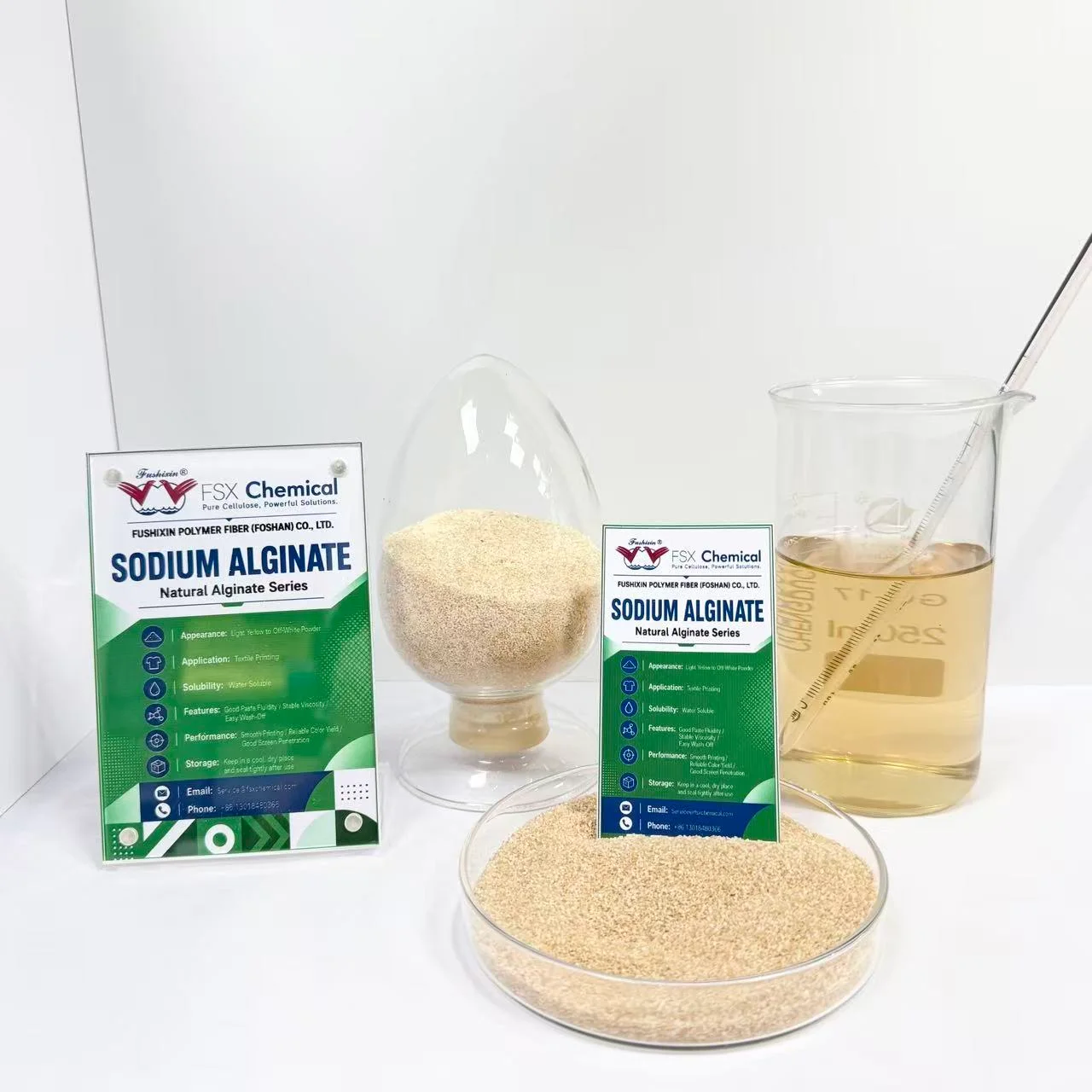
سوڈیم الگینٹ is an important thickener route for conventional reactive dye printing on suitable cellulosic textiles such as cotton and viscose.
Sodium alginate is derived from brown algae and belongs to the polysaccharide family. However, its renewable origin should not be the only reason for selecting it.
Why it is useful in reactive printing
A suitable textile-grade sodium alginate can provide the viscosity and rheological behavior required for paste preparation, screen passage and controlled transfer to the fabric.
Its performance should be assessed together with the reactive dye, alkali, electrolyte, printing equipment and subsequent fixation and washing process.
Sustainability considerations
Optimize the viscosity grade instead of automatically selecting HV
Reduce unnecessary polymer dosage
Control hydration to minimize lumps and waste
Check filtration to reduce avoidable screen cleaning
Evaluate wash-off at the finished-fabric stage
Monitor batch consistency to reduce formulation corrections
Higher viscosity is not automatically more sustainable
A higher-viscosity grade may reach a target viscosity at a different concentration, but the final decision should also consider screen passage, transfer, definition, wash-off and actual polymer dosage.
Sustainability therefore comes from selecting the correct alginate grade for the process, not from choosing the highest viscosity.
2. CMC for Selected Textile Printing Systems
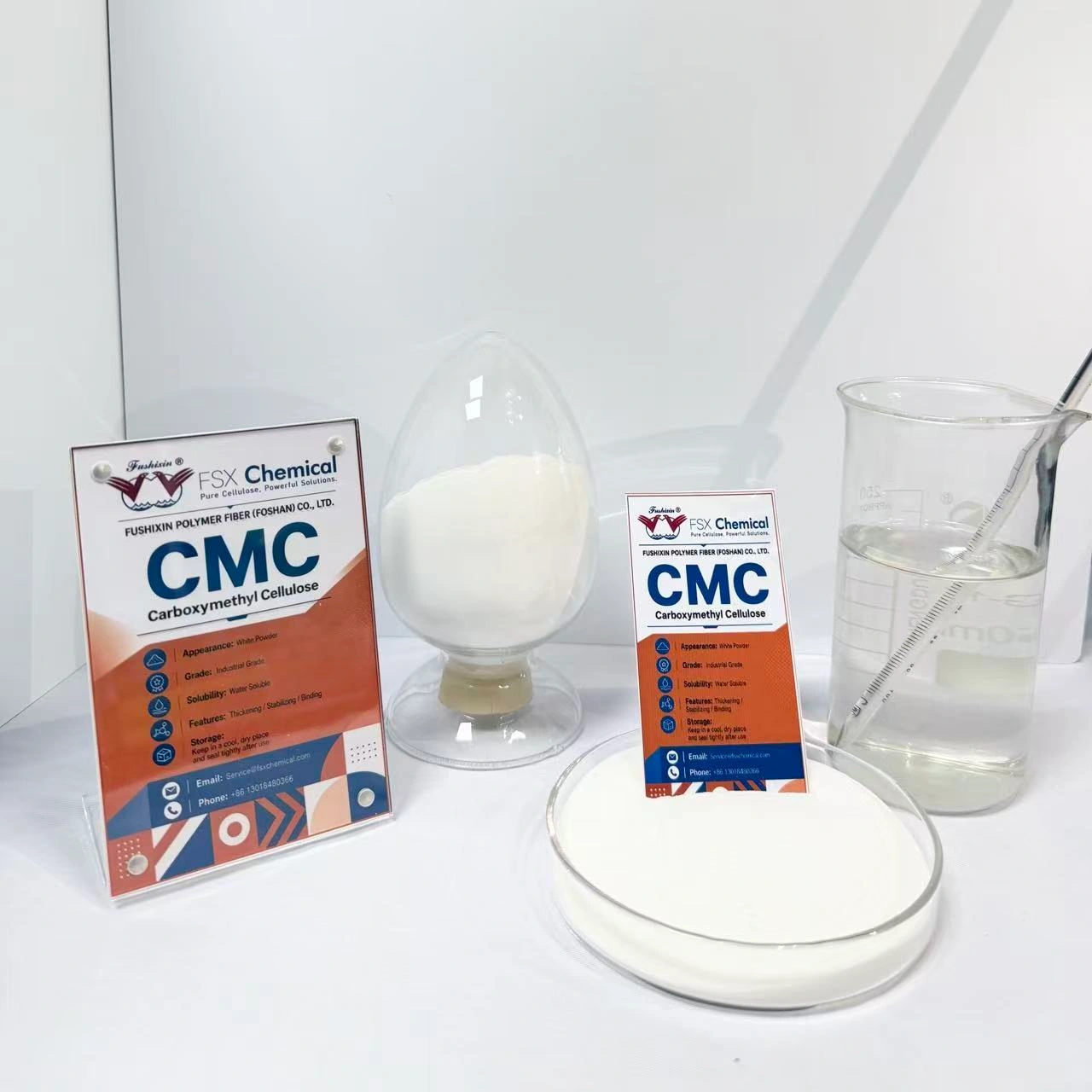
کاربوکسی میتھل سیلولوز , commonly abbreviated as CMC, is a cellulose-derived water-soluble polymer available in multiple commercial grades.
CMC can be evaluated in selected textile printing, viscosity-control and compound-thickener systems where its grade characteristics are compatible with the complete formulation.
Important CMC selection parameters include
جہاں متعلقہ ہو، متبادل کی ڈگری
سانسیت اور آزمائشی ارتکاز
Dissolution and hydration
چھانٹائی
ریولوجی
الیکٹرولائٹ کا ردعمل
Complete-formula compatibility
How CMC can support material efficiency
Correct grade selection can help avoid using excessive polymer simply to reach a target viscosity. Buyers can compare several viscosity and substitution routes and then determine the minimum practical dosage that still meets printing requirements.
Do not assume CMC can replace sodium alginate directly
Changing from sodium alginate to CMC changes the polymer chemistry. In reactive printing, this should be treated as formulation development rather than a simple weight-for-weight substitution.
A technically unsuccessful substitution can create more waste than it saves.
3. CMS for Cost- and Resource-Efficient Formulations
کاربوکسی میتھل نشاستہ , or CMS, is a modified starch-based polymer that can be evaluated in selected textile printing and compound-thickener systems.
CMS is particularly interesting when formulators are looking for a different balance among viscosity, rheology, printing performance and cost.
Potential CMS evaluation areas include
Viscosity efficiency
ہائیڈریشن
Paste uniformity
چھانٹائی
اسکرین کا گزرگاہ
استحکام برقرار رکھنا
Compatibility with the dye system
تیار کپڑے کا معیار
Sustainability does not come from starch origin alone
Although CMS originates from a starch-based polymer route, the finished product is chemically modified. Its sustainability should therefore be judged through the complete formulation and production performance rather than the feedstock name alone.
CMS can also be evaluated in blended systems
In some applications, CMS can form part of a compound thickener designed to balance different polymer functions.
The objective should be to achieve acceptable printing at an efficient total polymer level rather than simply maximizing the percentage of the lowest-cost component.
4. Digital Printing Paste for Process-Specific Pretreatment
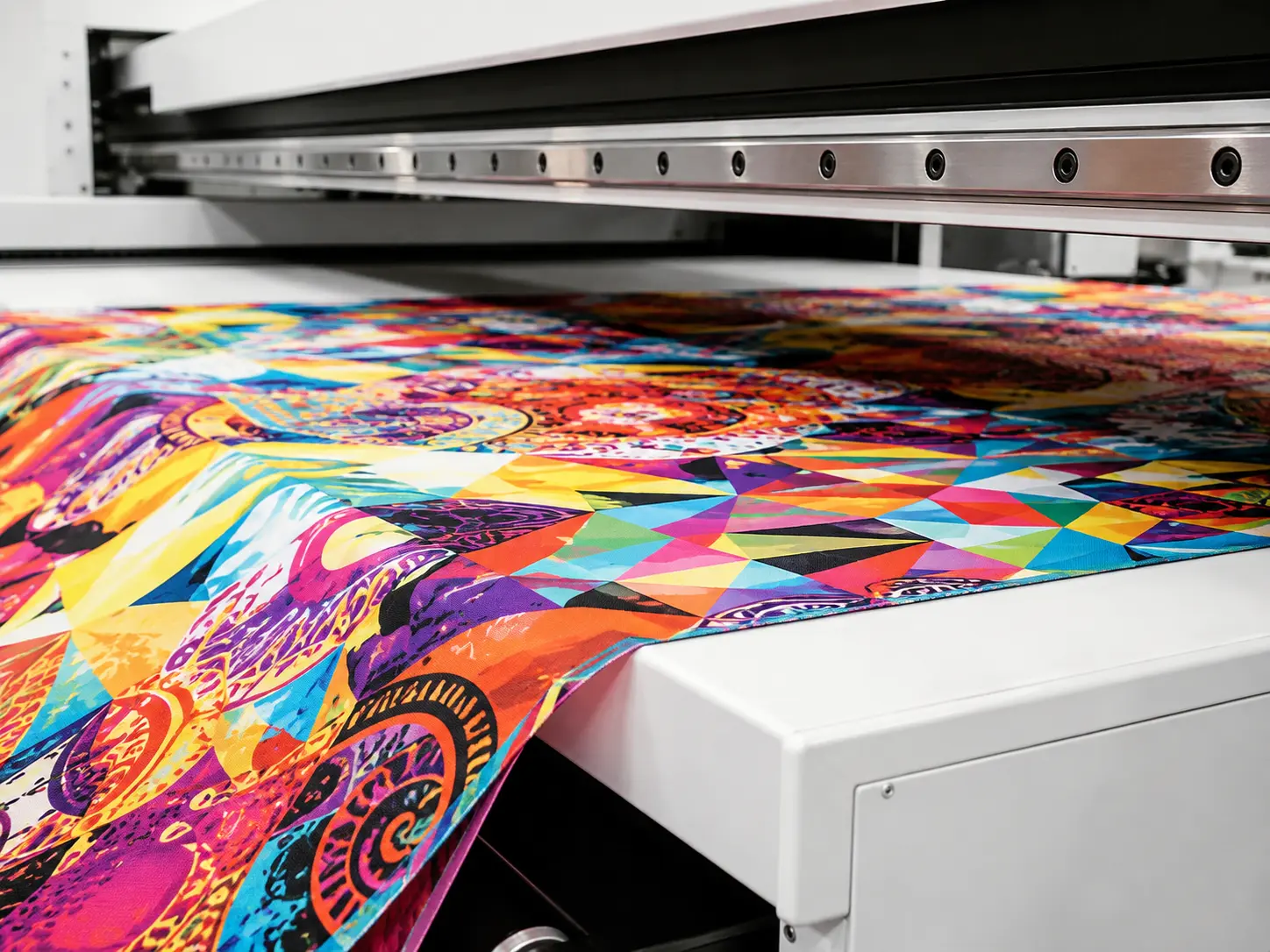
ڈیجیٹل پرنٹنگ پیسٹ represents a different product-selection route because digital textile printing should not be treated as conventional screen printing with a different machine.
Reactive, disperse and pigment digital printing use different ink, fibre and fixation systems. Pretreatment chemistry should therefore be selected according to the specific digital route.
Reactive digital printing
Pretreatment should be evaluated for suitable cellulosic fabrics, reactive ink behavior, print definition, fixation and washing.
Disperse digital printing
Polyester and disperse ink systems require a different evaluation around pretreatment uniformity, thermal processing and final surface quality.
Pigment digital printing
Pigment systems require attention to binder compatibility, curing, rubbing performance, definition and fabric handle.
Where sustainability enters the discussion
A well-matched pretreatment can help reduce failed prints caused by uncontrolled spreading, uneven application or poor compatibility. However, digital printing should not automatically be described as environmentally superior without evaluating the complete production system.
The relevant sustainability question is whether the chosen pretreatment helps the specific digital process produce acceptable fabric with less avoidable waste and correction.
5. Compound Thickener Solutions
A compound thickener combines different rheology or polymer components to achieve an application-specific balance.
Instead of asking one polymer to provide every required property, a compound system can assign different functions to different components.
A compound system may be designed around
بنیادی چپچپا پن
Shear-thinning behavior
ساختی بحالی
چھانٹائی
پیسٹ کی استحکام
الیکٹرولائٹ برداشت
تعریف پرنٹ کریں
Commercial cost
Why this can support resource efficiency
If the blend allows the required printing result to be achieved at a more efficient overall formulation, it may reduce unnecessary use of one expensive or inefficient component.
Compound formulation can also help address cases where one polymer provides suitable viscosity but inadequate rheology, filtration or application stability.
Compound does not automatically mean better
More components also create more formulation variables. A compound system should therefore be validated through controlled laboratory and production testing.
Natural-Origin Does Not Automatically Mean Sustainable
Sodium alginate, cellulose-derived CMC and starch-derived CMS all have links to renewable biological feedstocks, but raw-material origin is only one part of a product’s environmental profile.
Production chemistry, purification, energy, packaging, transportation, dosage, processing and end-of-process waste all matter.
This is why procurement teams should avoid making sustainability decisions from labels such as natural, bio-based or biodegradable alone.
A better supplier discussion asks
What product amount is required?
Does it reduce or increase filtration loss?
Does it improve process stability?
Does it reduce rejected fabric?
How does it behave during washing or curing?
Does the supplier provide relevant compliance documentation?
Can the commercial batch remain consistent?
How Thickener Selection Can Improve Material Efficiency
Chemical dosage is one of the most direct links between product selection, cost and resource efficiency.
Start with an equal-concentration baseline
When comparing two grades, first prepare them under the same concentration and laboratory conditions.
Then optimize each grade separately
Once the candidate has demonstrated acceptable behavior, gradually adjust its dosage to determine the practical operating window.
Do not optimize only to viscosity
A lower polymer concentration may appear efficient but can become inefficient if print definition, stability or machine performance deteriorates.
The correct target is the lowest practical total formulation cost and resource use that still produces acceptable finished fabric.
How Rheology Influences Sustainable Printing
Rheology describes how a paste flows and changes structure under different mechanical conditions.
Textile printing paste experiences relatively low shear during storage, higher shear during pumping and strong mechanical forces during application.
Appropriate rheology can support
Stable paste storage
Efficient pumping
Reliable screen passage
Controlled paste transfer
Sharp print boundaries
Reduced unwanted spreading
Two thickeners with the same single-point viscosity can have different rheological behavior. Selecting only from one viscosity number can therefore lead to avoidable waste and troubleshooting.
How Filtration Affects Material Efficiency
Filter residue represents more than a laboratory observation. In production, it can represent purchased material that does not reach the fabric.
Excessive residue can increase
Material loss
Filter consumption
Cleaning frequency
Operator time
Machine interruptions
A standardized filtration test should use the same preparation conditions, concentration, filter opening and sample quantity for each candidate.
The source of residue should also be investigated. It may come from incomplete hydration, polymer gel, contamination or incompatibility in the complete paste.
Reducing Reprints and Rejected Fabric
One of the largest hidden sustainability losses in textile printing is producing fabric that cannot be accepted the first time.
Common problems include
Unclear pattern edges
Bleeding
Broken fine lines
Uneven solid colors
Excessive or insufficient penetration
Fixation problems
Difficult wash-off
Unacceptable fabric handle
Reprinting consumes more fabric, chemistry, machine time, water and energy.
A printing chemical that improves process consistency may therefore support sustainability even when its purchase price is not the lowest.
Consider Fixation and Post-Treatment
Sustainability evaluation should not stop when the fabric leaves the printing machine.
ردعمل پر مبنی طباعت
The final comparison should include fixation and wash-off. A paste that prints well but creates difficult post-treatment may not provide the best overall process.
Disperse printing
Thermal fixation and any required cleaning should be included in the technical and economic evaluation.
Pigment printing
Curing, binder performance, rubbing properties and fabric handle should be evaluated together.
ڈیجیٹل پرنٹنگ
Pretreatment, drying, inkjet printing, fixation or curing and final washing should be considered as one connected process.
Sustainable Printing and Total Cost in Use
Sustainability and cost efficiency often overlap because waste is expensive.
جائزہ کا شعبہ
Economic Impact
Resource-Efficiency Impact
Effective Dosage
Chemical consumption
Material use
ہائیڈریشن
Labor and preparation time
Energy and off-spec paste
چھانٹائی
Filter and labor cost
Material waste
Machine Stability
Downtime and production speed
Cleaning and wasted production
چھپائی کا معیار
دوبارہ کام اور مسترد شدہ کپڑا
Fabric and chemical waste
علاج کے بعد
Water, heat and time
Process resource consumption
بیچ کی مستقل مزاجی
Laboratory and formulation correction
Avoidable repeated processing
This is why sustainability programs should measure the complete process rather than focusing only on whether one raw material has a natural origin.
How to Compare Two Textile Chemicals Fairly
A meaningful sustainability comparison requires both products to be tested under controlled conditions.
Use the current commercial product as the benchmark
The existing approved product provides a realistic reference for quality and resource use.
Standardize laboratory preparation
Use the same water, concentration, mixer, hydration time and temperature.
Standardize measurement
Viscosity, pH, filtration and other measurements should follow the same methods.
Test the complete formulation
پیداوار میں استعمال ہونے والے اصل رنگ، رنگ ساز ذرات، نمک، الکلیات، باندھنے والے مادے اور معاون مادے شامل کریں۔.
Print the same fabric
Keep the fabric lot, design, equipment and process as consistent as possible.
Complete normal post-treatment
Final comparison should be made after fixation, washing or curing.
Recommended Laboratory Evaluation
Step 1: Define the sustainability objective
Identify whether the target is lower dosage, less paste waste, better filtration, fewer reprints, easier processing or another measurable improvement.
Step 2: Select the correct polymer route
Decide whether sodium alginate, CMC, CMS, digital printing paste or a compound system is technically appropriate.
Step 3: Prepare reference and candidate together
Keep the important preparation variables controlled.
Step 4: Evaluate basic properties
ظاہری شکل
ہائیڈریشن
سَانچَر
پی ایچ
چھانٹائی
استحکام
Step 5: Prepare the full printing formula
The polymer should not be approved only from its behavior in water.
Step 6: Print and complete post-treatment
Evaluate definition, color, penetration, fixation, washing and final fabric handle as appropriate.
Step 7: Optimize dosage
Once technical suitability is established, adjust concentration to determine the most efficient practical operating level.
Step 8: Record waste and processing data
Include filtration residue, unused paste, preparation time and other relevant process losses.
From Sample to Production
Laboratory efficiency does not automatically translate into production efficiency.
Larger mixing equipment, longer circulation, different shear, production holding time and machine speed can change product behavior.
Use a limited production trial
Compare the candidate with the approved product under production-relevant conditions before full conversion.
Monitor the full run
Evaluate the beginning, middle and end of production rather than only the first meters of fabric.
پہلے تجارتی بیچ کی تصدیق کریں۔
Confirm product identity, relevant batch information and critical properties before routine production use.
Compare actual production data
Record dosage, waste, downtime, defects and finished-textile quality. These measurements provide stronger sustainability evidence than assumptions made from the product description.
Sustainable Supplier Qualification Checklist
Product sustainability also depends on whether the supplier can support consistent and transparent industrial use.
Supplier Area
پوچھنے کے لیے سوال
Product Selection
Is the grade selected for my actual printing process?
آزمائشی طریقہ
Are viscosity and other key parameters clearly defined?
نمونے کی بنیاد پر مصنوعات کا انتخاب
Can my current product be used as a reference?
Dosage Optimization
Can the candidate be optimized after baseline testing?
بیچ کوالٹی کنٹرول
Are critical commercial-batch properties controlled?
دستاویزات
Are relevant technical and compliance documents available?
Claims
Can sustainability statements be supported with evidence?
تجارتی فراہمی
Can the approved product be supplied consistently?
Buyers should be cautious when sustainability claims are broad but the supplier cannot provide product-specific information or explain how those claims relate to the actual application.
How FSX Chemical Supports Product Matching
FSX کیمیکل فراہم کرتا ہے textile printing thickener solutions including sodium alginate, CMC, CMS, digital printing paste and application-specific compound thickener routes.
A customer does not need to select a product from the polymer name alone. The current printing process can be used to identify the most relevant starting route.
کے ذریعے نمونے اور ملاپ , buyers can provide their current TDS, physical sample, viscosity method, formulation and process information.
مفید معلومات میں شامل ہیں
Current thickener and commercial grade
Current TDS or COA
جسمانی حوالہ نمونہ
موجودہ خوراک
Viscosity and complete measurement method
Reactive, disperse, pigment or digital route
کپڑے کی ترکیب
چھپائی کا سامان
Filtration or screen problems
Current waste or production issue
Required finished-fabric quality
The objective is to identify a technically appropriate candidate, compare it against the current product and determine whether it can support a more efficient printing process without compromising the required textile quality.
اکثر پوچھے جانے والے سوالات
What are the most sustainable textile printing chemicals?
There is no universal ranking. Sustainability depends on the complete application, including product dosage, manufacturing efficiency, waste, printing quality, fixation, washing and batch consistency.
Is sodium alginate a sustainable textile printing thickener?
Sodium alginate is derived from brown algae and can be evaluated as a renewable-origin thickener route. Its overall sustainability still depends on manufacturing, dosage, printing performance, waste and post-treatment.
Is CMC sustainable because it is cellulose-based?
Cellulose origin alone does not establish the full environmental profile of a commercial CMC. Manufacturing, substitution, purification, dosage and actual process performance should also be considered.
Is CMS environmentally friendly?
CMS is based on modified starch chemistry, but it should not be described as environmentally superior only because of its starch origin. Evaluate the complete product and printing process.
Does digital textile printing always use fewer resources?
Not automatically. Resource use depends on the specific printing route, pretreatment, drying, ink, fixation or curing, washing, production efficiency and rejection rate.
Can compound thickeners reduce chemical consumption?
They may provide a more efficient polymer balance in some applications, but the actual dosage and performance must be confirmed through controlled testing.
Does higher-viscosity thickener improve sustainability?
Not necessarily. Higher viscosity may change the required dosage, but rheology, filtration, machine behavior and finished-fabric quality must also remain acceptable.
How can a printing mill reduce chemical waste?
Standardize preparation, optimize dosage, improve filtration, control batch size, monitor leftover paste and reduce formulation corrections and rejected printing.
How should I compare two sustainable textile thickeners?
Test them under identical laboratory and printing conditions, then compare effective dosage, filtration, waste, machine performance, finished-fabric quality and post-treatment requirements.
Can FSX Chemical match my current textile thickener?
Customers can provide the current TDS, physical sample, viscosity method, dosage and printing process so that a technically relevant candidate can be selected for side-by-side testing.
Looking for a More Resource-Efficient Textile Printing Chemical?
Send FSX Chemical the TDS or physical sample of the thickener you currently use together with your printing process, fabric, current dosage, viscosity method and the production issue you want to improve.
Depending on the application, a sodium alginate, CMC, CMS, digital printing paste or compound thickener route can be selected as the starting point for controlled testing.
Instead of evaluating sustainability from a product label alone, the candidate can be compared through dosage, filtration, paste stability, printing performance, waste and finished-fabric quality.
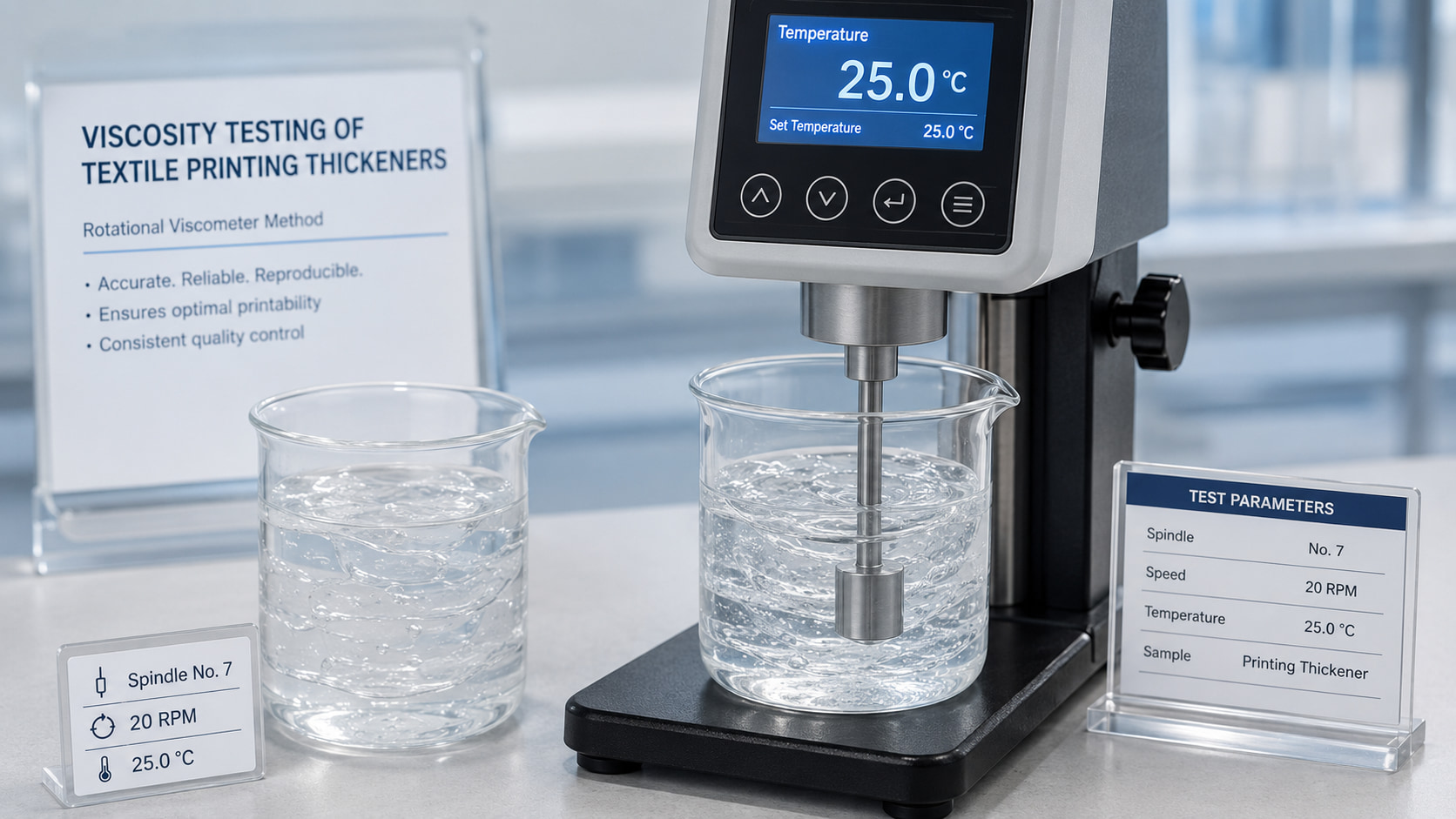
جانیں کہ ٹیکسٹائل پرنٹنگ کے گاڑھا کرنے والے کے وسکوسیٹی اقدار کا موازنہ کیوں نہیں کیا جا سکتا جب تک کہ ارتکاز، درجہ حرارت، آلہ، اسپنڈل، رفتار، تیاری کا طریقہ اور ٹیسٹ کا وقت یکساں نہ ہوں۔.
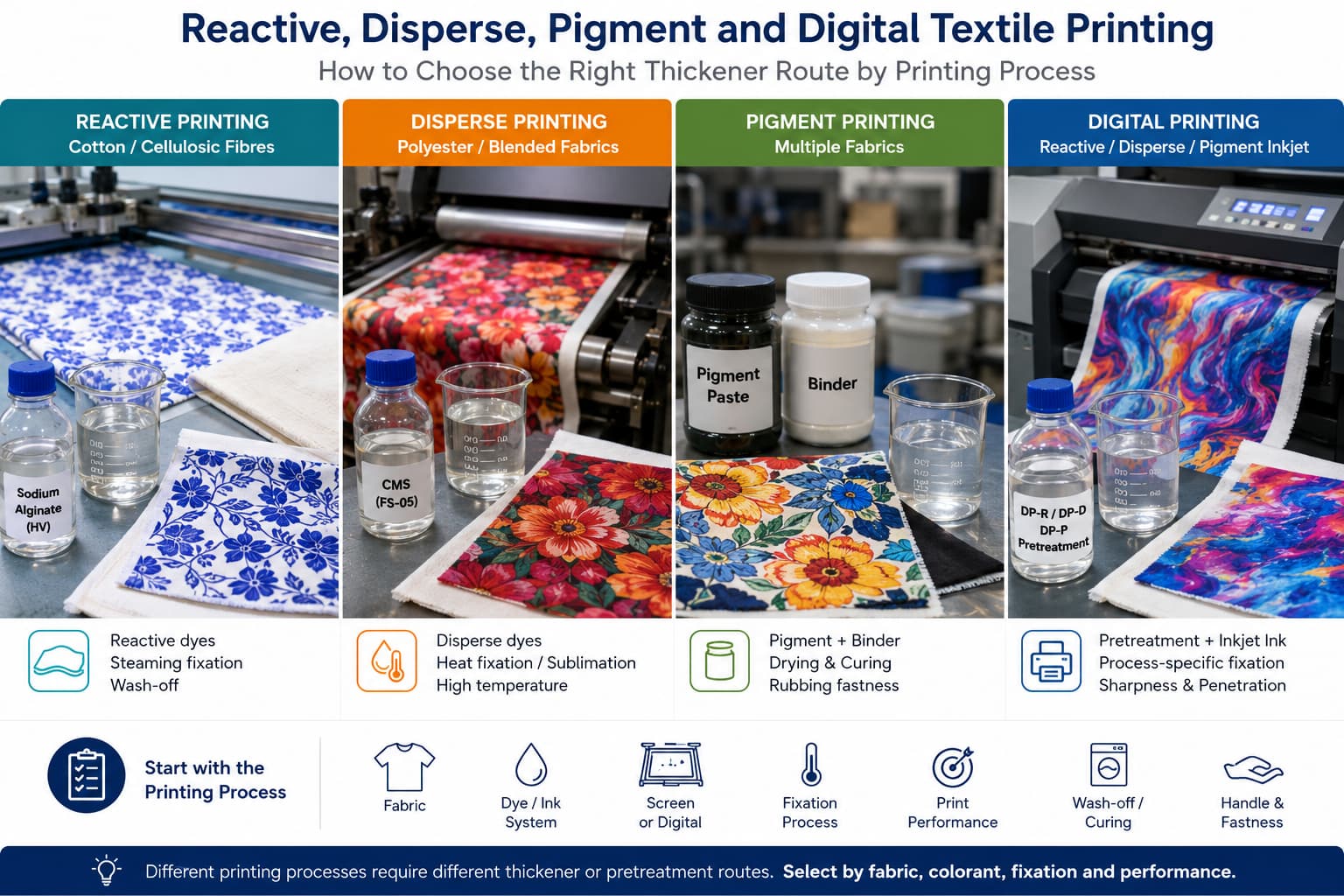
سیکھیں کہ ردعمل کرنے والی، منتشر، رنگین اور ڈیجیٹل ٹیکسٹائل پرنٹنگ کے لیے کپڑے، رنگ یا سیاہی کی بنیاد پر گاڑھا کرنے والا مادہ اور پری ٹریٹمنٹ کے راستے کیسے منتخب کیے جائیں، تاکہ فکسیشن، دھونے کے قابل ہٹانے اور پرنٹ کے معیار کی ضروریات پوری ہوں۔.
ٹیکسٹائل پرنٹنگ کے لیے CMC، CMS، سوڈیم الگینٹ اور ڈیجیٹل پرنٹنگ پیسٹ کا موازنہ کریں۔ جانیں کہ ہر طریقہ کار ری ایکٹیو، ڈسپرز، پگمنٹ اور ڈیجیٹل عمل کے لیے کیسے موزوں ہے، اور خریداروں کو سیمپل ٹیسٹنگ، گریڈ میچنگ اور بڑے پیمانے پر خریداری سے پہلے کن باتوں کا جائزہ لینا چاہیے۔.
سوڈیم الگینٹ ردعمل پذیر پرنٹنگ پیسٹ کے لیے ایک مستحکم اور دھونے کے قابل گاڑھا کرنے والا مادہ ہے، جو ٹیکسٹائل پرنٹنگ میں وسیع پیمانے پر استعمال ہوتا ہے۔ خریداری سے پہلے چپچپا پن کے گریڈ، خالصت، اور استعمال کے لیے موزونیت کا جائزہ لینے کا طریقہ سیکھیں، اور جانیں کہ FSX کیمیکل عالمی خریداروں کو تکنیکی ڈیٹا اور نمونوں کے ساتھ کیسے معاونت فراہم کرتا ہے۔.
کاربوکسی میتھل سیلولوز (CMC) ٹیکسٹائل کی پرنٹنگ، سائزنگ اور رنگائی کے عمل میں وسیع پیمانے پر استعمال ہوتا ہے۔ یہ رہنما بتائے گا کہ CMC گریڈز کا جائزہ کیسے لیا جائے، کون سے پیرامیٹرز سب سے زیادہ اہم ہیں، اور FSX کیمیکل خریداری کے فیصلوں میں کس طرح معاونت کر سکتا ہے۔.
کاربوکسی میتھل سیلولوز کو پانی پر مبنی سیاہیوں، گراور پرنٹنگ اور انک جیٹ پری ٹریٹمنٹ میں گاڑھا کرنے اور استحکام بخشنے کے لیے استعمال کیا جاتا ہے۔ یہ رہنما خریداری کی ٹیموں کے لیے اہم گریڈ پیرامیٹرز اور حصول کے دوران غور طلب امور کا احاطہ کرتی ہے۔.
صحیح CMC سپلائر کا انتخاب صرف قیمت کے موازنہ سے زیادہ ہے۔ یہ رہنما خریداری کی ٹیموں کے لیے تشخیص کے معیار، دستاویزات کی چیک لسٹ، اور آزمائشی عمل کا احاطہ کرتی ہے جن پر انہیں بڑے پیمانے پر آرڈر دینے سے پہلے عمل کرنا چاہیے۔.
CMC پر مبنی پرنٹنگ پیسٹ کو رنگدار، ردعمل پذیر اور ڈیجیٹل ٹیکسٹائل پرنٹنگ میں استعمال کیا جاتا ہے۔ یہ رہنما بتاتا ہے کہ کون سے پیرامیٹرز اہم ہیں، سپلائرز کا موازنہ کیسے کریں اور بڑے آرڈر دینے سے پہلے کیا درخواست کریں۔.
سوڈیم الگینٹ اور سی ایم سی دونوں ٹیکسٹائل پرنٹنگ میں گاڑھا کرنے کے لیے استعمال ہوتے ہیں، لیکن یہ مختلف رنگ ساز نظاموں اور عمل کے حالات کے لیے موزوں ہیں۔ یہ رہنما اہم فرق اور ہر ایک کے استعمال کے اوقات کی وضاحت کرتی ہے۔.
ٹیکسٹائل پر ڈیجیٹل انک جیٹ پرنٹنگ کے لیے اسکرین پرنٹنگ کے مقابلے میں مختلف پیسٹ اور پیش علاج کی ضروریات ہوتی ہیں۔ یہ رہنما بتاتی ہے کہ ڈیجیٹل ٹیکسٹائل پرنٹنگ میں سوڈیم الگنیٹ کا استعمال کیسے کیا جاتا ہے اور خریداری کی ٹیموں کو کون سے گریڈ کے پیرامیٹرز متعین کرنے چاہئیں۔.
خوراکی اور صنعتی گریڈ کے CMC کی بنیادی کیمسٹری ایک جیسی ہوتی ہے، لیکن خالصت، DS کی حد اور ضابطہ جاتی تقاضوں میں ان میں نمایاں فرق ہوتا ہے۔ یہ رہنما اہم فرق بیان کرتی ہے اور بتاتی ہے کہ غلط گریڈ کے استعمال سے پیداوار میں مسائل کیوں پیدا ہوتے ہیں۔.
ری ایکٹیو ڈائی ٹیکسٹائل پرنٹنگ میں گریڈ کے انتخاب کی طرح پیسٹ کی تیاری بھی اتنی ہی اہم ہے۔ یہ رہنما سوڈیم الگنیٹ کے تحلیل کے طریقے، استعمال کے لحاظ سے ارتکاز کی حدود، ذخیرہ کرنے کے حالات، اور تیاری کے عام مسائل کے حل کا طریقہ بیان کرتی ہے۔.
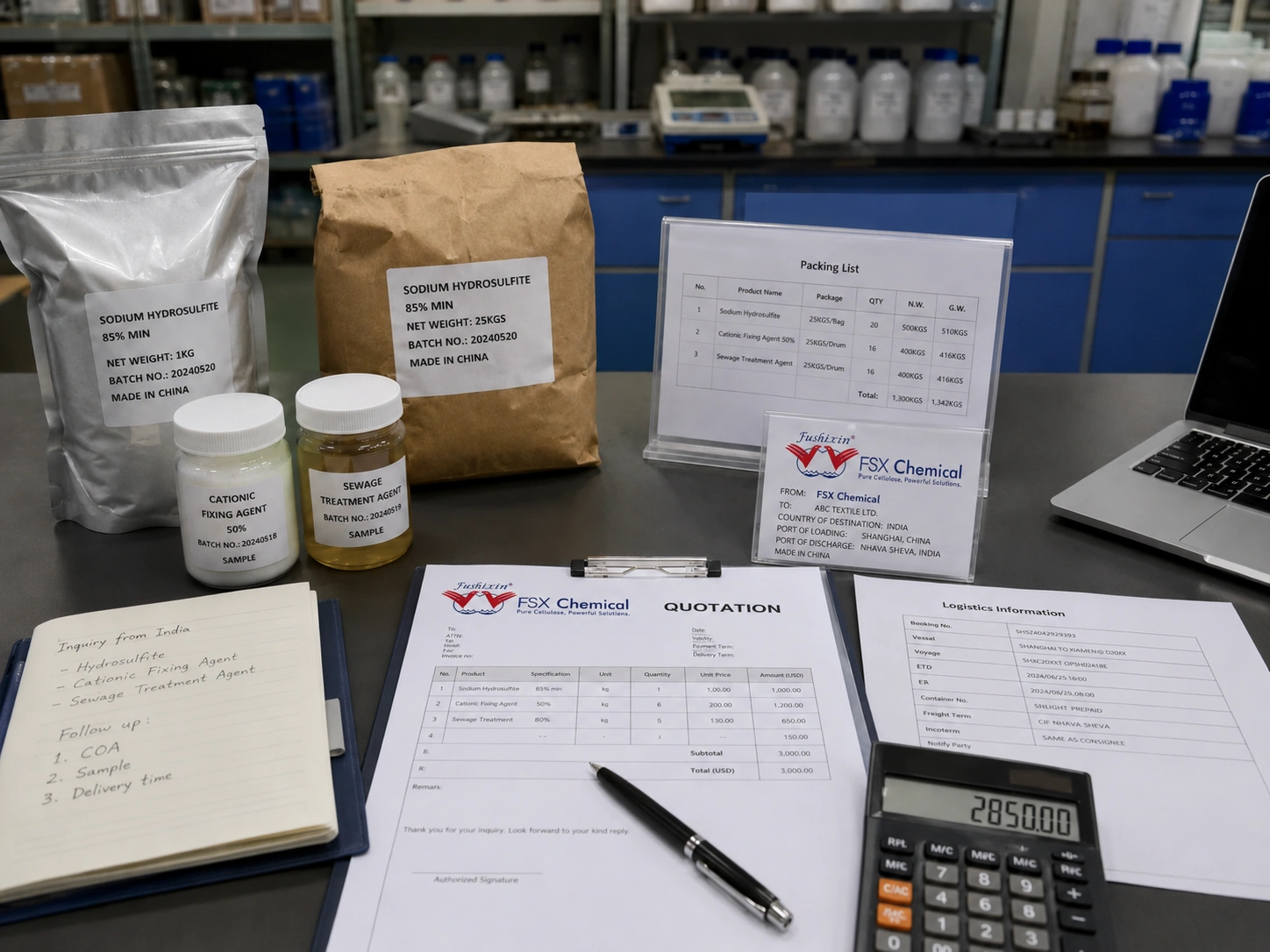
پروڈکٹ کا نام، استعمال، مقدار، منزل اور کوئی بھی TDS، نمونہ کی تصویر یا دستاویز جو آپ کے پاس موجود ہو، فراہم کریں۔ FSX کیمیکل اس معلومات کا جائزہ لے گا اور کوٹیشن، نمونہ کی مطابقت یا پروڈکٹ کے انتخاب کے لیے اگلا قدم تجویز کرے گا۔.
مصنوعات کی معلوماتمصنوعہ کا نام، گریڈ، ماڈل، لیبل کی تصویر یا سپلائر کا حوالہ.
دستیاب دستاویزاتٹی ڈی ایس، ایس ڈی ایس، سی او اے، نمونہ کی تصویر، مصنوعات کی فہرست یا ٹیسٹ کے اعداد و شمار۔.
آرڈر کی تفصیلاتمتوقع مقدار، پیکیجنگ، منزل ملک، بندرگاہ یا تجارتی اصطلاح۔.
درخواست یا مسئلہٹیکسٹائل پرنٹنگ کا عمل، فارمولیشن کی ضرورت، موجودہ مسئلہ یا ہدف کارکردگی۔.