This guide explains what buyers should provide when requesting chemical formulation support, product matching, sample testing, and technical document review.
What Chemical Formulation Support Really Means
It Is Not the Same as Unlimited Custom Production
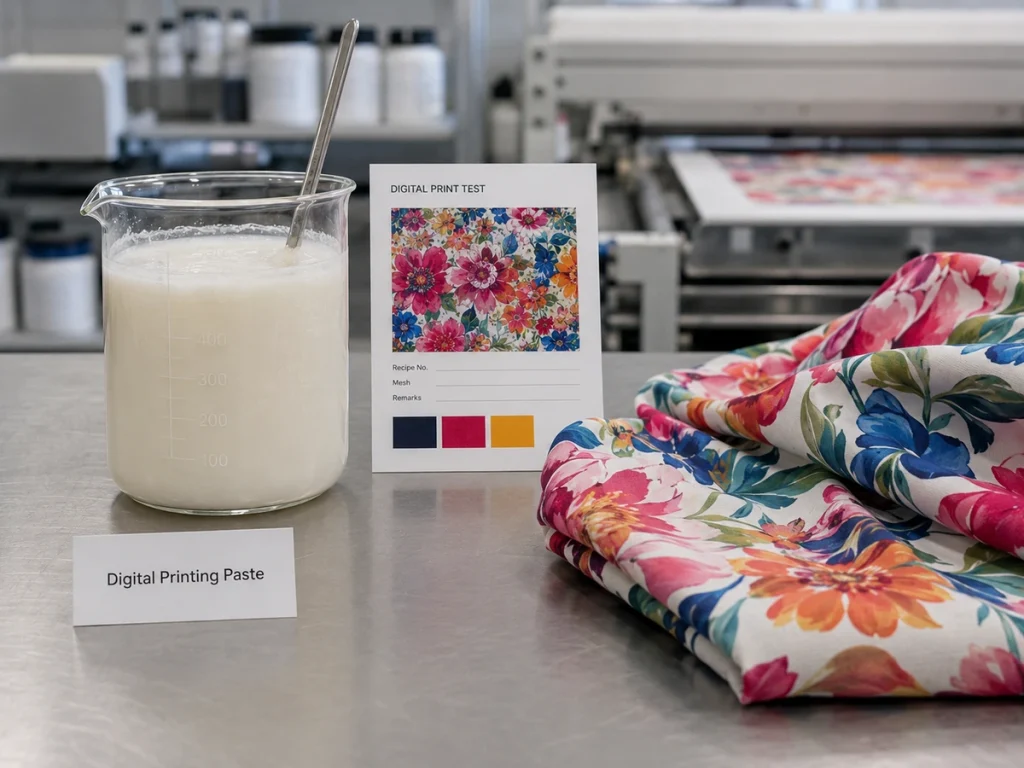
In practical textile printing procurement, chemical formulation support usually means reviewing the buyer’s application and recommending a suitable grade or adjustment direction. It may involve comparing an existing product, checking target viscosity, reviewing paste behavior, or arranging sample testing.
This is different from promising unlimited custom production for every possible process. A reliable supplier should explain what can be adjusted, what needs testing, and what may not be suitable for the product system.
Product Matching Starts from Real Application Data
A supplier cannot recommend the right product based only on a broad description such as “textile printing chemical” or “high-performance thickener.” Useful application data is necessary.
The buyer should provide information such as printing process, fabric type, target viscosity, current formulation, dosage, water quality, and the problem they want to solve.
Sample Testing Is Necessary Before Bulk Confirmation
Even if a recommended grade looks suitable on paper, it should still be tested in the buyer’s own formulation. Dyes, auxiliaries, pH, stirring method, preparation time, and production conditions can all affect the final result.
Before confirming a bulk order, buyers should connect sample approval with specification range, COA data, packaging, and batch traceability.
When Buyers May Need Formulation Support
Replacing an Existing Thickener or Paste Product
Many buyers request formulation support when they want to replace an existing thickener, sodium alginate grade, CMC grade, CMS grade, or printing paste product.
In this situation, the best starting point is the existing product’s TDS, target viscosity, application process, and current dosage. This helps the supplier compare possible replacement options more accurately.
Adjusting Viscosity or Paste Handling
Viscosity is one of the most common reasons for product matching. Buyers may need a higher or lower viscosity grade, better paste smoothness, easier preparation, or more stable handling during production.
The suitable product should be selected according to the actual formulation and testing method rather than only by product name.
Solving Dissolution, Filtration or Stability Issues
Some buyers face problems such as slow dissolution, lumps, poor dispersion, filtration difficulty, unstable viscosity, or inconsistent batch behavior.
These issues may relate to product grade, mesh size, addition method, water quality, stirring speed, pH, or compatibility with other auxiliaries. Sample testing and formulation review can help identify a more suitable starting point.
Key Information Buyers Should Share
Printing Process and Fabric Type
Buyers should explain the actual printing or production process. Useful information includes reactive printing paste, screen printing, rotary printing, flatbed printing, dyeing support, or another application.
Fabric type is also important. Cotton, blended fabrics, and different textile materials may require different paste behavior and viscosity control.
Target Viscosity and Current Formulation
Target viscosity should be shared together with the test concentration, temperature, unit, and method if available. Without the test method, viscosity data from different suppliers may not be directly comparable.
If the buyer already has a working formulation, sharing the main components, dosage, preparation method, and current thickener type can help the supplier make a more practical recommendation.
Existing Product Grade or TDS
If the buyer is replacing an existing product, the current product grade or TDS is very helpful. It allows the supplier to compare viscosity, pH, moisture, DS where applicable, mesh size where relevant, and storage conditions.
This does not guarantee a perfect one-to-one replacement, but it provides a useful technical reference for sample selection.
Production Problem and Testing Method
Buyers should describe the production issue clearly. For example, the problem may be unstable viscosity, slow dissolution, paste lumps, poor filtration, weak paste stability, or inconsistent results between batches.
It is also useful to explain how the buyer tests the product internally, including preparation time, water temperature, stirring speed, and evaluation criteria.
Products That May Be Considered
CMC for Viscosity Control and Thickening
When matching CMC grades, buyers should review viscosity, degree of substitution, pH, moisture, solubility, and batch consistency.
CMS for Printing Paste Formulation Support
For CMS selection, buyers should check viscosity range, DS, dispersion behavior, pH, moisture, and compatibility with the customer’s formulation.
Alginat natri dùng cho hỗn hợp in phản ứng
The recommended sodium alginate grade should be tested in the buyer’s own paste formulation before bulk purchase.
Chất làm đặc trong in ấn dệt may và các sản phẩm bột in
Some buyers need a single thickener, while others need a ready-to-test printing paste product or a recommendation for a specific printing process.
Documents and Testing Before Confirmation
Tài liệu kỹ thuật (TDS) để rà soát thông số kỹ thuật
For viscosity-related products, buyers should check the test concentration, temperature, unit, and method.
COA cho việc xác nhận lô hàng
Giấy chứng nhận phân tích xác nhận các dữ liệu thực tế của một lô sản xuất cụ thể. Giấy chứng nhận này rất quan trọng đối với các đơn hàng số lượng lớn, việc mua hàng định kỳ, việc cung ứng cho nhà phân phối và công tác kiểm soát chất lượng nội bộ.
Người mua có thể so sánh các hồ sơ COA giữa các lô hàng để kiểm tra xem các thông số chính có vẫn nằm trong phạm vi đã thỏa thuận hay không.
Bảng dữ liệu an toàn (SDS) và các tài liệu xuất khẩu khi cần thiết
For international purchasing, buyers may need SDS, invoice, packing list, labels, and other export-related documents.
The required document list may vary by destination country, product type, and internal purchasing process, so it should be confirmed before shipment.
Sample Testing in the Buyer’s Own Formulation
Sample testing should be done in the buyer’s own formulation whenever possible. Water quality, dyes, auxiliaries, pH, stirring method, preparation time, and storage conditions can all affect the final result.
Việc thử nghiệm trong điều kiện thực tế giúp xác định xem loại sản phẩm được khuyến nghị có phù hợp hay không trước khi tiến hành mua số lượng lớn.
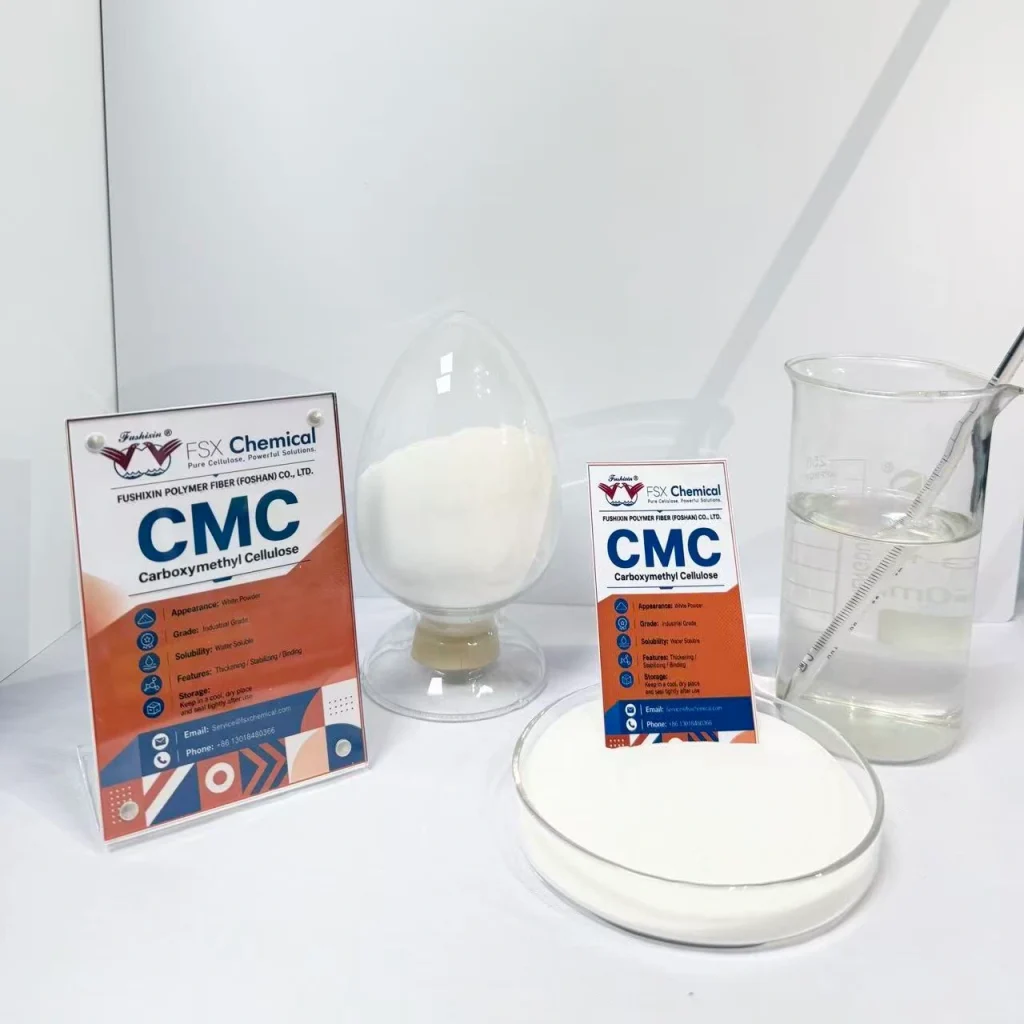
How FSX Chemical Supports Formulation Matching
Các bước tiếp theo
- Share Your Application — tell us your printing process, fabric type, dye system, target viscosity, and current formulation.
- Request Product Matching — ask for a suitable CMC, CMS, sodium alginate, textile printing thickener, or printing paste recommendation.
- Yêu cầu bản TDS — review viscosity, DS where applicable, mesh size where relevant, pH, moisture, appearance, storage conditions, and testing method.
- Yêu cầu cấp Giấy chứng nhận xuất xứ (COA) — Xác nhận xem dữ liệu lô hàng có phù hợp với phạm vi thông số kỹ thuật đã thỏa thuận hay không trước khi xuất hàng.
- Yêu cầu mẫu thử — Hãy thử nghiệm sản phẩm được đề xuất trong điều kiện chuẩn bị và sản xuất của quý vị trước khi xác nhận các đơn hàng số lượng lớn.
- Xác nhận các tài liệu xuất khẩu — check SDS, invoice, packing list, labels, batch traceability, and other required documents before shipment.
- Liên hệ với đội ngũ kỹ thuật của chúng tôi — discuss which product or grade is suitable for your textile or printing formulation📧 Email: Service@fsxchemical.com