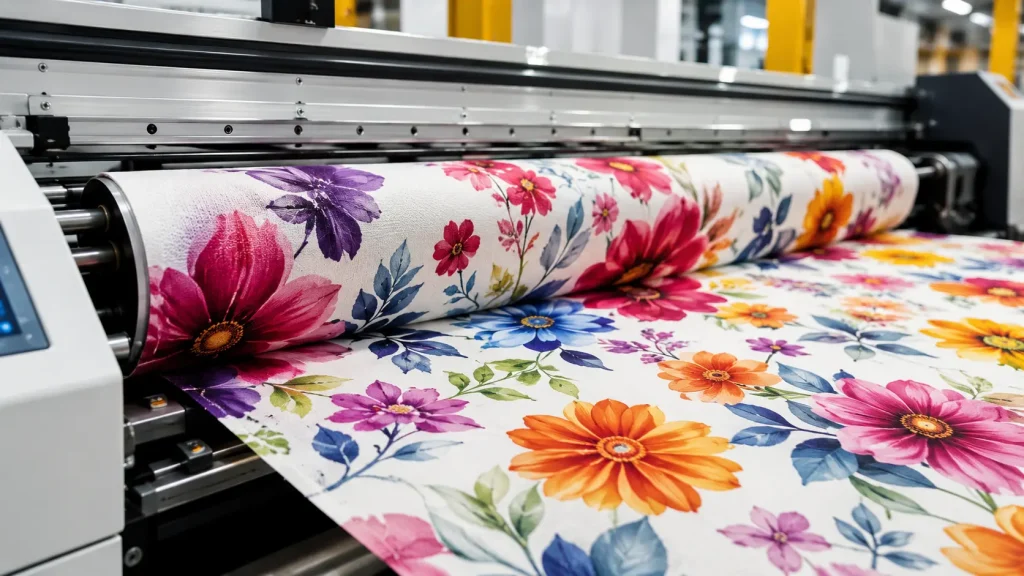
“Environmentally friendly sodium alginate” is a broad claim, not a grade specification or proof of lower textile-process impact. Ask what specific property is claimed, which commercial grade was tested, what method and boundary were used, and what evidence is available. Then check reactive-printing performance separately; seaweed origin, an SDS or easy wash-off alone does not verify the whole environmental claim.
Sodium alginate is commonly used as a thickener in reactive textile printing paste. However, environmental claims such as “eco-friendly,” “non-toxic,” “biodegradable,” “formaldehyde-free,” or “compliant” should not be accepted only as marketing language. Buyers should ask what documents, test data, or supplier statements are available to support the claim.
This guide explains how textile printing factories, dyeing and printing mills, and chemical distributors can evaluate sodium alginate for both application performance and environmental document review.
What Does “Environmentally Friendly Sodium Alginate” Mean in Purchasing?
It Should Be Treated as a Claim That Needs Verification
In B2B chemical purchasing, “environmentally friendly” is a broad description. Different buyers may use this term to mean different things, such as lower restricted-substance risk, easier internal approval, product origin preference, or document support for customer audits.
Ask the supplier to replace a general green label with a precise, documented statement. ISO 14021:2026, the third edition published in June 2026, provides the current framework for self-declared environmental claims and replaces the 2016 edition. Referencing it is not evidence that an FSX grade is certified or that a particular claim has been independently verified.
Application Suitability Still Comes First
Even if a product is described as environmentally friendly, it still needs to work in the buyer’s textile printing process. The grade must match the reactive printing paste formulation, target viscosity, fabric type, dye system, water quality, and preparation method.
A product that does not match the application may create production problems even if the environmental description sounds attractive.
Document Requirements Can Vary by Buyer
Some buyers only need SDS and basic product information. Others may request additional testing, restricted substance statements, customer-specific questionnaires, or third-party certification documents.
Before confirming an order, buyers should explain which documents are required by their internal team, customer, or destination market.
Key Product Specifications Buyers Should Review
Viscosity Grade and Test Method
Viscosity is one of the most important parameters for sodium alginate used in textile printing paste. Buyers should check the viscosity range together with the test concentration, temperature, instrument method, and unit.
Without a clear test method, viscosity values from different suppliers may not be directly comparable.
Kích thước mắt lưới và đặc tính hòa tan
Mesh size can affect dispersion and hydration during paste preparation. However, actual dissolution behavior also depends on water quality, stirring speed, addition method, preparation time, and formulation conditions.
Buyers should test the product in their own paste preparation process instead of relying only on the mesh size shown in the TDS.
Độ ẩm, độ pH và hình thức
Moisture, pH, and appearance are basic quality indicators. They affect storage, handling, quality control, and repeat purchasing.
Các thông số này cần được rà soát trong Bảng dữ liệu kỹ thuật (TDS) và được xác nhận thông qua dữ liệu trong Giấy chứng nhận phân tích (COA) cho từng lô sản xuất.
Tính nhất quán của lô
For repeat orders, batch consistency is important. If viscosity, moisture, or dissolution behavior changes significantly between batches, the factory may need to adjust the formulation again.
Buyers should compare COA records and confirm whether key parameters remain within the agreed specification range.
Documents to Check Before Accepting Environmental Claims
Tài liệu kỹ thuật (TDS) để rà soát thông số kỹ thuật
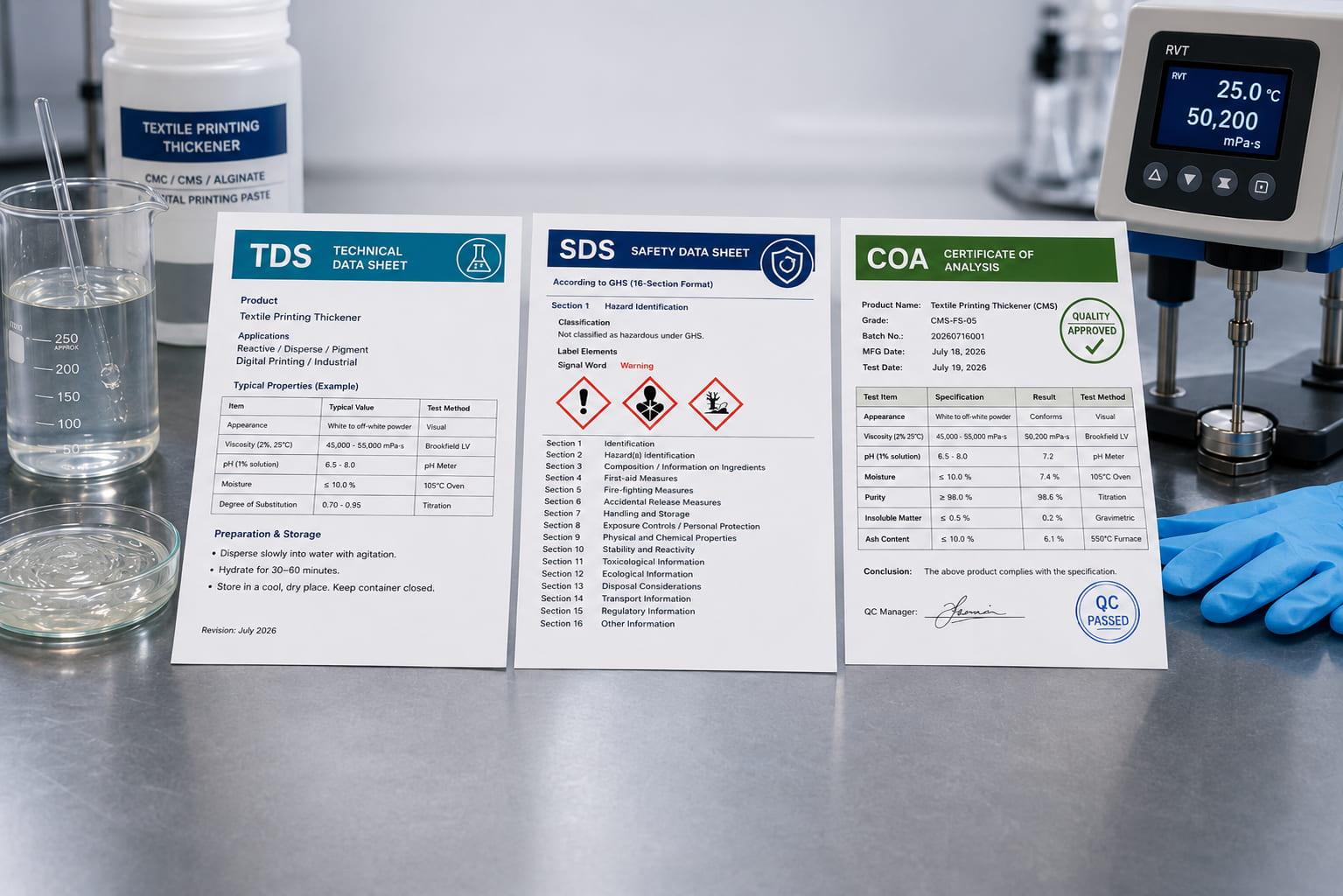
The Technical Data Sheet helps buyers review the standard product specification. It should include key parameters such as appearance, viscosity, mesh size, moisture, pH, storage conditions, and testing method.
The TDS is useful for technical comparison, but it does not replace sample testing in the buyer’s own formulation.
COA cho việc xác nhận lô hàng
A batch COA reports the selected tests for an identified grade and lot. Viscosity, moisture or pH results do not substantiate unrelated environmental or restricted-substance claims. Request the relevant analytical report or declaration separately and verify its sample identity, method, reporting limit, date and scope.
When environmental or quality claims are important, buyers should also confirm whether related batch information can be provided where applicable.
SDS for Handling and Safety Review
The SDS supports hazard communication and handling, storage and transport review. It is not a biodegradability certificate, a full restricted-substance test report or proof of lower lifecycle impact. Confirm that the grade and supplier details match the purchase documents; request claim-specific evidence separately.
Người mua cần đảm bảo rằng tên sản phẩm trên Bảng dữ liệu an toàn hóa chất (SDS) và thông tin nhà cung cấp phải khớp với các tài liệu đặt hàng.
Additional Environmental or Restricted-Substance Documents
If the buyer needs confirmation related to restricted substances, certification requirements, or customer audit requirements, these should be clearly requested before order confirmation.
Suppliers should explain which documents can be provided and which claims require third-party testing or formal certification.

Match Each Environmental Claim to the Right Evidence
| Claim being considered | Evidence a buyer should request | What it does not establish |
|---|---|---|
| Seaweed-derived | Grade-specific material identity and a traceable origin statement. | Overall lower environmental impact, restricted-substance compliance or wastewater performance. |
| Readily biodegradable | Report for the relevant material, identifying method, test conditions, duration, result and interpretation. | Easy dissolution or wash-off is not proof of biodegradation; a raw-polymer report may not cover a formulated grade. |
| Restricted-substance compliant | Named requirement and edition, exact grade/sample, substance panel, analytical method, reporting limits and applicable document validity. | Passing one panel does not cover every buyer list, market or finished textile. |
| Formaldehyde-free or non-toxic | A defined claim, relevant analyte or hazard endpoint and evidence suitable for that scope. | Origin, an unspecified “not detected” result or one safety endpoint cannot prove every exposure or substance absent. |
| Lower water, energy or effluent load | Comparable production trials at equivalent finished quality, with documented system boundaries and water, energy or effluent measurements. | A lower dosage or easier visual rinsing alone does not quantify the total process impact. |
OECD Test No. 301 describes ready-biodegradability screening in an aerobic aqueous medium using endpoints such as dissolved organic carbon, carbon dioxide or oxygen uptake. A claim must identify the actual method and tested material; no OECD result is asserted here for FSX sodium alginate. Also separate laboratory biodegradation from wastewater-plant treatability and actual discharge quality.
For a process comparison, report the functional basis, such as one accepted m² of finished printed fabric, and the same fixation, washing and quality requirements. Record total rinse water, energy and relevant effluent results under a matched boundary. This checklist is a proposed purchasing review, not a certificate or an FSX lifecycle assessment.
How to Test Sodium Alginate Before Bulk Purchase
Test in the Actual Printing Paste Formulation
Sample testing should be done in the buyer’s own formulation whenever possible. Dyes, auxiliaries, water quality, pH, stirring method, paste concentration, and storage time can all affect final paste behavior.
Việc chỉ tiến hành thử nghiệm trong nước sạch có thể là chưa đủ để xác định liệu loại natri alginat đó có phù hợp cho sản xuất hay không.
Observe Paste Smoothness and Filtration
During testing, buyers should observe dissolution speed, paste smoothness, lumps, filtration behavior, viscosity stability, and application handling.
Những quan sát thực tế này thường có tầm quan trọng không kém gì các thông số kỹ thuật được nêu trong TDS.
Compare Approved Sample with Bulk Shipment
Before placing a bulk order, buyers should confirm whether the approved sample and bulk shipment will follow the same viscosity range, mesh size, packaging format, batch traceability, and COA requirements.
This helps reduce the risk of sample-to-bulk mismatch.
Common Mistakes When Buying Environmentally Friendly Sodium Alginate
Accepting “Eco-Friendly” Without Documents
Environmental wording should be treated carefully. Buyers should ask what the claim means and what supporting documents are available.
If a specific certification, restricted-substance limit, or compliance statement is required, the buyer should request it before purchasing.
Ignoring Application Performance
A product may have acceptable documents but still fail to match the buyer’s printing paste formulation. Viscosity, dissolution, paste smoothness, filtration, and stability still need to be tested.
Both document review and application testing are necessary for practical purchasing decisions.
Choosing Only by Price or General Supplier Claims
Price is important, but it should not be the only factor. Buyers should review specifications, batch consistency, packaging, export documents, and supplier communication before confirming bulk orders.
This is especially important for distributors and factories that require stable repeat supply.
How FSX Chemical Supports Sodium Alginate Buyers
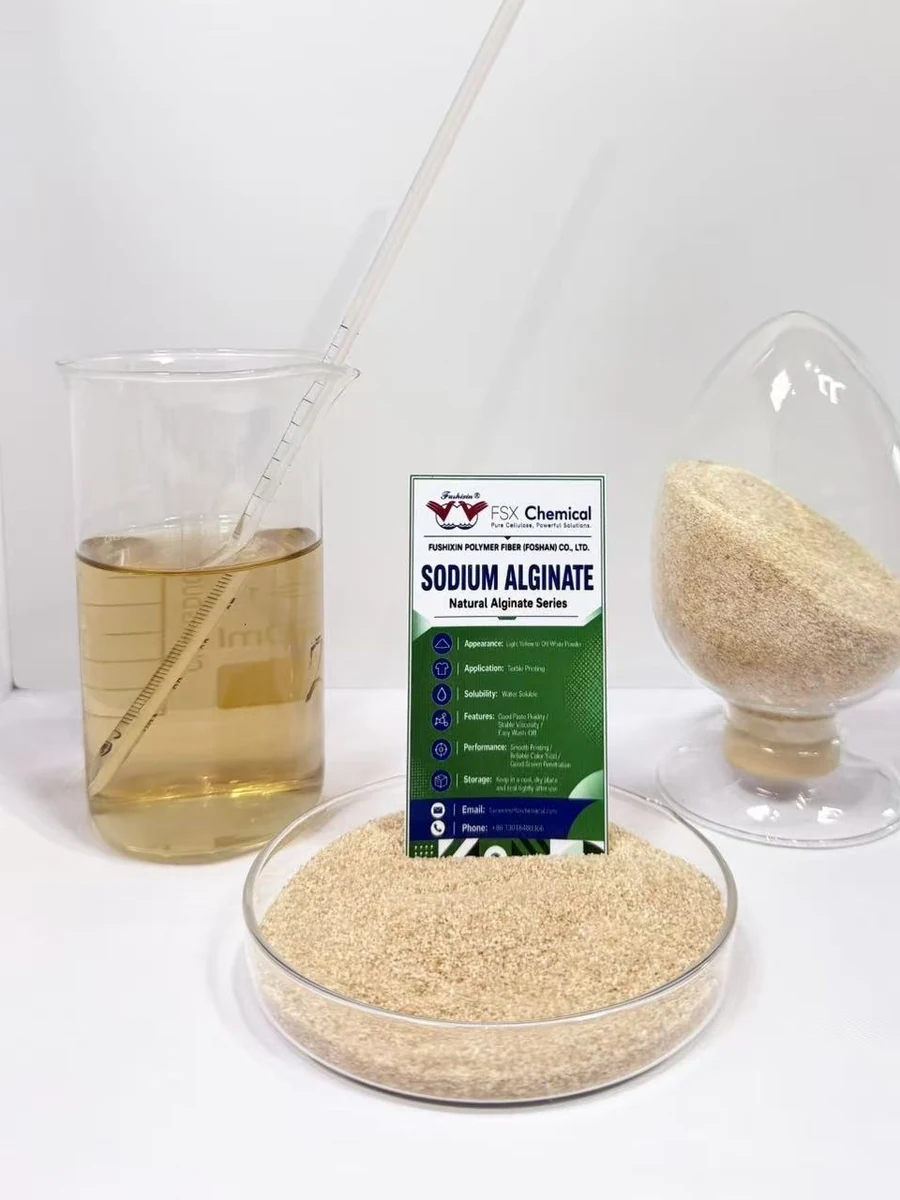
FSX Chemical lists sodium alginate grades for textile-printing buyers. Request current grade-specific documents and samples before approval; a product listing does not substantiate an environmental claim.
Our support is focused on practical grade matching, document communication, and export procurement. We can provide TDS, COA, SDS where applicable, sample support, and grade matching suggestions based on the customer’s printing process, target viscosity, fabric type, paste formulation, packaging needs, and document requirements.
We do not suggest confirming environmentally friendly sodium alginate only by broad green claims, product name, or price. The recommended grade should be reviewed through technical documents and tested in the buyer’s own formulation before bulk purchase.
Các bước tiếp theo
- Clarify Your Environmental Requirement — explain whether you need SDS, restricted-substance statements, customer questionnaires, or third-party certification documents.
- Yêu cầu bản TDS — review viscosity range, mesh size, pH, moisture, appearance, storage conditions, and testing method.
- Yêu cầu cấp Giấy chứng nhận xuất xứ (COA) — Xác nhận xem dữ liệu lô hàng có phù hợp với phạm vi thông số kỹ thuật đã thỏa thuận hay không trước khi xuất hàng.
- Yêu cầu điều chỉnh điểm — share your printing process, fabric type, target viscosity, current formulation, and existing product grade if available.
- Yêu cầu mẫu thử — test the recommended sodium alginate grade in your own paste preparation and printing conditions before confirming bulk orders.
- Xác nhận các tài liệu đóng gói và xuất khẩu — check bag size, labels, batch traceability, SDS, invoice, packing list, and other required documents before shipment.
- Liên hệ với FSX Chemical — identify the exact grade and the environmental document requirement you need to verify. Email: service@fsxchemical.com.