Hướng dẫn này trình bày các điểm người mua cần xem xét khi tìm nguồn natri alginate cho ứng dụng in thuốc nhuộm hoạt tính.
Vì sao natri alginate được dùng làm chất làm đặc cho in thuốc nhuộm hoạt tính
Giúp tạo độ nhớt cần thiết cho hồ in
Trong in thuốc nhuộm hoạt tính, chất làm đặc giúp tạo cấu trúc hồ cần thiết cho khâu chuẩn bị và in. Natri alginate thường được lựa chọn khi cần kiểm soát độ nhớt, tạo hồ và xử lý hồ in thuận lợi.
Cấp sản phẩm phù hợp phụ thuộc vào độ nhớt mục tiêu của hồ, phương pháp in, loại vải, hệ thuốc nhuộm và điều kiện sản xuất. Cấp có độ nhớt cao hơn không phải lúc nào cũng là lựa chọn tốt nhất.
Đặc tính hòa tan ảnh hưởng đến việc chuẩn bị hồ
Đặc tính hòa tan rất quan trọng khi chuẩn bị hồ. Nếu natri alginate hydrat hóa không đều, hồ có thể xuất hiện vón cục, kém mịn hoặc khó lọc.
Người mua nên kiểm tra khả năng hòa tan của sản phẩm với chất lượng nước, phương pháp khuấy, cách thêm nguyên liệu, thời gian chuẩn bị và điều kiện công thức thực tế của mình.
Hiệu quả cuối cùng phụ thuộc vào toàn bộ công thức
Hiệu quả của natri alginate không thể chỉ đánh giá bằng ngoại quan bột hoặc một chỉ số độ nhớt. Thuốc nhuộm, chất trợ, pH, chất lượng nước, loại vải, nồng độ hồ và thời gian lưu trữ đều có thể ảnh hưởng đến kết quả cuối cùng.
This is why sample testing in the buyer’s own formulation is necessary before confirming a bulk order.
Các thông số kỹ thuật chính mà người mua nên xem xét
Viscosity Grade and Test Method

Viscosity is one of the most important parameters for sodium alginate used in reactive dye printing paste. Buyers should check the viscosity range together with the test concentration, temperature, instrument method, and unit.
Without a clear test method, viscosity values from different suppliers may not be directly comparable.
Kích thước mắt lưới và đặc tính hòa tan
Mesh size can influence dispersion and hydration during paste preparation. However, the actual dissolution result also depends on stirring speed, water quality, addition method, and preparation time.
Buyers should not select a grade only by mesh size. The product should be tested in the real paste preparation process.
Độ ẩm, độ pH và hình thức
Moisture, pH, and appearance are basic but important quality indicators. They affect storage, handling, quality control, and repeat purchasing.
These parameters should be reviewed in the TDS and confirmed through COA data for each batch.
Batch Consistency and COA Data
For repeat orders, batch consistency matters. If viscosity, moisture, or dissolution behavior changes significantly between batches, the printing factory may need to adjust the formulation again.
The COA helps buyers confirm actual batch data and compare whether the shipment remains within the agreed specification range.
How to Test Sodium Alginate Before Bulk Purchase
Test in the Actual Reactive Printing Paste Formulation
Sample testing should be done in the buyer’s own reactive printing paste formulation whenever possible. Dyes, auxiliaries, water quality, pH, stirring method, paste concentration, and storage time can all affect final paste behavior.
Việc chỉ tiến hành thử nghiệm trong nước sạch có thể là chưa đủ để xác định liệu loại natri alginat đó có phù hợp cho sản xuất hay không.
Observe Paste Smoothness and Filtration
During sample testing, buyers should observe dissolution speed, paste smoothness, lumps, filtration behavior, viscosity stability, and application handling.
For textile printing paste, these practical observations are often as important as the basic specification data shown in the TDS.
Check Printing Trial Results Carefully
If a printing trial is arranged, buyers can review paste handling, screen passing, pattern edge condition, bleeding tendency, and washing behavior under their own production conditions.
The evaluation should be based on the buyer’s process and internal quality standard rather than broad supplier claims.
Compare Approved Sample with Bulk Shipment
Before confirming a bulk order, buyers should ask whether the approved sample and the bulk shipment will follow the same viscosity range, mesh size, packaging format, batch traceability, and COA requirements.
This helps reduce the risk of sample-to-bulk mismatch.
Common Mistakes When Choosing Reactive Dye Thickener Sodium Alginate
Selecting Only by High Viscosity
A high viscosity grade may not automatically match every reactive printing paste system. If the viscosity is too high for the formulation, preparation and application handling may become difficult.
Buyers should select the grade according to the target paste viscosity, process requirement, and testing result.
Comparing Supplier Data Without Test Method
Viscosity values measured under different concentrations, temperatures, or instruments may show different results.
Before comparing suppliers, buyers should ask how the viscosity was tested and whether the method matches their own evaluation process.
Relying on Broad Performance or Compliance Claims
Claims such as “eco-friendly,” “compliant,” “high-performance,” or “preferred solution” should be supported by actual documents or test data when they are important to the buyer’s purchasing process.
For practical product selection, buyers should focus first on TDS, COA, sample testing, batch consistency, and application suitability.
Các tài liệu mà người mua nên yêu cầu
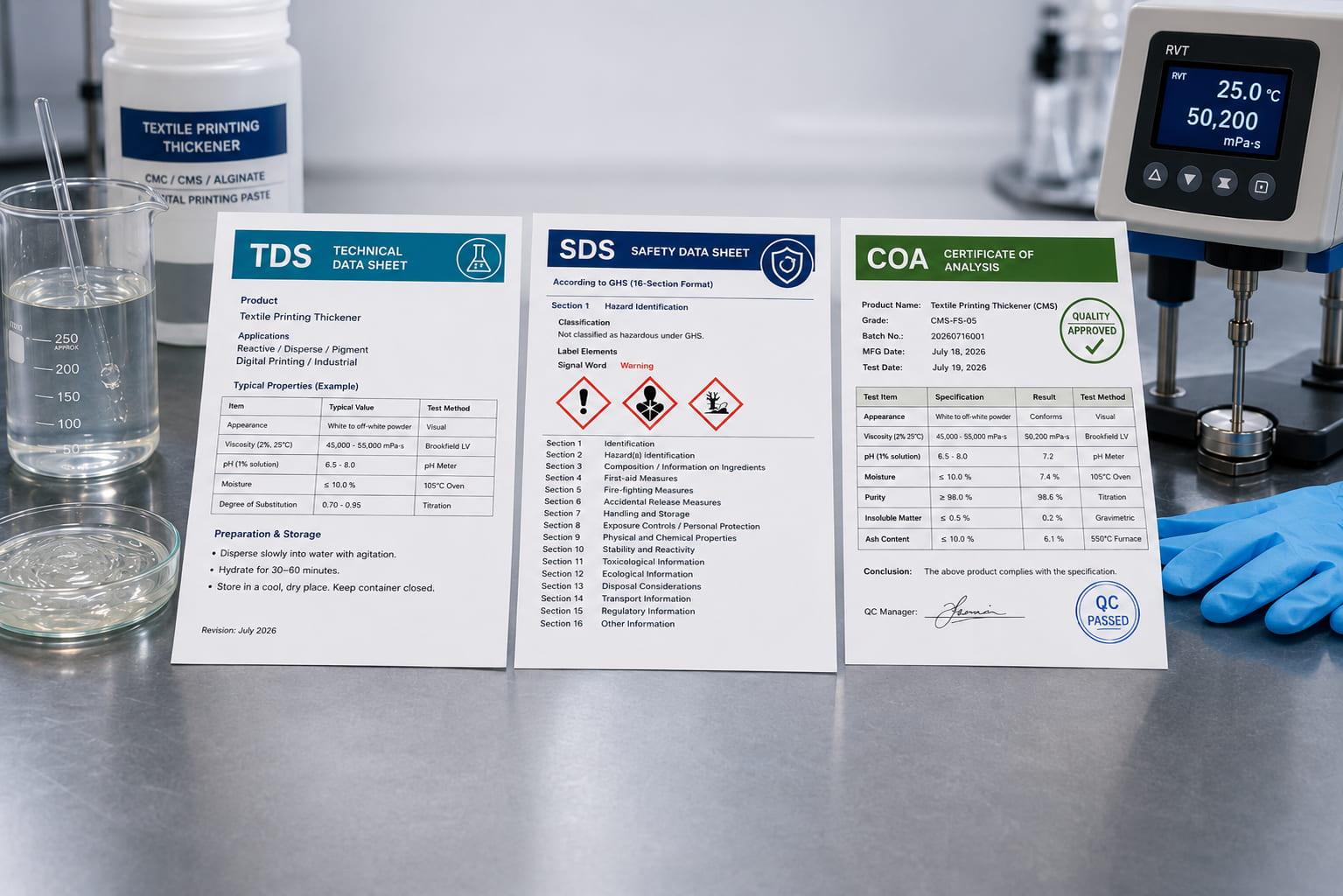
Tài liệu kỹ thuật (TDS) để rà soát thông số kỹ thuật
The Technical Data Sheet should include key parameters such as appearance, viscosity, mesh size, moisture, pH, storage conditions, and testing method.
For reactive dye thickener sodium alginate, the viscosity test method should be clearly stated.
COA cho việc xác nhận lô hàng
Giấy chứng nhận phân tích xác nhận các dữ liệu thực tế của một lô sản xuất cụ thể. Giấy chứng nhận này rất quan trọng đối với các đơn hàng số lượng lớn, việc mua hàng định kỳ, việc cung ứng cho nhà phân phối và công tác kiểm soát chất lượng nội bộ.
Người mua có thể so sánh các hồ sơ COA giữa các lô hàng để kiểm tra xem các thông số chính có vẫn nằm trong phạm vi đã thỏa thuận hay không.
Bảng dữ liệu an toàn (SDS) và các tài liệu xuất khẩu khi cần thiết
For international purchasing, buyers may also need SDS, invoice, packing list, labels, and other export-related documents. The required document list may vary by destination country, product type, and internal purchasing process.
Document requirements should be confirmed before shipment to avoid delays in internal review or customs communication.

How FSX Chemical Supports Sodium Alginate Buyers
FSX Chemical supplies sodium alginate and related textile printing chemicals for textile printing factories, dyeing and printing mills, and chemical distributors.
We do not suggest confirming reactive dye thickener sodium alginate only by price, product name, or broad supplier claims. The recommended grade should be reviewed through technical documents and tested in the buyer’s own formulation before bulk purchase.
Các bước tiếp theo
- Yêu cầu bản TDS — review viscosity range, mesh size, pH, moisture, appearance, storage conditions, and testing method.
- Yêu cầu cấp Giấy chứng nhận xuất xứ (COA) — Xác nhận xem dữ liệu lô hàng có phù hợp với phạm vi thông số kỹ thuật đã thỏa thuận hay không trước khi xuất hàng.
- Yêu cầu điều chỉnh điểm — share your reactive printing process, fabric type, target viscosity, current formulation, and existing product grade if available.
- Yêu cầu mẫu thử — test the recommended sodium alginate grade in your own paste preparation and printing conditions before confirming bulk orders.
- Xác nhận các tài liệu đóng gói và xuất khẩu — check bag size, labels, batch traceability, SDS, invoice, packing list, and other required documents before shipment.
- CLiên hệ với đội ngũ kỹ thuật của chúng tôi — discuss which sodium alginate grade is suitable for your reactive dye printing paste📧 Email: Service@fsxchemical.com