















This guide explains how buyers can compare sodium alginate and CMC for textile thickening applications through technical documents, sample testing, and bulk order confirmation.
Why Sodium Alginate and CMC Are Often Compared
Both Can Support Viscosity Control
Both sodium alginate and CMC can help build viscosity in different textile-related systems. Buyers may compare them when they need a thickener, want to reduce formulation cost, replace an existing product, or improve paste handling.
However, similar thickening function does not mean the products will behave the same in actual production. Each grade should be tested in the buyer’s own formulation.
Application Conditions Decide the Better Fit
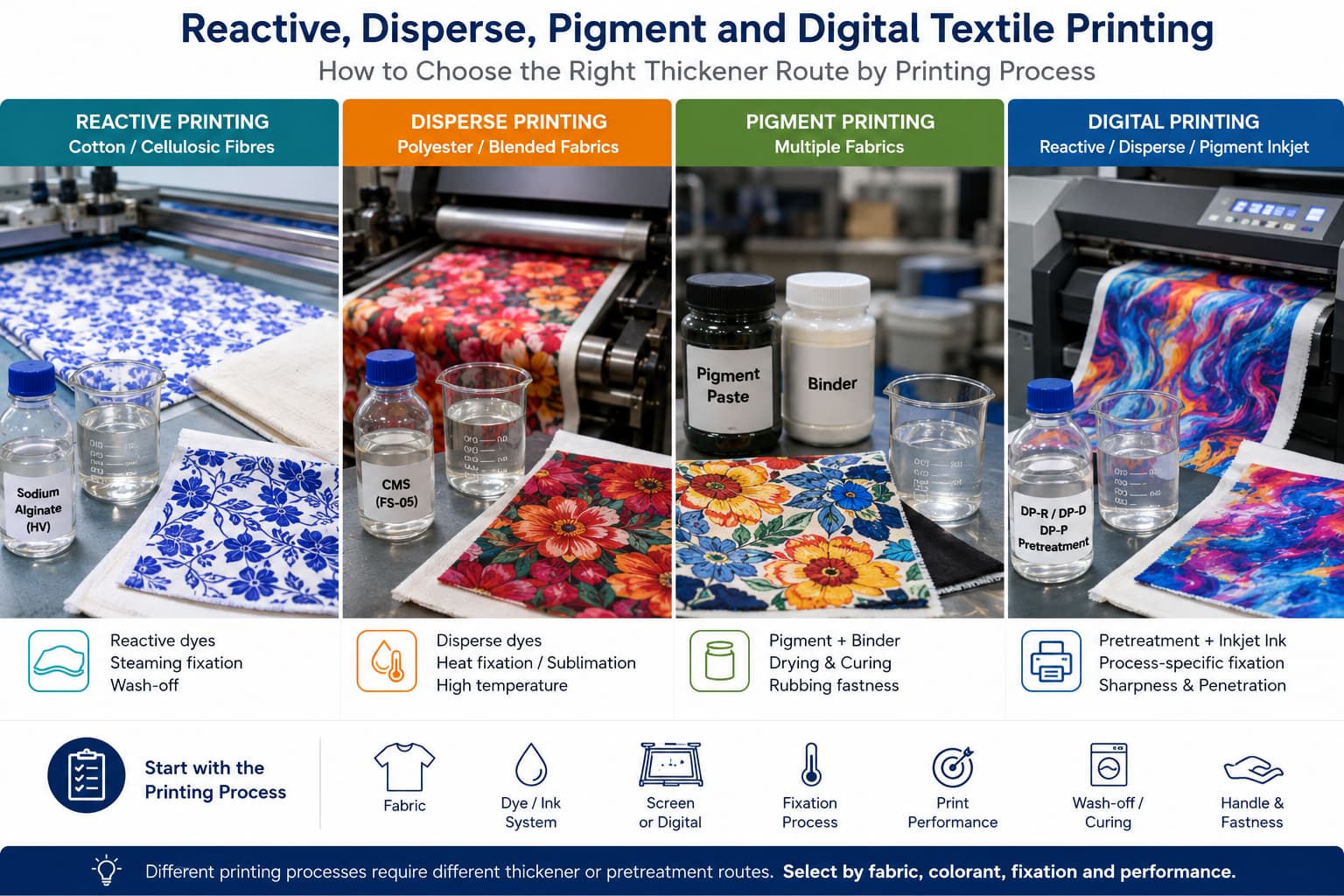
Identify both the colorant system and the equipment. Reactive, disperse and pigment describe different chemical routes; flat-screen and rotary-screen describe application equipment. Sizing is a separate yarn-processing function. These categories should not be treated as interchangeable alternatives in a selection checklist.
Before choosing between sodium alginate and CMC, buyers should define the actual application and target performance clearly.
Sample Testing Is Necessary Before Replacement
If a buyer wants to replace sodium alginate with CMC, or replace CMC with sodium alginate, sample testing is necessary. Water quality, pH, dye system, auxiliaries, stirring method, fabric type, and storage time can all affect the final result.
A supplier should provide a starting recommendation, but the final decision should be confirmed through the buyer’s own test conditions.
Sodium Alginate in Textile Thickening Applications
Common Use in Reactive Printing Paste
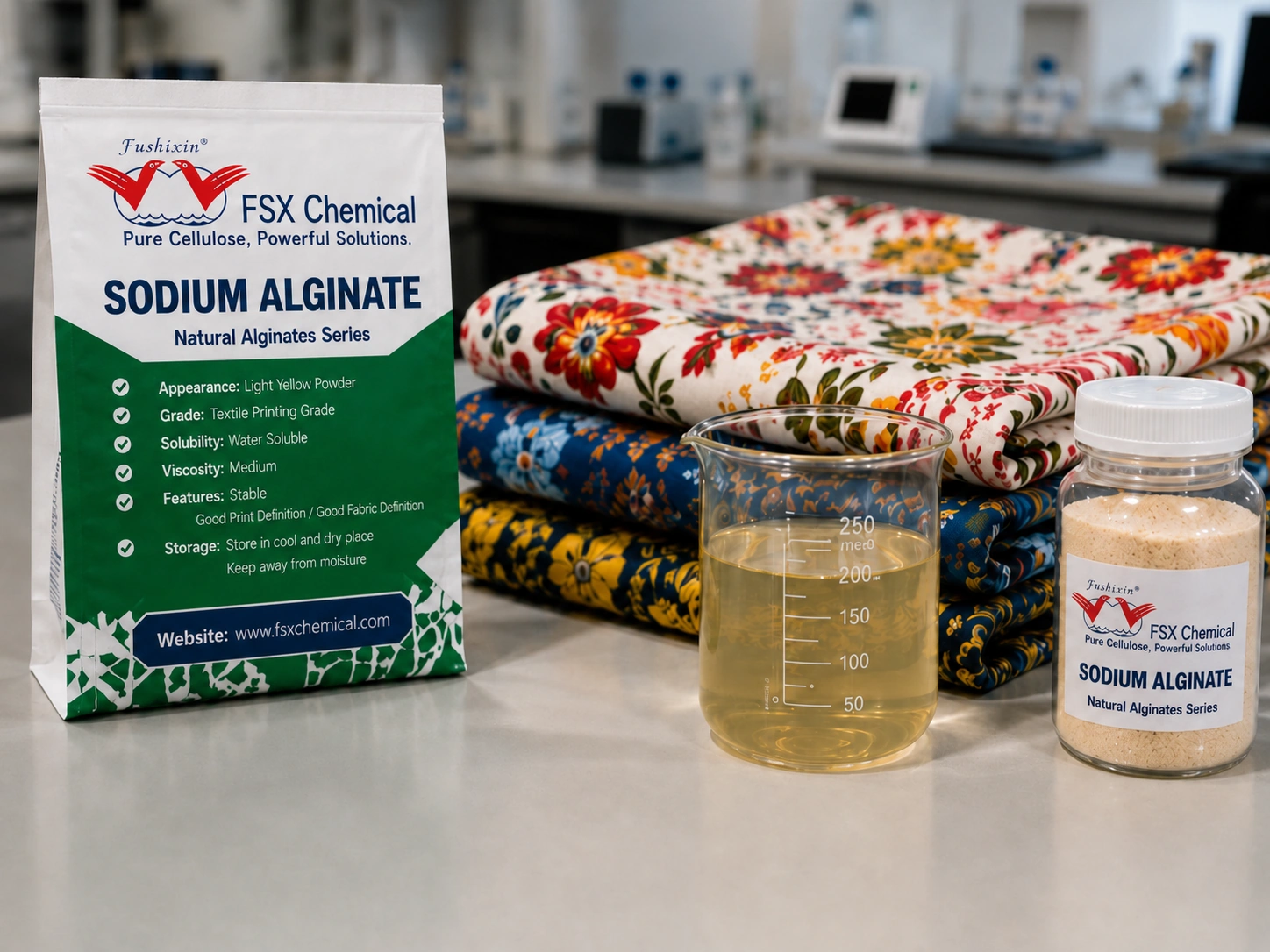
Sodium alginate is commonly selected for reactive textile printing paste where viscosity control, paste formation, dissolution behavior, and printing paste handling are important.
For reactive printing applications, buyers usually pay attention to viscosity grade, mesh size, paste smoothness, filtration behavior, and consistency between sample and bulk shipment.
Specifications Buyers Should Review
When reviewing sodium alginate, buyers should check viscosity range, testing method, mesh size, moisture, pH, appearance, storage conditions, and COA data.
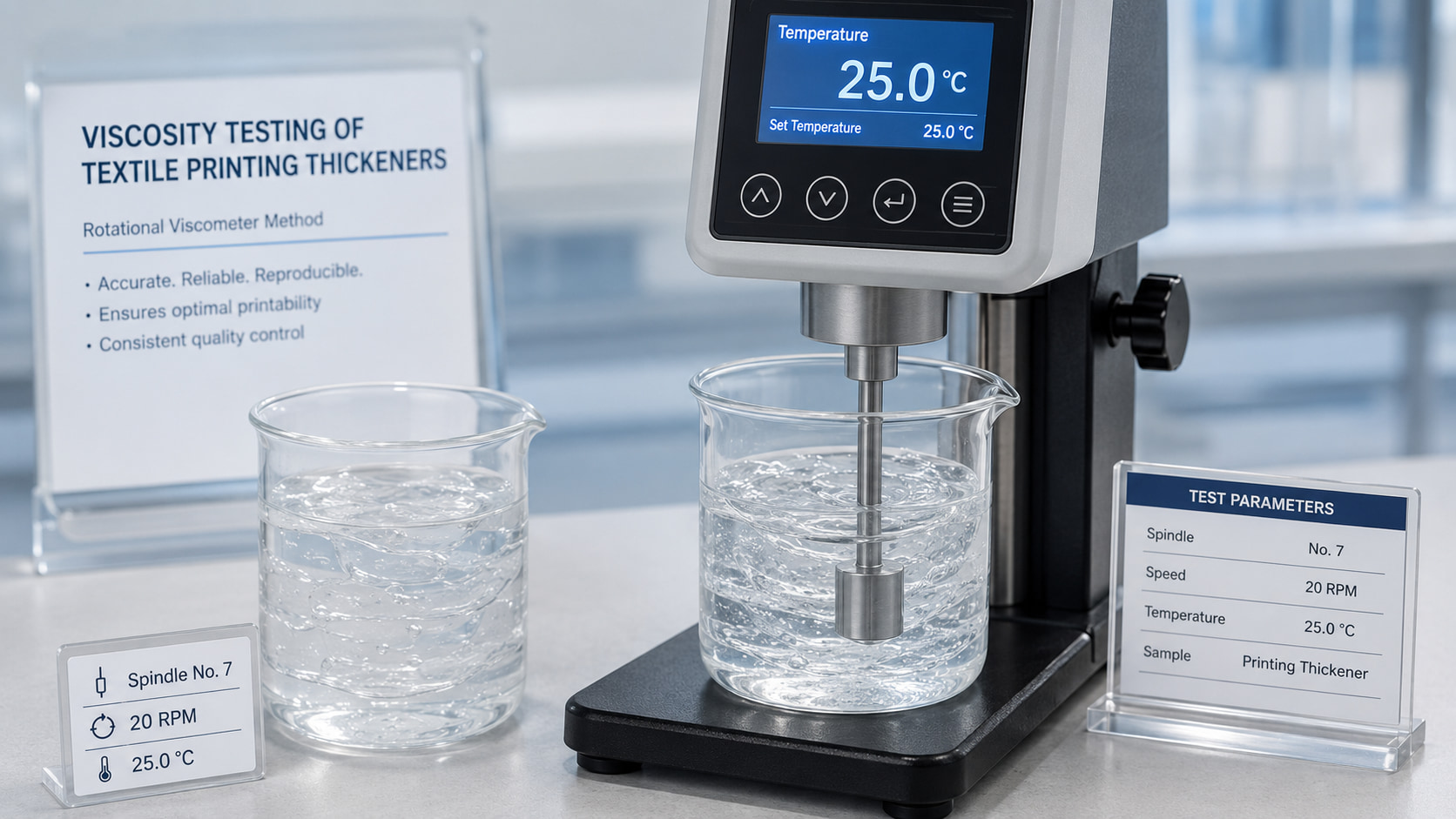
The viscosity test concentration, temperature, instrument method, and unit should be clearly stated. Without these details, viscosity values from different suppliers may not be directly comparable.
Testing Points for Sodium Alginate
During sodium alginate testing, buyers should observe dissolution speed, paste smoothness, lumps, filtration behavior, viscosity stability, and printing paste handling.
The grade should be tested in the buyer’s own paste formulation rather than only in clean water.
CMC in Textile Thickening Applications
Useful in Selected Thickening and Formulation Systems
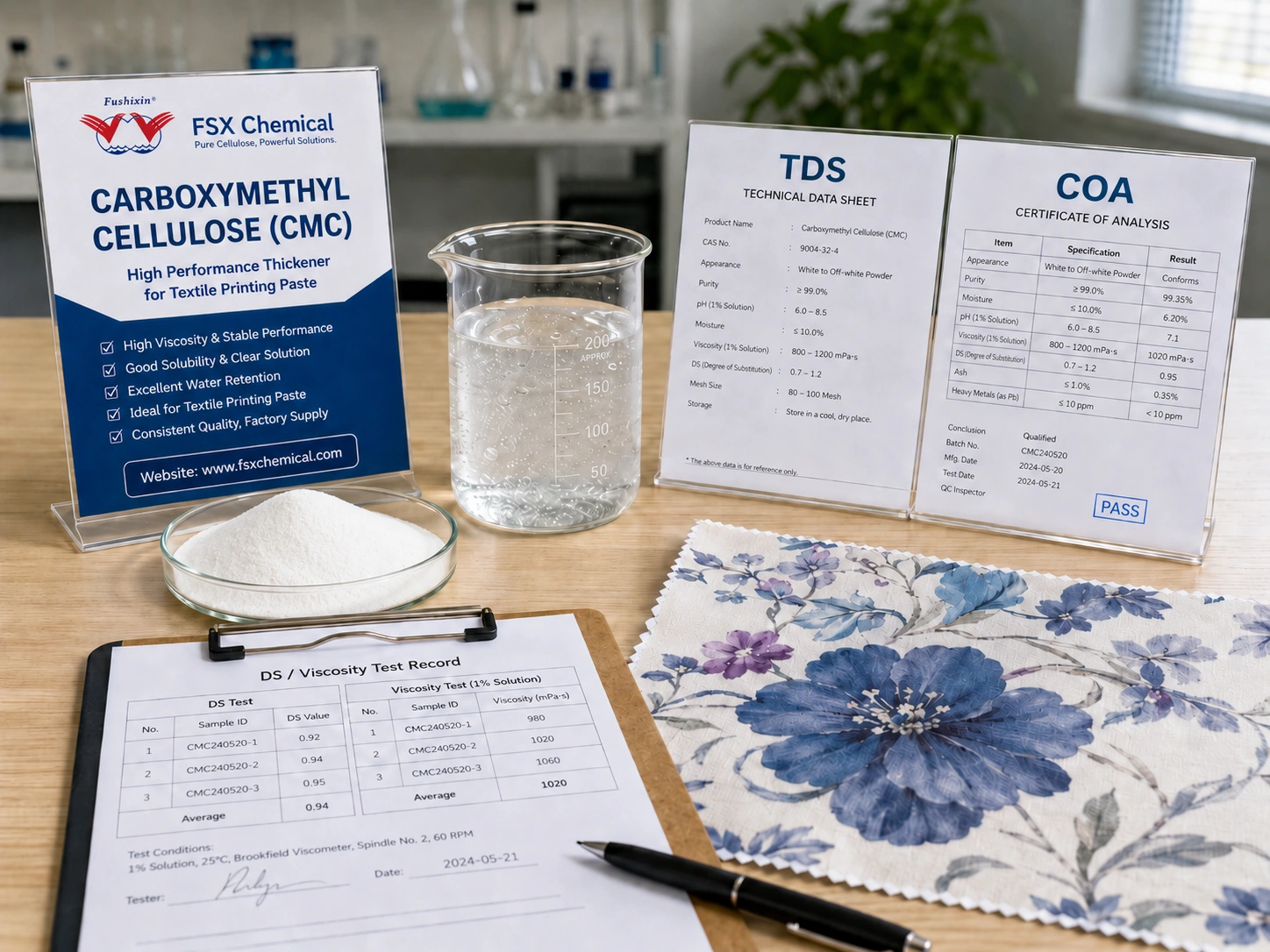

CMC should not be selected only by product name. Different CMC grades may perform very differently in preparation and application.
Specifications Buyers Should Review
If the buyer is replacing an existing CMC grade, sharing the current TDS and target viscosity can help the supplier recommend a closer starting grade.
Testing Points for CMC
During CMC testing, buyers should observe dissolution behavior, paste texture, viscosity stability, compatibility with other auxiliaries, and handling under the actual process conditions.
The result should be compared against the buyer’s production target rather than broad supplier claims.
Sodium Alginate vs CMC: Key Comparison Points
Sự phù hợp của ứng dụng

Buyers should share the printing method, dye system, fabric type, target viscosity, paste preparation method, and current production issue before requesting a recommendation.
Viscosity and Testing Method
Both sodium alginate and CMC are often compared by viscosity. However, viscosity data should always be reviewed together with test concentration, temperature, instrument method, and unit.
Without the test method, data from different suppliers may be misleading.
Dissolution and Paste Preparation
Dissolution behavior can affect production efficiency and paste quality. A product that hydrates unevenly may create lumps, poor paste smoothness, or filtration difficulty.
Use each grade’s documented preparation requirements while controlling the comparison basis. Record water, mixer, addition order, concentration, hydration endpoint and temperature. A single fixed hydration time can disadvantage a slower-hydrating grade; if the mill cannot accommodate its preparation needs, record that as a practical limitation.
Compatibility with Formulation
Compatibility depends on the full formulation, including dyes, auxiliaries, pH, salts, water quality, and fabric type. A product that works in one factory may not perform the same in another formulation.
For this reason, sample testing in the buyer’s own system is necessary before bulk purchase.
Tính nhất quán của lô
For repeat orders, batch consistency is important. If viscosity, moisture, pH, or dissolution behavior changes significantly between batches, the buyer may need to adjust the formulation again.
COA review helps buyers compare the reported lot results with the agreed specification range. Investigate missing methods, unclear lot identity or inconsistent results through the agreed incoming-QC procedure rather than treating a document alone as proof of application consistency.
Các tài liệu mà người mua nên yêu cầu
Tài liệu kỹ thuật (TDS) để rà soát thông số kỹ thuật
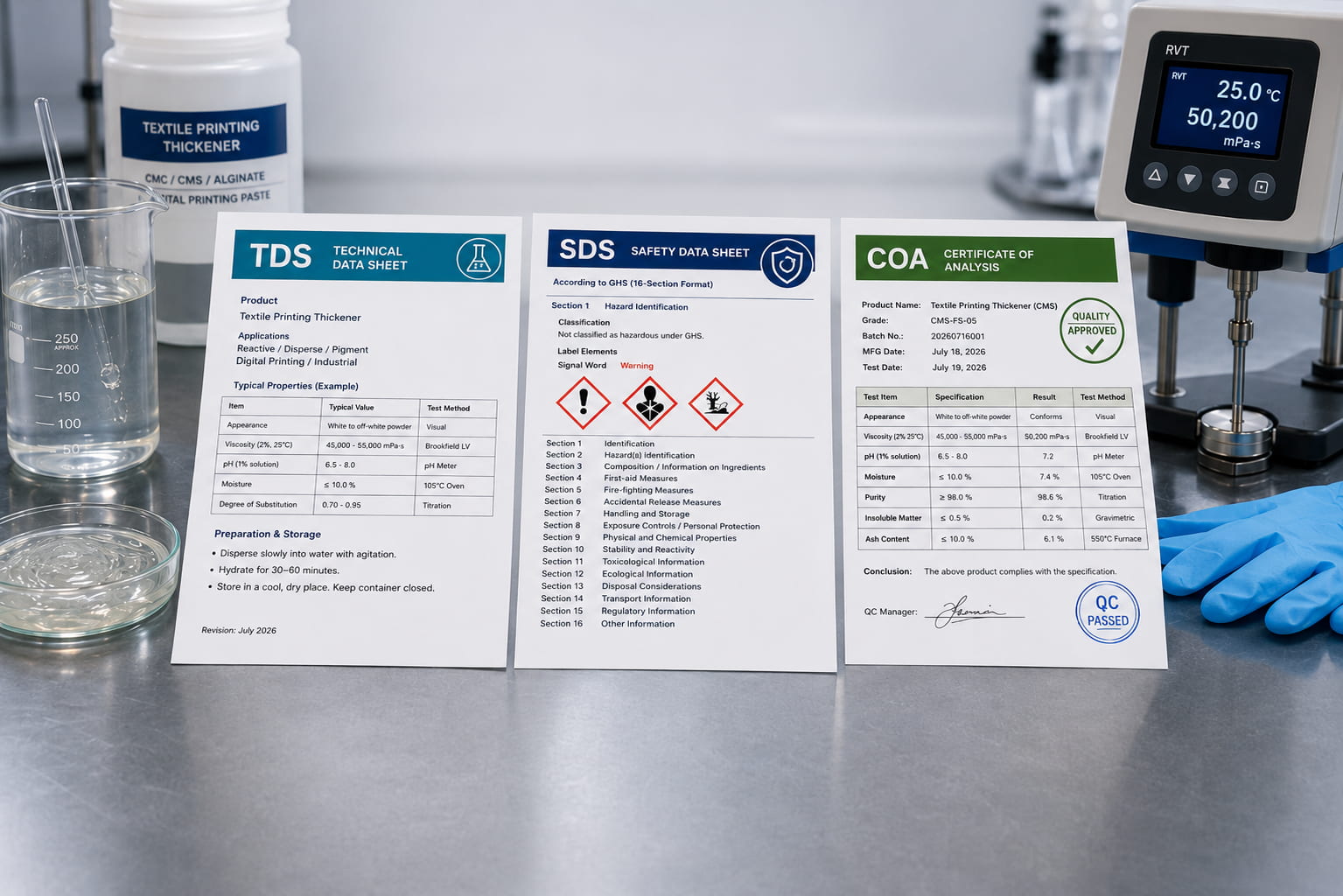
The Technical Data Sheet helps buyers review the standard specification range. For sodium alginate, it should include parameters such as viscosity, mesh size, moisture, pH, appearance, storage conditions, and testing method.
For CMC, the TDS should include viscosity, DS where applicable, pH, moisture, appearance, solubility, storage conditions, and testing method.
COA cho việc xác nhận lô hàng
A Certificate of Analysis reports the listed results for an identified lot or sample under the stated methods. Check the commercial grade, lot number, test date, methods, units and agreed limits, and distinguish measured results from statements of conformity or typical values. The document does not by itself prove that every package was tested or that the grade will perform in the buyer’s printing process. Use the agreed incoming checks and application qualification separately.
Người mua có thể so sánh các hồ sơ COA giữa các lô hàng để kiểm tra xem các thông số chính có vẫn nằm trong phạm vi đã thỏa thuận hay không.
Bảng dữ liệu an toàn (SDS) và các tài liệu xuất khẩu khi cần thiết
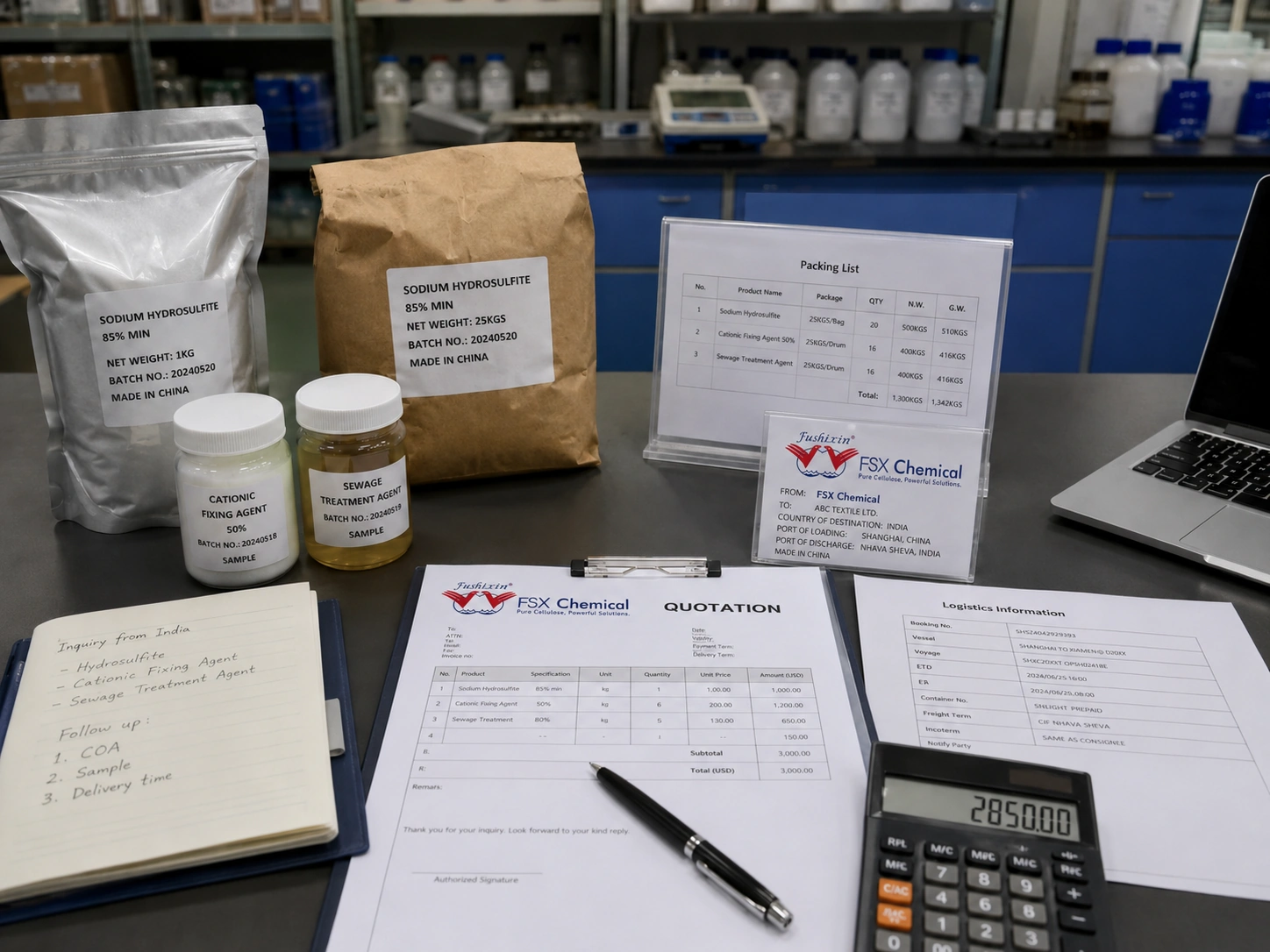
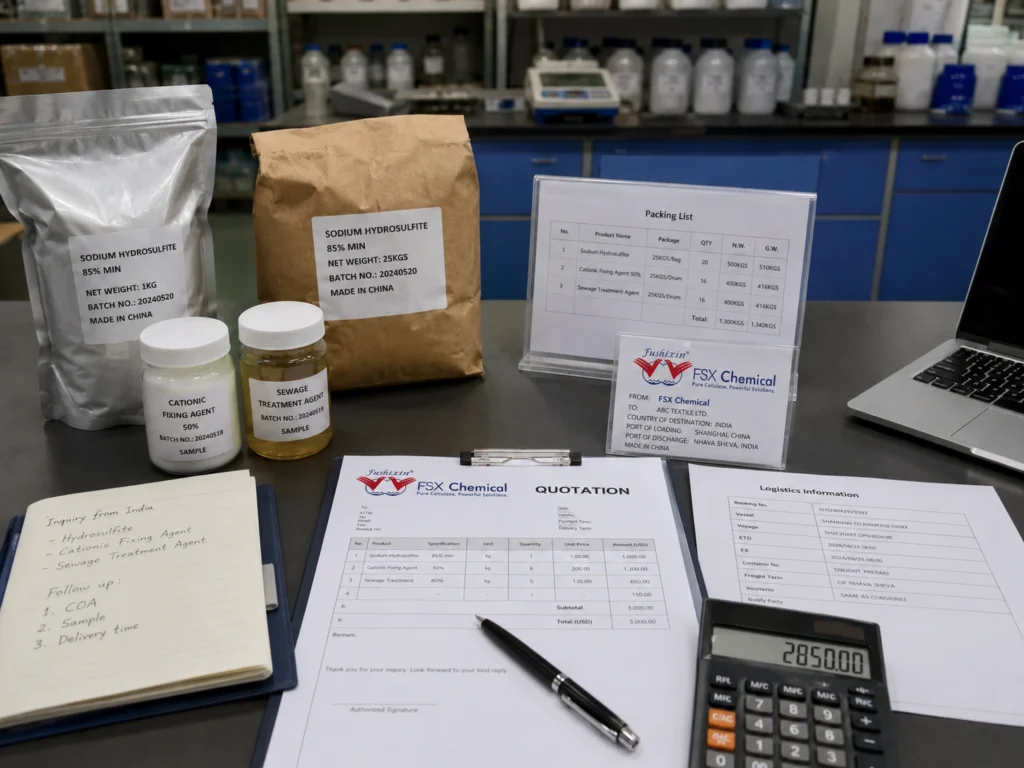
For international purchasing, buyers may also need SDS, invoice, packing list, labels, and other export-related documents. The required document list may vary by destination country, product type, and internal purchasing process.
Document requirements should be confirmed before shipment to avoid delays in internal review or customs communication.
How to Choose Between Sodium Alginate and CMC
Start with the Application
First identify the function and chemical system: textile printing with reactive dyes, disperse dyes or pigments, or yarn sizing as a separate process. Then record the fabric, equipment such as flat-screen or rotary-screen, preparation sequence and fixation or curing route. For digital printing, state whether the product is applied to the fabric as a pretreatment; approval for fabric treatment does not authorize use in printhead ink. These are different selection dimensions, not interchangeable chemical categories.
Product selection should start from real production requirements rather than supplier claims.
Compare Samples Under the Same Conditions
Compare independently prepared reference and candidate samples using agreed viscosity conditions and the same printing and finishing evaluation. Record dosage changes explicitly. Equal apparent viscosity controls only one measurement point; it does not establish equal flow, dye interaction or residue removal.
Key observations may include viscosity, dissolution speed, paste smoothness, filtration behavior, stability, and application handling.
Xác nhận tính nhất quán giữa mẫu và lô hàng
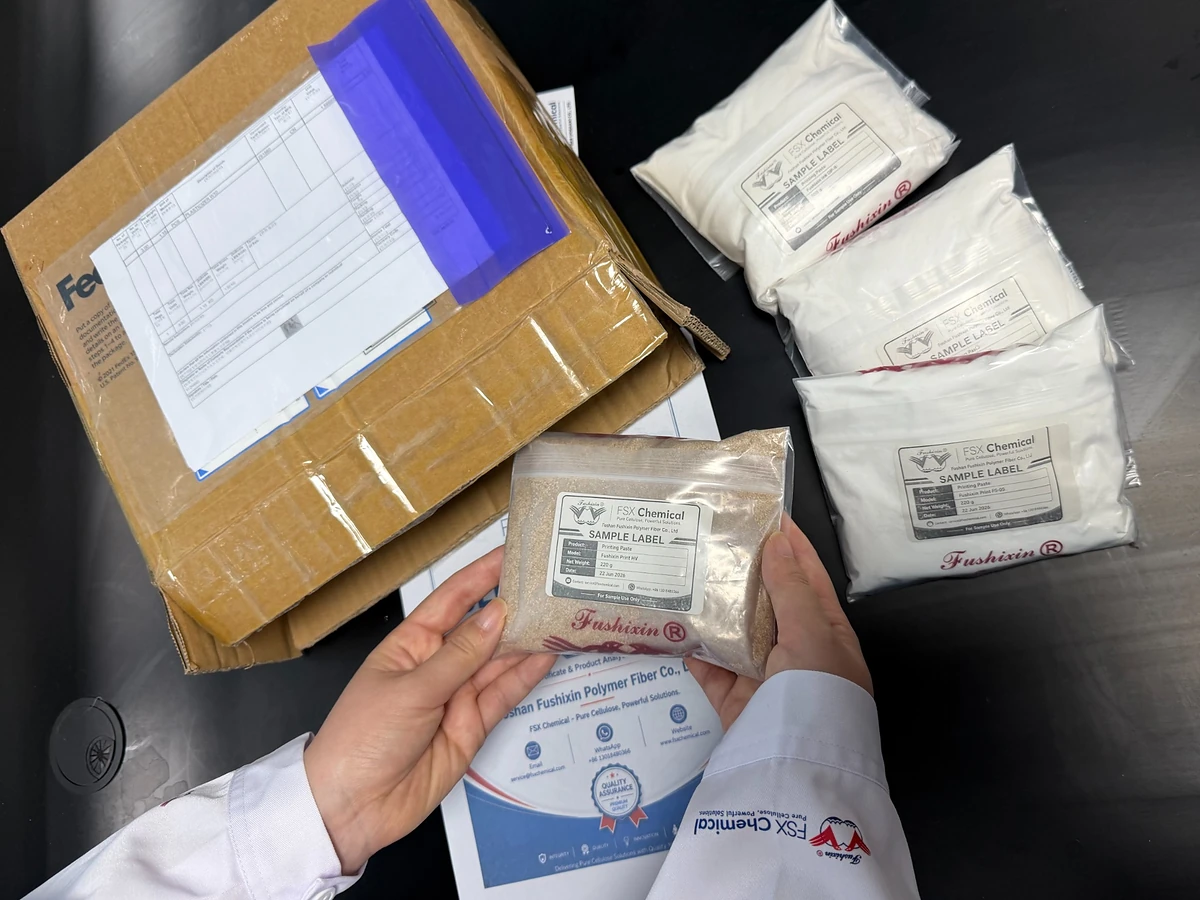
Before placing a bulk order, buyers should confirm whether the approved sample and bulk shipment will follow the same specification range, packaging format, batch traceability, and COA requirements.
This helps reduce the risk of sample-to-bulk mismatch.
What the Chemistry Changes in a Substitution Trial
| Question | Alginat natri | CMC |
|---|---|---|
| How is product identity described? | Alginate salt grade and supplier specification; CMC degree of substitution is not its routine grade descriptor | Cellulose derivative; confirm degree of substitution and the grade-specific method |
| Why test the reactive-dye system? | Established use reflects relatively low interaction with many reactive dyes | Suitability must be demonstrated for the actual grade and dye recipe; DS alone is not proof |
| What may a water test miss? | Calcium-related gel formation and complete-paste behavior | Grade-dependent response to salts, auxiliaries and the intended application |
| What decides approval? | Required final shade, definition, penetration, wash-off where applicable, handle, fastness and cost under a recorded process | |
Use the FAO alginate review for background on reactive-printing use, not as evidence that a particular supplier grade is approved. Trial results should remain specific to the formulation and fabric tested.
How FSX Chemical Supports Textile Thickening Buyers
We do not suggest confirming sodium alginate or CMC only by price, product name, or broad performance claims. The recommended grade should be reviewed through technical documents and tested in the buyer’s own formulation before bulk purchase.
Các bước tiếp theo
- Share Your Application — tell us your printing process, fabric type, dye system, target viscosity, and current formulation.
- Request Sodium Alginate or CMC Grade Matching — ask for a suitable starting grade based on your production needs.
- Yêu cầu bản TDS — review viscosity, DS where applicable, mesh size where relevant, pH, moisture, appearance, storage conditions, and testing method.
- Yêu cầu cấp Giấy chứng nhận xuất xứ (COA) — review the identified lot’s reported results, methods and units against the agreed limits; confirm separate incoming and application checks.
- Request Samples — compare sodium alginate and CMC in your own paste preparation and application conditions.
- Xác nhận các tài liệu đóng gói và xuất khẩu — check bag size, labels, batch traceability, SDS, invoice, packing list, and other required documents before shipment.
- CLiên hệ với đội ngũ kỹ thuật của chúng tôi — discuss which thickener or grade is suitable for your textile application📧 Email: Service@fsxchemical.com