














This guide explains how buyers can compare sodium alginate and CMC for textile thickening applications through technical documents, sample testing, and bulk order confirmation.
Why Sodium Alginate and CMC Are Often Compared
Both Can Support Viscosity Control
Both sodium alginate and CMC can help build viscosity in different textile-related systems. Buyers may compare them when they need a thickener, want to reduce formulation cost, replace an existing product, or improve paste handling.
However, similar thickening function does not mean the products will behave the same in actual production. Each grade should be tested in the buyer’s own formulation.
Application Conditions Decide the Better Fit
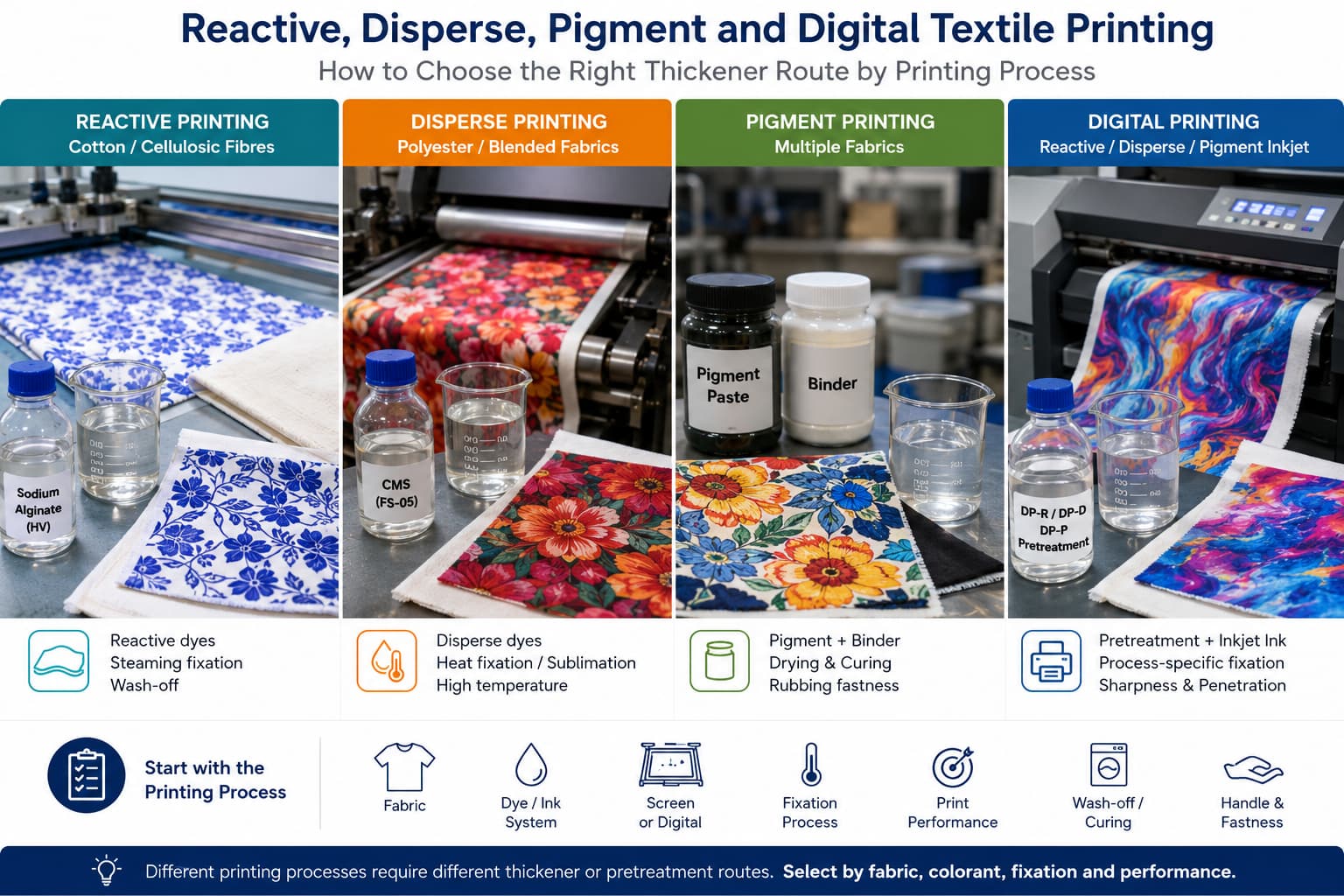
The suitable thickener depends on the application. Reactive printing paste, screen printing, rotary printing, sizing support, and other textile processes may require different viscosity, solubility, paste smoothness, and stability.
Before choosing between sodium alginate and CMC, buyers should define the actual application and target performance clearly.
Sample Testing Is Necessary Before Replacement
If a buyer wants to replace sodium alginate with CMC, or replace CMC with sodium alginate, sample testing is necessary. Water quality, pH, dye system, auxiliaries, stirring method, fabric type, and storage time can all affect the final result.
A supplier should provide a starting recommendation, but the final decision should be confirmed through the buyer’s own test conditions.
Sodium Alginate in Textile Thickening Applications
Common Use in Reactive Printing Paste
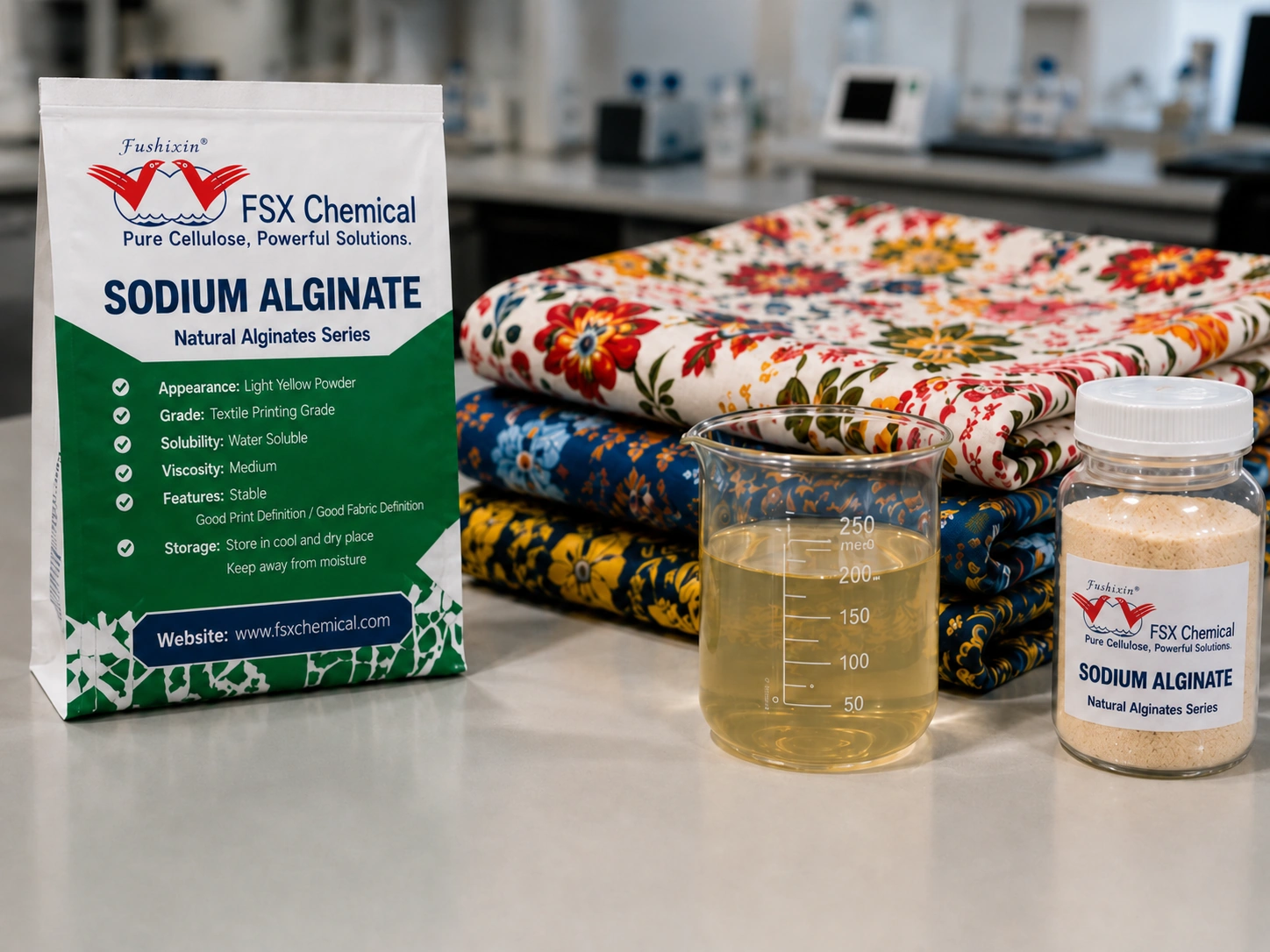
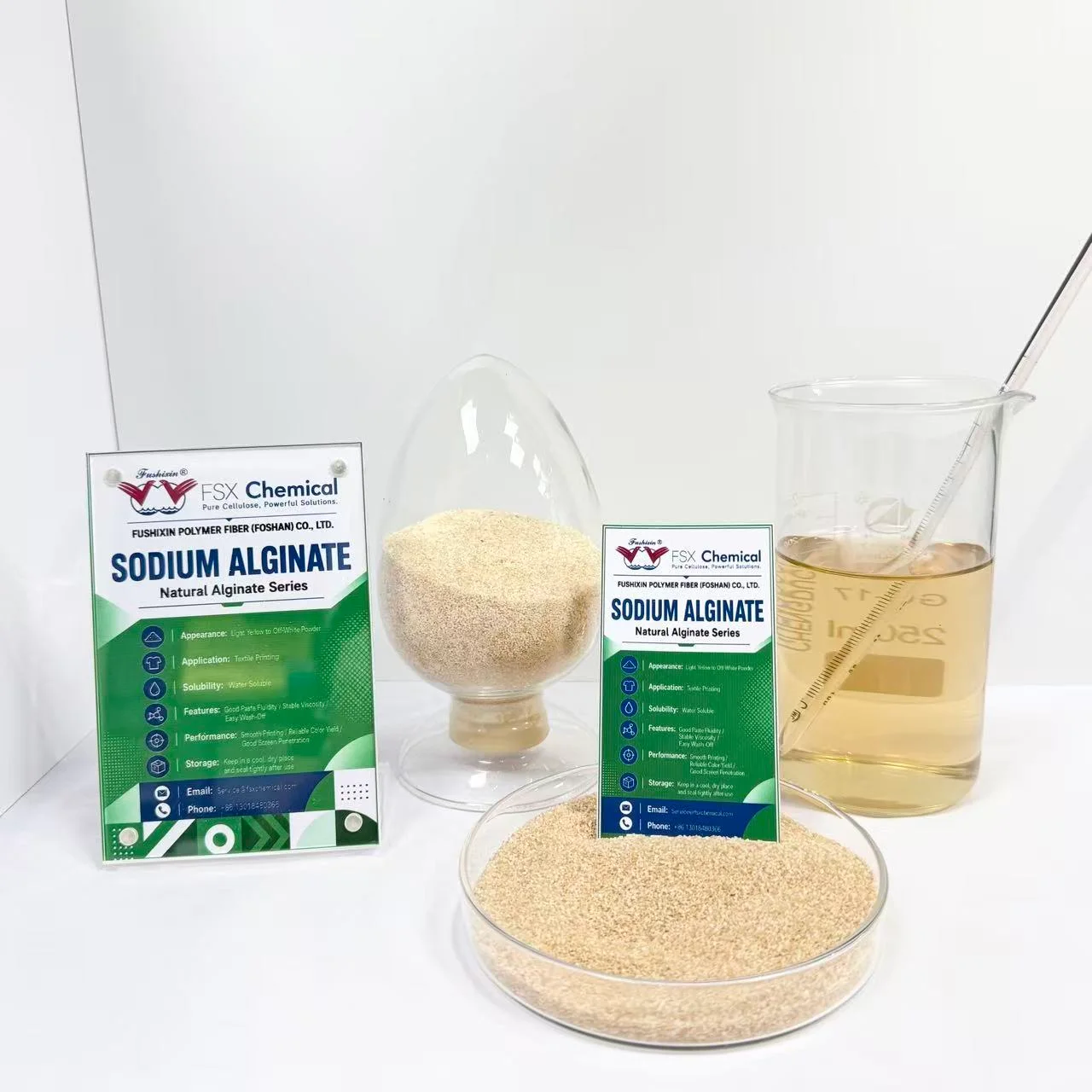
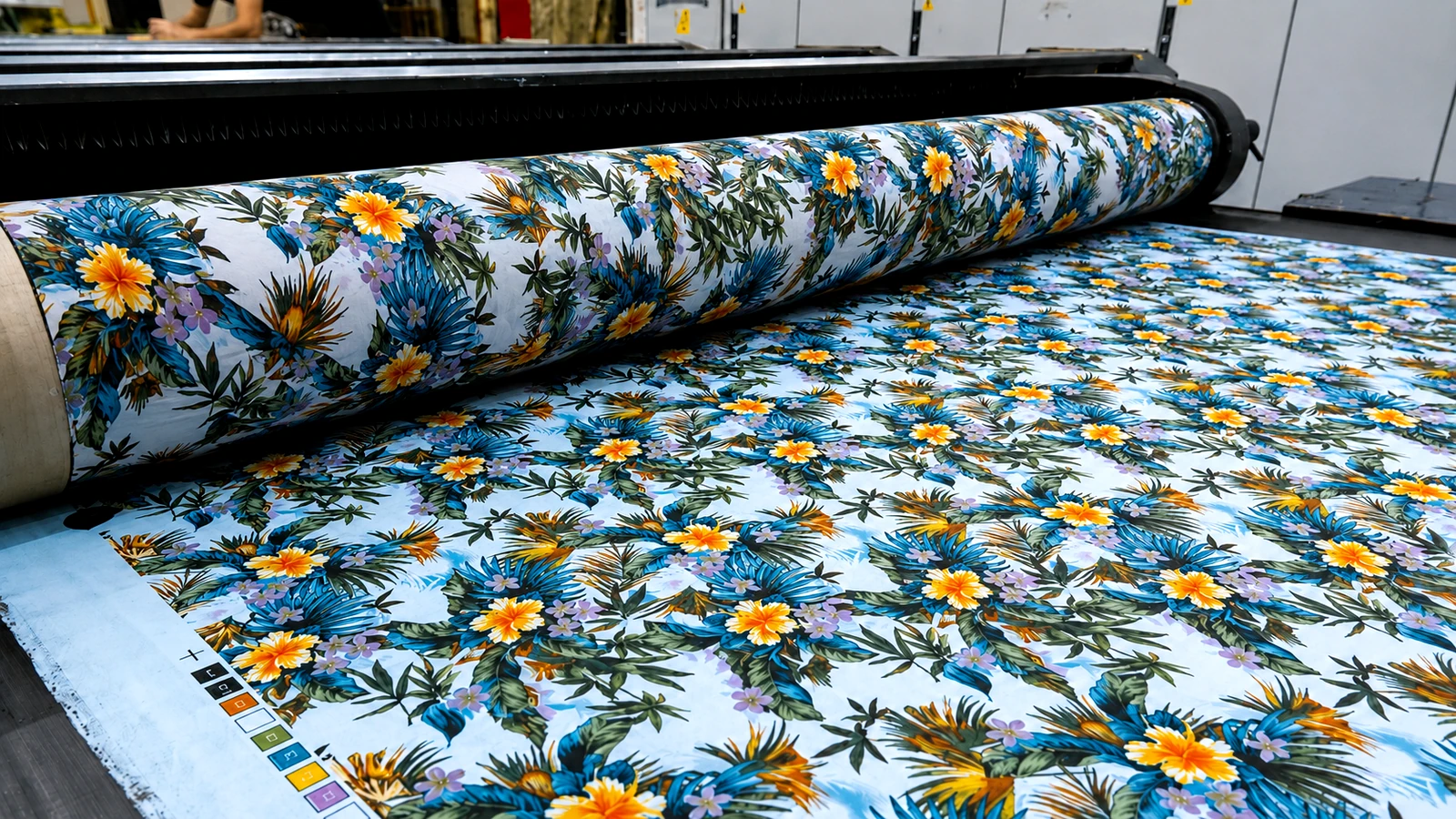
Sodium alginate is commonly selected for reactive textile printing paste where viscosity control, paste formation, dissolution behavior, and printing paste handling are important.
For reactive printing applications, buyers usually pay attention to viscosity grade, mesh size, paste smoothness, filtration behavior, and consistency between sample and bulk shipment.
وہ وضاحتیں جن کا خریداروں کو جائزہ لینا چاہیے
When reviewing sodium alginate, buyers should check viscosity range, testing method, mesh size, moisture, pH, appearance, storage conditions, and COA data.
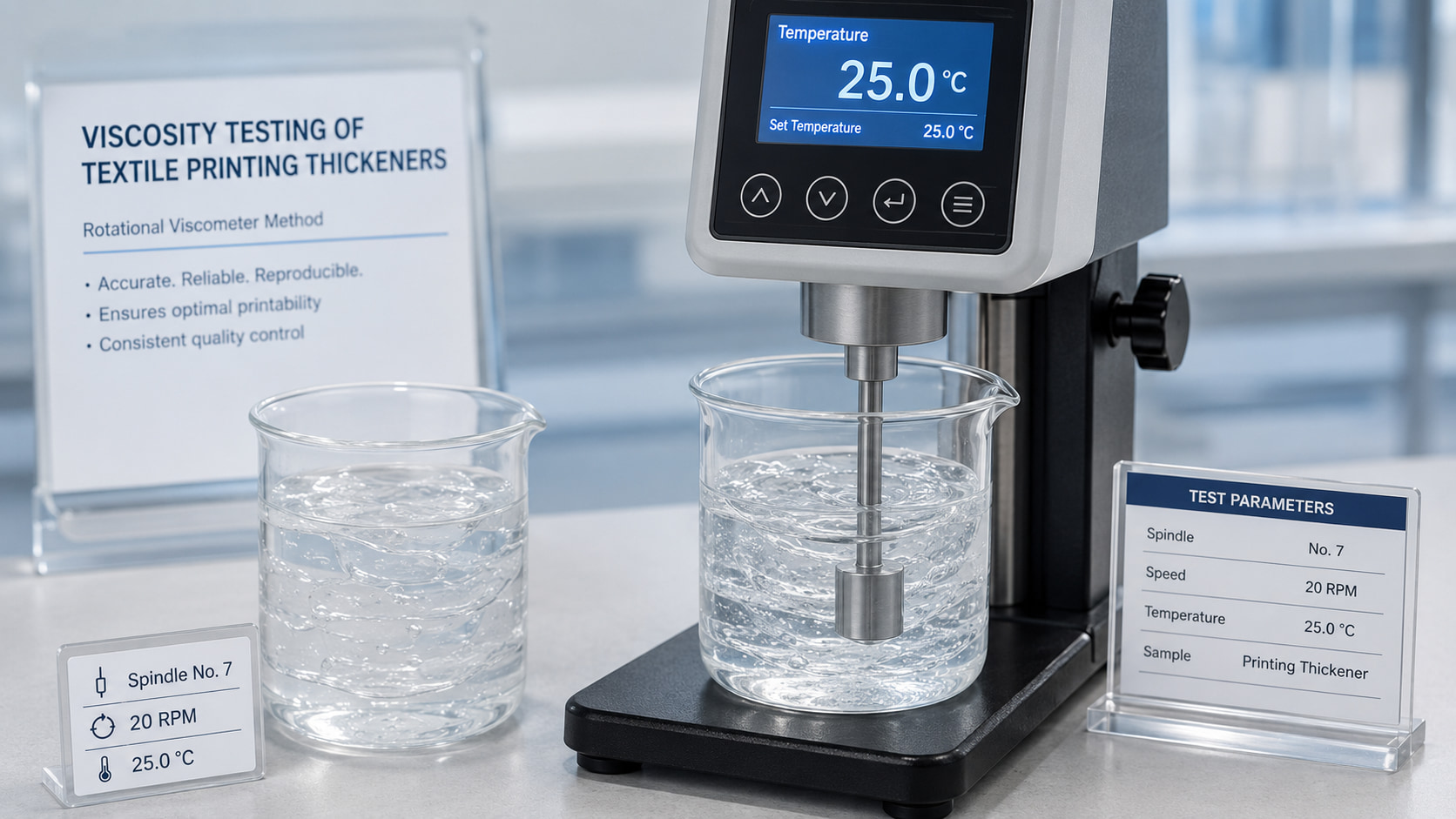
The viscosity test concentration, temperature, instrument method, and unit should be clearly stated. Without these details, viscosity values from different suppliers may not be directly comparable.
Testing Points for Sodium Alginate
During sodium alginate testing, buyers should observe dissolution speed, paste smoothness, lumps, filtration behavior, viscosity stability, and printing paste handling.
The grade should be tested in the buyer’s own paste formulation rather than only in clean water.
CMC in Textile Thickening Applications
Useful in Selected Thickening and Formulation Systems
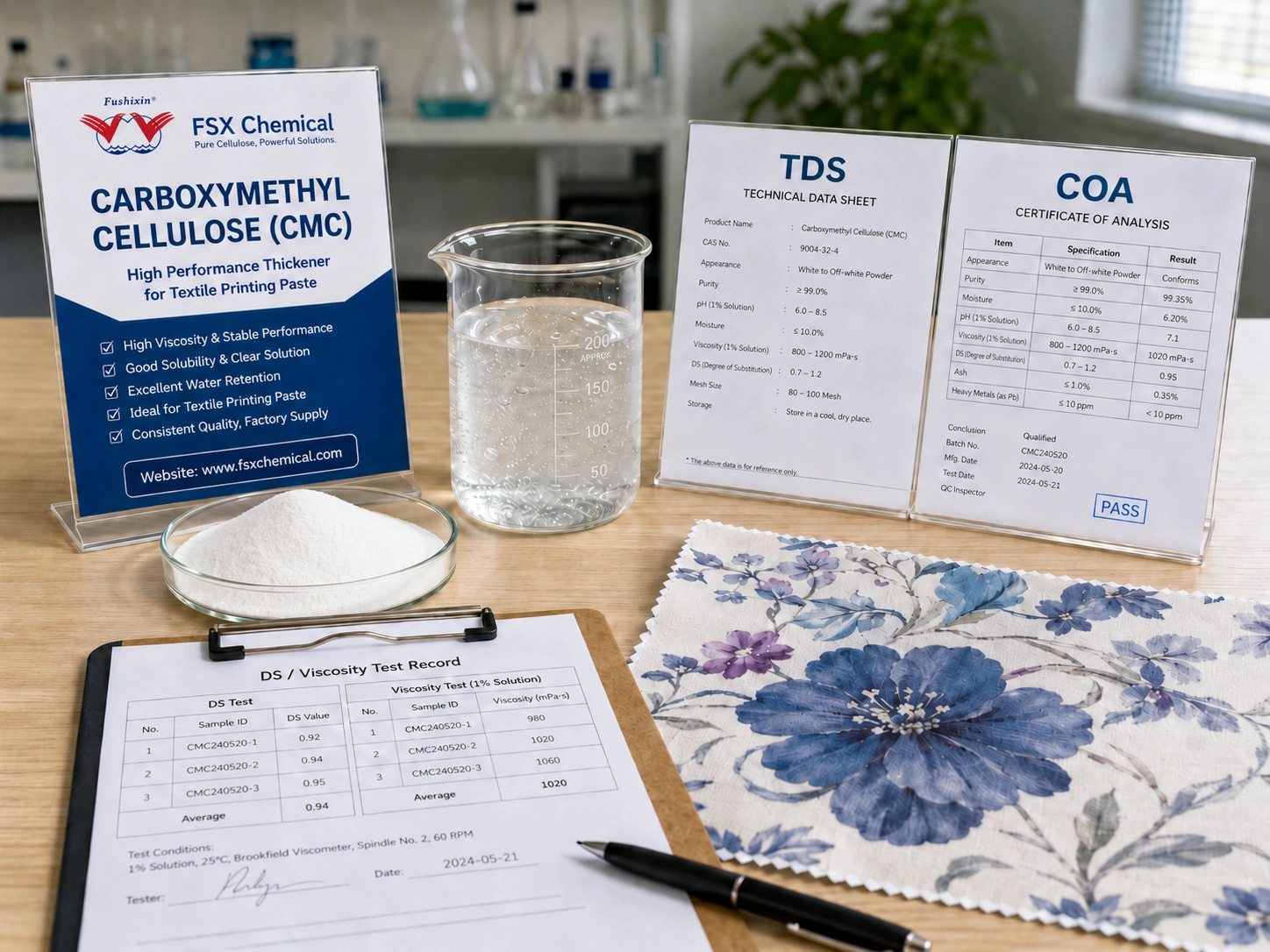

CMC should not be selected only by product name. Different CMC grades may perform very differently in preparation and application.
وہ وضاحتیں جن کا خریداروں کو جائزہ لینا چاہیے
If the buyer is replacing an existing CMC grade, sharing the current TDS and target viscosity can help the supplier recommend a closer starting grade.
Testing Points for CMC
During CMC testing, buyers should observe dissolution behavior, paste texture, viscosity stability, compatibility with other auxiliaries, and handling under the actual process conditions.
The result should be compared against the buyer’s production target rather than broad supplier claims.
Sodium Alginate vs CMC: Key Comparison Points
استعمال سے مطابقت

Buyers should share the printing method, dye system, fabric type, target viscosity, paste preparation method, and current production issue before requesting a recommendation.
Viscosity and Testing Method
Both sodium alginate and CMC are often compared by viscosity. However, viscosity data should always be reviewed together with test concentration, temperature, instrument method, and unit.
Without the test method, data from different suppliers may be misleading.
Dissolution and Paste Preparation
Dissolution behavior can affect production efficiency and paste quality. A product that hydrates unevenly may create lumps, poor paste smoothness, or filtration difficulty.
Buyers should test sodium alginate and CMC under the same preparation conditions where possible, including water quality, stirring speed, addition method, and preparation time.
Compatibility with Formulation
Compatibility depends on the full formulation, including dyes, auxiliaries, pH, salts, water quality, and fabric type. A product that works in one factory may not perform the same in another formulation.
For this reason, sample testing in the buyer’s own system is necessary before bulk purchase.
بیچ کی مستقل مزاجی
For repeat orders, batch consistency is important. If viscosity, moisture, pH, or dissolution behavior changes significantly between batches, the buyer may need to adjust the formulation again.
COA کا جائزہ خریداروں کو یہ تصدیق کرنے میں مدد دیتا ہے کہ بیچ کا ڈیٹا طے شدہ وضاحتی حدود کے اندر ہے یا نہیں۔.
وہ دستاویزات جو خریداروں کو طلب کرنی چاہئیں
تفصیلی جائزے کے لیے TDS
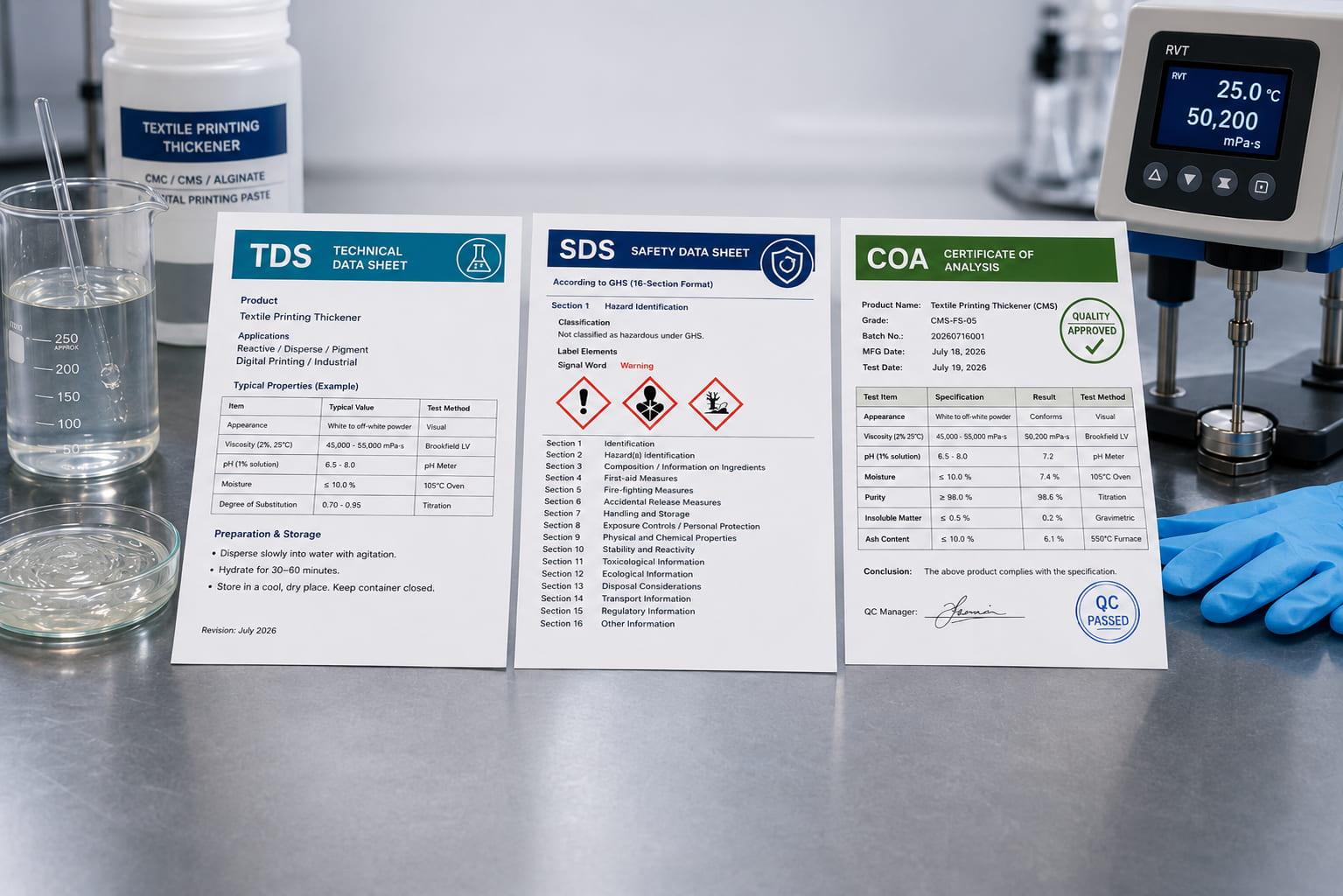
The Technical Data Sheet helps buyers review the standard specification range. For sodium alginate, it should include parameters such as viscosity, mesh size, moisture, pH, appearance, storage conditions, and testing method.
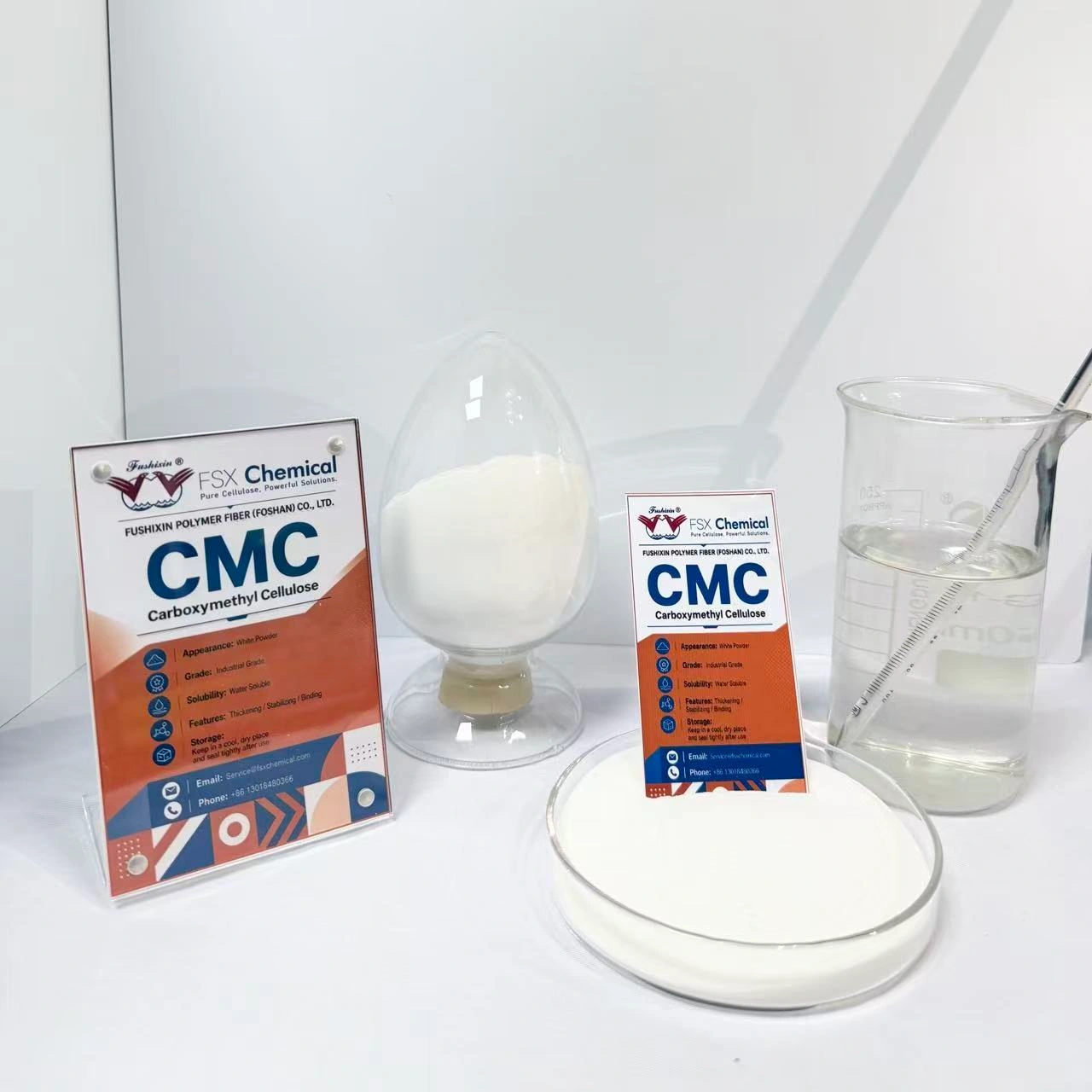
For CMC, the TDS should include viscosity, DS where applicable, pH, moisture, appearance, solubility, storage conditions, and testing method.
بیچ کی تصدیق کے لیے COA
تجزیاتی سرٹیفکیٹ مخصوص پیداواری بیچ کے حقیقی اعداد و شمار کی تصدیق کرتا ہے۔ یہ بڑے آرڈرز، بار بار خریداری، تقسیم کاروں کی فراہمی، اور اندرونی کوالٹی کنٹرول کے لیے اہم ہے۔.
خریدار شپمنٹس کے دوران COA ریکارڈز کا موازنہ کر سکتے ہیں تاکہ یہ جانچ سکیں کہ آیا کلیدی پیرامیٹرز طے شدہ حدود کے اندر ہیں یا نہیں۔.
جب ضروری ہو تو ایس ڈی ایس اور برآمدی دستاویزات
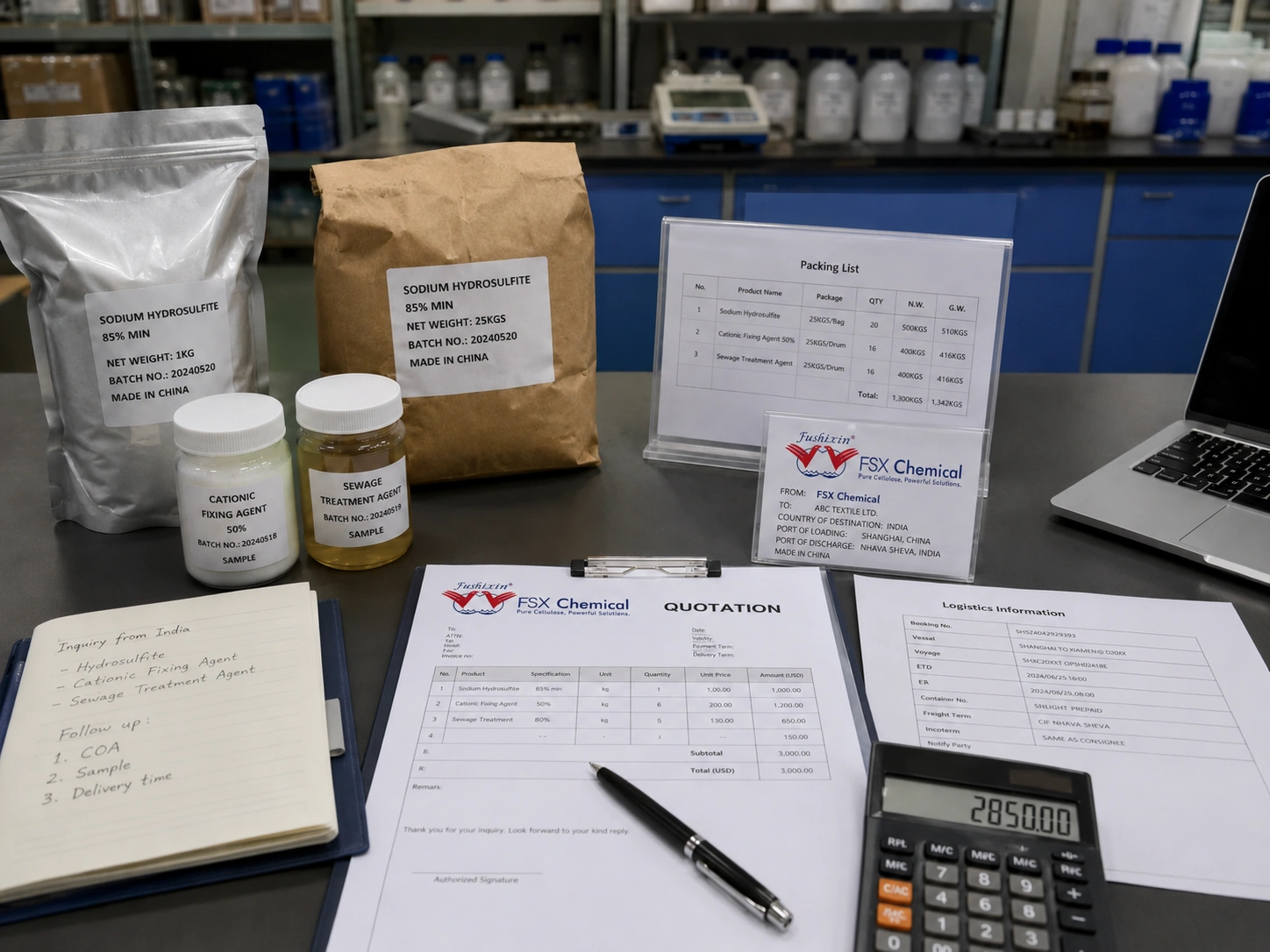
بین الاقوامی خریداری کے لیے خریداروں کو ایس ڈی ایس، انوائس، پیکنگ لسٹ، لیبلز اور دیگر برآمدی دستاویزات کی بھی ضرورت پڑ سکتی ہے۔ مطلوبہ دستاویزات کی فہرست منزل ملک، مصنوعات کی قسم اور اندرونی خریداری کے عمل کے مطابق مختلف ہو سکتی ہے۔.
بھیجنے سے پہلے دستاویزات کی ضروریات کی تصدیق کر لینی چاہیے تاکہ اندرونی جائزے یا کسٹمز کے تبادلے میں تاخیر نہ ہو۔.
How to Choose Between Sodium Alginate and CMC
Start with the Application
The buyer should first define the application: reactive printing paste, screen printing, rotary printing, sizing support, or another textile process. Different applications may require different thickening behavior.
Product selection should start from real production requirements rather than supplier claims.
Compare Samples Under the Same Conditions
When possible, buyers should test sodium alginate and CMC under the same preparation method and evaluation standard. This makes comparison more practical.
Key observations may include viscosity, dissolution speed, paste smoothness, filtration behavior, stability, and application handling.
نمونے سے بلک تک مطابقت کی تصدیق کریں
Before placing a bulk order, buyers should confirm whether the approved sample and bulk shipment will follow the same specification range, packaging format, batch traceability, and COA requirements.
یہ نمونے اور مجموعی کے عدم مطابقت کے خطرے کو کم کرنے میں مدد کرتا ہے۔.
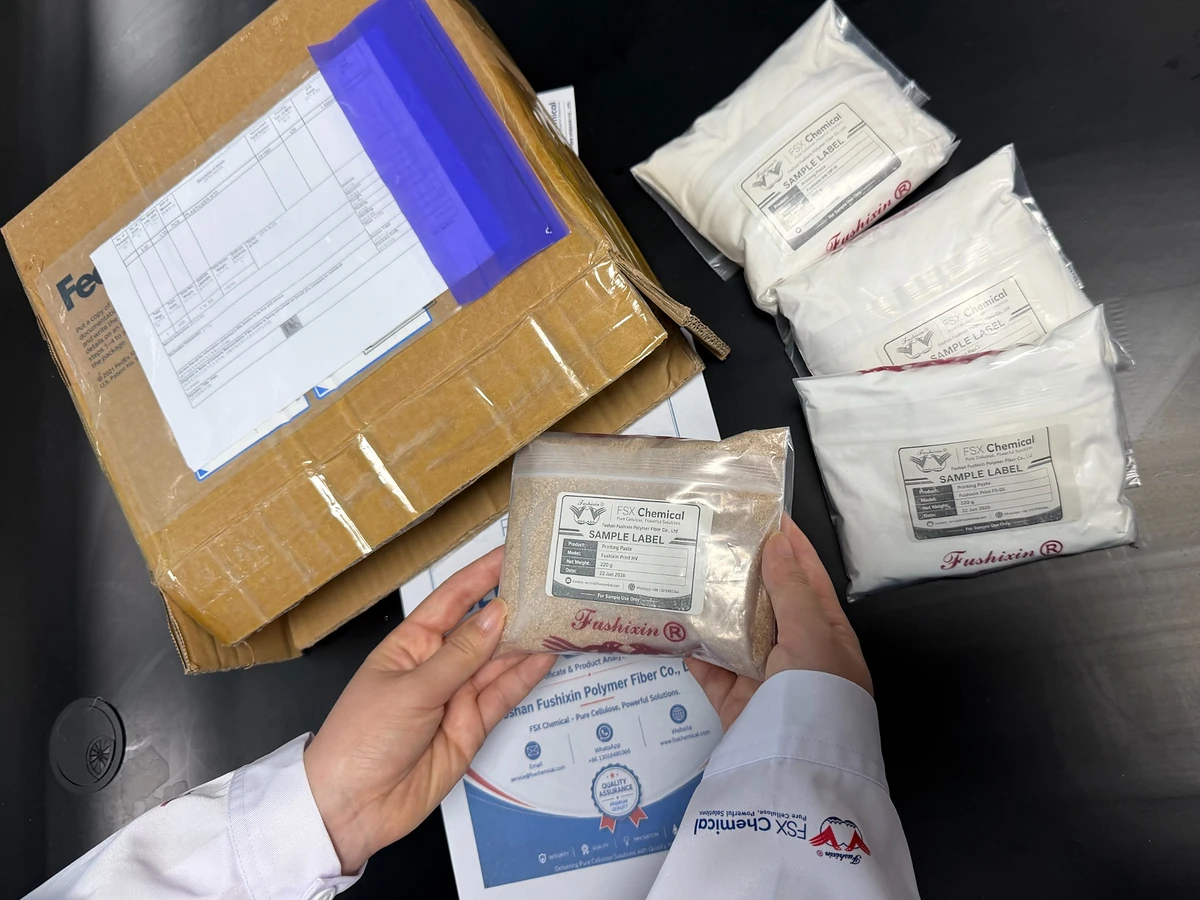
How FSX Chemical Supports Textile Thickening Buyers
We do not suggest confirming sodium alginate or CMC only by price, product name, or broad performance claims. The recommended grade should be reviewed through technical documents and tested in the buyer’s own formulation before bulk purchase.
اگلے اقدامات
- اپنی درخواست شیئر کریں — tell us your printing process, fabric type, dye system, target viscosity, and current formulation.
- Request Sodium Alginate or CMC Grade Matching — ask for a suitable starting grade based on your production needs.
- TDS کی درخواست کریں — review viscosity, DS where applicable, mesh size where relevant, pH, moisture, appearance, storage conditions, and testing method.
- لاگت اور مالی اعانت کی تفصیلات کا تقاضا کریں — شپمنٹ سے پہلے تصدیق کریں کہ بیچ کا ڈیٹا متفقہ وضاحتی حدود سے مطابقت رکھتا ہے۔.
- Request Samples — compare sodium alginate and CMC in your own paste preparation and application conditions.
- پیکیجنگ اور برآمدی دستاویزات کی تصدیق کریں — شپمنٹ سے پہلے بیگ کے سائز، لیبلز، بیچ کی ٹریسیبلٹی، ایس ڈی ایس، انوائس، پیکنگ لسٹ اور دیگر ضروری دستاویزات کی جانچ کریں۔.
- Contact Our Technical Team — discuss which thickener or grade is suitable for your textile application📧 ای میل: Service@fsxchemical.com