EN
EN  BN
BN  ES
ES  TR
TR  FR
FR  ID
ID  RU
RU  AR
AR  UR
UR  VI
VI  TL
TL  HI
HI  UK
UK  KK
KK  KA
KA  UZ
UZ 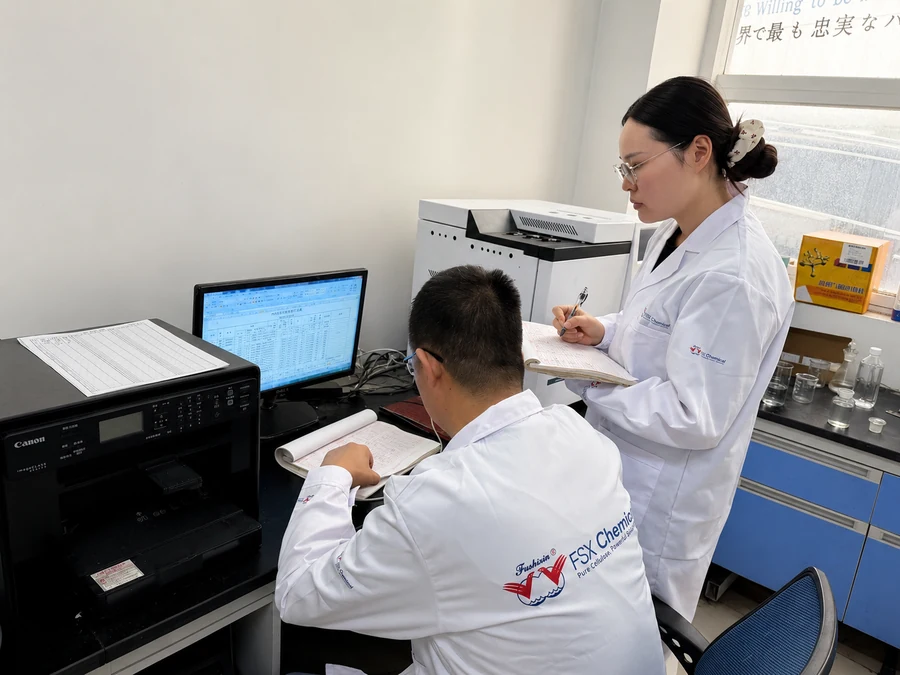
Effective batch quality control begins with raw-material approval and continues through process monitoring, representative sampling, laboratory testing, release review, traceability and corrective action. This guide explains what textile chemical manufacturers and B2B buyers should check before a production batch is approved.
Batch quality control is the system used to prevent, detect and investigate these differences. It connects raw-material information, production records, representative samples, laboratory results, release decisions and customer documentation.
A reliable system should answer three questions: Was the correct product made? Was it manufactured under the approved conditions? Does the completed batch meet the agreed specification and application requirements?
Why Final Inspection Alone Is Not Enough
Finished-product testing is necessary, but it cannot reveal every source of variation. A batch may pass one viscosity test while containing uneven moisture, particle segregation or an undocumented raw-material change.
Quality should therefore be controlled throughout the manufacturing process. Problems are easier to correct before materials are blended, packed and shipped.
| Quality-Control Stage | Main Objective | Typical Records |
|---|---|---|
| Raw-material control | Prevent unsuitable inputs from entering production | Supplier lot, incoming inspection and release status |
| In-process control | Confirm that the approved manufacturing procedure is followed | Batch record, process readings, yield and deviation notes |
| Finished-product testing | Compare representative batch results with the specification | Laboratory worksheet, instrument data and review record |
| Release control | Prevent unapproved material from being packed or shipped | Release authorization and batch COA |
| Post-release control | Support complaints, investigations and repeat orders | Retention sample, distribution record and complaint file |
Define the Batch and Its Approved Specification
Quality control becomes unreliable when the factory has not clearly defined what constitutes a batch. A batch should represent a specific quantity produced through a defined manufacturing sequence and identified by a unique lot or batch number.
The batch number should connect the finished product to its raw materials, production equipment, processing dates, operators, laboratory results, packaging and shipment records.
Use a controlled product specification
Every grade should have an approved specification identifying the test items, acceptance limits, test methods and document version. The specification should distinguish mandatory release parameters from typical or informational values.
A typical value is not automatically a contractual limit. Buyers and suppliers should agree in writing which parameters must appear on the batch Certificate of Analysis and which are provided only as general technical guidance.
Connect the specification to the application
A technically complete specification should reflect how the product is used. For a textile printing thickener, a viscosity value may be important, but hydration behavior, paste stability, particle size, solubility and compatibility can also affect production.
The specification should be reviewed when a product is supplied for a new dye system, fabric, printing machine or preparation method.
Control Raw Materials Before Production
Finished-product consistency begins with incoming materials. Changes in polymer feedstock, salts, solvents, processing aids or packaging can affect the final chemical even when the production recipe has not changed.
Approve raw-material suppliers
Supplier approval should consider technical capability, specification clarity, batch documentation, change-notification practices and historical performance. Price alone does not show whether the incoming material can be supplied consistently.
Critical raw materials may require an approved-supplier list and a defined requalification schedule. Alternative suppliers should be evaluated before their material is introduced into routine production.
Inspect and identify incoming lots
Each delivery should be checked against the purchase specification and supplier documents. Product identity, lot number, packaging condition, label information and release status should be recorded.
Depending on risk and raw-material importance, incoming tests may include appearance, identity, moisture, pH, active content, viscosity or another functional parameter.
Prevent mixing and moisture exposure
Powdered polymers can absorb moisture or become contaminated when bags are damaged or left open. Warehouse controls should separate approved, quarantined and rejected materials and prevent unintended lot mixing.
Storage conditions should follow the supplier’s documented requirements. Materials should be issued according to an approved inventory system and their status should remain visible throughout handling.
Monitor Critical Production Parameters
A batch record should show that the approved recipe and production procedure were followed. Recording only the starting time and final yield is not sufficient for a process-sensitive polymer product.
Verify material weighing and addition
Raw-material names, lot numbers and actual weights should be independently checked where required. Addition sequence can influence reaction, dispersion, neutralization and final product uniformity.
Record critical process conditions
The relevant conditions depend on the product, but may include:
- Material quantities and addition sequence
- Reaction or mixing temperature
- Processing time
- pH or alkalinity
- Mixing speed or equipment setting
- Drying conditions and final moisture direction
- Milling and sieving conditions
- Batch-blending time
- Actual yield and material reconciliation
Not every recorded parameter is necessarily critical. Manufacturers should identify which variables have a demonstrated relationship with final product quality and establish appropriate operating ranges.
Do not hide process deviations
A process deviation does not automatically mean that the batch must be rejected. It does mean that the event should be documented, evaluated and approved by authorized personnel before release.
Undocumented adjustments make future investigations difficult and can hide recurring process problems.
Build a Representative Sampling Plan
A laboratory result is only meaningful when the sample represents the batch. Testing one convenient bag or taking powder only from the top of a container may miss segregation or moisture differences.
Define where and when samples are collected
The sampling procedure should specify the batch stage, number of increments, sampling locations, equipment, sample quantity and method used to prepare the laboratory sample.
Powder batches may require increments from different locations or packing points. The sampling approach should consider batch size, blender design, particle segregation risk and packaging sequence.
Prevent contamination during sampling
Sampling tools and containers should be clean, suitable for the product and correctly identified. Samples should be protected from moisture, foreign material and mix-ups.
Separate test and retention samples
The laboratory sample is used for batch testing. A separately identified retention sample should be stored for possible complaint investigation, comparison or stability review.
The retention period and sample quantity should be defined according to the product shelf life, contractual requirements, investigation needs and applicable regulations.
Standardize Laboratory Testing
The same batch can produce different results when laboratories use different sample concentrations, temperatures, instruments or conditioning times. Test conditions must therefore be part of the specification.
Control the complete test method
For viscosity testing, record:
- Sample concentration and basis of calculation
- Water quality
- Powder addition and mixing procedure
- Hydration or conditioning time
- Sample temperature
- Instrument model
- Spindle or measuring geometry
- Rotational speed or shear rate
- Measurement time and reporting unit
Many thickener solutions are non-Newtonian. A result obtained at one rotational speed should not be compared directly with a result obtained at another speed.
Calibrate and verify laboratory equipment
Balances, viscometers, pH meters, moisture instruments, thermometers and other measuring devices should have defined calibration or verification schedules.
Calibration records should identify the instrument, reference used, date, result, acceptance decision and next due date. Metrological traceability is important, but the method’s precision and uncertainty must also be suitable for the required specification.
Monitor laboratory repeatability

Duplicate testing, reference samples, check standards or control charts can help identify analyst variation and instrument drift. Unexpected differences should be investigated before a manufacturing batch is adjusted or rejected.
Laboratory personnel should be trained and authorized for the methods they perform. Training records alone are not enough; practical competency should also be demonstrated.
Product-Specific QC Parameters for Textile Chemicals
Not every textile chemical requires the same test panel. Release parameters should be selected according to product chemistry, production risks and customer application.
| Product Family | Possible Batch Tests | Application Relevance |
|---|---|---|
| Carboxymethyl Cellulose (CMC) | Appearance, viscosity, pH, moisture, degree of substitution, particle size and solubility | Hydration, paste rheology, dye compatibility and formulation stability |
| Carboxymethyl Starch (CMS) | Appearance, viscosity, moisture, pH, particle size and paste behavior | Screen passage, paste body, wash-off and batch-to-batch preparation |
| Sodium Alginate | Appearance, viscosity, moisture, pH, particle size and insoluble matter where specified | Reactive printing paste preparation, print definition and wash-off |
| Compound Printing Thickener | Appearance, viscosity or rheology, moisture or solids, pH, dispersion and application test | Paste stability, screen behavior and compatibility with the complete formulation |
| Digital Printing Paste or Pretreatment | Viscosity, pH, solids, filtration behavior, residue and application performance where relevant | Fabric coating, ink spreading, filtration and print consistency |
These are possible control parameters rather than universal specifications. The required tests and acceptance limits should be confirmed for the individual grade and customer agreement.
Include a functional test where appropriate
Chemical analysis may not fully predict printing performance. A controlled application test can provide additional evidence for products whose main value is viscosity development, screen passage, wash-off or compatibility.
Functional testing must also use a written procedure. Results are difficult to compare if the fabric, formulation, dye, mixing method or printing conditions change between batches.
Use Statistical Process Control to Detect Drift
Pass-or-fail decisions show whether an individual result meets the specification. They do not necessarily show whether the manufacturing process is gradually shifting.
Control charts can be used to monitor important parameters such as viscosity, moisture, pH or particle size over time. Trends may reveal changes in raw materials, drying, milling, laboratory conditions or equipment before a batch fails its specification.
Do not confuse specification limits with control limits
Specification limits define the agreed acceptable product range. Statistical control limits are calculated from process data and are used to identify unusual process behavior.
A result can be within specification but still form part of an abnormal trend. A statistical signal also does not automatically mean that the product is defective; it indicates that the process should be investigated.
Review variation, not only averages
Two production lines may have the same average viscosity but different levels of variability. Supplier performance should therefore be evaluated using both the typical result and the batch-to-batch distribution.
Batch Release and COA Review
A completed batch should remain under controlled status until production records, deviations and laboratory results have been reviewed by authorized personnel.
Release should be based on the approved specification and actual batch records. Commercial urgency should not replace technical review.
What a batch COA should contain
- Supplier and manufacturing-site identification
- Product name and grade
- Unique batch or lot number
- Manufacturing or relevant reference date
- Test parameters
- Specification or acceptance range
- Actual batch result
- Test method or method reference where necessary
- Release status and authorized approval
A COA should report results from the identified production batch. A generic specification sheet or copied typical value should not be presented as an actual batch test result.
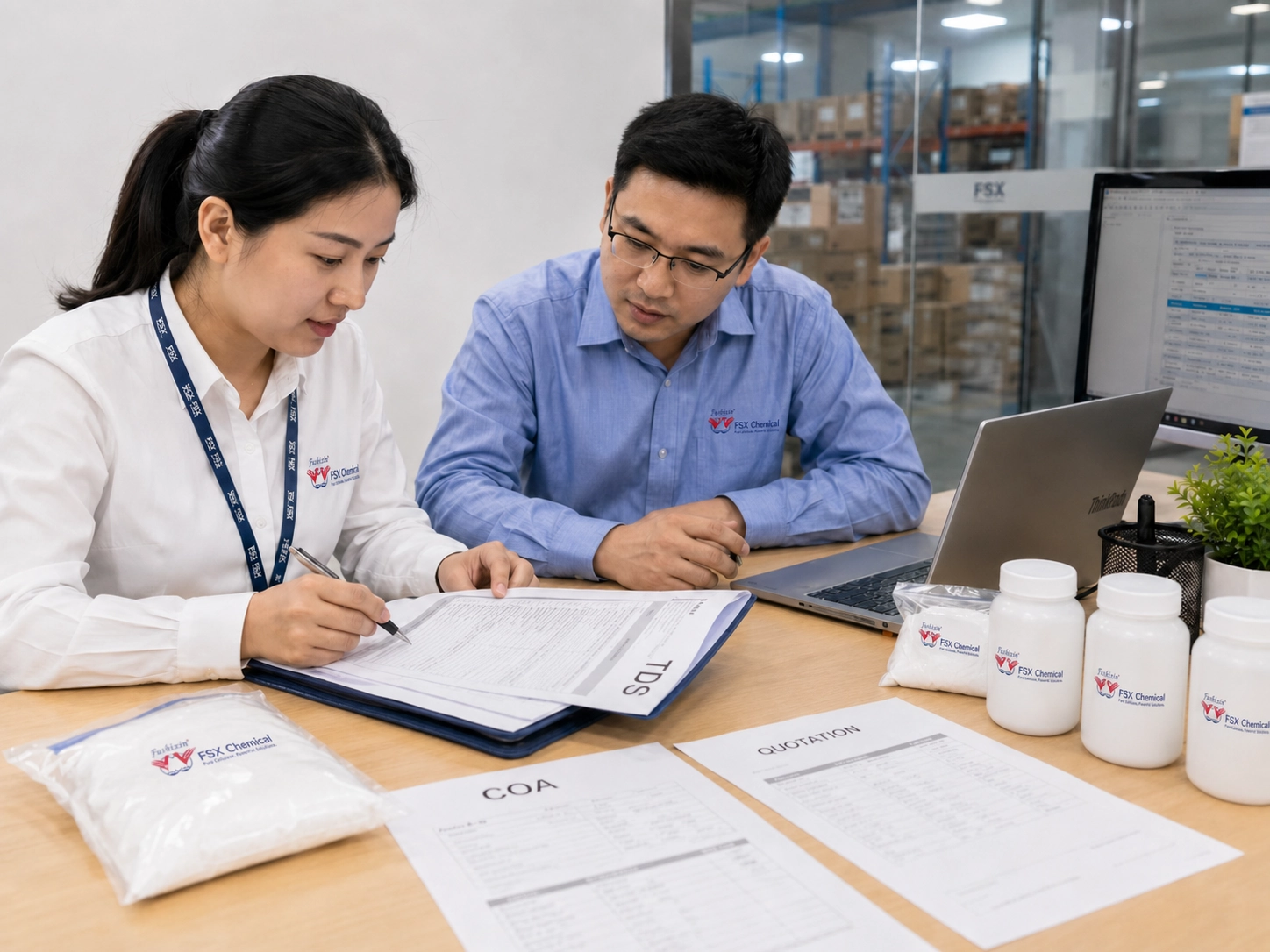
Understand the difference between TDS, SDS and COA
| Document | Main Purpose | What It Does Not Prove by Itself |
|---|---|---|
| TDS | Describes typical properties, application and technical information | That a particular shipment was tested and passed |
| SDS | Provides safety, handling, storage and transport information | Product performance or batch conformity |
| COA | Reports selected results for an identified batch | Suitability for every customer formulation or process |
Retention Samples and Batch Traceability
Traceability should connect the shipped material to the complete production and testing history. This is essential when a customer reports unexpected viscosity, hydration, color yield or printing behavior.
Recommended traceability records
- Finished-product batch number
- Raw-material suppliers and incoming lot numbers
- Production date, equipment and batch record
- In-process checks and deviations
- Laboratory sample and test results
- Retention-sample identification
- Packaging material and label version
- Warehouse and shipment records
- Customer and quantity supplied
Retention samples should be sealed, clearly labeled and stored under defined conditions. The storage method should prevent moisture absorption, contamination and mistaken identification.
Managing Nonconforming or Suspect Batches
A result outside the specification should trigger a controlled investigation. The material should be identified and prevented from unintended release while the result is reviewed.
Confirm the result before deciding the cause
The first review should check sample identity, preparation, calculations, instrument status, method execution and data transcription. Retesting should follow an approved procedure and should not be repeated until a passing result is obtained.
Investigate manufacturing causes
If the result is confirmed, the investigation may review raw-material changes, weighing, reaction conditions, mixing, drying, milling, blending, storage and sampling.
Document the disposition
A nonconforming batch may be rejected, reprocessed, regraded or accepted under an authorized concession when contractually and legally appropriate. The reason, technical assessment and approval should be documented.
Rework should follow an approved instruction and the completed material should be retested before release.
Corrective and Preventive Action
Correcting one batch does not prevent the problem from returning. Corrective and preventive action, commonly called CAPA, should address the underlying system or process cause.
A practical CAPA process
- Describe the deviation or complaint clearly.
- Contain potentially affected material.
- Review records, samples and historical data.
- Identify the most probable root cause using evidence.
- Define corrective actions, responsibilities and deadlines.
- Update procedures, training or controls where required.
- Verify that the action was effective.
“Operator error” should not be accepted as the final root cause without examining instructions, training, equipment design, workload and process controls.
Control Manufacturing and Specification Changes
Changes that appear minor to a manufacturer can affect the customer’s printing process. A formal change-control system should assess the potential impact before implementation.
Changes that may require technical review
- Raw-material source or grade
- Manufacturing formula or processing sequence
- Production equipment or manufacturing site
- Drying, milling or sieving conditions
- Laboratory test method or instrument
- Product specification
- Packaging material or bag construction
- Storage conditions or shelf-life statement
Customer notification requirements should be agreed during supplier qualification. When a change may affect application performance, a comparison sample or production trial may be appropriate before routine supply resumes.
Supplier Qualification Checklist for Textile Chemical Buyers
Buyers should examine how the supplier controls repeat production rather than evaluating only one successful sample.
Questions to ask the supplier
- How is a production batch defined and identified?
- Which raw-material lots are traceable to the finished batch?
- How are incoming materials approved and released?
- Which process parameters are recorded?
- How are representative samples collected?
- What are the finished-product release tests?
- Are complete viscosity test conditions documented?
- How are instruments calibrated or verified?
- Is a retention sample kept for each batch?
- How are nonconforming results investigated?
- Can the supplier provide a batch-specific COA?
- How are customers notified of relevant changes?
Verify certification claims separately
If a supplier presents a management-system certificate or third-party test report, check the legal entity, manufacturing location, product scope, issuing organization and validity period.
A certificate covering one product or facility should not automatically be treated as evidence for every product sold by the supplier.
Batch Quality and Document Support from FSX Chemical
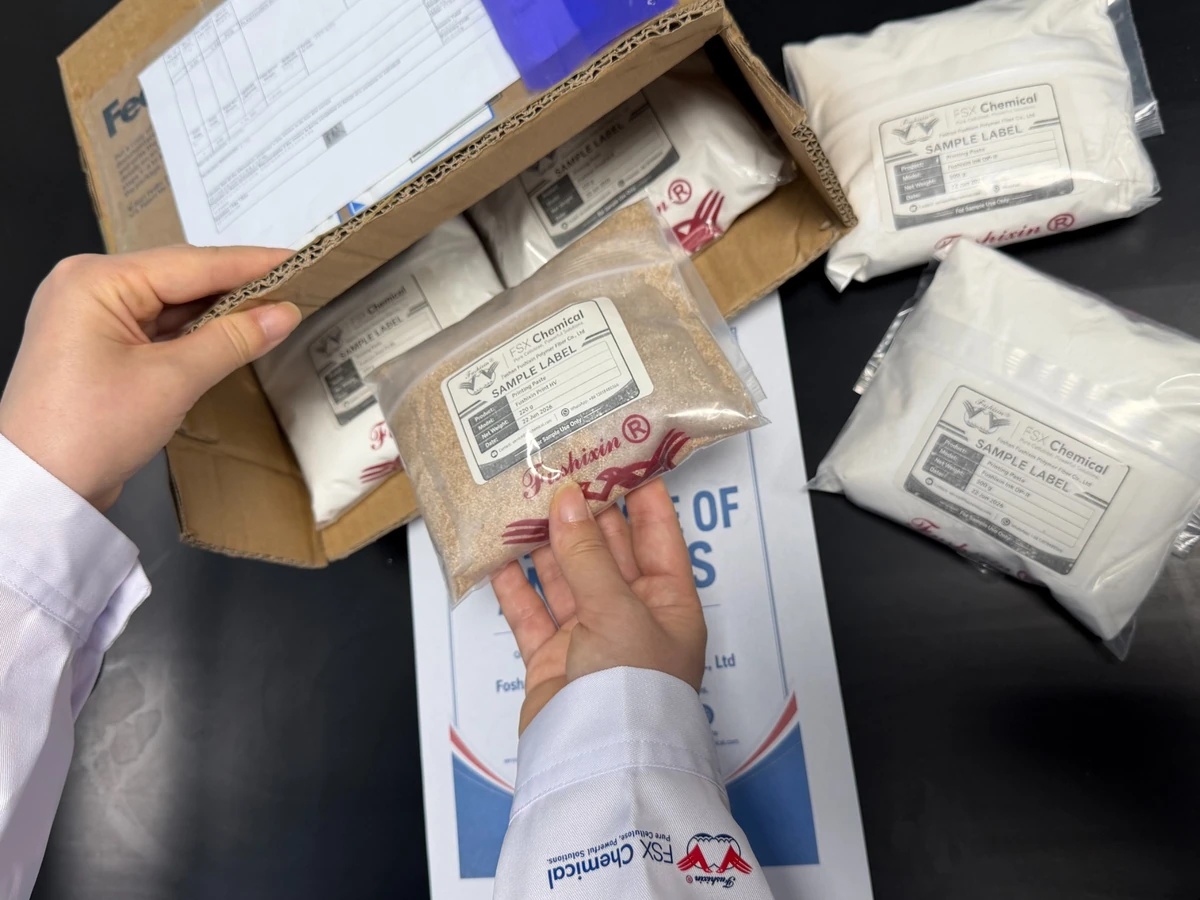
Buyers can request available technical and batch information for supplier evaluation, including:
- Product Technical Data Sheet
- Safety Data Sheet
- Representative sample for grade evaluation
- Batch COA for the confirmed production or shipment where applicable
- Viscosity test conditions and selected specification details
- Packing, labeling and export-document information
Document availability should be confirmed for the individual product and order stage. Customers should complete application testing before approving a new grade for commercial use.
Need Batch QC Documents for Supplier Review?
Send FSX Chemical the product name, required specification, test method, application, order quantity and documents needed by your quality or procurement team📧 Email: Service@fsxchemical.com