















This guide explains how buyers can evaluate an industrial chemicals supplier by reviewing ISO-related documents, TDS, COA, SDS, sample testing, batch consistency, and export documentation.
Why Quality Documents Matter in Chemical Sourcing
Product Names Are Not Enough for Technical Purchasing
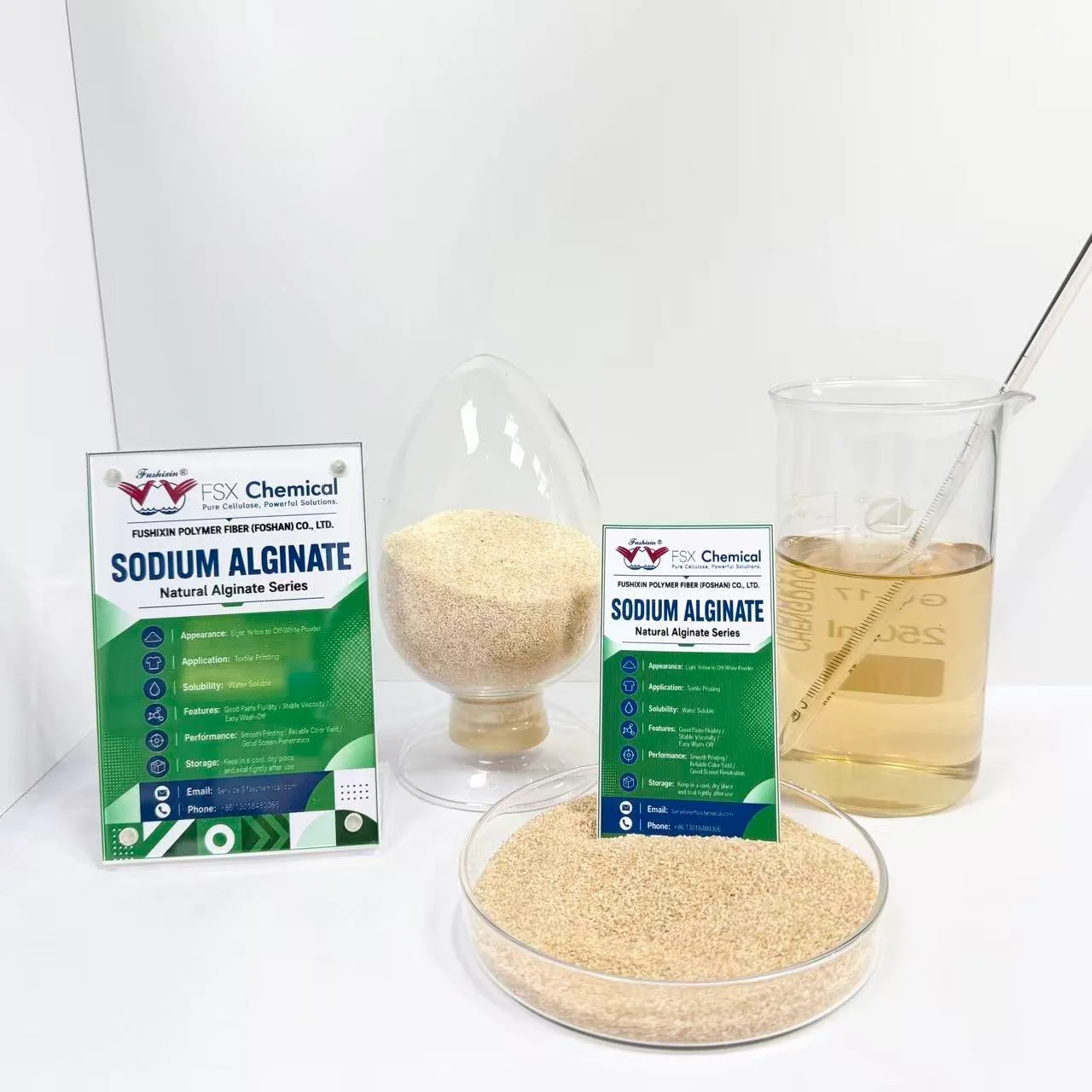
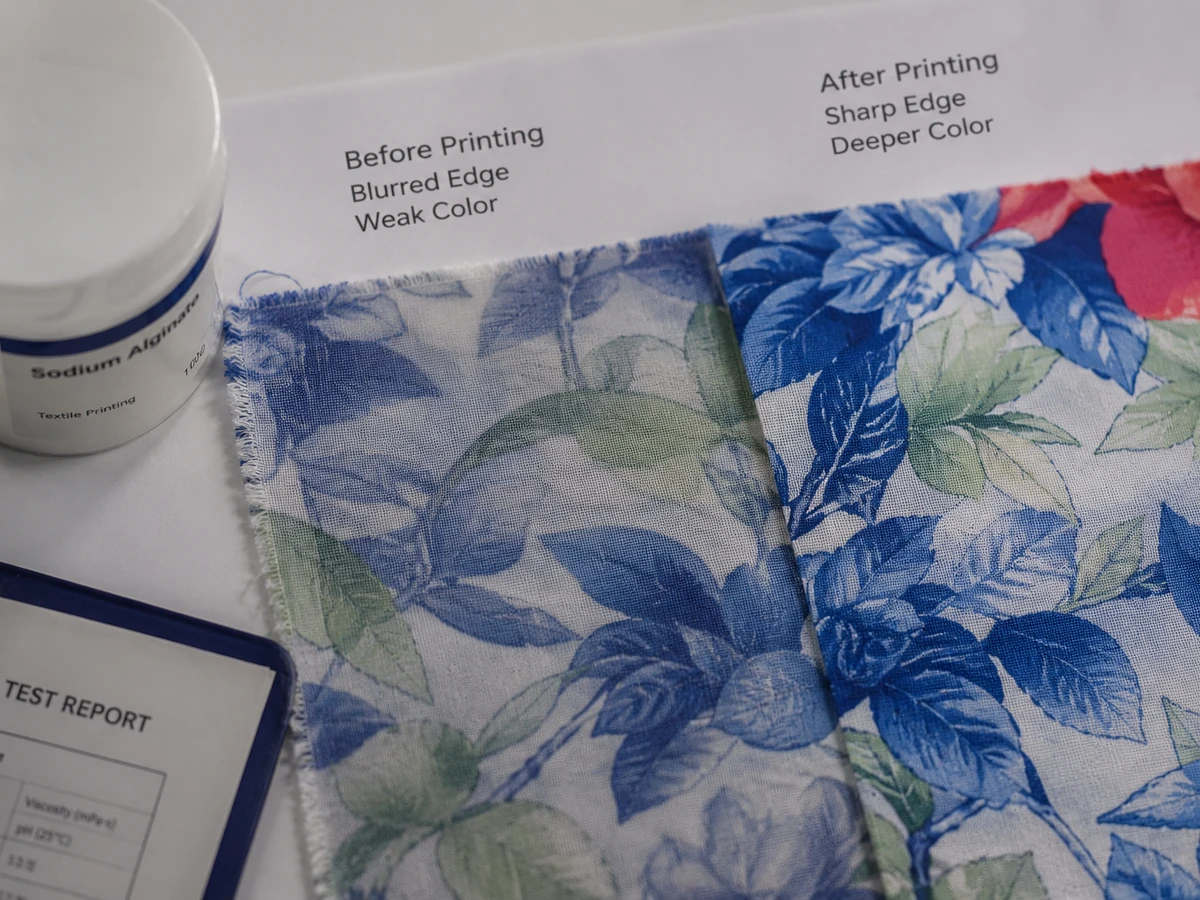
In textile printing chemicals, the same general product name can cover different grades. For example, CMC, CMS, or sodium alginate may have different viscosity ranges, DS values, mesh sizes, pH ranges, moisture levels, and solubility behavior.
For this reason, buyers should not confirm a product only by name. Technical documents and sample testing are necessary to check whether the product matches the actual production requirement.
Documents Help Reduce Sourcing Risk
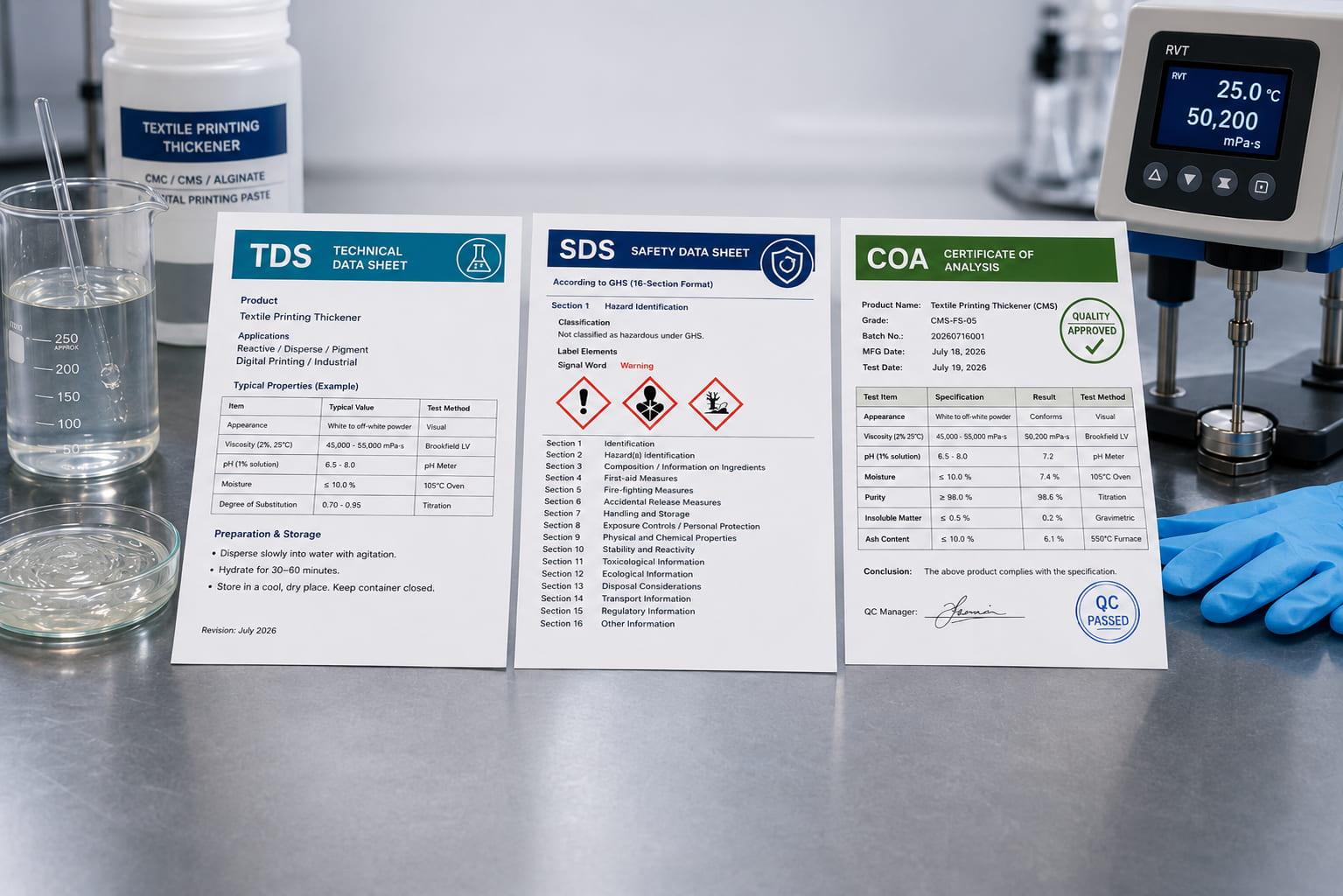
Quality documents help buyers understand what the supplier can provide and what each batch actually contains. A clear TDS helps review the standard specification range, while a COA helps confirm batch-specific data.
For overseas buyers and distributors, clear documentation can also support internal quality control, customer communication, and shipment preparation.
Sample Approval Should Connect to Batch Data
Sample testing is useful, but it should not be separated from bulk order confirmation. Buyers should confirm whether the approved sample and the bulk shipment follow the same specification range.
For viscosity-related products, batch consistency is especially important because changes in viscosity, solubility, or moisture can affect paste preparation and application behavior.
What to Check If a Supplier Claims ISO Certification
Certificate Holder and Company Name
If a supplier describes itself as ISO certified, buyers should first check the certificate holder name. The company name on the certificate should match the supplier entity or be clearly connected to the manufacturer or production site.
If the certificate belongs to another company, buyers should ask for an explanation of the relationship between the trading company, manufacturer, and certified entity.
Certification Scope and Product Relevance
The ISO certificate scope should be reviewed carefully. A certificate may cover general quality management, but buyers should check whether the scope is relevant to chemical production, supply, or the specific product category.
ISO certification can support supplier evaluation, but it does not replace product testing, TDS review, COA review, or application confirmation.
Validity Period and Issuing Body
Buyers should check the certificate validity period, issuing body, certificate number, and any available verification method. An expired or unclear certificate should not be treated as reliable purchasing evidence.
If a buyer has strict supplier audit requirements, these details should be confirmed before bulk purchase.
Product Documents Buyers Should Request

TDS for Specification Review
The Technical Data Sheet should include key product parameters such as appearance, viscosity, pH, moisture, DS where applicable, mesh size where relevant, storage conditions, and testing method.
For textile printing applications, viscosity data should be reviewed together with test concentration, temperature, unit, and method. Without this information, values from different suppliers may not be directly comparable.
COA for Batch Confirmation
The Certificate of Analysis confirms the actual data of a specific production batch. It is especially important for repeat orders, distributor supply, and customer quality control.
Buyers can compare COA records over time to check whether viscosity, pH, moisture, appearance, and other key parameters remain within the agreed range.
SDS for Handling and Transport Review
The Safety Data Sheet supports product handling, storage, transport, and internal safety review. For international purchasing, SDS may also be needed for shipment and customs-related communication.
Buyers should make sure the SDS matches the product name and supplier information used in the order.
Application Testing Before Bulk Purchase
Test Viscosity and Solubility
For many textile printing chemicals, viscosity and solubility are important purchasing parameters. Buyers should test whether the product can reach the required viscosity and whether it dissolves or disperses smoothly under their own preparation conditions.
Testing should be done in the buyer’s actual water quality and formulation whenever possible.
Check Paste Preparation Behavior
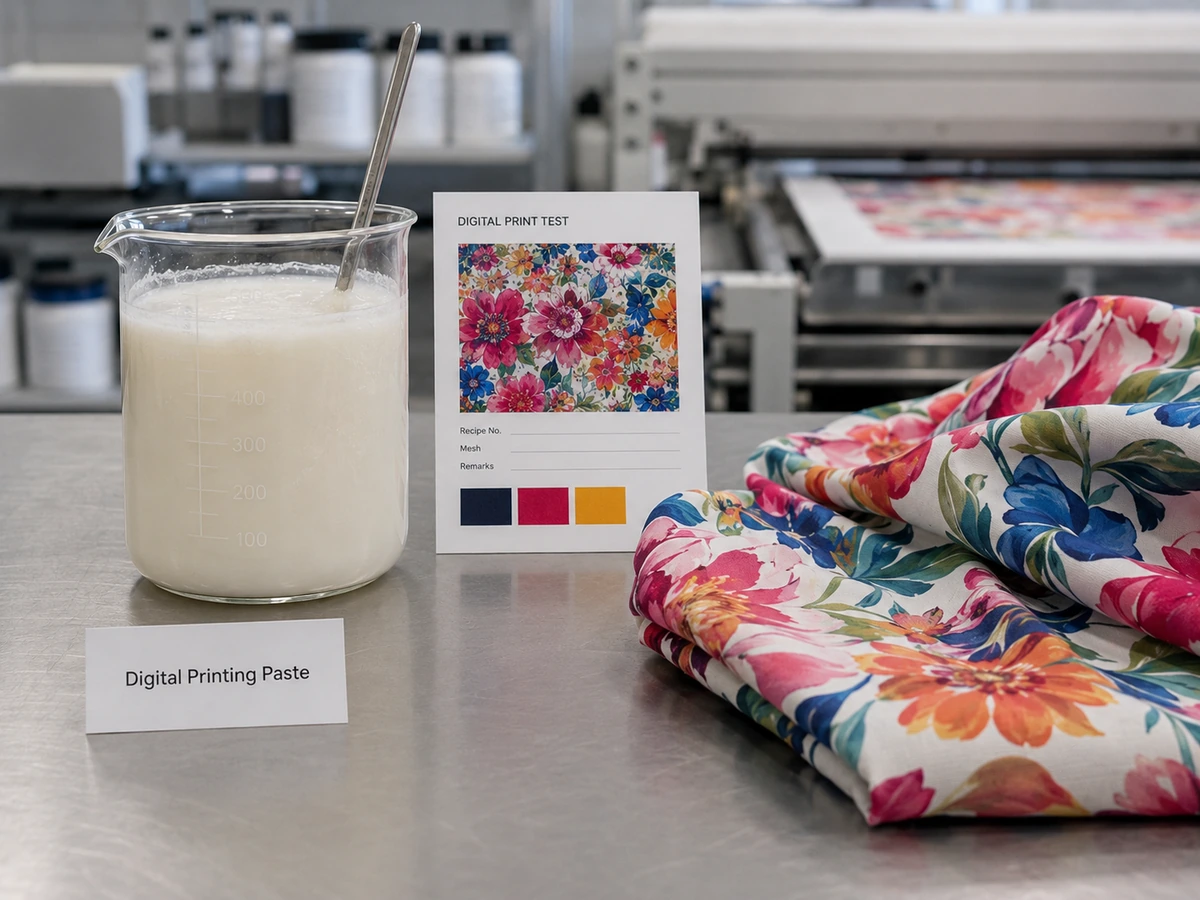
For printing paste applications, buyers should observe paste smoothness, mixing behavior, filtration performance, viscosity stability, and application handling.
These practical observations are important because a product that looks acceptable in basic specification data may still perform differently in the buyer’s own formulation.
Compare Sample and Bulk Shipment Requirements
Before confirming a bulk order, buyers should ask whether the approved sample and the bulk shipment will follow the same specification range.
Important points include viscosity range, DS where applicable, mesh size where relevant, pH, moisture, packaging, batch number, and COA availability.
Export Documents and Order Confirmation
Packing Information and Batch Traceability
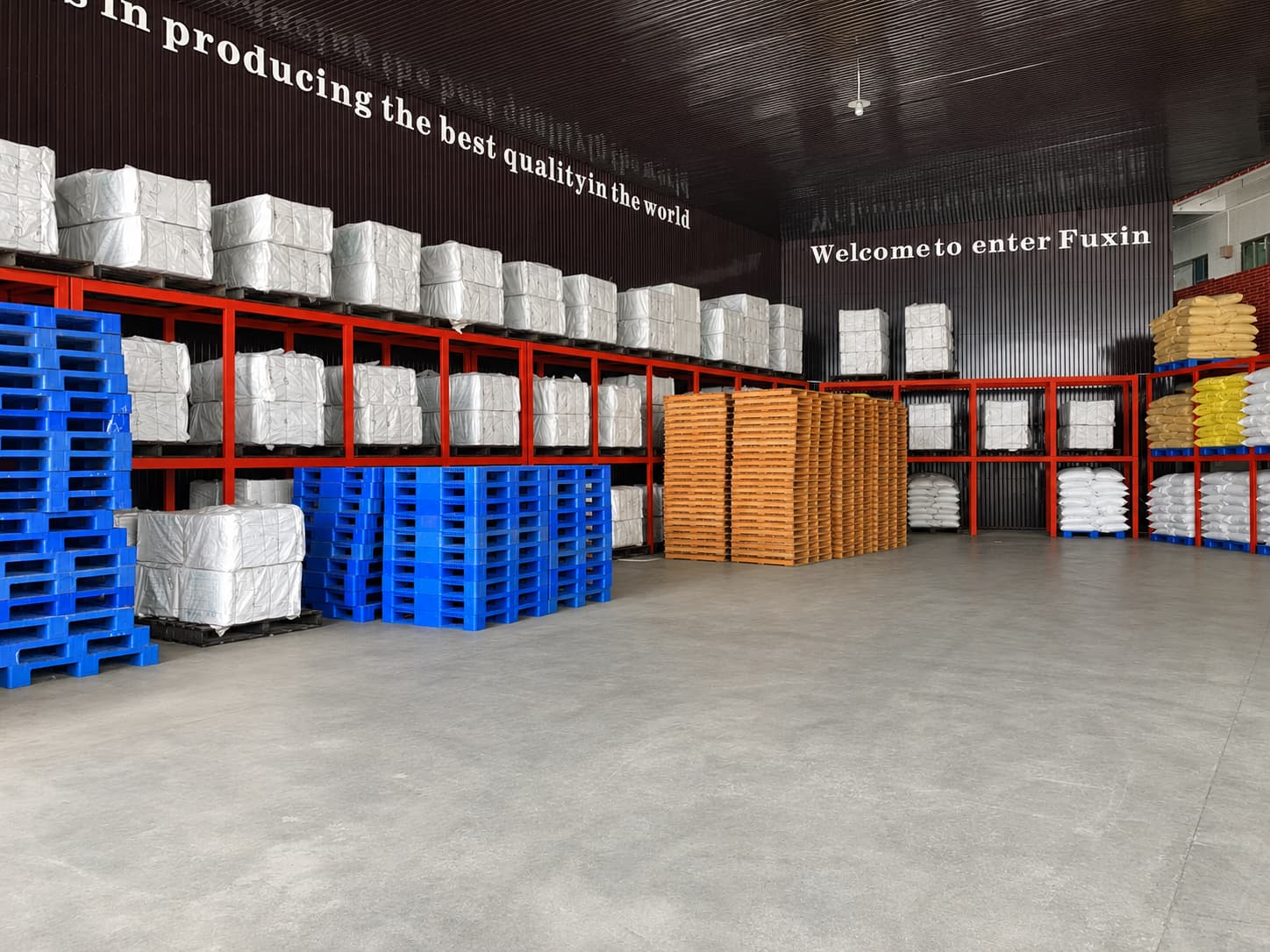
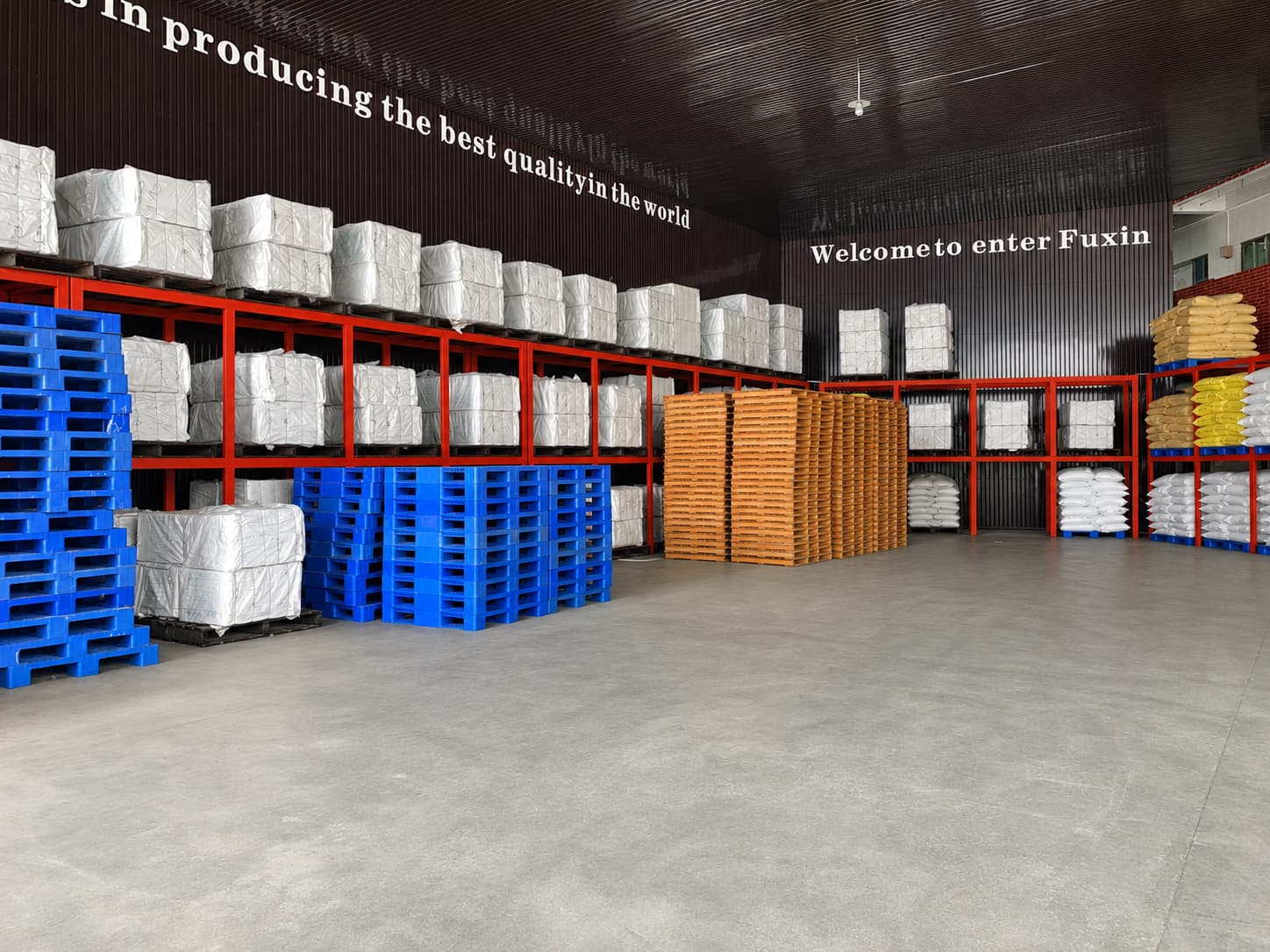
Before shipment, buyers should confirm packaging size, net weight, bag type, pallet requirements, batch number, and label information.
Clear batch traceability helps buyers manage warehouse records, compare COA data, and handle customer feedback if needed.
Labels and Shipment Documents
For international orders, buyers may need invoice, packing list, COA, SDS, labels, and other shipment-related documents. The required document list may vary by destination country, product type, and internal company process.
It is better to confirm document requirements before shipment rather than after the goods have been dispatched.
Document Requirements by Destination
Different buyers may have different document requirements. Some need basic export documents, while others may require additional quality or internal compliance files.

How FSX Chemical Supports Industrial Chemical Buyers
We do not suggest confirming industrial chemical products only by product name, broad compliance claims, or price. The recommended grade should be reviewed through technical documents and tested in the buyer’s own formulation before bulk purchase.
Next Steps
- Request ISO-Related Documents — if ISO certification is required, check certificate holder, scope, validity period, issuing body, and relevance to the product supply.
- Request a TDS — review viscosity, DS where applicable, mesh size where relevant, pH, moisture, appearance, storage conditions, and testing method.
- Request a COA — confirm whether batch data matches the agreed specification range before shipment.
- Request an SDS — review handling, storage, and transport information when required for your purchasing process.
- Ask for Grade Matching — share your application, printing process, fabric type, target viscosity, and current formulation.
- Request a Sample — test the recommended product in your own preparation and production conditions before confirming bulk orders.
- Contact Our Technical Team — discuss which industrial chemical grade is suitable for your textile or printing application📧 Email: Service@fsxchemical.com