Step-by-Step: Matching Textile Thickener Grades to Your Printing Process
Matching textile thickener grades requires more than finding the same viscosity. Follow a step-by-step process...
Matching textile thickener grades requires much more than finding the same viscosity. A reliable matching process begins with the printing chemistry and fabric, aligns laboratory methods, compares rheology and filtration, evaluates the complete printing paste and then confirms performance through fabric and production trials.
Textile printing mills frequently need to qualify a new thickener grade. The objective may be to establish a second supplier, reduce total cost, improve screen passage, solve a filtration problem, increase production stability or replace a product that is no longer commercially convenient.
At first, grade matching can appear straightforward. A mill takes the viscosity specification of its current product, asks another supplier for the same value and tests the candidate.
In practice, this method is incomplete.
Sodium alginate, CMC, CMS and compound thickeners can have similar viscosity values while showing different hydration, shear response, filtration, chemical compatibility and printing behavior.
The printing process must therefore come before the viscosity number. Professional grade matching connects the product to the actual fabric, colorant chemistry, machine, formulation and finished-textile requirements.
This step-by-step guide explains how to move from an existing approved thickener to a technically relevant candidate without assuming that a similar product name or laboratory number guarantees equivalent performance.
What Does Textile Thickener Grade Matching Mean?
Textile thickener grade matching is the process of identifying a candidate commercial grade that can operate within the technical and production requirements already established by the printing mill.
A matched grade does not necessarily mean that the candidate is chemically identical to the current product.
Instead, the objective is to determine whether the new product can provide comparable or acceptable performance under the customer’s actual manufacturing conditions.
A successful match can require similarity in
Effective viscosity
Hydration behavior
Reologi
Penyaringan
Stabilitas pasta
Kompatibilitas kimia
Screen passage or application behavior
Definisi cetak
Penetrasi
Pengikatan atau pengeringan
Wash-off where applicable
Dosis yang efektif
The final acceptance criteria should be defined by the printing process rather than by one laboratory number alone.
Why the Printing Process Must Come First
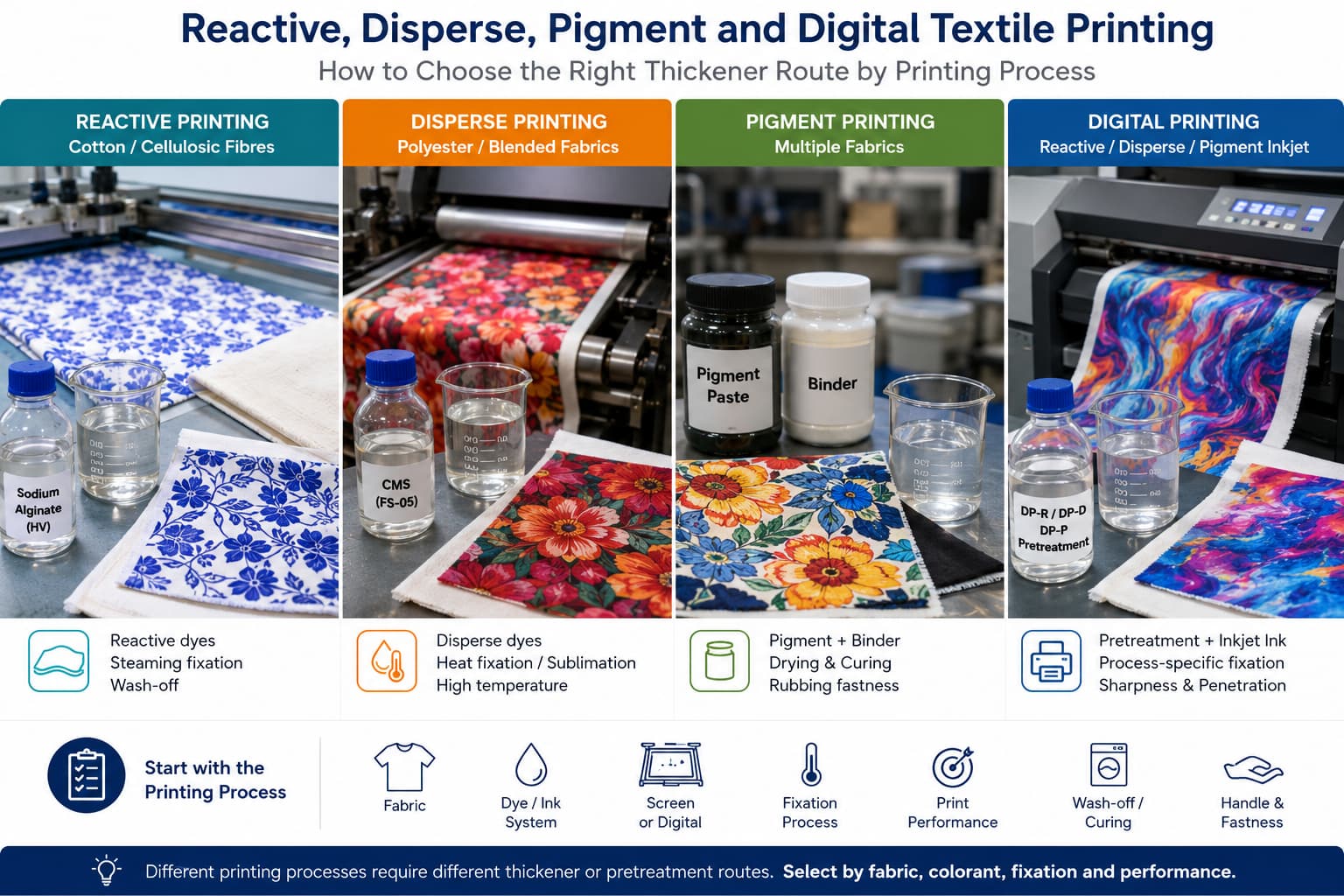
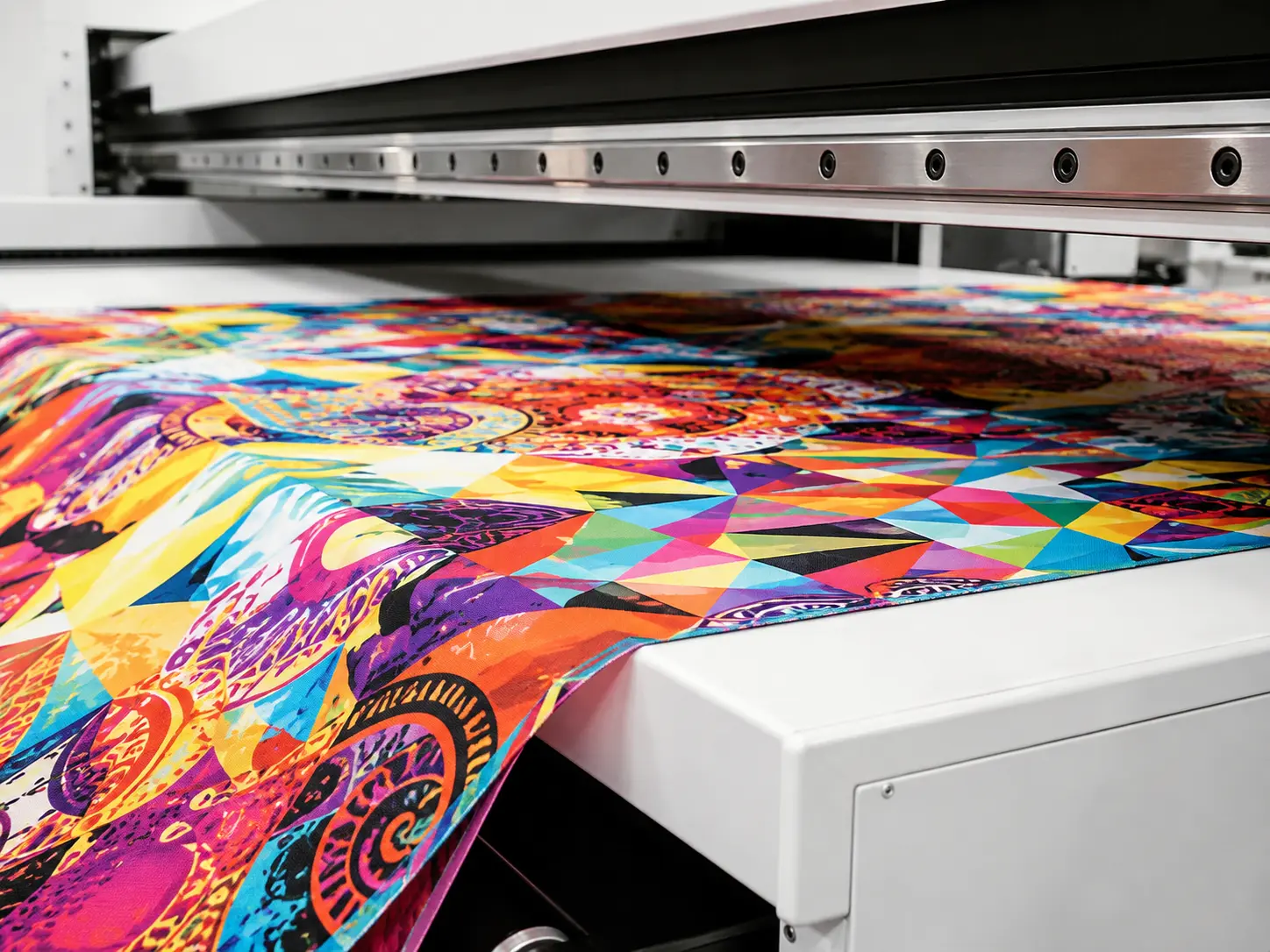
The same thickener cannot be assumed to perform identically across reactive, disperse, pigment and digital textile printing.
Each process exposes the polymer to different dyes or pigments, electrolytes, pH conditions, fabrics, application forces and post-treatment.
Pencetakan reaktif
The thickener needs to perform inside a dye paste that can contain reactive dye, alkali and other auxiliaries and must later pass through fixation and washing.
Pencetakan dispersi
The system is commonly associated with polyester and thermal fixation, creating different compatibility and application requirements.
Pencetakan pigmen
The rheology system must work with pigment dispersion, binder and curing chemistry.
Digital printing
The pretreatment is normally applied to the fabric rather than used as a conventional screen-printing paste.
Grade matching should therefore begin with the question: Where and how will this product actually be used?
Step 1: Define the Printing Process
Before comparing grades, record the exact production route.
Identify the printing technology
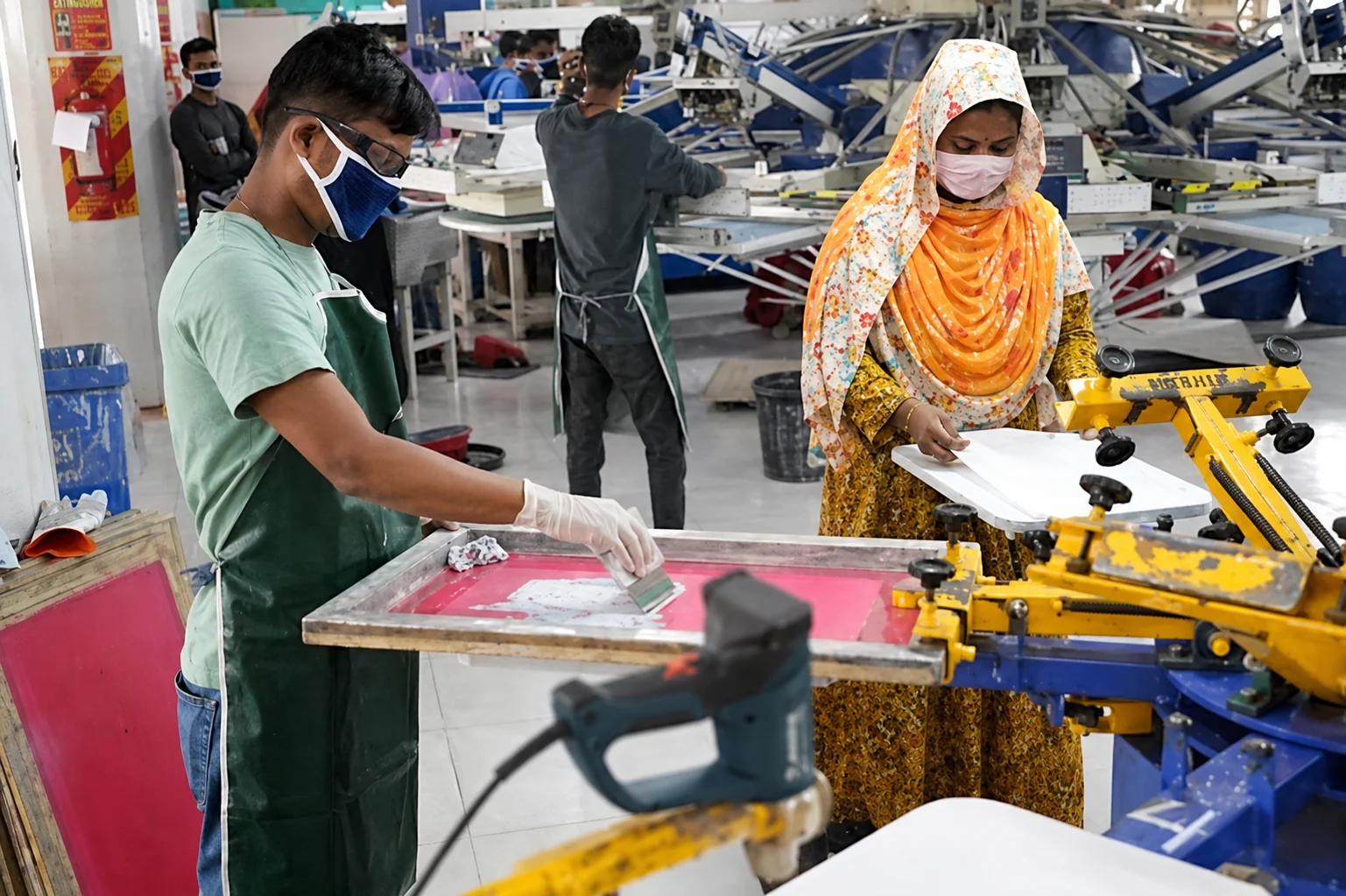
Pencetakan layar datar
Pencetakan saring rotari
Digital inkjet printing
Other application-specific printing systems
Identify the colorant chemistry
Reactive dye
Disperse dye or ink
Pigmen
Other application-specific systems
Identify the post-treatment
Pengukusan
Fiksasi termal
Pengeringan
Mencuci
Penyelesaian
This information immediately eliminates thickener routes that are not technically relevant to the process.
Step 2: Identify the Fabric and Dye or Ink System
Fabric chemistry and structure strongly influence paste penetration, surface spreading and final print definition.
Record the fiber composition
Katun
Viscose or rayon
Poliester
Nilon
Wol
Sutra
Campuran
Record the fabric construction
Rajutan atau tenunan
Berat kain
Kepadatan
Tekstur permukaan
Stretch where relevant
Two fabrics made from the same fiber can still require different rheological behavior because their absorbency and construction differ.
The dye or ink route should then be connected with the fabric before a candidate thickener chemistry is selected.
Step 3: Document the Current Approved Thickener
If the printing mill already has a product that performs successfully, that material should become the reference.
Rekor
Manufacturer
Exact commercial grade
Product family
TDS Saat Ini
Recent COA where available
Physical reference sample
Dosis saat ini
Current preparation procedure
Current viscosity method
Known strengths
Known weaknesses
Do not describe the benchmark only as “high-viscosity sodium alginate” or “textile-grade CMC.”
The exact commercial grade provides a much stronger technical target.
Step 4: Align the Viscosity Test Method
One of the most common causes of failed grade matching is comparing viscosity values generated by different methods.
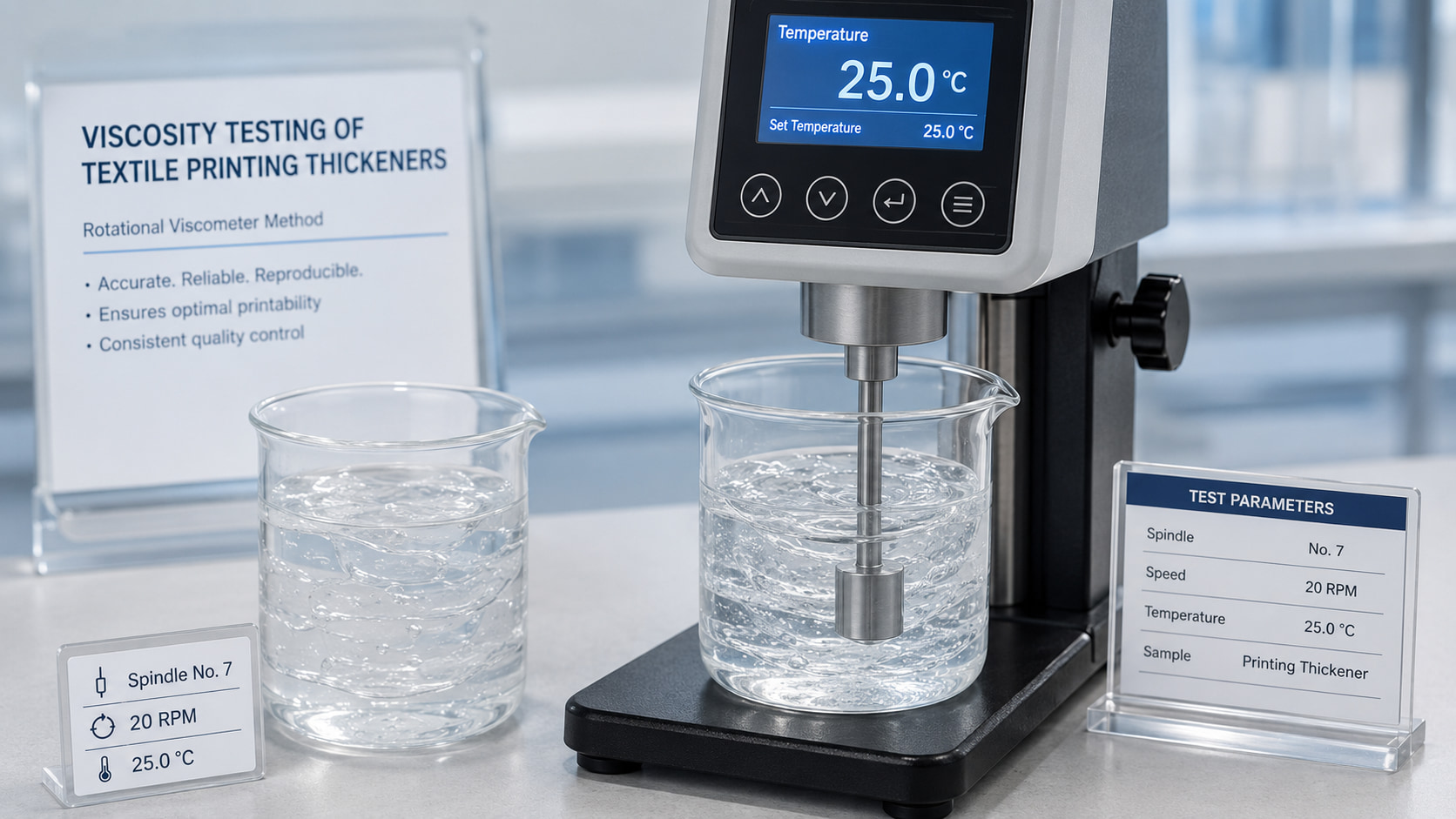
Always record
Polymer concentration
Concentration basis
Kualitas air
Prosedur penambahan bubuk
Mixing speed
Waktu pencampuran
Waktu hidrasi
Suhu pengukuran
Viskosimeter
Poros, rotor, atau geometri
Kecepatan putaran
Waktu membaca
Satuan yang dilaporkan
A reference product measured at one concentration cannot be fairly compared with a candidate reported at another concentration.
Similarly, changing temperature, spindle or rotational speed can change the result.
The test method must therefore be matched before the numerical target.
Step 5: Select the Candidate Thickener Chemistry
Once the application and reference product are understood, choose the technically relevant polymer route.
Proses Pencetakan
Arah Awal yang Umum
Important Matching Criteria
Sablon Reaktif
Sodium alginat
Rheology, filtration, definition, fixation and wash-off
Selected Compound Systems
CMC, CMS or blended thickener
Compatibility, rheology, dosage and application performance
Pencetakan Dispersi
CMS atau pengental khusus aplikasi
Stability, screen passage, transfer and thermal process
Pencetakan Pigmen
Synthetic or compound rheology system
Binder compatibility, electrolytes, curing and handle
Reactive Digital
Pretreatment digital reaktif
Pickup, migration control, definition and wash-off
Disperse Digital
Pretreatment digital dispersi
Uniformity, filtration and thermal compatibility
Pigmen Digital
Pigment-compatible pretreatment
Binder compatibility, definition, curing and hand feel
These are starting directions rather than universal replacement rules.
Matching Sodium Alginate Grades
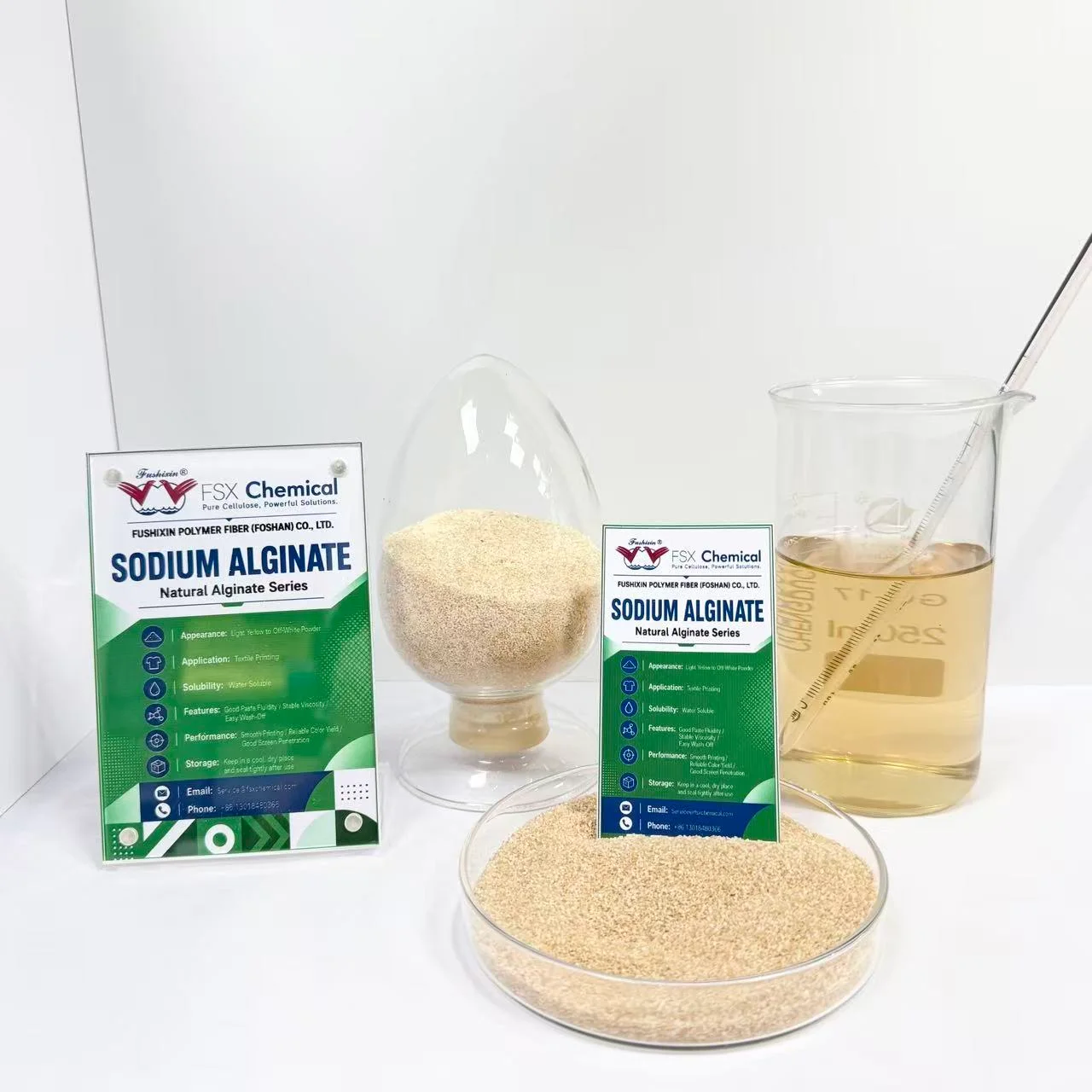
Sodium alginat is a common benchmark route for conventional reactive printing on suitable cellulosic textiles.
Do not match only HV, MV or LV
These labels are supplier-defined categories and should not be assumed to represent identical numerical ranges across manufacturers.
Bandingkan
Actual viscosity
Konsentrasi uji
Hidrasi
Penyaringan
Reologi
Bagian layar
Reactive-paste behavior
Definisi cetak
Fiksasi
Pencucian residu pengental
A higher-viscosity candidate is not automatically a better match.
Matching CMC Grades
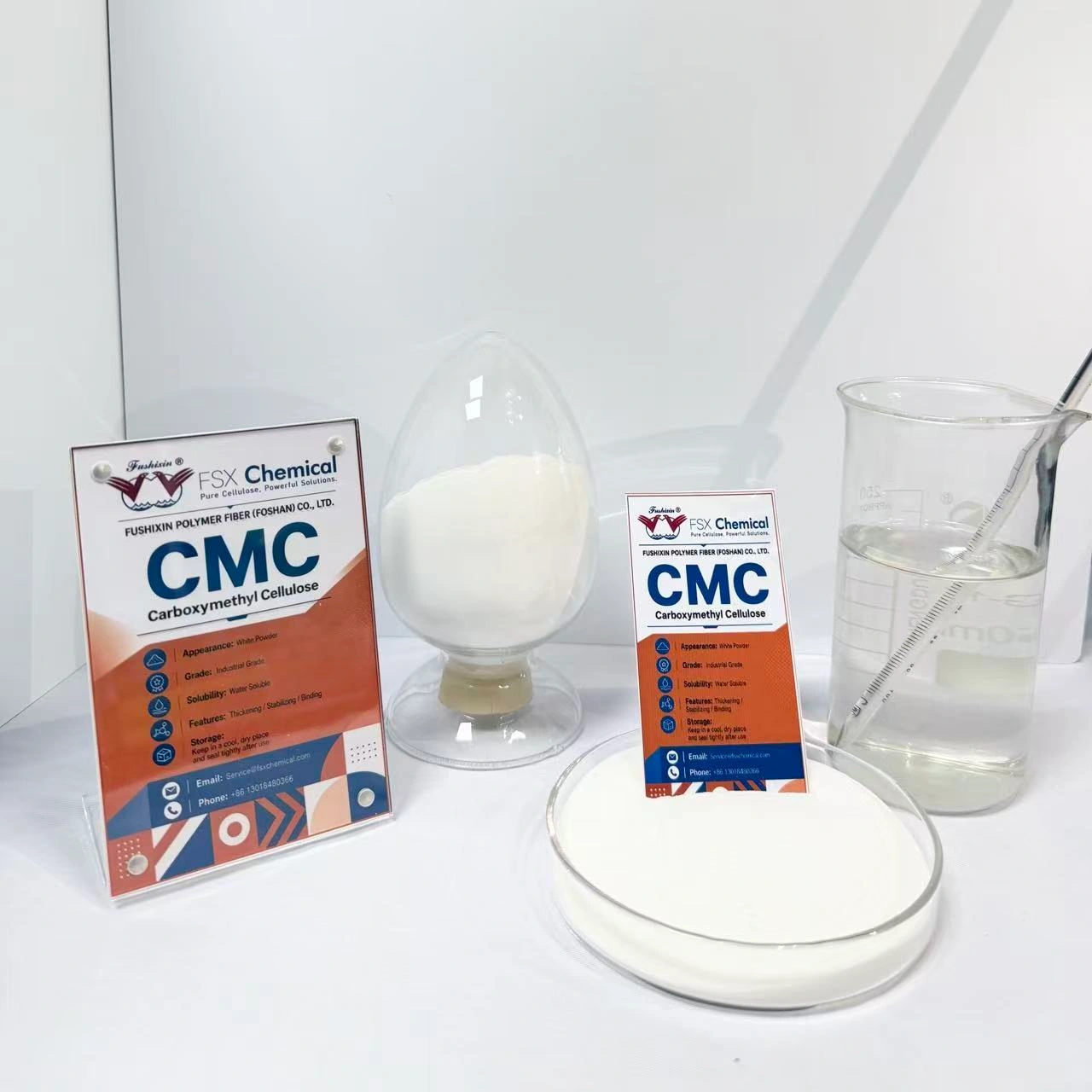
Karboksimetil Selulosa is available in multiple grades with different structural and rheological characteristics.
Important CMC matching parameters include
Derajat substitusi
Viskositas
Konsentrasi uji
Purity-related specification where applicable
Hidrasi
Pelarutan
Penyaringan
Respon elektrolit
Reologi
Similar degree of substitution does not prove equivalent printing behavior, just as similar viscosity does not prove identical CMC.
Final approval must be made through the complete formulation and printing process.
Matching CMS Grades
Pati Karboksimetil can be evaluated in selected disperse, compound and other printing systems according to the specific grade.
Bandingkan
Identitas kelas komersial
Viscosity method
Hidrasi
Penyaringan
Stabilitas pasta
Bagian layar
Reologi
Dosis yang efektif
Finished-textile performance
A CMS grade should not be selected simply because its raw-material price is lower than another polymer.
The meaningful comparison is technical performance at the optimized commercial dosage.
Matching Compound Thickeners
Compound thickeners require a slightly different matching strategy because the product may combine several polymers or rheology-control components.
Do not try to identify the match from one polymer percentage alone
Two compound products can achieve similar printing behavior through different formulation structures.
Instead compare functional performance
Viskositas dasar
Shear behavior
Pemulihan struktural
Penyaringan
Toleransi elektrolit
Menjaga stabilitas
Definisi cetak
Dosis yang efektif
Compound-thickener matching is therefore particularly dependent on complete-paste and fabric testing.
Matching Digital Printing Paste
Pasta cetak digital should be matched according to the ink system and fabric rather than treated as a generic high-viscosity polymer.
First identify
Reactive, disperse or pigment ink
Komposisi kain
Pretreatment application method
Current dosage or pickup
pH
Drying process
Fixation or curing route
Digital pretreatment paste should not simply be added directly into inkjet ink. The fabric pretreatment and the ink formulation serve different technical functions.
Matching should therefore compare final printed textiles using the same ink and printer settings.
Step 6: Compare Hydration and Stock-Paste Properties
Once a candidate grade has been selected, prepare the reference and candidate under identical conditions.
Observe powder addition
Compare wetting, lump formation and dispersion during preparation.
Record hydration time
Some polymers develop viscosity gradually and should not be judged immediately after mixing.
Compare basic properties
Penampilan
Solution uniformity
Viskositas
pH
Busa
Stabilitas fisik
Preparation efficiency is part of commercial performance because difficult hydration can increase labor, mixing and filtration costs.
Step 7: Compare Rheology
Similar single-point viscosity does not guarantee similar behavior during printing.
At low shear
The paste may need sufficient structure to remain stable during storage and holding.
Under higher shear
The paste must flow through pumping, circulation or screen systems.
After application
Structural recovery can influence lateral spreading, penetration and pattern definition.
Where possible, compare the reference and candidate under several controlled shear conditions rather than relying on one viscosity reading.
Step 8: Compare Filtration
Filtration is an important practical test for printing thickeners.
Standardize
Polymer concentration
Cara pembuatan
Waktu hidrasi
Jumlah sampel
Filter material
Opening size or mesh
Filtration conditions
Inspect the retained residue
Residue may consist of incompletely hydrated polymer, gels, contamination or material formed through chemical incompatibility.
Test stock paste and complete paste separately
This helps determine whether the problem originates from the thickener or from another formulation component.
Step 9: Prepare the Complete Printing Paste
A thickener should not be approved from its performance in water alone.
The reference and candidate should be tested with the actual production formulation.
Depending on the process, this may include
Dyes
Pigments
Salts
Alkali
Binders
Bahan pelembap
Wetting agents
Defoamers
Other auxiliaries
Monitor after each major addition when necessary
Staged addition can identify which chemical causes viscosity loss, precipitation, separation or filtration changes.
Complete-formula compatibility is one of the strongest tests of a candidate grade.
Step 10: Print the Actual Fabric
The purpose of a textile thickener is ultimately to perform during textile printing, so the actual production fabric should be tested.
Use a diagnostic design containing
Fine horizontal lines
Fine vertical lines
Small text
Sharp corners
Fine dots
Adjacent colors
Large solid areas
Dark shades where useful
Evaluate during printing
Bagian layar
Transfer dengan cara menempelkan
Penyebaran
Penetrasi
Keseragaman area padat
Evaluate after post-treatment
Complete the normal steaming, fixation, curing and washing process before making the final technical comparison.
Wet-print appearance alone is not sufficient for final approval.
Step 11: Optimize Effective Dosage
The first technical comparison should usually use a controlled baseline. After the candidate demonstrates acceptable performance, dosage can be optimized.
Do not assume weight-for-weight replacement
Different grades can have different thickening efficiency and rheological behavior.
Adjust gradually
Test a controlled range around the successful concentration instead of making a large dosage reduction immediately.
Repeat critical quality checks
Lowering dosage may change definition, penetration, stability or machine behavior.
Calculate commercial cost after optimization
Comparing price before determining the practical dosage can lead to an incorrect purchasing decision.
Step 12: Conduct a Production Trial
Laboratory approval is not the final stage.
Production changes batch size, mixer geometry, circulation, holding time, temperature and mechanical shear.
During the production trial, record
Waktu persiapan
Batch viscosity
Menjaga stabilitas
Penyaringan
Pemompaan
Bagian layar
Interupsi mesin
Paste consumption
Print quality
Check the entire production run
Compare fabric from the beginning, middle and end instead of approving the candidate from only the first meters.
A product should be considered successfully matched only after it performs inside the real production window.
Sample-to-Bulk Verification
A successful sample should remain traceable when the buyer moves to a commercial order.
The qualification chain should connect
Candidate sample
Kelas komersial permanen
TDS
Laboratory approval
Percobaan pencetakan
Approved dosage
Penawaran harga komersial
Purchase order
Batch produksi
Package label
Batch-specific quality documentation where applicable
Verify the first commercial batch
Repeat the critical incoming laboratory checks before the first bulk shipment is released into unrestricted production.
This step is especially important when changing suppliers.
Reactive Printing Grade-Matching Example
Consider a cotton printing mill using a sodium alginate grade successfully in flat-screen reactive printing.
The wrong approach
Ask a new supplier only for the same viscosity and replace the current alginate at the same dosage.
The better approach
Record the current alginate grade and viscosity method.
Prepare reference and candidate at identical concentration.
Compare hydration, viscosity, rheology and filtration.
Prepare the actual reactive color paste.
Print the same cotton fabric.
Compare screen passage and definition.
Complete fixation and wash-off.
Optimize candidate dosage.
Run a controlled production trial.
This provides much stronger evidence of equivalence than matching the viscosity number alone.
Disperse Printing Grade-Matching Example
For polyester disperse printing, the candidate may be a CMS or another application-specific thickener.
Important comparison areas include
Stock-paste stability
Disperse color compatibility
Penyaringan
Bagian layar
Transfer
Keseragaman area padat
Thermal fixation performance
Final polyester surface quality
The product with the closest laboratory viscosity is not necessarily the product that performs most similarly on polyester.
Pigment Printing Grade-Matching Example
Pigment printing requires the thickener to operate with the pigment dispersion and binder system.
Bandingkan
Reologi
Kompatibilitas pengikat
Respon elektrolit
Stabilitas pasta
Definisi cetak
Curing behavior
Dry and wet rubbing performance where required
Pegangan dari kain
A candidate that matches the viscosity but interacts poorly with the binder is not a successful replacement.
Digital Printing Grade-Matching Example
Digital textile printing requires a different comparison because the pretreatment is evaluated on the fabric side.
Match the ink route first
Determine whether the system uses reactive, disperse or pigment ink.
Then compare pretreatment
Persiapan
Viscosity where relevant
Penyaringan
pH
Pengambilan kain
Pola pengeringan
Migrasi tinta
Definisi garis halus
Use the same printer and ink
Changing the ink or printer settings during the same comparison makes it difficult to isolate the effect of the candidate pretreatment.
Final evaluation should occur after the appropriate fixation, curing and washing route.
Flat-Screen vs Rotary-Screen Matching
A grade that performs well on one screen-printing technology should not automatically be assumed to behave identically on another.
Flat-screen printing emphasizes
Transfer dengan squeegee
Bagian layar
Definisi pola
Penetrasi
Repeat consistency
Rotary-screen printing emphasizes
Continuous circulation
Pemompaan
Practical filtration
Shear behavior
Stabilitas jangka panjang
Equipment should therefore be included in the grade-matching specification.
Troubleshooting a Poor Grade Match
Masalah yang Diamati
Possible Cause
Hal-hal yang Perlu Diperiksa
Candidate viscosity is lower
Different efficiency or incomplete hydration
Concentration, mixing, hydration and test method
Viscosity matches but edges bleed
Different rheological recovery
Shear behavior, fabric absorbency and dosage
Viscosity matches but screen passage is poor
Filtration or flow difference
Residue, hydration, rheology and screen condition
Stock paste matches but color paste changes
Chemical incompatibility
Dye, salt, alkali, binder or auxiliary interaction
Fine lines break
Poor transfer or excessive resistance
Rheology, viscosity, screen and pressure
Lab test passes but production fails
Scale-up difference
Batch size, mixer, circulation and holding time
Candidate needs much higher dosage
Different thickening efficiency
Optimized concentration and total cost in use
Batch massal berbeda dengan sampel
Sample-to-bulk or QC issue
Grade identity, COA, retained sample and test method
Troubleshooting should always consider fabric, machine, formulation and post-treatment as well as the thickener itself.
Commercial Cost Comparison
Once the candidate has achieved acceptable technical performance, compare the commercial economics.
Biaya produk yang telah dikirim
Compare prices using the same quantity, packing, destination and trade term.
Dosis yang efektif
Use the optimized production dosage rather than equal kilograms of two different grades.
Biaya persiapan
Consider hydration, mixing, filtration and labor.
Machine efficiency
Include screen cleaning, downtime, printing speed and production interruptions.
Biaya kualitas
Include rejected fabric, reprinting and additional post-treatment.
The most economical matched grade is therefore not necessarily the product with the lowest price per kilogram.
What Information to Send Your Supplier
Providing complete application information significantly improves the accuracy of a grade-matching recommendation.
Produk saat ini
Manufacturer
Commercial grade
Product family
TDS
Recent COA where available
Sampel fisik
Laboratory method
Viskositas
Konsentrasi
Air
Prosedur pencampuran
Waktu hidrasi
Suhu
Alat
Spindle and speed
Proses pencetakan
Reactive, disperse, pigment or digital
Komposisi kain
Flat screen, rotary screen or digital equipment
Current formula
Dosis saat ini
Pengikatan atau pengeringan
Washing where applicable
Performance target
Penyaringan yang lebih baik
Sharper edges
Improved screen passage
Lower effective dosage
Better stability
Alternative supplier qualification
The more accurately the current process is defined, the more useful the candidate-grade recommendation can be.
Bagaimana FSX Chemical Mendukung Penyesuaian Kualitas
Customers who already use another commercial product can begin with their current material as the benchmark.
Melalui Sampel & Pencocokan Grade , buyers can provide an existing TDS, physical sample, viscosity method and printing-process information for candidate-grade review.
A practical matching project can include
Review of the current product and application
Alignment of important test methods
Selection of a technically relevant candidate
Sample preparation
Customer laboratory comparison
Full printing-paste trial
Fabric evaluation
Dosage optimization
Production validation
Commercial quotation and bulk verification
The recommendation should be treated as a trial-grade starting point. Final suitability depends on the customer’s actual formulation, fabric, equipment and production conditions📧 Email: Service@fsxchemical.com
Ketahui mengapa nilai viskositas pengental dalam pencetakan tekstil tidak dapat dibandingkan tanpa menyesuaikan konsentrasi, suhu, alat ukur, spindel, kecepatan, metode persiapan, dan waktu pengujian.
Pelajari cara memilih bahan pengental dan metode pra-perlakuan untuk pencetakan tekstil reaktif, disperse, pigmen, dan digital berdasarkan jenis kain, pewarna atau tinta, proses fiksasi, daya lepas saat pencucian, serta persyaratan kualitas cetakan.
Bandingkan CMC, CMS, natrium alginat, dan pasta cetak digital untuk pencetakan tekstil. Pelajari bagaimana masing-masing bahan tersebut sesuai dengan proses pencetakan reaktif, dispersi, pigmen, dan digital, serta hal-hal apa saja yang perlu diperhatikan pembeli sebelum melakukan pengujian sampel, penyesuaian kualitas, dan pembelian dalam jumlah besar.
Sodium alginat banyak digunakan dalam pencetakan tekstil sebagai pengental yang stabil dan tahan cuci untuk pasta cetak reaktif. Pelajari cara mengevaluasi tingkat viskositas, kemurnian, dan kesesuaian penggunaannya sebelum membeli, serta bagaimana FSX Chemical mendukung pembeli di seluruh dunia dengan data teknis dan sampel.
Karboximetil selulosa (CMC) banyak digunakan dalam proses pencetakan, pelapisan, dan pewarnaan tekstil. Panduan ini akan menjelaskan cara mengevaluasi jenis-jenis CMC, parameter mana yang paling penting, serta bagaimana FSX Chemical dapat mendukung keputusan pembelian.
Karboximetil selulosa digunakan sebagai pengental dan penstabil dalam tinta berbasis air, pencetakan gravure, serta pra-perlakuan pencetakan inkjet. Panduan ini membahas parameter utama setiap jenis produk serta pertimbangan dalam pemilihan pemasok bagi tim pengadaan.
Pasta cetak berbasis CMC digunakan dalam pencetakan tekstil pigmen, reaktif, dan digital. Panduan ini menjelaskan parameter apa saja yang penting, cara membandingkan pemasok, serta hal-hal yang perlu diminta sebelum melakukan pemesanan dalam jumlah besar.
Baik natrium alginat maupun CMC digunakan sebagai pengental dalam pencetakan tekstil, namun keduanya cocok untuk sistem pewarnaan dan kondisi proses yang berbeda. Panduan ini menjelaskan perbedaan utama di antara keduanya serta kapan masing-masing harus digunakan.
Pencetakan inkjet digital pada tekstil memiliki persyaratan pasta dan pra-perlakuan yang berbeda dibandingkan dengan pencetakan sablon. Panduan ini menjelaskan bagaimana natrium alginat digunakan dalam pencetakan tekstil digital serta parameter kualitas apa saja yang harus ditentukan oleh tim pengadaan.
CMC kelas pangan dan kelas industri memiliki struktur kimia dasar yang sama, namun berbeda secara signifikan dalam hal kemurnian, rentang DS, dan persyaratan regulasi. Panduan ini menjelaskan perbedaan-perbedaan utama tersebut serta mengapa penggunaan kelas yang salah dapat menimbulkan masalah dalam proses produksi.
Persiapan pasta yang tepat sama pentingnya dengan pemilihan kadar dalam pencetakan tekstil dengan pewarna reaktif. Panduan ini membahas metode pelarutan natrium alginat, kisaran konsentrasi sesuai dengan penggunaannya, kondisi penyimpanan, serta cara mengatasi masalah umum dalam persiapan.
Sodium alginat adalah polimer alami yang dapat terurai secara hayati, namun penggunaannya dalam pencetakan tekstil menghasilkan air limbah yang perlu dikelola. Panduan ini membahas profil lingkungan sodium alginat, karakteristik air limbah hasil pencucian, serta hal-hal yang perlu dipahami oleh tim pengadaan terkait pemilihan bahan pengental dan dampaknya terhadap lingkungan.
Berikan nama produk, kegunaan, jumlah, tujuan pengiriman, serta TDS,
foto sampel, atau dokumen lain yang sudah Anda miliki. FSX Chemical akan meninjau
informasi tersebut dan merekomendasikan langkah selanjutnya terkait penawaran harga, pencocokan sampel,
atau pemilihan produk.
Informasi ProdukNama produk, grade, model, foto label, atau referensi pemasok.
Dokumen yang TersediaTDS, SDS, COA, foto sampel, daftar produk, atau data pengujian.
Rincian PesananPerkiraan jumlah, kemasan, negara tujuan, pelabuhan, atau syarat perdagangan.
Aplikasi atau KendalaProses pencetakan tekstil, kebutuhan formulasi, masalah terkini, atau target kinerja.