Tính lưu biến của chất làm đặc tổng hợp trong in lụa dệt may: Hiện tượng loãng do cắt, khả năng phục hồi và độ sắc nét của bản in
Synthetic thickener performance in screen printing depends on more than static viscosity. The useful rheology...
Synthetic thickener selection for textile screen printing should be based on rheology, not on one viscosity number. A printing paste is almost stationary in the color kitchen, experiences moderate shear during pumping, much higher shear under the squeegee and through the screen, then returns to low shear after it reaches the fabric. The thickener therefore needs enough low-shear body to control spreading, enough shear thinning to pass through the screen, and enough structural recovery to rebuild the pattern after transfer. If recovery is too slow, the print can bleed or lose definition; if recovery is too fast or elasticity is too high, poor leveling, stringing or mesh marks can appear. This guide explains how to evaluate synthetic-thickener rheology for textile flat and rotary screen printing and connect laboratory measurements with actual print definition.
What Rheology Should a Synthetic Thickener Provide?
A useful synthetic thickener for textile screen printing should generally provide three linked behaviors:
High Enough Structure at Low Shear → Lower Apparent Viscosity Under Printing Shear → Controlled Structural Recovery After Transfer
These three behaviors help the paste:
Remain stable in the tank
Move through pumps and pipes
Pass through the screen under squeegee force
Deposit evenly on the fabric
Recover enough structure to limit spreading
Maintain edge definition until drying begins
The best grade is therefore not the synthetic thickener with the highest measured viscosity.
It is the grade with the most useful flow-and-recovery profile for the actual screen, machine, fabric and pigment-binder formula.
Why One Viscosity Number Is Not Enough
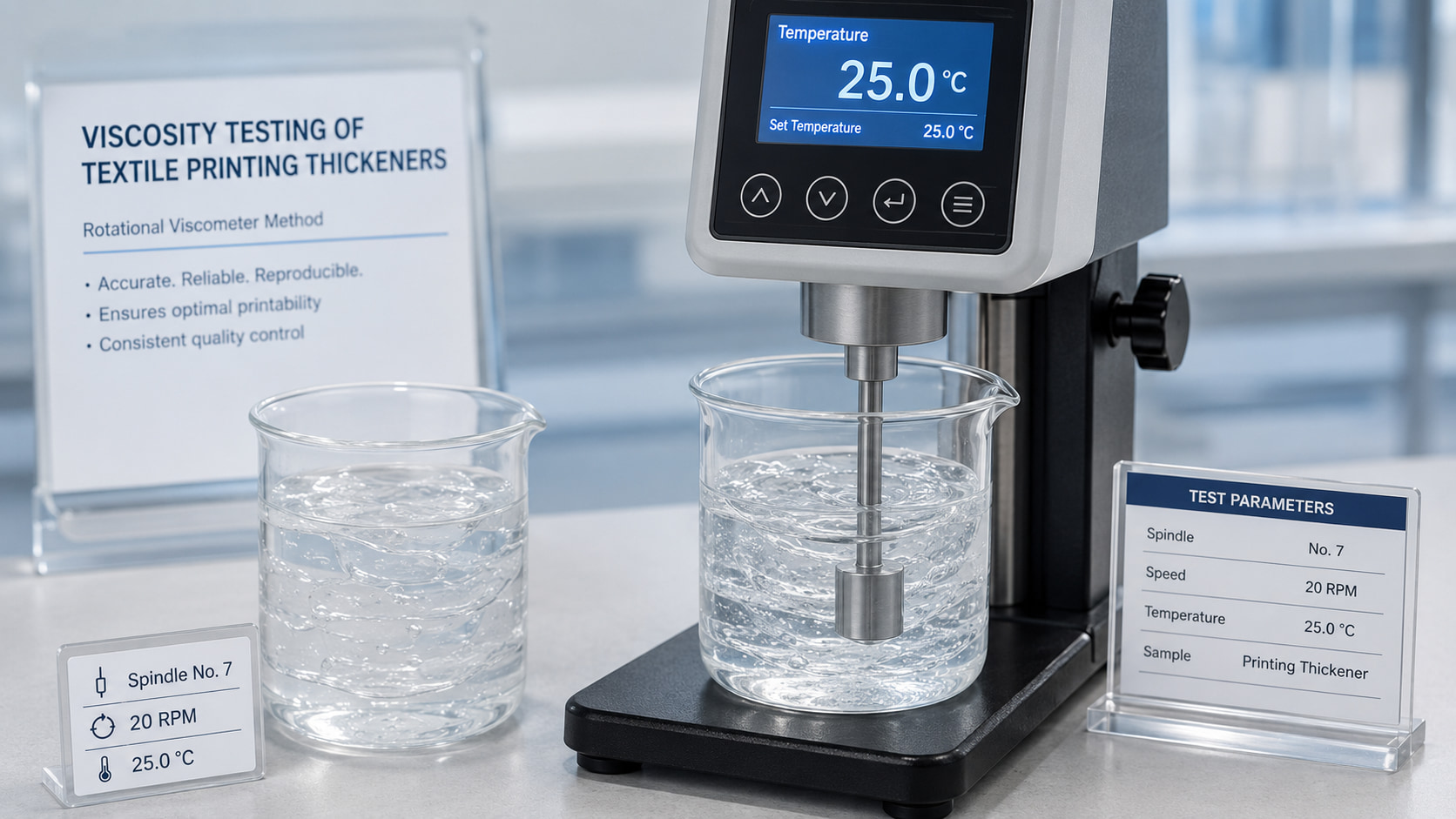
A Brookfield or rotational-viscometer value normally represents one specific measurement condition.
For example:
30,000 mPa·s at one spindle, one RPM and one temperature
does not tell the mill how the paste behaves at much higher shear under the squeegee.
Textile-printing research shows that thickener rheology affects:
Screenability
Paste flow through screen openings
Penetration into fabric
Độ sắc nét khi in
Hiệu suất màu
Levelness
Two pastes with the same low-shear viscosity can therefore give different printing results if they differ in:
Shear-thinning rate
Recovery speed
Độ đàn hồi
Yield stress
Thixotropy
Same viscosity does not mean same rheology.
The Screen-Printing Shear History Map
The printing paste experiences several mechanical environments during one production cycle.
Process Stage
Relative Shear Condition
Rheology Requirement
Tank / Rest
Low
Body, stability, anti-settling
Pumping / Circulation
Low to medium
Easy flow without permanent breakdown
Squeegee Movement
Medium to high
Strong shear thinning
Screen Opening
Cao
Low enough apparent viscosity for transfer
Fabric Deposit
Rapidly falling
Controlled recovery
Before Drying
Low
Enough structure to limit spreading
Published screen-printing rheology work describes this same principle: paste is relatively high in viscosity at rest, becomes easier to flow under squeegee and screen shear, then rebuilds viscosity after transfer.
This is why rheology must be evaluated as a curve and a recovery process rather than one point.
1. Low-Shear Body: Holding the Paste Before and After Printing
At low shear, the printing paste needs enough structure to remain stable and resist uncontrolled flow.
Low-shear body helps control:
Pigment distribution
Phân phối bìa hồ sơ
Spreading after printing
Penetration into the fabric
Fine-line definition
If low-shear structure is too weak, possible symptoms include:
Bleeding
Haloing
Loss of fine detail
Excess penetration
Uneven solid areas
But excessive low-shear viscosity can create:
Difficult pumping
Poor screen filling
High squeegee pressure requirement
The target is sufficient structure—not maximum structure.
2. Shear Thinning: Helping Paste Pass the Screen
Most useful screen-printing pastes are pseudoplastic or shear-thinning.
As shear rate increases, apparent viscosity decreases.
This behavior allows the paste to:
Move more easily under the squeegee
Pass through screen openings
Transfer to the textile with lower mechanical resistance
A strongly shear-thinning paste can have high body at rest and still flow efficiently during printing.
This combination is one reason synthetic polyacrylate thickeners are useful in selected textile-printing systems.
If shear thinning is too weak:
Screen passage can be poor.
Pressure may need to increase.
Transfer can become incomplete.
If shear thinning is too strong:
Paste can become excessively fluid under the squeegee.
Penetration can become too deep.
Recovery demand becomes more important.
3. Structural Recovery: Rebuilding After the Screen
When the paste exits the screen, the high shear condition disappears.
The thickener should rebuild enough structure to stabilize the deposit.
This is structural recovery.
Recovery helps control:
Pattern edge sharpness
Dot or fine-line stability
Surface spreading
Paste leveling
Độ thâm nhập
Polyacrylate-based printing systems can show rapid recovery after shear, but the exact rate depends on the grade and formula.
A useful synthetic thickener should therefore be evaluated for both:
Viscosity Loss Under Shear
và:
Viscosity / Structure Recovery After Shear
What Happens When Recovery Is Too Slow?
Slow recovery leaves the paste too fluid after transfer.
Possible results include:
Bleeding
Edge spreading
Loss of fine lines
Excess fabric penetration
Lower surface color concentration
In this case, simply increasing low-shear viscosity may not be the best correction.
A grade with faster recovery can sometimes improve definition without making pumping or screen transfer excessively difficult.
What Happens When Recovery Is Too Fast?
Very fast recovery can also create problems.
If the paste rebuilds structure immediately after passing the mesh, it may have insufficient time to level.
Possible symptoms include:
Mesh marks
Uneven solid areas
Surface texture
Poor leveling
General screen-printing research shows that recovery must be balanced: too slow allows spreading, while excessively rapid recovery can preserve mesh structure in the deposited layer.
The objective is therefore a controlled recovery window.
4. Elasticity and Stringiness
Synthetic printing pastes are often viscoelastic.
This means they show both liquid-like and elastic behavior.
Some elasticity helps the paste rebuild after shear.
Too much elasticity can create:
Stringing
Filament dragging
Poor screen release
Tail defects
Uneven transfer
Polyacrylate thickener studies have specifically evaluated filament dragging and thixotropy because these properties can influence print quality.
A visually “thick” paste can still be unsuitable if it stretches into strings during screen separation.
5. Yield Stress and Rest Stability
Some synthetic-thickener systems develop an apparent yield stress.
Below this stress, the paste resists flow.
Above it, the paste begins to move more readily.
A useful yield-stress region can support:
Rest stability
Anti-settling behavior
Pattern control after transfer
But excessive yield stress can make pumping and screen transfer difficult.
Yield stress should therefore be interpreted together with shear-thinning and recovery behavior.
6. Thixotropy and Time-Dependent Rheology
Thixotropy means the paste structure changes with both shear and time.
A thixotropic paste can become thinner during sustained shear and gradually rebuild when shear stops.
This matters in production because:
High-speed mixing can reduce viscosity temporarily.
Pumping can continue to shear the paste.
Rotary-screen circulation exposes paste to repeated shear.
Rest periods allow recovery.
Therefore, viscosity should be measured after a defined shear history and a defined recovery time.
Otherwise, the same paste can produce different laboratory readings depending on when the sample was taken.
Why Synthetic Thickener Architecture Matters
“Synthetic thickener” includes several polymer architectures.
Therefore, rheology should be measured on the actual commercial grade rather than inferred from the generic word “acrylic.”
Pigment and Binder Can Change the Rheology
Water-only rheology is not the final printing rheology.
Pigment dispersion and binder can change:
pH
Electrolyte level
Cân bằng chất hoạt động bề mặt
Chất rắn
Polymer interaction
This can alter shear thinning, recovery and elasticity even when the final Brookfield viscosity looks acceptable.
For pigment-printing grades, measure rheology in the complete:
Pigment + Binder + Thickener + Fixer + Auxiliary
system.
Flat Screen: What Rheology Usually Matters Most?
Flat-screen printing exposes the paste to intermittent squeegee strokes and dwell periods.
Important properties include:
Low-shear hold during pauses
Flow during the squeegee stroke
Recovery after transfer
Resistance to screen drying
Repeatable behavior after restart
A paste that recovers too slowly may spread during the dwell period.
A paste that becomes too structured during pauses may require increased pressure on restart.
Flat-screen qualification should therefore include pause/restart testing.
Rotary Screen: What Rheology Usually Matters Most?
Rotary-screen printing is continuous and places stronger emphasis on repeated shear and long-run stability.
Important properties include:
Khả năng bơm
Continuous-shear viscosity
Recovery after screen transfer
Foam control
Mid-run stability
End-run stability
A paste that prints well for the first few meters but progressively thins during circulation has not passed rotary production qualification.
Screen Mesh and Open Area
Finer screen openings increase sensitivity to:
High-shear viscosity
Gel particles
Elastic stringing
Filtration quality
A more open screen can increase paste deposit and penetration.
Do đó:
Fine Mesh ≠ Automatically Lower Viscosity
và:
Open Mesh ≠ Automatically Higher Viscosity
The complete rheological profile must be matched to screen geometry.
Squeegee Pressure, Speed and Angle
Squeegee settings change both mechanical force and shear history.
Higher pressure or faster movement can increase the shear applied to the paste and change:
Apparent viscosity during transfer
Lớp lắng đọng dạng bột nhão
Độ thâm nhập
Pattern definition
If a paste requires unusually high squeegee pressure to transfer, the problem may be insufficient high-shear flow rather than inadequate low-shear viscosity.
Machine settings and rheology should therefore be diagnosed together.
Penetration vs. Surface Color
Rheology controls where the paste goes after it reaches the fabric.
Too little penetration can produce:
Surface-heavy print
Uneven coverage on some fabrics
Too much penetration can produce:
Lower surface color concentration
Reduced edge sharpness
Higher reverse-side show-through
The optimum penetration depends on:
Fabric weight
Construction
Absorbency
Print design
Pigment / binder system
The thickener should therefore control both screen transfer and post-transfer penetration.
The objective is not necessarily 100% immediate recovery.
The useful recovery profile is the one that gives good screen transfer and print definition.
What a Rheometer Can Add
A rheometer can provide deeper information such as:
Flow curve
Yield stress
Thixotropic loop
Storage modulus (G’)
Loss modulus (G”)
Quá trình phục hồi sau khi chịu lực cắt có kiểm soát
These measurements can help distinguish two pastes that look identical in a single-viscosity test.
However, rheometer data should still be connected to actual screen printing.
The most sophisticated rheology curve has little production value if it is not correlated with transfer, penetration and definition.
Define an Approved Rheology Window
Do not approve one perfect laboratory value.
Define a working window that includes:
Low-shear viscosity range
High-shear response
Recovery behavior
Holding-time stability
Screen-transfer result
Print-definition result
The working window should remain acceptable across:
Normal temperature variation
Expected pigment loading
Approved binder level
Expected production holding time
This makes the specification useful for actual manufacturing rather than one ideal lab condition.
Phê duyệt thử nghiệm sản xuất
Laboratory rheology is only the screening stage.
During a controlled production trial, record:
Thickener grade and batch
Liều lượng
Complete paste formula
Start viscosity
Độ nhớt giữa chu kỳ
Độ nhớt khi chảy qua khe hở
Tốc độ máy
Cài đặt màn hình / lưỡi gạt
Pattern definition
Độ thâm nhập
Beginning-to-end shade
Finished hand and fastness
A candidate should pass a production window, not one short print swatch.
Bảng khắc phục sự cố
Vấn đề được ghi nhận
First Rheology Check
Đừng vội kết luận
Paste spreads after printing
Low-shear body and recovery
Only the Brookfield viscosity is too low
Paste is difficult to push through screen
High-shear flow / shear thinning
More squeegee pressure is the only fix
Fine lines blur
Recovery, deposit, penetration
Higher viscosity always improves sharpness
Mesh marks remain visible
Recovery may be too fast / leveling too low
Fast recovery is always better
Stringing during screen release
Elasticity / filament dragging
Viscosity alone explains the defect
Rotary run thins over time
Thixotropy, continuous shear, temperature
Initial lab viscosity proves long-run stability
Same viscosity, different print definition
Full shear/recovery profile
The two grades are equivalent
More thickener improves body but hand worsens
Polymer solids and paste deposit
Maximum viscosity is the target
Tổng chi phí trong quá trình sử dụng
Rheology affects cost through:
Liều lượng chất làm đặc
Pumping energy
Squeegee pressure
Tốc độ máy
Vệ sinh màn hình
Sửa lại
Vải dệt tay
Một mô hình hữu ích là:
Total Cost in Use = Thickener + Preparation + Machine Efficiency + Downtime + Curing / Finishing + Rework + Quality Loss
A higher-priced synthetic thickener can be cheaper if it gives better shear response and allows lower dosage or higher machine efficiency.
A cheaper product can be more expensive if it causes poor screen transfer, excessive corrections or unstable long runs.
Bạn nên cung cấp những thông tin nào cho nhà cung cấp chất làm đặc?
For useful rheology matching, provide:
Current thickener name, sample or TDS
Liều lượng hiện tại
Độ nhớt và phương pháp thử nghiệm toàn diện
Dung dịch phân tán sắc tố
Hệ thống chất kết dính / chất cố định
Final paste pH
Rây phẳng hoặc rây quay
Screen mesh / engraving
Squeegee settings
Vải
Tốc độ máy
Thời gian giữ
Main defect: transfer, spreading, stringing, penetration, definition or long-run drift
FSX Chemical có thể sử dụng thông tin này thông qua Mẫu và việc kết hợp to compare current and candidate thickener rheology under controlled printing conditions.
Useful screen-printing paste normally needs higher structure at low shear and easier flow at high shear.
Recovery should be fast enough to limit spreading but not so fast that leveling becomes poor.
Elasticity and thixotropy can affect screen release and long-run stability even when viscosity looks normal.
Flat and rotary screen machines expose the paste to different shear histories.
The final rheology specification must be validated by actual print definition and production stability.
Các câu hỏi thường gặp
1. What rheology is best for textile screen printing?
A useful paste normally has enough low-shear structure to control spreading, shear-thins under the squeegee and then recovers enough structure after transfer.
2. Is higher viscosity always better for print definition?
No. Excess low-shear viscosity or elasticity can reduce screen transfer, while poor recovery can cause spreading. The complete rheological profile matters.
3. What is shear thinning?
Shear thinning means apparent viscosity decreases as shear rate increases. This helps printing paste move through the screen under squeegee force.
4. What is structural recovery?
Structural recovery is the rebuilding of paste viscosity or internal structure after high shear is removed.
5. What happens if recovery is too slow?
The paste can remain too fluid after printing, causing bleeding, loss of fine detail or excessive penetration.
6. Can recovery be too fast?
Yes. Excessively rapid recovery can reduce leveling and contribute to mesh marks or uneven solid areas.
7. Why can two synthetic thickeners with the same Brookfield viscosity print differently?
They can have different shear-thinning, elasticity, yield stress, thixotropy and recovery behavior.
8. How can I measure shear thinning without a rheometer?
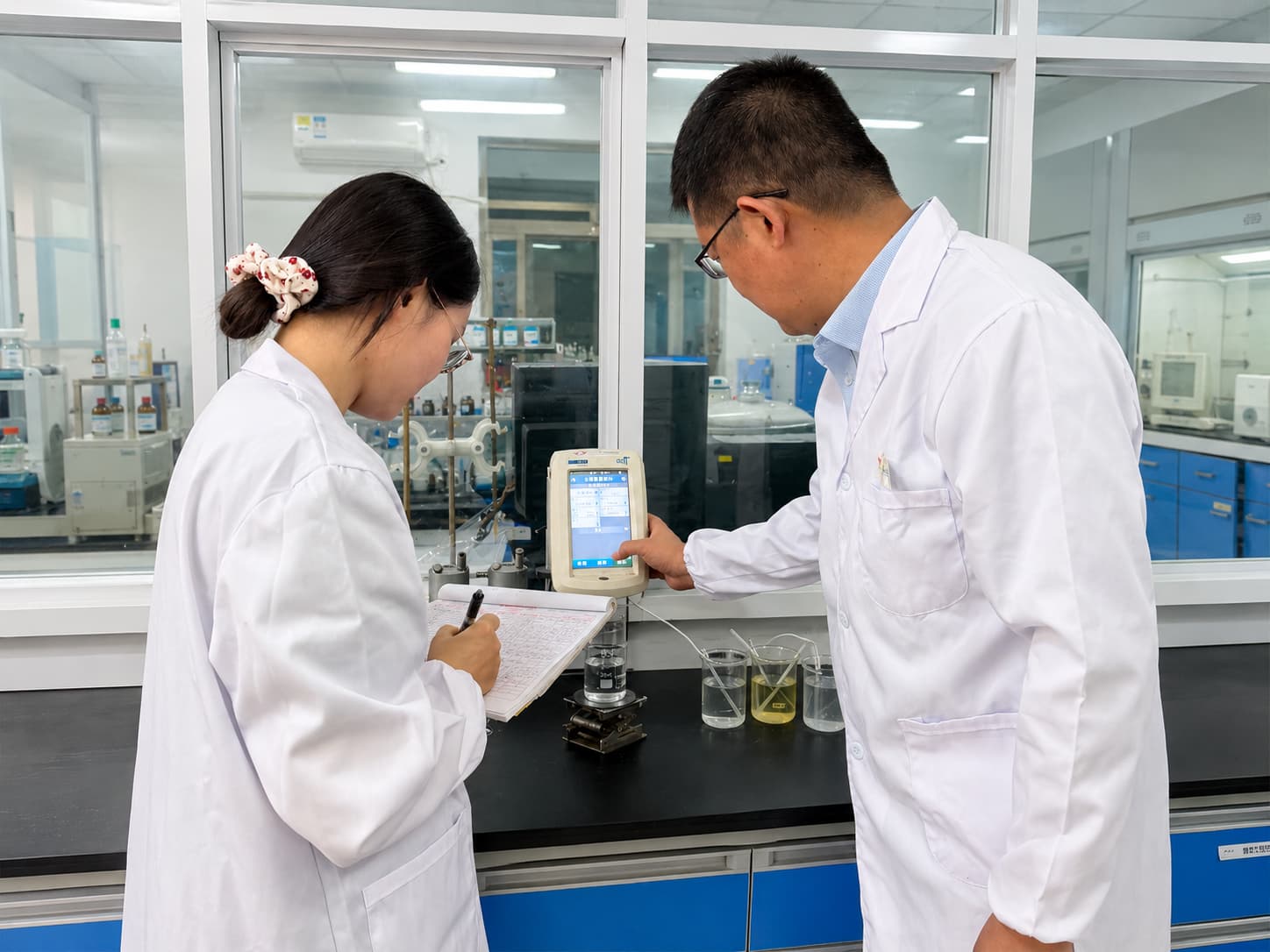
A controlled multi-speed rotational-viscometer test can provide a practical comparison, provided the spindle and torque range remain appropriate.
9. How can I test recovery in a normal laboratory?
Measure initial viscosity, apply a standardized high-shear mixing step, then measure immediately and again after defined recovery times.
10. Does rotary screen require lower-viscosity paste than flat screen?
Not as a universal rule. Rotary printing places more emphasis on continuous shear and long-run stability, while flat screen includes repeated strokes and dwell periods.
11. Should pigment and binder be included in rheology testing?
Yes. They can change pH, electrolyte level, solids and polymer interactions, so final rheology should be measured in the complete pigment paste.
12. What should I send FSX Chemical for rheology troubleshooting?
Send the current thickener or TDS, dosage, viscosity method, pigment, binder, pH, machine, screen, squeegee conditions and the observed transfer or print-definition problem.
Match Synthetic-Thickener Rheology to Your Screen Printing Process
If your synthetic thickener reaches the target viscosity but still gives spreading, poor transfer, stringing, excess penetration or unstable long runs, FSX Chemical can help separate low-shear viscosity from shear-thinning and recovery behavior.
Để nhận được bài đánh giá kỹ thuật hữu ích, vui lòng gửi:
Mẫu chất làm đặc tổng hợp hiện tại của quý khách, TDS hoặc COA
Liều lượng hiện tại
Độ nhớt và phương pháp thử nghiệm toàn diện
Dung dịch phân tán sắc tố
Hệ thống chất kết dính / chất cố định
Final paste pH
Rây phẳng hoặc rây quay
Screen mesh / engraving
Squeegee settings
Fabric and machine speed
Thời gian giữ
Current transfer, definition, penetration or stability problem
Bắt đầu bằng Mẫu và việc kết hợp for a controlled current-vs-candidate comparison.
The best synthetic thickener is not the one with the highest static viscosity. It is the one that flows easily under screen shear, recovers at the right rate after transfer and keeps the printed pattern stable until drying and curing are complete.
Tìm hiểu lý do tại sao không thể so sánh các giá trị độ nhớt của chất làm đặc trong in ấn dệt may nếu không đảm bảo các yếu tố như nồng độ, nhiệt độ, thiết bị, trục quay, tốc độ, phương pháp chuẩn bị và thời gian thử nghiệm đều giống nhau.
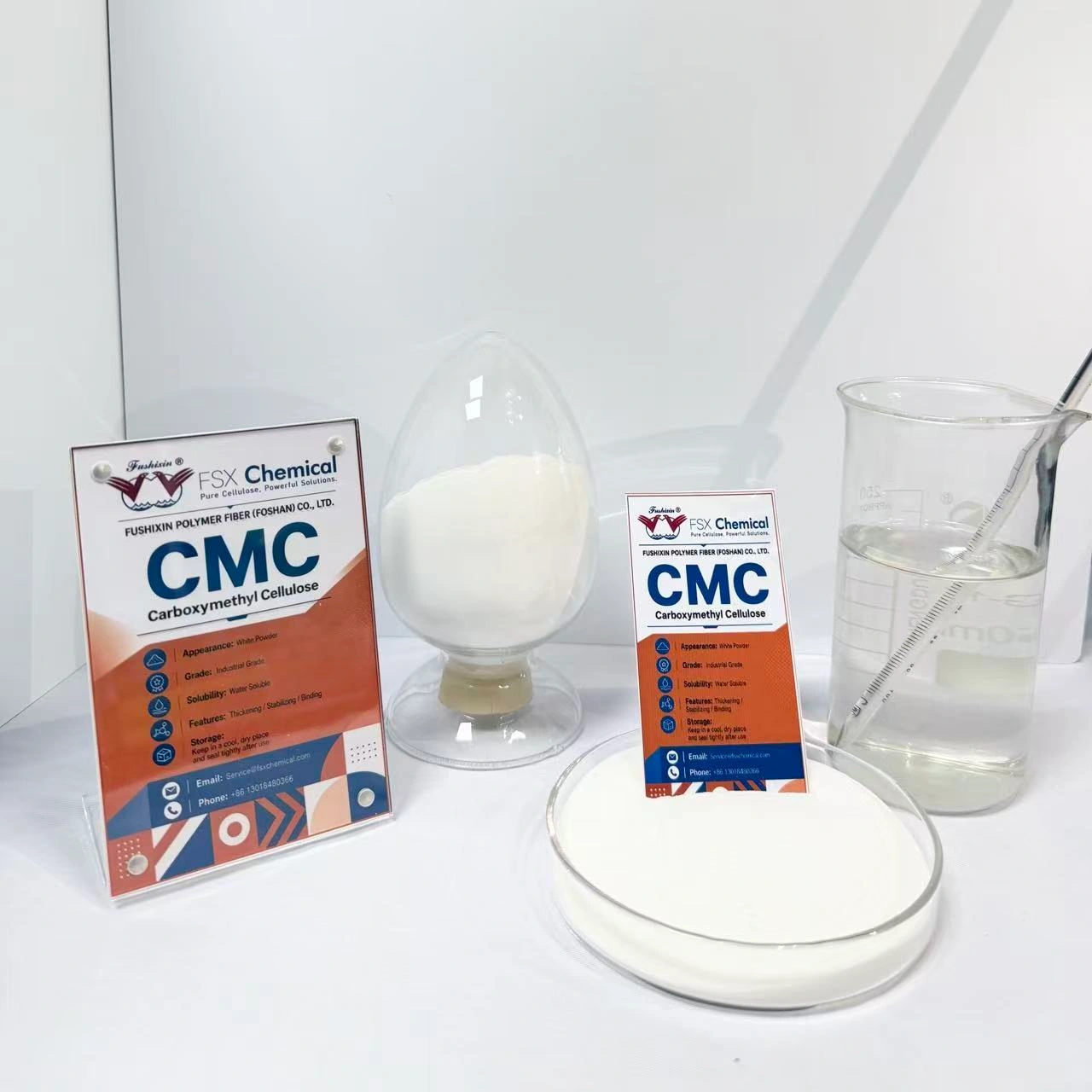
Carboxymethyl cellulose (CMC) được sử dụng rộng rãi trong các quy trình in ấn, xử lý chất làm cứng và nhuộm vải. Hướng dẫn này sẽ giải thích cách đánh giá các loại CMC, những thông số nào là quan trọng nhất, cũng như cách FSX Chemical có thể hỗ trợ các quyết định mua hàng.
Kích thước hạt (mesh) của natri alginat ảnh hưởng đến tốc độ hòa tan của bột, mức độ đồng đều khi ngậm nước, cũng như hiệu quả của hỗn hợp in trong quá trình in lụa. Hướng dẫn này giải thích những tác động thực tiễn của thông số mesh đối với các ứng dụng hỗn hợp in trên vải.
Các tiêu chuẩn về độ tinh khiết của natri alginat không chỉ gói gọn trong một con số duy nhất. Hướng dẫn này giải thích ý nghĩa của các chỉ số như hàm lượng hoạt chất, NaCl, chất không hòa tan và kim loại nặng đối với hiệu suất của bột in dệt — cũng như khi nào nên yêu cầu độ tinh khiết cao hơn so với loại tiêu chuẩn công nghiệp.
In lụa bằng thuốc nhuộm phản ứng kết hợp với natri alginat đòi hỏi phải có công thức hỗn hợp in chính xác, kiểm soát độ nhớt và điều kiện hấp hơi phù hợp. Hướng dẫn này đề cập đến các yêu cầu đối với hỗn hợp in lụa phẳng và quay, thời gian xử lý kiềm, các lỗi sản xuất thường gặp, cũng như cách chẩn đoán các nguyên nhân liên quan đến hỗn hợp in.
Các chất làm đặc dùng trong in vải có sự khác biệt về thành phần hóa học, tính lưu biến, khả năng tương thích với thuốc nhuộm và đặc tính phai màu khi giặt. Hướng dẫn này so sánh các nhóm chất làm đặc chính, các hướng ứng dụng phổ biến của chúng và các thông số mà người mua cần kiểm tra trước khi tiến hành thử nghiệm sản xuất.
Để nâng cao độ sắc nét của hình in trên vải bằng công nghệ CMC, không chỉ đơn thuần là tăng độ nhớt. Hướng dẫn từng bước này giải thích cách thức mà việc lựa chọn loại mực, tính lưu biến, quá trình ngâm ướt, quá trình lọc, tính tương thích của công thức, quy trình chuẩn bị vải và cài đặt máy móc ảnh hưởng đến độ sắc nét của viền và chi tiết hoa văn.
Để đánh giá độ đặc của chất làm đặc trong in ấn dệt may một cách đáng tin cậy, không chỉ cần kiểm tra độ nhớt. Hướng dẫn này giải thích các thông số thử nghiệm thiết yếu liên quan đến nguyên liệu thô, dung dịch, hỗn hợp sệt, độ ổn định, quy trình ứng dụng và sản phẩm vải thành phẩm.
Các vấn đề liên quan đến bột in dệt may hiếm khi chỉ do một nguyên nhân duy nhất. Hướng dẫn khắc phục sự cố này giải thích cách chẩn đoán các hiện tượng như sự thay đổi độ nhớt, vón cục, cặn lọc, bọt, hiện tượng tách lớp, chất lượng in kém, hiện tượng lan màu, màu sắc không đồng đều và các khuyết tật trên vải thành phẩm.
Các chất làm đặc dệt may hiệu suất cao cần phải đảm bảo cả tốc độ sản xuất lẫn độ chính xác khi in. Tìm hiểu cách các yếu tố như tính lưu biến, quá trình lọc, quá trình ngâm nước, độ ổn định của hỗn hợp và sự phù hợp với ứng dụng ảnh hưởng đến quá trình in dệt may tốc độ cao.
Các chất làm đặc trong in ấn dệt may không chỉ đơn thuần điều chỉnh độ nhớt. Cẩm nang năm 2026 này giải thích về natri alginat, CMC, CMS, các chất làm đặc hỗn hợp và hỗn hợp in kỹ thuật số, kèm theo hướng dẫn thực tiễn về lưu biến học, thử nghiệm, lựa chọn ứng dụng phù hợp và đánh giá nhà cung cấp.
Improving viscosity control in textile printing pastes requires more than adjusting a final cP or mPa·s value. Reliable control starts with standardized testing and continues through hydration, temperature, mixing, formulation sequence and printing performance.
Vui lòng cung cấp tên sản phẩm, ứng dụng, số lượng, điểm đến và bất kỳ tài liệu kỹ thuật (TDS),
hình ảnh mẫu hoặc tài liệu nào mà quý khách đã có. FSX Chemical sẽ xem xét
thông tin này và đề xuất bước tiếp theo liên quan đến báo giá, đối chiếu mẫu
hoặc lựa chọn sản phẩm.
Thông tin sản phẩmTên sản phẩm, cấp loại, mẫu mã, ảnh nhãn mác hoặc mã tham chiếu của nhà cung cấp.
Các tài liệu có sẵnTDS, SDS, COA, ảnh mẫu, danh mục sản phẩm hoặc dữ liệu thử nghiệm.
Chi tiết đơn hàngSố lượng dự kiến, hình thức đóng gói, nước nhập khẩu, cảng hoặc điều kiện thương mại.
Yêu cầu hoặc Vấn đềQuy trình in trên vải, yêu cầu về công thức, vấn đề hiện tại hoặc chỉ tiêu hiệu suất.