টেক্সটাইল প্রিন্টিং ব্যাচের জন্য অপরিহার্য পরীক্ষার পরামিতিগুলির তালিকা
Reliable textile printing batch control requires more than checking one viscosity value or a COA....
Reliable textile printing batch control requires more than checking a Certificate of Analysis or one viscosity value. A strong testing program connects raw-material identity, preparation, rheology, filtration, complete-paste stability, printing behavior, post-treatment and batch-to-batch traceability before a batch is released for routine use.
Textile printing quality depends on a chain of chemical and process variables. A batch can meet a basic laboratory specification and still create problems during pumping, screen passage, fabric transfer, fixation, washing or curing.
This is why printing mills, formulators and textile chemical suppliers need a testing system that goes beyond a short COA checklist.
The most useful approach is to test at several levels: the incoming thickener or printing chemical, the prepared stock solution or paste, the complete production formulation, the actual printing application and the finished textile.
This guide lists the essential testing parameters for textile printing batches and explains which tests are routine QC measurements, which are application checks and which are especially important when qualifying a new supplier or first commercial batch.
What Does Textile Printing Batch Testing Mean?
Textile printing batch testing is the process of confirming that a specific batch of chemical or prepared printing paste remains suitable for its intended production process.
The objective is not only to confirm that the material matches a written specification. It is also to reduce the risk that a technically acceptable laboratory number hides a problem that becomes visible only during printing.
A useful batch-testing system should answer three questions
Is this the correct product and batch?
Does it meet the relevant laboratory requirements?
Does it remain suitable for the actual printing process?
The importance of each test depends on the chemistry and application. Sodium alginate, CMC, CMS, pigment thickener and digital pretreatment should not all use an identical QC panel.
The Four Levels of Batch Testing
A strong testing program separates measurements according to where the material is in the production process.
Testing Level
What Is Tested
প্রধান উদ্দেশ্য
Level 1
Incoming raw or commercial chemical
Identity and basic batch conformity
Level 2
Prepared stock solution or stock paste
Hydration, viscosity, filtration and stability
Level 3
Complete printing formulation
Compatibility, rheology and holding stability
Level 4
Printed and post-treated fabric
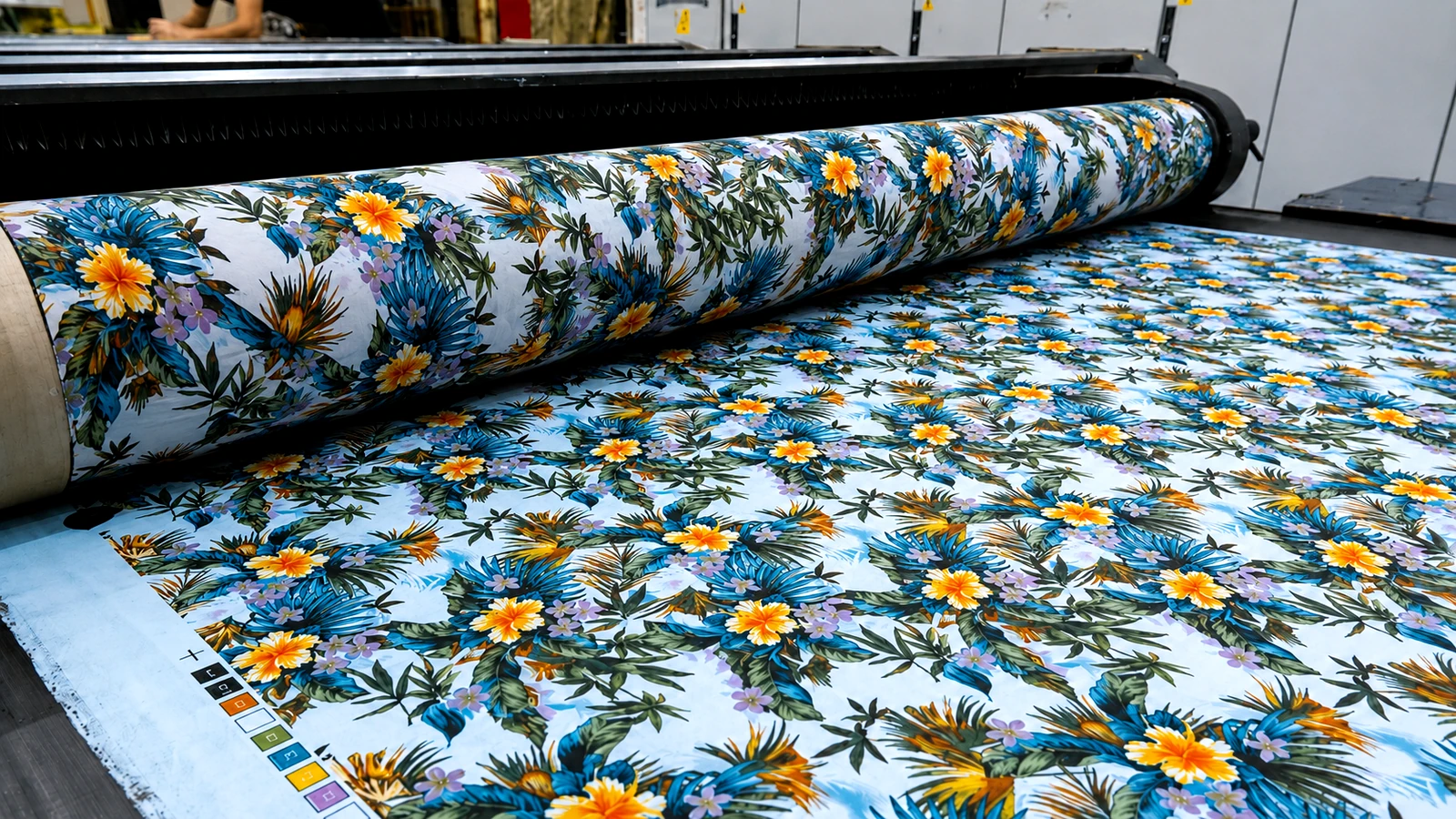
Application release and finished-textile quality
Not every production batch requires every possible test. Routine QC should focus on parameters that have proven useful for controlling the process, while new suppliers, new grades and problem batches should receive a broader evaluation.
1. Product Identity and Batch Traceability
Before any laboratory measurement, confirm that the material being tested is the intended commercial product.
রেকর্ড
Manufacturer
Commercial product name or grade
Batch or lot number
Production or relevant reference date
Package identification
Purchase order or receiving reference
A technically excellent test result has little value if the sample cannot be connected to the actual production batch.
Traceability is particularly important when comparing retained samples, investigating complaints or verifying the first commercial shipment from a new supplier.
2. Appearance
Appearance is a simple but useful incoming and preparation check.
For powders, observe
Color
Powder or granular form
Visible agglomeration
Foreign material
Unusual odor where relevant
For liquids or prepared pastes, observe
Color
Uniformity
বিচ্ছেদ
Sedimentation
জেল কণা
Excessive foam
Appearance alone does not prove quality, but a visible change from the approved reference can justify further investigation before release.
3. Moisture or Solids Content
Moisture is especially relevant for powdered products, while solids content can be important for liquid or formulated products.
Changes in moisture or solids can influence effective dosage and may also help explain apparent differences in viscosity.
Use the parameter only when it is meaningful for the product
A routine QC panel should not include unnecessary tests simply because they are common on another chemical.
The method and acceptance range should be linked to the commercial product specification and the way the material is used.
4. pH
pH can be a useful identity and formulation-control parameter, especially where polymer behavior or printing chemistry is sensitive to the chemical environment.
Measure under a defined condition
The concentration, sample preparation and temperature should remain consistent.
Do not use one universal pH range
The correct range depends on the product and application.
Investigate pH together with viscosity
If both shift at the same time, the result may indicate formulation, raw-material or chemical-interaction differences.
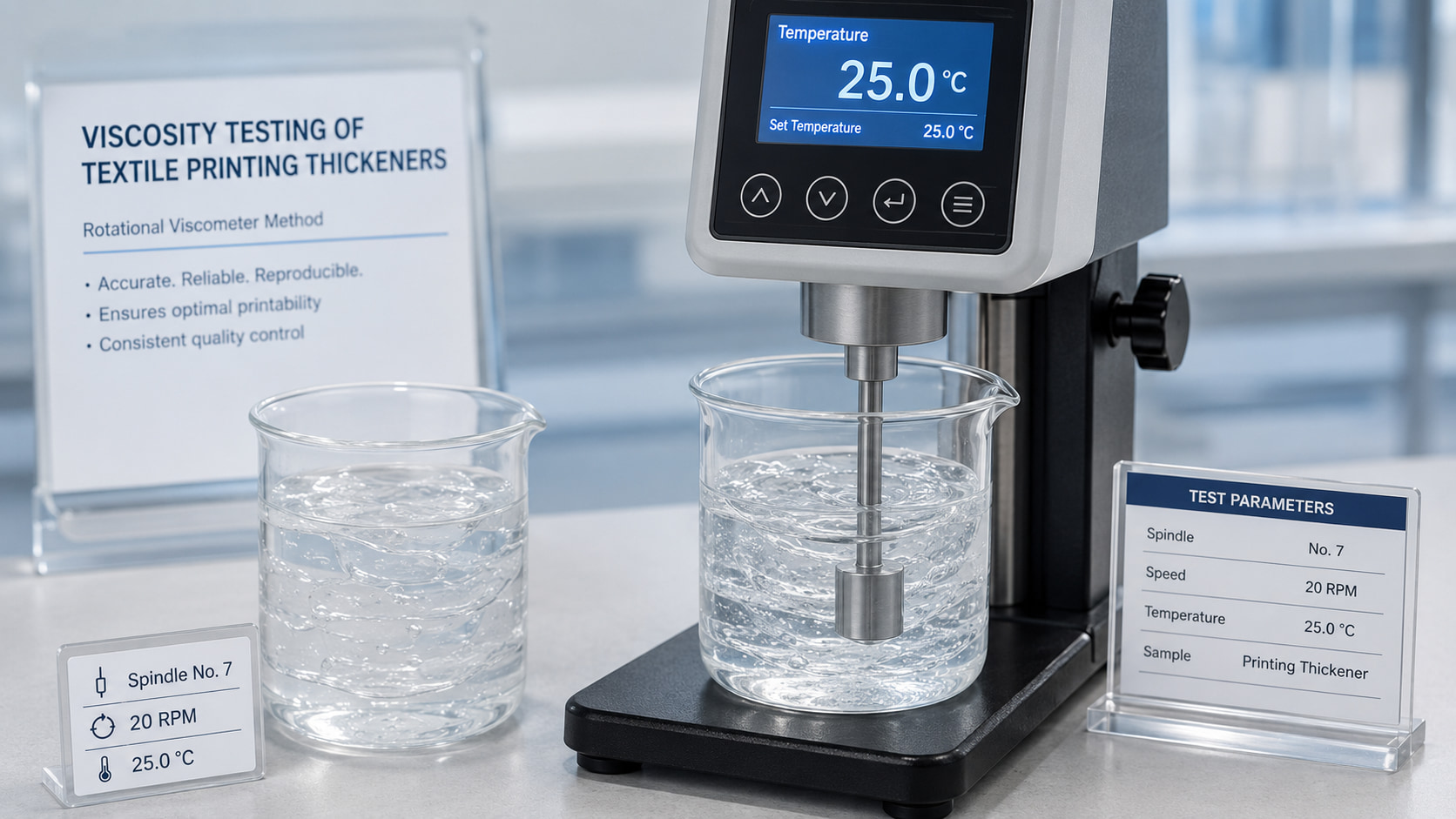
5. Viscosity Under a Defined Method
Viscosity is one of the most important batch-control parameters for textile thickeners, but it is meaningful only when the test method is controlled.
রেকর্ড
পণ্যের ঘনত্ব
জলের উৎস
প্রস্তুতি পদ্ধতি
সময় ও গতি মিশ্রণ
Hydration time
পরিমাপের তাপমাত্রা
যন্ত্র
স্পিন্ডল, রোটর বা জ্যামিতি
ঘূর্ণন গতি
পড়ার সময়
Unit
Two batches should not be judged different from viscosity data generated using different conditions.
The most useful viscosity specification is one that has been linked to successful production performance.
6. Hydration, Dissolution and Dispersion
A thickener can meet its final viscosity specification but still create poor preparation behavior.
Observe
Wetting
Lump formation
Hydration speed
Solution or paste uniformity
Undissolved particles
Hydration should be evaluated using a defined preparation method. Changing mixing speed or waiting time between batches makes comparison less useful.
For powdered thickeners, preparation behavior can directly influence labor, filtration, batch correction and production repeatability.
7. Filtration and Residue
Filtration is one of the most practical tests for textile printing thickeners and pretreatment systems.
A standardized filtration method should define
নমুনা ঘনত্ব
Hydration time
Sample quantity
Filter material
Opening or mesh size
Pressure or gravity condition
Method for evaluating retained residue
Residue should be investigated, not only counted
Retained material may be incompletely hydrated polymer, gel, contamination or precipitation created by another chemical.
Stock-solution filtration and complete-paste filtration can provide different diagnostic information.
8. Rheological Behavior
A single viscosity result cannot completely describe how a printing paste behaves under changing shear.
Rheology influences
Pumping
Circulation
স্ক্রিন প্যাসেজ
Paste transfer
Structural recovery
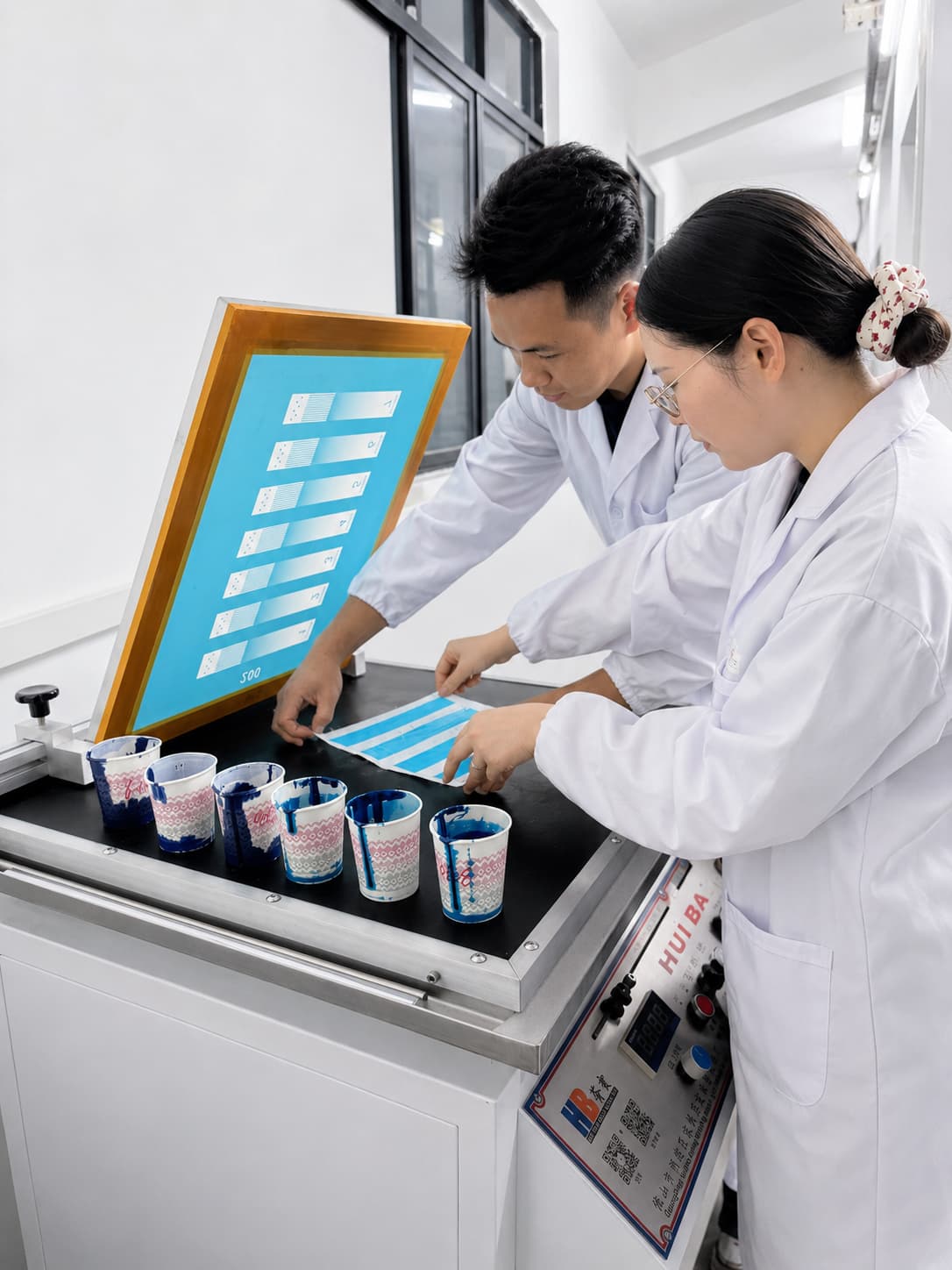
সংজ্ঞা মুদ্রণ করুন
Multi-speed viscosity measurements or other controlled rheological comparisons can be useful when two batches meet the same single-point viscosity but print differently.
Rheological testing is especially valuable during grade qualification and troubleshooting, even if it is not included in every routine release panel.
9. Complete-Formula Compatibility
A stock thickener should not be approved for a new process only because it performs well in water.
Depending on the printing system, test with
Reactive dyes
Disperse colorants
Pigment dispersions
লবণসমূহ
ক্ষারক
বাইন্ডারসমূহ
আর্দ্রতা ধরে রাখে এমন পদার্থ
আর্দ্রকারী পদার্থ
ডিফোমার
অন্যান্য পলিমার
Observe whether viscosity, appearance, pH, filtration or stability changes after the complete formulation is prepared.
Staged addition can help identify which component creates the change.
10. Holding Stability
Textile printing paste may remain in a preparation tank, circulation system or production area for hours before it is fully consumed.
উপযোগী চেকপয়েন্টগুলির মধ্যে থাকতে পারে
Immediately after preparation
After complete hydration
After the normal production holding period
প্রাসঙ্গিক ক্ষেত্রে প্রচারের পর
পর্যবেক্ষণ করুন
সান্দ্রতা
পিএইচ
দৃষ্টি
বিচ্ছেদ
ফেনা
ছাঁকন
A batch that meets specification only immediately after preparation may still create production instability.
11. Foam and Air Entrapment
Foam can interfere with paste preparation, sampling, application and printing uniformity.
যাচাই করুন
Foam generated during mixing
Foam persistence during holding
Air entrainment during pumping
Compatibility of any defoamer with the formulation
Foam problems should not automatically be corrected by changing the thickener. Mixing conditions and formulation sequence may be the primary cause.
12. Fabric Pickup or Application Uniformity
For pretreatment, coating or other controlled application processes, the amount of formulation applied to the fabric can be as important as the formulation itself.
Evaluate
Application quantity
Edge-to-center uniformity
Lengthwise uniformity
Fabric moisture before application
Drying consistency
This is particularly important in digital printing pretreatment, where uneven pickup can create differences in ink migration, definition and shade.
13. Screen Passage and Machine Behavior
Laboratory data should be connected to the equipment that will actually use the paste.
For screen printing, evaluate
স্ক্রিন প্যাসেজ
স্কুইজি স্থানান্তর
Pumping and circulation where relevant
Screen cleaning frequency
Paste buildup
Production interruptions
A batch with acceptable viscosity but poor screen passage may have different rheology, filtration or hydration behavior.
14. Print Definition
Print definition is an application parameter that links paste rheology with the final visual result.
A useful diagnostic design can include
Fine horizontal lines
Fine vertical lines
Small text
Sharp corners
Dots
Adjacent color boundaries
Large solid areas
Fine structures reveal spreading and transfer problems that may not be visible in a simple solid-color laboratory print.
15. Penetration and Surface Control
The correct amount of penetration depends on the fabric, printing route and desired appearance.
Excessive penetration can contribute to
Weak surface appearance
Loss of fine detail
Unwanted strike-through
Insufficient penetration can contribute to
Poor coverage through the textile structure
Surface-heavy appearance
Application-specific uniformity problems
Penetration should be evaluated together with fabric absorbency, paste rheology, dosage and machine settings.
16. Color and Shade Consistency
Thickener or pretreatment chemistry can influence how colorant remains on or moves through the textile, but final color is always a system-level result.
For a fair batch comparison, keep constant
Fabric lot
Dye, pigment or ink
সূত্র
Application quantity
Machine settings
Fixation or curing
Washing or finishing
Color differences should not automatically be attributed to the thickener without checking the rest of the process.
17. Fixation or Curing Performance
A printing batch should be judged after the relevant fixation step rather than from the wet print alone.
Reactive systems
Evaluate after the standard steaming or fixation route and subsequent washing.
Disperse systems
Evaluate after the applicable thermal fixation process.
Pigment systems
Evaluate after binder-film formation and curing.
A candidate batch that looks excellent before fixation may behave differently after the full production sequence.
18. Wash-Off and Surface Cleanliness
Wash-off is especially important in printing routes where unfixed material, residual thickener or auxiliaries must be removed after fixation.
Evaluate
পটভূমির পরিচ্ছন্নতা
Residual surface material
Change in print definition
Color appearance after washing
ফ্যাব্রিক হ্যান্ডেল
The most useful comparison uses the same washing procedure for reference and candidate batches.
19. Fastness Where Relevant
Fastness testing belongs to the finished-textile stage and should be selected according to the printing system and customer requirement.
Pigment systems may require particular attention to rubbing performance, while other printing routes may require their own relevant fastness tests.
Fastness should not be attributed to the thickener alone because colorant, binder, fixation and fabric also influence the result.
20. Fabric Hand Feel
Fabric hand feel can be important when a printing formulation leaves polymer or binder on the textile surface.
This is especially relevant to pigment systems and some digital pretreatment routes.
Compare after the complete process
Do not judge handle before curing, washing or finishing if those steps are part of normal production.
An apparently strong printing result may still be unacceptable if the resulting fabric becomes too stiff for the intended end use.
21. Batch-to-Batch Comparison
One isolated result cannot show whether a supplier or formulation is consistent over time.
Trend critical parameters across multiple batches
সান্দ্রতা
পিএইচ
Moisture or solids where relevant
ছাঁকন
জলসঞ্চার
Application result
The goal is not zero numerical variation. The goal is variation small enough that the process remains inside the approved operating window without repeated formulation correction.
22. Retained Samples
Retained samples can be valuable when investigating future batch differences.
A retained-sample system can help
Compare a complaint batch with an approved batch
Investigate method differences
Verify whether a material changed during storage
Support supplier discussions
Retained samples should be identified with the exact batch and stored under defined conditions appropriate to the product.
COA Testing vs Application Release Testing
A Certificate of Analysis and an application release test serve different purposes.
মূল্য নির্ধারণ কর্তৃপক্ষ
A COA normally reports selected batch-specific quality parameters against the commercial specification.
Application release
An application test asks whether the batch works acceptably in the customer’s actual formulation, fabric and printing process.
A passing COA does not automatically guarantee printing performance, and a printing trial does not replace the need for a controlled commercial specification.
Strong supplier qualification uses both in the appropriate role.
Testing Sodium Alginate Batches
সোডিয়াম অ্যালজিনেট is commonly evaluated as a thickener for conventional reactive printing.
Useful batch checks can include
দৃষ্টি
Moisture where specified
pH where relevant
Viscosity under the agreed method
জলসঞ্চার
ছাঁকন
Reactive-paste compatibility
সংজ্ঞা মুদ্রণ করুন
Fixation and wash-off
HV, MV and LV labels should not replace the actual viscosity specification and test method.
Testing CMC Batches
কার্বক্সিমেথাইল সেলুলোজ can be supplied in multiple grades with different viscosity and substitution characteristics.
Depending on the commercial specification, evaluate
দৃষ্টি
আর্দ্রতা
পিএইচ
সান্দ্রতা
Degree of substitution where specified
Purity-related parameters where applicable
Hydration or dissolution
ছাঁকন
Complete-formula behavior
Similar viscosity and DS do not by themselves prove that two CMC batches or supplier grades will print identically.
Testing CMS Batches
কার্বক্সিমেথাইল স্টার্চ can be evaluated in selected disperse, compound and other textile printing systems.
Relevant batch checks can include
দৃষ্টি
আর্দ্রতা
পিএইচ
সান্দ্রতা
জলসঞ্চার
ছাঁকন
পেস্টের স্থিতিশীলতা
স্ক্রিন প্যাসেজ
Application performance
The test panel should reflect the specific CMS grade and printing route rather than copy a sodium alginate or CMC specification automatically.
Testing Digital Printing Paste Batches
ডিজিটাল প্রিন্টিং পেষ্ট should be evaluated according to the reactive, disperse or pigment inkjet route.
Batch evaluation can include
দৃষ্টি
পিএইচ
Viscosity where relevant
Dispersion or preparation behavior
ছাঁকন
স্থিতিশীলতা বজায় রাখা
Pretreatment pickup
Drying uniformity
সংজ্ঞা মুদ্রণ করুন
ইঙ্ক স্থানান্তর
Fixation or curing
Final fabric result
Digital pretreatment paste should be evaluated on the fabric side rather than treated as a general additive for digital ink.
Reactive Printing Batch Checklist
For a reactive printing batch, a practical control sequence can move from stock thickener to finished fabric.
Confirm thickener grade and batch.
Check stock-paste viscosity and hydration.
Check filtration.
Prepare the complete reactive color paste.
Record viscosity after chemical addition.
Check holding stability.
Print the approved reference fabric or production fabric.
Evaluate definition and penetration.
Complete fixation.
Complete wash-off.
Compare final color and fabric quality.
Disperse Printing Batch Checklist
Polyester disperse printing requires a different application check from reactive printing.
Confirm product and batch identity.
Check viscosity and preparation behavior.
Check filtration and paste uniformity.
Prepare the complete disperse formulation.
Evaluate holding stability.
Print the production-representative polyester fabric.
Evaluate screen passage and transfer.
Complete the thermal fixation process.
Evaluate final shade and surface cleanliness.
Pigment Printing Batch Checklist
Pigment printing requires the rheology system to work together with the binder and curing system.
Confirm thickener, pigment and binder identities.
Check complete-paste viscosity and stability.
Check compatibility and filtration.
Print a diagnostic design.
Evaluate transfer and definition.
Complete curing under the approved conditions.
Evaluate final color and fabric handle.
Check relevant rubbing or other fastness requirements.
How to Build a Representative Sampling Plan
Testing is only as useful as the sample represents the batch.
Define where the sample is taken
The correct sampling point depends on whether the material is a powder, liquid, stock paste or complete production batch.
Avoid sampling only the most convenient location
Where batch uniformity is a concern, the sampling procedure should be designed to detect meaningful variation.
Use clean and identified containers
Contamination or mislabeling can invalidate an otherwise good test.
Record sampling time
This is particularly important for pastes whose viscosity or stability changes during hydration or holding.
First-Batch Testing for a New Supplier
The first commercial batch from a new supplier deserves more testing than a routine repeat order from a fully qualified source.
Compare with the approved sample
Confirm commercial grade, appearance, viscosity method, filtration and other critical properties.
Review batch documentation
The package identity and available batch-specific documentation should match the commercial product that was approved.
Run a controlled application check
Where the process is critical, verify the first shipment in the complete printing formula before unrestricted production use.
Keep the first accepted batch as a future reference where practical
This can improve future batch-to-batch comparison.
Building a Practical Batch Release System
A strong QC system does not need to run every possible test on every production batch.
Instead, divide tests by purpose.
Test Category
Typical Purpose
Routine Release
Identity and critical batch-control parameters
Periodic Verification
Broader performance and method checks
New Supplier / New Grade
Full technical and application qualification
Complaint Investigation
Reference comparison and root-cause analysis
Production Change
Confirm suitability after formula, fabric or machine changes
The release panel should focus on parameters proven to predict acceptable production performance.
Common Batch-Testing Mistakes
Testing only viscosity
Viscosity is important, but filtration, hydration, rheology and compatibility may explain printing differences that viscosity does not.
Comparing different test methods
Concentration, temperature, spindle and speed must be aligned before supplier values are compared.
Approving from the COA alone
A COA confirms selected batch parameters, not the customer’s complete printing process.
Changing several variables during a trial
Changing thickener, dosage, dye, fabric and machine settings at the same time prevents useful diagnosis.
Skipping post-treatment
Wet-print appearance does not prove final fixation, wash-off, fastness or handle.
Using an unrepresentative fabric
Application testing should use the actual or technically representative production fabric whenever possible.
Ignoring the first bulk batch
A sample trial should be connected with the commercial material through first-shipment verification.
How FSX Chemical Supports Batch and Grade Evaluation
Customers evaluating a new grade can begin with either their current commercial product or a clearly defined printing-process requirement.
মাধ্যমে নমুনা ও মিলान , the current TDS, batch data, physical sample, viscosity method and printing conditions can be used to select a technically relevant candidate for controlled evaluation.
উপযোগী তথ্যের মধ্যে রয়েছে
বর্তমান প্রস্তুতকারক এবং বাণিজ্যিক গ্রেড
টিডিএস বা সাম্প্রতিক সিওএ
শারীরিক রেফারেন্স নমুনা
সান্দ্রতা এবং সম্পূর্ণ পরীক্ষণ পদ্ধতি
বর্তমান মাত্রা
Printing formula
কাপড়
প্রতিক্রিয়াশীল, ছড়িয়ে, রঞ্জক বা ডিজিটাল পথ
Printing equipment
Fixation, curing or washing process
Current QC problem or target improvement
Final suitability should be confirmed under the customer’s actual formulation and production conditions rather than from laboratory specification data alone.
প্রায়শই জিজ্ঞাসিত প্রশ্নাবলী
What are the most important testing parameters for a textile printing batch?
Important parameters can include product identity, appearance, viscosity, pH, moisture or solids where relevant, hydration, filtration, rheology, complete-formula stability and finished-fabric performance.
Is viscosity enough to release a textile thickener batch?
Not always. The required release panel depends on the product and process. Filtration, hydration, pH or other product-specific parameters may also be important.
Why must the viscosity test method be standardized?
Concentration, preparation, hydration time, temperature, instrument, spindle and rotational speed can all change the reported result.
Should every batch receive a full printing trial?
Not necessarily. A qualified routine process may use a smaller release panel, while new suppliers, new grades, first commercial batches and problem batches usually justify broader application testing.
What is the difference between a COA and internal batch testing?
A COA reports selected supplier batch results against the commercial specification. Internal batch testing verifies the parameters that the printing mill considers important for its own process and application.
Why is filtration important in textile printing?
Filtration can reveal incomplete hydration, gels, contamination or formulation incompatibility that may later affect screens, pumps or pretreatment equipment.
Why should the complete printing paste be tested?
Dyes, pigments, salts, alkalis, binders and other auxiliaries can change viscosity, rheology, filtration and stability after the stock thickener is prepared.
What should be checked on the finished fabric?
Depending on the printing route, evaluate print definition, penetration, color, fixation, wash-off, fastness and fabric handle after the normal post-treatment.
How should the first batch from a new supplier be tested?
Compare the first commercial batch with the approved sample, verify critical laboratory parameters and batch identity, and conduct a controlled application check where the process risk justifies it.
Should batch-to-batch variation be zero?
Zero numerical variation is not a practical requirement. The important goal is to keep critical properties within an approved range that maintains stable production and finished-textile quality.
Can the same QC panel be used for sodium alginate, CMC and CMS?
Some parameters may overlap, but the full panel should be product-specific. CMC may require substitution-related checks, while sodium alginate, CMS and digital pretreatment have different application priorities.
Can FSX Chemical help compare a current batch or supplier grade?
Customers can provide the current TDS, COA or physical sample together with the viscosity method and printing process so that a technically relevant candidate can be evaluated under comparable conditions.
Need to Build a Better Textile Printing Batch Test?
Send FSX Chemical the TDS, COA or physical sample of the thickener or printing paste you currently use together with your laboratory test methods and production process.
If your current issue is batch-to-batch viscosity variation, high filtration residue, unstable paste, poor screen passage, inconsistent definition or a difference between sample and bulk material, include these details with the inquiry.
A relevant sodium alginate, CMC, CMS, compound thickener or digital printing paste route can then be selected for controlled technical comparison where appropriate📧 ইমেইল: Service@fsxchemical.com
জানুন কেন টেক্সটাইল প্রিন্টিং থিকেনার সান্দ্রতা (ভিসকোসিটি) মানগুলো তুলনা করা যায় না যদি না সেগুলোর ঘনত্ব, তাপমাত্রা, যন্ত্র, স্পিন্ডল, গতি, প্রস্তুতি পদ্ধতি এবং পরীক্ষার সময় মিল থাকে।.
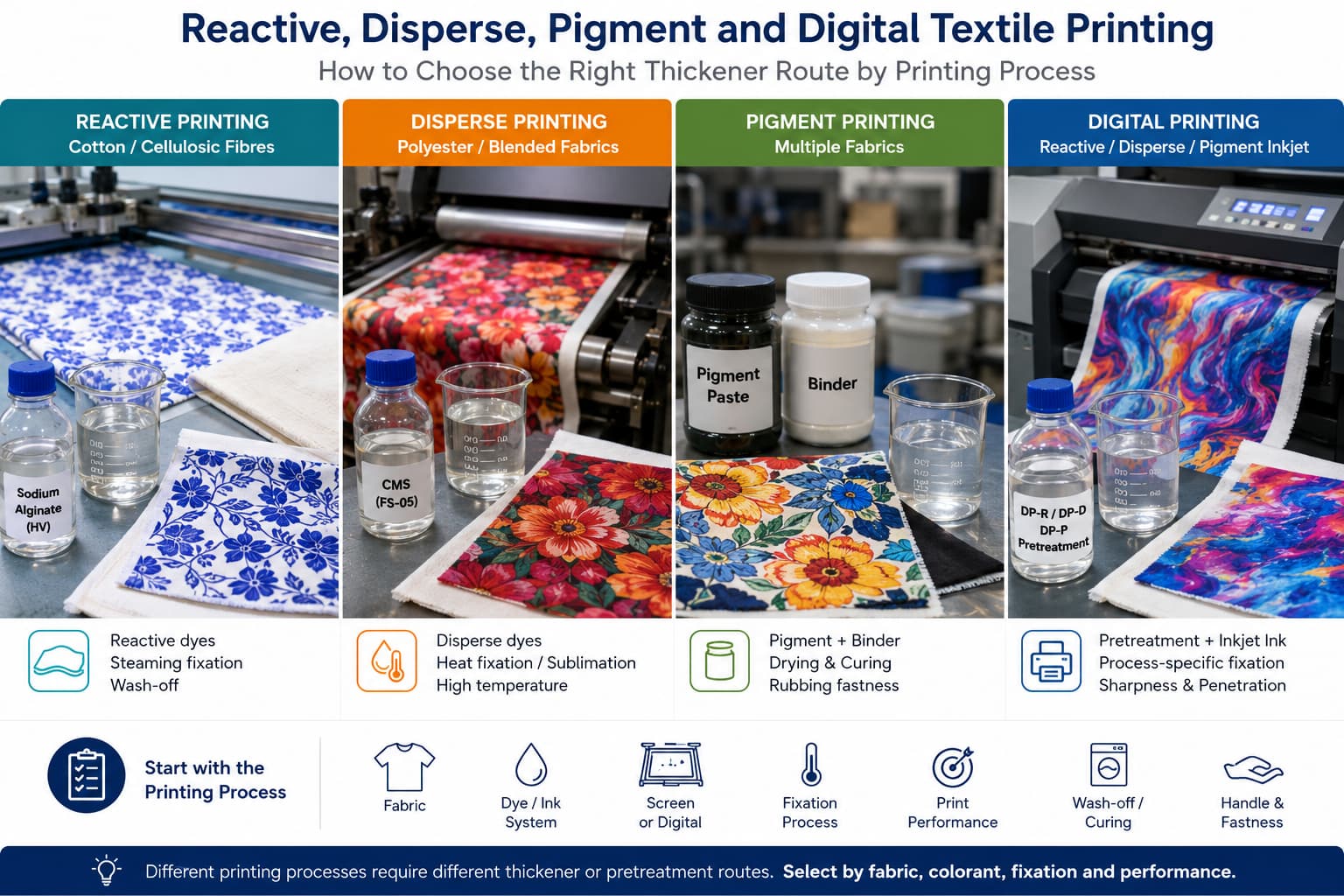
কাপড়, রঞ্জক বা কালি, স্থিরীকরণ, ধুয়ে ফেলার এবং মুদ্রণ-মানের প্রয়োজনীয়তার ভিত্তিতে প্রতিক্রিয়াশীল, বিচ্ছুরিত, পিগমেন্ট এবং ডিজিটাল টেক্সটাইল প্রিন্টিংয়ের জন্য ঘনকারী ও প্রিট্রিটমেন্ট পদ্ধতি কীভাবে নির্বাচন করবেন তা শিখুন।.
টেক্সটাইল প্রিন্টিংয়ের জন্য CMC, CMS, সোডিয়াম অ্যালজিনেট এবং ডিজিটাল প্রিন্টিং পেষ্টের তুলনা করুন। প্রতিটি পদ্ধতি কীভাবে রিয়্যাক্টিভ, ডিসপার্স, পিগমেন্ট এবং ডিজিটাল প্রক্রিয়ার সঙ্গে খাপ খায় এবং নমুনা পরীক্ষা, গ্রেড মিলान ও বৃহৎ পরিমাণে ক্রয়ের আগে ক্রেতাদের কী কী বিষয় পর্যালোচনা করা উচিত তা শিখুন।.
সোডিয়াম অ্যালজিনেট টেক্সটাইল প্রিন্টিং-এ রিঅ্যাক্টিভ প্রিন্টিং পেষ্টের জন্য একটি স্থিতিশীল ও ধোয়াযোগ্য ঘনকারী হিসেবে ব্যাপকভাবে ব্যবহৃত হয়। কেনার আগে সান্দ্রতা গ্রেড, বিশুদ্ধতা এবং প্রয়োগের উপযোগিতা কীভাবে মূল্যায়ন করবেন এবং FSX কেমিক্যাল কীভাবে প্রযুক্তিগত তথ্য ও নমুনা দিয়ে বিশ্বব্যাপী ক্রেতাদের সহায়তা করে তা জানুন।.
কার্বক্সিমেথাইল সেলুলোজ (CMC) বস্ত্রের মুদ্রণ, সাইজিং এবং রঙ করার প্রক্রিয়ায় ব্যাপকভাবে ব্যবহৃত হয়। এই গাইডে CMC গ্রেডগুলো কীভাবে মূল্যায়ন করবেন, কোন প্যারামিটারগুলো সবচেয়ে গুরুত্বপূর্ণ এবং FSX Chemical কীভাবে ক্রয় সিদ্ধান্তে সহায়তা করতে পারে তা ব্যাখ্যা করা হবে।.
কার্বক্সিমেথাইল সেলুলোজ জল-ভিত্তিক ইঙ্ক, গ্র্যাভুর প্রিন্টিং এবং ইঙ্কজেট প্রি-ট্রিটমেন্টে ঘনকারী ও স্থিতিশীলকারী হিসেবে ব্যবহৃত হয়। এই গাইডে ক্রয় দলের জন্য মূল গ্রেড পরামিতি এবং উৎস নির্ধারণ সংক্রান্ত বিবেচনাসমূহ অন্তর্ভুক্ত রয়েছে।.
টেক্সটাইল প্রিন্টিং-এ ঘনকারী হিসেবে সোডিয়াম অ্যালজিনেট এবং CMC উভয়ই ব্যবহৃত হয়, তবে এগুলো ভিন্ন রঞ্জক ব্যবস্থা ও প্রক্রিয়া শর্তের জন্য উপযুক্ত। এই গাইডে মূল পার্থক্যগুলো এবং কখন কোনটি ব্যবহার করতে হবে তা ব্যাখ্যা করা হয়েছে।.
টেক্সটাইল ডিজিটাল ইঙ্কজেট প্রিন্টিং-এ স্ক্রিন প্রিন্টিং-এর তুলনায় ভিন্ন ধরনের পেস্ট এবং পূর্ব-প্রক্রিয়াকরণ প্রয়োজন। এই গাইডে ব্যাখ্যা করা হয়েছে কীভাবে সোডিয়াম অ্যালজিনেট ডিজিটাল টেক্সটাইল প্রিন্টিং-এ ব্যবহৃত হয় এবং ক্রয় দলগুলিকে কোন গ্রেড পরামিতি নির্ধারণ করা উচিত।.
খাদ্য-গ্রেড এবং শিল্প-গ্রেড CMC একই মৌলিক রাসায়নিক গঠন ভাগ করে, তবে বিশুদ্ধতা, DS পরিসর এবং নিয়ন্ত্রক প্রয়োজনীয়তায় এদের মধ্যে উল্লেখযোগ্য পার্থক্য রয়েছে। এই গাইডে মূল পার্থক্যগুলো এবং ভুল গ্রেড ব্যবহার করলে কেন উৎপাদন সমস্যা সৃষ্টি হয় তা ব্যাখ্যা করা হয়েছে।.
প্রতিক্রিয়াশীল রঞ্জক টেক্সটাইল প্রিন্টিং-এ গ্রেড নির্বাচনের মতো সঠিক পেস্ট প্রস্তুতিও গুরুত্বপূর্ণ। এই গাইডে সোডিয়াম অ্যালজিনেট দ্রবীভবন পদ্ধতি, প্রয়োগ অনুযায়ী ঘনত্বের পরিসর, সংরক্ষণ শর্তাবলী এবং সাধারণ প্রস্তুতিজনিত সমস্যা সমাধানের উপায়সমূহ অন্তর্ভুক্ত রয়েছে।.
সোডিয়াম অ্যালজিনেট একটি প্রাকৃতিক, জৈব-বিক্রিয়যোগ্য পলিমার, তবে টেক্সটাইল প্রিন্টিংয়ে এর ব্যবহারের ফলে এমন বর্জ্যজল তৈরি হয় যার ব্যবস্থাপনা প্রয়োজন। এই গাইডে সোডিয়াম অ্যালজিনেটের পরিবেশগত প্রোফাইল, ধৌত-প্রবাহিত বর্জ্যজলের বৈশিষ্ট্য এবং ক্রয় দলকে ঘনকারী নির্বাচন ও পরিবেশগত প্রভাব সম্পর্কে কী জানতে হবে তা আলোচনা করা হয়েছে।.
রঙ স্থিরীকরণ হার সরাসরি প্রভাবিত করে রঙের ফলন, ধোয়ার স্থায়িত্ব এবং দূষিত জল নির্গমনের পরিমাণ রিঅ্যাক্টিভ ডাই প্রিন্টিং-এ। এই গাইডে ব্যাখ্যা করা হয়েছে কীভাবে সোডিয়াম অ্যালজিনেট রঙ স্থিরীকরণে সহায়তা করে, কোন পেস্ট পরামিতিগুলো স্থিরীকরণ হারে প্রভাব ফেলে এবং উৎপাদনে কম স্থিরীকরণের সমস্যা কীভাবে সমাধান করতে হয়।.
পণ্যের নাম, ব্যবহার, পরিমাণ, গন্তব্য এবং আপনার কাছে থাকা যেকোনো TDS, নমুনা ছবি বা ডকুমেন্ট শেয়ার করুন। FSX Chemical এই তথ্য পর্যালোচনা করবে এবং কোটেশন, নমুনা মিলানো বা পণ্য নির্বাচনের পরবর্তী ধাপের জন্য পরামর্শ দেবে।.
পণ্যের তথ্যপণ্যের নাম, গ্রেড, মডেল, লেবেলের ছবি বা সরবরাহকারীর রেফারেন্স।.