সঠিক থিকেনার নির্বাচন করে তীক্ষ্ণ প্যাটার্ন প্রান্ত কীভাবে অর্জন করবেন
Sharp textile print edges depend on more than viscosity. Learn how thickener chemistry, rheology, structural...
Sharp pattern edges in textile printing do not come from viscosity alone. They depend on the interaction between thickener chemistry, rheology, structural recovery, filtration, fabric absorbency, paste transfer and machine settings. This guide explains how proper thickener selection can help improve edge definition in reactive, disperse, pigment and selected digital textile printing processes.
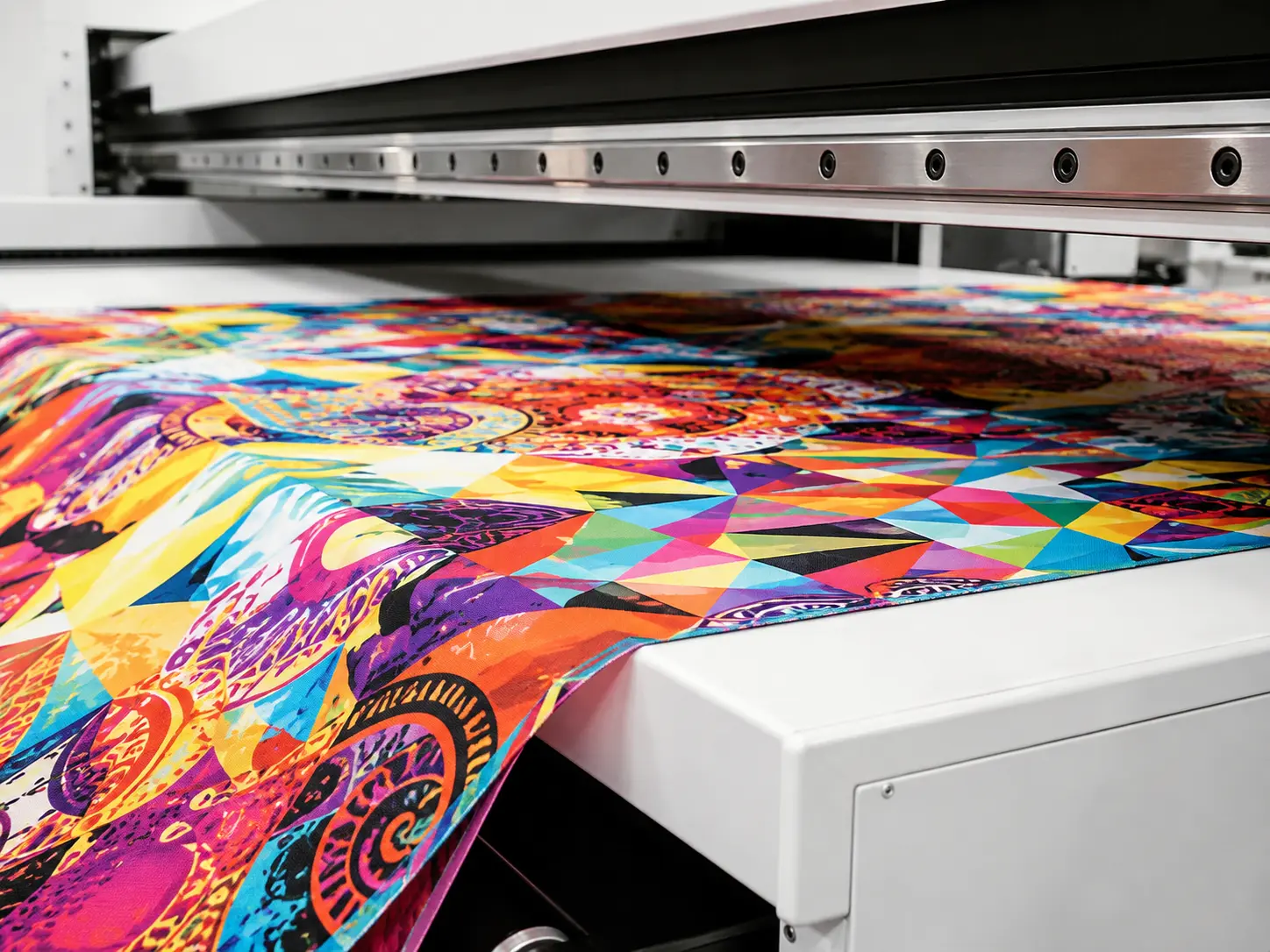
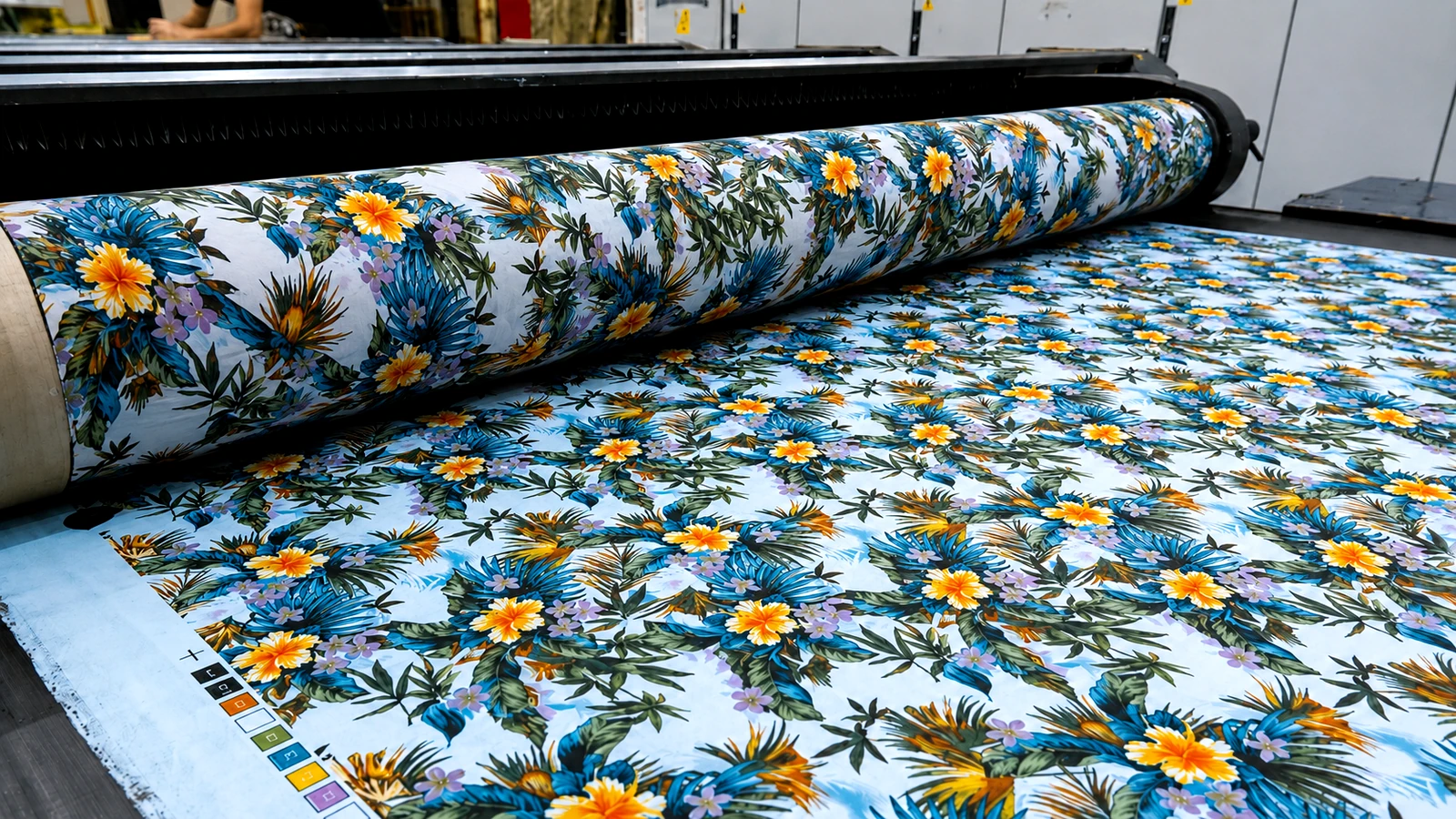
Sharp edges are one of the clearest visual indicators of a well-controlled textile printing process. Fine lines should remain narrow, corners should stay defined, small text should remain legible and adjacent colors should not bleed into one another.
When pattern edges become blurred, the first reaction is often to increase viscosity. In some cases this changes spreading, but it is not a reliable universal solution.
A paste can have high standing viscosity and still show weak print definition if it transfers poorly, recovers structure too slowly after shear, penetrates the fabric excessively or interacts poorly with the full printing formula.
The correct objective is therefore not maximum viscosity. It is a controlled rheological operating window that allows the paste to flow during application and then recover enough structure to limit unwanted movement on the textile.
This guide explains how to select and evaluate textile printing thickeners when sharp pattern edges, fine details and clean color boundaries are the primary performance targets.
What Do Sharp Pattern Edges Mean in Textile Printing?
Sharp pattern edges mean that the printed boundary remains close to the intended design after paste transfer, fixation or curing and any required washing.
Useful indicators include
Fine lines remain continuous and narrow
Small text remains readable
Sharp corners remain angular rather than rounded
Dots remain distinct
Adjacent colors remain separated
Pattern boundaries do not feather excessively
Edge definition should be evaluated after the complete printing process, because fixation, washing, curing and fabric movement can change the final appearance.
Why Pattern Edges Become Blurred
Blurred edges can originate from several different parts of the printing process.
Possible thickener-related causes include
Insufficient structural recovery
Unsuitable shear-thinning behavior
Viscosity outside the practical operating range
Poor hydration
Low filtration quality
Chemical incompatibility in the complete paste
Other causes can include
Highly absorbent fabric
Excessive paste pickup
Incorrect squeegee pressure
Screen condition
Excess ink or paste laydown
শুকানোর শর্তাবলী
Fixation or washing differences
A professional troubleshooting process should therefore confirm the source of the problem before changing thickener concentration.
Why Viscosity Alone Is Not Enough
Viscosity is important because it influences how easily the paste moves, but a single reading represents only one measurement condition.
Textile printing exposes the paste to changing shear. The paste may be nearly stationary in storage, move through pipes, experience stronger forces during screen passage and then recover after reaching the fabric.
Two thickeners with the same single-point viscosity can therefore produce different edge definition.
The difference may come from
Shear-thinning behavior
Structural recovery
Yield-like structure
Hydration quality
ছাঁকন
Fabric interaction
The better thickener is not necessarily the one with the higher viscosity. It is the one that gives the required balance of transfer and recovery.
Rheology and Edge Definition
Rheology describes how the paste behaves as mechanical force changes. This makes it especially important when the performance target is sharp printing.
At relatively low shear
Sufficient structure can help the paste remain stable before printing.
Under application shear
The paste should become easy enough to transfer through the screen or application zone.
After transfer
The paste should recover enough structure to reduce continued spreading.
This sequence explains why rheology often predicts edge definition better than a single viscosity value.
Shear Thinning During Printing
Many useful textile printing pastes show shear-thinning behavior. Their apparent viscosity decreases as the applied shear increases.
This can help the paste pass through a screen or move under a squeegee without requiring a permanently low-viscosity system.
Too little shear thinning
The paste may resist transfer, creating incomplete lines or uneven solid areas.
Excessive flow without adequate recovery
The paste may transfer easily but continue spreading after application, reducing pattern sharpness.
Sharp printing therefore depends on the balance between flow under shear and recovery after shear.
Structural Recovery After Paste Transfer
Structural recovery is one of the most important concepts in edge definition.
Once the paste leaves the high-shear application zone, it should rebuild enough structure to resist excessive lateral movement.
Slow or weak recovery can contribute to
Feathered edges
Loss of fine-line width
Rounded corners
Color migration between adjacent areas
Excessively rigid recovery can create other problems
If the paste becomes too resistant, transfer and leveling may become less uniform.
The optimum recovery profile is therefore application-specific.
Penetration vs Lateral Spreading
Paste movement on fabric occurs both into the textile structure and across the surface.
These two directions should be distinguished.
Excessive lateral spreading
This is the main contributor to blurred edges.
Excessive penetration
This can reduce surface color appearance and make fine details less visible.
অপর্যাপ্ত অনুপ্রবেশ
This may create a surface-heavy result that is not suitable for some fabric constructions.
Proper thickener selection should therefore control both lateral movement and depth of penetration rather than focusing on one direction only.
How Fabric Absorbency Changes Edge Sharpness
A thickener cannot be selected independently of the fabric.
Highly absorbent cellulosic fabrics can pull liquid rapidly into yarn and fiber structures, increasing the risk of migration.
Important fabric variables include
Fiber composition
Knitted or woven construction
কাপড়ের ওজন
Density
Surface texture
Previous finishing
Moisture content
A thickener that produces sharp lines on dense woven cotton may require different optimization on viscose knit or an open fabric.
Filtration and Fine-Pattern Reproduction
Fine patterns are less tolerant of gels, lumps and poorly hydrated material.
High filtration residue can contribute to
Blocked screen openings
Broken fine lines
Local missing print
Inconsistent transfer
Use a standardized filtration test
Compare products using the same concentration, hydration time, sample quantity and filter condition.
Filtration does not guarantee perfect printing, but it is a useful supporting indicator when fine pattern reproduction is important.
Screen Passage and Transfer
Sharp edges depend on clean transfer through the printing system.
If the paste is too resistant, fine openings may not transfer enough material. If the paste is too fluid or recovers too slowly, the printed boundary may spread after transfer.
Evaluate together
সান্দ্রতা
রিওলজি
ছাঁকন
Screen mesh
স্কুইজি সেটিংস
Printing speed
The thickener should be matched to the complete mechanical printing condition rather than tested only in a beaker.
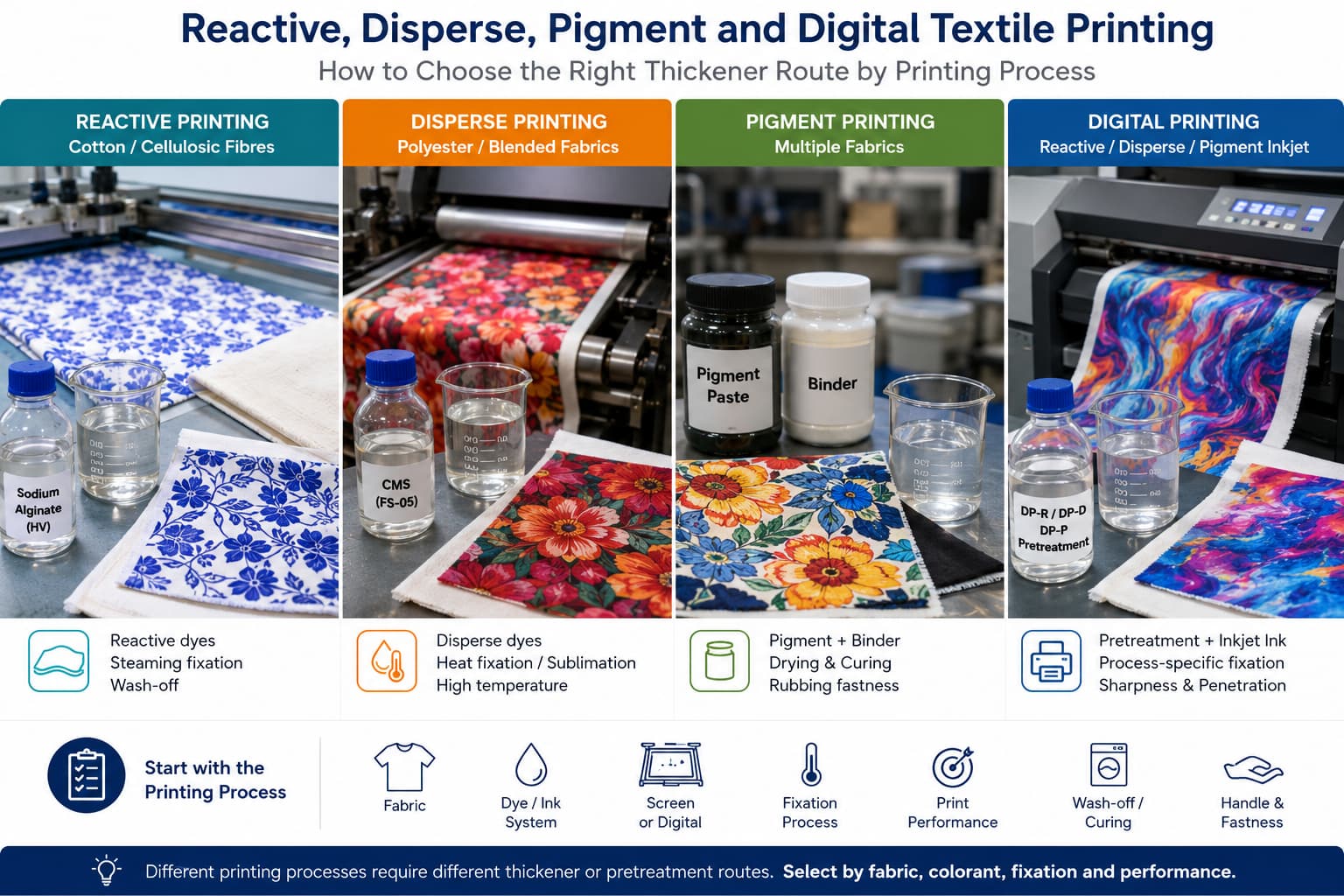
Sodium Alginate for Sharp Reactive Printing
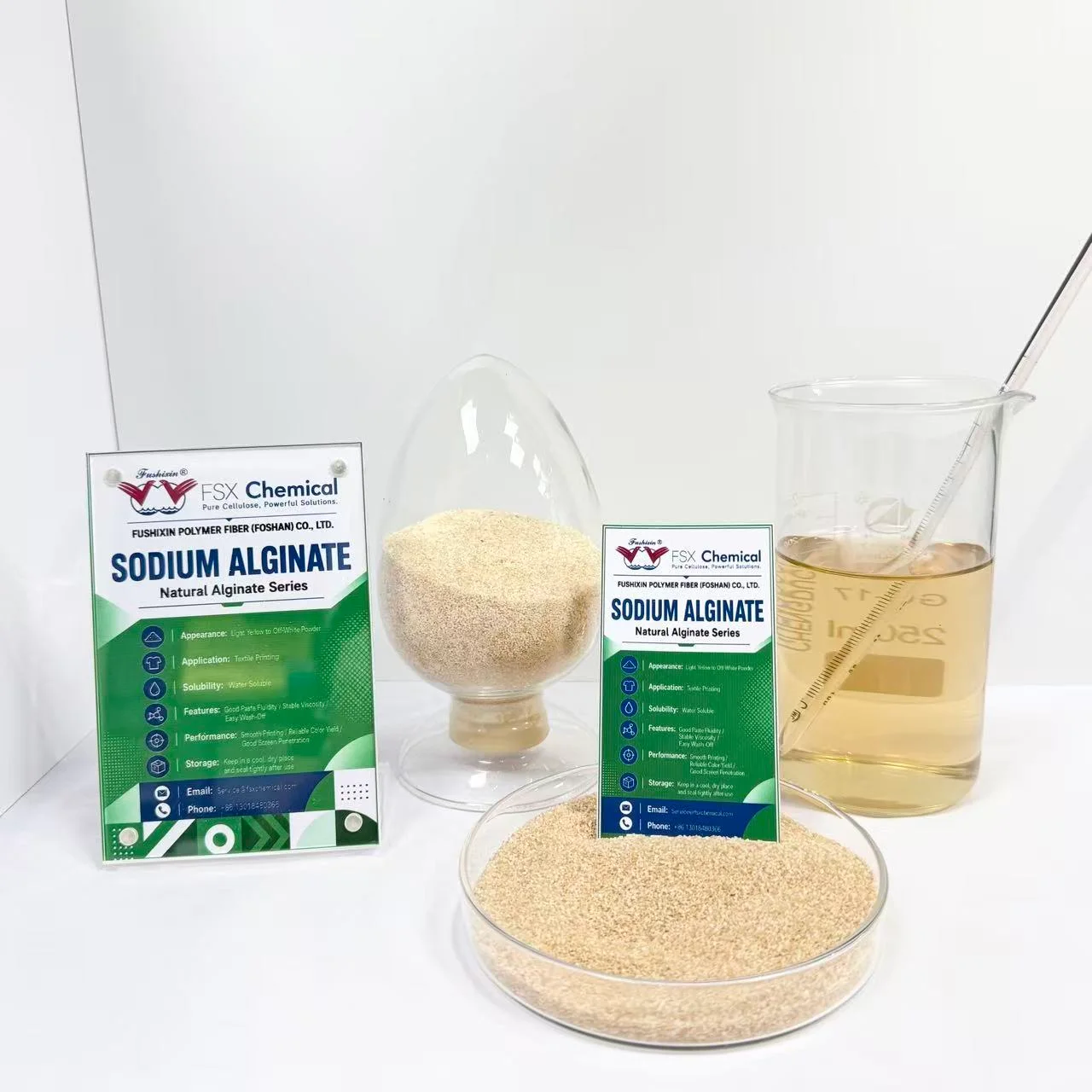
সোডিয়াম অ্যালজিনেট এটি উপযুক্ত সেলুলোজিক কাপড়ে প্রচলিত প্রতিক্রিয়াশীল প্রিন্টিংয়ের জন্য একটি সাধারণ বেঞ্চমার্ক ঘনকারী।.
For sharp pattern edges, evaluate
Viscosity under a defined method
জলসঞ্চার
ছাঁকন
Shear-thinning behavior
Structural recovery
Reactive-paste compatibility
সূক্ষ্ম রেখা সংজ্ঞা
Fixation and wash-off
HV sodium alginate should not automatically be assumed to provide the sharpest printing. The best grade is the one that provides the correct rheological balance for the formula, fabric and machine.
CMC in Selected Sharp-Definition Systems
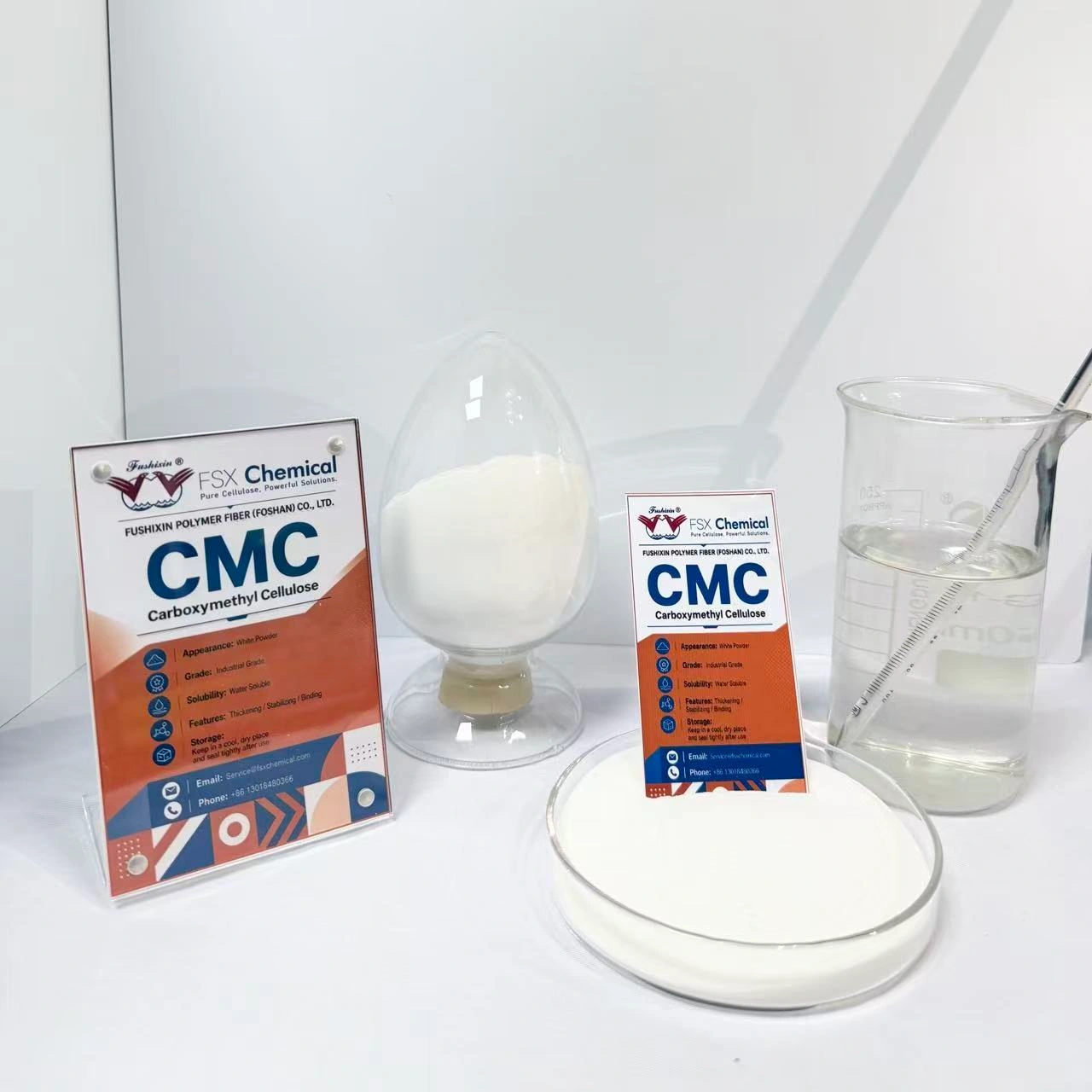
সিএমসি can be evaluated in selected textile printing and compound thickener systems.
Important matching parameters include
Degree of substitution where relevant
সান্দ্রতা
জলসঞ্চার
ছাঁকন
Electrolyte response
রিওলজি
সম্পূর্ণ-পেস্ট সামঞ্জস্য
Two CMC grades with similar viscosity can still produce different edge definition because their shear response and recovery may differ.
CMC should not be assumed to replace sodium alginate 1:1 in reactive printing without full formulation and fabric testing.
CMS in Selected Disperse and Compound Systems
সিএমএস নির্বাচিত বিচ্ছুরিত, যৌগিক এবং বিশেষ টেক্সটাইল প্রিন্টিং সিস্টেমে মূল্যায়ন করা যেতে পারে।.
For pattern definition, compare
Viscosity efficiency
জলসঞ্চার
ছাঁকন
স্ক্রিন প্যাসেজ
Rheological recovery
পেস্টের স্থিতিশীলতা
Color-system compatibility
Sharpness should be confirmed on the finished textile after the relevant thermal or post-treatment process.
Compound Thickeners for Balanced Edge Control
A compound thickener can combine several rheology-control components when one polymer alone does not provide the preferred balance.
A compound system may be designed to balance
Base viscosity
Shear thinning
Structural recovery
ছাঁকন
Electrolyte tolerance
স্থিতিশীলতা বজায় রাখা
Edge definition
Effective dosage
Compound does not automatically mean sharper. The formulation still needs to be evaluated against a current benchmark and actual printing conditions.
Pigment Printing and Binder-Compatible Rheology
Pigment printing requires the thickener to operate together with pigment dispersion, binder and curing chemistry.
A thickener that gives good edge definition but interacts poorly with the binder is not a successful solution.
Evaluate
বাইন্ডার সামঞ্জস্যতা
Electrolyte response
পেস্টের স্থিতিশীলতা
সংজ্ঞা মুদ্রণ করুন
শুকানো
ঘর্ষণ কর্মক্ষমতা
Fabric hand feel
Sharp pigment printing requires a balance between rheology and film-forming performance.
Digital Printing Pretreatment and Edge Definition
Digital inkjet printing uses a different chemistry from conventional screen printing.
ডিজিটাল প্রিন্টিং পেষ্ট is primarily evaluated as a fabric-side pretreatment rather than as a general additive to digital ink.
For sharp digital printing, evaluate
Pretreatment uniformity
ফ্যাব্রিক পিকআপ
শুকানো
ইঙ্ক স্থানান্তর
সূক্ষ্ম রেখা সংজ্ঞা
Color boundaries
Fixation or curing
চূড়ান্ত কাপড়ের হ্যান্ডেল
Reactive, disperse and pigment digital systems should be evaluated separately because their fabric and fixation chemistry differ.
Flat-Screen Printing
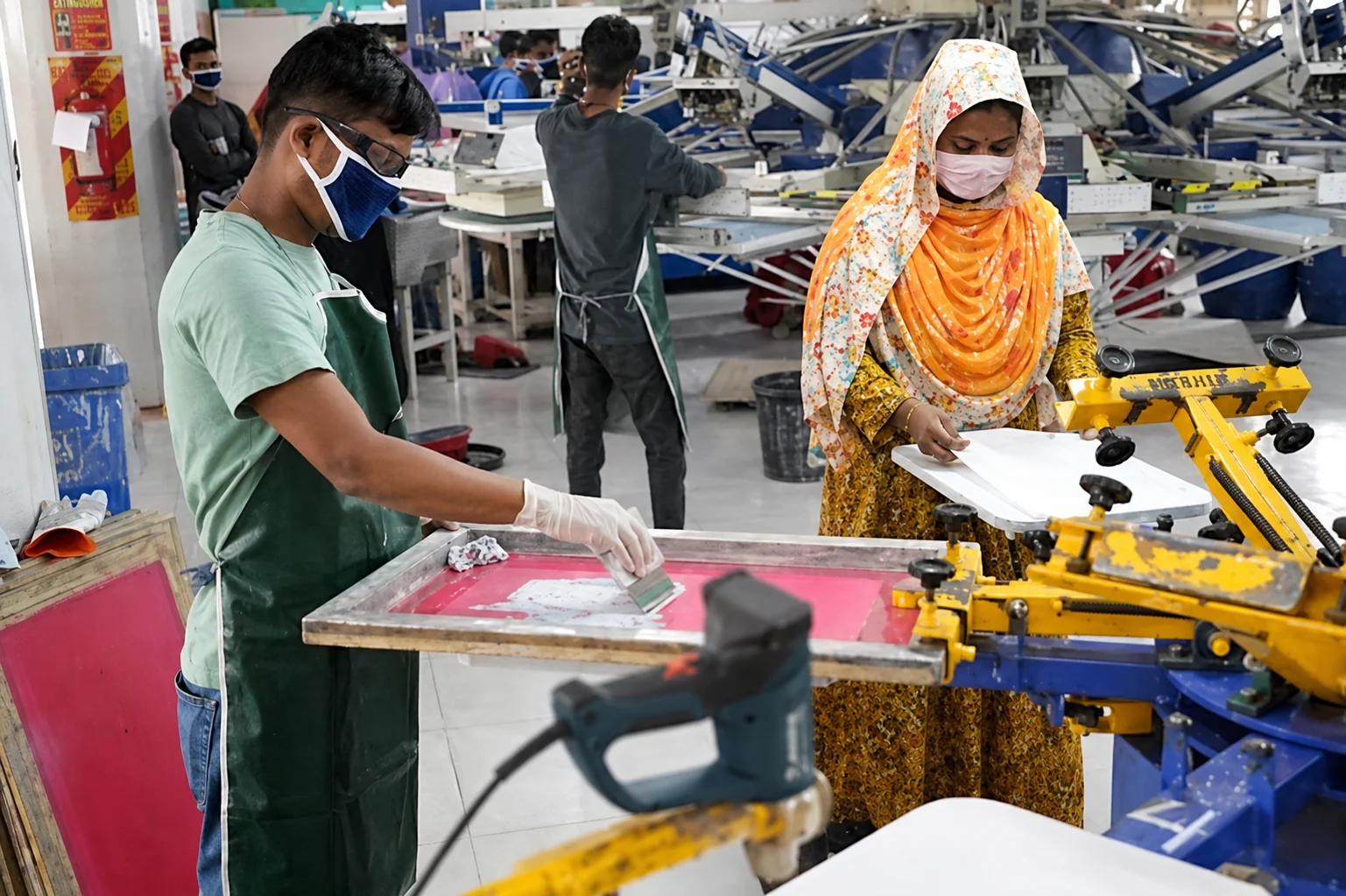
Flat-screen printing is strongly affected by the interaction between squeegee conditions, screen parameters and paste rheology.
When edge definition is poor, check
Squeegee pressure
Squeegee speed
Screen mesh
Paste viscosity
রিওলজি
ছাঁকন
কাপড়ের শোষণক্ষমতা
Increasing viscosity without controlling the squeegee and screen can hide the real source of the defect.
Rotary-Screen Printing
Rotary-screen printing adds continuous pumping and circulation to the requirements of sharp pattern reproduction.
Important thickener properties include
Stable circulation
Practical filtration
Shear stability
Fast enough structural recovery
Long-run holding stability
A paste that prints sharply during a short trial should still be checked through the beginning, middle and end of a production run.
Fine Lines, Small Text and Corners
Fine-detail test patterns are one of the best ways to compare two thickeners for edge definition.
A useful diagnostic design should include
Fine horizontal lines
Fine vertical lines
Small text
Sharp corners
Fine dots
Closely spaced parallel lines
Adjacent color boundaries
These features can reveal spreading and transfer differences that are easy to miss in a simple solid block.
Why Solid Areas Must Also Be Tested
A thickener can produce excellent fine lines but poor large-area coverage if the paste does not transfer or level correctly.
Solid areas reveal
Transfer efficiency
Paste leveling
Penetration uniformity
Color-paste delivery
Machine consistency
The preferred thickener should therefore balance fine-detail sharpness with acceptable solid-area performance.
Dark Shades as a Stress Test
Black and other deep colors make edge defects easier to observe.
Dark shades can reveal
Feathering
Uneven solid coverage
Excessive penetration
Broken fine details
Boundary contamination
However, dark-shade performance depends on the dye or pigment system as well as the thickener. The same colorant, concentration, fabric and post-treatment should be used during comparison.
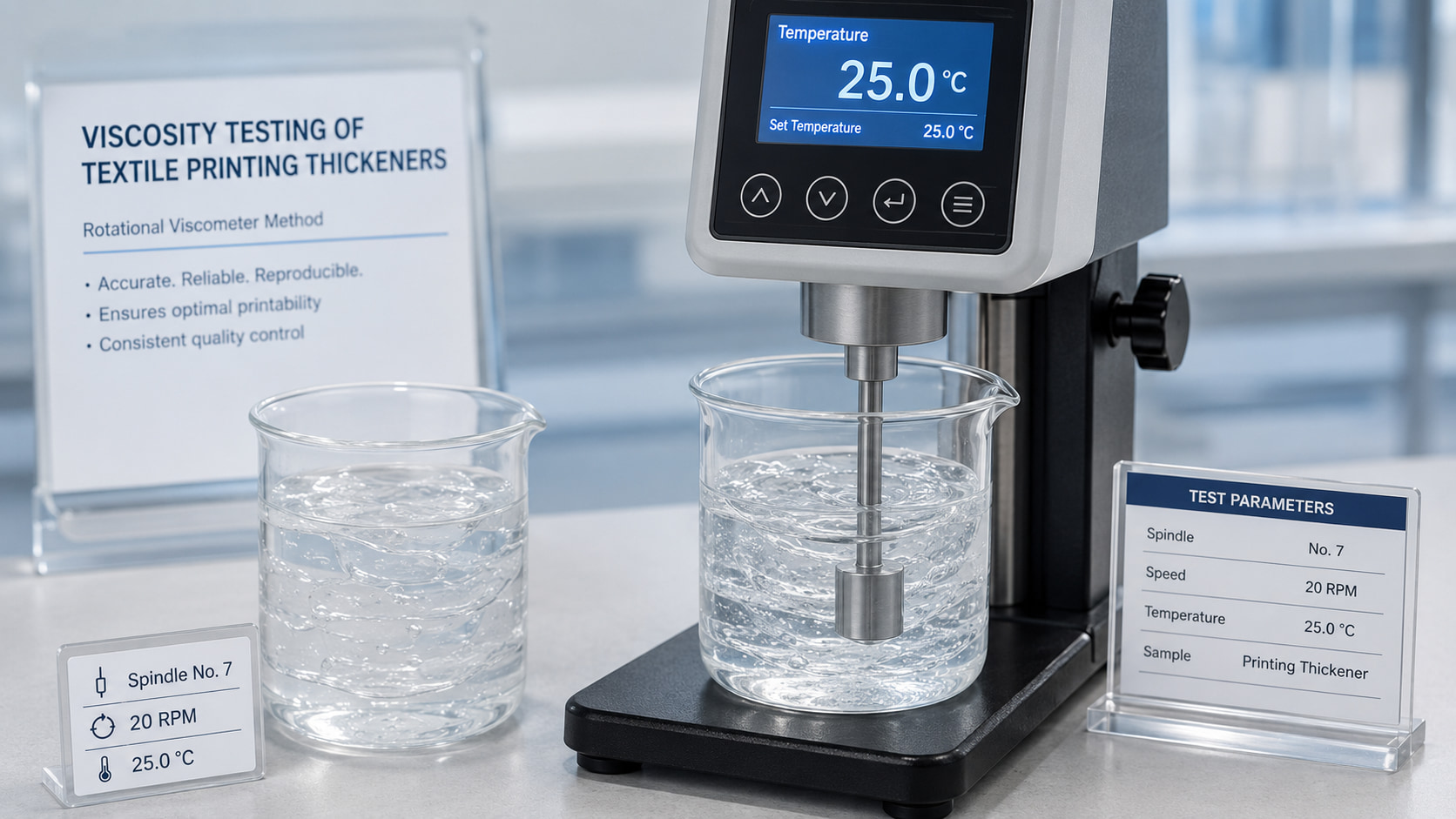
Standardizing the Viscosity Method
Thickener comparison is unreliable if viscosity is measured under different conditions.
Always record
পণ্যের ঘনত্ব
জলের উৎস
Mixing method
Hydration time
তাপমাত্রা
Viscometer
স্পিন্ডল, রোটর বা জ্যামিতি
ঘূর্ণন গতি
পড়ার সময়
Edge-definition problems should not be attributed to a product until the viscosity comparison itself is technically valid.
Optimizing Thickener Dosage
The initial comparison should use a controlled baseline. After a candidate passes the basic technical comparison, dosage can be optimized.
Do not optimize only for viscosity
A lower dosage may still meet a viscosity target but produce weaker edge recovery or different penetration.
Adjust gradually
Test several controlled dosage levels around the successful condition.
Reprint the same diagnostic design
Compare fine lines, solid areas and final fabric after every meaningful dosage change.
The best dosage is the lowest practical level that maintains the required production and quality performance, not simply the lowest number tested.
Testing the Complete Printing Paste
A thickener should never be approved for edge definition from water solution alone.
The complete paste may contain
Dyes
Pigments
লবণসমূহ
ক্ষারক
বাইন্ডারসমূহ
আর্দ্রতা ধরে রাখে এমন পদার্থ
আর্দ্রকারী পদার্থ
ডিফোমার
These components can change viscosity, rheology, filtration and stability.
Sharpness should therefore be evaluated only after the candidate thickener has been tested in the real production formula.
সুপারিশকৃত পরীক্ষাগার কর্মপ্রবাহ
Step 1: Define the edge-definition problem
Record whether the issue is feathering, broken lines, rounded corners, color bleeding or poor small-text clarity.
Step 2: Record the current benchmark
Use the currently approved thickener whenever possible.
Step 3: Standardize the viscosity method
Align concentration, preparation, hydration, temperature and instrument.
Step 4: Compare hydration and filtration
Eliminate obvious preparation problems before printing.
Step 5: Compare rheology where possible
Multi-speed measurements can help reveal differences in shear behavior.
Step 6: Prepare the complete production paste
Use the same colorant and auxiliaries.
Step 7: Print the same fabric
Use a diagnostic design containing fine details and large solid areas.
Step 8: Complete fixation, curing or washing
Evaluate edge definition on the finished textile.
Step 9: Optimize dosage
Adjust the candidate only after it has passed the baseline comparison.
Production Trial and Scale-Up
Laboratory sharpness does not automatically guarantee production sharpness.
Scale-up changes
Batch size
Mixer geometry
Holding time
Pumping
Circulation
মেশিনের গতি
Fabric tension
During the production trial, monitor
স্ক্রিন প্যাসেজ
Paste transfer
সূক্ষ্ম রেখা সংজ্ঞা
ঘন-ক্ষেত্রের সমতা
প্রবেশ
পেস্টের স্থিতিশীলতা
Compare fabric from the beginning, middle and end of the run before approving the new grade.
Troubleshooting Blurred Pattern Edges
পর্যবেক্ষিত সমস্যা
সম্ভাব্য কারণ
কি পরীক্ষা করবেন
Fine lines spread wider
Weak structural recovery or high fabric absorbency
Rheology, dosage, pickup and fabric
Edges feather after printing
Excess lateral migration
Recovery, liquid load, fabric and machine settings
Fine lines are incomplete
Poor transfer, excessive resistance or blocked screen openings
Viscosity, filtration, screen and squeegee
Corners become rounded
Paste continues to flow after transfer
Structural recovery and dosage
Adjacent colors bleed
Migration, excess liquid or insufficient surface control
Rheology, paste load, fabric and drying
Sharpness is good but solids are weak
Transfer is too restricted
Viscosity, squeegee pressure and screen passage
Lab print is sharp but production blurs
Scale-up, circulation or speed difference
Machine conditions, shear history and holding time
Same viscosity but different sharpness
Different rheology or recovery
Multi-speed behavior, filtration and full-paste trial
Blurred edges should be treated as a system problem. Thickener selection is important, but the machine, fabric, colorant and post-treatment should be investigated at the same time.
Sharpness and Total Cost in Use
A sharper-printing thickener can have economic value when it reduces rework, rejected fabric or repeated machine adjustment.
তুলনা করুন
Delivered thickener price
Effective dosage
প্রস্তুতি সময়
ছাঁকন
স্ক্রিন পরিষ্কার করা
Printing speed
বাতিল করা কাপড়
পুনর্মুদ্রণ
The preferred product is not necessarily the cheapest per kilogram or the highest in viscosity. It is the grade that achieves the required edge definition and overall production stability at an acceptable total cost.
How to Compare Thickener Suppliers for Edge Definition
Supplier comparison should begin with a current successful product whenever one is available.
Ask the supplier to align
সান্দ্রতা পদ্ধতি
Polymer concentration
Hydration conditions
Filtration method
প্রিন্ট করার পথ
কাপড়
বর্তমান মাত্রা
Main edge-definition problem
A supplier should recommend a candidate for testing rather than guarantee sharper printing before seeing the actual formulation and application.
How FSX Chemical Supports Sharp-Definition Grade Matching
Customers seeking sharper edges can use their current commercial product and printed fabric as the technical benchmark.
মাধ্যমে নমুনা ও মিলान , the current TDS, physical sample, viscosity method, formula and printing conditions can be reviewed before a candidate grade is selected.
উপযোগী তথ্যের মধ্যে রয়েছে
Current thickener manufacturer and grade
TDS or available COA
শারীরিক রেফারেন্স নমুনা
Viscosity concentration and test method
বর্তমান মাত্রা
প্রতিক্রিয়াশীল, ছড়িয়ে, রঞ্জক বা ডিজিটাল পথ
বস্ত্রের গঠন ও নির্মাণ
Flat-screen, rotary-screen or digital equipment
Screen mesh where relevant
Current print image or defect photo
Main issue: bleeding, feathering, broken lines or weak solids
Final suitability should be confirmed through controlled side-by-side printing and production validation rather than from viscosity data alone📧 ইমেইল: Service@fsxchemical.com
জানুন কেন টেক্সটাইল প্রিন্টিং থিকেনার সান্দ্রতা (ভিসকোসিটি) মানগুলো তুলনা করা যায় না যদি না সেগুলোর ঘনত্ব, তাপমাত্রা, যন্ত্র, স্পিন্ডল, গতি, প্রস্তুতি পদ্ধতি এবং পরীক্ষার সময় মিল থাকে।.
কাপড়, রঞ্জক বা কালি, স্থিরীকরণ, ধুয়ে ফেলার এবং মুদ্রণ-মানের প্রয়োজনীয়তার ভিত্তিতে প্রতিক্রিয়াশীল, বিচ্ছুরিত, পিগমেন্ট এবং ডিজিটাল টেক্সটাইল প্রিন্টিংয়ের জন্য ঘনকারী ও প্রিট্রিটমেন্ট পদ্ধতি কীভাবে নির্বাচন করবেন তা শিখুন।.
টেক্সটাইল প্রিন্টিংয়ের জন্য CMC, CMS, সোডিয়াম অ্যালজিনেট এবং ডিজিটাল প্রিন্টিং পেষ্টের তুলনা করুন। প্রতিটি পদ্ধতি কীভাবে রিয়্যাক্টিভ, ডিসপার্স, পিগমেন্ট এবং ডিজিটাল প্রক্রিয়ার সঙ্গে খাপ খায় এবং নমুনা পরীক্ষা, গ্রেড মিলान ও বৃহৎ পরিমাণে ক্রয়ের আগে ক্রেতাদের কী কী বিষয় পর্যালোচনা করা উচিত তা শিখুন।.
সোডিয়াম অ্যালজিনেট টেক্সটাইল প্রিন্টিং-এ রিঅ্যাক্টিভ প্রিন্টিং পেষ্টের জন্য একটি স্থিতিশীল ও ধোয়াযোগ্য ঘনকারী হিসেবে ব্যাপকভাবে ব্যবহৃত হয়। কেনার আগে সান্দ্রতা গ্রেড, বিশুদ্ধতা এবং প্রয়োগের উপযোগিতা কীভাবে মূল্যায়ন করবেন এবং FSX কেমিক্যাল কীভাবে প্রযুক্তিগত তথ্য ও নমুনা দিয়ে বিশ্বব্যাপী ক্রেতাদের সহায়তা করে তা জানুন।.
কার্বক্সিমেথাইল সেলুলোজ (CMC) বস্ত্রের মুদ্রণ, সাইজিং এবং রঙ করার প্রক্রিয়ায় ব্যাপকভাবে ব্যবহৃত হয়। এই গাইডে CMC গ্রেডগুলো কীভাবে মূল্যায়ন করবেন, কোন প্যারামিটারগুলো সবচেয়ে গুরুত্বপূর্ণ এবং FSX Chemical কীভাবে ক্রয় সিদ্ধান্তে সহায়তা করতে পারে তা ব্যাখ্যা করা হবে।.
কার্বক্সিমেথাইল সেলুলোজ জল-ভিত্তিক ইঙ্ক, গ্র্যাভুর প্রিন্টিং এবং ইঙ্কজেট প্রি-ট্রিটমেন্টে ঘনকারী ও স্থিতিশীলকারী হিসেবে ব্যবহৃত হয়। এই গাইডে ক্রয় দলের জন্য মূল গ্রেড পরামিতি এবং উৎস নির্ধারণ সংক্রান্ত বিবেচনাসমূহ অন্তর্ভুক্ত রয়েছে।.
CMC-ভিত্তিক প্রিন্টিং পেষ্ট পিগমেন্ট, রিঅ্যাক্টিভ এবং ডিজিটাল টেক্সটাইল প্রিন্টিংয়ে ব্যবহৃত হয়। এই গাইডে কোন প্যারামিটারগুলো গুরুত্বপূর্ণ, সরবরাহকারীদের কীভাবে তুলনা করবেন এবং বড় অর্ডার দেওয়ার আগে কী জানতে হবে তা ব্যাখ্যা করা হয়েছে।.
টেক্সটাইল প্রিন্টিং-এ ঘনকারী হিসেবে সোডিয়াম অ্যালজিনেট এবং CMC উভয়ই ব্যবহৃত হয়, তবে এগুলো ভিন্ন রঞ্জক ব্যবস্থা ও প্রক্রিয়া শর্তের জন্য উপযুক্ত। এই গাইডে মূল পার্থক্যগুলো এবং কখন কোনটি ব্যবহার করতে হবে তা ব্যাখ্যা করা হয়েছে।.
টেক্সটাইল ডিজিটাল ইঙ্কজেট প্রিন্টিং-এ স্ক্রিন প্রিন্টিং-এর তুলনায় ভিন্ন ধরনের পেস্ট এবং পূর্ব-প্রক্রিয়াকরণ প্রয়োজন। এই গাইডে ব্যাখ্যা করা হয়েছে কীভাবে সোডিয়াম অ্যালজিনেট ডিজিটাল টেক্সটাইল প্রিন্টিং-এ ব্যবহৃত হয় এবং ক্রয় দলগুলিকে কোন গ্রেড পরামিতি নির্ধারণ করা উচিত।.
খাদ্য-গ্রেড এবং শিল্প-গ্রেড CMC একই মৌলিক রাসায়নিক গঠন ভাগ করে, তবে বিশুদ্ধতা, DS পরিসর এবং নিয়ন্ত্রক প্রয়োজনীয়তায় এদের মধ্যে উল্লেখযোগ্য পার্থক্য রয়েছে। এই গাইডে মূল পার্থক্যগুলো এবং ভুল গ্রেড ব্যবহার করলে কেন উৎপাদন সমস্যা সৃষ্টি হয় তা ব্যাখ্যা করা হয়েছে।.
প্রতিক্রিয়াশীল রঞ্জক টেক্সটাইল প্রিন্টিং-এ গ্রেড নির্বাচনের মতো সঠিক পেস্ট প্রস্তুতিও গুরুত্বপূর্ণ। এই গাইডে সোডিয়াম অ্যালজিনেট দ্রবীভবন পদ্ধতি, প্রয়োগ অনুযায়ী ঘনত্বের পরিসর, সংরক্ষণ শর্তাবলী এবং সাধারণ প্রস্তুতিজনিত সমস্যা সমাধানের উপায়সমূহ অন্তর্ভুক্ত রয়েছে।.
সোডিয়াম অ্যালজিনেট একটি প্রাকৃতিক, জৈব-বিক্রিয়যোগ্য পলিমার, তবে টেক্সটাইল প্রিন্টিংয়ে এর ব্যবহারের ফলে এমন বর্জ্যজল তৈরি হয় যার ব্যবস্থাপনা প্রয়োজন। এই গাইডে সোডিয়াম অ্যালজিনেটের পরিবেশগত প্রোফাইল, ধৌত-প্রবাহিত বর্জ্যজলের বৈশিষ্ট্য এবং ক্রয় দলকে ঘনকারী নির্বাচন ও পরিবেশগত প্রভাব সম্পর্কে কী জানতে হবে তা আলোচনা করা হয়েছে।.
পণ্যের নাম, ব্যবহার, পরিমাণ, গন্তব্য এবং আপনার কাছে থাকা যেকোনো TDS, নমুনা ছবি বা ডকুমেন্ট শেয়ার করুন। FSX Chemical এই তথ্য পর্যালোচনা করবে এবং কোটেশন, নমুনা মিলানো বা পণ্য নির্বাচনের পরবর্তী ধাপের জন্য পরামর্শ দেবে।.
পণ্যের তথ্যপণ্যের নাম, গ্রেড, মডেল, লেবেলের ছবি বা সরবরাহকারীর রেফারেন্স।.