
















This guide explains how buyers can evaluate textile industry chemicals by application requirements, technical documents, sample testing, batch consistency, and supplier support.
Why Product Matching Matters in Textile Industry Chemicals
Product Names Do Not Define Application Suitability
A product name alone does not confirm suitability. Relevant specifications depend on chemistry: degree of substitution is useful for CMC, but should not be assigned automatically to sodium alginate or an unspecified FSX CMS grade. Confirm the applicable parameters and methods in the current TDS.
For this reason, buyers should review the actual specification and application conditions before confirming a product. This helps avoid mismatch between the selected grade and the production process.
Formulation Conditions Affect Performance
The same chemical grade may perform differently in different factories. Water quality, stirring method, dye system, auxiliaries, pH, fabric type, and production speed can all influence the final result.
A practical supplier should ask about these conditions before recommending a grade. This makes product matching more reliable and reduces unnecessary sample trials.
Sample Testing Reduces Bulk Order Risk
Sample testing helps buyers check whether the product can meet real production requirements before placing a bulk order. It is especially important when changing suppliers, replacing an existing grade, or developing a new printing paste formulation.
The approved sample should be connected to the final bulk order specification, including viscosity range, COA data, packaging, and batch traceability.
Main Textile Industry Chemicals Buyers May Need
CMC pour le contrôle de la viscosité et l'épaississement
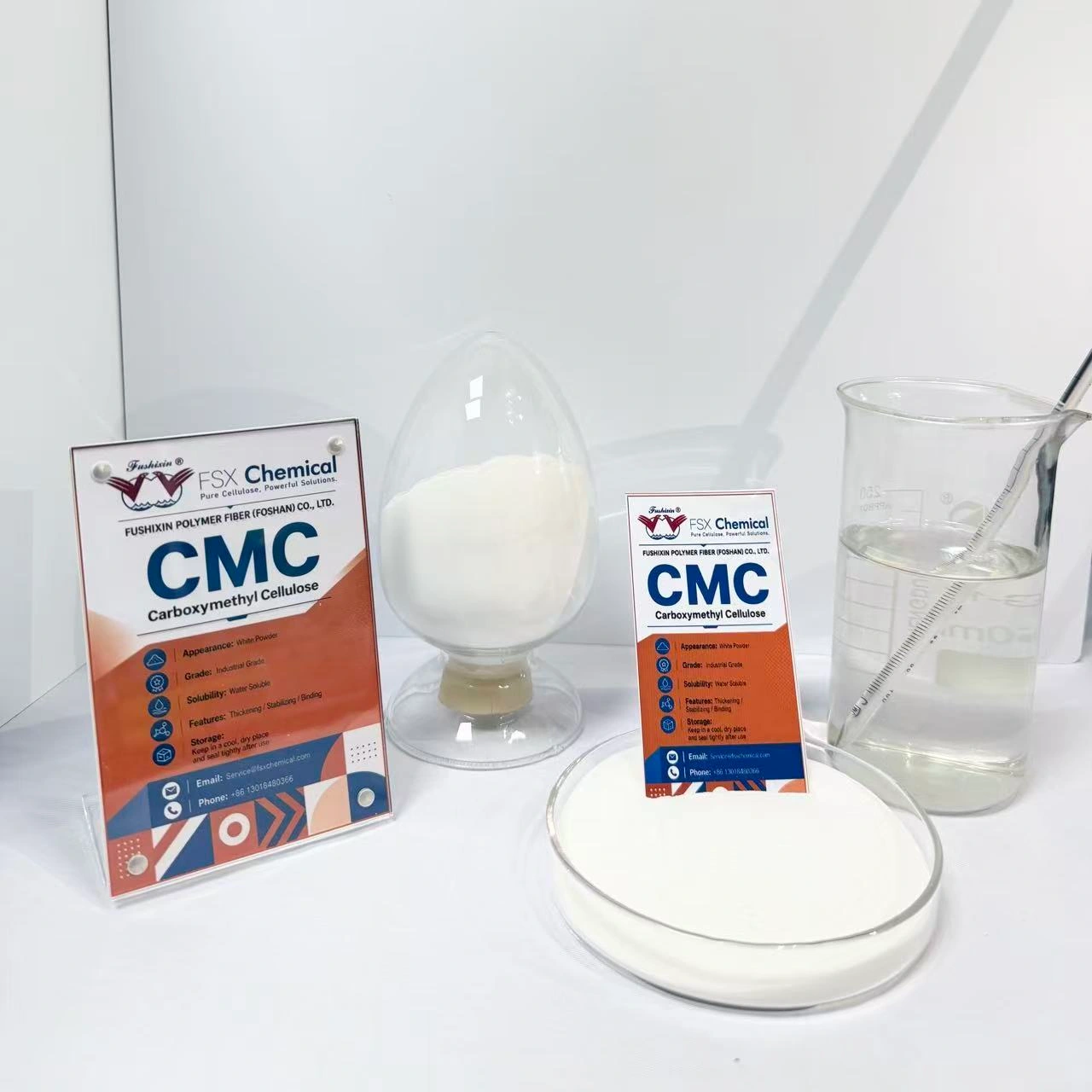
CMC, or Carboxymethyl Cellulose, can be used in selected textile printing and thickening applications where viscosity control, solubility, and paste handling are important.
When sourcing CMC, buyers should review viscosity grade, degree of substitution, pH, moisture, solubility, and batch consistency. If the buyer is replacing an existing grade, sharing the current specification can help the supplier recommend a closer match.
CMS pour l'aide à la formulation de pâtes d'impression
FSX CMS is a commercial synthetic printing-thickener product family. The abbreviation on this site should not be interpreted as a declaration of carboxymethyl starch composition. Confirm the exact grade and intended application against current product documentation.
For FSX CMS selection, check the grade-specific preparation method, viscosity conditions, paste stability and compatibility with the complete printing system. Request composition-related parameters only when the supplier documents their relevance; do not assume that every CMS product has a starch DS specification.
Alginate de sodium pour pâte d'impression réactive
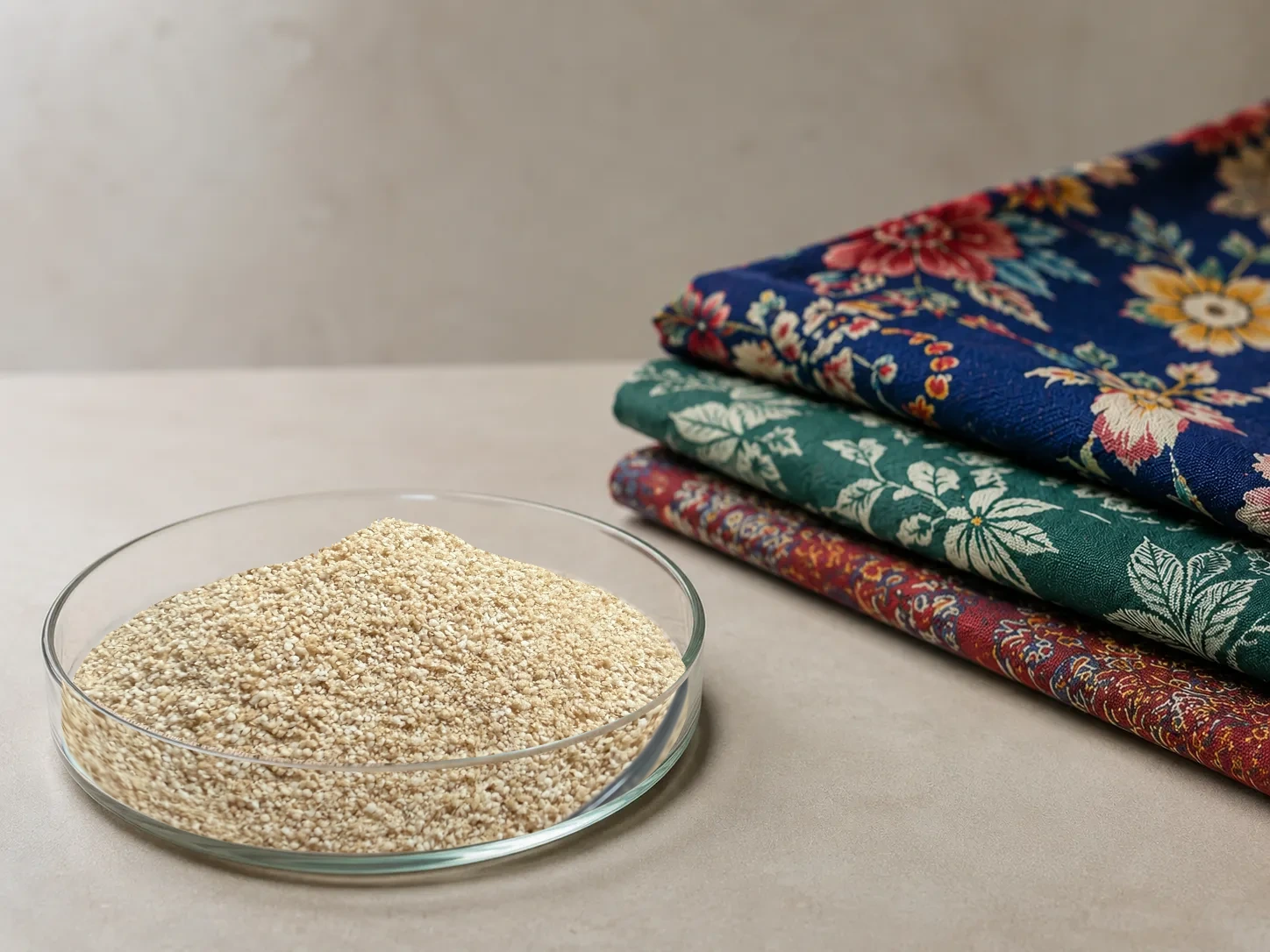
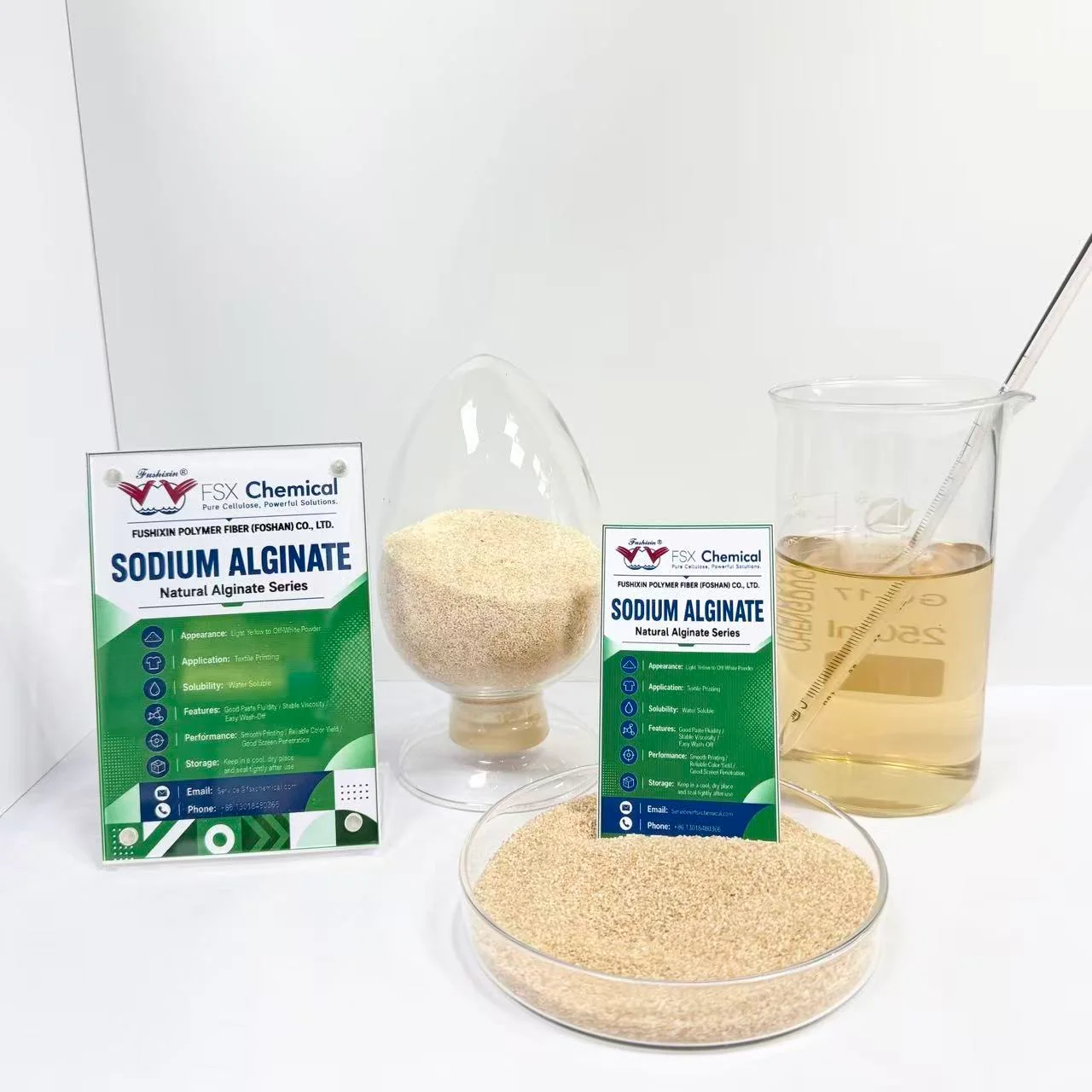
Sodium alginate is commonly used as a thickener in reactive textile printing paste. It is often selected where paste formation, dissolution behavior, and printing paste handling are important.
Lors de l'achat d'alginate de sodium, les acheteurs doivent vérifier le degré de viscosité, la taille des mailles, le degré de pureté, la teneur en humidité, le pH et les performances de dissolution. Il est recommandé de tester la qualité choisie dans la formulation propre à l'acheteur avant de procéder à un achat en grande quantité.
Épaississants pour l'impression textile et pâtes d'impression
Some buyers need a single thickener, while others need a ready-to-test printing paste product or a product recommendation for a specific process.
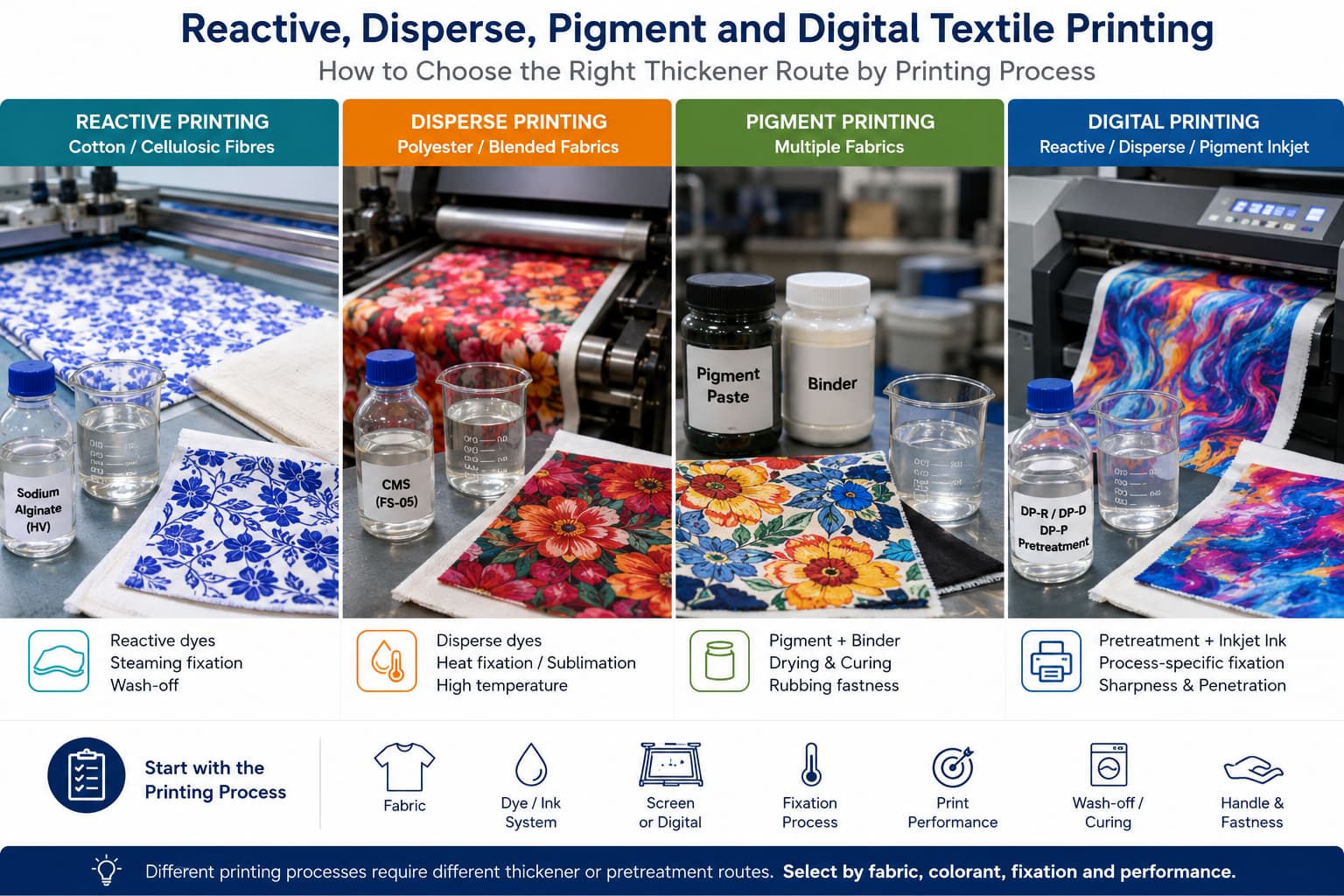
A suitable recommendation should be based on the printing method, dye system, fabric type, target viscosity, and production requirement rather than broad product categories.
Key Information Buyers Should Provide
Procédé d'impression et type de tissu
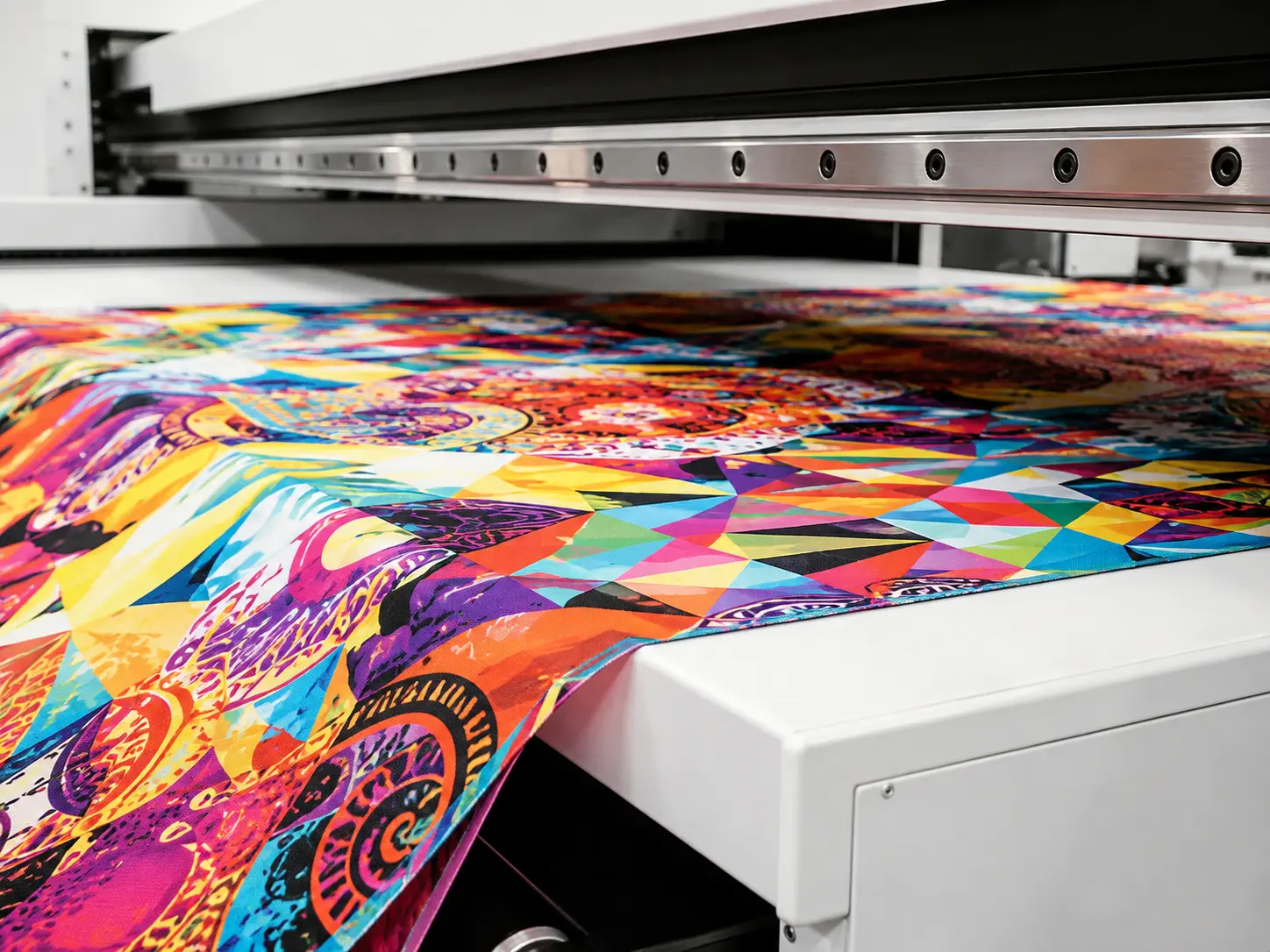
Before requesting a quotation, distinguish the colorant system from the equipment: reactive, disperse, acid or pigment describes one selection axis; flat-screen, rotary-screen or digital direct printing describes another. Identify whether the product enters a stock paste, complete color paste or fabric pretreatment bath. Conventional textile thickeners are not automatically approved as ink-circuit additives.
Fabric type is also important because cotton, blended fabrics, and other textile materials may require different paste behavior.
Target Viscosity and Current Formulation
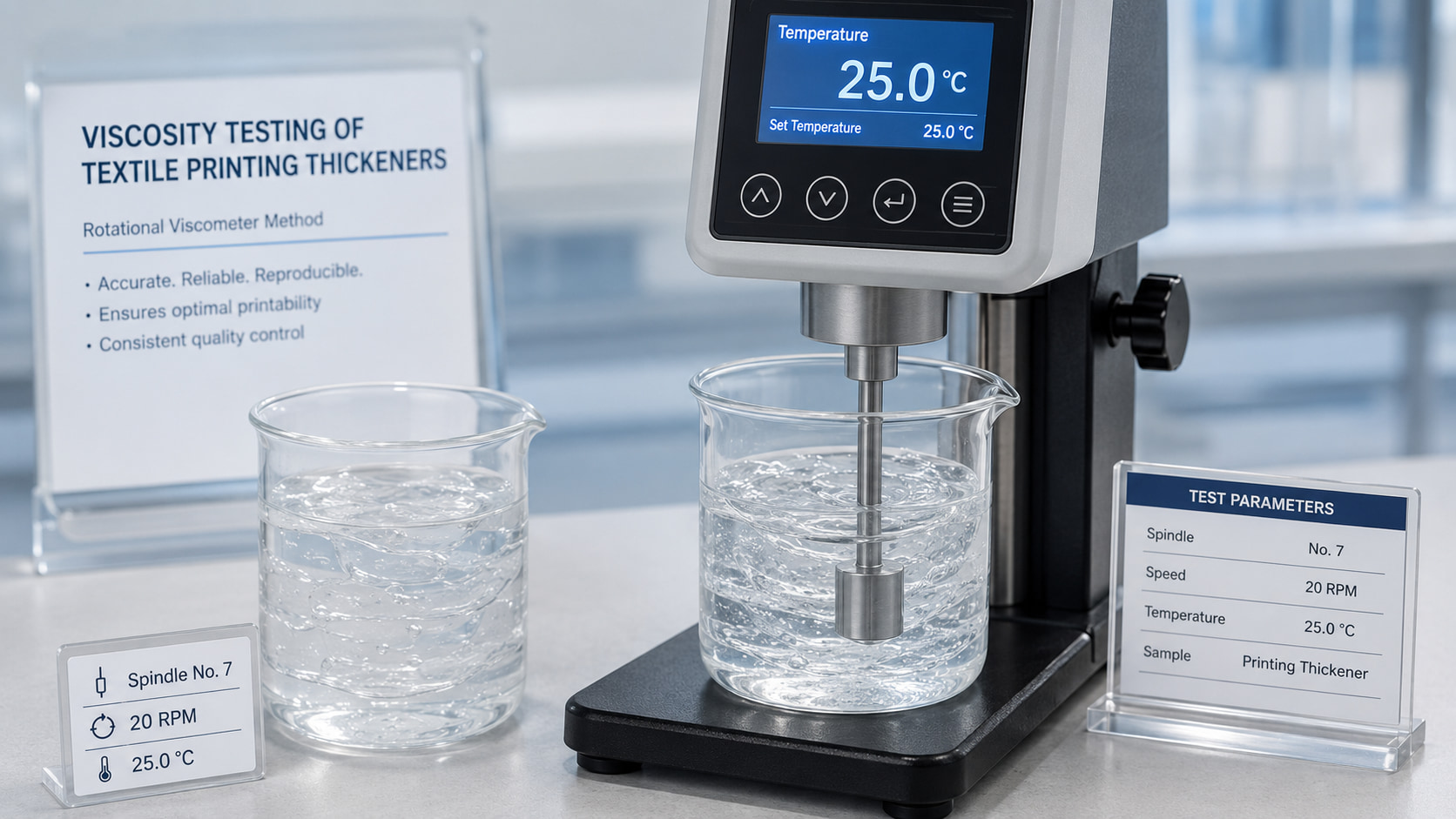
Target viscosity is one of the most important points for grade matching. Buyers should provide the required viscosity range, testing concentration, temperature, and method if available.
If the buyer already has a current formulation, sharing the existing thickener type, dosage, and preparation method can help the supplier make a more practical recommendation.
Current Production Issue or Replacement Grade
If the buyer is changing suppliers or solving a production issue, it is useful to explain the current problem. Common concerns include unstable viscosity, slow dissolution, poor paste smoothness, filtration difficulty, or inconsistent batch performance.
If the buyer has an existing product grade, sharing its TDS or basic specification can help compare possible replacement options.
Documents to Review Before Purchase
TDS pour la révision du cahier des charges
The Technical Data Sheet helps buyers review the standard product specification. It should include key parameters such as appearance, viscosity, pH, moisture, DS where applicable, mesh size where relevant, storage conditions, and testing method.
For viscosity-related products, buyers should check the test concentration, temperature, unit, and instrument method. Without this information, viscosity values from different suppliers may not be directly comparable.
Certificat d'origine pour la confirmation de lot
A batch-specific COA reports the identified lot’s selected test results under the stated methods and reporting basis. Check the product/grade, lot, sample identity, test date, method and agreed limits. It does not by itself establish that every bag was tested, that every application property is covered or that the lot will pass the buyer’s complete printing process.
Buyers can compare COA records over time to check whether key parameters remain within the agreed range.
Fiches de données de sécurité (FDS) et documents d'exportation, le cas échéant
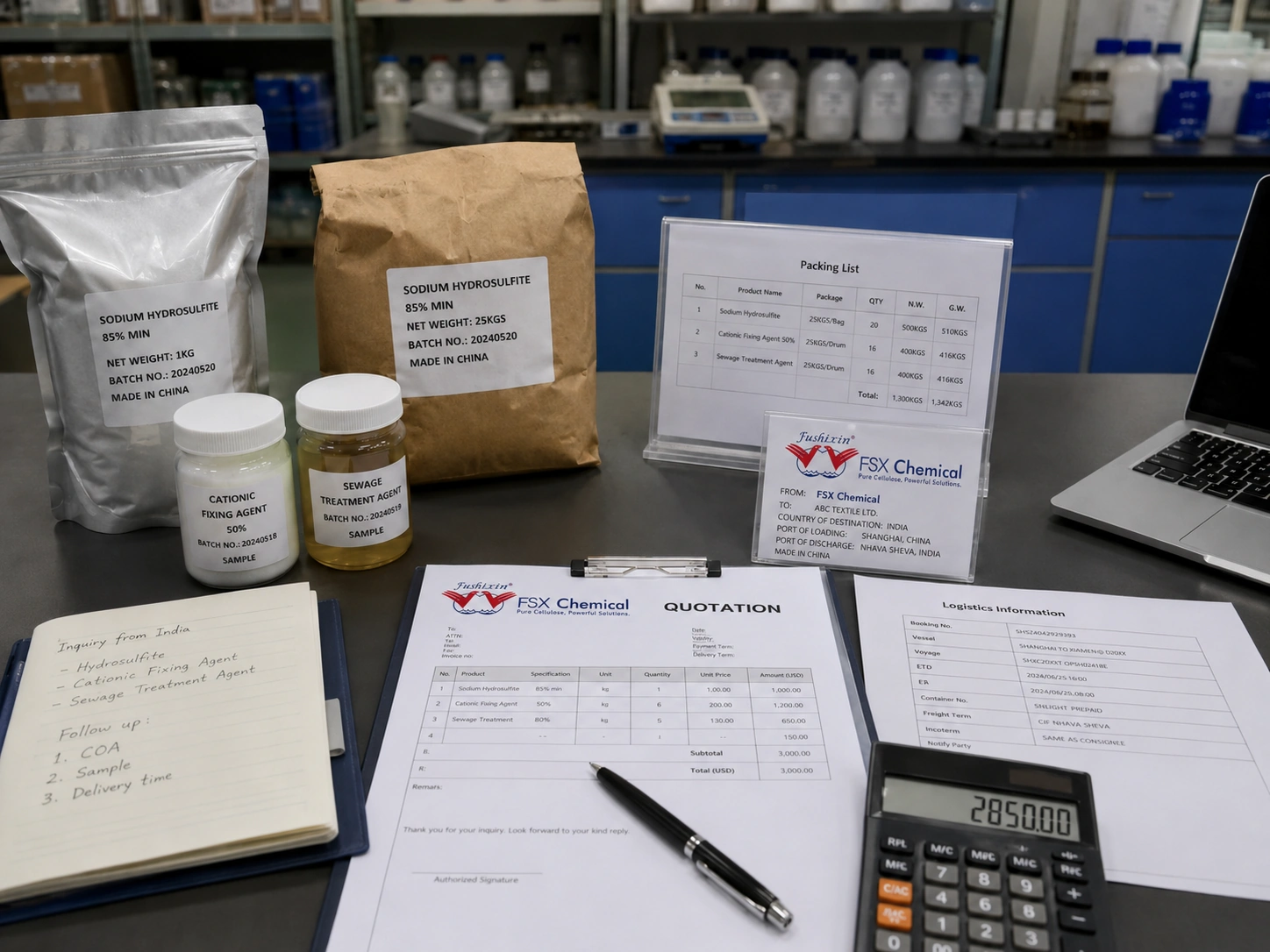
For international purchasing, buyers may also need SDS and export-related documents for transport, customs clearance, internal review, or customer requirements.
The required documents may vary by destination country, product type, and purchasing process, so buyers should confirm document needs before shipment.
How to Test Textile Industry Chemicals Before Bulk Orders
Test in the Actual Formulation
Sample testing should be done in the buyer’s own formulation whenever possible. Dyes, auxiliaries, water quality, pH, stirring method, and storage time can all affect final performance.
Testing only in clean water may not be enough to confirm whether the product is suitable for real production.
Check Solubility, Dispersion and Paste Behavior
During testing, buyers should observe dissolution speed, dispersion behavior, paste smoothness, filtration performance, viscosity stability, and application handling.
For printing paste applications, these practical observations are often as important as the specification data.
Compare Approved Sample with Bulk Supply
Before confirming a bulk order, buyers should ask whether the approved sample and the bulk shipment will follow the same specification range.
Parmi les points importants, on peut citer la plage de viscosité, le DS le cas échéant, la taille des mailles si nécessaire, le conditionnement, le numéro de lot, le certificat d'analyse (COA) et les conditions de stockage.

A Minimum Matching Brief Before Sending Samples
| Buyer input | Why it changes the shortlist |
|---|---|
| Colorant, fabric and printing method | Separates chemically different application routes |
| Product addition point and current TDS | Identifies whether the requirement is stock paste, complete paste or fabric pretreatment |
| One main problem and its acceptance measure | Distinguishes a material mismatch from a process investigation |
| Preparation and viscosity method | Makes reference and candidate results comparable |
| Trial constraints | Defines equipment, allowable changes and the decision maker |
Send the current TDS and non-confidential process description first. Detailed recipes should be shared only where authorized and necessary. A shortlist is a proposal for testing, not approval for direct substitution in production.
Comment FSX Chemical accompagne les acheteurs du secteur de l'impression textile
We do not suggest confirming textile industry chemicals only by product name, broad claims, or price. The recommended grade should be reviewed through technical documents and tested in the buyer’s own formulation before bulk purchase.
Prochaines étapes
- Demander une liste de produits — passer en revue les produits disponibles : CMC, CMS, alginate de sodium, épaississant pour l'impression textile et pâtes d'impression.
- Demander un TDS — vérifier la viscosité, la densité relative (DS) le cas échéant, la taille des mailles si nécessaire, le pH, la teneur en humidité, l'aspect, les conditions de stockage et la méthode d'essai.
- Ask for Product Matching — Indiquez-nous votre application, votre procédé d'impression, le type de tissu, la viscosité souhaitée et la formulation actuelle.
- Demander un échantillon — Testez le produit recommandé dans vos propres conditions de préparation et de production avant de valider les commandes en gros.
- Vérifier le bon de commande avant l'expédition — vérifier si les données du lot correspondent à la plage de spécifications convenue.
- Contactez notre équipe technique — discuss which textile industry chemical is suitable for your printing or formulation application📧 E-mail: Service@fsxchemical.com