Sodium alginate washed from reactive-printed fabric contributes to wastewater organic load. Its seaweed origin alone does not establish ready biodegradability, low COD or compliance at a particular mill. Evaluate the supplied grade, the complete printing recipe and the treatment process using measured results and a clear comparison basis.
This guide covers the basic environmental properties of sodium alginate, what happens to it in the washing-off stage of reactive dye printing, and what procurement teams should understand when evaluating thickener choice from an environmental perspective.
Sodium Alginate as a Natural Polymer: Basic Environmental Properties
Origin and Biodegradability
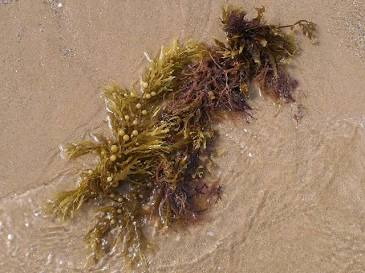
Sodium alginate is derived from brown seaweed. A claim of ready biodegradability should identify the tested material, method and result, such as an applicable OECD 301 test. A natural source is not a substitute for that evidence, and results for one material do not automatically cover a formulated textile grade.
Biological treatability must be assessed in the actual wastewater matrix. Inoculum, temperature, residence time, salinity, pH and inhibitory components can affect treatment. A laboratory biodegradation result does not guarantee a particular removal efficiency in a mill’s treatment plant.
Comparison with Synthetic Thickeners
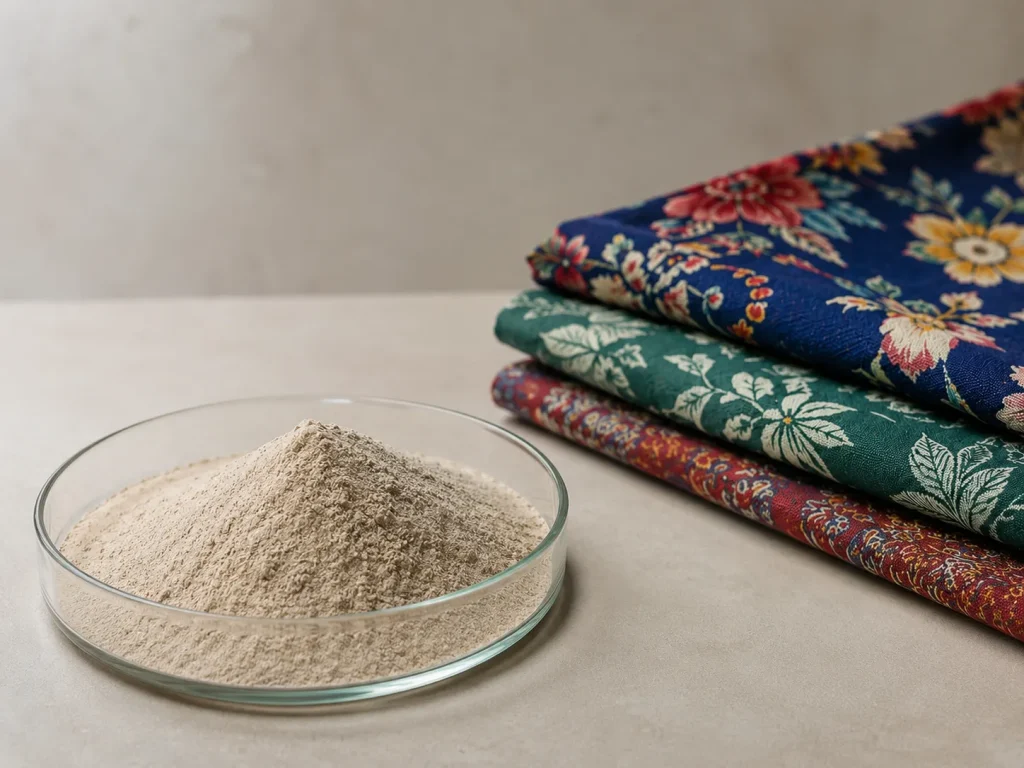
Do not assign a single biodegradability result to all acrylic-based thickeners or commercial blends. Request product-specific evidence. Also distinguish the process boundary: pigment printing commonly uses binder fixation and may not include the same wash-off sequence as reactive printing.
A useful environmental comparison starts with equivalent finished-fabric performance and a defined production route. Compare chemical consumption, wash-water volume, measured pollutant load, treatment response and waste handling rather than the labels “natural” and “synthetic” alone.
Wastewater Generated in Reactive Dye Printing
Sources of Effluent in the Printing Process
Additional effluent can arise from screen washing, equipment cleaning and paste preparation rinses. Establish each stream’s volume and pollutant load from the mill’s measurements rather than assuming which dominates.
What Washing-Off Wastewater Contains
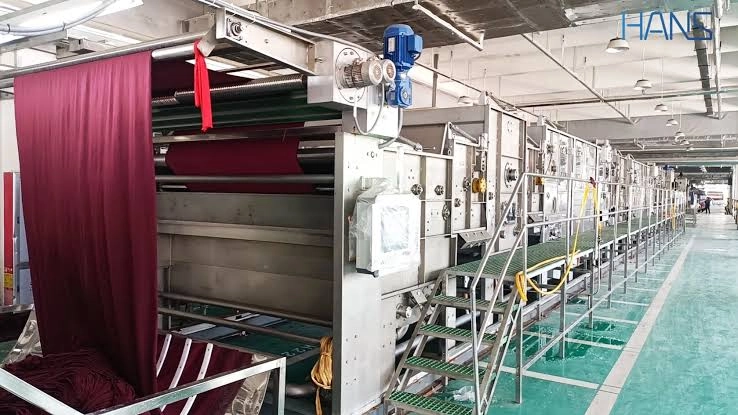
Washing-off effluent from reactive dye printing typically contains:
- Unfixed and hydrolyzed reactive dye — the most visible component, responsible for the color of the effluent
- Residual thickener — sodium alginate or other paste components that were not fully retained on the fabric
- Alcalin — sodium carbonate or bicarbonate from the printing paste
- Urée — if used as a hygroscopic agent in the paste formulation
- Salt — sodium chloride or sodium sulfate used in the dyeing and fixation process
- Soaping agent — from the washing-off step itself
The relative concentrations of these components depend on the paste formulation, dye fixation rate, and washing-off conditions. Higher fixation rate means less unfixed dye in the effluent; more thorough washing means more complete removal of thickener and other paste components from the fabric.
The Role of the Thickener in Effluent Load
Sodium alginate contributes to the organic load (COD and BOD) of washing-off effluent. The amount of alginate entering the effluent depends on the paste concentration, the amount of paste applied per unit area of fabric, and how completely the fabric is washed.
Review thickener dosage only within a validated printing window. Reducing the mass applied may reduce the thickener entering wash-off, but poor definition or reprinting can offset a saving. Using less wash water can raise pollutant concentration; it does not by itself reduce pollutant mass.
Sodium Alginate in Printing Effluent: What to Expect
COD Contribution from Alginate Washout
Do not use a universal COD value per kilogram of sodium alginate without a traceable method and material basis. Theoretical oxygen demand and measured COD are different quantities. Ordinary sodium alginate does not use the CMC degree-of-substitution (DS) specification, so DS is not a valid explanation for an alginate COD range.
To estimate contributions, test the actual grade, the complete recipe and representative effluent under compatible laboratory methods. Record dosage, paste add-on, production quantity and wash-water flow. Assess nitrogen separately where urea or other nitrogen-containing inputs are used; do not assume dye or urea is always the dominant COD source.
If your operation has COD discharge limits that require careful management, quantifying the thickener contribution alongside dye and other paste components allows you to identify where reduction efforts will have the most impact.
Color and Turbidity in Washing-Off Effluent
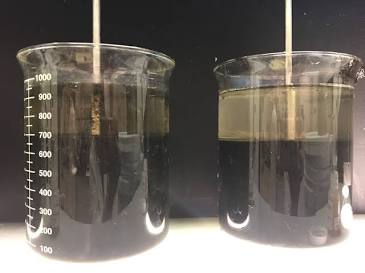
Separate color, turbidity and COD measurements. Reactive dye residues can contribute visible color, while suspended material and other recipe components can affect turbidity. The appearance of a commercial alginate solution also depends on the grade and impurities; visual clarity alone does not establish low organic load.
If color removal changes after a formulation change, compare representative effluent samples in controlled treatment trials. Keep pH, chemical dosing and sampling conditions comparable, and assess both clarified water and sludge. Do not infer coagulant performance from the thickener name alone.
Biodegradation in Wastewater Treatment
Treat biological removal as a measured outcome. Compare representative influent and effluent while recording flow, residence time and plant operating conditions. COD removal can include transfer to sludge or other mechanisms; it is not automatically proof of complete biodegradation.
An anaerobic stage requires its own compatibility and performance assessment. Do not promise biogas yield or energy recovery for a textile grade without relevant test data and process conditions.
How Thickener Choice Affects Overall Effluent Management
Sodium Alginate vs. Synthetic Thickeners: Effluent Comparison
For a sodium-alginate-versus-synthetic comparison, first specify the exact products and whether they serve the same dye system, fabric and fixation route. Results from reactive wash-off cannot be compared directly with a different pigment-printing process and described as a polymer-only effect.
Use product-specific biodegradation or treatability evidence together with actual wastewater and sludge measurements. The preferred option depends on the process, achieved fabric quality and treatment capability; the polymer family alone does not establish the result.
Include effective dosage and water use in the comparison. A lower dose may reduce chemical input, but equivalent measured viscosity does not establish equivalent printing performance or equivalent effluent load.
Effect of Thickener Concentration on Washout Load
Higher applied alginate mass can increase the amount entering wash-off. Determine the lowest practical dosage through trials that meet definition, color, fastness and wash-off requirements. Record rejected fabric, reprocessing and cleaning as part of the comparison.
Implications for On-Site Treatment Systems
Before changing a commercial grade, provide representative recipe and wash-off samples to the team responsible for wastewater treatment. Agree on relevant tests and review the downstream results alongside print performance.
When evaluating changes to your paste formulation or thickener grade, consider the downstream impact on your treatment system alongside the upstream impact on print quality.
Procurement Considerations for Environmentally Sensitive Operations
Questions à poser à votre fournisseur
If environmental profile is a relevant factor in your sodium alginate procurement, the following questions are worth raising with your supplier:
- Is biodegradability data available for this grade, and what test method was used (e.g., OECD 301)?
- What is the product’s COD value per unit weight, if measured?
- Are there any constituents of concern — such as heavy metals or persistent additives — that could affect effluent compliance?
- Can you provide a current SDS and any additional composition or environmental documentation needed for this assessment? An SDS is not necessarily a full formulation disclosure.
Documentation Relevant to Environmental Compliance
For operations subject to buyer sustainability audits or third-party environmental certifications, the following documentation from your sodium alginate supplier may be relevant:
- FDS (Fiche de données de sécurité) — includes environmental hazard classification and disposal guidance
- Fiche technique (TDS) — product composition and specification
- Heavy metal content data — relevant where buyer specifications or local regulations limit heavy metal input from textile chemicals
Note that third-party environmental certifications for sodium alginate have specific scope and criteria. If a certification is relevant to your buyer requirements, confirm the specific standard, the certification number, and the issuing body directly with your supplier, rather than relying on general claims of compliance.
How FSX Chemical Supports Environmentally Aware Procurement
Ask FSX Chemical for the current TDS, SDS and available batch documentation for the proposed grade. Confirm in advance whether the required biodegradation, COD, restricted-substance or certification evidence is available for that exact product. Check documentation before using an environmental claim in a purchasing decision.
Prochaines étapes :
Contactez notre équipe technique — for questions on thickener choice and effluent management
Demander une fiche technique (TDS) et une fiche de données de sécurité (FDS) — review product composition and environmental classification before ordering
Demander un échantillon — run paste trials and confirm washout behavior in your process conditions
Demander l'alignement des notes — share your application and any environmental specification requirements: Service@fsxchemical.com
Compare Concentration and Load Separately
For a representative stream, COD load (kg/day) = COD (mg/L) × flow (m³/day) ÷ 1,000. Use measurements representing the same period. For variable streams, calculate and sum the relevant flow-weighted contributions. Divide by acceptable fabric output to compare kg COD per tonne of finished fabric, while recording rejects and reprocessing.
Illustrative calculation, not FSX test data: 800 mg/L at 100 m³/day corresponds to 80 kg COD/day. A concentration of 1,600 mg/L at 50 m³/day gives the same mass load. Lower water use alone has not reduced COD load in this example.
| Buyer question | Evidence to request |
|---|---|
| Is the supplied grade readily biodegradable? | Exact tested material, recognized method, laboratory report and result |
| Will it reduce the mill’s wastewater load? | Matched trials with dosage, fabric output, wastewater flow and measured concentrations |
| Will treatment remain effective? | Representative effluent compatibility trials and plant operating data |
| Does a certificate cover this product? | Product identity, certificate scope, validity and issuing body |
Method references: OECD Test No. 301: Ready Biodegradability et US EPA: pollutant loading calculations. These references explain assessment methods; they are not certifications or test results for FSX products.