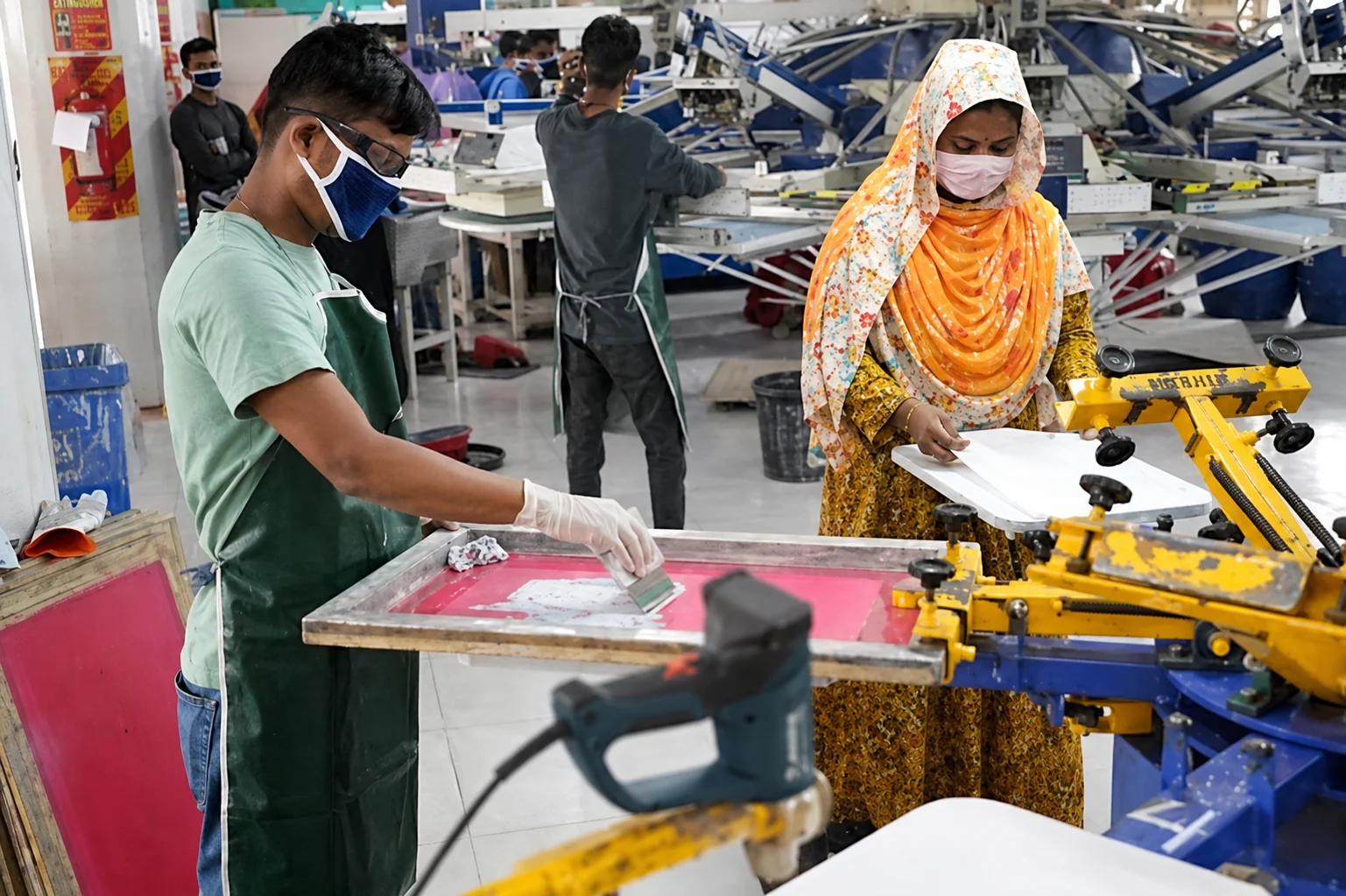
Digital Textile Printing Paste Stability: 10 Process Controls
Stable digital printing paste requires more than a target viscosity. This guide explains how product...
\n
Digital textile printing paste stability means that the pretreatment or paste remains uniform from preparation and holding through coating, drying, printing and fixation. Diagnose instability by tracking viscosity, pH, filtration, separation, pickup and printed result at defined time intervals; a single viscosity reading cannot prove production stability.
\n
Stability problems are not always caused by the thickener alone. Water quality, chemical-addition sequence, mixing conditions, pH, electrolytes, temperature, contamination and storage can all change the behavior of the complete formulation.
The correct improvement strategy is therefore to control the entire preparation and use process. Changing several additives at once may hide the original problem and make later production difficult to reproduce.
The following ten tips provide a structured method for improving digital printing paste stability without relying on unsupported universal formulas. Final conditions should always be confirmed using the current product TDS, representative fabric and actual ink system.
Digital Printing Paste Stability Triage
\n
Observed change
First controlled checks
Production risk
Viscosity rises during holding
Hydration time, temperature, evaporation, pH and electrolyte addition
Uneven pickup or coating weight
Viscosity falls
Polymer compatibility, shear history, contamination and dilution
Spreading, penetration or shade change
Gel particles or filter residue
Addition order, dispersion, water quality and local chemical shock
Coating defects and digital-print contamination
Séparation de phases ou décantation
Formula compatibility, solids distribution, mixing and storage temperature
Widthwise or batch-to-batch inconsistency
Print changes from start to finish
Paste age, pickup, drying, ink response and fixation
Shade and definition variation
\n
What Digital Printing Paste Stability Really Means
Digital printing paste stability is not one single test result. It is the ability of the complete formulation to remain suitable during its intended preparation, storage and application period.
Viscosity stability
The apparent viscosity should remain within a practical operating range when measured using the same concentration, temperature, instrument and procedure.
Stabilité physique
The formulation should remain sufficiently uniform without unacceptable separation, sedimentation, floating material, skin formation or gel development.
Chemical stability
The thickener, salts, alkalis, binders, humectants and other auxiliaries should remain compatible for the required holding period.
Application stability
The paste should provide repeatable coating, padding or pretreatment pickup and maintain acceptable performance during the normal production run.
Final-print stability
Fabric printed from paste prepared at different points in the approved holding period should remain within the required definition, shade, fixation, handle and durability standards.
A paste can appear visually uniform but still be unstable in viscosity or application. It can also show a small laboratory viscosity change without causing a meaningful production problem. Stability limits should therefore be linked to actual textile performance.
Why Digital Printing Pastes Become Unstable
Instability can begin during raw-material selection, preparation, chemical addition, storage or fabric application. Identifying when the change first appears helps narrow the cause.
Common causes include
A paste route that does not match the ink or fabric system
Variation in water hardness, conductivity or pH
Incorrect chemical-addition sequence
Incomplete powder dispersion or polymer hydration
Electrolyte, alkali, acid or binder incompatibility
Excessive or insufficient mixing shear
Uncontrolled temperature changes
Undissolved particles, gels or contamination
Microbial contamination in water, tanks or transfer lines
Evaporation during open storage
Holding the paste longer than the validated production period
Changing raw materials without repeating compatibility tests
A practical investigation should begin with the most recent controlled batch and compare one variable at a time. Adding more thickener, water, alkali or stabilizer before identifying the cause may make the formulation more difficult to control.
Tip 1. Match the Paste to the Ink and Fabric System
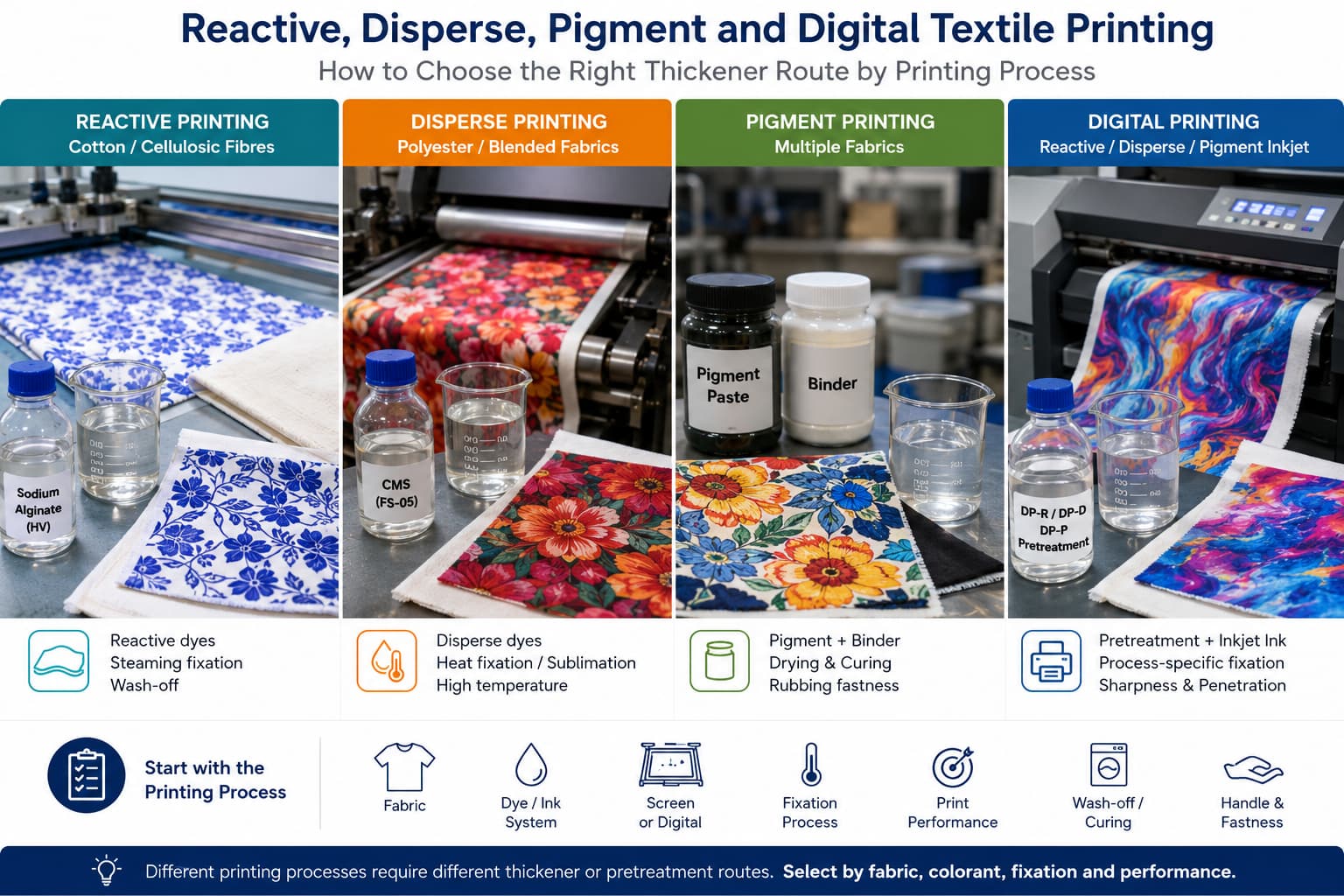
The first stability decision is selecting the correct chemical route. Reactive, disperse and pigment digital printing systems do not use the same colorant chemistry, fixation method or fabric pretreatment.
Reactive digital printing
Reactive printing on cotton, viscose and other suitable cellulosic textiles requires a pretreatment that remains compatible with the selected reactive ink, alkali, humectant and fixation process.
A material selected only because it produces high viscosity may change after alkaline or electrolyte-containing components are added.
Disperse digital printing
Disperse systems should be evaluated according to polyester or the intended synthetic textile, application uniformity, drying, fixation and any migration or surface-quality requirements.
Pigment digital printing
Pigment pretreatments must be evaluated with the actual pigment ink, binder or crosslinking system. Stability problems may appear as flocculation, viscosity change, sedimentation or reduced curing performance.
Use an application-specific product route
Un service dédié pâte d'impression numérique should be selected according to the ink, fabric, pretreatment equipment and fixation process.
Do not assume that a conventional screen-printing thickener, coating thickener or another digital route can be transferred directly without testing.
Tip 2. Standardize Water Quality
Water is often the largest component in a digital printing pretreatment. Changes in water quality can alter polymer hydration, ionic balance, viscosity and interactions between formulation components.
Record the water source
Laboratory and production comparisons should use the same water source where practical. Switching between deionized water, softened water and untreated process water can change the result.
Monitor relevant water properties
Température
pH
Hardness where relevant
Conductivity where relevant
Visible contamination or suspended matter
Seasonal or treatment-system variation
Test production water before final approval
Deionized water is useful for controlled laboratory screening, but final stability should be confirmed using the water that will actually be used in the factory.
Avoid unrecorded dilution
Operators should not add water only until the paste “looks correct.” Record every addition because uncontrolled dilution changes viscosity, chemical concentration and fabric pickup.
Tip 3. Control the Order of Addition
The same ingredients can produce different results when they are added in a different sequence. Addition order influences hydration, local concentration, pH exposure and polymer interaction.
Prepare the polymer phase correctly
Unless the current TDS specifies another route, provide enough time and mixing for the thickening or stabilizing component to disperse before exposing it to strongly interacting salts, alkalis or binders.
Avoid local chemical shock
Adding a concentrated alkali, electrolyte or binder directly into one small area can create local gel, flocculation or permanent nonuniformity.
Dilute sensitive additions when required
Some additives may need controlled pre-dilution or gradual addition. Follow the current product instructions and record the dilution ratio and addition time.
Use the same sequence during comparisons
When comparing the current paste and a candidate, do not change both the product and addition sequence at the same time.
Measure after critical additions
Record appearance, pH and viscosity after adding components that are known to change ionic strength or polymer interaction.
Tip 4. Improve Dispersion and Hydration
Incomplete dispersion can be mistaken for chemical instability. Dry powder trapped inside hydrated lumps may continue absorbing water and changing the paste long after preparation appears complete.
Establish suitable circulation first
Start the mixer and create stable liquid movement before introducing a powdered component.
Add powder gradually
Avoid dumping the full amount into one location. Controlled addition helps expose individual particles to water and reduces surface-hydrated lumps.
Control mixing time
Mixing should continue long enough to create a uniform phase, but unnecessary extended high-speed mixing may increase temperature and foam.
Allow the defined hydration period
Visible dispersion does not always mean complete hydration. Measure the paste only after the preparation period specified for the selected grade.
Check the whole vessel
Inspect or sample appropriate positions in the vessel. Material near the surface, wall or bottom may not have experienced the same circulation.
Do not repair lumps only by adding more water
Additional water can lower overall viscosity without resolving incompletely dispersed material. Review powder addition and mixing before changing the formula.
Tip 5. Keep pH and Electrolytes Within the Tested Window
Digital printing pastes may contain salts, alkalis, acids, binders, humectants and ionic auxiliaries. These materials can change polymer structure and apparent viscosity.
Measure the complete formulation
A thickener can appear stable in clean water but become unstable in the final pretreatment. Test the complete formulation rather than relying only on the stock solution.
Record pH at defined stages
Useful checkpoints can include the water phase, the hydrated polymer phase, the completed formulation and the paste after the approved holding period.
Use realistic electrolyte levels
A laboratory formula with lower salt or alkali loading may not represent the production formulation.
Avoid unnecessary correction cycles
Repeatedly adding acid, alkali, water or thickener can create a formulation that reaches the target number but no longer behaves like the approved process.
Confirm route-specific conditions
There is no universal pH range for every digital printing paste. Use the current TDS and validate the actual ink, fabric and fixation route.
Tip 6. Control Mixing Shear and Temperature
Mixing shear helps disperse the formulation, but uncontrolled mechanical treatment can change temperature, introduce air or alter the measured paste structure.
Standardize the mixing equipment
Record mixer type, impeller, vessel size, filling level, rotational speed and mixing duration.
Control heat generated by mixing
High-speed mixing may increase paste temperature. Because viscosity is temperature-sensitive, samples should be measured at the same defined temperature.
Avoid unnecessary post-hydration shear
Once the formulation is uniform, excessive continued mixing may introduce foam or produce a result that is difficult to repeat in production.
Scale up by circulation, not RPM alone
The same revolutions per minute do not create the same liquid movement in a laboratory beaker and a production tank.
Record cooling and resting
When the paste is allowed to cool or rest before measurement, use the same process for the reference and candidate.
Tip 7. Use Process-Relevant Filtration
Filtration helps identify undissolved particles, gels, contamination and incompatibility before the paste reaches the fabric-application equipment.
Define the filtration method
Record the filter material, opening size, sample quantity, pressure or gravity condition and filtration time.
Match filtration to the process
A coarse laboratory filter may not reveal particles that affect a fine coating, padding or digital pretreatment system.
Filter the completed formulation
A polymer stock solution may filter well but form residue after binders, salts or other auxiliaries are added.
Inspecter les résidus retenus
Determine whether the residue is dry powder, hydrated gel, precipitated chemical, fibre contamination or foreign material.
Do not use filtration to hide incompatibility
Filtration can remove particles, but it cannot make an unstable chemical system permanently compatible. Repeated residue formation requires a formulation review.
Tip 8. Prevent Contamination and Microbial Growth
Water-based textile formulations can be affected by contamination from process water, tanks, mixers, transfer lines, open containers and returned production material.
Use clean equipment
Residue from a previous formulation may introduce incompatible chemicals, pigment, binder or microorganisms.
Keep containers suitably closed
Open storage increases exposure to dust, fibres, evaporation and environmental contamination.
Avoid returning contaminated paste
Paste that has passed through open production equipment should not automatically be returned to the main storage vessel.
Follow the approved preservation strategy
Where preservation is necessary, select and use the preservative according to the complete formulation, applicable regulations and supplier instructions.
Do not solve every problem by increasing preservative
Odor, viscosity loss or gas formation may indicate poor hygiene, excessive holding time or contamination. Additional preservative is not a substitute for process control.
Tip 9. Define Storage and Holding Conditions
A stable paste must remain suitable for the actual period between preparation and application. Testing for a short laboratory period is not sufficient when production stores the paste much longer.
Define the required holding period
Establish the normal minimum and maximum time before application. Use this period during stability qualification.
Control container closure
Evaporation can increase concentration and apparent viscosity. Closed comparison containers provide more reliable data.
Record storage temperature
Workshop and seasonal temperatures can affect viscosity, chemical interaction and microbiological stability.
Use suitable storage materials
Tanks and containers should be compatible with the formulation and should not introduce rust, contamination or residues from another product.
Check before reuse
Before a stored batch returns to production, inspect appearance, odor, viscosity, pH and filtration according to the factory’s approved method.
Do not extend holding time without validation
A paste that remains visually acceptable may still produce a different pretreatment pickup or print result after extended storage.
Tip 10. Build a Repeatable Quality-Control Method
Stability cannot be improved reliably without consistent measurement and records. A single successful batch does not establish a controlled process.
Use permanent product identification
Record the commercial grade, supplier batch number and formulation version for every test.
Standardize viscosity measurement
Sample preparation and resting condition
Température de mesure
Modèle de viscosimètre
Axe, rotor ou géométrie
Vitesse de rotation
Reading time and reported unit
Define stability checkpoints
Test the paste immediately after preparation, after complete hydration, after the approved holding period and during a production-relevant trial.
Include physical observations
Séparation
Régularisation
Floating material
Skin formation
Mousse
Particules de gel
Odor or color change
Résidu de filtration
Connect laboratory data with printed results
A viscosity change is important when it affects pretreatment pickup, ink spreading, definition, shade or final textile quality.
Retain representative samples and records
Retained paste, raw-material information and production records help investigate later batch differences.
Stability Priorities by Digital Printing Route
Parcours de l'impression numérique
Important Stability Priorities
Final Performance Checks
Reactive digital printing
Alkali and electrolyte compatibility, uniform pretreatment pickup, holding stability and filtration
Definition, shade, fixation, wash-off and fabric handle
Disperse digital printing
Fabric compatibility, uniform application, physical stability and drying behavior
Color uniformity, migration control, fixation and surface quality
Pigment digital printing
Binder compatibility, pH, particle stability, filtration and curing-system compatibility
Definition, handle, curing, rubbing and washing performance
Compound pretreatment paste
Polymer compatibility, addition order, storage stability and batch-to-batch repeatability
Pickup uniformity, print consistency and total cost in use
These priorities are starting points. The actual formulation should be tested using the selected ink, fabric, pretreatment equipment and fixation or curing process.
Recommended Stability Test Plan
Step 1: Select the reference
Use a representative sample of the current approved digital printing paste or pretreatment formula.
Step 2: Define the acceptance criteria
Identify which changes are critical, including viscosity, pH, separation, filtration, pickup and printed-fabric performance.
Étape 3 : Uniformiser la préparation
Utilisez la même source d'eau
Use identical containers and mixers
Control raw-material addition sequence
Control mixing speed and duration
Control hydration and resting time
Mesurer tous les échantillons à la même température
Step 4: Record the initial condition
Aspect
pH
Viscosité
Mousse
Filtration
Odor where appropriate
Step 5: Store under defined conditions
Use suitable closed containers and record storage time and temperature. Do not expose only one sample to evaporation or repeated opening.
Step 6: Repeat measurements
Test at intervals that represent the factory’s actual preparation and holding process.
Step 7: Apply the pretreatment
Use representative fabric and the normal padding, coating, spraying or other application method.
Step 8: Measure application uniformity
Record wet pickup, dry pickup or another suitable factory control parameter.
Step 9: Complete printing and fixation
Use the actual ink, printer settings, drying, steaming, curing or washing route.
Step 10: Compare the finished textile
Définition de l'impression
Ink spreading
Pénétration
Ombre et planéité
Fixation ou durcissement
À rincer
Poignée en tissu
Relevant durability
Troubleshooting Common Stability Problems
Problème constaté
Possible Causes
Recommended Checks
Viscosity increases during storage
Continued hydration, evaporation, temperature change or excessive initial concentration
Review hydration time, container closure, temperature and batch calculation
Viscosity decreases during storage
Electrolyte interaction, pH drift, polymer incompatibility, contamination or excessive shear
Check addition sequence, pH, conductivity, hygiene and mixing history
Separation or clear liquid appears
Insufficient structure, incompatible components, poor dispersion or unsuitable solids balance
Review grade selection, dosage, mixing and complete formulation
Sediment forms at the bottom
Inadequate suspension, incompatible particles, insufficient mixing or contamination
Inspect the sediment and review particle size, rheology and circulation
Gels or particles appear
Incomplete hydration, local chemical shock, binder incompatibility or contamination
Review powder addition, chemical dilution, addition order and equipment cleanliness
Excessive filter residue
Undissolved material, gel formation, fibre contamination or precipitated ingredients
Identify residue type and test stock and final paste separately
Strong foam remains after mixing
Excessive shear, unsuitable addition point, contaminated equipment or incompatible surfactant system
Review mixing speed, impeller position, addition method and auxiliaries
Odor changes during storage
Microbial contamination, dirty equipment, excessive holding time or unsuitable preservation
Review hygiene, water, storage temperature and approved preservation method
Pretreatment pickup becomes uneven
Viscosity drift, foam, poor mixing, filtration problems or application-equipment variation
Compare paste condition with coating or padding records
Print edges change after paste storage
Rheology drift, pickup change, chemical interaction or evaporation
Compare fresh and stored paste under identical printing conditions
Begin troubleshooting by confirming the product code, batch numbers, water, addition sequence, pH, temperature and measurement method. Avoid changing several raw materials at once.
Information to Send When Requesting Technical Support
Product information
Current digital printing paste name and supplier
Current TDS, SDS or COA
Product and raw-material batch numbers
Representative fresh and unstable paste samples where practical
Formulation information
Complete raw-material list
Dosage or concentration of each component
Ordre d'addition
Pre-dilution procedures
Target and measured pH
Water source and available quality data
Preparation information
Taille du lot
Mixer and impeller type
Mixing speed and time
Powder or liquid addition duration
Hydratation et temps de repos
Preparation and measurement temperature
Stability information
When the change first appears
Viscosity results and complete test method
pH results at different stages
Storage time and temperature
Photographs of separation, sediment or residue
Filtration method and retained material
Application information
Reactive, disperse or pigment digital route
Composition du tissu et des fibres
Système d'encre
Pretreatment application equipment
Wet or dry pickup
Drying, fixation, curing or washing process
Printed-fabric photographs and main defect
\n
Foire aux questions
\n\n\nWhat does stable digital textile printing paste mean?\n
The paste should remain within approved viscosity, pH, filtration, homogeneity, pickup and print-performance limits throughout its qualified preparation, holding and use window.
\n\n\n\nIs matching viscosity enough when changing suppliers?\n
No. Compare filtration, coating uniformity, storage behavior, ink response, color yield, fixation, wash-off or curing and fabric handle under the same process.
\n\n\n\nWhy does viscosity change after additives are added?\n
Electrolytes, pH, addition order, local concentration, temperature and shear can change polymer hydration and interaction. Measure the complete formula at defined intervals.
\n\n\n\nShould reactive, disperse and pigment digital pastes use the same stability test?\n
No. Use a shared preparation and holding framework, then add route-specific checks for fabric, ink, coating, fixation and final performance.
\n\n\n\nWhat should be sent when requesting a stability-matching sample?\n
Send the current TDS or sample, full formula, water quality, mixing sequence, viscosity method, holding time, fabric, ink system and observed defect through Échantillons et correspondances.
\n\n\n\n\n
How FSX Chemical Supports Paste Stability Projects
FSX Chemical provides digital printing paste routes for reactive, disperse and pigment textile applications. Candidate selection can begin with the customer’s ink system, fabric, pretreatment process, current formula and stability problem.
Current-product review
Buyers can provide an existing TDS, physical sample, formulation, viscosity method and photographs of the observed instability.
Route selection
The first review can determine whether a reactive, disperse or pigment digital printing paste is the appropriate starting direction.
Sample comparison
Candidate samples can be compared for preparation, viscosity, pH, filtration, holding stability and actual textile performance.
Related thickener review
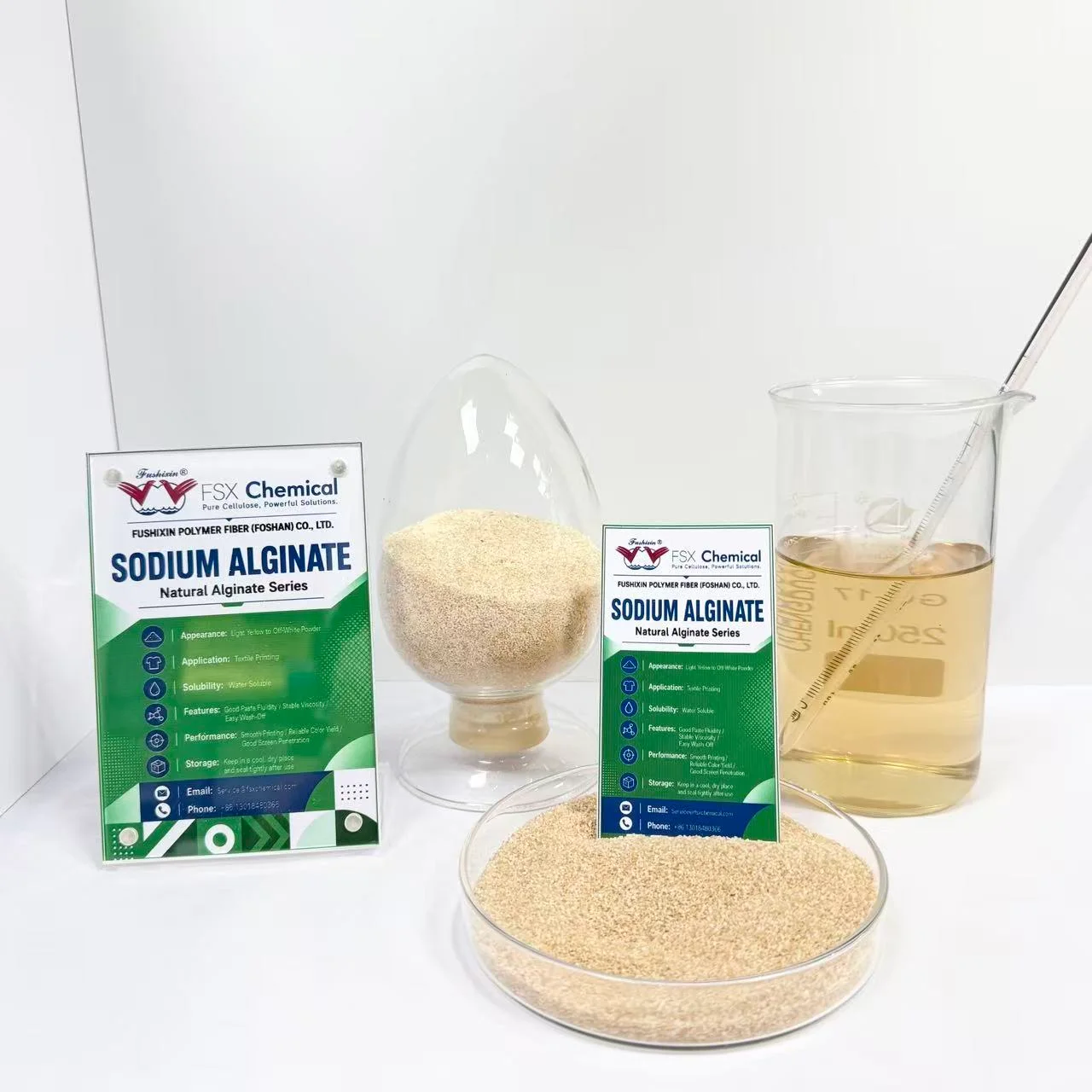
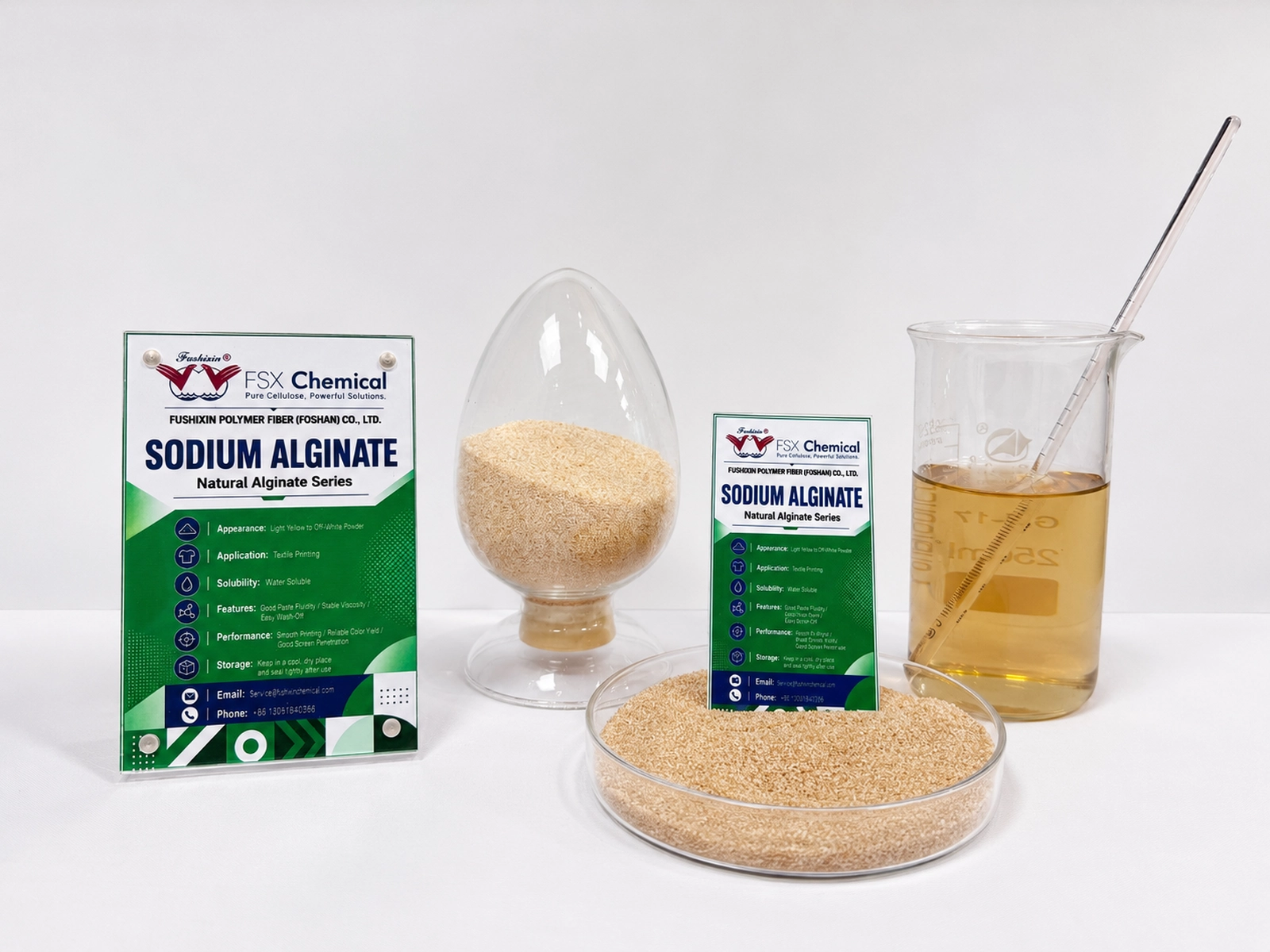
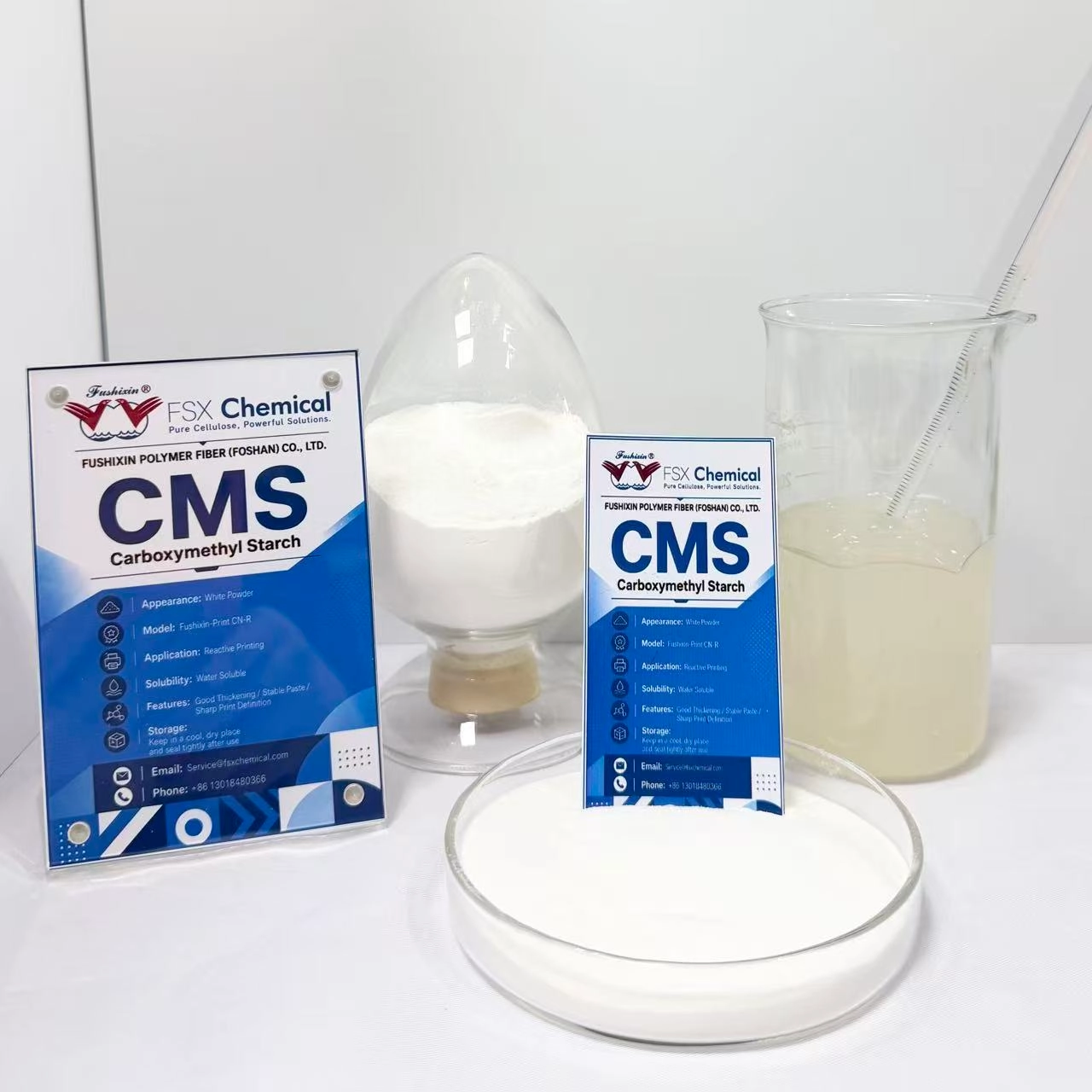
Where the project involves a compound system, related alginate de sodium , CMC ou CMS routes may be reviewed according to the complete application.
Technical-document support
Relevant TDS and SDS information can support product and safety review. Batch-level information can be linked to the confirmed commercial grade and order stage.
Sample-to-bulk verification
The approved candidate should be connected to a permanent grade code, commercial specification and first-batch verification process.
A recommended grade remains a candidate for controlled evaluation. Final suitability depends on the customer’s complete formulation, equipment, ink, fabric and production conditions📧 E-mail: Service@fsxchemical.com
Découvrez comment choisir les agents épaississants et les procédés de prétraitement adaptés à l'impression textile réactive, dispersée, pigmentée et numérique, en fonction des exigences liées au tissu, à la teinture ou à l'encre, à la fixation, à l'élimination au lavage et à la qualité d'impression.
Comparez le CMC, le CMS, l'alginate de sodium et la pâte d'impression numérique pour l'impression textile. Découvrez comment chaque solution s'adapte aux procédés réactifs, dispersés, pigmentés et numériques, et ce que les acheteurs doivent vérifier avant de procéder à des tests d'échantillons, à la mise en correspondance des qualités et à l'achat en gros.
L'alginate de sodium est largement utilisé dans l'impression textile comme épaississant stable et lavable pour les pâtes d'impression réactives. Découvrez comment évaluer le degré de viscosité, la pureté et l'adéquation à l'application avant tout achat, et comment FSX Chemical accompagne les acheteurs du monde entier en leur fournissant des données techniques et des échantillons.
Le choix d'un fournisseur de CMC ne se résume pas à une simple comparaison des prix. Ce guide présente les critères d'évaluation, la liste de contrôle des documents à fournir et le processus d'essai que les équipes chargées des achats doivent suivre avant de s'engager dans une commande en gros.
La pâte d'impression à base de CMC est utilisée dans l'impression textile pigmentaire, réactive et numérique. Ce guide explique quels sont les paramètres importants, comment comparer les fournisseurs et ce qu'il faut demander avant de passer une commande en gros.
L'alginate de sodium et la CMC sont tous deux utilisés comme épaississants dans l'impression textile, mais ils conviennent à des systèmes de teinture et à des conditions de traitement différents. Ce guide explique les principales différences entre ces deux produits et précise dans quels cas il convient d'utiliser l'un ou l'autre.
L'impression numérique à jet d'encre sur textiles présente des exigences différentes en matière de pâte et de prétraitement par rapport à la sérigraphie. Ce guide explique comment l'alginate de sodium est utilisé dans l'impression textile numérique et quels paramètres de qualité les équipes d'approvisionnement doivent préciser.
Incorrect storage is one of the most common causes of sodium alginate performance problems in textile printing. This guide covers powder and paste storage conditions, shelf life expectations, degradation indicators, and what to check when receiving a new shipment.
CMS for textile printing paste can help adjust viscosity, improve paste handling, and support stable formulation performance. This guide explains how buyers can evaluate CMS grades by viscosity, DS, solubility, pH, moisture, and sample testing before bulk purchase.
Many suppliers market "customized sodium alginate," but the term covers very different things in practice. This guide explains which parameters are genuinely adjustable, which are fixed by fundamental chemistry, and how to evaluate a supplier's customization claims.
L'alginate de sodium peut être envisagé pour certains systèmes d'encollage de chaîne ou de formulation textile, mais il ne doit pas être choisi uniquement en fonction de son nom commercial ou d'allégations générales concernant ses performances. Ce guide explique comment les usines textiles peuvent évaluer la viscosité, le comportement du film, la compatibilité avec les fils, le désencollage, l'influence de l'eau dure, les TDS, le COA, les essais sur échantillons et l'uniformité des lots avant de procéder à un achat en gros.
L'amidon carboxyméthylé (CMS) peut être évalué pour certaines applications telles que l'encollage textile, les pâtes d'impression et les formulations destinées à l'impression numérique. Ce guide explique comment les acheteurs doivent examiner la classe de viscosité, le comportement à la dissolution, le pH, la teneur en humidité, le comportement du film, la compatibilité avec les formulations, la fiche technique (TDS), le certificat d'analyse (COA), la fiche de données de sécurité (FDS), les essais sur échantillons et l'uniformité des lots avant tout achat en gros.
Veuillez nous communiquer le nom du produit, son application, la quantité, la destination, ainsi que toute fiche technique (TDS),
photo ou document dont vous disposez déjà. FSX Chemical examinera ces
informations et vous recommandera la marche à suivre pour obtenir un devis, trouver un échantillon correspondant
ou choisir un produit.
Informations sur le produitNom du produit, référence, modèle, photo de l'étiquette ou référence du fournisseur.
Documents disponiblesFiche technique (TDS), fiche de données de sécurité (SDS), certificat d'analyse (COA), photo d'exemple, liste des produits ou données d'essai.
Détails de la commandeQuantité estimée, conditionnement, pays de destination, port ou conditions commerciales.
Demande ou problèmeProcédé d'impression textile, besoins en matière de formulation, problème actuel ou performances visées.

 FR
FR  EN
EN  BN
BN  ES
ES  TR
TR  ID
ID  RU
RU  AR
AR  UR
UR  VI
VI  TL
TL  HI
HI  UK
UK  KK
KK  KA
KA  UZ
UZ