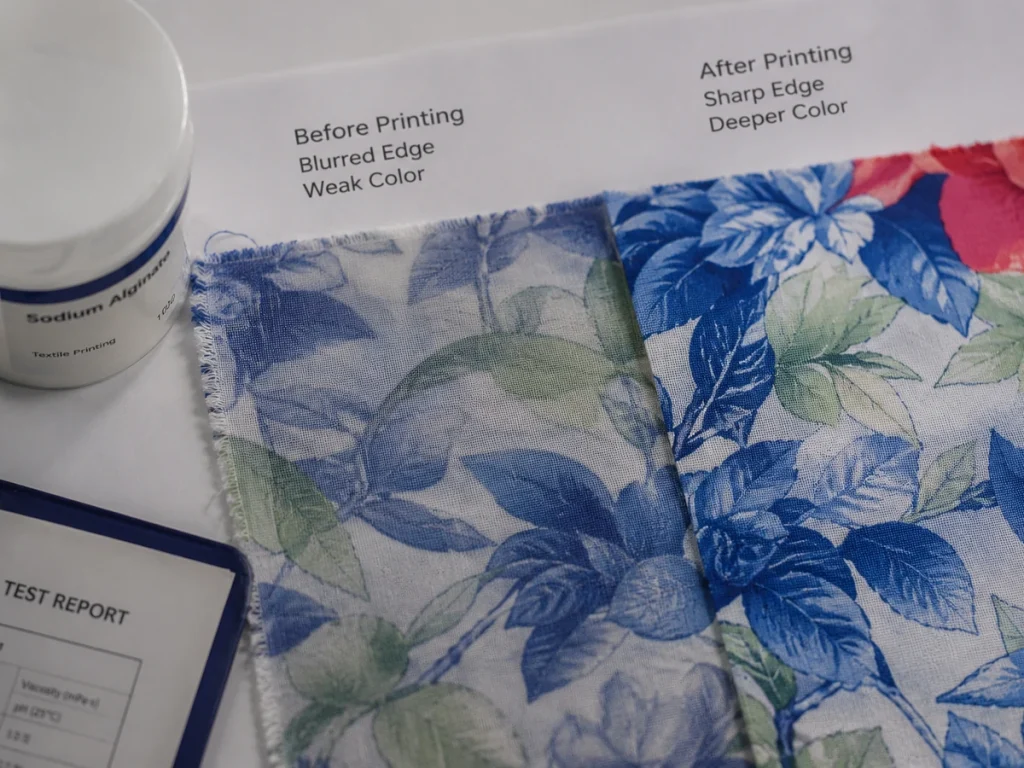
Sodium alginate can be considered as a candidate for selected warp-sizing formulations, but a printing-grade label does not establish yarn adhesion, abrasion protection, weaving efficiency or removability. Compare the candidate with the mill’s approved size on the same yarn and sizing line, then verify weaving and desizing. Approval must identify the exact grade, dry add-on and process conditions; no universal replacement ratio applies.
Sodium alginate is widely known in textile printing paste applications, especially reactive printing. It may also be evaluated in selected textile sizing or formulation systems, but the suitable grade and use level must be confirmed by actual mill testing. It should not be treated as a universal replacement for starch, CMC, PVA, or other existing sizing materials without comparison trials.
This guide explains how textile mills can evaluate sodium alginate for warp sizing by reviewing specifications, testing samples, comparing against current sizing materials, and confirming batch consistency before bulk purchase.
Can Sodium Alginate Be Used for Warp Sizing?
It Depends on the Sizing System
Warp sizing is a practical production process, not only a chemical selection question. A material may perform well in one sizing formula but show different results in another system.
Before using sodium alginate for warp sizing, buyers should confirm the yarn type, fiber composition, loom speed, sizing machine conditions, desizing process, and current sizing formulation.
Do Not Select Only by Product Name
A broad product name such as “industrial grade sodium alginate” does not confirm whether the product is suitable for warp sizing. Different grades may vary in viscosity, dissolution behavior, moisture, pH, appearance, and film behavior.
Buyers should review the TDS and test the sample in their own mill conditions before discussing bulk purchase.
Compare Against the Current Sizing Material
Many mills already use starch, modified starch, CMC, PVA, acrylic sizing agents, or blended systems. When evaluating sodium alginate, it should be compared against the current material under the same sizing and weaving conditions.
The goal is not to prove one material is always better. The goal is to identify which grade and formulation can meet the mill’s production target.
Key Performance Points in Warp Sizing
Viscosity and Paste Preparation
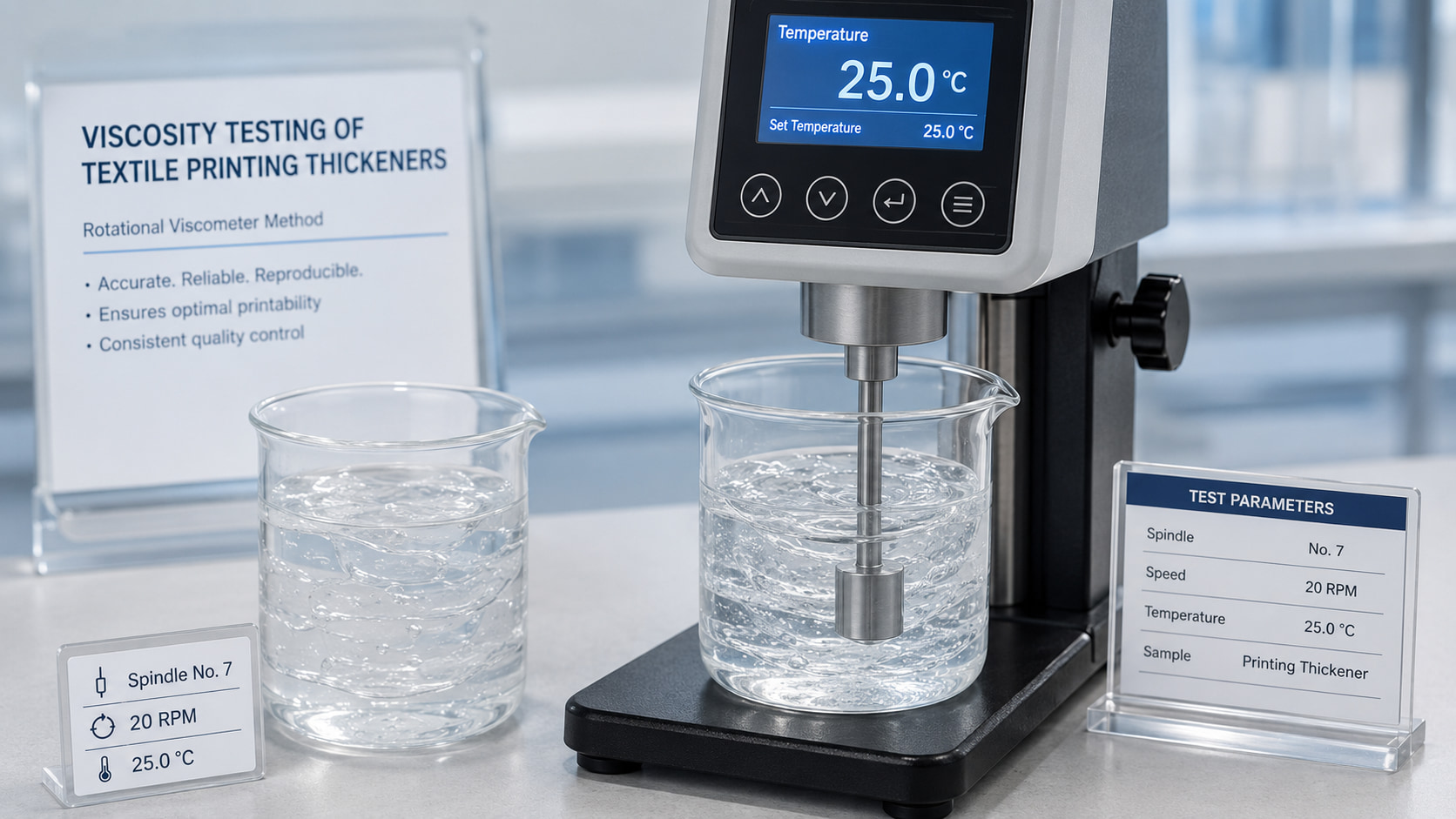
Viscosity affects sizing bath preparation, penetration, coating, pickup, and handling. Buyers should check the viscosity range together with the test concentration, temperature, instrument method, and unit.
Without a clear viscosity test method, data from different suppliers may not be directly comparable.
Film Formation and Flexibility
Warp sizing needs suitable film behavior on yarn. The sizing film should support weaving performance without making the yarn too stiff or causing excessive shedding.
Film behavior should be tested on the buyer’s actual yarn and compared with the current sizing material.
Adhesion and Yarn Protection
The sizing material should help protect warp yarn during weaving. Important observations include yarn hairiness, abrasion resistance, breakage rate, shedding, and loom performance.
These results cannot be confirmed by TDS alone. They require mill-scale or pilot-scale testing.
Desizing and Downstream Process Compatibility
After weaving, evaluate removal of the complete sizing formulation under the mill’s actual desizing and rinsing route. Water solubility of an ingredient does not establish removal from dried yarn or fabric. Record residual size, downstream wetting and any fiber damage; starch-specific indicator tests do not by themselves quantify residual alginate or other non-starch components.
Desizing performance may vary depending on the sizing formula, fabric structure, temperature, washing conditions, and other chemicals used.
Caractéristiques techniques que les acheteurs devraient examiner
Classe de viscosité et méthode d'essai
Viscosity is one of the first parameters buyers should review. The TDS should clearly state the viscosity range and how it is measured.
Buyers should confirm the concentration, temperature, instrument method, and unit before comparing sodium alginate grades from different suppliers.
Dissolution and Hydration Behavior
Dissolution behavior affects preparation efficiency and sizing bath stability. Poor dispersion may create lumps, uneven viscosity, or filtration problems.
Buyers should test sodium alginate under their actual water quality, stirring speed, addition method, temperature, and preparation time.
Humidité, pH et aspect
L'humidité, le pH et l'aspect sont des indicateurs de qualité fondamentaux mais essentiels. Ils ont une incidence sur le stockage, la manutention, le contrôle qualité et la fidélisation des clients.
Ces paramètres doivent être vérifiés dans la fiche technique (TDS) et confirmés par les données du certificat d'analyse (COA) pour chaque lot de production.
Hard Water Sensitivity
Water quality can affect the behavior of many textile chemicals. If the mill uses hard water, buyers should evaluate whether calcium or magnesium ions affect dissolution, viscosity, or bath stability.
Water quality should be part of the sample testing plan before bulk purchase.
How to Compare Sodium Alginate with CMC, Starch or PVA
Compare Under the Same Mill Conditions
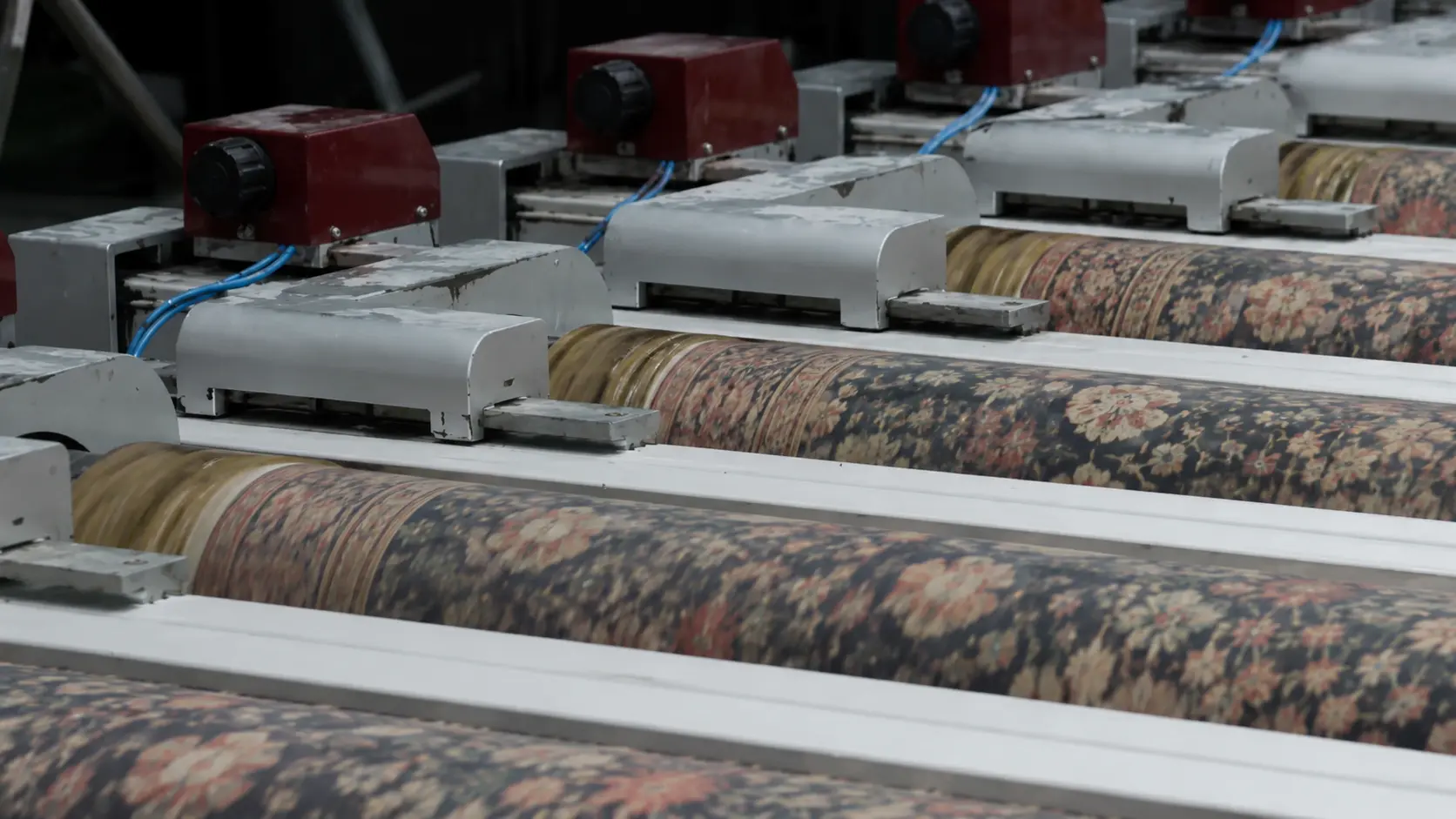
When comparing sodium alginate with CMC, starch, PVA, or another sizing material, the test should be as close as possible to the real production process.
Compare bath viscosity under a recorded method and temperature, actual nonvolatile solids, dry size add-on, yarn coating and penetration, film flexibility, abrasion, shedding and warp-break observations over comparable runs. Keep yarn count, construction, loom conditions and conditioning visible; wet pick-up alone is not dry polymer add-on.
Évitez les affirmations catégoriques concernant les matériaux
No sizing material is always the best choice for every mill. Sodium alginate, CMC, starch, PVA, and blended systems each have different performance characteristics depending on the formulation and process.
Buyers should avoid making decisions based only on claims such as “more sustainable,” “lower cost,” “higher efficiency,” or “better than PVA” unless these claims are supported by their own testing and documents.
Calculate Total Use Cost, Not Only Unit Price
For warp sizing, total use cost may include dosage, bath stability, weaving performance, desizing, downtime, quality loss, and rework. A lower unit price may not always result in lower total cost.
Buyers should compare sodium alginate with the current product using real production data where possible.
Documents que les acheteurs devraient demander
TDS pour la révision du cahier des charges
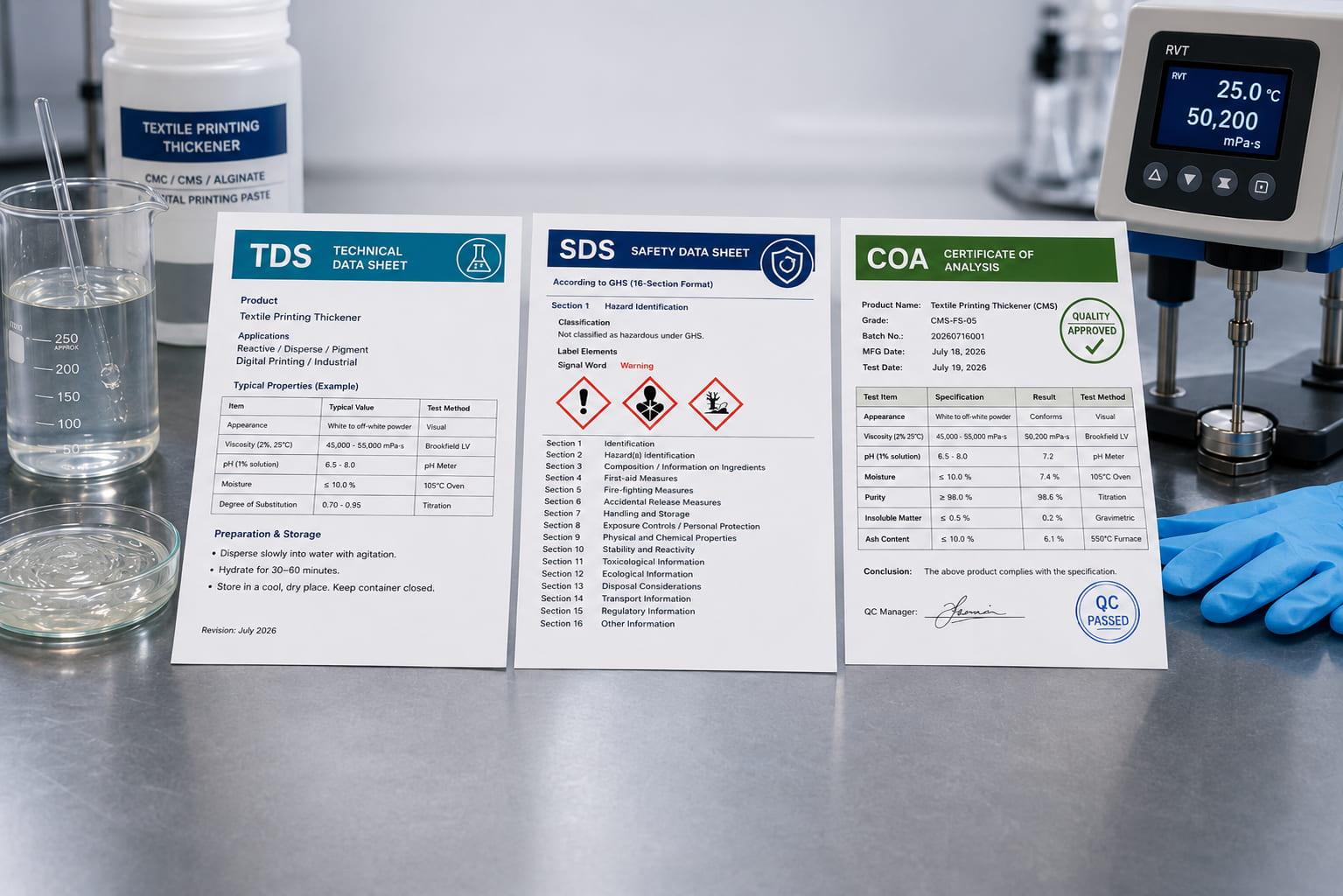
The Technical Data Sheet helps buyers review the standard product specification. It should include appearance, viscosity, moisture, pH, storage conditions, and testing method. Mesh size or other relevant parameters may also be listed depending on the grade.
The TDS supports initial grade screening, but it should not replace sample testing in the mill’s own sizing system.
Certificat d'origine pour la confirmation de lot
Le certificat d'analyse confirme les données réelles d'un lot de production spécifique. Il revêt une importance particulière pour les commandes en gros, les achats récurrents, l'approvisionnement des distributeurs et le contrôle qualité interne.
Les acheteurs peuvent comparer les données des certificats d'analyse (COA) d'un envoi à l'autre afin de vérifier si les paramètres clés restent dans les limites convenues.
SDS for Handling and Transport Review
La fiche de données de sécurité (FDS) sert de référence pour la manipulation, le stockage, le transport et l'évaluation interne de la sécurité. Dans le cadre des achats internationaux, la FDS peut également être requise pour l'expédition et les formalités douanières.
Les acheteurs doivent s'assurer que le nom du produit figurant sur la FDS et les informations relatives au fournisseur correspondent bien aux documents de commande.
Additional Compliance or Customer Documents
Si l'acheteur a besoin de déclarations relatives aux substances soumises à restriction, de documents environnementaux, de questionnaires d'audit client ou d'une assistance en matière de certification par un organisme tiers, ces exigences doivent être discutées avant la confirmation de la commande.
Un fournisseur sérieux doit expliquer clairement quels documents peuvent être fournis et quelles allégations nécessitent des essais ou une certification formels effectués par un organisme tiers.
Sample Testing Checklist for Textile Mills
Step 1: Define the Current Process
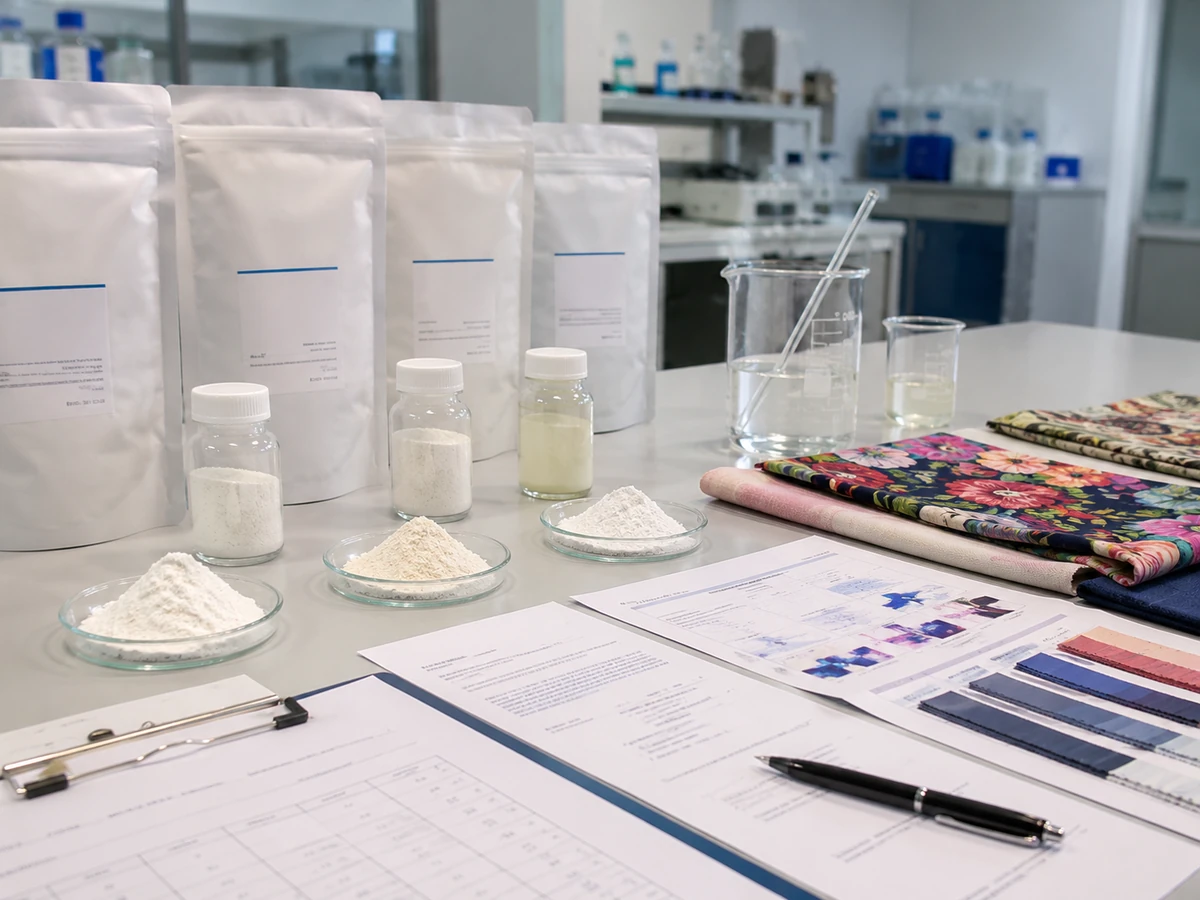
Before requesting a recommendation, buyers should define the current sizing formula, yarn type, fiber composition, loom type, sizing machine conditions, target viscosity, and desizing method.
This information helps the supplier recommend a more suitable starting grade.
Step 2: Prepare the Sample Under Real Conditions
The sample should be prepared using the mill’s actual water quality, mixing equipment, heating conditions, addition sequence, and preparation time.
During preparation, buyers should observe dispersion, lump formation, viscosity development, bath stability, and filtration behavior.
Step 3: Test Sizing and Weaving Performance
After sizing, buyers should evaluate yarn coating, penetration, film flexibility, shedding, abrasion resistance, breakage, loom performance, and fabric quality.
The result should be compared with the current sizing material under similar conditions.
Step 4: Confirm Desizing and Downstream Results
The final evaluation should include a matched desizing test and the downstream process. Check residual size using a method appropriate to the formulation, alongside wetting, handle and fabric quality. Correct gravimetric observations for loss from an unsized blank before attributing mass loss to removed size.
Only after these tests should the buyer confirm whether sodium alginate is suitable for bulk use.
Measure Dry Add-On and Desizing Without Misreading Mass Loss
Use a recorded dry-mass or validated moisture-corrected basis for all masses; conditioned masses alone are not necessarily dry masses. Define dry size add-on as the dry applied size mass divided by the original dry yarn mass, multiplied by 100. If a bath contains several size polymers, waxes or auxiliaries, gravimetry measures their combined mass, not alginate alone. Determine the initial applied mass from a suitable weighed witness sample or an independently validated method.
- Prepare matched sized specimens and an unsized blank from the same yarn or fabric lot. Use replicates and a consistent mass basis.
- Process both through the same desizing, rinsing and drying procedure. Record chemistry, temperature, time, liquor ratio and rinse sequence.
- Measure the mass loss of the sized specimens and the blank. Scale blank loss to the equivalent original fiber mass before subtracting it.
- Estimate removed size mass = sized-specimen mass loss − scaled unsized-blank mass loss. Estimated removal (%) = 100 × estimated removed size mass ÷ independently determined initial dry size mass.
- Investigate negative results or values above 100%; do not round them into a pass. Possible causes include sampling, moisture, fiber damage, incomplete rinsing or a poor estimate of initial add-on.
This is a proposed mill comparison, not a validated alginate-specific assay. Blank correction reduces bias from removable oils and fiber loss but cannot guarantee that both specimens behave identically. Confirm residue with a formulation-appropriate method and evaluate downstream wetting and fabric integrity. ASTM D2257-25 is an extractable-matter method with defined extraction scope; it should not be represented as a universal alginate-desizing test or as a method performed by FSX.
Common Troubleshooting Points
Lumps During Preparation
Lumps may be related to fast addition, insufficient dispersion, unsuitable stirring, water quality, or preparation method. Buyers should adjust the addition sequence and mixing conditions during sample testing.
Viscosité instable
Viscosity changes may be caused by water quality, temperature, preparation time, pH, formulation compatibility, or grade mismatch. Buyers should record preparation conditions and compare them with the supplier’s test method.
Yarn Feels Too Stiff
Stiffness may be related to formulation ratio, film behavior, drying conditions, or grade selection. Buyers should evaluate flexibility and weaving performance before scaling up.
Desizing Is Not Satisfactory
Desizing issues may come from the full sizing formula, fabric structure, drying conditions, washing process, and other chemicals used. Buyers should evaluate desizing under real downstream conditions.

Comment FSX Chemical accompagne les acheteurs d'alginate de sodium
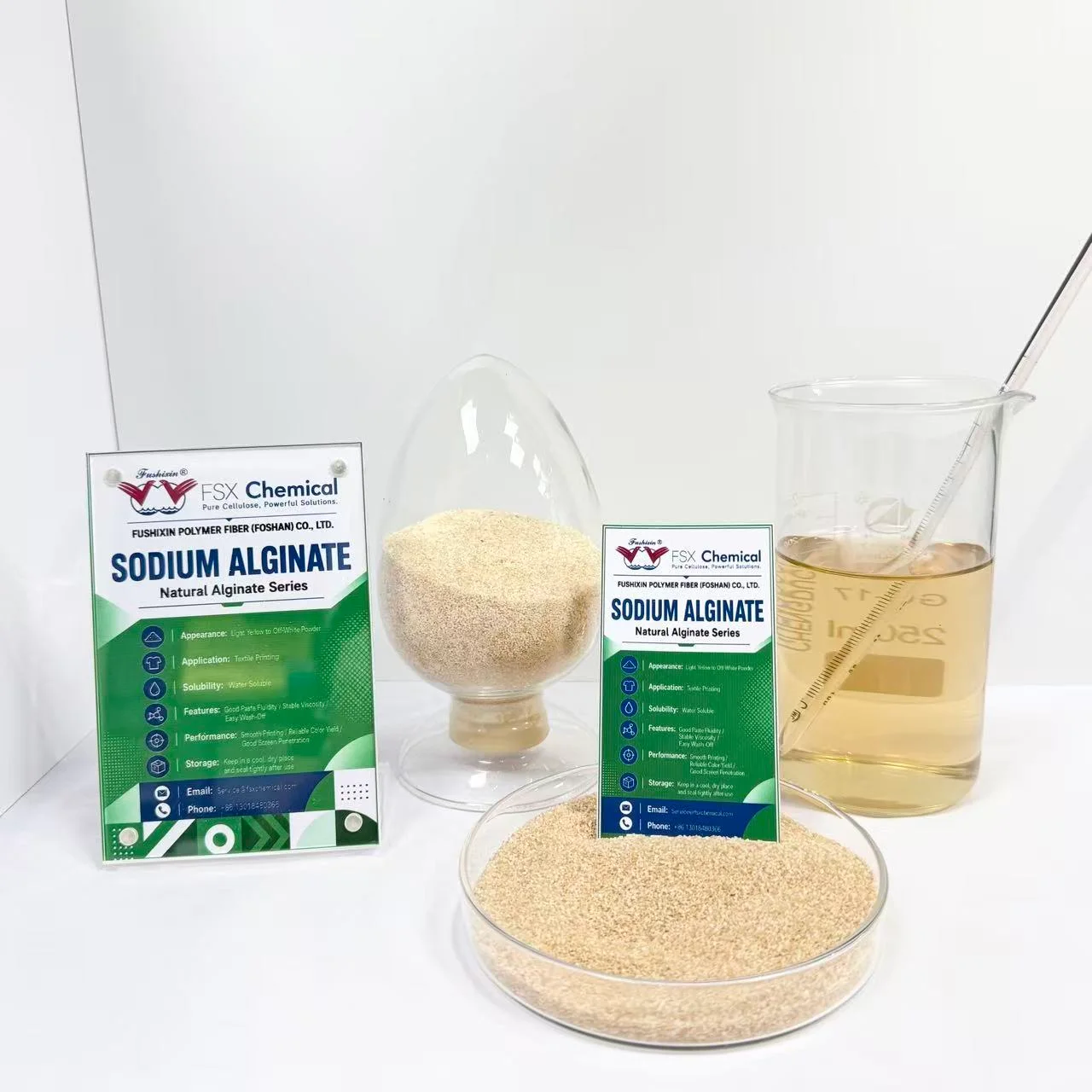
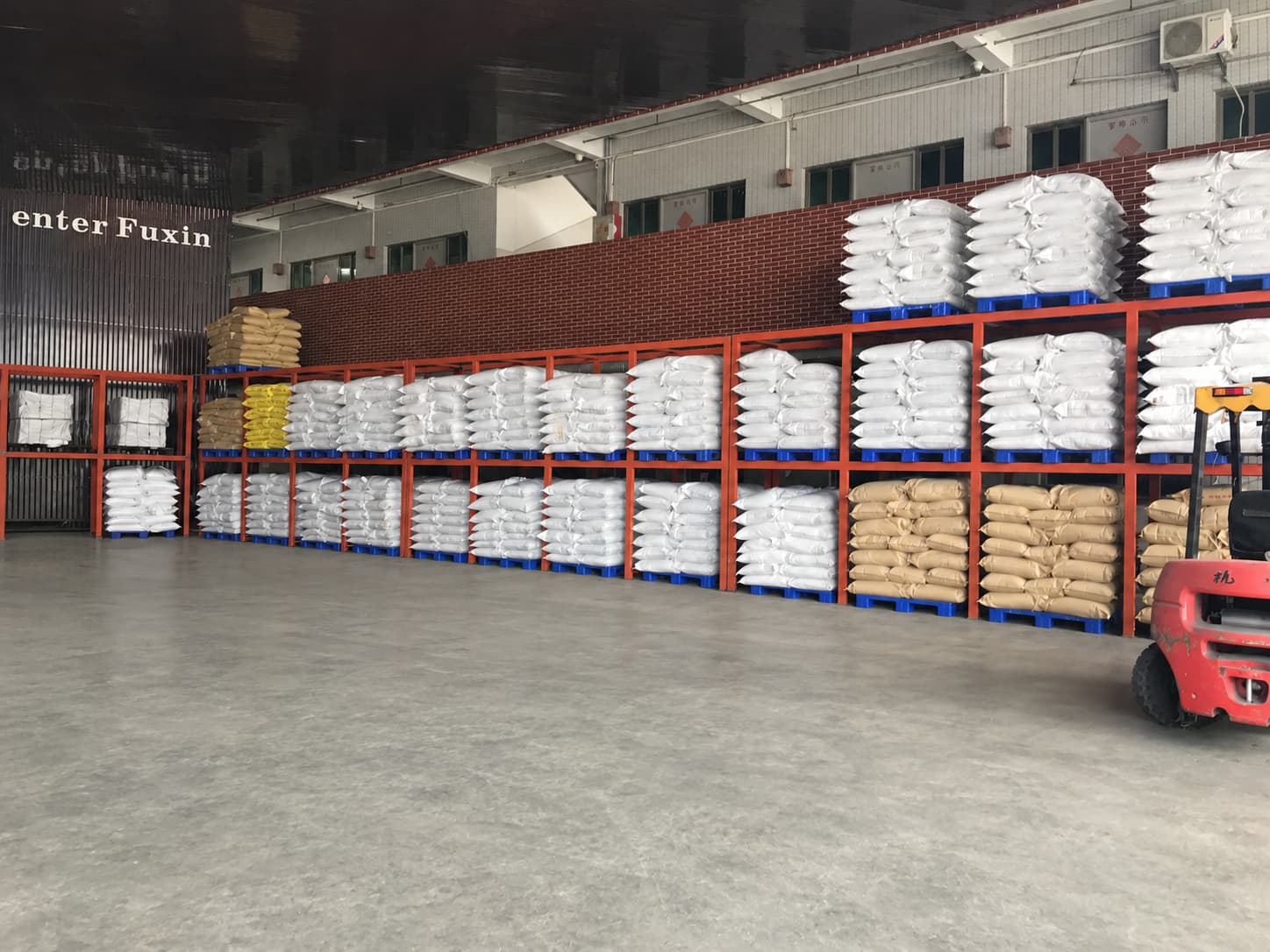
FSX Chemical lists sodium alginate grades for textile-printing buyers. Request current grade-specific documents and samples before approval; a printing-grade listing does not establish warp-sizing performance.
Our support is focused on practical grade matching and export procurement. We can provide TDS, COA, SDS where applicable, sample support, and grade matching suggestions based on the customer’s application, target viscosity, yarn or fabric type, formulation conditions, packaging needs, and document requirements.
We do not suggest confirming sodium alginate for warp sizing only by product name, broad cost-reduction claims, or general performance claims. The recommended grade should be reviewed through technical documents and tested in the buyer’s own mill conditions before bulk purchase.
Prochaines étapes
- Share Your Sizing Process — tell us your yarn type, fiber composition, current sizing formula, machine conditions, target viscosity, and desizing method.
- Demande d'équivalence de notes — ask for a suitable starting sodium alginate grade based on your actual warp sizing or textile formulation requirements.
- Demander un TDS — review viscosity, pH, moisture, appearance, storage conditions, and testing method.
- Demander un certificat d'authenticité — vérifier, avant l'expédition, que les données du lot correspondent à la plage spécifiée convenue.
- Demander un échantillon — test the recommended grade in your own sizing preparation, weaving, and desizing conditions before confirming bulk orders.
- Compare with Current Materials — evaluate sodium alginate against your existing CMC, starch, PVA, or blended sizing system under similar conditions.
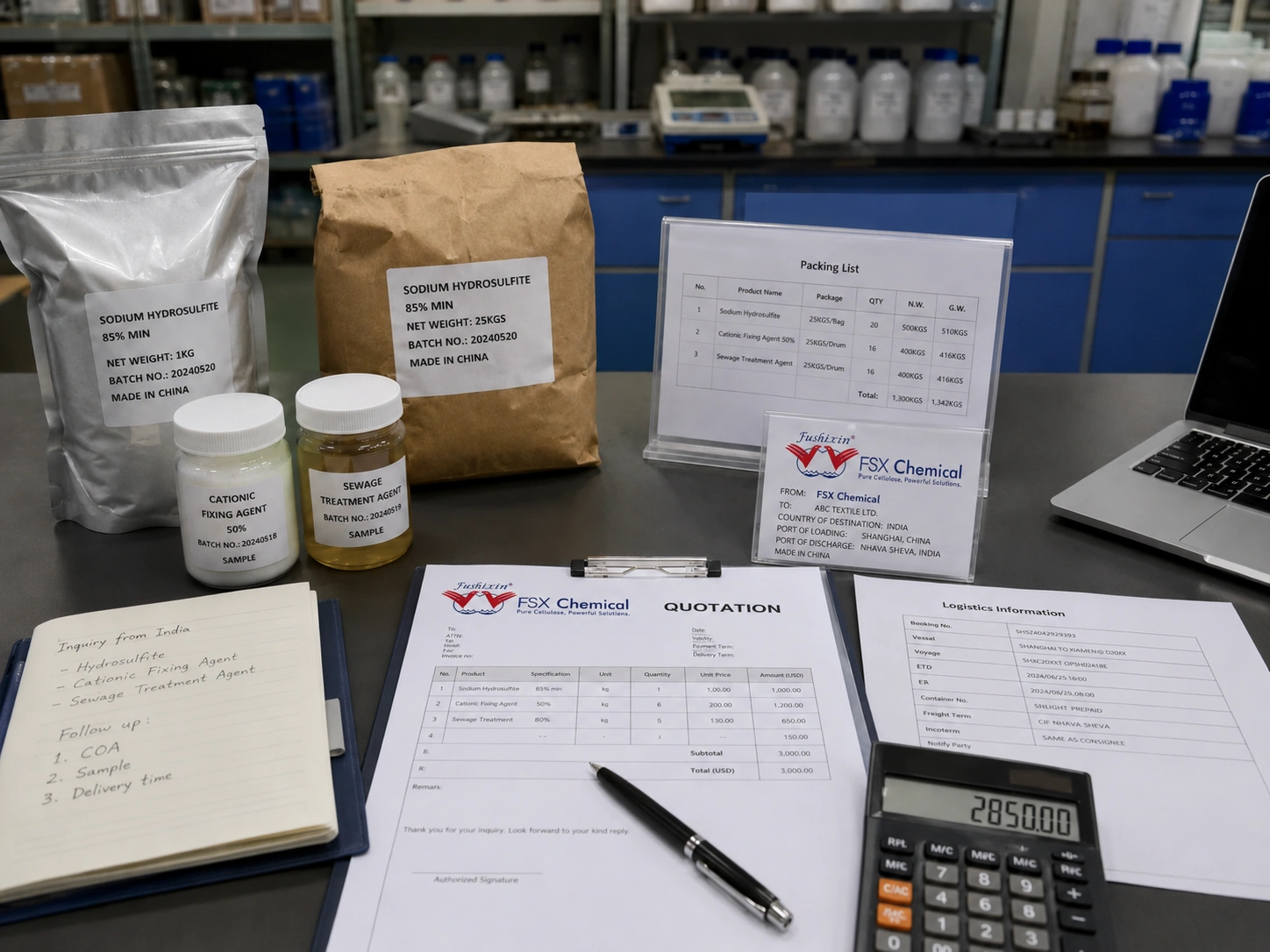
- Vérifier les documents d'emballage et d'exportation — Vérifiez les dimensions des sacs, les étiquettes, la traçabilité des lots, les fiches de données de sécurité (FDS), la facture, le bordereau d'expédition et les autres documents requis avant l'expédition.
- Contacter FSX Chemical — share your current sizing material or TDS and yarn type to begin an application review. Email: service@fsxchemical.com.