

















Textile Printing Thickeners Compared: Sodium Alginate, CMC, CMS and Digital Paste
Textile printing thickeners differ in chemistry, rheology, dye compatibility and wash-off behavior. This guide compares the main thickener families, their common application directions and the parameters buyers should verify before production trials.
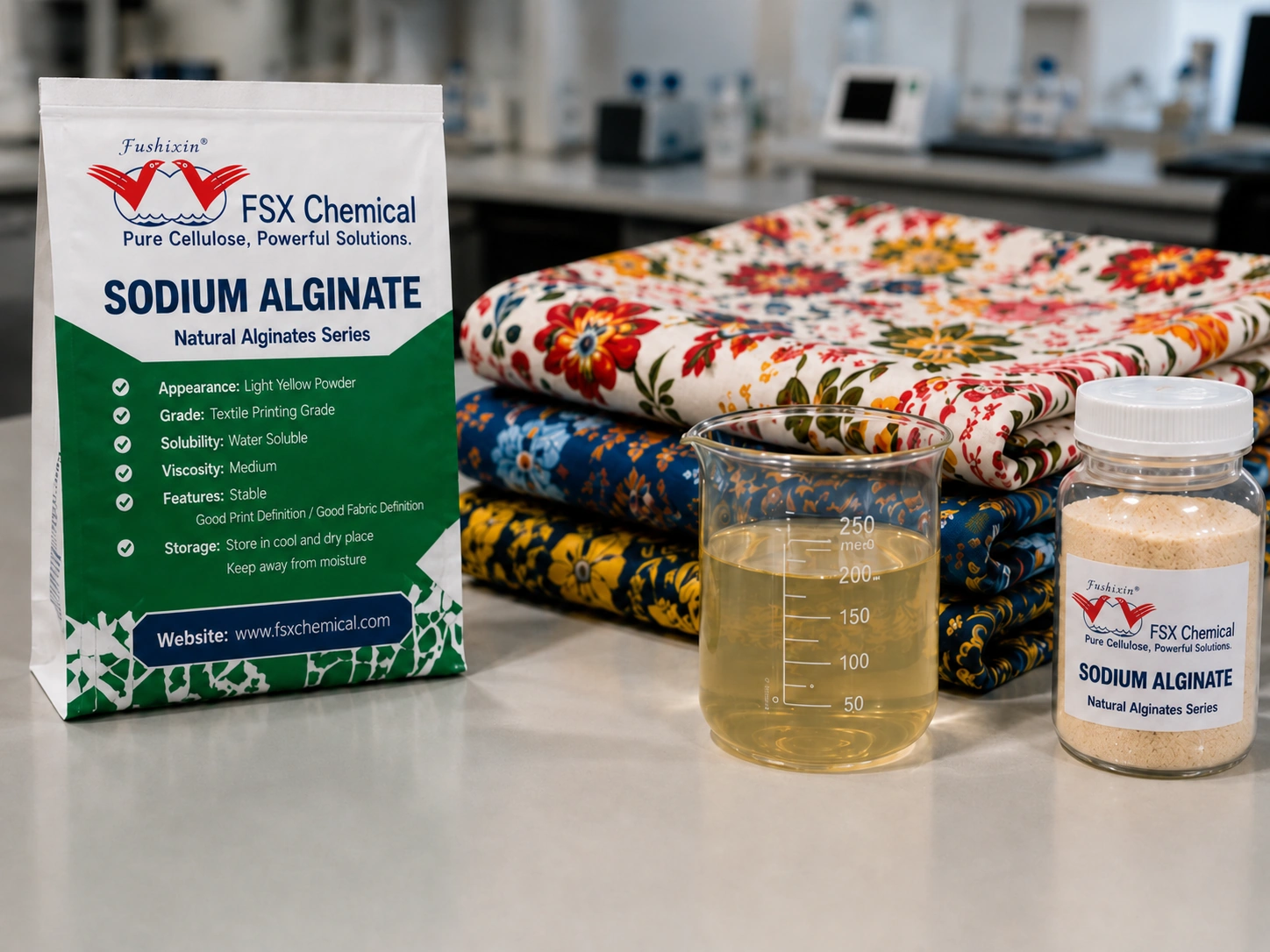
Technical Insights on Sodium Alginate in Reactive Dye Printing
Sodium alginate is widely used as a thickener in reactive dye printing, but grade selection requires more than choosing an HV, MV or LV label. This guide explains its technical role, key purchasing parameters, preparation controls and production trial requirements.

Optimizing Print Sharpness and Wash-Off with CMC and CMS
Print sharpness and wash-off performance depend on more than printing-paste viscosity. This guide explains how CMC and CMS grade, rheology, degree of substitution, paste preparation, dye compatibility and washing conditions should be evaluated.
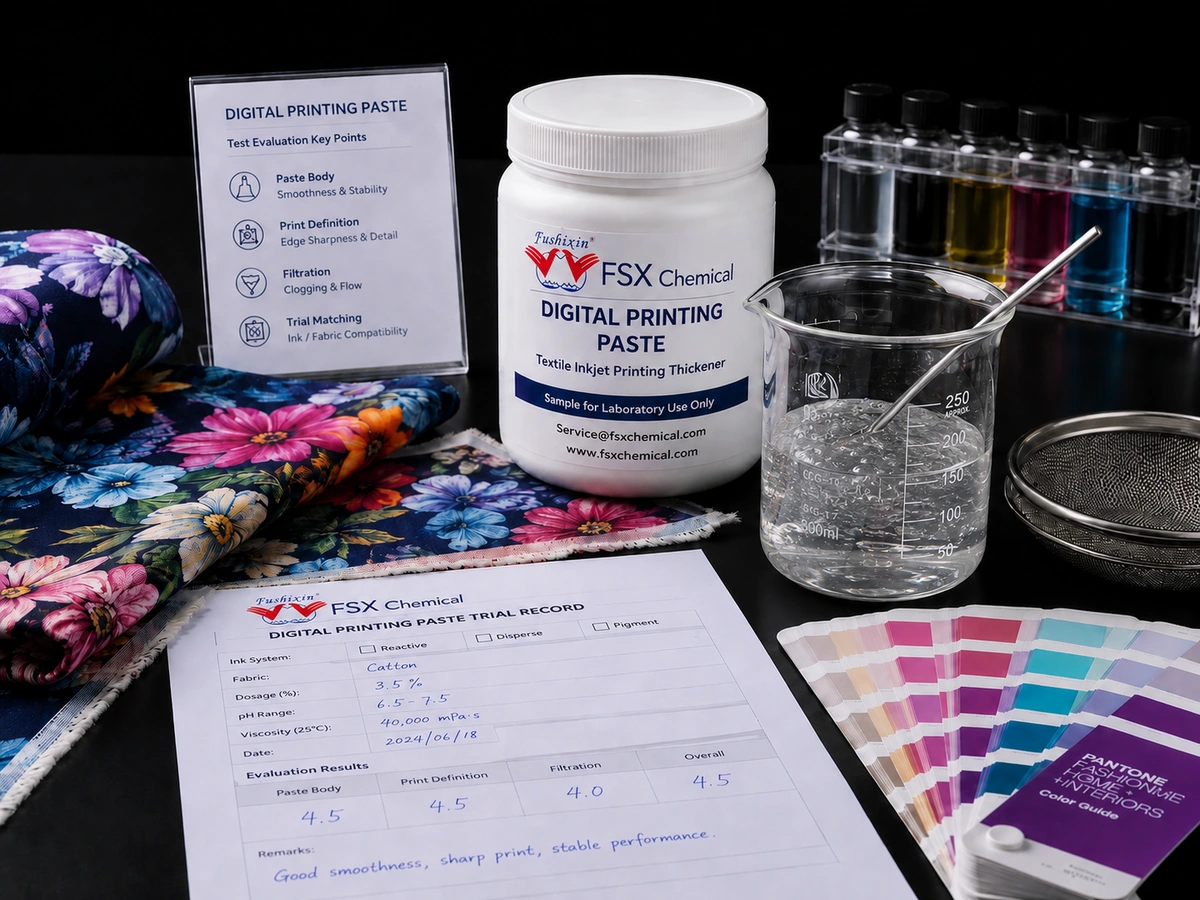
Understanding Viscosity Control in Digital Textile Printing Processes
Viscosity control in digital textile printing involves two different systems: the jetting ink and the fabric pretreatment formulation. This guide explains how temperature, formulation, measurement methods and process conditions affect jetting stability and print quality.
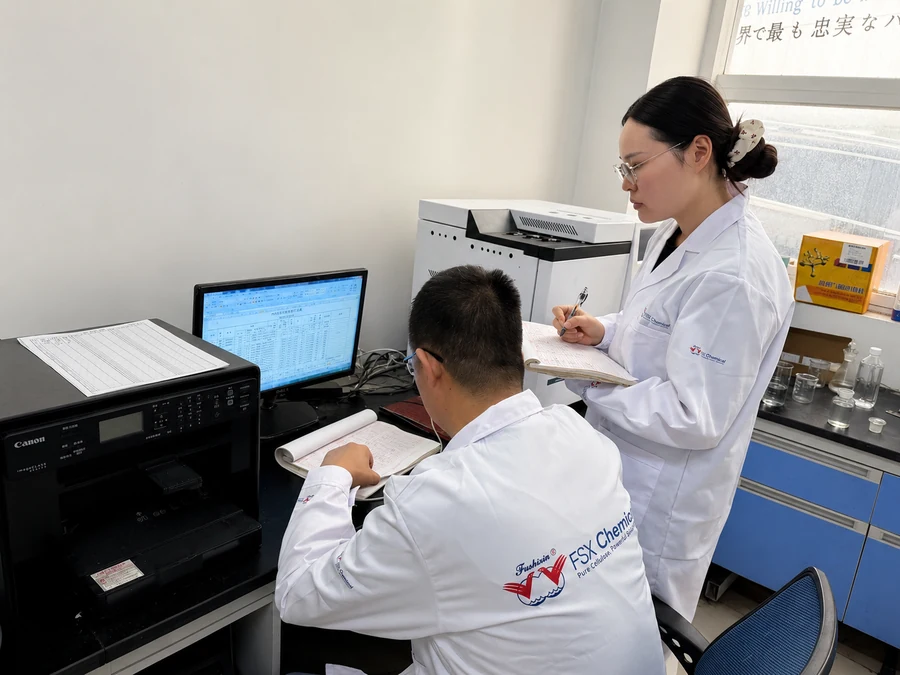
Best Practices for Batch Quality Control in Textile Chemical Manufacturing
Effective batch quality control begins with raw-material approval and continues through process monitoring, representative sampling, laboratory testing, release review, traceability and corrective action.

Textile Printing Chemical Standards: MRSL, RSL, Certificates and Performance
Textile printing chemical selection must balance legal compliance, MRSL and RSL requirements, product documentation, laboratory evidence and actual printing performance. This guide explains how buyers can evaluate each requirement without relying on unsupported supplier claims.

Guide to Laboratory Testing and Performance Evaluation of Printing Thickeners
Laboratory evaluation of a printing thickener should cover more than one viscosity result. This guide explains powder inspection, stock-paste preparation, rheology, formulation compatibility, printing trials, wash-off and final performance assessment.
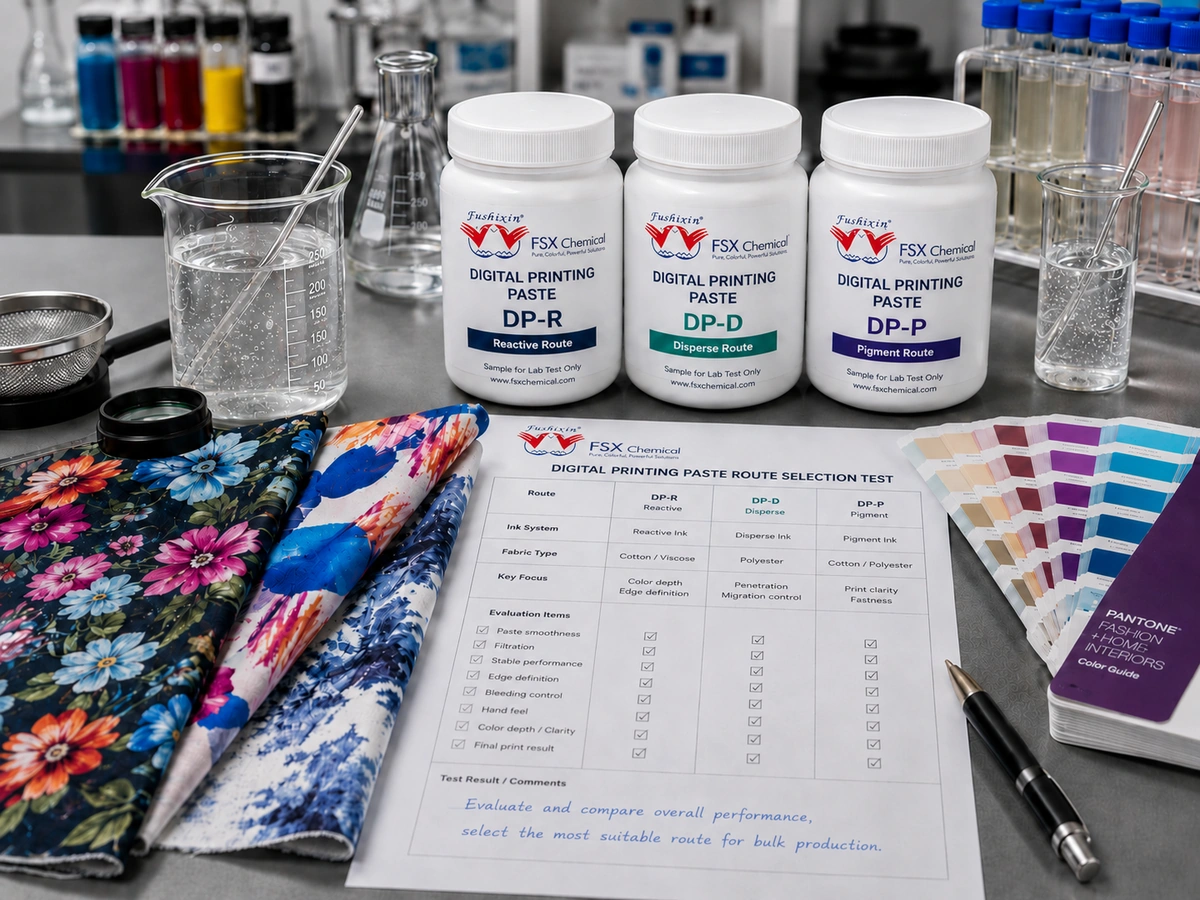
Digital Textile Printing Paste Selection: Reactive, Disperse and Pigment Systems
Digital printing pastes should be selected by ink chemistry, fabric, application method and post-treatment. This guide compares sodium alginate, CMC, CMS, synthetic polymer and compound pretreatment routes for textile inkjet printing.
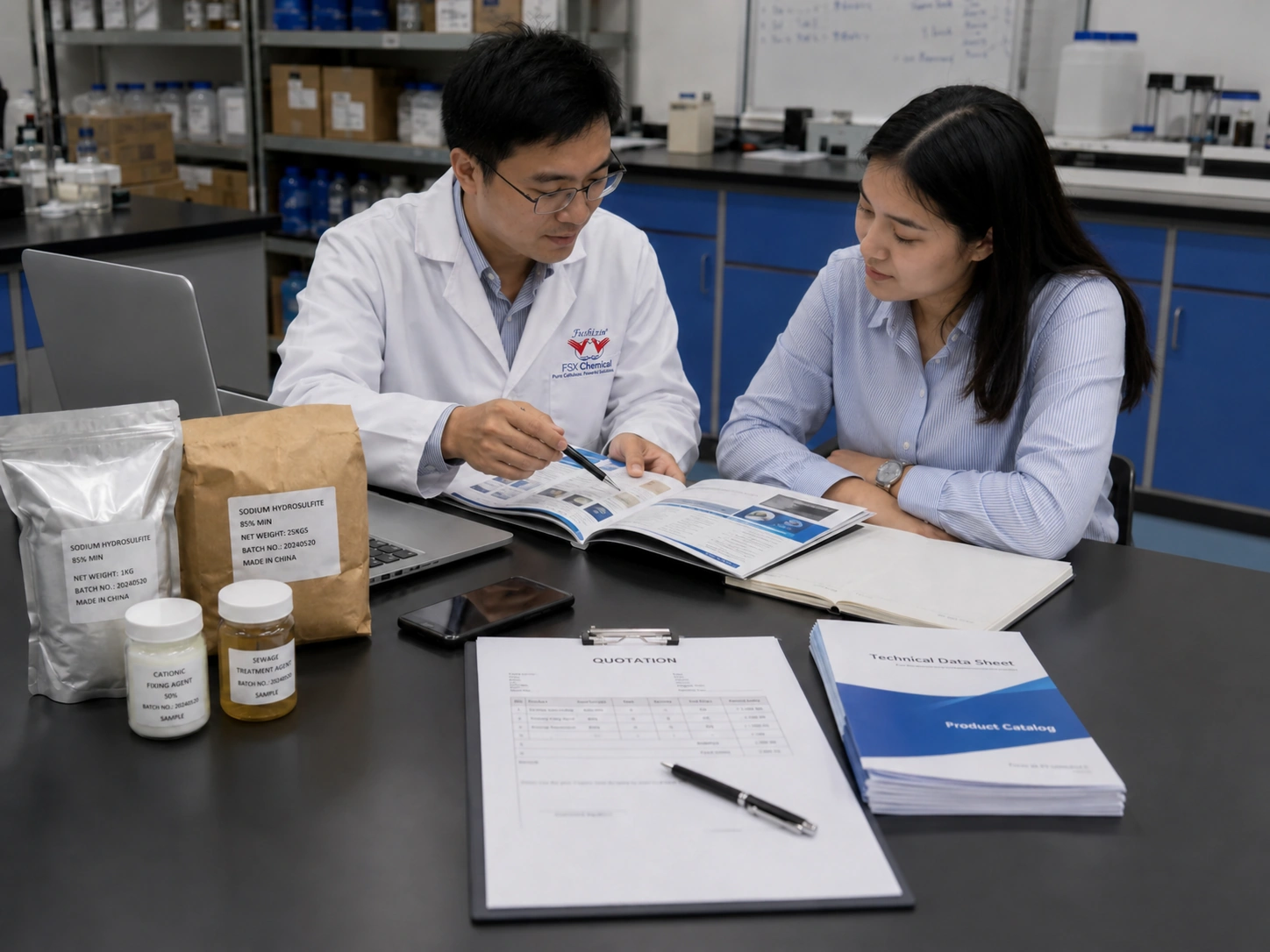
Custom Grade Matching Services for Textile Printing Pastes Explained
Custom grade matching helps textile printers compare a new thickener or printing paste with an approved reference under defined test conditions. This guide explains the information required, the laboratory and production validation stages, and how buyers can move from an initial sample to an agreed commercial specification.
Best Digital Printing Pastes for Disperse and Reactive Inkjet Systems
The best digital printing paste is the one matched to the ink chemistry, fabric and fixation route. This guide compares pretreatment requirements for reactive inkjet on cellulosic fabrics and direct disperse inkjet on polyester, then explains how buyers should evaluate samples before bulk purchasing.
Industrial Textile Printing Thickeners: Scale-Up, QC and Production Approval
Industrial textile printing thickeners must perform beyond a small laboratory test. This guide explains how mills should evaluate product chemistry, rheology, hydration, filtration, batch specifications, scale-up performance, packaging and total cost before approving a thickener for large-scale production.
Top Features to Look for in Textile Printing Chemical Suppliers
A reliable textile printing chemical supplier should provide more than a competitive quotation. This guide explains how buyers can evaluate application knowledge, grade matching, test methods, batch control, technical documents, change management, export support and total cost before approving a supplier.
